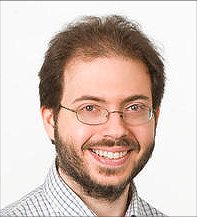
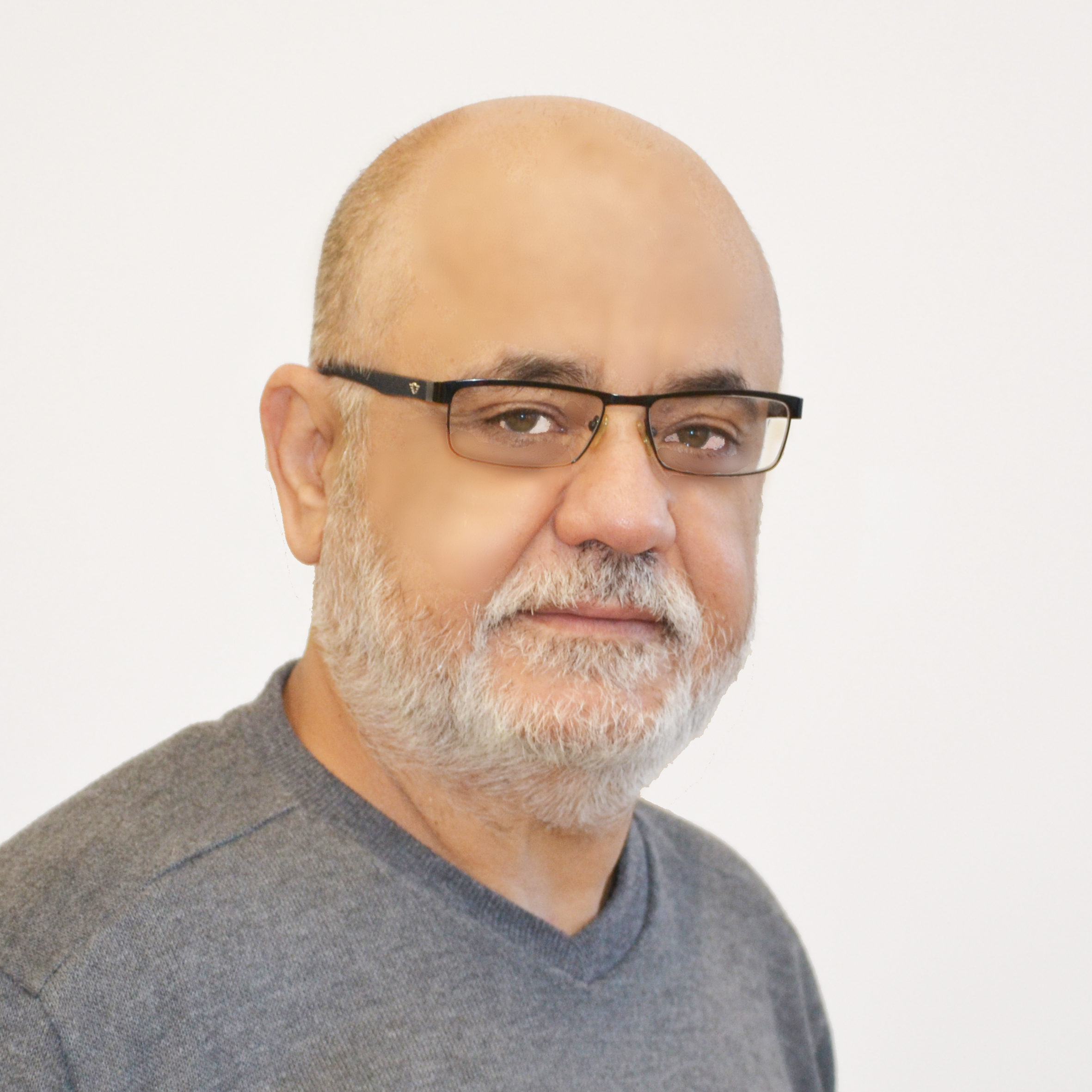
Samuel Mimram is a Professor at the LIX laboratory of École Polytechnique (part of Institut Polytechnique de Paris ). He serves as President of the Computer Science Department and Head of the Cosynus team , focusing on interdisciplinary research at the intersection of denotational semantics , concurrency , rewriting theory , category theory , linear logic , and algebraic topology . His recent work explores homotopy type theory , higher categories , and coherence in rewriting systems , with publications in venues like FSCD , LIPIcs , and Higher Structures . He mentors interns (e.g., Hugo Salou , William Hasley ) and participates in academic juries for PhD theses (e.g., Thomas Jan Mikhail , Luc Chabassier ). Contact: samuel.mimram@polytechnique.edu .
Daniel Jimenez Gonzalez is a faculty member at the Universitat Politècnica de Catalunya (UPC), affiliated with the Department of Computer Architecture within the School of Informatics (FIB). He is an active researcher in programming models and high-performance computing, contributing extensively to the field through publications, projects, and academic supervision. Research Interests: His work focuses on Computer Architecture , Programming Models , and Parallel Computing . He investigates task-based programming, runtime systems, compiler optimizations, and performance modeling for multi-core and heterogeneous architectures. His research addresses challenges in scalability, energy efficiency, and resilience in modern computing environments. His recent publications show a consistent trend in task-based programming models , runtime scheduling , and performance optimization across diverse architectures, including NUMA and GPU-accelerated systems. The work spans from theoretical modeling to practical implementation, often targeting real-world HPC applications. Scientific Awards: No awards explicitly mentioned in the provided text. Advising and Grants: While specific students are not listed, his involvement in doctoral theses and R&D projects suggests an active role in mentoring graduate students. He has participated in both competitive and non-competitive R&D+i projects, indicating grant acquisition and project leadership experience in areas related to programming models and computer architecture. Labs and Teams: He is a member of the UPC PM - Programming Models research group, which focuses on the design, analysis, and optimization of modern programming paradigms for high-performance systems.
Felipe García Pinillos serves as a Professor in the Department of Physical Education and Sports within the Faculty of Sports Sciences at the University of Granada. He concurrently holds the position of Coordinator for the Master's Degree in Research in Physical Activity and Sport at the university's International Graduate School, demonstrating dual institutional engagement in both undergraduate and graduate academic frameworks. His research specialization centers on Physical Education and Sports Sciences, with emphasis on empirical investigation of physical activity dynamics and sport performance metrics. This encompasses biomechanical analysis, training methodology optimization, and interdisciplinary approaches bridging exercise physiology with sports psychology to advance evidence-based practices in athletic development. As Master's Program Coordinator, Professor García Pinillos directs academic supervision for graduate researchers while maintaining rigorous undergraduate teaching commitments. His structured tutoring schedule—conducted in Building D, Office 3.12 during designated morning blocks across both semesters—reflects systematic mentorship protocols for student cohorts pursuing advanced degrees in sport science disciplines.
Esther Caparros Cayuela serves as an Associate Professor in the Department of Clinical Medicine at Miguel Hernández University of Elche, concurrently holding leadership positions as Chair of the SEMERGEN-UMH Research Chair in Chronicity and Secretary of the Electoral Board. Her academic responsibilities span multiple programs including Biotechnology, Medicine, Pharmacy, and Podiatry, where she teaches immunology-focused courses and supervises degree projects. Her research centers on immunological mechanisms with specialized expertise in hepatic and intestinal immunobiology as a core member of the Hepatic and Intestinal Immunobiology Group. This focus extends to clinical applications in allergology and hematology through her teaching of Immunology and Allergology for Medicine students and Immunology and Hematology for Pharmacy students, reflecting her integrated approach to basic and clinical immunology. Dr. Caparros Cayuela coordinates the Immunology and Hematology course in the Bachelor's Pharmacy program while teaching advanced techniques in Clinical Medicine Research and Neuropsychopharmacology master's programs. Her laboratory work within the Hepatic and Intestinal Immunobiology Group investigates immune responses in liver and intestinal pathologies, with particular relevance to chronic disease mechanisms addressed through her SEMERGEN-UMH Research Chair leadership.
Pedro Moreno-Sánchez is an Assistant Research Professor at the IMDEA Software Institute in Madrid, Spain. He holds a PhD in Computer Science from Purdue University (2018), and previously held a postdoctoral position at TU Vienna. His research focuses on distributed ledgers (blockchain), privacy-enhancing technologies, and applied cryptography, aiming to bridge theory and practice in secure and practical systems. He has advised PhD students (Lukas Aumayr, Erkan Tairi) and master’s students (Jakob Abfalter), and mentored research interns from institutions like TU Delft and Purdue. Education: PhD in Computer Science (Purdue University, 2018), MSc and BSc from University of Murcia (Spain), with visiting stints at Ripple Labs, IBM Research, and Philips Research. Research Interests: Blockchain security and privacy, scalability via Layer-2 solutions, cryptographic tools for transaction privacy, and anonymous communication systems. His work emphasizes formal security guarantees and practical deployment. Key Contributions: Developed protocols like A2L (scalable atomic locks), Blitz (secure multi-hop payments), and SilentWhispers (privacy for decentralized credit networks). His papers address payment channel networks, cross-chain interoperability, and privacy-preserving transaction designs. Awards: Best Reviewer Award at Privacy Enhancing Technologies Symposium (PETS) 2019. Service: Served as Program Chair for FC, NDSS, and multiple blockchain conferences; editorial roles at PETS, IEEE journals, and the Journal of Cryptoeconomic Systems. Labs/Teams: Primary affiliation with IMDEA Software Institute’s security and privacy research group.
Elisabet Sarri is a PartTime Lecturer at the Faculty of Science and Technology of the University of Vic - Central University of Catalonia and concurrently holds a part-time lecturing position at the Faculty of Medicine of the University of Barcelona. She is an active member of the Research Line on Mechanisms of Tissue Repair and Regeneration at the University of Vic, with her primary affiliation evidenced by her institutional email (elisabet.sarri@uvic.cat) and ORCID profile through URECERCA. Her academic foundation includes a Biology degree (1989), Master's (1991), and doctoral thesis on neurotransmission mechanisms (1996) from the Autonomous University of Barcelona. Her educational journey involved research stays at the University of Mainz, University of Extremadura, and Institute of Biomedical Research of Barcelona. Sarri's research centers on tissue repair and regeneration, with specific focus on cell-extracellular matrix interactions in arterial walls and complex wound healing. Her work spans vascular biology in Marfan syndrome, intracellular signaling mechanisms, phospholipid metabolism, and membrane trafficking. She actively contributes to biomedical education through problem-based learning methodologies and outreach programs like the Biomedicine Workshops for high school students. Recent publications (2021-2024) reveal a strategic shift toward clinical wound healing therapies and medical education research, while her foundational work (2007-2016) established significant contributions to Marfan syndrome pathophysiology and phospholipid signaling pathways in vesicular transport. She has secured and led research projects including FIS-2003 and Marato TV3-2012, contributing to eight additional projects. Currently, she supervises doctoral candidates Clara Masó (micrografting for complex wounds) and Marta Casals (patient empowerment in wound self-care) through AGAUR-funded industrial doctorates at TR2Lab and Hospital Universitari de la Santa Creu de Vic. Sarri operates within TR2Lab's research ecosystem, directing the Educational Biomedicine Program that has engaged over 1,000 high school students since 2015. Her work bridges laboratory research on tissue regeneration with clinical applications in vascular pathology and wound management, while maintaining active teaching roles in histology and microscopic organography.
Francisco Javier Martinez Contreras serves as an Associate Professor at the University of Deusto, Bilbao campus, concurrently leading the Centre for Applied Ethics. He instructs undergraduate courses including Ethical Challenges in the Global World and Civic and Professional Ethics, alongside the Master’s course Ethics of Globalisation within the Master’s in Ethics for Social Construction program. His academic foundation comprises: BA in Philosophy and Religious Science from the University of Deusto PhD in Philosophy from the University of Deusto His research critically engages ethics, political philosophy, and aesthetics within contemporary frameworks, emphasizing global ethical dilemmas and professional conduct. Work explores intersections between aesthetic theory and moral philosophy, applied to modern societal challenges through publications on political and contemporary philosophy. Scientific recognition: No awards documented Advisory activities and research funding remain unspecified in available records. International engagements include Wissenschaftlicher Mitarbeiter at Berlin’s Institut M.-D. Chenu Espaces, visiting lectureship at Mexico’s TEC Monterrey, and guest researcher positions at Portugal’s University of Coimbra and Germany’s Freie Universität Berlin within the Ethics Applied to Social Reality research team at Deusto’s Centre for Applied Ethics.
Cynthia H. Chuang, MD, MSc, serves as Professor of Medicine and Public Health Sciences at Pennsylvania State University's College of Medicine and Penn State Health Milton S. Hershey Medical Center. She holds concurrent professorships in the Department of Public Health Sciences and Department of Obstetrics and Gynecology, and serves as Chief of the Division of General Internal Medicine. Her leadership encompasses academic physicians and scientists developing innovative educational programs and research initiatives, including critical patient care responses during the COVID-19 pandemic. Dr. Chuang's research focuses on reproductive wellness and contraceptive policy, with particular emphasis on how state and federal policies affect women's access to care. Her work consistently addresses preventive care frameworks and evidence generation for reproductive health interventions. As a physician-scientist and general internist, she bridges clinical practice with health services research to improve primary care delivery for women. Analysis of her 15 most recent publications reveals strong thematic continuity in reproductive health policy research, with increasing emphasis on post-pandemic healthcare delivery, contraceptive coverage mandates, and equity-focused implementation science. Her work demonstrates methodological diversity spanning randomized controlled trials, policy analyses, and large-scale observational studies. Key scientific recognition includes the 2014 Outstanding Collaborative Research Team award. Her research portfolio demonstrates sustained NIH, PCORI, and AHRQ funding, particularly for projects examining contraceptive coverage policies and reproductive life planning interventions. Dr. Chuang has led significant research collaborations including the MyNewOptions study (PCORI-funded), which tested web-based reproductive life planning tools for contraceptive decision-making among 984 privately insured Pennsylvania women. Her current R01 project examines how state and federal contraceptive coverage policies affect women's access to care, reflecting ongoing commitment to policy-relevant research.
Javier Verdu Mula is a Professor at the Departament d'Arquitectura de Computadors (Universitat Politècnica de Catalunya - UPC) and a key researcher at the CRAAX - Centre de Recerca d'Arquitectures Avançades de Xarxes . His work focuses on computer architecture, parallel processing, and networking systems. Fields of Research include RISC-V virtualization, multithreaded processor optimization, and performance analysis of stateful networking applications. Scientific Awards include the BDigital Global Congress (2015) and Wayra Barcelona (2012) recognitions. Collaborations span institutions like Barcelona Supercomputing Center and researchers such as Manuel Alejandro Pajuelo, Mateo Valero Cortes, and Mario Nemirovsky. His recent publications address RISC-V hypervisor extensions, deep packet processing in parallel architectures, and statistical thread assignment models. He also holds patents in hardware virtualization and resource control systems.
Jacques-Henri Jourdan is a CNRS researcher at the Laboratoire Méthodes Formelles (LMF) , Université Paris-Saclay. His work focuses on formal verification and programming language design , particularly for Rust and OCaml , using proof assistants like Coq and the Iris framework. Current academic rank: Researcher (CNRS) Affiliation: LMF, Université Paris-Saclay Research highlights include: Developing Creusot , a deductive verification tool for Rust Contributing to the Iris concurrent separation logic Formalizing RustBelt for Rust's type system soundness Building a statistical memory profiler for OCaml Scientific awards: GdR GPL 2016 Thesis Prize for his PhD on formal verification Notable contributions to academia: Co-teacher of Advanced Programming at ENS Paris-Saclay Co-development of OCaml's runtime library and parser Active program committee member in POPL, ICFP, and WITS
KC Sivaramakrishnan serves as an Adjunct Professor at the Indian Institute of Technology, Madras and CTO of Tarides, bridging academic research and industrial application in programming languages and systems. His dual roles reflect a commitment to advancing both theoretical foundations and practical implementations in computer science. His research spans Functional Programming, Language Runtimes, Concurrency/Parallelism/Distribution, and Weak Memory/Consistency models, with particular focus on the OCaml programming language. Sivaramakrishnan's work addresses fundamental challenges in concurrent and distributed systems through innovative language design and runtime techniques. Analysis of his publication record reveals a consistent trajectory from foundational work on effect handlers and concurrency models (2015-2020) to more recent contributions in verified systems, multicore programming, and distributed data types (2021-2025). His research demonstrates strong continuity in exploring how programming language principles can solve real-world systems challenges. Sivaramakrishnan actively contributes to the academic community through program committee memberships across major PL conferences including POPL, PLDI, ICFP, and SPLASH. His service spans multiple roles from committee member to track chair and diversity co-chair. As CTO of Tarides, he leads industrial efforts in OCaml compiler development and systems programming, maintaining a productive synergy between his academic research and industry leadership. His work with the OCaml community includes significant contributions to multicore support and effect handler implementations.
Derek Dreyer is the Scientific Director at the Max Planck Institute for Software Systems (MPI-SWS) and an Adjunct Professor in the Saarland Informatics Campus of Saarland University . His research focuses on programming languages , type theory , and formal verification of software systems. Education : PhD in Computer Science from Carnegie Mellon University (2005), advised by Bob Harper and Karl Crary. Key Contributions : Pioneering work in separation logic , ownership types , and memory safety for languages like Rust and C. Awards & Grants : Recipient of significant grants for research on logical foundations of safe systems programming . Leadership : Program Chair for POPL and PLDI, Organizer of RTFM (Red-Hot Topics in Faculty Mentoring), and active role in mentoring students through PLMW. Labs & Teams : Leads a dynamic research group at MPI-SWS , driving collaborative projects in programming languages and systems verification.
Tej Chajed is an Assistant Professor in the Department of Computer Science at the University of Wisconsin-Madison. His research focuses on formal verification of systems software, particularly addressing concurrency and crash safety in file systems and distributed protocols.
Miguel Á. Delgado is a Professor of Econometrics at Universidad Carlos III de Madrid, holding a Ph.D. in Economics from the London School of Economics. Previously, he served as an Assistant Professor at Indiana University. His academic roles include Editorships for journals like Econometric Theory and Journal of Econometrics . He has supervised 13 doctoral theses and teaches courses in Statistics and Econometrics across undergraduate and graduate levels. Education: Ph.D. in Economics (London School of Economics), Previous Position: Assistant Professor at Indiana University His research focuses on econometric methodologies in non-parametric and semi-parametric models, with publications in top-tier journals such as Econometrica and Journal of the American Statistical Association . Recent work integrates machine learning and generative AI into educational technology, addressing challenges in hybrid learning environments, MOOCs, and predictive student analytics. Publications highlight innovations in exercise modeling, telepresence classrooms, and AI-driven feedback systems, reflecting a dual focus on econometric theory and applied educational technology. Key Projects: Development of tools like ABENEARIO for early math education, and involvement in initiatives like PROF-XXI to enhance teaching competencies in the 21st century.
Alejandro Cremades holds dual roles as an Adjunct Professor of Corporate Real Estate at IE University's School of Architecture and Design, and as an Adjunct Professor of Real Estate Financial Modeling at the Colegio Oficial de Arquitectos de Madrid. He concurrently serves as South Europe & Africa Real Estate Manager at Siemens Gamesa, specializing in real estate asset management, architectural projects, and construction. Education: Bachelor's and Master's in Architecture (2005–2011), Universidad Politécnica de Madrid Executive Program in Real Estate M&A Finance (2021–2022), Instituto de Estudios Bursátiles Additional executive programs in valuation, financing, and real estate asset management Professional Affiliations: Member of Círculo Inmobiliario, Urban Land Institute's Young Leaders Executive Committee, and IE Real Estate Club. Extensive corporate experience includes roles at Klepierre, Indra, Hipoges, and ISG Spain.