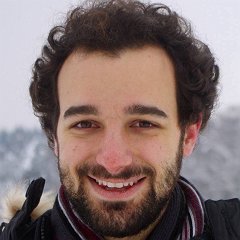
Marco Vassena is an Assistant Professor at the Department of Information and Computing Sciences, Utrecht University. His research focuses on using programming language techniques like type systems, compilers, and program verification to build secure systems with reliable security guarantees. Affiliation: Utrecht University, Netherlands Research Areas: Language-based security, memory safety, constant-time programming, information flow control, WebAssembly security, and defenses against microarchitectural attacks. His work includes developing frameworks for secure execution environments, such as MSWasm for WebAssembly, and advancing tools like Blade to mitigate speculative leaks in cryptographic code. He has contributed to leading conferences including POPL, PriSC, and PLDI. Scientific Awards: Veni Grant (2023)
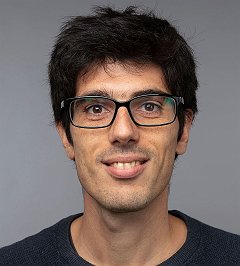
Andreas Pavlogiannis is an Associate Professor in the Department of Computer Science at Aarhus University, Denmark, where he leads research in the Programming Languages group. His work focuses on formal methods, algorithmic verification, and concurrency analysis, with additional interests in network diffusion and evolutionary graph theory. He holds a PhD from IST Austria and actively recruits PhD students and PostDocs. Research Interests: Pavlogiannis investigates foundational and applied aspects of concurrent systems, including static/dynamic program analysis, automata theory, and weak memory models. His interdisciplinary work bridges computer science with evolutionary biology through network diffusion models and game theory. Awards: Distinguished Paper Award (PLDI 2025) Best Paper Award (ASPLOS 2024) Best Presentation Award (SOAP 2024) Best Paper Award (ASPLOS 2022) Teaching: He teaches courses on Programming Languages (Bachelor), Algorithmic Model Checking (Master), and Program Analysis (Master). Service: Serves on program committees for top conferences including POPL, PLDI, CAV, and IJCAI. Organizer of CONFEST 2025. Funding: Research supported by Villum Foundation, Danish Free Research Foundation (DFF), Stibo Foundation, and Austrian Science Fund (FWF).
Mirjam van Praag serves as the Maersk Mc-Kinney Moller Professor of Entrepreneurship at Copenhagen Business School's Department of Innovation and Organizational Economics, while maintaining an unpaid professorship in Entrepreneurship and Organization at the University of Amsterdam's Amsterdam Business School. She concurrently holds influential positions as a Crown Member of the Dutch government's Socioeconomic Council (SER) and board member of Berlingske Media Group, bridging academic research with policy and industry applications. Her research program centers on the Economics of Entrepreneurship, investigating human capital formation, team dynamics, and household entrepreneurship through experimental methodologies. She extends this expertise into Personnel Economics—focusing on performance measurement systems and reward structures—and Behavioral Economics, examining psychological drivers of economic decisions. This multidisciplinary approach reveals how social contexts shape entrepreneurial outcomes across diverse environments. Analysis of her recent publications shows consistent exploration of entrepreneurial behavior determinants, including failure stigma, family background influences, and social contagion effects in venture creation. Her work strategically combines natural experiments with large-scale dataset analysis, demonstrating how entrepreneurial ecosystems develop through interpersonal networks and institutional frameworks while maintaining methodological rigor across labor economics and organizational behavior domains. Her distinguished recognition includes: Maersk Mc-Kinney Moller Professorship Crown Member of the Socioeconomic Council (SER) Research Fellow of CEPR Research Fellow of IZA Research Fellow of Tinbergen Institute Research Fellow of ACE Research Fellow of ACLE Member of Academia Europaea While specific academic advising roles remain undisclosed, van Praag's professional trajectory demonstrates significant cross-sector impact through board memberships in public institutions and private enterprises. Her industry experience spans The Boston Consulting Group, Procter & Gamble, and GFK Intomart, providing practical foundations for her academic work on organizational behavior and performance systems. As founding director of the Amsterdam Center for Entrepreneurship, she established a multidisciplinary hub fostering collaboration between scholars, entrepreneurs, and policymakers to advance entrepreneurship research and education through integrated academic programs and industry partnerships.
Leonie K. Elsenburg serves as Assistant Professor in the Department of Public Health, Section of Epidemiology at the University of Copenhagen's Faculty of Health and Medical Sciences, and concurrently as Assistant Professor in the Department of Public and Occupational Health at Amsterdam University Medical Center, University of Amsterdam. Dr. Elsenburg's research program investigates the association between childhood adversity and health outcomes across the lifespan. Her work examines how exposure to poverty, family illness or death, and parental divorce relate to obesity, cardiovascular disease, diabetes, mental health conditions, educational attainment, and labor market outcomes. She employs sophisticated epidemiological methods to model longitudinal trajectories of adversity exposure and health outcomes, with particular emphasis on understanding exposure to multiple adversities simultaneously. Primary Research Frameworks: Life course epidemiology of childhood adversity Mechanisms linking early adversity to health outcomes Register-based cohort methodology Longitudinal mediation analysis Subgroup identification through trajectory modeling Her current work centers on the DANLIFE project, a Danish nationwide register-based cohort study that combines annual childhood adversity exposure data with comprehensive health and social outcome information extending into young adulthood. Through this project, she identifies subgroups with differential adversity exposure patterns and examines associations between childhood adversity and subsequent health and social outcomes. Dr. Elsenburg's educational background includes a PhD in Epidemiology from University Medical Center Groningen and Netherlands Interdisciplinary Demographic Institute, a Research Master in Clinical and Psychosocial Epidemiology from University of Groningen, and a Bachelor's degree in Natural and Social Sciences from University of Amsterdam. Her publication record demonstrates significant research productivity with multiple 2025 publications across high-impact journals including The Lancet Public Health and Social Science & Medicine. Her work has implications for developing targeted interventions addressing the long-term consequences of childhood adversity.
Bieliński Jacek serves as Assistant Professor at the Institute of Sociology, Civitas University, Warsaw, Poland, while concurrently holding the position of Deputy Head of the Sociology Department. He maintains a secondary appointment as Assistant Professor at the National Information Processing Institute in the Laboratory of Statistical Analysis. His research portfolio centers on: Advanced social research methodology and quantitative data analysis techniques Values and norms within Polish society and scientific communities Institutional Anomie Theory with development of the 'marketized mentality' measurement framework Ethos of science typologies in contemporary Poland (academic, industrial, post-academic, opportunistic) Drivers of pro-environmental behavior during the Covid-19 pandemic across European nations His empirical work employs structural equation modeling with nationally representative Polish samples, establishing theoretically grounded metrics for individual-level anomic culture manifestations while examining legitimacy foundations of social-political systems through axio-normative lenses.
Jean-François Ethier is a Clinical Professor in the Department of Medicine at Université de Sherbrooke, holding concurrent appointments as Director of the Centre interdisciplinaire de recherche en informatique de la santé de l'Université de Sherbrooke (CIRIUS) from 2020-2023 and Principal Applicant for multiple major research initiatives. His academic trajectory shows progressive advancement from Assistant Professor (2012-2018), to Associate Clinical Research Professor (2018-2023), culminating in his current position as full Clinical Professor since 2023. He maintains active clinical practice as a specialist in general internal medicine certified by both Collège des médecins du Québec and Royal College of Physicians and Surgeons of Canada. Doctorate in Epidemiology and Biomedical Information Science (Très honorable), Université de Paris VI (P & M Curie), 2016 Master's Equivalent in Public Health, Université de Rennes I, 2011 Medical Residency Training, McGill University, 2011 MD CM, McGill University, 2006 Ethier's research centers on building foundational infrastructure for learning health systems through ontological modeling and data integration. His work bridges clinical medicine with computer science to develop interoperable frameworks for personalized medicine, pragmatic clinical trials, and health data analytics. Key contributions include the Prescription Drug Ontology (PDRO), Clinical Data Integration Model (CDIM), and multiple ontology-driven data warehousing solutions that enable secondary use of clinical data while addressing ethical and privacy constraints. His research demonstrates consistent focus on translating theoretical ontological frameworks into practical healthcare applications. Analysis of his 15 most recent publications reveals dominant themes in biomedical ontology development (40%), learning health system architecture (30%), and clinical data interoperability (30%). His work increasingly incorporates public engagement frameworks for health data governance while maintaining technical focus on semantic interoperability solutions. The publications demonstrate progressive complexity from foundational ontological modeling toward integrated system implementations with measurable clinical impact. Dean's honor list (top 10% academic involvement, 2017-2022) First place, ontology competition (FOIS 2014) Multiple J.W. McConnell and James McGill scholarships FRQS clinical researcher fellowships (Junior 1 and Junior 2) Ethier directs CIRIUS and leads the SPOR National Data Platform ($39M CIHR grant), demonstrating exceptional grant capture capacity with over $85M in awarded funding as Principal Applicant. His projects consistently feature interdisciplinary teams spanning clinical medicine, computer science, and public health. Current work focuses on implementing Quebec's Learning Health System infrastructure through the Unité Soutien SSA Québec, emphasizing ethical data governance and cross-sector collaboration. Ethier has trained numerous researchers through his ontology-focused projects and serves as principal supervisor for multiple graduate students. Ethier directs CIRIUS and co-leads the Canadian Consortium on Neurodegeneration in Aging ($49M). His laboratory develops ontology-driven data integration frameworks that connect clinical practice with research through the TRANSFoRm project infrastructure. Current team includes 15+ researchers across computer science, clinical medicine, and public health disciplines working on pragmatic registry-based trials and sensitive data exchange protocols. Future work focuses on scaling ontological frameworks for national health data interoperability and developing AI-ready data structures for precision medicine applications.
Prof. Dr. Falk Radisch serves as Professor of School Pedagogy at the University of Rostock since 2013, holding the Chair for School Pedagogy with a focus on school research and general didactics. He concurrently acts as Chairman of the Working Group for Empirical Educational Research (AEPF) since 2018. His academic foundation includes a doctorate in Philosophy from Johann Wolfgang Goethe University Frankfurt (2008) under Prof. Dr. Eckhard Klieme, preceded by specialized studies in educational planning/organization at the University of Erfurt (1996-2002). Prior appointments encompass Junior Professor for Quantitative Methods in Educational Research at University of Wuppertal (2010-2013) and Deputy Head of the Institute for Educational Management and Educational Economics at Switzerland's University of Teacher Education Central Switzerland (2008-2010). Radisch's research integrates empirical methodologies with school system analysis, emphasizing quantitative approaches to didactic structures and educational organization. His leadership in the AEPF underscores commitment to data-driven educational policy development, while his foundational work at the German Institute for International Educational Research (2002-2008) established expertise in cross-institutional educational assessment frameworks.
Professor JI Jie serves as Professor and Vice Director of the State Key Laboratory of Fire Science at the University of Science and Technology of China (USTC), with additional leadership roles in the Engineering Research Center of Thermal Safety and National & Local Joint Engineering Research Center of Thermal Safety Technology. Education: Bachelor of Science, University of Science and Technology of China, 2002 Ph.D. in Engineering, University of Science and Technology of China, 2008 Postdoctoral Research, University of Science and Technology of China, 2008-2010 His research pioneers fire plume dynamics, combustion of complex materials, fire spread mechanisms in ancient/high-rise structures, and real-time fire forecasting using data assimilation techniques. Current work focuses on integrating experimental and numerical methods for fire risk assessment in tunnels, subways, and cultural heritage sites. Recent publications (2021-2023) demonstrate expertise across fire dynamics, smoke management, and safety engineering, with significant contributions to understanding wind-driven fires, multi-fire interactions, and real-time smoke prediction systems using Ensemble Kalman Filter approaches. Honors and Awards: Elected fellow of the Combustion Institute (2022) Highly Cited Chinese Researcher (Elsevier 2020, 2021) National Science and Technology Innovation Leadership Talent (2018) Excellent Young Scientists Fund recipient (2017) Multiple national teaching and research awards including China Fire Protection Association First Prize (2019) Professor Ji has secured major funding including the National Science Fund for Excellent Young Scholars and multiple National Natural Science Foundation projects, while supervising award-winning research teams. His lab implements fire safety standards in national construction projects and international protocols. He leads USTC's State Key Laboratory of Fire Science research team, focusing on experimental combustion studies, computational fire dynamics, and practical fire safety engineering applications for complex infrastructure.
Tomasz Ociepa is an Assistant Professor at Lublin University of Life Sciences since 2015 within the Institute of Plant Genetics, Breeding and Biotechnology, and concurrently at the Polish-Japanese Academy of Information Technology since 2023 in the Department of Bioinformatics. His interdisciplinary work bridges plant science and computational biology with emphasis on oat genetics and disease resistance mechanisms. Dr. Ociepa's research focuses on plant-pathogen interactions in oat crops, particularly resistance to powdery mildew (Blumeria graminis f. sp. avenae). He utilizes molecular markers and genetic diversity studies of wild oat species (Avena sterilis, A. fatua) to identify novel resistance genes like Pm11 and Pm12. His recent work expands into bioinformatics applications including DNA data storage systems and molecular tagging techniques, demonstrating a strategic pivot toward computational approaches in agricultural science. Analysis of his 15 most recent publications reveals a dominant theme of oat-pathogen coevolution studies across European populations, with 12 papers dedicated to powdery mildew resistance mechanisms. His 2025 publications mark a significant diversification into computational biology, particularly DNA-based information storage. This dual trajectory shows increasing integration of traditional plant breeding with cutting-edge bioinformatics, positioning his work at the intersection of agricultural sustainability and data science innovation.
Rohan Padhye is an Assistant Professor in the Software and Societal Systems Department (S3D) within the School of Computer Science at Carnegie Mellon University. He leads the Program Analysis, Software Testing, and Applications (PASTA) research group and serves as affiliate faculty at CyLab. His research spans software engineering, programming languages, systems, and security, with publications at top venues including ICSE, ASE, ISSTA, MSR, OOPSLA, SOSP, SoCC, NSDI, and USENIX Security. Padhye completed his Ph.D. in Computer Science at UC Berkeley under Koushik Sen, where he investigated techniques for specializing program analysis and automated testing tools. He holds a Master's degree from IIT Bombay in static program analysis. Prior to CMU, he worked with Amazon Web Services, Microsoft Research, Samsung Research America, and IBM Research India. His research focuses on automatically discovering software bugs using dynamic program analysis and coverage-guided fuzz testing. Recent projects include Fray (a concurrency testing platform for the JVM), Mu2 (mutation-based fuzz testing), and JQF+Zest (coverage-guided property-based testing). His work has identified numerous bugs in open-source software across Google Closure Compiler, OpenJDK, Apache projects, and others. Padhye's publications demonstrate a consistent focus on improving software testing through innovative fuzzing techniques, with recent work expanding into date/time bug analysis, distributed systems testing, and AI-driven legal reasoning. His research bridges theoretical foundations with practical applications, evidenced by tools like ChocoPy (used for teaching compilers at multiple universities) and JQF+Zest (integrated into Fuzzit cloud service). NSF grant as PI on Practical Controlled Concurrency Testing for Managed Code (2025) NSF grant as PI on Strengthening Correctness of Date and Time Logic in Software Systems (2025) Amazon Research Award for property-based testing (2025) Distinguished Reviewer Award for PLDI'25 ACM SIGSOFT Distinguished Paper Award for date/time bugs study Best Paper Award at SOSP 2019 Padhye advises multiple Ph.D. students in the PASTA Lab, including Ao Li, Vasudev Vikram, and Shrey Tiwari. He has served on program committees for major conferences including ASE, SPLASH, ISSTA, ICSE, and PLDI. His teaching at CMU includes courses on Program Analysis and Fantastic Bugs and How to Find Them, continuing his work from Berkeley where he was an Outstanding Graduate Student Instructor. The PASTA Lab conducts research on Program Analysis, Software Testing, and Applications with a focus on dynamic analysis and grey-box fuzzing. The lab follows an open science ethos, making all research artifacts openly accessible and reproducible under permissive licenses. Their research is funded by NSF, CyLab, and Amazon, with a commitment to responsible disclosure practices in security research.
Stefanie Claudine Boulila serves as Lecturer and Project Manager at the Institute for Sociocultural Development within the School of Social Work at Lucerne University of Applied Sciences and Arts, concurrently holding a lecturer position in Social Work at HES-SO Valais since 2019. Her academic trajectory includes doctoral research at the University of Leeds and postdoctoral work at Georg-August-University Göttingen, establishing her expertise in critical gender and race studies. Her educational background features a PhD in Sociology and Gender Studies (2016) and MA in Global Genders (2011) from the University of Leeds, complemented by a BA in Media and Communication Studies (2010) from the University of Fribourg. This foundation informs her research at the intersection of structural inequalities and identity politics. Boulila's scholarship centers on Gender & Diversity , Racism and Intersectionality , and LGBTIQ realities of life , with distinctive focus on Social inequalities in mountain regions and Participatory research methods . Her work critically examines homonormativity, anti-gender mobilizations, and racial denial in European contexts, particularly Switzerland's alpine communities. Recent publications analyze transformative rainbow family practices in rural settings and far-right post-homophobic imaginaries. Her fifteen most recent publications reveal consistent engagement with anti-gender politics resistance , intersectional policy gaps , and decolonial frameworks , spanning peer-reviewed journals, policy reports, and critical book chapters. Geographically, her research bridges Swiss cantonal contexts with transnational European dynamics. Scientific recognition includes: Emma Goldman Award 2021 for Innovative research on feminist and inequality issues in Europe Boulila advises social work students at Lucerne and HES-SO Valais while leading externally funded projects including RESIST (fostering queer feminist resistances against anti-gender politics) and anti-racism teaching initiatives. Her grant portfolio features collaborations with the German Federal Ministry of Family Affairs, Center for Intersectional Justice, and Swiss cantonal governments. As Principal Investigator at the Institute for Sociocultural Development, she coordinates research collectives like #RainbowFamiliesVS and serves on the Swiss Society for Gender Studies board. Her work integrates academic rigor with activist engagement through participatory methodologies that center marginalized community voices.
Dr. Ehsan Noroozinejad Farsangi serves as a Senior Research Fellow at Western Sydney University's Urban Transformations Research Centre, specializing in Smart Resilient Construction and Infrastructure. He directs the Resilient Structures Research Group and holds concurrent positions as Visiting Senior Researcher at the University of British Columbia, Managing Director of IRI Leeds-SEU Joint Lab at the University of Leeds, and Adjunct Associate Professor at Southeast University. His research spans critical areas including smart materials, resilience-based design, artificial intelligence applications, modular construction, and digital twins. With over 160 journal papers, 7 books, and numerous patents, his work directly addresses Australia's housing and climate crises through industrialized construction solutions and net-zero building systems. Analysis of his 2025 publications reveals strong focus on AI-driven structural monitoring, disaster-resilient infrastructure, and sustainable construction materials, with significant contributions to seismic performance, flood management, and housing affordability through modular systems. Honors include: 2022 ASCE Associate Editor Award 2020 ASCE Outstanding Reviewer Award 2019 Top 1% Reviewers in the World by Publons He actively supervises HDR candidates and leads three major research projects: Integrated Policies for Affordable and Net-Zero Housing, Managing Resilient Green Spaces in Australian Cities, and FEM-based Structural Integrity Assessment of Bridges. His media engagements with ABC News, The Guardian, and News.com.au highlight his role as a public commentator on housing and climate solutions. As Founder and Chief Editor of the International Journal of Earthquake and Impact Engineering and co-founding Editor of the Data-Centric Engineering Book Series, he shapes global discourse in resilient infrastructure.
Professor Prudence Wong is a faculty member in the Department of Computer Science at the University of Liverpool. She earned her PhD from the University of Hong Kong in 2003 and has been at Liverpool since 2004. Her research focuses on algorithm design for optimization problems, particularly online algorithms , approximation algorithms , and applications in smart grid energy management , GPU computing in bioinformatics, and wireless communication . She has contributed to scheduling problems in job allocation, bin packing, and multimedia streaming. Key leadership roles include: Chair of EPSRC ICT Strategic Advisory Team (2024–present) Chair of London Mathematical Society Computer Science Committee (2017–2023) Programme Director of BSc Mathematics and Computer Science Editorial Board Member for journals like Concurrency and Computation, Practice and Experience. She actively participates in peer review and professional societies, including the Association for Computing Machinery (ACM) and British Computer Society (BCS).
Sanjay Krishnan is an Assistant Professor of Computer Science at the University of Chicago. His research focuses on managing uncertain data in databases and information systems, including accuracy guarantees in incomplete databases, query evaluation under corruption, and data leakage detection. He leads the ChiDATA research group within the University of Chicago's Department of Computer Science, collaborating with researchers like Michael Franklin and Raul Castro Fernandez on large-scale data analysis and systems. His academic work spans foundational areas such as AI/ML integration with data systems, scalable data processing, and resource-efficient database design. He is affiliated with the CERES Center for Unstoppable Computing and the Systems Group, exploring resilient computing systems and software engineering challenges. His lab's research has been featured in UChicago CS news for innovations like geometric database query processing and interdisciplinary collaborations with the Museum of Science & Industry. Key contributions include frameworks like EdgeServe for decentralized model serving, CrocodileDB for resource-efficient query execution, and ActiveClean for interactive data cleaning in ML pipelines. His work bridges theoretical computer science with practical system implementations, emphasizing real-world data challenges in IoT, healthcare, and environmental monitoring.
Prof. dr. Wim H. Hesselink is an Associate Professor at the University of Groningen's Faculty of Science and Engineering, affiliated with the Fundamental Computing Science department within the Bernoulli Institute. His research focuses on concurrency, program correctness, theorem proving, and formal methods in computer science and mathematics. He holds an office at Nijenborgh 9, room 5161.0374, and can be reached at w.h.hesselink@rug.nl. Key research contributions include lock algorithms (e.g., MCSH, Triangle), formal verification of distributed systems, and theoretical work on automata (Büchi) and algebraic structures (Lie algebras). His publications span journals like Formal Aspects of Computing and ACM Transactions on Parallel Computing . Education : Not explicitly detailed in text, but his work indicates expertise in advanced computer science and mathematics. Awards : None listed in the provided text. Grants : No specific grants mentioned. His recent work emphasizes high-performance concurrency solutions and algorithm verification, with applications in distributed systems and lock-free computing.