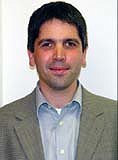
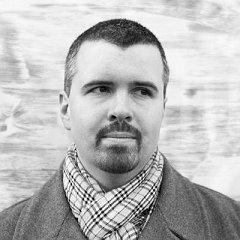
Bernhard Scholz is a Professor at the University of Sydney's School of Computer Science. His research focuses on programming languages, compilers, static analysis, and blockchain technologies, with significant contributions to Datalog optimization and smart contract security. He teaches COMP3109 Programming Languages and Paradigms and leads research in declarative programming frameworks. Scholz's primary research interests include: Development of Soufflé, a Datalog-based program analysis framework Ethereum smart contract security through tools like Ethainter and MadMax Parallel data structures for efficient Datalog evaluation Compiler optimizations for embedded systems and cloud environments His recent publications demonstrate a consistent focus on improving the efficiency and security of declarative programming systems, particularly through innovations in Datalog execution and smart contract analysis. This work bridges theoretical computer science with practical applications in blockchain and distributed systems. Scholz has secured research funding including an ARC Discovery Project on adaptive key-value stores and a Fantom Operations grant for smart contract toolchain development. He collaborates with international researchers on parallel computing and blockchain verification projects.
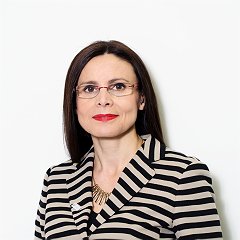
Mira Mezini is a Professor of Computer Science at the Technical University of Darmstadt, Germany, leading the Software Technology Lab. She serves on steering committees, program committees, and editorial boards of top-tier conferences and journals. Her affiliations include the National Research Center for Applied Cybersecurity ATHENE and co-directorship of hessian.AI, the Hessian Center for Artificial Intelligence. Her research focuses on programming systems for reliable distributed software and AI, automated software analysis, and foundational code models. She has developed large-scale module concepts for adaptability, extensible programming languages, and intelligent software development environments that leverage web-based resources to generate programming rules and patterns. Specializes in software engineering Expert in programming language design Contribution to cybersecurity and AI Her recent work emphasizes static analysis, distributed systems, and programming language design, with trends in API misuse detection, decentralized applications, and secure local-first programming. The focus spans from foundational type systems to practical tools enhancing software quality and developer productivity. Scientific Awards Two-time IBM Eclipse Innovation Award recipient (2005, 2006) Google Research Award (2017) Horst Görtz IT Security Award (2014) ERC Advanced Grant (2012) ACM Fellow Dahl-Nygaard Prize (2025) She has held leadership roles including Dean of Computer Science at TU Darmstadt (2013-2014) and Vice President positions (2014-2019). Her service extends to international juries, funding panels, and editorial boards. Labs & Teams Leads the Software Technology Lab at TU Darmstadt, driving research in programming paradigms and tools. Co-directs hessian.AI and contributes to the Excellence Cluster 'Reasonable Artificial Intelligence.'
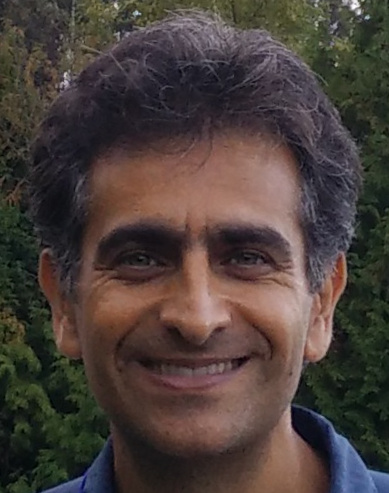
Yannis Smaragdakis is a Professor at the Department of Informatics, University of Athens, with a 35%-time appointment and concurrent affiliation at Dedaub (a blockchain security company). His research spans programming languages, software engineering, static analysis, and distributed systems, with a current focus on Ethereum smart contract security and declarative program analysis. Notable contributions: Doop framework for Datalog-based program analysis, Gigahorse decompiler, Elipmoc for Ethereum contracts, and foundational work on points-to analysis Key research themes: Static analysis (soundness, precision, scalability), memory management algorithms (EELRU), declarative languages, and concurrency models Recent work emphasizes security analysis of blockchain programs, earning distinctions like the SIGPLAN Research Highlight (2019) and Distinguished Paper Awards . He has advised numerous Ph.D. students and received funding from the ERC and HFRI .
Nektarios Kozyris is a Professor of Computer Science and former Dean of the School of Electrical and Computer Engineering at the National Technical University of Athens (NTUA). He holds a PhD and Diploma in Electrical and Computer Engineering from NTUA. His research focuses on parallel and distributed systems, computer architecture, high-performance computing, and cloud infrastructure. He has authored over 180 papers and contributed to major projects like the Okeanos public cloud and Synnefo open-source software. Kozyris has led EU initiatives such as ACTiCLOUD and EuroEXA, and advises startups like Arrikto. He is a senior member of the ACM, IEEE Computer Society, and co-founder of the Greek Free/Open Source Software Society (GFOSS). His academic roles include teaching courses on computer architecture, operating systems, and distributed systems. Awards include Best Paper Awards at IPDPS 2001 and CCGRID 2013, and Intel's recognition for research in transactional memory. He actively contributes to conferences as a PC member and co-chair, and has supervised numerous PhD students in areas like distributed systems and sparse matrix computations. Kozyris pioneered the ~okeanos cloud infrastructure and advanced storage systems like Pithos. His work on GridTorrent and XOROS demonstrates innovation in data management and peer-to-peer systems. Current research includes elastic resource provisioning, quantum machine learning, and FPGA-based acceleration. His labs at NTUA and collaborations with institutions like ICCS and IMIS drive advancements in computing systems and software engineering.
Rachid Guerraoui is a Moroccan-Swiss computer scientist and Full Professor in the School of Computer and Communication Sciences at EPFL. He is renowned for his significant contributions to distributed and concurrent computing, holding the prestigious Chair in Distributed Computing at the Collège de France (2018-19). As an ACM Fellow (2012) and recipient of the Dahl-Nygaard Senior Prize (2024), his work has shaped both theoretical foundations and practical implementations in distributed systems. Guerraoui earned simultaneous Master's degrees in Computer Engineering from École supérieure d'informatique électronique automatique (ESIEA) and in Computer Science from Pierre and Marie Curie University in 1989. He completed his PhD at Université d'Orsay in 1992 under the supervision of Christian Fluhr, with a dissertation titled "Programmation Répartie par Objets: Études et Propositions." Following postdoctoral research at EPFL, he joined the computer science faculty in 1999 after working at HP Labs and MIT. Guerraoui's research spans distributed computing, concurrent systems, transactional memory, and asynchronous algorithms. His work on establishing theoretical foundations of Transactional Memory, including the concept of opacity, has been highly influential. He has also made significant contributions to scalable information dissemination methods, asynchronous distributed computations, and the mathematical abstraction of indulgence. His research bridges theoretical rigor with practical implementations, as evidenced by systems like SwissTM and STMBench7. His publication record shows a clear evolution from theoretical foundations to practical implementations and broader applications. Early work focused on fundamental problems like consensus and renaming, while more recent publications address machine learning applications and public understanding of AI. The consistent thread throughout his career is a focus on making distributed systems more reliable, efficient, and accessible. Guerraoui has received numerous prestigious awards including: ACM Fellow (2012) ERC Advanced Grant Award (2013) Google Focused Award (2014) Middleware Best Paper Award (2014) Middleware 10-Years Best Paper Award Chair in Distributed Computing, Collège de France (2018-19) Dahl-Nygaard Senior Prize (2024) As an academic advisor, Guerraoui has mentored students including El Mahdi El Mahmdi, with whom he co-created the Wandida project - a collection of educational videos on computer science. His research has been supported by significant grants from the European Research Council and Google. Beyond research, Guerraoui actively participates in public discourse, particularly regarding computer science education and technology policy. Guerraoui leads the Distributed Computing Laboratory (DCL) at EPFL, which focuses on advancing the state of the art in distributed systems. The lab's work spans theoretical foundations, practical implementations, and educational outreach, reflecting Guerraoui's holistic approach to computer science research and education.
Derek Dreyer serves as Scientific Director at the Max Planck Institute for Software Systems (MPI-SWS) and holds the position of Honorarprofessor (Honorary Professor) of Computer Science at Saarland University's Saarland Informatics Campus. With a PhD from Carnegie Mellon University, he has established himself as a leading researcher at the intersection of programming language theory and practical software verification. Dreyer's research focuses on developing formal methods that bridge theoretical foundations with real-world systems programming challenges. His work has significantly advanced the theoretical understanding of programming languages, particularly in the areas of type systems, separation logic, and concurrency. He is renowned for his contributions to the formal verification of the Rust programming language, including the influential RustBelt project. His recent publications demonstrate a consistent focus on making formal verification practical for industrial-strength codebases. The research trajectory shows increasing sophistication in handling complex systems properties while maintaining theoretical rigor. His work spans from foundational logical frameworks to applied verification techniques for specific language features and system components. As an academic leader, Dreyer has served as Program Chair for major conferences including POPL and ICFP, and has mentored numerous students and postdocs. He is known for his insightful commentary on academic life, including a widely-read blog post addressing impostor syndrome in research careers. Dreyer leads a vibrant research group at MPI-SWS that collaborates extensively with both academic and industrial partners. His team's work has influenced both theoretical developments in programming languages and practical verification tools used in industry.
Rajiv Gupta is a Distinguished Professor and the Amrik Singh Poonian Professor of Computer Science at the University of California, Riverside (UCR), where he serves as Associate Dean for Academic Personnel in the Bourns College of Engineering (BCOE). He is a member of the RIPLE research group and has co-authored 327 papers with an h-index of 69 and over 16,600 citations. His extensive service includes chairing major conferences such as FCRC 2015, PPoPP 2020, ASPLOS 2011, and PLDI 2008. Professor Gupta's research focuses on Programming, Compiler, Runtime & Architectural Support for Parallel & Distributed Heterogeneous Systems and Software Tools for Monitoring and Managing Runtime Behavior . His work spans graph analytics with scalability and performance, understanding and managing the dynamic behavior of parallel programs, software speculation for irregular parallelism, dynamic program analysis for secure and reliable computing, and compiler optimizations with architectural support. His research has significant applications in high-performance computing, GPU programming, and distributed systems. Analysis of his recent publications reveals a strong focus on graph processing systems, with particular emphasis on evolving and streaming graph analytics. His work addresses critical challenges in memory management for large-scale graph processing, hardware acceleration for graph algorithms, and optimization techniques for concurrent and distributed graph computations. The research demonstrates a progression from foundational compiler and architecture work to increasingly sophisticated systems for handling modern data-intensive computing challenges. Fellow of the ACM (2009) Fellow of the IEEE (2008) Fellow of the AAAS (2011) NSF Presidential Young Investigator Award (1991) UCR Doctoral Dissertation Advisor/Mentor Award (2012) Multiple best paper awards across major conferences Two students won ACM SIGPLAN Outstanding Doctoral Dissertation Award Five advisees received NSF CAREER Award Professor Gupta has supervised 42 PhD students to completion and currently advises several doctoral candidates. His advising success is reflected in his students' achievements, including multiple award-winning dissertations and significant career accomplishments in academia and industry. His research has been supported by numerous grants from NSF, DARPA, and industry partners, enabling sustained investigation into parallel computing systems. The RIPLE research group under his leadership has produced influential work that bridges theoretical foundations with practical system implementations. As the leader of the RIPLE research group at UC Riverside, Professor Gupta oversees a vibrant team focused on innovative approaches to parallel and distributed computing. The group maintains strong collaborations with industry partners and other academic institutions, contributing to the development of next-generation computing systems. Current projects include GRASP (Graph Analytics with Scalability & Performance) and research on understanding and managing the dynamic behavior of parallel programs, reflecting the group's continued focus on cutting-edge computing challenges.
Sam Lindley is a Reader in Programming Language Design and Implementation at the Laboratory for Foundations of Computer Science within the School of Informatics at The University of Edinburgh. He holds a prestigious UKRI Future Leaders Fellowship focused on Effect Handler Oriented Programming. His academic career spans multiple institutions including Heriot-Watt University and Imperial College London. His research interests center on programming language theory and implementation, with specific expertise in type systems, effect handlers, session types, and functional programming. Lindley's work bridges theoretical foundations with practical implementation, particularly in compiler design and language semantics. His research has significant implications for language safety, efficiency, and expressiveness. Lindley's publication record demonstrates consistent contributions to top programming languages venues including PLDI, POPL, ICFP, and OOPSLA. His recent work explores modal effect types, scoped effects, and the application of effect handlers to systems programming and WebAssembly. The trend shows increasing focus on practical applications of theoretical concepts in real-world language implementations. Major Awards: UKRI Future Leaders Fellowship in Effect Handler Oriented Programming Lindley has served in significant leadership roles including ICFP 2023 Program Chair and PLDI 2025 Area Chair. He actively participates in the programming languages community through numerous program committees and workshop organization. His research is conducted within the Laboratory for Foundations of Computer Science, a leading center for theoretical computer science research at Edinburgh.
Umang Mathur is a Presidential Young Professor (Assistant Professor) in the School of Computing at the National University of Singapore (NUS), where he leads the FOCS Lab and is affiliated with PLSE@NUS (Programming Languages and Software Engineering group). He has established himself as a leading researcher in Formal Methods, with significant contributions to concurrency analysis and program verification. Dr. Mathur received his PhD from the University of Illinois at Urbana-Champaign under Prof. Mahesh Viswanathan. Prior to joining NUS, he worked as a Research Scientist at Facebook Inc. and as a Research Fellow at the Simons Institute for the Theory of Computing. His doctoral work was supported by a Google PhD Fellowship. PhD: University of Illinois at Urbana-Champaign Current Position: Presidential Young Professor at NUS School of Computing Previous Positions: Research Scientist at Facebook, Research Fellow at Simons Institute His research spans Formal Methods and Logic with applications to Programming Languages, Software Engineering, and Cyber-Physical Systems. Dr. Mathur specializes in developing algorithmic techniques for analysis of concurrent software and understanding decidability boundaries in verification and synthesis. His work bridges theoretical foundations with practical implementations, making verification techniques more efficient for real-world systems. Analysis of his recent publications reveals a strong focus on practical concurrency analysis, with many papers addressing race detection, deadlock prediction, and memory model verification. His research consistently demonstrates how theoretical computer science can solve practical software engineering challenges, particularly in making verification techniques scalable and efficient for industrial applications. Google PhD Fellowship ESEC/FSE 2018 Distinguished Paper Award ASPLOS 2022 Best Paper Award POPL 2023 ACM SIGPLAN Distinguished Paper Award CPP 2024 Distinguished Paper Award Dr. Mathur actively mentors numerous PhD students, Master's students, and undergraduates through the FOCS Lab. His research group has received support from Google Research grants and other funding sources. He serves on program committees for major conferences including PLDI, POPL, and ASPLOS, and has organized events like PLMW@PLDI. His teaching includes courses on Data Structures and Algorithms, Foundations of Logic in Computer Science, and advanced topics in Programming Languages. As director of the FOCS Lab, Dr. Mathur oversees a vibrant research group focused on foundational aspects of computer science with direct applications to programming languages and software engineering. The lab maintains strong international collaborations and regularly publishes in top-tier venues, reflecting its significant contributions to the field of formal methods and programming languages.
Sidi Mohamed Beillahi is a Lecturer in the Department of Computer Science at the University of Toronto's Faculty of Arts and Science. He teaches courses including Principles of Programming Languages (CSC324H1S) and Algorithms and Data Structures (ECE345H1F). Previously, he served as a Teaching Assistant at both University of Paris and Concordia University for courses ranging from Automata Theory to Hardware Functional Verification. Dr. Beillahi's research focuses on developing formal verification and programming languages techniques to ensure the correctness of software systems, particularly distributed systems, concurrent programs, blockchain, and smart contracts. His work bridges theoretical computer science with practical security applications in decentralized finance. His publication record shows a clear progression from quantum circuit verification during his Master's to blockchain and smart contract security in his doctoral and postdoctoral work. Recent publications demonstrate expertise in authenticated data structures for blockchain storage, flash loan attack analysis, and formal verification of decentralized applications. Scientific Awards: ACM SIGSOFT Distinguished Paper Award (ICSE '24) ICBC Distinguished Paper Award (ICBC '22) Dr. Beillahi has advised multiple research projects in blockchain security and verification, often collaborating with Professor Fan Long and Professor Andreas Veneris at the University of Toronto. His research has been supported by prestigious fellowships including an NSERC Postdoctoral Fellowship and a Mitacs Accelerate Fellowship.
Kunle Olukotun is a Professor of Electrical Engineering and Computer Science at Stanford University's School of Engineering, where he has been faculty since 1991. He directs the Stanford Pervasive Parallelism Lab (PPL) and co-leads the Transactional Coherence and Consistency (TCC) project. His research focuses on computer architecture, parallel programming environments, and scalable parallel systems. Key areas include chip multiprocessors (CMPs), transactional memory systems, domain-specific languages (DSLs) for heterogeneous computing, and hardware-software co-design for machine learning workloads. His work bridges theoretical foundations with practical systems implementation. Notable contributions include the Stanford Hydra research project (one of the first chip multiprocessors with thread-level speculation), founding Afara Websystems (acquired by Sun Microsystems), and developing the Niagara processor architecture. His DSL frameworks like Green-Marl and Spatial enable efficient graph analysis and hardware acceleration. His publications reveal strong trends in parallel systems evolution: from foundational CMP research (2000s) to transactional memory (2004-2010), then DSLs for heterogeneous computing (2010-2015), and currently foundation model systems (2023-2025). Subfield analysis shows consistent focus on hardware-software co-design, sparse computation, and compiler techniques across decades. ACM Fellow (2006) for contributions to multiprocessors on a chip and multi-threaded processor design Best Paper Award at IEEE International Symposium on Workload Characteristics (IISWC '10) for EigenBench Olukotun actively mentors researchers through the Stanford Pervasive Parallelism Lab (PPL), which seeks to proliferate parallelism across application domains. His projects have secured significant industry partnerships, including the acquisition of his startup Afara Websystems by Sun Microsystems. Current research focuses on compiler frameworks for foundation model systems and hardware acceleration for sparse machine learning workloads, supported by collaborations with major tech companies. He leads the Stanford Pervasive Parallelism Lab (PPL), which develops compiler and runtime systems for heterogeneous architectures. The lab's work spans DSLs, hardware acceleration, and parallel programming models, with strong industry ties to companies like NVIDIA and Google. Current initiatives include the Mosaic compiler framework and Stardust architecture for sparse tensor computation.
Erez Petrank is a Professor of Computer Science at the Technion - Israel Institute of Technology, where he holds the Andrew and Erna Viterbi Chair. His academic career spans decades with significant contributions to systems research, particularly in memory management and concurrent programming. He has maintained continuous academic service through leadership roles in major conferences including SPAA'24, ISMM 2023, and PPOPP 2021. His research focuses on concurrent computing, programming languages, and systems with special emphasis on memory management. Additional interests include parallelism, cryptography, data structures, approximation algorithms, and distributed computing. Petrank's work bridges theoretical foundations with practical systems implementation, particularly evident in his persistent memory research and garbage collection innovations. Petrank's publication record shows consistent contributions to ACM SIGPLAN conferences over two decades, with recent work focusing on non-volatile memory systems, lock-free data structures, and memory reclamation techniques. His research demonstrates a clear trajectory from foundational memory management concepts toward modern persistent memory architectures, reflecting adaptability to evolving hardware paradigms while maintaining theoretical rigor. H-index: 41 (Google Scholar) Erdos number: 2 62 co-authors across diverse research collaborations Petrank has mentored numerous researchers through his academic position and conference leadership roles, serving on program committees for major venues including PLDI, PPoPP, and ISMM. His professional service includes executive committee membership in ACM SIGPLAN (2009-2012) and steering committee roles for multiple conferences. He maintains active research collaborations with institutions worldwide, as evidenced by his extensive co-author list spanning theoretical computer science to practical systems implementation. His academic lineage traces back through Oded Goldreich, Shimon Even, and Hao Wang to intellectual giants including Isaac Newton and Galileo Galilei, reflecting deep roots in theoretical computer science and mathematics.
Ilya Sergey is an Associate Professor at the National University of Singapore (NUS) School of Computing, with previous faculty appointments at University College London (2015-2018). His academic career spans multiple prestigious institutions including IMDEA Software Institute (postdoctoral position) and KU Leuven (PhD). His educational background includes a PhD in Computer Science from KU Leuven (2012), an MSc in Mathematics and Computer Science from Saint Petersburg State University (2008), and professional experience as a software engineer at JetBrains prior to academia. Sergey's research focuses on the intersection of programming language theory and practical software verification, with particular emphasis on concurrent systems , smart contracts , and program synthesis . His work bridges theoretical foundations in type theory and separation logic with practical applications in blockchain technology and Rust programming. He has developed novel techniques for verifying heap-manipulating programs, analyzing commutativity in distributed transactions, and synthesizing correct-by-construction code. Analysis of his recent publications reveals a clear trajectory toward practical verification of blockchain systems and concurrent data structures, with increasing focus on Rust programming language applications. His work demonstrates consistent innovation in mechanized reasoning techniques while maintaining relevance to real-world software challenges, particularly in the domains of smart contracts and distributed systems. Sergey maintains an active research group at NUS, as evidenced by his social media references to lab traditions and student collaborations. He frequently participates in major programming languages conferences as both author and committee member, serving in leadership roles including General Chair for ICFP 2025. His research lab follows distinctive traditions, including location-based Mattermost status updates when traveling. Sergey is deeply engaged with the programming languages community through conference organization, mentoring activities, and outreach initiatives such as nature walks for conference attendees.