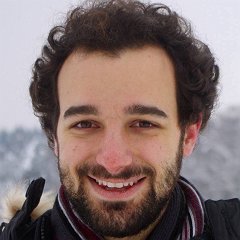
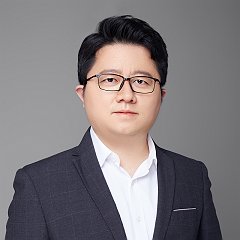
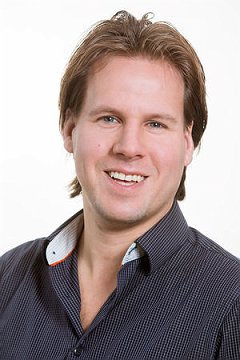
Marco Vassena is a researcher affiliated with CISPA Helmholtz Center for Information Security and Utrecht University , focusing on Information Flow Control , Programming Languages , and Security . He contributes to secure compilation, memory safety, and cryptographic code analysis. His research explores compiler design , speculative execution mitigation , and Wasm security , often involving formal verification and runtime enforcement . Recent work includes eliminating speculative leaks and enforcing memory safety for WebAssembly. Marco has authored publications in conferences like POPL and PriSC , addressing cryptography , secure compilation , and parallel runtime systems . He actively participates in program committees and artifact evaluations.
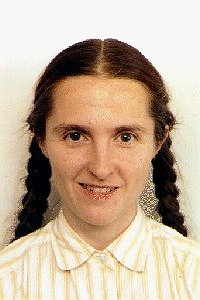
Elsa Gunter is a Research Professor at the Department of Computer Science , University of Illinois at Urbana-Champaign . Her work bridges formal methods , programming languages , and human-computer interaction with a focus on verification and security. Education: Ph.D. in Mathematics, University of Wisconsin-Madison (1987) M.A. in Mathematics, University of Wisconsin-Madison (1981) B.A. in Mathematics, University of Chicago (1979) Her research interests include formal verification , type theory , and secure system design . She has developed tools like VeriF-OPT for parallel program optimization and Tutela for modeling human-computer protection envelopes. Her recent publications focus on concurrent systems , compiler verification , and security protocols . Notable awards include the Most Influential 10-Year Paper Award at RE 2010 and the EASST Best Paper at ETAPS 2001 . She has advised students like Dennis Griffith and Liyi Li , while collaborating on projects such as DSILL (distributed functional language) and PTRANS (program transformation semantics).
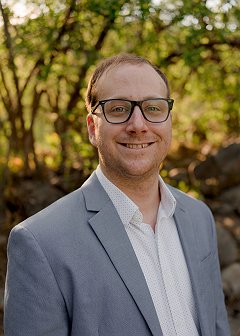
Tyler Sorensen is an Assistant Professor at the University of California, Santa Cruz in the Department of Computer Science and Engineering. He is currently on leave working with the RiSE group at Microsoft Research . His research focuses on concurrency programming, heterogeneous systems (GPUs, accelerators), compilers , and memory consistency models . PhD in Computer Science, Imperial College London (2018) MS in Computer Science, University of Utah (2014) BSc in Computer Science, University of Utah (2012) His work explores programming models for correctness and efficiency on emerging architectures, particularly GPGPU programming. He contributes to standards evolution with the Khronos Group and has developed testing frameworks for GPU memory consistency. His research has significant implications for parallel programming and GPU architecture design . His recent publications analyze GPU memory behavior, concurrency models, and performance portability across different architectures. Key trends include formal verification of memory models, empirical testing frameworks, and performance optimization for heterogeneous systems. Scientific Awards & Recognitions: ISSTA'23 Distinguished Artifact Award ASPLOS'23 Distinguished Paper & Artifact Awards IISWC'19 Best Paper Award PLDI'18 Distinguished Paper Award FSE'17 Distinguished Paper Award ISPASS'20 Best Paper Nomination Tyler advises a diverse group of students working on GPU programming, memory models, and heterogeneous systems. He has served on numerous program committees including ASPLOS 2024, PLDI 2024, and IWOCL 2019, and has been program co-chair for PLDI 2021 and 2022 Student Research Competition.
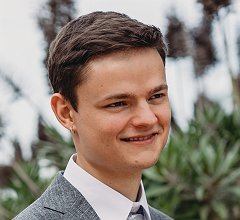
Caleb Stanford is an Assistant Professor at the University of California, Davis, specializing in Programming Languages , Formal Methods , and Systems . He actively contributes to research in Rust security, stream processing, and graph algorithms. Key projects: GID (Guided Incremental Digraphs) for dead state detection, Regex SMT Benchmarks , and Cargo-Scan for Rust crate auditing Conference roles: Committee Member for OOPSLA Review Committee (2025), PLDI Review Committee (2024), POPL Artifact Evaluation Co-Chair (2024) Research focuses on improving software correctness through differential testing , incremental algorithms , and formal verification in systems like Apache Flink and Rust ecosystems.
Vincent Danjean is an associate professor at Grenoble Alpes University , specializing in parallel computing, high-performance computing, and bioinformatics. He earned his PhD in 2004 from École Normale Supérieure de Lyon under the supervision of Raymond Namyst. Research Interests: Vincent's work spans several critical areas in computational science: Parallel and Distributed Systems: Focus on task-based parallelism and hybrid cluster architectures. Performance Analysis: Development of visual frameworks for analyzing parallel applications. Bioinformatics: Application of computational methods to genetic and genomic data analysis. GPU Computing: Efficient scheduling and work stealing strategies for multi-GPU systems. Reproducible Research: Workflows using Git and Org-mode for scientific transparency. Publication Trends: His publications demonstrate a consistent focus on advancing parallel computing techniques, with significant contributions to GPU scheduling, cache-efficient algorithms, and visualization tools. Recent work includes interdisciplinary applications in genomics and cybersecurity protocols. Contact: vincent.danjean@imag.fr
Azalea Raad is a researcher at Imperial College London, actively contributing to the fields of programming languages, formal methods, and concurrency. She has a strong presence in top-tier academic conferences such as POPL, PLDI, SPLASH, and ICFP, serving in key roles including program committee member, session chair, and organizing committee member across multiple tracks and co-located events. Her research interests center on weak memory concurrency, non-volatile memory, program logics, separation logic, concurrent reasoning, and verification . She has pioneered work in incorrectness logic and under-approximate reasoning , enabling scalable bug detection in concurrent and persistent systems. Her work bridges formal theory with practical systems challenges, particularly in memory models and semantics for C/C++ and assembly-level concurrency. The recent publications highlight a strong trend toward formalizing memory persistency , extending memory models , and developing logical frameworks for bug detection . The keywords across her work include concurrency, verification, program logics, and systems correctness, with sub-fields spanning separation logic, incorrectness logic, TSO, RDMA, and crash consistency. Her research increasingly focuses on scalable and compositional methods for analyzing unsafe libraries and binaries. She has contributed to academic service through organizing workshops such as O'Hearn Fest , The Future of Weak Memory , and Incorrectness , and has co-chaired the Student Research Competition at POPL. While no grants are explicitly mentioned, her leadership in multiple conference tracks suggests active involvement in funded research and student mentorship. Azalea Raad leads or contributes to collaborative research teams focused on formal semantics and verification tools, often working within frameworks like Isabelle/HOL and developing new logical systems for program analysis. Her personal website, https://www.SoundAndComplete.org , serves as a hub for her research outputs and projects.
Julien Reygner is a Professor at École des Ponts ParisTech (ENPC) and Deputy Director of CERMICS research laboratory. He holds a concurrent part-time position as Associate Professor at École Polytechnique. His academic background includes a PhD from Sorbonne Université (2011-2014) and a Habilitation thesis (2021). He has held positions as Assistant Professor at ENPC (2018-2023) and CNRS postdoctoral fellow at ENS Lyon (2014-2015). Reygner's research explores stochastic processes, particle systems, and numerical methods with applications in uncertainty quantification. His work bridges probability theory with mathematical analysis and statistical mechanics. Primary domains include Langevin dynamics, mean-field systems, Fokker-Planck equations, and computational statistics. His publications demonstrate consistent focus on stochastic modeling, particle methods, and probabilistic approaches to partial differential equations. Recent work emphasizes convergence analysis, structural reliability, and applications in statistical learning. He actively advises doctoral candidates, including projects on particle systems, Langevin processes, and structural fatigue. Research grants include ANR projects: Conviviality (2023-2028), QuAMProcs (2019-2024), and EFI (2018-2022). He leads CERMICS' Applied Probability team and co-organizes seminars on data transitions and uncertainty quantification.
Olivier Gauwin serves as an Assistant Professor at the University of Bordeaux, holding dual roles in academic instruction and research. He teaches within the Computer Science Department at the University Institute of Technology (IUT), while conducting research as a core member of LaBRI's Numeric and Sustainability team. His institutional presence spans both the IUT campus in Gradignan (office 111) and LaBRI's research facilities in Talence (office 311), reflecting his integrated contributions to theoretical computer science and applied sustainability initiatives. His educational trajectory demonstrates deep theoretical foundations: Habilitation à diriger des recherches (HDR) from University of Bordeaux (2020) titled Transductions: resources and characterization PhD in Computer Science from Université Lille 1 (2009) titled Streaming Tree Automata and XPath , conducted at LIFL/INRIA Master's degree (DEA) from Centre de Recherche en Informatique de Lens (2004) titled Fusion itérée de croyances Gauwin's research program bridges abstract theory and practical applications, with early work establishing fundamental results in automata theory for XML stream processing. His investigations into visibly pushdown automata, nested words, and transducers created novel frameworks for efficient query answering in data streams. Recent years show strategic expansion into sustainability, where he adapts formal methods to environmental modeling challenges. This evolution maintains rigorous theoretical grounding while addressing contemporary computational sustainability needs through the Numeric and Sustainability team. Analysis of his 15 most recent publications reveals consistent methodological excellence across theoretical computer science. Core themes include automata minimization (notably proving NP-completeness for visibly pushdown automata), logical characterizations of transductions, and streamability analysis for nested structures. His work demonstrates exceptional coherence—advancing from foundational XML processing (2008-2013) to resource-optimized transducers (2015-2018) and current sustainability applications, always maintaining focus on computational efficiency and formal verifiability. Dr. Gauwin actively mentors the next generation of computer scientists: Supervised PhD completion of Nathan Lhote (2015-2018) on logical characterizations of transductions Guided PhD research of Félix Baschenis (2014-2017) on transducer minimization and resource optimization His research is institutionally supported through LaBRI (UMR 5800), a joint CNRS-University of Bordeaux laboratory, though specific external grants aren't detailed in available materials. Current work continues through the Numeric and Sustainability team, where he integrates automata theory with environmental computation challenges in collaborative projects spanning theoretical innovation and real-world sustainability applications.
Tobias Wrigstad is a faculty member at Uppsala University, Sweden, with research interests spanning type systems, reference capabilities, programming language design, scripting languages, and concurrent/parallel programming. His work focuses on memory management, concurrency safety, and language extensions for performance optimization. Education: Not explicitly mentioned in provided data Research Interests: Designing type systems to enforce concurrency safety and memory correctness Reference capabilities for manual and automatic memory management Actor model programming and garbage collection co-design Cache locality optimization without program restructuring Formal verification of language designs using Dafny Recent Publications (2025-2015): Explore concurrency safety through region ownership Develop parallel array programming models in Kappa Investigate energy-efficient garbage collection Design capability-based dynamic languages for data race freedom Create formal models for heap invariants and incorrectness Optimize memory allocation via load barriers Conference Involvement: 2025: IWACO Committee Member, OOPSLA Associate Chair 2024: Program Co-Chair for IWACO, Author in VIMPL, MPLR, ISMM 2023: SPLASH Steering Committee, ECOOP PC Member 2022-2015: Active in PLDI, ECOOP, ICFP, and related workshops
Delphine Demange is an Associate Professor in Computer Science at the University of Rennes, affiliated with Inria, CNRS, and IRISA, where she conducts research in the Epicure group. Her work focuses on programming languages, formal semantics, compiler verification, and program verification using interactive theorem provers. Research Interests: Programming Languages Implementation Compiler Verification Formal Semantics Program Verification with Interactive Theorem Provers Static Analysis and Language-Based Security Her recent publications demonstrate a strong trend in mechanized semantics, verified compilation, and correctness of intermediate representations such as SSA forms and dataflow circuits. She frequently employs Coq for formal verification and contributes to foundational aspects of compiler correctness. Scientific Awards: EAPLS Best PhD Dissertation Award 2012 Gilles Kahn PhD Thesis Award 2013 Delphine Demange has held significant service roles, including Program Co-Chair for CC 2021 and General Co-Chair for JFLA 2023 and 2024. She has served on numerous program committees for top conferences such as POPL, PLDI, CPP, ESOP, and OOPSLA, reflecting her active engagement in the programming languages community. She teaches courses in programming, algorithmics, compilation, semantics, and software security at both undergraduate and master's levels. She is part of the Epicure research team at IRISA, focusing on verified systems and programming language foundations.
Shengyi Wang is an Associate Research Scholar in the Department of Computer Science at Princeton University, School of Engineering and Applied Science. He is actively engaged in research on formal verification, programming languages, and mechanized reasoning, with a focus on verifying concurrent systems, C programs, and network packet processing. Research Interests: His work centers on foundational and compositional verification of low-level systems using interactive theorem proving. Key areas include separation logic, concurrency, data structure invariants, and certified systems programming. He applies these to real-world challenges in systems security and network correctness. Recent Research Trends: His recent publications (2020–2024) show a strong trajectory in verifying complex systems such as concurrent C programs, P4-based packet processors, and enclave filesystems. The work consistently uses Coq and mechanized proofs to ensure correctness, emphasizing scalability and compositional techniques. Scientific Awards: No awards or fellowships are mentioned in the provided text. Advising and Grants: No formal students or advisees are listed. No grants or funding sources are explicitly mentioned. Labs and Teams: While not explicitly stated, his collaborations with researchers like Andrew W. Appel, Lennart Beringer, and William Mansky suggest involvement in Princeton’s formal methods and systems verification research group, likely associated with the Department of Computer Science.
Robbert Krebbers is an Associate Professor in the Department of Software Science at Radboud University Nijmegen, Netherlands. His research focuses on advancing program verification techniques for complex programming paradigms such as concurrency, higher-order functions, and modular code, with applications to systems languages like C, Rust, and Scala. He develops rigorous mathematical foundations and practical verification tools, primarily using the Coq proof assistant. His most significant research contribution is as co-designer and co-leader of Iris , a highly influential framework for concurrent separation logic in Coq. Iris has been widely adopted in verification projects worldwide. Before returning to Radboud, he served as an Assistant Professor at Delft University of Technology and completed a postdoctoral fellowship at Aarhus University. He earned his PhD cum laude from Radboud University between 2011 and 2015. His research interests include: Semantics Separation logic Theorem proving Coq Program verification Concurrent and higher-order programming His recent publications (2020–2025) show a consistent focus on mechanized verification, linearizability, session types, deadlock freedom, and foundational enhancements to Iris and separation logic. These works appear in top-tier venues like POPL, PLDI, ICFP, and OOPSLA, with several receiving distinguished paper or artifact awards. Notable scientific awards include: POPL 2023 Distinguished Paper Award (DimSum) POPL 2022 Distinguished Paper Award (Simuliris) PLDI 2021 Distinguished Paper and Artifact Awards (RefinedC) CPP 2021 Distinguished Paper Award (Machine-Checked Semantic Session Typing) ECOOP 2017 Distinguished Paper Award 2023 Alonzo Church Award (as part of Iris team) He has advised PhD students such as Ike Mulder and Jules Jacobs. He actively contributes to the academic community as a program committee member, steering committee member, and organizer for major conferences including POPL, PLDI, ICFP, and CPP. His work is supported by major grants such as ERC Consolidator Grant (RustBelt) and Villum Investigator Grant (CPV). He is a core member of the Logic and Semantics Group and the Iris research project, which involves collaborations across institutions globally. His personal website is https://robbertkrebbers.nl .
Fabrice MUHLENBACH is a Lecturer in Computer Science at Jean Monnet University of Saint-Étienne, where he has been working since September 2003. He conducts his research within the Hubert Curien Laboratory (UMR CNRS 5516), specifically as a member of the Connected Intelligence research team. His academic background is multidisciplinary, combining computer science with cognitive psychology and cognitive sciences. MUHLENBACH's research focuses on artificial intelligence, particularly in improving recommendation processes from intelligent systems. His work addresses ethical considerations in AI and explores ways to escape the "filter bubbles" commonly encountered in recommendation systems. He has developed innovative approaches to recommendation systems that consider complementary cultural forms when users become saturated with similar content. His research also investigates the potential usefulness of knowledge from scientific disciplines outside one's expertise. His publications demonstrate expertise in data mining, text mining, recommendation systems, and AI ethics. His work spans from theoretical foundations to practical applications, with notable contributions in clustering algorithms, semantic search, and health informatics. His research has practical implications, as evidenced by the industrial patent filed for a method of automatic multimedia content selection. Best Paper Award at ADMA 2017 conference Patent FR3046269 for "Method for automatic selection of multimedia content in a database" (2017) Contributions to Encyclopedia of Social Network Analysis and Mining (2014, 2017) MUHLENBACH has supervised doctoral theses in recommendation systems and data mining, and has been actively involved in teaching various computer science subjects including data analysis, machine learning, and computer ethics. His work bridges technical aspects of AI with human-centered considerations, reflecting his background in both computer science and cognitive psychology.
Andrei Popescu is a Senior Lecturer in the Department of Computer Science at the University of Sheffield, specializing in formal verification and proof assistants. Previously, he held faculty positions at Middlesex University and TU Munich. University of Sheffield (2020–present) Middlesex University (2014–2020) TU Munich (2010–2020) His research focuses on proof assistants (Isabelle/HOL), inductive/coinductive reasoning, syntax with bindings, and information flow security. Key projects include CoCon (verified conference system) and CoSMeDis (confidentiality-verified social media). Recent publications address Gödel's incompleteness theorems, modular (co)datatypes, and security verification. Awards include POPL Distinguished Paper Awards (2023–2025) and the RS 3 Best Paper Award (2012–2013). He teaches courses on software/hardware verification and previously taught decision support systems, web development, and verification techniques. Andrei is actively involved in conference organization and program committees, including POPL, ITP, and CSF.
Jean-Michel Couvreur is a Full Professor at the Université d'Orléans, affiliated with the LIFO laboratory (Laboratoire d'Informatique Fondamentale d'Orléans). He leads the LMV research team (Languages, Models and Verification) and co-leads the PRV team. His research focuses on formal verification, Petri nets, model checking, and concurrency theory. He holds a HDR (Habilitation à Diriger des Recherches) from 2004. His current research involves projects such as the MORSE initiative for embedded systems verification and the FORWAL GDR group, which explores formalisms for verification and validation of security protocols, web services, and semi-structured documents. His work often combines automata theory, tree languages, and symbolic computation. Teaching responsibilities include the 'Pratique de la Programmation Objet' course for Mathematics undergraduates (Level L3). His contributions span over 30 publications since 1988, addressing topics like Petri net analysis, temporal logic model checking, and decision diagram techniques.