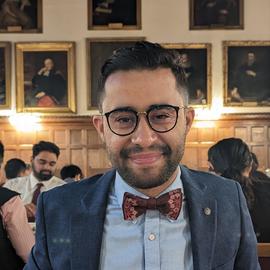
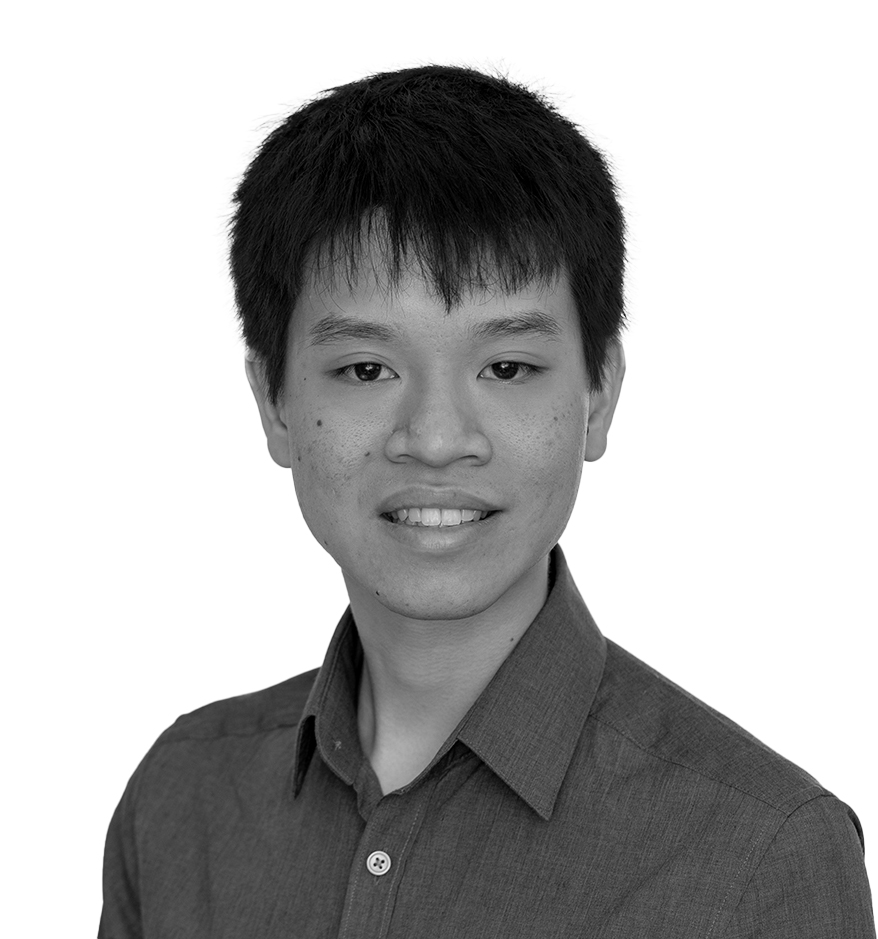
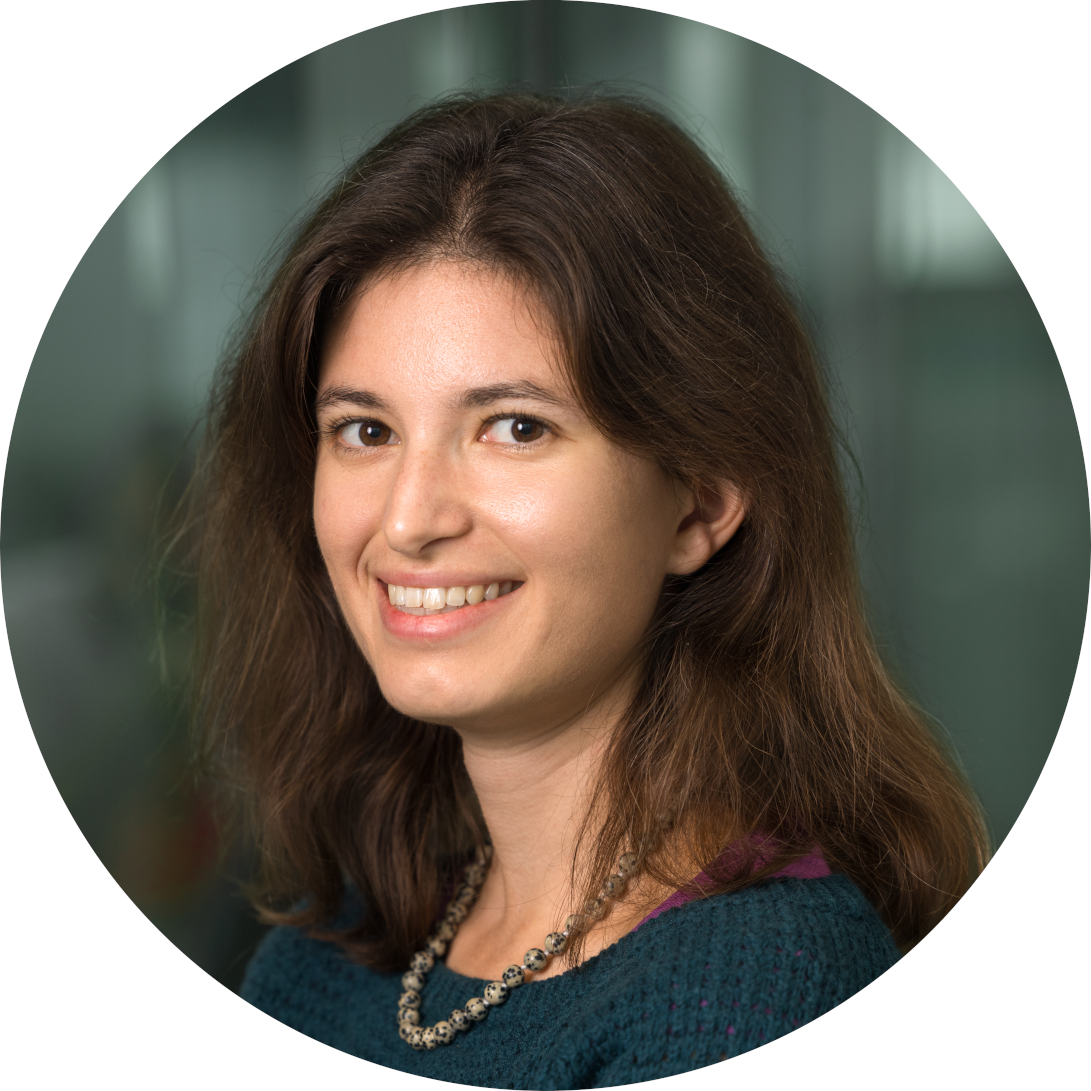
Matilde Onofri serves as a Doctoral Assistant at the Laboratory of Computational Molecular Design (LCOM) within the Institute of Chemical Sciences and Engineering at the School of Basic Sciences, Swiss Federal Institute of Technology Lausanne (EPFL). She concurrently pursues her doctoral studies in the Chemistry and Chemical Engineering Doctoral Program. Her research spans computational approaches to molecular systems with core interests in: Computational Chemistry Molecular Design Chemical Engineering Materials Science Theoretical Chemistry This work emphasizes predictive modeling and simulation techniques for molecular behavior and material properties. She operates within the Laboratory of Computational Molecular Design (LCOM), a specialized research unit focusing on algorithm development and computational frameworks for chemical applications.
Nency Patricio Domingues is a Doctoral Assistant at the Laboratory of Molecular Simulation (LSMO) within the Institute of Chemical Sciences and Engineering (ISIC) at the School of Basic Sciences, École polytechnique fédérale de Lausanne (EPFL), located at the EPFL Valais Wallis campus in Sion, Switzerland. She is concurrently a doctoral student in the Doctoral Program in Chemistry and Chemical Engineering (EDCH) under the EPFL Doctoral School (EDOC). Her research is centered in the field of molecular simulation, a discipline that combines principles from chemistry, chemical engineering, and computational science to model molecular systems. Given her affiliation with LSMO, her work likely involves computational modeling of materials, catalysis, or energy-related chemical processes. While no specific publications or scientific awards have been listed in the available text, her role as a Doctoral Assistant indicates active participation in research projects, academic training, and potential contributions to peer-reviewed scientific literature in the coming years. She is not listed as a former or retired staff member, and there is no indication that she is part-time. Her primary professional email is publicly available through the EPFL directory.
Xiaoqi Zhang serves as a Doctoral Assistant at the Laboratory of Molecular Simulation (LSMO) within the Institute of Chemical Sciences and Engineering (ISIC), School of Basic Sciences at the Swiss Federal Institute of Technology in Lausanne (EPFL). Concurrently enrolled in EPFL's Doctoral Program in Chemistry and Chemical Engineering, Zhang operates from the EPFL Valais Wallis campus in Sion. Research concentrates on Molecular Simulation methodologies applied to Computational Chemistry and Materials Science , with emphasis on theoretical frameworks in chemical engineering systems. The work advances predictive modeling of molecular behavior through high-performance computing techniques within LSMO's research ecosystem. Contact: xiaoqi.zhang@epfl.ch | Office: I17 4 F3 | Phone: +41 21 693 84 40 | ORCID: 0000-0002-6507-6490
Maxence Grangeot serves as a Doctoral Assistant at two research laboratories within the Institute of Architecture at EPFL's School of Architecture, Civil and Environmental Engineering: the Structural Exploration Lab (SXL) in Fribourg and the Laboratory for Creative Computation (CRCL) in Lausanne. He is concurrently enrolled in the Doctoral Program in Architecture and Sciences of the City (EDAR). His research centers on sustainable construction methodologies, with primary focus on digital upcycling of concrete rubble. His doctoral thesis develops innovative processes and physical demonstrators for constructing walls using large concrete rubble pieces, addressing critical waste reduction challenges in the building industry. This work integrates computational design with material science to advance circular economy principles in architecture. Grangeot contributes to both the Structural Exploration Lab 's investigations into sustainable material systems and the Laboratory for Creative Computation 's exploration of digital fabrication techniques. His cross-laboratory engagement demonstrates a commitment to bridging theoretical research with practical architectural applications through computational approaches to material reuse.
Roger Sauser is a Lecturer at the École Polytechnique Fédérale de Lausanne (EPFL), holding dual appointments in the College of Management of Technology (CMS) and the School of Basic Sciences (SB). Within CMS, he delivers foundational mathematics and physics instruction for the preparatory year program, covering Newtonian mechanics and numerical methods in Python. Concurrently in SB's Institute of Physics (SPH), he teaches physics courses to management and architecture students, emphasizing real-world modeling applications and vector calculus. His research expertise centers on cardiovascular biophysics, with focus areas including calcium signaling in vascular smooth muscle, mechanical properties of migrating cells, and mathematical modeling of vasomotion. Key interests span vascular dynamics, intercellular communication mechanisms, and the emergent properties of electrically coupled cellular networks. His work integrates experimental physiology with computational approaches to unravel how mechanical stresses and endothelial interactions regulate blood vessel function. Analysis of his 2004-2010 publication record reveals a cohesive research trajectory in arterial biophysics. He pioneered investigations into calcium wave propagation in arterial strips, force transmission mechanisms in cellular migration, and the role of gap junctions in vascular coordination. His studies consistently employ mathematical modeling to explore arterial wall stress effects, synchronization phenomena in smooth muscle populations, and endothelial-smooth muscle signaling pathways, contributing to fundamental understanding of blood flow regulation. No documented scientific awards or major research grants were identified. Similarly, there is no public information regarding doctoral student supervision or leadership of dedicated research laboratories. His collaborative research was conducted within Jean-Jacques Meister's biophysics group at EPFL, working closely with co-authors including M. Koenigsberger, D. Seppey, and M. Lamboley. While not leading an independent laboratory, his contributions form part of broader interdisciplinary efforts to model biological systems at cellular and tissue levels, with particular emphasis on vascular physiology and mechanobiology.
Prof. Bryan Alexander Ford is an Associate Professor at École Polytechnique Fédérale de Lausanne (EPFL), where he leads the Decentralized and Distributed Systems (DEDIS) lab within the School of Computer and Communication Sciences, Department of Computer Science. He also holds teaching positions in SIN (Systems and Networking) and SSC (Security and Software Composition) at EPFL, and serves on the Open Science Strategic Committee. His academic journey includes faculty positions at Yale University following his Ph.D. at MIT. Dr. Ford's research spans multiple domains with a primary focus on building secure decentralized systems. His work encompasses privacy and anonymous communication systems like Dissent, systems security, blockchain technology, and novel approaches to operating systems for deterministic parallel computing such as Determinator. He has made seminal contributions to parsing theory through his development of Parsing Expression Grammars (PEGs) and packrat parsing algorithms, which provide linear-time parsing with backtracking capabilities. His research also extends to networking protocols including the Unmanaged Internet Architecture and Structured Stream Transport, as well as virtualization technologies like VX32. Ford's publication record demonstrates a remarkable evolution from foundational work in parsing and programming languages to cutting-edge research in decentralized systems and security. His early career focused on operating systems theory, parsing algorithms, and language design, culminating in influential papers on packrat parsing and PEGs. More recently, his work has shifted toward practical decentralized systems, blockchain technology, and security architectures, while maintaining connections to programming language theory through projects like Matchertext and MinML. This trajectory reflects both continuity in his interest in system architecture and a strategic pivot toward emerging challenges in decentralized computing. As an educator and mentor, Ford advises multiple PhD students at EPFL through the EDIC program and welcomes prospective students and researchers to join his lab. His teaching includes courses on decentralized systems engineering and technologies for democratic society, reflecting his commitment to both technical rigor and societal impact of computing technologies.
Paolo Arru is a Lecturer at the University of Applied Sciences and Arts of Southern Switzerland (SUPSI), Department of Education and Learning, operating within the Competence Centre for Education, Learning and Teaching (EAI). His institutional roles include Head of Educational Sciences 1 and 4 modules, plus Master's Thesis supervision. His research centers on two interconnected domains: digital citizenship in educational ecosystems and teacher well-being dynamics. The Ensemble project (2023-2025) pioneers a participatory democracy platform merging LiveSmart-Campus proximity tools with Decidim's open-source infrastructure, enabling community-driven university governance. Concurrently, his empathy research investigates how teacher emotional engagement affects burnout while developing mitigation strategies. Current projects reveal strong institutional support with internal SUPSI funding. The Ensemble platform has attracted external interest from Lugano Living Lab for urban adaptation, indicating real-world policy impact. His publications demonstrate consistent focus on participatory methodologies across educational and civic contexts. Arru maintains active cross-divisional collaborations at SUPSI, particularly with the Institute of Information Systems and Networking (ISIN) and Competence Centre for Innovation and Research on Education Systems (CIRSE). His work bridges theoretical educational frameworks with practical digital tools for community empowerment.
Praveen Nellissery serves as Lecturer for the Master's Program in International Project Management at Kalaidos University of Applied Sciences Switzerland since February 2018, concurrently operating as CEO and Senior Consultant at HELVETIX Consulting GmbH where he specializes in payment transaction optimization, ERP automation, and outsourcing solutions for financial institutions. His educational foundation includes a Bachelor's degree in Finance & Banking from Basel University of Applied Sciences (2005-2009) with minors in Human Resource Management, Corporate Treasury & Cash Management, Insurance Management, Applied Finance, Microeconomics of Competitiveness (Harvard Business School), and Intercultural Management, supplemented by 2011 AVALOQ certification covering Money Market, FX instruments, and Settlement systems. Research interests center on the convergence of financial operations and intelligent automation, particularly Robotic Process Automation (RPA) implementation in payment systems (ISO 20022/SWIFT), digital transformation strategies, and ERP-driven process optimization within banking and insurance sectors. His expertise bridges theoretical project management frameworks with practical payment infrastructure modernization. Analysis of his sole documented publication—the 2021 RPA blog post—reveals emphasis on real-world automation adoption in financial services, highlighting trends toward cognitive robotics in transaction processing and future applications for workflow intelligence in cross-border payments. No scientific awards or honors were documented in the available profile information. Professional activities indicate extensive industry consulting rather than academic advising, with no references to student supervision, research grants, or dedicated laboratory facilities. His current work focuses on client engagements for payment system harmonization and digital transformation initiatives across Swiss financial institutions.
Arkaprava Basu serves as a Visiting Professor at École Polytechnique Fédérale de Lausanne (EPFL) within the Parallel Systems Architecture Laboratory (PARSA) , part of the Institute of Electrical Engineering under the School of Computer and Communication Sciences. Concurrently, he holds a Lecturer position in the SIN - Teaching unit (School of Computer and Communication Sciences). His research focuses on computer architecture and parallel computing systems , with expertise in high-performance and distributed computing environments. His work aligns with PARSA's mission to advance parallel systems design and implementation. Basu maintains his primary office at INJ 237 on EPFL's campus and contributes to academic instruction through SIN-ENS, EPFL's computer science teaching division. His professional activities are anchored in EPFL's robust computer science ecosystem, leveraging resources from both PARSA ( https://parsa.epfl.ch/ ) and SIN ( https://sin.epfl.ch ). His academic background includes formal education in Computer Science , though specific degree details are not publicly enumerated in available institutional records. Basu's dual appointments reflect his integration into both research and pedagogical frameworks at one of Europe's leading technical universities.
Filippo Maria Bianchi is an Associate Professor at the Department of Mathematics and Statistics of UiT The Arctic University of Norway , with a concurrent senior researcher position at NORCE Norwegian Research Centre . He co-founded the Northernmost Graph Machine Learning Group and serves as vice-chair of the IEEE Task Force on Learning for Structured Data , while being a member of the ELLIS society , the Graph Machine Learning Group in Lugano , and the IEEE Task Force on Reservoir Computing . Education: Bachelor's and Master's in Computer Engineering and Artificial Intelligence & Robotics from Sapienza University of Rome, PhD in Machine Learning (2016, Sapienza University of Rome). Positions: Postdoc at UiT (2016-2018), Scientific Collaborator at Università della Svizzera Italiana (2017), Research Scientist at NORCE (2018-2025), Visiting Researcher at University of Pisa (2019), Visiting Professor at Politecnico di Milano (2024-2025). Research: Focuses on machine learning for time series and graphs, with applications in energy analytics and remote sensing. Key methodologies include reservoir computing, spatio-temporal modeling, and graph neural networks. Collaborations: Active in international networks like IEEE and ELLIS, with strong ties to institutions in Italy, Canada, Switzerland, and Norway.
Adel Bibi is a prominent Research Fellow at the University of Oxford 's Department of Engineering Science, with concurrent roles at Kellogg College and the ELLIS Society . He serves as R&D Distinguished Advisor for Softserve , specializing in AI Safety through robustness certification and optimization. Academic Background: PhD in Electrical Engineering (4.0/4.0), KAUST (2020) MSc in Electrical Engineering (4.0/4.0), KAUST (2016) BSc in Electrical Engineering (3.99/4.0), Kuwait University (2014) His research focuses on Trustworthy AI through three main pillars: AI Safety : Specializing in robustness certification, alignment, and security of foundational models in vision/language Continual Learning : Developing efficient frameworks for model updates and domain adaptation Optimization : Creating novel approaches for training stability and resource allocation Recent publications demonstrate expertise in large language model security , interpretable architectures , and robust training , with a particular focus on mitigating risks in agentic systems. Scientific Recognition: Systemic AI Safety Grant (~$250,000) - UK AI Security Institute (2025) Google Gemma 2 Academic Program - $10,000 GCP Credit (2024) Amazon Research Award - Machine Learning Algorithms & Theory (2022) 4 Best Paper Awards (NeurIPS23, ICML23, CVPR22, 2018 Optimization & Big Data) Notable Area Chair Award - NeurIPS23 (top 8.1%) He actively mentors through: 13 PhD/MSc students at Oxford (including 4 graduated PhDs) 3 Unofficial PhD Mentees at KAUST/MIT Supervision of 6 Graduated MSc Students
Ola Engkvist is Professor in Machine Learning and AI for molecular design at Chalmers University of Technology (since 2021) and concurrently serves as Senior Director, Head of Molecular AI in Discovery Sciences R&D at AstraZeneca (since 2004). He holds a PhD in Computational Chemistry from Lund University and conducted postdoctoral research at the University of Cambridge and Czech Academy of Sciences. His research focuses on transformative applications of artificial intelligence and machine learning in drug discovery, particularly leveraging generative AI to accelerate chemical space exploration, predict molecular properties, and optimize synthetic routes. He leads computational chemistry teams developing AI solutions for biopharmaceutical R&D. Professional recognition includes: Trustee appointment at Cambridge Crystallographic Data Centre (2021) Keynote speaker at ELRIG Drug Discovery 2018 He leads AstraZeneca's Discovery Sciences Computational Chemistry team, collaborating with external experts to advance AI-driven drug design innovation.
Thanh Phong Lê is a Researcher and MRI Operational Manager at the Center for Biomedical Imaging (CIBM) within the Swiss Federal Institute of Technology Lausanne (EPFL), specifically in the Pre-Clinical Imaging EPFL Metabolic Imaging Section. He joined CIBM in August 2024 and has served as the 9.4T MRI Operational Manager since April 2025, concurrently holding the position of MR safety officer. His educational background: Bachelor of Science in Physics, EPFL Master of Science in Physics, EPFL (2017), specializing in solid-state, biological, and computational physics with a thesis on mitigating RF artefacts in EEG-fMRI under Dr. Joao Jorge and Dr. Ozlem Ipek Doctor of Philosophy (2023), HES-SO Genève and EPFL, developing a theranostic approach for ischemic stroke using hyperpolarized metabolic imaging under Prof. Jean-Noël Hyacinthe and Prof. Rolf Gruetter Dr. Lê's research centers on advancing MR hardware, RF coil design, and computational methods to enhance state-of-the-art MRI and MRSI capabilities. His expertise particularly emphasizes hyperpolarized metabolic imaging via dynamic nuclear polarization (DNP), where he demonstrated the biomarker potential of hyperpolarized lactate and pyruvate for ischemic stroke while optimizing DNP methodology and metabolic modeling in preclinical settings. As a core member of CIBM's Pre-Clinical Imaging team, he manages high-field MRI operations and safety protocols, directly supporting metabolic imaging research at EPFL's Lausanne campus.
Larissa Fritsch is an adjunct researcher at the University of Zurich, specifically within the URPP Human Reproduction Reloaded (H2R Data Centre), while concurrently completing her PhD in Sociology at the institution. Her academic foundation includes advanced training in both sociological theory and biological sciences. Her educational background encompasses: Master of Arts in Sociology with Minor Biology, University of Zurich (2019-2022) Bachelor of Arts in Sociology with Minor Biology, University of Zurich (2015-2019) Research interests focus on social determinants of life course trajectories, particularly analyzing how legal recognition and medical access shape reproductive aspirations within LGBT+ communities. This work bridges sociological frameworks with health policy analysis, examining institutional barriers and societal influences on family formation decisions. As a contributor to the URPP Human Reproduction Reloaded initiative, she participates in interdisciplinary data-driven research through the H2R Data Centre, which integrates perspectives from social sciences, medicine, and computational analytics to study contemporary reproduction dynamics.
Sokratis Anagnostopoulos serves as a Doctoral Assistant at the Hemodynamics and Cardiovascular Technology Laboratory (LHTC) within the Institute of Bioengineering, School of Engineering, École Polytechnique Fédérale de Lausanne (EPFL), while concurrently pursuing doctoral studies in the Mechanics program. His dual role bridges academic research and technical application in cardiovascular systems. His research integrates cardiovascular engineering, computational hemodynamics, and machine learning to develop diagnostic models for arterial waveform analysis and pressure decay phenomena. Key focuses include physics-informed neural networks for fluid dynamics simulation, cardiac output estimation algorithms, and biomedical applications like tracheomalacia correction using hydrogels, demonstrating interdisciplinary innovation across medical and engineering domains. Publication trends (2019-2025) reveal a strong trajectory in machine learning-driven cardiovascular modeling, with recent work emphasizing physics-informed neural networks for hemodynamic diagnostics and renewable energy optimization. Cross-cutting themes include in silico population modeling, diastolic pressure decay analysis, and multi-fidelity transfer learning for engineering systems. No scientific awards were documented in available sources. No student advisement or grant information was specified in the provided materials. He operates within EPFL's Hemodynamics and Cardiovascular Technology Laboratory (LHTC), contributing to the Institute of Bioengineering's mission of advancing cardiovascular technology through computational and experimental approaches.