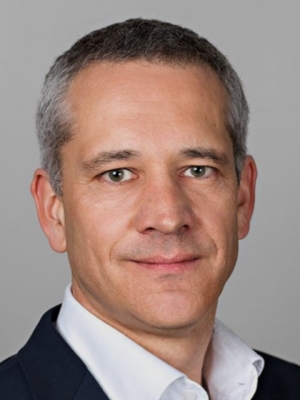
Dr. Stefan Frei serves as a Lecturer in the Department of Computer Science at ETH Zurich, where he teaches Cyber Security courses while concurrently working for SDX Security. With over 20 years of professional experience spanning offensive and defensive cybersecurity operations, he operates at the critical intersection of technology, society, and economic systems. His research expertise encompasses comprehensive cybersecurity domains including: Penetration Testing methodologies and real-world attack simulations Enterprise Security Architecture design and implementation Advanced Threat Modelling techniques for emerging risks Security Research focused on predictive threat analysis Professional trajectory includes significant roles at major industry organizations: Accenture Security Swisscom NSS Labs Secunia ISS X-Force Prestigious recognition includes: ETH medal for excellent research (2009) Dr. Frei maintains an active industry presence while contributing academic expertise in explaining and forecasting evolving cyber threats and countermeasures.
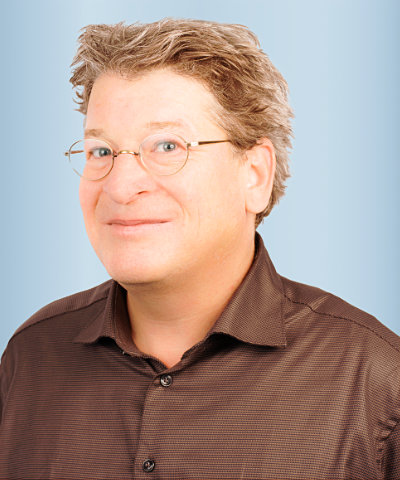
Prof. Ralf Jung is an Assistant Professor at ETH Zürich's Department of Computer Science, leading the Programming Language Foundations Lab under the Institute for Programming Languages and Systems. His work focuses on formal verification of programming languages, particularly Rust and Iris. Previously, he earned his PhD at Saarland University and MPI-SWS, advised by Derek Dreyer, followed by a postdoc at MIT CSAIL's PDOS group. Research Interests: Formal foundations of Rust, including tools like Miri for detecting undefined behavior and MiniRust for precise specification. Iris logical framework for modular verification of programming languages at scale. Concurrent and distributed systems verification using separation logic. Advising & Labs: He leads the Programming Language Foundations Lab and is hiring postdocs. His work integrates theoretical rigor with practical tooling for real-world language verification challenges. Labs/Teams: Programming Language Foundations Lab at ETH Zürich, collaborating with the Rust language team and global research community.
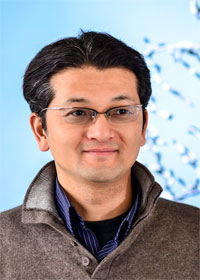
Dr. Kari Kostiainen is a Lecturer at the Department of Computer Science, ETH Zürich. His affiliation includes the Institute for Information Security (Institut f. Informationssicherheit) and he is associated with the Security of Wireless Networks course in the Autumn Semester 2025. His research focuses on cybersecurity, blockchain technology, privacy-preserving systems, and trusted execution environments. Kari's work addresses challenges in phishing detection, cryptocurrency regulation, and secure communication protocols. Key research interests include: Phishing prevention and organizational cybersecurity Blockchain scalability and privacy in digital currencies Trusted execution environments (TEEs) and enclave security Privacy-preserving technologies for decentralized systems Secure access control mechanisms and user-friendly security setups His recent publications emphasize advancements in CBDC design, censorship-resistant payment systems, and lightweight blockchain client privacy. Notable contributions include Platypus (privacy-preserving CBDC framework) and Tee-based mining pool optimizations. Dr. Kari Kostiainen can be contacted at kari.kostiainen@inf.ethz.ch . His office is located at CNB F 103.2, ETH Zürich.
Niklas Werner is a Lecturer in Economics at the University of Westminster (since October 2022) and concurrently pursues a Doctorate in Geophysics at ETH Zürich's Department of Environmental Systems Science (D-EAPS). His academic journey includes a PhD in Economics from Loughborough University (2019–2022), an MA in International Business from Shanghai University of Finance and Economics (2017–2019), an MSc in Investment and Finance from Queen Mary University of London (2017–2018), and a BA in Business Administration from Shanghai University of Finance and Economics (2013–2016). Research interests span Economics and adjacent fields, including econometrics, development economics, and climate economics. While his doctoral work at ETH Zürich focuses on geophysical modeling and climate dynamics, his role at the University of Westminster emphasizes economic theory and policy. Recent publications highlight interdisciplinary work in geophysics and glaciology, addressing topics like paleogeographic reconstructions, mantle convection modeling, and glacial dynamics. These studies contribute to understanding climate evolution and environmental processes across timescales. No scientific awards have been listed in the provided materials. His doctoral research at ETH Zürich is centered at the Institut für Geophysik, with affiliations in both academic and applied research contexts.
Gabriel Aeppli is Full Professor at ETH Zurich's Department of Physics and Professor of Physics at EPFL, concurrently serving as Head of the Photon Science Division at Paul Scherrer Institut (PSI). He oversees 300+ staff and major facilities including SwissFEL and Swiss Light Source, managing a CHF 350M annual budget. His MIT education includes: BSc in Mathematics & Electrical Engineering MSc in Electrical Engineering PhD in Electrical Engineering His research integrates nanotechnology, photon science, and quantum engineering to address biomedical diagnostics and quantum information processing. Key projects develop optical/microwave tools for drug-target binding assays and THz-controlled quantum systems in silicon. Research emphasizes specificity, quantitative precision, and scalable implementations for practical applications. Recent publications (2016-2019) demonstrate cross-disciplinary innovation in non-destructive imaging, quantum state control, viral detection lasers, and nanomaterial interfaces, bridging physics, engineering and biomedicine. Major scientific honors include: Oliver Buckley Prize (APS) Neel Medal/IUPAP Magnetism Prize Royal Society Fellowship National Academy of Sciences membership He directs PSI's Technology Transfer initiatives and co-founded London Centre for Nanotechnology. Institutional roles encompass ETH Domain data science coordination and senior recruitment at PSI.
Natasha Sharygina is a Full Professor of Informatics at the University of Lugano (USI) in Switzerland. She leads the USI Formal Verification and Security group, focusing on improving software and hardware verification through formal methods like model checking and SAT/SMT techniques. Her research emphasizes applying these methods to computer security, electronic design, and program analysis. Education: PhD in Informatics from The University of Texas at Austin (2002). Research Interests: Her work spans formal verification, model checking, SMT-based solvers, and security analysis. She develops theoretical frameworks and practical tools for verifying large-scale systems, with applications in safety-critical and distributed computing environments. Funding & Awards: Her research has been supported by grants from the Swiss National Science Foundation, EU STReP/COST projects, Hasler Foundation, and TASSO Career Award. She has been recognized with the ACM Recognition of Service Award and CMU Technical Excellence Awards. Grants & Projects: Key initiatives include 'Beyond Symbolic Model Checking through Deep Modelling' (2019–2023), EU-funded 'Rich-Model Toolkit', and Swiss TASSO Career Award (2005–2010). She has led efforts in parallel SMT solving and runtime verification. Labs & Teams: Director of the USI Formal Verification and Security Lab, which develops tools like Golem (CHC solver) and OpenSMT (SMT solver). Collaborates globally on projects like SAFARI and FunFrog for program verification.
Andrea Fedrigucci is a Doctoral Assistant at the Swiss Federal Institute of Technology in Lausanne (EPFL), holding dual appointments in the School of Basic Sciences (Institute of Physics of Complex Systems, Theory group) and School of Engineering (Laboratory of theory and simulation of materials). He is concurrently enrolled in EPFL's Doctoral Program in Materials Science and Engineering. His research integrates Materials Science, Theoretical Physics, and Complex Systems through computational modeling and simulation techniques. Key focus areas include theoretical frameworks for material behavior and multiscale analysis of complex physical phenomena, bridging fundamental physics with engineering applications. As a Researcher, Fedrigucci contributes to both theoretical development and practical implementation within interdisciplinary teams. His work supports EPFL's materials science initiatives through collaborative projects spanning quantum simulations to macroscopic material properties.
Dimitra Tatli is a Doctoral Assistant at the Embedded Systems Laboratory (ESL) , affiliated with the School of Engineering at Swiss Federal Institute of Technology Lausanne (EPFL) . She is also concurrently a student in the Doctoral Program in Electrical Engineering at EPFL. Educational Affiliation: Doctoral Program in Electrical Engineering, EPFL Research Interests: Her work focuses on Embedded Systems , integrating principles of Electrical Engineering and Computer Science . She contributes to Systems Engineering and Microelectronics through her research activities.
Danick Lamoureux is a Researcher (Doctoral Assistant) at the Flexible Structures Laboratory (FLEXLAB) within the School of Engineering (STI) at EPFL. He is concurrently enrolled in the Doctoral Program in Mechanics under the EDME doctoral school. His affiliation path is EPFL > STI > IGM (Institut de Génie Mécanique) > FLEXLAB. His role involves research activities in mechanical engineering and related disciplines. Contact information includes danick.lamoureux@epfl.ch and an office at MED 0 1526 in Lausanne. No specific research interests or awards are explicitly stated in the provided text, but his laboratory affiliation suggests focus areas in structural mechanics, materials science, and applied engineering. No publications or student advisement records are mentioned. His status as staff indicates active involvement in academic/research activities at EPFL.
Peter Oehme serves as a Researcher and Doctoral Assistant at the Numerical Algorithms and High-Performance Computing Chair (ANCHP) within the Department of Mathematics, School of Basic Sciences at École Polytechnique Fédérale de Lausanne (EPFL). Concurrently, he is a doctoral candidate in the Doctoral Program in Mathematics (EDMA) and acts as Webmaster for the SIAM Student Chapter, managing its digital presence. His research centers on Numerical Algorithms and High-Performance Computing , with specialization in computational mathematics and parallel algorithm design. These fields focus on developing efficient computational methods for solving complex mathematical problems using advanced parallel architectures, contributing to scientific computing across engineering and physical sciences. As a core member of the ANCHP research group, Peter advances numerical simulation techniques while actively supporting academic community engagement through SIAM. Contact details: peter.oehme@epfl.ch .
Oliver Fuhrer is Lecturer at the Department of Environmental Systems Science, ETH Zurich, a role he has held since 2010. Concurrently, he is head of the Numerical Prediction unit at the Federal Office of Meteorology and Climatology MeteoSwiss, where he drives innovation and operational excellence in numerical weather-prediction models. Education: Ph.D. in Atmospheric Dynamics, ETH Zurich Studies in Environmental Physics, Department of Natural Sciences, ETH Zurich Research interests revolve around understanding and predicting the weather-climate system. His work emphasizes high-resolution numerical weather prediction , the intricate atmospheric dynamics over complex terrain , and the high-performance computing infrastructures required to run state-of-the-art models. He has been instrumental in establishing HPC-focused atmospheric modeling initiatives within the Center for Climate Systems Modeling (C2SM). Although no specific publications are listed in the provided material, his extensive authorship and co-authorship in peer-reviewed journals—coupled with service as reviewer for major funding agencies—demonstrates sustained scholarly impact. Professional roles & affiliations: Lecturer, Department of Environmental Systems Science, ETH Zurich (since 2010) Head, Numerical Prediction Unit, MeteoSwiss Former Senior Director for Climate Modeling, Allen Institute of Artificial Intelligence Former Research Associate, École Polytechnique Fédérale de Lausanne (EPFL), Institute of Environmental Engineering Former Research Associate, ETH Zurich, Institute of Atmospheric and Climate Science Member, Center for Climate Systems Modeling (C2SM) Dr. Fuhrer spearheads interdisciplinary teams that bridge academic theory with operational meteorology, ensuring that cutting-edge research translates into reliable forecast products for Switzerland and beyond.
Denis Ribeaud serves as Senior Research Associate and Co-Project Director of the Zurich Project on the Social Development from Childhood to Adulthood (z-proso) at the University of Zurich's Faculty of Arts and Social Sciences. Since 2006, he has directed the Zurich Youth Surveys (ZYS), which track youth violence trends in Zurich canton using representative student samples. The z-proso project, ongoing since 2003 with over 1,300 participants, examines longitudinal development of violence and problem behaviors through repeated surveys. His educational background includes: Sociology and Social Psychology studies at the University of Zurich PhD in Criminology from the University of Lausanne, where he worked at the Criminological Institute for several years Ribeaud's research focuses on criminology and developmental psychology, specifically investigating how peer victimization, parenting behaviors, socio-emotional skills, and harsh environments influence violence perpetration, mental health, and substance use across adolescence. His work integrates biological measures (e.g., hair cortisol analysis), ecological momentary assessment, and advanced statistical modeling to map causal pathways in youth development. Key specialties include longitudinal cohort design, transdiagnostic mental health analysis, and validation of behavioral instruments. Recent publications reveal heavy emphasis on multi-method approaches combining biological data with psychological assessments. He explores gene expression changes from victimization, hormonal correlates of aggression, and machine learning applications in EMA data, while consistently addressing Zurich-specific youth cohorts. His articles highlight Switzerland-focused violence research, substance use patterns in immigrant vs. native adolescents, and pandemic impacts on young adult coping mechanisms. No scientific awards were documented in the provided materials. Ribeaud's project leadership implies grant management and student supervision, though specific advisees or funding details are absent. His z-proso role involves coordinating cross-disciplinary teams across 13+ years of data collection, suggesting substantial advisory responsibilities in research design and execution. He directs the z-proso project and Zurich Youth Surveys (ZYS), major longitudinal initiatives based at the University of Zurich. These projects maintain archives of data collections from 2004-2022 and employ interdisciplinary teams for analyzing youth violence, mental health, and social decision-making through combined survey and biomarker approaches.
Masaomi Hatakeyama is a Post-doctoral Researcher at the Department of Evolutionary Biology and Environmental Studies, University of Zurich, and concurrently serves as an Informatics Specialist at the Functional Genomic Center Zurich (both since 2012). His research bridges computational methods and biological inquiry, focusing on genomics and evolutionary genetics. Research Focus: Dr. Hatakeyama develops bioinformatics tools and genomic analysis pipelines, with emphasis on: De novo genome assembly of polyploid species (e.g., finger millet) Transcriptomics and gene expression patterns in allopolyploids Population genetics analysis of hybrid crops Reproducible NGS data analysis frameworks (e.g., SUSHI software) Publication Trends: His recent work (2015–2017) demonstrates consistent focus on plant genomics, evolutionary genetics, and bioinformatics tool development. Key themes include polyploid genome evolution, self-incompatibility mechanisms, and scalable computational methods for genomics data. Professional Background: Post-doctoral roles at University of Zurich (2011–present) Industry experience as a web developer (ywesee GmbH, 2010–2012) Visiting Researcher at Toyota Central R&D Labs, Japan (2008–2009) No awards, grants, or student mentorship details are provided in the source material. Affiliations: He operates within evolutionary biology and bioinformatics research teams at the University of Zurich and the Functional Genomic Center Zurich, leveraging cross-institutional collaboration for genomic studies.
Olexiy Kochubey serves as a Lecturer in the School of Life Sciences (SV) and Scientist at the Brain Mind Institute's Laboratory of Synaptic Mechanisms (LSYM) at École Polytechnique Fédérale de Lausanne (EPFL), with office AI 2102 in Lausanne. Concurrently, he is enrolled as a student in EPFL's Management of Technology and Entrepreneurship (MTE) continuing education program. His research expertise centers on neuroscience , specifically investigating synaptic transmission mechanisms, neural circuit organization, and motivated behavioral responses. This is exemplified by his course Neural circuits of motivated behaviors , which examines how neuronal systems detect environmental threats, regulate physiological states, and coordinate adaptive behaviors through circuit-level analyses. Dr. Kochubey actively supervises three current PhD students—Jana, Nishant, and Shantanu—and has previously mentored Baleisyte Aiste and Osypenko Denys to completion. His laboratory work at LSYM focuses on fundamental synaptic plasticity processes underlying neural computation. As part of EPFL's academic infrastructure, he contributes to the School of Life Sciences' educational mission through course instruction while maintaining active research operations in the Brain Mind Institute.
Michel Guillaume serves as Professor and Head of the Centre for Aviation at Zurich University of Applied Sciences (ZHAW) School of Engineering, concurrently leading the Centre for Aircraft System Design and Integration. His academic responsibilities include lecturing in aerodynamics, structural integrity, systems engineering, and unmanned aviation, while directing the Master's programme profile commission for MSE in Aviation and coordinating the MSE Advanced Aircraft System Design module. His research centers on sustainable aircraft development through collaborative digital engineering and establishing drone testing infrastructure (indoor/outdoor). Key interests span structural integrity, fatigue analysis, unmanned aerial systems, aerodynamics, and systems engineering, with emphasis on damage tolerance methodologies for aging aircraft and AI-driven drone technologies. Current projects include the Aviation Research Ecosystem Advanced Novel Approach and LINA (Shared Large-scale Infrastructure for Autonomous Systems). Recent publications (2023-2024) demonstrate evolving focus from traditional fatigue analysis toward AI-integrated drone systems and structural risk assessment frameworks. His work consistently bridges theoretical research with practical aviation applications, particularly evident in Swiss aeronautical fatigue reviews and drone safety validation studies. Guillaume directs multiple funded projects including the completed Engineering Documentation for Junkers Ju-52 and Safety Analysis for Structural Integrity of Ageing Airplanes. As Director of the Aviation Research Center Switzerland (ARCS), he manages contractual research efforts through ZHAW consulting projects with annual fixed budgets. He actively participates in professional networks including the International Committee on Aeronautical Fatigue (ICAF) as Swiss national delegate, American Institute of Aeronautics and Astronautics (AIAA), and Swiss Aerospace Cluster, while developing ZHAW's drone test infrastructure as critical research infrastructure for the Swiss aviation ecosystem.