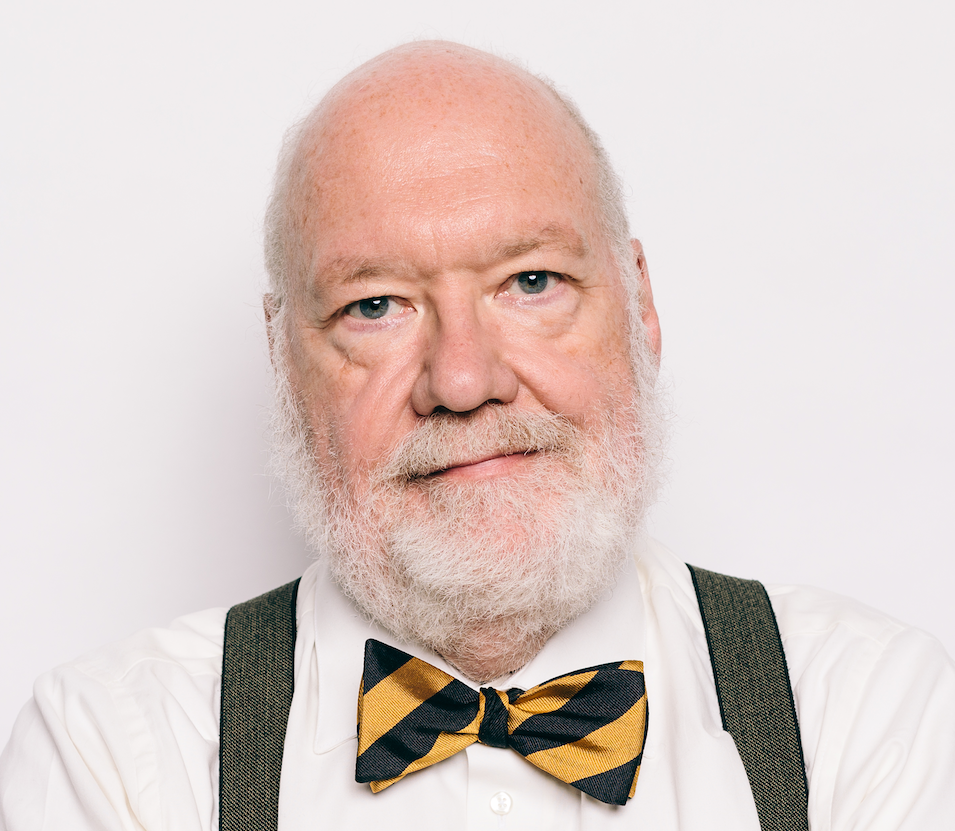
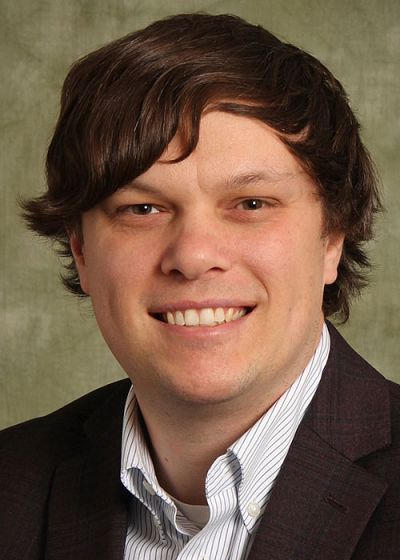
Dr. Eugene H. Spafford ("Spaf") is a Distinguished Professor in the Department of Computer Sciences at Purdue University, serving since 1987. He holds courtesy appointments in Philosophy, Communication, Electrical and Computer Engineering, Nuclear Engineering, and Political Science. As founder and Executive Director Emeritus of CERIAS and the COAST Laboratory, he has shaped information security research and education. His research centers on information security, computer crime investigation, and information ethics. Spafford's work in cybersecurity, computer forensics, and computing ethics has established him as a leading figure in the field. He emphasizes practical security solutions and ethical considerations in technology. Recent publications address cybersecurity myths, deception-based security techniques, and password security, alongside memorials for computing pioneers. This blend reflects his dual focus on advancing security research and preserving the field's history. Spafford has advised numerous graduate students and secured significant funding for CERIAS, fostering interdisciplinary collaboration. He currently serves as Editor-in-Chief of Computers & Security and on the board of the Computing Research Association. Leading CERIAS, Spafford built one of the world's premier academic centers for information assurance, integrating expertise from computer science, engineering, and social sciences to address complex security challenges.
Sara Miner More is an Associate Teaching Professor in the Department of Computer Science at Johns Hopkins University, where she has served since 2014. As of 2019, she is the Director of Gateway Computing. Her research focuses on computer science education, cryptography, and the foundations of computing. Ph.D. in Computer Science (2003), UC San Diego MS in Computer Science (1998), UC San Diego BS in Computer Science and Mathematics (1996), University of Dayton Her research interests span: Computer science pedagogy and curriculum development Information flow security and cryptographic protocols Formal logic and dependency relations in computing Notable trends in her publications include: Foundational cryptography research (1999-2002) Transition to computer science education and logic (2005-2012) Collaborative security models with hypergraph applications Scientific awards: Robert B. Pond, Sr. Excellence in Teaching Award (2016) She teaches multiple gateway computing courses including Java and Python bootcamps, data structures, and automata theory.
Professor Hoai Phuong Ha is affiliated with UiT The Arctic University of Norway's Department of Computer Science. A leading expert in green computing and cyber-physical systems, they contribute to Arctic research through the Distributed Arctic Observatory (DAO) and Arctic Green Computing (AGC) group. Founded ARC (Arctic Center for Sustainable Energy) PI in EU FP7 EXCESS and H2020 TAILOR projects WP-leader in EEA POLNOR HAPADS and RCN PREAPP projects Their research focuses on energy-efficient computing, including IoT systems, edge computing, and parallel algorithms. Recent work addresses wireless charging trajectories (eU2U, 2025), smart grid networks (GridWatch, 2024), and pollution monitoring (2024). Publications span cyber-physical observatories, sensor calibration, and distributed systems optimization. Key trends in their 15 most recent articles (2017-2025) include: energy-aware data structures, Arctic-adapted IoT deployments, and sustainable computing methods. Collaborations span EU and Norwegian grants with applications in smart grids, environmental sensing, and high-performance computing. Co-founder of Arctic Center for Sustainable Energy (2017) Active in EEA POLNOR (2019-2023) and RCN eX3 infrastructure project Their lab (Realfagbygget A237) develops systems for Arctic tundra monitoring, including UAV-powered networks and energy-harvesting protocols. Students include researchers from multiple international collaborations.
Kusumoto Noriaki is a Professor at Waseda University's School of Education within the Faculty of Education and Integrated Arts and Sciences. With a Doctor of Science degree from Waseda University, he maintains an active research profile with teaching responsibilities for 2025 including Seminar in Cultural Sciences, Introduction to Information Processing, Cultural Sciences: Maps, Information Society/Information Ethics, and Application of Information Technology and Career courses. His academic work bridges educational technology and biological sciences, reflecting a unique interdisciplinary approach. Professor Kusumoto's research interests focus on educational technology and science education, particularly e-learning and Web-Based Training (WBT) systems. His work demonstrates significant contributions to language learning technologies, including mobile learning applications for English vocabulary acquisition, learning history analysis for personalized instruction, and corpus development for language proficiency assessment. He has also maintained a parallel research line in photosynthetic reaction centers of green sulfur bacteria, with publications dating back to the 1990s that examine electron transfer mechanisms and ferredoxin interactions. His publication record shows a clear evolution from biological research toward educational technology applications, with recent work (2003-2008) predominantly focused on language learning systems, data infrastructure for educational research (VALIS project), and information ethics. The 15 most recent publications reveal a strong emphasis on practical applications of technology in language education, with particular attention to mobile learning, learning analytics, and networked systems for language data collection and analysis. His work consistently addresses the intersection of technology, pedagogy, and practical implementation challenges. Professor Kusumoto has been involved in numerous research projects funded by the Japan Society for the Promotion of Science, including 'Data Collection and Annotation of Relatively Spontaneous Utterances by Japanese Learners of English' (2009-2013) and 'English learning with handheld devices' (2007-2009). His professional memberships include the Biophysical Society of Japan, Japanese Society for Biology Education, Japan Society for Educational Technology, and Information Processing Society of Japan, reflecting his dual expertise in both biological sciences and educational technology. As a concurrent researcher at the Waseda Research Institute for Science and Engineering and affiliated with the Global Education Center (2024-2026), Professor Kusumoto maintains an active research presence. His work on information ethics, particularly in educational contexts, demonstrates his commitment to addressing the social and ethical dimensions of technology in learning environments. His early research on photosynthetic reaction centers continues to inform his approach to science education methodology and biological curriculum development.
Naoki Yamamoto is an Assistant Professor (non-tenure lecturer) at Waseda University's School of Fundamental Science and Engineering, Department of Computer Science and Engineering since April 2025. He also holds a part-time lecturer position at the University of Tokyo's College of Arts and Sciences (Junior Division) since October 2025. Previously, he served as a Research Associate at Waseda University from April 2022 to March 2025. He received his Doctor of Engineering from Waseda University in March 2025, following his Master of Engineering (2021) and Bachelor of Engineering (2019) from the same institution. Dr. Yamamoto's educational background is impressive, having earned his Bachelor's, Master's, and Doctoral degrees consecutively from Waseda University's School of Fundamental Science and Engineering. During his doctoral studies under Professor Kazunori Ueda, he focused on advanced topics in programming languages and graph theory. He was awarded the Outstanding Student Award (Dean's Award) from Waseda University in March 2019. His research interests center around graph-based programming language theory, with particular expertise in Graph Pattern Matching , Static Type Checking for complex data structures , and Graph Rewriting Languages . He has developed innovative approaches to handling graph structures that go beyond traditional algebraic data types like lists and trees. His work bridges theoretical computer science with practical implementation, focusing on how to safely manipulate complex graph structures in programming languages. His publication record demonstrates consistent advancement in graph-based type systems. Starting with foundational work on static type checking for graph operations (2019), he progressed to handling numeric constraints (2020), extending type expression power (2022), and developing grammar-based approaches for difference data structures (2024). His research shows a clear trajectory from theoretical foundations to practical applications, with increasing sophistication in handling complex graph structures. His work on LMNtal ShapeType represents a significant contribution to the field of graph rewriting languages. Outstanding Student Award (Dean's Award), Waseda University (2019) Dr. Yamamoto has been actively involved in teaching and research supervision, having served as a Teaching Assistant for 14 courses between 2018-2021. He currently teaches Introduction to C Programming and C Application Development at Waseda University, and Introduction to Algorithms at the University of Tokyo. He has received research funding through the Japan Society for the Promotion of Science Grants-in-Aid for Scientific Research, collaborating with Professor Kazunori Ueda on projects related to high-level languages with powerful data structures and concurrency. As a member of Ueda Laboratory at Waseda University, Dr. Yamamoto has contributed to the development of tools like Lambda Friends, a web-based interpreter for lambda calculus written in TypeScript. His research group focuses on advancing programming language theory, particularly in the areas of graph rewriting and type systems, with applications in both programming languages and modeling languages. His work demonstrates how graph rewriting languages can unify program execution and model checking functionalities while guaranteeing well-formedness of graph structures.
Andreas Pavlogiannis is an Associate Professor in the Department of Computer Science at Aarhus University. His research focuses on formal methods , algorithmic verification , automata theory , concurrency , static and dynamic program analysis , network diffusion , evolutionary graph theory , and evolutionary game theory . Teaching courses: Programming Languages (Bachelor) , Algorithmic Model Checking (Master) , and Program Analysis (Master) Service: Program committee member for POPL, ESOP, AAAI, IJCAI, CONCUR, OOPSLA, and organizer of CONFEST'25 His research has been supported by the Austrian Science Fund (FWF), VILLUM Foundation, Stibo Foundation, and Danish Council for Independent Research (DFF). He is actively recruiting PhD and PostDoc researchers. Recent publications span quantum computing , concurrent systems , evolutionary dynamics , and network science , with particular emphasis on symbolic algorithms , dynamic analysis , and graph-based models .
Dr. Saeed Salehi is the Herman Brown Endowed Chair of Engineering and a Professor of Mechanical Engineering at Southern Methodist University (SMU) Lyle School of Engineering, with a courtesy appointment in Civil & Environmental Engineering. His research bridges energy, environment, and sustainability through subsurface energy systems, geothermal repurposing of oil/gas wells, and sustainable materials. Ph.D., Missouri University of Science and Technology (Petroleum & Geological Engineering) M.Eng., University of Calgary (Chemical & Petroleum Engineering) B.S., Petroleum University of Technology (Petroleum Engineering) Dr. Salehi specializes in subsurface energy systems for geothermal and fossil fuels, greenhouse gas mitigation, well integrity for hydrogen storage, and sustainable cementing materials. His work integrates machine learning, computational fluid dynamics, and techno-economic analysis. His publications span geothermal energy, energy economics, and well integrity. Recent articles focus on physics-informed neural networks for wave modeling, contra-rotating pump-turbine dynamics, and geothermal repurposing of legacy wells. 2023 OU VPRP Award for Excellence in Research Grants ($1M+ secured) DOE-sponsored Geothermal Collegiate Competition Mentor (1st place, 2023 and 2022) SPE Regional Awards (2018, 2014) Early Career Researcher of the Year, University of Louisiana at Lafayette (2014) Dr. Salehi has led $10M+ in projects funded by the U.S. Department of Energy, Department of the Interior, and energy industry partners. He serves as associate editor for ASME journals and guest associate editor for Elsevier publications.
Michael D. Bond is a Professor in the Department of Computer Science & Engineering at Ohio State University's College of Engineering. He leads the Programming Languages and Software Systems (PLaSS) Research Group, which focuses on designing program analyses and software and hardware systems that enhance computing reliability, scalability, and security. His academic service includes general chair for PLDI 2027, program committee membership for multiple top conferences, and committee roles in SIGPLAN Research Highlights (2024-2027). Professor Bond's research spans programming languages, systems, and security, with particular expertise in memory management, concurrency, hardware transactional memory, information flow control, and predictive race detection. His work bridges theoretical foundations with practical implementations, as evidenced by numerous open-source projects accompanying his publications. The PLaSS group has made significant contributions to understanding and improving memory models, developing efficient garbage collection techniques for modern architectures, and creating novel approaches to secure programming in languages like Rust. Analysis of his recent publications reveals a clear trajectory toward addressing security and reliability challenges in modern computing systems, particularly through language-based approaches. His work increasingly focuses on Rust programming language security mechanisms, memory disaggregation for datacenters, and advanced techniques for detecting and preventing concurrency bugs. The research demonstrates strong continuity in exploring memory models and concurrency while adapting to emerging hardware trends and security challenges. Outstanding Teaching Award, Department of Computer Science and Engineering, Ohio State University (2018) Lumley Research Award, College of Engineering, Ohio State University (2016) OOPSLA 2015 Distinguished Paper and Artifact Awards NSF CAREER Award ACM SIGPLAN Outstanding Doctoral Dissertation Award Intel PhD Fellowship Professor Bond actively mentors several PhD students including Chujun Geng, Vincent Beardsley, Chris Xiong, Victor Chen, and Noah Charlton, with external co-advisee Zixian Cai at Australian National University. His research is currently supported by multiple NSF grants including SaTC-2348754 (2024-2027), CyberCorps-2336531 (2024-2029), and CSR-2106117 (2021-2025), reflecting sustained funding for his work in information flow control, security, and systems research. The PLaSS Research Group maintains a strong presence in both academic and industrial communities, with graduated PhD students securing positions at major technology companies like Google, Amazon Web Services, and Huawei, as well as academic positions at institutions like UIUC and IIT Kanpur. The group's work combines theoretical rigor with practical implementation, consistently producing open-source artifacts that enable reproducibility and further research in the systems and programming languages community.
Steve Blackburn is a research scientist at Google DeepMind and professor of computer science at the Australian National University in the College of Engineering and Computer Science. His primary research focus is on programming language implementation, with expertise spanning memory management, virtual machines, and performance analysis. He has served in significant leadership roles including Associate Dean for Diversity and Inclusion (2016-2019) and as Program Chair for PLDI 2015 and General Chair for PLDI 2023. Blackburn's research interests center on making software run faster and more power-efficiently on modern hardware. His primary areas include microarchitectural support for managed languages, fast and efficient garbage collection, and the design and implementation of virtual machines. He maintains a strong interest in sound methodology and infrastructure for successful research innovation. His work bridges theoretical computer science with practical systems implementation, with particular focus on memory management frameworks and performance benchmarking. His publication record reveals a consistent focus on memory management systems, with recent work exploring garbage collection in modern contexts including CRuby, Julia, mobile devices, and memory-disaggregated datacenters. His research shows an evolution from foundational garbage collection algorithms toward practical implementations addressing real-world constraints in contemporary programming languages and hardware platforms. A notable trend is his increasing focus on quantifying and understanding the true costs of garbage collection in production environments. Fellow of the ACM Blackburn has supervised numerous doctoral students including Zhen He, John Zigman, Robin Garner, Ting Cao, and currently advises Wenyu Zhao, Zixian Cai, and others. He has also served on multiple program committees for major conferences including PLDI, ASPLOS, ISMM, and OOPSLA, demonstrating his significant contributions to the programming languages and systems research community. His service includes editorial roles for ACM Transactions on Programming Language Applications and Systems from 2017-2020. He leads two major research infrastructure projects: the MMTk memory management framework and the DaCapo benchmark suite, both of which have become foundational tools for researchers in programming languages and systems. These projects reflect his commitment to shared research infrastructure and reproducible methodology in systems research.
Alastair F. Donaldson is a Professor in the Department of Computing at Imperial College London's Faculty of Engineering, where he leads the Multicore Programming Group. He also works as a Software Engineer at Google in the Android Graphics Team. Previously, he served as Director of GraphicsFuzz, an Imperial College spinout company acquired by Google in 2018. His research spans programming languages, compilers, verification, and testing, with a particular focus on randomized and fuzz testing techniques for compilers and program analyzers. Donaldson has developed several influential testing frameworks including GraphicsFuzz, RustSmith, and GrayC, which have significantly advanced compiler testing methodologies. Analysis of his recent publications reveals a strong trend toward practical applications of compiler testing techniques across diverse domains including GPU programming, verification-aware languages, and memory models. His work increasingly incorporates continuous integration practices and focuses on addressing real-world challenges in compiler development and verification. Donaldson maintains active involvement in the programming languages research community, serving on program committees for major conferences including PLDI, POPL, ASPLOS, and SPLASH. He has contributed significantly to advancing compiler testing methodologies and has mentored numerous researchers through PLMW (Programming Languages Mentoring Workshop). He leads the Multicore Programming Group at Imperial College London, which focuses on challenges in parallel and concurrent programming. His work bridges theoretical computer science with practical software engineering challenges, particularly in the areas of compiler correctness and verification.
Chao Peng is a Principal Research Scientist at ByteDance where he leads the Software Engineering Lab, focusing on AI agents for software engineering. He holds a part-time position as a Postgraduate Student Mentor at Fudan University's School of Computer Science. His research bridges industry and academia, with significant contributions to software testing, program repair, and LLM applications in software development. Education: PhD in Informatics, 2021, University of Edinburgh, UK MSc in High Performance Computing and Data Science, 2017, University of Edinburgh, UK BEng in Computer Science and Technology, 2016, Xuzhou University of Technology, China Dr. Peng's research interests center on the intersection of artificial intelligence and software engineering. He explores how large language models can transform traditional software development practices, particularly in code generation, testing, and bug fixing. His work on LLM4Code has led to innovative frameworks like CodeVisionary for evaluating code generation capabilities and Trae Agent for software engineering tasks with test-time scaling. He investigates the synergy between machine learning techniques and compiler optimizations to enhance software reliability and developer productivity. His recent publications reveal a strong focus on practical evaluation frameworks for LLMs in real-world software engineering contexts. Rather than theoretical benchmarks, his work emphasizes real-world applicability, as seen in RepoMasterEval which evaluates code completion in actual repository settings. He examines multi-faceted challenges including code generation, bug reproduction, issue resolution, and repository-level question answering, consistently addressing the gap between laboratory evaluations and practical development environments. Scientific Awards: Distinguished Reviewer for FSE'25 Invited to program committees for FSE'26, SANER 2026, ASE 2025, and others School of Informatics Scholarship (fully-funded PhD) Multiple national scholarships during undergraduate studies Honours Spot Bonus at ByteDance Dr. Peng actively mentors postgraduate students at Fudan University while leading research initiatives at ByteDance that foster university collaborations. His laboratory work translates academic research into practical tools for software development, with several frameworks deployed in industrial settings. He serves on multiple conference program committees, contributing to the advancement of software engineering research through rigorous peer review and community building. His Software Engineering Lab at ByteDance operates at the forefront of AI-assisted development, exploring how agent-based systems can automate complex software engineering tasks. The team's work on frameworks like AEGIS for bug reproduction and DialogAgent for code question answering demonstrates their commitment to solving practical challenges faced by developers in real-world settings.
Dr. Bob Mahmoodi serves as a Lecturer in the Department of Electrical and Computer Engineering at the University of St. Thomas School of Engineering, where he has taught for 10 years since 2012. Concurrently, he holds an adjunct instructor position at the University of Minnesota's Electrical and Computer Engineering department for 35 years. His industry background includes over 30 years at 3M in R&D focused on wireless RFID and biometric sensors, plus three years at Honeywell developing airborne radar systems. His educational qualifications include: PhD in Electrical Engineering and Control Sciences from the University of Minnesota MS in Electrical Engineering from the University of Minnesota BS in Electrical Engineering from the University of Minnesota Dr. Mahmoodi's research spans wireless communication, digital signal processing, control systems, medical instrumentation sensors, and FPGA/IC design. His work integrates analog/digital systems with applications in biometric security and image compression. Current teaching focuses on Electronics I laboratories, Engineering Design Clinic II, and graduate-level Digital Signal Processing coursework emphasizing machine learning applications. His publication history from 1981-2013 reveals consistent innovation in image enhancement algorithms and radar signal processing, with increasing specialization in medical imaging after 1984. Key thematic developments include the transition from military radar applications to medical/biometric systems and the evolution of real-time processing techniques for commercial printing technologies. Dr. Mahmoodi holds seven U.S. patents covering image enhancement (1986, 1994), projection displays (2006), and oil quality monitoring systems (2012-2013). His professional service includes IEEE Twin Cities Chapter chairmanship (1989-1990), IS&T Conference chairmanship (1991), and ACR-NEMA standards committee membership for image compression. As an active design clinic instructor, he mentors student teams in industrial problem-solving through the Senior Design Clinic program. His industry experience directly informs classroom instruction, particularly in sensor integration and system modeling applications. Laboratory development for electronics courses leverages his 3M/Honeywell background in practical circuit design.
Eric Atkinson is an Assistant Professor in the School of Computing at Binghamton University, specializing in programming languages for uncertainty and their intersections with artificial intelligence. He holds a PhD from MIT (2024), an MS from MIT (2018), and a BS from UC Berkeley (2015). Prior to Binghamton, he was a visiting researcher at INSAIT in Sofia, Bulgaria, and conducted research internships at Facebook and Mozilla. His research focuses on programming languages, program runtimes, formal methods, and AI integration. Key interests include probabilistic programming, static analysis, and runtime systems for uncertain domains. He teaches programming languages courses and advises PhD and M.Sc. students. His publications span probabilistic programming systems, compiler optimizations, and formal verification. He actively participates in academic service roles, including program committees for PLDI, LAFI, and OOPSLA, and mentors underrepresented groups in graduate school through initiatives like the MIT EECS GAAP program.
Caroline Fontaine serves as a CNRS Research Director at the Formal Methods Laboratory (LMF), a joint research unit operated by CNRS, ENS Paris-Saclay, and University of Paris-Saclay. She concurrently directs the national Computer Security Research Group (GDR Computer Security), coordinating cybersecurity initiatives across French academic and research institutions. Her research centers on Formal Methods and Computer Security , specializing in mathematically rigorous techniques for system specification, development, and verification. Key focus areas include cryptographic protocol analysis, security property validation, and formal verification of hardware/software systems, with applications in critical infrastructure protection and secure computing. As leader of the Computer Security Research Group, she fosters interdisciplinary collaboration among researchers nationwide, driving innovation in security frameworks through formal mathematical approaches and promoting knowledge exchange via workshops and joint publications.
Cock Heemskerk serves as a Lecturer in Robotics at Inholland University of Applied Sciences, Alkmaar campus since May 2016, operating under the Research and Innovation Centre for Technology, Design and Computer Science (RIC-TOI). He collaborates across Mechanical Engineering, Electrical Engineering, and Computer Science programs to integrate robotics into technical curricula through applied research. His educational foundation includes a PhD in Mechanical Engineering from Delft University of Technology (1990) on industrial robot assembly, an MSc from the same institution (1985), and a visiting scientist role at Carnegie Mellon University (1985-1986). Delft University of Technology: MSc Mechanical Engineering (1985) Delft University of Technology: PhD Robotics (1990) Carnegie Mellon University: Visiting Scientist (1985-1986) Dr. Heemskerk's research centers on practical robotics implementation with dual emphases: healthcare applications (including a care robot developed since 2014 through his consultancy HIT) and agricultural robotics for sustainable farming. His work uniquely bridges Technology, Design and Computer Science (TOI) with Health, Sport and Welfare (GSW), Agri, Food & Life Sciences (AFL), and Business domains through projects like HiPerGreen. Key cross-cutting themes include sustainability, human-robot collaboration, and field-deployable solutions for real-world problems. Analysis of his 2017-2019 publications reveals a concentrated focus on agricultural robotics , particularly Unmanned Aerial Systems (UAS) for greenhouse crop monitoring. These works demonstrate a strategic shift toward practice-oriented validation of robotics in horticulture, with strong emphasis on data transmission, storage, and UAS navigation in confined environments. Concurrently, his educational contributions explore robotics' role in developing 21st-century technical skills. Students engage through internships, graduation projects, and design assignments within his Robotics knowledge circle, while industry partnerships drive innovation in healthcare and agricultural robotics applications. Government collaboration is exemplified by the Ministry of Agriculture's working visit regarding his input on the "Robots to Farming Practice" innovation program. The Robotics lectureship operates within RIC-TOI as a multidisciplinary hub connecting Terra Technica and other platforms, with current projects including HiPerGreen, KIEM 21st Century Skills, and SCOUT focusing on field validation of robotic systems.