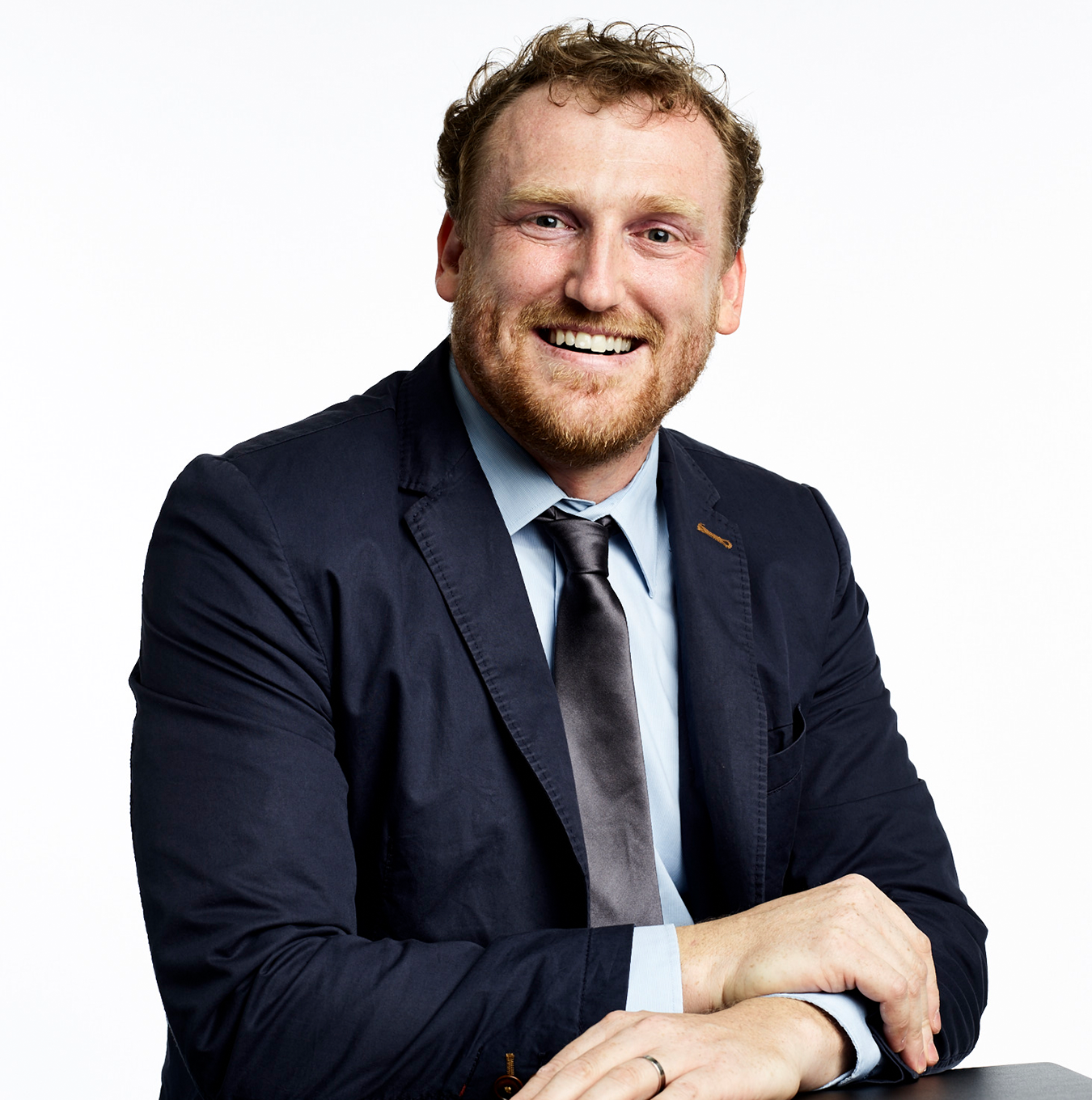
Chanel Fallon is a Lecturer in the Department of Mechanical Engineering at the University of Bath, affiliated with the Centre for Integrated Materials, Processes & Structures (IMPS). Her research focuses on dynamic material behavior and infrastructure protection under extreme conditions. She holds a PhD and MEng from the University of Cambridge. Research interests include dynamic experimental techniques (e.g., gas guns, Split-Hopkinson pressure bars), numerical modeling of extreme loading, blast/impact mitigation for civilian infrastructure, and strain-rate/temperature-dependent material characterization. Recent projects include cryogenic composite testing (EPSRC-funded), GKN Prosperity Partnership in aerospace materials, and blast protection strategies for concrete structures. She collaborates widely on material testing and structural resilience. Advising and Grants: Principal Investigator/Co-Investigator on 4 research projects, including EPSRC grants and industry partnerships. Supervises doctoral students in protective materials and structural dynamics. Labs/Teams: Active in the IMPS Centre, specializing in advanced material testing and computational modeling.
Bjorn Birgisson is the Chair of the School of Environmental, Civil, Agricultural and Mechanical Engineering and holds the Georgia Power E-Mobility Distinguished Professorship at the University of Georgia. His research focuses on infrastructure resilience, pavement engineering, materials science, and novel construction technologies. He has pioneered work on asphalt mixture performance, autonomous vehicle impacts on roadways, and extraterrestrial construction materials using lunar regolith. His interdisciplinary approach integrates computational modeling, experimental testing, and environmental sustainability. Educational Background: Ph.D., P.E. credentials are highlighted but formal education details are not provided in the text. His professional appointments emphasize practical application of research to real-world infrastructure challenges. Research Interests include: Transportation infrastructure resilience to climate change Advanced material characterization for pavements Additive manufacturing for space exploration Non-destructive evaluation techniques His recent publications (2020-2025) address: Moisture variation in clayey soils Pavement crack initiation modeling Autonomous truck infrastructure impacts Lunar regolith utilization Scientific Awards: Georgia Power E-Mobility Distinguished Professorship recognizes his contributions to sustainable transportation infrastructure. Advising/Grants: While student names are not listed, his research teams focus on doctoral-level projects in geotechnical engineering and materials science. Grant activities likely include federal/state transportation initiatives and space exploration partnerships. Labs/Teams: Active in the Boyd Research and Education Center, collaborating with industry partners on pavement testing and additive manufacturing technologies.
Pablo D. Zavattieri is the Jerry M. and Lynda T. Engelhardt Professor in Civil Engineering at the Lyles School of Civil Engineering, College of Engineering, Purdue University. His research focuses on solid mechanics applied to the multiscale modeling of advanced and innovative engineering materials, with emphasis on bridging between atomistics to continuum-based models and combining computational tools with experimental validation. Education: B.S./M.S., Instituto Balseiro, Argentina, 1995 Ph.D., Purdue University, 2000 Professor Zavattieri's research spans solid mechanics applied to multiscale analysis and design of advanced architectured materials, interfaces, and complex structures. His work lies at the intersection of Solid Mechanics and Materials Engineering, focusing on developing novel materials with exceptional properties inspired by natural systems. His contributions include micromechanical models for polycrystalline materials, new fracture models for thin-walled structures, and pioneering work on biomimetic materials using 3D printing technology. Current projects investigate the multiscale modeling of heterogeneous and hierarchical materials, micro and nanomechanics of biological materials, bioinspired materials, architectured materials, micropatterned interfaces, and smart materials. His publication record demonstrates a strong focus on understanding natural materials like chiton radular teeth, nacre, and mantis shrimp structures, translating these biological designs into engineered solutions. His recent work spans biological materials characterization, phase-transforming cellular materials, cellulose nanocrystal composites, and 3D printing of cementitious materials, consistently combining computational modeling with experimental validation across multiple length scales. Scientific Awards and Recognitions: NSF CAREER award (2013) Roy E. & Myrna G. Wansik Research Award (2013) Purdue University Faculty Scholar (2015-2020) Kavli Frontier of Science Fellow of the National Academy of Science (2015) National Academy of Engineering US Frontier of Engineering Symposium attendee (2014) Engineering Fracture Mechanics Journal Most Cited Articles award (2005-2009 period) Second Most Cited Journal of the Mechanics and Physics of Solids Article (2007-2012) Cover page of Cellulose journal (2013) Cover page of Advanced Functional Materials journal (2014) Professor Zavattieri has mentored numerous graduate students who have received prestigious awards including William and Mary Goetz Graduate Scholarships, William L. Dolch Graduate Scholarships, Purdue Doctoral Fellowships, and SURF Research Symposium awards. His research has been supported by NSF, AFOSR, INDOT/JTRP, Forest Product Laboratory, General Motors, Velcro, and the Purdue Research Foundation. Notable projects include a $7.5M DoD/MURI award for 'Convergent Evolution to Engineering: Multiscale Structures and Mechanics in Damage Tolerant Functional Bio-Composite and Biomimetic Materials' and multiple NSF grants focusing on biomimetic materials and 3D printing of civil infrastructure. He directs the Multi-Scale Mechanics and Materials by Design Lab at Purdue University, which maintains a strong collaborative network with institutions including UC Riverside (David Kisailus' group), UC San Diego, Northwestern University, and UC Berkeley. The lab has produced significant research on biological materials like chiton radular teeth, mantis shrimp structures, and nacre, translating these natural designs into engineered solutions for applications in infrastructure, lightweight structural materials, and energy absorption systems.
Shu Yang is the Joseph Bordogna Professor and Department Chair of Materials Science and Engineering at the University of Pennsylvania's School of Engineering and Applied Science. Her research spans multiple departments, with primary appointments in both Materials Science and Engineering and Chemical and Biomolecular Engineering. She directs the Yang Lab, which operates at the intersection of multi-materials synthesis, nano-/microfabrication, and device processing, backed by deep understanding of physical, mechanical and biological principles. Director, Center for Analyzing Evolved Structures as Optimized Products (AESOP) Principal Investigator, NSF NRT: Climate Action and Resilience for Extreme Urban Heat (CLIMATE-CARE) Member of the Engineering Research Visioning Alliance (ERVA) Professor Yang's research focuses on developing novel materials synthesis, assembly and eco-manufacturing of complex, multi-functional, nano- to macrostructured soft, sustainable materials and composites. Her lab addresses fundamental questions centered around surface/interface, actuation mechanisms, and structure-property relationships. Through directed assembly of oligomers, polymers, gels, colloids, liquid crystals, amphiphiles, and their composites with inorganic materials and biomolecules across nano- to macroscales, her team creates complex, multi-functional nano- and microstructures with unique surface, optical, and mechanical properties. Analysis of Professor Yang's recent publications reveals a strong trend toward environmentally responsive materials with applications in sustainability, water harvesting, carbon capture, and climate resilience. Her work increasingly integrates kirigami engineering principles with liquid crystal elastomers to create programmable, shape-morphing materials. The research shows a clear trajectory from fundamental materials science toward real-world applications addressing global challenges, particularly in climate action and sustainable infrastructure. Inaugural Nat Geo 33 Extraordinary Changemaker List 2022 Cozzarelli Prize from PNAS for Class III: Engineering and Applied Sciences Advanced Materials Hall of Fame collection recognition Multiple highly cited papers according to Web of Science Professor Yang's research group has secured significant funding for projects addressing climate change, sustainable materials, and advanced manufacturing. Her lab has developed numerous technologies with potential applications in coatings, adhesives, smart windows, displays, sensors, soft robotics, biomedical devices, dehumidifiers, and carbon-absorbing concrete. The Yang Lab maintains a strong mentoring record with numerous students and postdocs who have gone on to successful careers in academia and industry. Her group actively collaborates across disciplines, working with biologists, physicists, environmental scientists, and engineers to tackle complex challenges. The Yang Lab operates state-of-the-art facilities for materials synthesis, characterization, and fabrication. The lab is particularly known for its expertise in liquid crystal elastomers, kirigami engineering, and biomimetic materials. The group maintains strong industry partnerships and has filed multiple patents based on their research. Their facilities enable everything from molecular-scale synthesis to macro-scale manufacturing of functional materials, with particular strength in bridging these scales through innovative design principles.
Teemu Ojala is a Postdoctoral Researcher in Civil Engineering at Aalto University, specializing in concrete materials and mechanics. He works within the Mineral Based Materials and Mechanics research group, focusing on automated workability control and compositional property measurement in concrete production. Research Interests His work bridges Civil Engineering and Materials Science, emphasizing: Concrete durability and segregation monitoring Digital image analysis for microstructure characterization Smart sensing techniques (AC impedance, stereovision) Optimization of air content and compaction Key Contributions He has advanced automated quality control methods in concrete mixing through: Developing stereovision-based workability estimation Investigating freeze-thaw resistance mechanisms Pioneering AC impedance spectroscopy for segregation detection
Associate Professor Kirk Vessalas is Head of School at the School of Civil and Environmental Engineering , University of Technology Sydney. He has led groundbreaking research on low-carbon concrete , supplementary cementitious materials (SCMs) , and alkali-silica reaction (ASR) mitigation since 1992. His work integrates industrial by-products like fly ash and slag into high-performance concrete systems, supporting Australia's transition to a net-zero economy . PhD in Civil Engineering (UTS, 2009) Bachelor of Applied Science in Materials Science (UTS, 1991) Research interests span: Concrete durability and decarbonisation Mechanisms of ASR and DEF (Delayed Ettringite Formation) Development of smart cement-based sensors with self-sensing and self-cleaning properties Application of nanotomography for microstructural analysis Regulatory reform in Australian and New Zealand concrete standards Recent publications highlight advancements in alkali-activated binders , DEF risk assessment , and SCM integration for sustainable infrastructure. His studies often combine chemical analysis , durability testing , and industry collaboration to address practical challenges. Supervision and grants include mentoring students like Johnson Mak and Nicholas Allan, with over $6M AUD secured from ARC Research Hub , SmartCrete CRC , and international partnerships . He actively collaborates with Cement Concrete & Aggregates Australia , Concrete New Zealand , and infrastructure agencies.
Alper Taşdemirci is a Professor in the Department of Mechanical Engineering at Izmir Institute of Technology (IYTE). His primary research focuses on high strain rate mechanics, material deformation, energy absorption in structural materials, and computational modeling. He has conducted extensive studies on composite materials, metallic foams, and bio-inspired designs, with a strong emphasis on dynamic loading conditions and finite element analysis. Education: B.S. in Mechanical Engineering, Erciyes Üniversitesi M.S. in Mechanical Engineering, Erciyes Üniversitesi PhD in Mechanical Engineering, University of Delaware Research Interests: High strain rate behavior of materials Energy absorption mechanisms in structural components Dynamic material testing (e.g., Split Hopkinson Pressure Bar) Composite and metallic material design for impact applications Numerical modeling with LS-DYNA Publications: His recent works explore bio-inspired metallic structures, additive manufacturing of composites, and the dynamic compression of syntactic foams. Key themes include strain rate effects, material characterization under impact, and the development of constitutive models for advanced materials. Awards and Honors: No specific awards mentioned in the text. Grants and Advising: No explicit details on grants or advisees provided in the text.
Jeffery S. Volz holds the title of Associate Dean for Partnerships and is a Lloyd G. and Joyce Austin Presidential Professor at the University of Oklahoma 's Gallogly College of Engineering. He is affiliated with the School of Civil Engineering and Environmental Science (CEES), where he previously served as associate director for undergraduate studies and director of the Donald G. Fears Structural Engineering Laboratory. His academic journey includes roles in industry for 16 years at firms like Skidmore, Owings & Merrill, and the Portland Cement Association. Education : PhD, Civil Engineering, Pennsylvania State University MS, Architectural Engineering, Pennsylvania State University BAE, Architectural Engineering, Pennsylvania State University Research Focus : Volz's work centers on structural engineering and material science , emphasizing resilient and sustainable infrastructure solutions. Key areas include UHPC applications, bridge column reinforcement, and recycled material utilization in concrete. His research has been funded by NSF, DoD, FHWA, and industry partners like Ameren Corporation and Dolese. Grants & Projects : Over 20 grants since 2013, including studies on UHPC link slabs, FRP bridge decks, and high-volume recycled materials in pavements. He has led projects addressing bridge-pavement interaction, in-stream structure erosion effects, and corrosion-resistant concrete formulations. Labs & Teams : Director of the Donald G. Fears Structural Engineering Laboratory . Advises ASCE student chapters and competition teams (Concrete Canoe, Steel Bridge).
Professor Chien Ming Wang is the Transport and Main Roads Chair Professor of Structural Engineering at the University of Queensland (UQ) since 2017. He also holds an Adjunct Professor position at Monash University and contributes to the Centre for Marine Science within UQ’s Faculty of Science. Alumnus of the Year 2015, Monash University Chartered Structural Engineer Educational Background : Bachelor of Civil Engineering (First Class Honours), Monash University, 1978 M.Eng.Sc. and Ph.D., Monash University, 1980 & 1982 Research Focus : Pioneering Very Large Floating Structures (VLFS) with applications in floating bridges, oil storage, and aquaculture systems. His work spans structural stability, vibration analysis, optimization of arches, and nonlocal theories for nanostructures. He developed Hencky bar-chain models and Shooting-Optimization Technique for boundary value problems. Scientific Leadership : Authored 500+ journal papers, 6 books, and 4 edited volumes with over 26,000 citations. Led $10M+ in industrial projects including Blue Economy CRC initiatives. Holds multiple patents in floating structures and aquaculture systems. 2019 Nishino Medal 2019 JN Reddy Medal IStructE Singapore Structural Award for Sustainability 2016 Minister of National Development R&D Special Mention 2017 Advising & Collaborations : Supervised 28 PhD and 20 MEng students, including work with NUS , SINTEF , and PolyU . Current projects involve offshore seaweed farms, self-healing concrete, and hybrid timber-cardboard composites.
Ryan Hurley is an Associate Professor in the Department of Mechanical Engineering at Johns Hopkins University's Whiting School of Engineering, with a secondary appointment in the Department of Civil and Systems Engineering. He is a Fellow of the Hopkins Extreme Materials Institute (HEMI) and leads a research group focused on the mechanics of granular and geologic materials, multiscale modeling, and 3D materials characterization. PhD, California Institute of Technology (Caltech), 2015 Postdoctoral Research, Lawrence Livermore National Laboratory (LLNL), 2015–2017 Joined JHU Faculty, 2018 His research interests center on understanding the mechanical behavior and failure mechanisms of granular materials, rocks, concrete, and ceramics through novel experiments and numerical models. He specializes in in-situ X-ray imaging and diffraction to observe deformation at micro and mesoscales. Key areas include impact physics, wave propagation, and rapid compaction, with applications in asteroid deflection and structural safety. His group develops digital twin models to simulate material behavior across scales. The research publications reveal a strong trend in multiscale experimental mechanics of geomaterials, combining high-resolution imaging with computational modeling. His work frequently appears in top journals such as Journal of the Mechanics and Physics of Solids , Proceedings of the National Academy of Sciences , and International Journal of Solids and Structures , focusing on granular dynamics, fracture, compaction, and constitutive modeling. Scientific awards include: NSF CAREER Award (2020) AFOSR Young Investigator Program (YIP) Award (2022) AEOP Mentor of the Year (2021) Department of Energy Secretary’s Appreciation Award (2017) Hurley has secured significant research funding from NSF, AFOSR, ARL, DOE, and DTRA . He actively mentors PhD, postdoctoral, and undergraduate students, and his group has produced numerous publications. He serves as co-editor of Open Geomechanics and has reviewed for major journals and funding agencies. Since 2021, he has chaired the annual Mach Conference. His research group operates within the Hopkins Extreme Materials Institute (HEMI) and utilizes advanced facilities including synchrotron X-ray sources and high-speed imaging systems for impact experiments.
Dr. Katalin KOPECSKÓ is Associate Professor in the Department of Engineering Geology and Geotechnics , Faculty of Civil Engineering, Budapest University of Technology and Economics (BME) . She lectures on construction-materials chemistry, durability and advanced concrete technologies, and maintains an active research portfolio spanning radioactive-waste solidification, geopolymer binders, supplementary cementitious materials and fibre-reinforced cementitious composites. Education & Academic Career Long-standing faculty member at BME Faculty of Civil Engineering (exact degrees not specified in text). Regular instructor for master-level courses: Alkali Activated Materials in Civil Engineering , Chemistry of Construction Materials , Durability of Construction Materials , Structure–Property Relations of Concrete . Holds weekly consultation hours on Thursdays 12–14 in building K, basement level, room 10/5. Research Focus Her research integrates materials science , geotechnical engineering and nuclear-waste management . Recent investigations include: Development of alkali-activated recipes for borate-rich liquid radioactive waste using limestone-portland blends. Application of semi-adiabatic calorimetry to identify optimal cement types for radioactive waste cementation. Enhancement of 3D-printing performance of concrete via metakaolin and silica fume. Long-term geotechnical and hydraulic impacts of municipal solid-waste leachate on soils. Durability of natural-fibre and nanocellulose-reinforced geopolymer mortars. Corrosion behaviour of vitrified high-level waste glass under simulated repository conditions. Across 2022-2025 she has published more than 40 peer-reviewed articles, reflecting a clear shift toward sustainable construction materials , nuclear environmental safety and advanced testing methodologies . Laboratory & Collaborative Environment Dr. KOPECSKÓ operates within BME’s well-equipped Engineering Geology and Geotechnics laboratories, where calorimetry facilities, geopolymer synthesis rigs and microstructural analysis tools support her projects. Close collaboration exists with the Vásárhelyi Pál Doctoral School and the national nuclear-waste management programme at Paks NPP, evidenced by joint publications on cemented-waste testing laboratories. Grants & Awards While specific grant numbers are not listed, her sustained output in high-impact journals and participation in national projects (e.g., NVKP_16-1-2016-0019 “Increasing the Chemical Resistance of Concrete”) indicate continuous external funding. Contact Office: Building K, basement, room 10/5, Budapest University of Technology and Economics. E-mail: kopecsko.katalin@emk.bme.hu Phone: +36 1 463 2238
Laura Dalton is an Assistant Professor in the Department of Civil and Environmental Engineering at Duke University. She joined the faculty in August 2022 after completing her Ph.D. at North Carolina State University. Her research focuses on reactive transport in porous media, CO2 sequestration, and advanced imaging techniques like X-ray CT and electrical capacitance tomography. Education: B.A., West Virginia Wesleyan College (2012) B.S. and M.Sc.Eng., West Virginia University (2015, 2016) Ph.D., North Carolina State University (2022) Dalton's work bridges experimental and computational methods, including: 4D imaging of geomaterials Machine learning for material inverse problems Thermal cycling in porous media CO2 mineralization strategies Her recent publications emphasize hybrid imaging modalities, deep learning applications, and reactive transport dynamics. While no specific awards are mentioned, her research aligns with Duke's climate solutions initiatives, including CO2 storage efficiency and sustainable material development.
Mouad JEBLI is an Associate Professor at CESI Engineering School in Aix-en-Provence, France, where he serves as a Teacher-researcher within the Engineering and Digital Tools research team. His academic focus centers on the chemomechanical behavior and durability of concrete materials, with particular expertise in interfacial transition zone (ITZ) characterization and degradation mechanisms. His educational background includes a Doctorate in Mechanics and Civil Engineering (2013-2016) from University of Montpellier/IMT Mines Alès, with research on local-scale mechanical properties of cement paste-aggregate interfaces, and a Specialized Master in Engineering and Project Management of Building and Public Works (2011-2012) from University of Montpellier 2 and Cadi Ayyad University, Morocco. Dr. JEBLI's research spans Concrete Technology, Durability of Materials, and Mechanical Behavior of Materials, emphasizing experimental characterization of chemomechanical degradation processes including leaching, internal sulfate attack, and interface mechanics. His work integrates multi-scale approaches from nanoindentation to structural testing, with significant contributions to cohesive zone modeling and composite repair techniques for concrete structures. Analysis of his 15 most recent publications (2018-2024) reveals consistent focus on experimental methodologies for concrete durability assessment, with strong emphasis on interface mechanics, degradation modeling, and sustainable repair solutions. Key thematic trends include the evolution of ITZ properties under chemical attack, development of predictive models for material interfaces, and application of natural fiber composites for structural rehabilitation. His scientific recognition includes: Best Poster Award at 36èmes Rencontres de l’AUGC (2018) Dr. JEBLI actively supervises graduate research, currently guiding PhD candidate MA TAZI (defending 2026) on composite patch repairs, and previously supervised PhD graduates S. NESRINE (2021) and A. Girboveanu (2020), along with multiple Master's students including Fabrice GBEWADE (2019) and Kim Quyen Nguyen (2016). His research is conducted through the Engineering and Digital Tools team, which develops advanced engineering methodologies for construction materials and structural systems.
Michael Raupach is a Professor at RWTH Aachen University holding the Chair of Building Materials Science - Building Conservation. His work focuses on concrete durability, reinforcement corrosion, and sustainable construction materials, with particular expertise in alkali-activated binders, carbon textile reinforcement, and electrochemical monitoring systems. Research Interests: Concrete durability, corrosion protection, sustainable materials, structural maintenance, BIM applications, and non-destructive testing. Recent Work: Investigates electrically heated carbon textile reinforced concrete systems, develops hybrid alkali-activated materials for realkalization, and explores chloride diffusion mechanisms in low-carbon binders. Publications: Active in journals covering concrete technology, corrosion engineering, and sustainable construction methods.
Admir Masic is an Associate Professor at MIT's Department of Civil and Environmental Engineering, where he leads the Masic Lab. His research focuses on sustainable construction materials, particularly cement-based systems, and integrates insights from ancient materials to address modern environmental challenges. He holds tenure and is a faculty fellow in Archaeological Materials at the Center for Materials Research in Archaeology and Ethnology (CMRAE). Education: PhD in Physical Chemistry (University of Turin, Italy) and postdoctoral research at the Max Planck Institute of Colloids and Interfaces. His work spans biomineralization, self-healing concrete, and carbon capture technologies. He co-directs the MIT Concrete Sustainability Hub and founded the MIT Refugee Action Hub (ReACT), providing education for displaced learners. Research highlights include revealing the self-healing mechanisms of Roman concrete, developing carbon-storing cement composites, and creating energy-storing supercapacitors using ancient materials. His lab employs advanced techniques like Raman spectroscopy and correlative imaging to bridge nanoscale phenomena with macro-engineering applications. Awards: Tenured at MIT (2024), numerous grants from industry partnerships. Grants: Collaborations with Japanese industry via MIT EC^3 Hub, funding for sustainable infrastructure projects. Labs/Teams: Masic Lab, MIT EC^3 Hub, MIT ReACT, and the Concrete Sustainability Hub. Active in translating research into industrial applications through partnerships like DMAT Performance Matters.