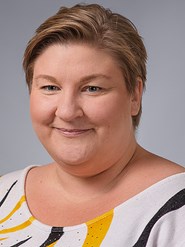
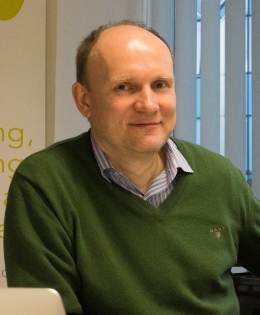
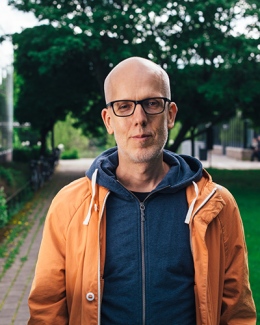
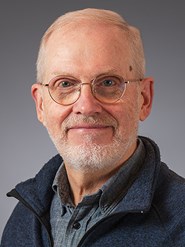
Therese Nordin is an Assistant Professor at Umeå University's Department of Community Medicine and Rehabilitation, specializing in occupational therapy. Her research focuses on social participation and togetherness among older adults within home care contexts, particularly through the STAY-IN-TOUCH project. Research Themes Gerontological perspectives on loneliness Co-creative methods in home care interventions Relational and transactional models of human activity Power dynamics in health services research Qualitative approaches to social participation Recent Publications Her work explores the interplay between structural care provision and subjective experiences of social connectedness in aging populations, with specific attention to: Gender norms and loneliness in men Home care professionals' conceptualization of social needs Design of participatory care models Quantitative-qualitative integration in aging research Methodological Expertise Therese employs a range of qualitative approaches, including: Scoping reviews Creative co-design methodologies Narrative analysis Transactional perspective frameworks
Janis Stirna is a Professor and Unit Head at the Department of Computer and Systems Sciences (DSV), Stockholm University. He leads the PRECIS research group, focusing on theories and tools for organizational and IT solution design. PhD in Computer and Systems Sciences (2001), Royal Institute of Technology, Sweden Associate Professor (2008), Jönköping University Research Interests include enterprise modeling, requirements engineering, organizational patterns, and knowledge management. His work spans methodologies like EKP, EKD, and 4EM, with notable coordination of the EU FP7 project CaaS (Capability as a Service). He co-edited key Springer publications on enterprise modeling and capability management. Teaching: Delivers Object-Oriented System Analysis with UML to DSV BSc students. Leadership: Chairs IFIP Working Group 8.1 and co-initiated the PoEM conference series.
Lars Eriksson is a researcher at the Department of Chemistry, Stockholm University, affiliated with the Faculty of Science. He is part of Gunnar Svensson's group, which focuses on solid-state inorganic chemistry, including the synthesis of energy-related compounds and their crystal structure analysis. Research interests span inorganic chemistry, solid-state chemistry, crystallography, energy applications, organic synthesis, catalysis, and chemical education. His work bridges experimental and computational approaches, with recent publications exploring molecular design for energy storage, asymmetric synthesis, triplet-to-singlet energy transfer, and pedagogical strategies in chemistry education. Trends in his research highlight applications in materials science, environmental chemistry, and educational methodologies. While no formal scientific awards are mentioned in the provided texts, his contributions include collaborative studies on catalysis, molecular structure, and student learning processes. He has no listed grants or students, but his publications emphasize tutor-student interactions and practical epistemology analysis. The research group he belongs to investigates fundamental properties of synthesized compounds, often with energy-related applications, and maintains strong ties to the broader chemistry community through peer-reviewed publications and educational studies.
Jens Rydgren is Professor of Sociology at Stockholm University, where he holds the Chair in Sociology since 2009. He is affiliated with the Department of Sociology within the Faculty of Social Sciences. Rydgren graduated from Stockholm University in 2002 and has been a visiting scholar at Columbia University, Cornell University, Harvard University, École des Hautes Études en Sciences Sociales in Paris, Copenhagen University, and Utrecht University. He is a fellow of the Royal Swedish Academy of Letters. Professor Rydgren's primary research interests lie in political sociology, particularly the study of radical right-wing parties and their voters, with a focus on explaining variation over time and across countries. He also has a longstanding interest in social networks and how relational and contextual factors influence individuals' beliefs, opportunities, and actions. His additional research interests include ethnic conflict, belief formation processes, collective memory, fanaticism, and sociology through literature. Much of his work combines theoretical insights with empirical analysis to understand complex social phenomena. His recent publications demonstrate a consistent focus on radical right-wing politics, xenophobia, nationalism, and social network analysis. Rydgren frequently employs comparative and multi-method approaches to examine political behavior and social phenomena. His work often intersects political sociology with social network theory to understand how contextual factors shape political attitudes and behaviors. He has made significant contributions to understanding how social networks influence various outcomes, from political attitudes to health behaviors. Fellow of the Royal Swedish Academy of Letters Rydgren is currently the Principal Investigator (PI) of the research project "Why do working class voters support the populist radical right?" funded by the Swedish Research Council. Previously, he was PI for the ERC Starting Grant project "Individual Life Chances in Social Context: A Longitudinal Multi-Methods Perspective on Social Constraints and Opportunities" (2011-2018), which combined survey data and register data to study the importance of egocentric networks for young adults' life chances. His research has important implications for understanding contemporary political challenges and developing evidence-based policy responses.
Jonas Faleskog is a Professor in the Department of Materials and Structural Mechanics at KTH Royal Institute of Technology. His research focuses on mathematical modeling of material deformation and failure mechanisms, particularly in metallic and polymeric materials. Key areas include ductile and brittle fracture analysis, fracture mechanics, and computational modeling of material behavior under various stress conditions. He leads a research group collaborating internationally to develop models describing material failure at microscopic scales. Faleskog teaches courses such as Fracture Mechanics (SE2139) and Modeling in FEM (SE2860), emphasizing practical applications of theoretical models. His work spans experimental and numerical methods, addressing challenges in material heterogeneity, porosity effects, and environmental degradation. Notable contributions include advancements in weakest-link modeling for brittle failure, probabilistic fracture models, and strain gradient plasticity analysis. His research bridges material science, applied mechanics, and numerical methods to optimize material utilization in engineering systems like reactor tanks, aircraft, and vehicles. Key collaborations involve international teams exploring microstructural influences on fracture behavior. While no specific awards are listed, his extensive publication record reflects sustained contributions to mechanical and materials engineering.
Martin Berggren is a Professor at the Department of Computing Science , Umeå University , Sweden. His work focuses on Computational Design Optimization , combining computer simulations and numerical optimization to enhance engineering designs for devices like antennas, microwave components, and loudspeakers. Berggren is also active in mathematical modeling of physical phenomena, particularly wave propagation and fluid mechanics, with a strong emphasis on finite-element methods . His research addresses large-scale conceptual design problems using thousands to millions of design variables, relying on gradient-based algorithms and adjoint-based computations of design sensitivities—similar to back-propagation in deep learning. Key application areas include acoustic and electromagnetic devices, where he investigates damping mechanisms, boundary conditions, and material distribution. Other interests, though less active, involve flow control and unsteady fluid–structure interaction . Berggren collaborates extensively on projects such as Structured Regularization , Topology Optimization of Acoustic Black Holes , and Design of Microstrip-to-Waveguide Transitions . His publications span journals like Journal of Computational Physics , Pattern Analysis and Applications , and IEEE Transactions on Antennas and Propagation , often co-authored with researchers like Linus Hägg , Eddie Wadbro , and Disi Lin .
Magnus Linnarsson is a Professor of History at Stockholm University's Department of History, specializing in political history with a focus on early modern and modern Sweden. His research examines institutional change, public-private service organization, and the evolution of the welfare city. He leads undergraduate programs and supervises students at all levels. PhD in History (2010), Lund University Associate Professor (2017), Stockholm University His research spans four centuries of political conflicts over public services, state formation, and urban development. Key works include analyses of Sweden's postal, customs, and welfare systems, comparing hierarchical and contractual state organization models. Recent publications (2024) in Nordic Welfare Cities explore urban citizenship and inclusive welfare systems since 1850, challenging national narratives by emphasizing local governance. Earlier studies (2022–2018) dissected regime shifts, mercantile-state relations, and publicness concepts in tramway and telecom debates. Current projects include: Skiftande regimer (2021–2025): State formation and administrative reform (Vetenskapsrådet-funded) Olika vägar till välfärdsstaden (2021–2025): Nordic urban welfare debates (Riksbankens jubileumsfond-funded) He advocates for interdisciplinary analysis of political economy, institutional loyalty, and spatial dynamics, connecting historical debates to modern policy challenges.
Santa Slokenberga, LL.D., serves as an Associate Professor in Medical Law and Senior Lecturer in Administrative Law at Uppsala University's Department of Law within the Faculty of Law. She maintains an active research profile focusing on the intersection of law, medicine, and technology, with particular expertise in biobanking, genetic privacy, and healthcare data governance. Her research interests span several critical areas in contemporary medical law, including the human genome and biobanking, AI applications in healthcare, privacy and personal data protection frameworks, quality of pediatric healthcare, and governance of rare diseases. Slokenberga's work demonstrates a strong focus on European regulatory frameworks and their implementation across different jurisdictions, particularly examining how GDPR interacts with medical research and biobanking practices. Analysis of her recent publications reveals a clear trajectory toward increasingly complex issues at the intersection of law, technology, and healthcare. Her scholarship consistently addresses regulatory challenges in genomic data sharing, European health data spaces, and the ethical implications of emerging technologies in medicine. Notably, she has contributed significantly to understanding how European data protection law applies to medical research contexts. Slokenberga holds leadership positions as a board member of EAHL and the Nordic Permed Law, reflecting her recognized expertise in health policy at both national and international levels. Her collaborative research projects often involve multinational teams, demonstrating her engagement with global health law challenges. Her academic supervision and teaching activities focus on preparing future legal professionals to navigate the complex landscape of medical law, administrative law, and data protection regulations as they apply to healthcare systems and biomedical research.
Andreas Duit is a Professor of Political Science at Stockholm University and also serves as a Guest Professor at the Political Science Unit, Luleå University of Technology. His academic work focuses on comparative environmental politics with special emphasis on the role of the state in addressing environmental challenges. Department of Political Science, Stockholm University Guest Professor, Political Science Unit, Luleå University of Technology Former visiting scholar at the Workshop in Political Theory and Policy Analysis at Indiana University, Bloomington Former visiting scholar at the Department of Political Science, University of Washington Professor Duit's research centers on comparative environmental politics, particularly examining how states address environmental challenges. His work employs quantitative methods and cross-national panel data analysis, with additional engagement in complex system analysis and survey research. His primary research interests include climate policy, environmental governance, sustainability transitions, and the relationship between welfare states and environmental policy. Analysis of Professor Duit's recent publications reveals a strong focus on climate governance mechanisms, environmental state development, and the interplay between political institutions and environmental outcomes. His research spans multiple analytical levels from international climate agreements to domestic policy implementation, with particular attention to how different governance structures affect environmental performance across countries. GREENTRANS: The Great Green Transformation – Politics, Markets and Civil Society in the Anthropocene (funded by Marcus and Marianne Wallenberg Foundation) THERAPY: The Electoral Ramifications of Environmental Policy (funded by FORMAS) GLEAN: A Global Survey of Learning, Participation and Ecosystem Management in Biosphere Reserves GRACE: Governing the Anthropocene – Environmental Policy and Outcomes in a Comparative Perspective Professor Duit has secured significant research funding from major Swedish research organizations including FORMAS, MISTRA, the Swedish Research Council, and the Marcus and Marianne Wallenberg Foundation. His research portfolio demonstrates a consistent focus on understanding the political dimensions of environmental challenges and identifying effective governance approaches for sustainability transitions.
Dr. Frank Thomas Grub is Professor of German and Head of the Department of Modern Languages at Uppsala University. Educated at Universität des Saarlandes (Dr. phil. 2003) and promoted to Associate Professor at Gothenburg University (2012) before joining Uppsala as Professor (2018), he has been recognized as Excellent Teacher (2021). As founder of the Landeskunde Nord network since 2012 and editor of the Peter Lang book series since 2013, his career bridges academic research, educational innovation, and international collaboration. His research focuses on contemporary German-language literature , GDR cultural studies , and transcultural didactics . Key projects explore autobiographical writing, post-Wall literary representations, and the intersection of travel literature with cultural memory. Recent publications (2024-2025) examine media narratives of reunification and cultural stereotypes in language pedagogy. Prof. Grub contributes to German as a foreign language curriculum development Intercultural competence frameworks Editorial leadership in Northern European Germanistics His 2023-2025 works analyze graphic novels in education, migration discourse in literature, and media transitions during the Cold War.
Jelena Zdravkovic is a Professor and Head of the Department of Computer and Systems Sciences (DSV) at Stockholm University. She leads the PRECIS research group which focuses on Process, Requirements, Enterprise, Capability, and Information Systems modelling. Her work spans theoretical and practical aspects of enterprise and IT solutions with a particular emphasis on digital transformation. Professor Zdravkovic's research interests center around Digital Business Ecosystems , Digital Twins , and Data-driven Requirements Engineering . Her work in Enterprise Modeling explores capability-oriented and consumer-oriented approaches to requirements engineering. She investigates how digital transformation and big data can be leveraged to improve requirements elicitation processes, and how organizations can model and manage complex digital business ecosystems. Her research has significant implications for how businesses can adapt to rapidly changing technological environments while maintaining resilience and competitiveness. Her recent publications reveal a clear trajectory toward integrating artificial intelligence with digital modeling techniques, particularly in the context of smart buildings and business ecosystems. There's a consistent focus on how data-driven approaches can transform traditional requirements engineering practices, making them more responsive to the velocity and variety of digital data sources. Her work bridges theoretical modeling with practical applications across various industries including healthcare, energy, and transportation. Professor Zdravkovic has been actively involved in mentoring PhD students, including supervising research on the Management Framework of Resilient Digital Business Ecosystems. She has participated in numerous national and international projects focused on interoperability and model-driven engineering, securing research funding for innovative work at the intersection of business and technology. She leads the PRECIS research group which deals with theories, methods and tools for analysis and design of organizational and IT solutions in congruence. The group's research covers three key topics – Enterprise Modelling, Business Process Management, and Conceptual Modelling. Their work brings together academic rigor with practical applications to solve real-world business challenges through innovative information systems approaches.
Anders Pousette is a Lecturer at the University of Gothenburg, affiliated with the Department of Organization, Health and Addiction. His academic work focuses on organizational psychology, leadership training, information security, occupational safety, and psychosocial working conditions in high-risk industries such as healthcare and construction. His research explores the interplay between organizational support climates and workplace safety, with a particular emphasis on ethical value conflicts in healthcare, leadership practices in construction, and security culture in nuclear and transportation sectors. He employs mixed-methods approaches and longitudinal studies to evaluate interventions and workplace dynamics. Recent publications highlight his work on managerial training programs, cross-cultural comparisons of safety practices, and the impact of psychosocial factors on information security behavior. His collaborations span multiple disciplines and institutions, particularly with Marianne Törner and Martin Grill.
Bor Gregorcic serves as an Associate Professor (Docent) and University Lecturer in Physics Education at Uppsala University's Department of Physics and Astronomy. His academic work bridges theoretical frameworks in science education with practical applications of educational technology. Gregorcic's research program spans several interconnected domains: Physics education research focusing on conceptual understanding in mechanics and statistical mechanics Embodiment and multimodal approaches to science learning Educational technology applications including interactive whiteboards and digital learning environments Emerging applications of artificial intelligence in physics education contexts Teacher professional development and pedagogical content knowledge His recent publication trajectory (2023-2025) reveals a significant pivot toward AI applications in physics education, with multiple studies examining ChatGPT's performance in interpreting physics concepts, visual representations, and kinematics graphs. This represents an evolution from his earlier foundational work on embodiment in science education and multimodal learning, where he explored conceptual blending, gesture studies, and the use of digital tools like Algodoo. His research consistently addresses how students develop conceptual understanding through various representational forms. Gregorcic has been recognized with the 'Excellent Teacher' award at Uppsala University, highlighting his commitment to pedagogical excellence. He maintains active research collaborations with Giulia Polverini, Elias Euler, Trevor Volkwyn, Ebba Koerfer, and other international scholars. His work appears predominantly in leading physics education research journals including Physical Review Physics Education Research, European Journal of Physics, and Physics Education, demonstrating significant impact in the field.
Jessica Edlom serves as a PhD student and adjunct teacher at Karlstad University, actively contributing to strategic communication research within the global music industry. Her work bridges academic theory and practical industry challenges, with particular focus on digital transformation and fan-brand relationships. Her core research examines strategic communication practices, fan engagement dynamics, and transmedia marketing strategies in music. She investigates how artists like ABBA and Taylor Swift leverage phygital experiences to cultivate fan communities, exploring tensions between commercial imperatives and authenticity. Key interests include pandemic-era industry adaptation, value co-creation mechanisms, and the commodification of fan participation through choreographed engagement. Analysis of her publication timeline reveals a clear evolution from foundational studies on Nordic music branding (2017-2019) toward cutting-edge explorations of immersive technologies and fan experience design (2023-2025). Recurring thematic threads include the strategic mobilization of fan communities through social media, authenticity maintenance in digital branding, and industry adaptation to technological disruption. Her methodological approach frequently employs strategy-as-practice frameworks to uncover practitioner-level tensions in brand work.
Professor Ola Isaksson is a faculty member in Product Development at Chalmers University of Technology, where he leads the Systems Engineering Design research group. With over 40 research projects nationally and internationally, his work bridges academic research and industrial application, particularly in aviation and transport-related manufacturing sectors. His expertise spans digitalization, sustainability, and advanced manufacturing methods in product development. Ola Isaksson received his PhD in Computer Aided Machine Design from Luleå University of Technology in 1999. Prior to his academic career, he had a specialist career at GKN Aerospace Engine Systems (formerly Volvo Aero) in Trollhättan, focusing on design and product development until 2015. Professor Isaksson's research focuses on developing new product development capabilities to address societal and industrial needs through digitalization and advanced manufacturing. His primary interests include platform-based development, Set Based Engineering, multidisciplinary engineering methods, Value-driven development, and knowledge-intensive system support. He has particular expertise in additive manufacturing integration, design space exploration, and sustainability transition in product development. Analysis of Professor Isaksson's recent publications reveals a strong focus on integrating digital technologies with sustainable manufacturing practices. His work demonstrates a progression from traditional design methodologies toward AI-assisted design, digital twins, and advanced data analytics. Key thematic areas include additive manufacturing implementation, design margin management, sustainability integration, and aerospace component optimization, reflecting his commitment to bridging theoretical research with industrial applications. Professor Isaksson is one of the founders of the Swedish Product Development Academy and maintains active membership in the Design Society, ASME, and SIG PM, reflecting his significant contributions to the field of engineering design. With over 100 scientific publications and leadership in more than 40 research projects, Professor Isaksson has established himself as a leading figure in product development research. His work frequently involves close collaboration with industry partners, particularly in the aviation sector, securing substantial research funding for projects addressing digitalization, sustainability, and advanced manufacturing challenges. Professor Isaksson leads the Systems Engineering Design research group at Chalmers University of Technology. His team focuses on developing methodologies for complex product development, with particular emphasis on digital tools, sustainability integration, and manufacturing innovation. The group maintains strong industry connections, especially with aerospace manufacturers, facilitating the translation of research into practical applications.