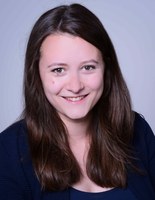
Kristin Litteck is a postdoctoral researcher at the Leibniz Institute for Science and Mathematics Education (IPN) in Kiel, Germany. She earned her PhD in 2024 and holds degrees in Mathematics and English education from Kiel University. Focuses on acquisition of mathematical concepts (derivative/integral) Investigates prior knowledge effects at upper secondary transition Explores intercultural differences in mathematics instruction Develops AI applications for mathematics education Active in the LPA – Learning Progression Analytics and MiO – Mathematik in der Oberstufe projects, her work bridges cognitive theory and educational practice. She serves on the IPN ethics committee since 2025 and has contributed to PME and GDM conference proceedings.
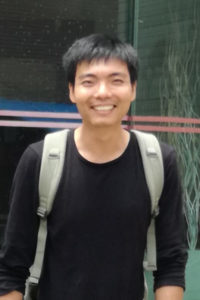
Dr. Gang Li is a Researcher at the Erlangen Centre for Islam and Law in Europe (EZIRE) at Friedrich-Alexander-University Erlangen-Nuremberg since 2023. He previously worked at the International Consortium for Research in the Humanities at FAU (2020-2023) and held lecturing positions at Xinjiang University and Xinjiang Normal University (2012-2015). His research focuses on socio-legal theories, Islamic law in non-Muslim majority contexts, minority rights, and cultural identity within Chinese societies. Current affiliation: FAU Erlangen-Nuremberg (EZIRE) Past affiliations: FAU's International Consortium for Research in Humanities, Xinjiang universities Research spans legal pluralism in China, gender norms under Sharīʿa, EU minority rights frameworks, and ethnographic studies of Muslim communities in Xinjiang, Gansu, and Yunnan. Publications include critical analyses of Islamic education modernization and socio-legal tensions in Chinese Muslim identity formation. Scientific contributions include monographs on Hui Muslim identity and journal articles addressing legal-ethical challenges in minority rights, religious violence, and post-Lisbon EU policies. Conference presentations explore topics like Muslim population dynamics in China and the Tang Code's treatment of Muslims.
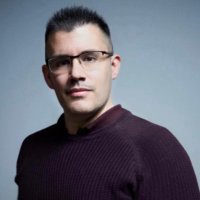
Mengqiu Cao is a Lecturer in Urban Systems Predictive Analytics and Machine Learning at the University College London (UCL) within the Bartlett School of Environment, Energy and Resources . He integrates academia and industry expertise to advance interdisciplinary research at the intersection of transport analysis and urban studies. Research Focus : Sustainable transport, urban mobility, logistics, social equity, and low carbon transitions. Teaching : Coordinates modules on climate sciences, data-driven consumer behavior analysis, and transport policy. Awards : Holds fellowships with the Royal Geographical Society, Royal Statistical Society, and Royal Society of Arts. Publications : Recent works examine green space impacts on mobility, equitable EV charging access, dockless bike-sharing patterns, and 15-minute city frameworks.
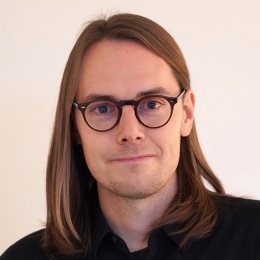
Professor Melanie Volkamer is a leading computer scientist at the Karlsruhe Institute of Technology (KIT), where she heads the SECUSO (Security, Usability, Society) research group within the Institute for Applied Informatics and Formal Description Methods at the Faculty of Business and Economics. She moved her research group from TU Darmstadt to KIT at the beginning of 2018 and has established herself as one of Germany's foremost experts on the human factor in security and privacy. Professor Volkamer's research focuses on human-centered security design, emphasizing that technical security solutions must be developed with user behavior and mental models in mind. She investigates why users often choose less secure passwords, fall for phishing emails, and how they react to security warnings. Her interdisciplinary team combines computer science, mathematics, and psychology to develop security solutions that better protect users against attacks while being usable in real-world contexts. Her publication record shows a strong focus on electronic voting security, email security, and cybersecurity awareness. Recent work includes analyzing the security challenges of online general meetings for listed companies, developing child-friendly authentication systems like KidzPass, and creating effective tools for detecting phishing emails. Her research demonstrates consistent attention to both technical security requirements and human factors in security design. Scientific Awards and Recognition: SECUSO tools recommended by the Federal Office for Information Security NoPhish concept materials included in the Federal Office for Information Security's CyberFibel since January 2021 Development of open source privacy-friendly apps available in the App Store Creation of educational tools like the Phishing Master Shooting Game Professor Volkamer actively advises on cybersecurity policy and regularly contributes to public discourse through media appearances and expert statements. She has supervised student projects that have resulted in practical security tools and has collaborated with government agencies including the Federal Ministry of Education and Research (BMBF) and the EU on security research projects. Her work with the Competence Center for Applied Security Technology (KASTEL) positions her at the forefront of Germany's cybersecurity research efforts. SECUSO, under Volkamer's leadership, develops practical security awareness measures including lectures, videos, flyers, and online tools that help citizens recognize fraudulent messages and better protect themselves online. The research group's work bridges academic research and practical application, making significant contributions to both theoretical understanding and real-world security solutions.
Dr. Amal Zouaq is a Full Professor in the Department of Computer Engineering and Software Engineering at Polytechnique Montréal. She holds the FRQS (Dual) Chair in AI and Digital Health, serves as Director of the LAMA-WeST research laboratory, and is an Associate Member of MILA. Her work bridges artificial intelligence with applications in digital health, cultural heritage, and educational technologies, positioning her at the forefront of interdisciplinary AI research in Canada. Her research focuses on Artificial Intelligence , particularly Natural Language Processing and the Semantic Web . Specific interests include knowledge representation, ontology learning, SPARQL query generation, bias mitigation in language models, and clinical text processing. Her work spans multiple domains including healthcare, cultural heritage, and educational technology, with emphasis on developing practical AI solutions that address real-world challenges in knowledge management and information extraction. Analysis of her recent publications reveals a strong trajectory in advancing NLP techniques for knowledge-intensive applications. Her work increasingly focuses on domain-specific applications in healthcare and cultural heritage, with growing emphasis on ethical AI considerations like bias mitigation. The research demonstrates progression from foundational semantic web technologies toward more sophisticated neural approaches while maintaining strong theoretical grounding in knowledge representation. Scientific Recognition: Holder of the FRQS (Dual) Chair in AI and Digital Health Dr. Zouaq has supervised 23 graduate students to completion, including 1 PhD and 22 Master's theses, with research spanning ontology learning, knowledge representation, and NLP applications. Her supervision record demonstrates consistent mentorship in cutting-edge AI research with practical applications across multiple domains. She actively serves on program committees for major conferences in knowledge engineering, data mining, and semantic web technologies. She directs the LAMA-WeST (Web, Semantics and Text) laboratory , which specializes in natural language processing and artificial intelligence research. The lab focuses on knowledge representation, semantic technologies, and their applications in healthcare, cultural heritage, and educational contexts. As a member of IVADO and MILA, she collaborates with leading AI researchers across Montreal's vibrant AI ecosystem.
Mikel Sanz is a Ramón y Cajal Researcher and Ikerbasque Fellow at the University of the Basque Country (UPV/EHU) in Bilbao, Spain. His research focuses on quantum computing, quantum algorithms, quantum technologies, and quantum metrology. His research interests include: Quantum Computing and Quantum Algorithms Quantum Metrology and Quantum Sensing Digital-Analog Quantum Computing Quantum Machine Learning Quantum Simulation Quantum Error Correction and Mitigation Dr. Sanz's recent publications demonstrate a strong focus on practical applications of quantum computing across various domains. His work spans quantum hardware design, quantum algorithm development, quantum machine learning applications, and quantum metrology techniques. He has made significant contributions to digital-analog quantum computing approaches, quantum kernel methods, and quantum-enhanced sensing technologies. His scientific awards include being selected as a Ramón y Cajal Researcher, a prestigious research position in Spain for experienced researchers, and an Ikerbasque Fellow, which is awarded by the Basque Foundation for Science to attract top researchers to the Basque Country. Dr. Sanz has collaborated extensively with researchers across multiple institutions, contributing to a wide range of quantum information science projects. His work often bridges theoretical quantum information concepts with practical implementations, particularly in superconducting quantum computing platforms. He is actively involved in advancing quantum technologies through his research group at UPV/EHU, focusing on developing novel quantum algorithms and exploring applications of quantum computing in various scientific and industrial domains.
Jina Kang is an Assistant Professor in the Department of Curriculum & Instruction at the University of Illinois Urbana-Champaign , with an affiliate appointment at the Siebel Center for Design . Her research focuses on immersive technology-supported learning environments , collaborative problem-solving dynamics , and educational data mining for understanding multimodal engagement in science education. Recent publications examine embodied cognition in STEM through gesture-based learning simulations, joint attention dynamics in astronomy VR environments, and systematic reviews of immersive technology applications in collaborative education. Her work integrates XR platforms , Bayesian knowledge tracing , and multimodal behavioral analysis to enhance science learning outcomes. She teaches graduate courses including CI 539: Introduction to Educational Data Mining and CI 489: Educational Technology Capstone Course , where students develop technology-supported learning activities using studio-based approaches.
Thomas Ebel is Professor and Head of the Centre for Industrial Electronics at the University of Southern Denmark (SDU) , Institute of Mechanical and Electrical Engineering. A leading expert in power electronics, high-voltage engineering and capacitor technology, he directs large, multi-partner research projects and teaches/supervises at both graduate and PhD levels. Education & Career Path Prof. Ebel holds the academic title Dr. rer. nat. and has been appointed full Professor at SDU. He concurrently serves as Head of Section at the Centre for Industrial Electronics, orchestrating cross-disciplinary research teams and infrastructure. Research Interests Power Electronics & Power Conversion: advanced converter topologies, WBG devices (GaN, SiC), high-frequency magnetics, grid-forming control. Dielectric Materials & Capacitors: polymer and hybrid nanocomposite dielectrics, self-healing metallized film capacitors, aluminium electrolytic capacitors, lifetime modelling and reliability. High-Voltage Engineering & Breakdown Physics: breakdown mechanisms in nanocomposites, corona and partial discharge, insulation coordination. IoT & Data-Driven Monitoring: real-time condition monitoring, digital twins, data-driven RUL estimation for power components. Publication Trends Across 133 research outputs (2018-2025) the dominant themes are (i) construction and reliability of 700 V-class aluminium polymer electrolytic capacitors, (ii) GaN-based power converter optimisation, (iii) hybrid AC/DC microgrid control and harmonic mitigation, and (iv) nanocomposite dielectrics for next-generation capacitors. The 15 most recent articles (2025) reinforce these directions while adding socio-technical energy analytics and green-vehicle powertrains. Scientific Awards Tek Innovation Prize 2023 – awarded for outstanding contributions to power electronics research and industrial innovation. Advising & Funding Prof. Ebel currently supervises ~10 PhD candidates and post-docs including L. Tavares, M. A. Khan, R. Maheshwari, S. Mateen, A. N. Pinky and others. He is Principal Investigator or Head Coordinator of six active projects (2024-2027) valued at >€8 M, spanning ultra-high-efficiency drives, hydrogen-PtX converters, self-healing capacitors and hybrid power-plant concepts. Laboratory & Teams He heads the High-Voltage Power Electronics Laboratory at SDU, equipped with 700 V/200 A capacitor test rigs, GaN/SiC converter prototyping benches, and environmental chambers for accelerated ageing studies. The centre collaborates with 20+ industrial partners and coordinates the international IEA Wind Task 50 on hybrid power plants.
Chun-Liang Li is a research scientist at Apple MLR and an affiliate assistant professor at the Paul G. Allen School of Computer Science & Engineering, University of Washington. His work bridges machine learning theory with practical applications in computer vision and natural language processing, focusing on efficient model training and representation learning. His educational background includes: Ph.D. in Machine Learning from Carnegie Mellon University (2014-2019), supervised by Prof. Barnabás Póczos B.S. and M.S. in Computer Science and Information Engineering from National Taiwan University (2008-2013), supervised by Prof. Hsuan-Tien Lin Li's research centers on generative models and representation learning , with significant contributions to document understanding (FormNet series), multimodal systems (Pic2word), and large language model efficiency . His work consistently addresses real-world challenges like reducing training costs while maintaining performance, as seen in distillation techniques and synthetic data optimization. Analysis of his 2022-2024 publications reveals three dominant trends: (1) LLM efficiency through curriculum training and model updating, (2) structural document understanding via graph-based methods, and (3) multimodal representation learning for vision-language tasks. These reflect his cross-cutting approach to improving model scalability and applicability. His scientific recognition includes: IBM Ph.D. Fellowship (2018) Best student paper runner-up at IJCAI (2017) Double first-place wins in KDD Cup Tracks (2011, 2013) While specific grant details aren't listed, his award-winning KDD Cup performances and extensive publication record suggest strong funding support. He collaborates widely with students and researchers, though formal advisees aren't specified. His current roles at Apple MLR and UW position him at the industry-academia interface for cutting-edge AI development. At Apple, Li contributes to the Machine Learning Research group's core vision-language projects, while his UW affiliation enables academic mentorship and cross-institutional collaboration on foundational ML research.
Maja Elmgren is a Senior Lecturer in Physical Chemistry and Educational Developer at Uppsala University's Department of Chemistry and Faculty of Science and Technology. Since 2009, she has directed the Council for Educational Development (TUR), focusing on academic leadership, chemistry education, and scholarly teaching. Her research spans physical chemistry, chemistry/physics education, and higher education development. Research Interests: Leadership in higher education and doctoral assessment Educational expertise in academia Student learning in thermodynamics and kinetics Chemistry education through international cooperation Quantum mechanics conceptualization Thermal phenomena visualization via infrared cameras Article Trends: Recent publications highlight interdisciplinary learning (chemistry-mathematics), assessment reform in doctoral education, student-centered pedagogy, and technological tools in science education. Subfields include mathematical modeling, entropy understanding, and VR-funded projects on science teacher roles. Scientific Awards: Medal for Merit from Uppsala Science and Technology Student Union (2011) Distinguished Teaching Award from Uppsala University (2001) Academic Roles: Director, Council for Educational Development (TUR) since 2009 Author of "Academic Teaching" (2018) and "Universitetspedagogik" (2016) International collaborations with IUPAC and VR-funded projects Specializes in entropy/thermodynamics education and infrared camera applications
Sebastian Trimpe is a Full Professor and Head of the Institute for Data Science in Mechanical Engineering at RWTH Aachen University, concurrently serving as Co-Executive Director of the RWTH Center for Artificial Intelligence since 2023. Previously, he led a Max Planck Research Group at the Max Planck Institute for Intelligent Systems from 2018 to 2022. His educational background includes: Ph.D. in Dynamic Systems and Control from ETH Zurich (2013) Dipl.-Ing. (M.Sc.) in Electrical Engineering from TU Hamburg (2007) MBA in Technology Management from TU Hamburg (2007) B.Sc. in General Engineering from TU Hamburg (2005) Professor Trimpe's research integrates machine learning with control theory to address safety and efficiency challenges in autonomous systems. His work spans theoretical frameworks for robust decision-making under uncertainty and practical implementations in robotics, with particular emphasis on event-triggered control, distributed systems, and data-efficient learning methodologies. Key contributions include novel approaches to safe reinforcement learning and model predictive control with guaranteed stability. Analysis of his recent publications reveals a pronounced focus on bridging machine learning with control engineering, especially in safety-critical robotics applications. Common themes include distribution-aware learning for medical diagnostics, diffusion-based control approximation, and hardware-in-the-loop validation of theoretical frameworks, demonstrating strong alignment between algorithmic innovation and real-world deployment. His scientific achievements have been recognized with prestigious honors: IFAC World Congress Interactive Paper Prize (2011) Klaus Tschira Award for public understanding of science (2014) Best Paper Award at International Conference on Cyber-Physical Systems (2019) Future Prize by Ewald Marquardt Stiftung (2020) As institutional leader, he directs the Institute for Data Science in Mechanical Engineering and co-leads the RWTH AI Center, overseeing strategic research initiatives and industry collaborations. His academic service includes editorial roles for IEEE Control Systems Society conferences and participation in the Cluster of Excellence 'Internet of Production'. The Institute for Data Science in Mechanical Engineering operates as a multidisciplinary hub where fundamental research in learning-based control meets industrial applications. Current projects focus on drone swarm coordination, deformable object manipulation, and medical diagnostics systems, leveraging both simulation environments and physical testbeds like the Mini Wheelbot platform.
Andreas Sundström is a Lecturer at the Department of Business Administration, Stockholm University . His interdisciplinary research bridges Social Studies of Accounting and Science and Technology Studies (STS) , focusing on knowledge management, organizational practices, and tensions between management tools and business practices. Research Themes : Epistemological foundations of accounting, AI-driven management control, and spatial dynamics in performance indicators. Collaborations : Visiting scholar at Stanford University (2023), UC Berkeley (2016), London School of Economics (2015), and University of Birmingham (2018-2019). Current Project : Leading "AI in management practice: Synergies and tensions between new tools for analysis and new approaches to control" funded by Riksbankens Jubileumsfond (2022-2025). Publications highlight emergent AI applications in management control, experimental research methodologies, and spatial concepts in accounting systems. No scientific awards or student advisement details are explicitly mentioned.
Vanessa Leonardi serves as an Associate Professor in the Department of Methods and Models for Economy, Territory and Finance at Sapienza University of Rome. She teaches English language courses across multiple degree programs including Geographic Sciences and Technologies for the Environment and Health (3rd year), Modern Philology (2nd year), Sustainable Tourism Sciences (1st/2nd year), Literature Music Entertainment (1st year), and Linguistics (1st year). Her research centers on the ideological dimensions of language and translation, with particular emphasis on gender representation in legal and medical texts, corpus-based analysis of academic discourse, and pedagogical innovations for English language instruction. She investigates how power structures manifest in translated materials through linguistic choices and cultural adaptation strategies. Recent publications (2024-2025) demonstrate sustained focus on corpus-driven legal translation studies, intralingual translation in children's literature, and digital communication challenges including emoji translation. Her work consistently examines the intersection of gender ideology with translation practices across diverse text types from EU legal documents to children's books. Dr. Leonardi maintains Wednesday office hours by appointment and is contactable at vanessa.leonardi@uniroma1.it . No scientific awards or student advising information appears in the available records.
Dr hab. Jarema Batorski , prof. UJ , is an Associate Professor at the Institute of Entrepreneurship within the Faculty of Management and Social Communication at Jagiellonian University. His work focuses on organizational learning , crisis management , and their applications in tourism and sports . He has held administrative roles, including Deputy Head of the Research Ethics Committee at his faculty. Research Interests : Organizational learning as a crisis management framework Knowledge management in tourism and sports sectors Open change models in enterprise restructuring Competitive dynamics in sports organizations Article Trends show a consistent focus on crisis response strategies, organizational fragmentation, and VR integration in tourism. His work bridges theoretical models (e.g., double-loop learning) with practical case studies (football coaching changes, pandemic recovery). Publications often emphasize ethical dimensions and cross-sectoral knowledge transfer. Teaching includes courses on contemporary management concepts , crisis management in tourism and sports , and competition in the sports market .
Prof. Dr. Valentina Dagienė serves as a Professor and Senior Researcher at the Educational Systems Group within the Institute of Data Science and Digital Technologies at Vilnius University, Lithuania. Her academic career spans several decades with significant contributions to informatics education globally, particularly through her leadership in the international Bebras contest initiative. Her research focuses on computational thinking education through constructionist learning approaches, with particular emphasis on task design that promotes deep conceptual understanding in K-12 settings. Prof. Dagienė has pioneered methods for integrating computational thinking into primary education curricula while addressing cultural differences in learning approaches. Her work bridges theoretical frameworks with practical classroom implementations, making complex informatics concepts accessible to young learners through engaging short tasks. Analysis of her recent publications reveals a clear progression toward interdisciplinary integration of computational thinking with STEAM education and digital competence frameworks. Her research increasingly addresses assessment methodologies for computational thinking skills and explores the connections between computational and algebraic thinking. The Bebras contest serves as both a research platform and practical implementation vehicle for her educational theories. Prof. Dagienė has established herself as a key figure in international informatics education through her editorial work, conference organization, and cross-national collaborations. She has fostered partnerships between educators and researchers across Europe and beyond, creating sustainable communities around computational thinking education. Her leadership in the Bebras International Contest has engaged millions of students worldwide in computational problem-solving activities. Through her work with the Educational Systems Group, Prof. Dagienė has developed comprehensive teacher training programs that support educators in implementing computational thinking concepts in diverse classroom settings. Her research on student approaches to problem-solving has informed the design of learning environments that accommodate different learning styles and cultural backgrounds.