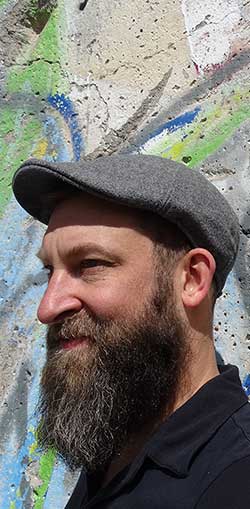
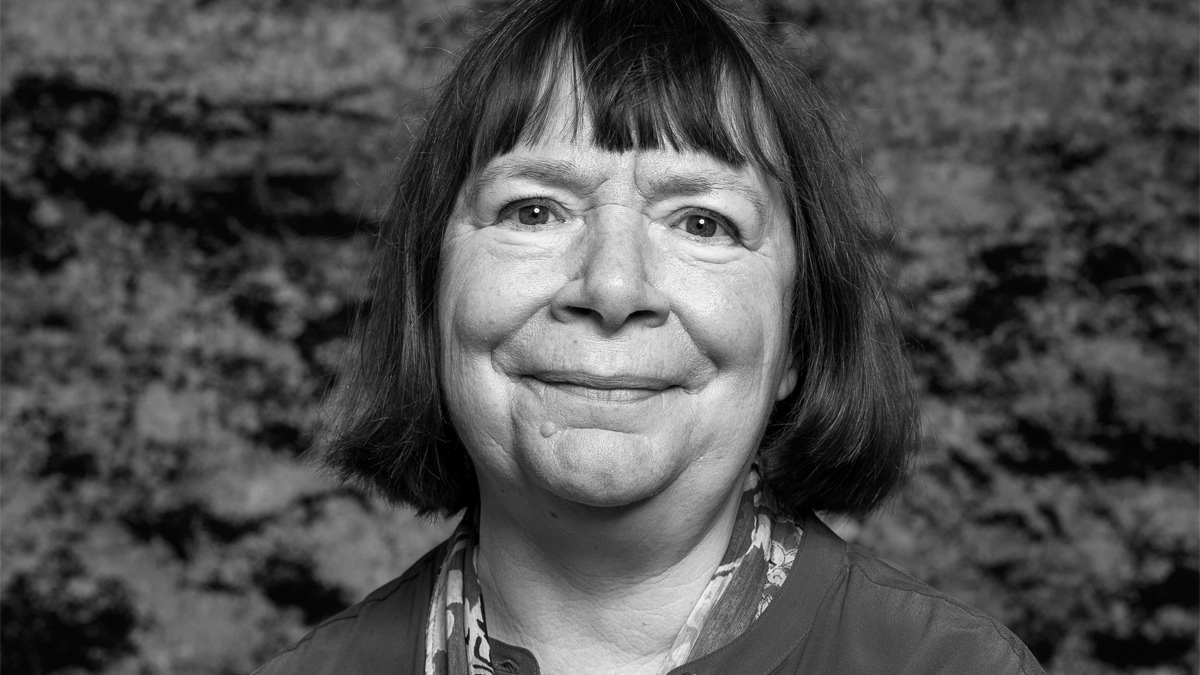
Dr. Immo Warntjes is the Ussher Associate Professor in Early Medieval Irish History at Trinity College Dublin's Department of History. His research focuses on early medieval scientific thought, particularly computus (time-reckoning), the transition from Latin to Arabic science, and the role of vernacular languages in monastic education. He also examines Irish kingship, hagiography, and medieval burial practices, including the separate burial of organs in European nobility. Warntjes has held academic positions at the University of Greifswald (2007–2013) and Queen’s University Belfast. He teaches courses on early Irish Christian history, medieval chronology, and palaeography. His edited volumes include key works on computus scholarship and medieval burial practices. His research outputs include monographs and articles analyzing manuscripts like the Munich Computus and Computus Einsidlensis, exploring their impact on Carolingian science and Irish-Frankish intellectual exchanges. He emphasizes the continuity of late antique learning into the early medieval period, particularly through Irish scholarly milieus influencing Bede and the Carolingian Renaissance. Warntjes' work bridges multiple disciplines: history of science, cultural history, and textual analysis. His studies on Visigothic scientifica and the transmission of Easter tables reveal cross-cultural knowledge transfer mechanisms in pre-modern Europe.
Professor Peter S. Baker (University of Virginia, College of Arts and Sciences, Department of English) is a leading scholar in Old English language and Anglo-Saxon literature. With a PhD from Yale (1978) and BA from Columbia (1974), he has authored major textbooks including the widely adopted Introduction to Old English and The Beowulf Reader . His work bridges traditional philology with digital humanities through the Old English Aerobics platform. Research Focus : Old English language acquisition, Beowulf studies, medieval lexicography, and digital preservation of Anglo-Saxon texts Key Publications : Introduction to Old English (2012), Honour, Exchange and Violence in Beowulf (2013), Æðelgyðe Ellendæda on Wundorlande (2015) His software contributions include Junicode font (specialized for medievalists) and Xgridfit (TrueType font hinting). His scholarship spans textual criticism, poetic meter analysis, and educational innovation.
Anne Lawrence-Mathers is Professor in the Department of History at the University of Reading, specializing in medieval history with particular focus on magical traditions, astrology, and manuscript studies. Her research examines the intersection of science, magic, and society in medieval Europe, reconstructing historical understandings of the natural world through analysis of textual and material sources. Her primary research interests include: Historical development of magical practices and beliefs Medieval astrology and prognostication Manuscript transmission and textual traditions Cultural perceptions of science and the supernatural History of medieval cosmology and meteorology Professor Lawrence-Mathers has authored significant monographs including Magic and Medieval Society (2014) and The True History of Merlin the Magician (2012), which reframe scholarly understanding of magical traditions within their socio-cultural contexts. Her current project analyzes magical manuscripts as material artifacts of cultural exchange. Her work combines meticulous archival research with innovative interdisciplinary approaches spanning history, literature, and anthropology. Publications demonstrate consistent focus on reconstructing medieval mentalities through analysis of understudied primary sources, establishing her as a leading authority in medieval magical traditions.
Jacopo Bisagni is a Lecturer at the School of Languages, Literatures, & Cultures, University of Galway. He specializes in Celtic and Indo-European linguistics, with a focus on medieval manuscript transmission and bilingualism. His academic profile includes extensive teaching in Latin, historical linguistics, and Hiberno-Latin studies. Education: PhD from NUI Galway (2008), Classics and Celtic Linguistics from University of Pisa (2004) His research explores early medieval Irish religious literature , manuscript transmission across Ireland, Brittany, and Francia, and computus (medieval time-reckoning systems). Additional interests include medieval martial culture , historical bilingualism, and the study of musical terminology in early Irish sources. Recent publications focus on early medieval scientific traditions, Breton manuscripts, and multilingualism in computistical texts. He has secured significant funding including the Irish Research Council Laureate Award and Marie Curie supervisory grants. Key Awards: Irish Research Council Laureate Award (2018) Marie Curie Postdoctoral Fellowships (Supervisor, 2023) Lady Gregory Fellowship (2005) Italian Ministry Student Mobility Grant (2004) Bisagni leads the Lutegerus Project on late medieval combat manuals and supervises postgraduate research including Dr Colleen Curran's Breton Palaeography project (2023-2025). His work bridges linguistic analysis, manuscript studies, and cultural history across early medieval Europe.
Brigitte Englisch serves as Professor of Medieval History at Paderborn University's Faculty of Arts and Humanities, where she is affiliated with the Department of Medieval History within the Institute of History. Her office is located at Pohlweg 55, Room N4.308, in Paderborn, Germany, where she maintains regular telephone office hours on Wednesdays from 12:00-13:30. Professor Englisch teaches a comprehensive curriculum covering medieval history, cartography, and worldview concepts, including courses such as 'What Holds the World Together - Cartography and Worldview of the Middle Ages' and 'Paderborn in the Middle Ages.' Her academic profile demonstrates deep engagement with how medieval societies conceptualized time, space, and knowledge through both theoretical frameworks and primary source analysis. Professor Englisch's research spans multiple critical areas of medieval studies. Her primary interests include the history of Spain during the Early and High Middle Ages, the history of Germanic successor kingdoms (particularly the Franks, Visigoths, and Anglo-Saxons), medieval worldview and cartography, computistics and chronology, medieval mental history, the history of natural sciences and technology, educational and intellectual history of the Middle Ages, and Gender History. She approaches these topics through interdisciplinary methodologies that bridge historical analysis with geographical and scientific perspectives, examining how medieval societies structured their understanding of the world through maps, timekeeping systems, and scholarly traditions. Her current research projects reflect this scholarly breadth, including 'Orbis mediaevalis – Media-based exploration of places in the medieval world,' studies on Victorius of Aquitaine and early medieval Easter calculation, investigations into Werl's position between autonomy and territorial power, analysis of the St. Gall monastery plan, and research on medieval cartography and geographical knowledge evolution from Christian worldview to reality-oriented representations. These projects demonstrate her commitment to understanding the complex interplay between religious frameworks and empirical observation in medieval contexts. Professor Englisch's publications reveal a consistent scholarly trajectory examining medieval visualization of the world across five decades of research. Her work spans from the early medieval period (5th-9th centuries) through the high medieval era, with particular attention to how knowledge was preserved, transformed, and transmitted from antiquity. A recurring theme across her publications is the intersection of religious worldview and practical scientific understanding, showing how theological frameworks coexisted with empirical observation and calculation in medieval contexts. Professor Englisch maintains active supervision of Bachelor's and Master's theses, which students may submit digitally. Her teaching portfolio is exceptionally comprehensive, covering general medieval history, the Crusades, Germanic successor kingdoms, Charlemagne's empire, Ottonian through Staufer periods, French and English history, Westphalia in the Middle Ages, historical auxiliary sciences, medieval script and documents, cartography, the history of science, time and space concepts, natural sciences and technology history, mathematics history, mental history aspects including wealth and poverty, childhood and death, environmental history, monastic culture, heretics and saints' veneration, women and power, cultural contacts between Arabic and Western cultures, and memory culture. She also leads specialized excursions throughout Europe focusing on specific medieval themes.
Dr. Natalia Turkiewicz serves as an Assistant Professor at the John Paul II Catholic University of Lublin , affiliated with the Department of Source Studies, Archival Studies and History Didactics within the Faculty of Humanities . Graduated with dual Master's degrees in history and classical philology (specialization: pedagogy) Received two doctoral degrees: (1) Humanities (History) in 2017 for her work on Jan of Głogów's Computus chirometralis, and (2) Literary Studies in 2019 on Isidore of Seville's cosmological writings Her research focuses on medieval chronology , computational systems , ancient and medieval cosmology , and historical demography , particularly analyzing metrical books and population registration sources . She has extensively worked on translating and publishing medieval time-measurement texts like Bede the Venerable's The Nature of the Universe and Amalariusz of Metz's Holy Rites of the Church . Recent publications address the evolution of vital records in Lublin, the Durand Computus in liturgical contexts, and astronomical chronology in Isidore of Seville's works. She integrates auxiliary sciences of history into educational frameworks and investigates demographic patterns through church records. Active in academic dissemination through: Guest lectures at institutions like Adam Mickiewicz University in Poznań Conferences on Galicia's socio-political transformations Workshops on family history and genealogy Editorial contributions to commemorative publications
Máirín MacCarron is a Senior Lecturer in the Department of Digital Humanities at University College Cork (UCC), appointed in 2019. Previously, she held academic positions at the University of Galway and the University of Sheffield. Elected a Fellow of the Royal Historical Society in 2020, she leads the GENCHRON project (2022–2026) on gender and chronology in medieval historiography. Her research bridges medieval studies and digital methodologies. Education: PhD in Medieval History, University College Cork (2008) Postgraduate Diploma in Teaching and Learning in Higher Education, University College Cork (2009) Research Focus: MacCarron's work integrates time reckoning (computus), gender studies, and digital approaches like network science. She investigates how medieval sources conceptualized time, power, and social structures, with emphasis on underrepresented female voices. Her projects include quantitative analysis of gendered networks in historical narratives and re-evaluations of chronology in pre-900 CE texts. Publication Trends: Her articles emphasize network analysis of medieval texts, gender politics in late antiquity, and Bede's computistical scholarship. Recurring themes include social connectivity, female agency in historical narratives, and interdisciplinary digital methodologies applied to pre-modern sources. Awards and Honors: Irish Historical Research Prize (2021) Royal Historical Society Fellowship (2020) Multiple NUI publication awards (2019, 2022) Moore Institute Visiting Fellowship (2018) Grants and Projects: GENCHRON (2022–2026): €596,548 from Irish Research Council Women, Conflict and Peace (2018–2021): €196,000 from Leverhulme Trust Digital Edgeworth Network (2020–2021): €38,000 from Irish Research Council Collaborations: Directs labs/networks including GENCHRON and Digital Edgeworth Network. Collaborates internationally with researchers in Germany (Universität Bonn), UK (Nottingham, Leicester), and Brazil. Internal UCC partnerships span Digital Humanities, English, and INFANT Research Centre.
Rebecca Stephenson is an Associate Professor in the School of English, Drama and Film at University College Dublin (UCD), where she specializes in early medieval English literature, with a focus on the interplay between Latin and English during the Anglo-Saxon period. Her research explores monastic identity, the Benedictine Reform, and the literary and linguistic dynamics of Old English and Latin texts. Her research interests include Early Medieval English Studies, Anglo-Saxon Literature, Old English, Medieval Literature, Latin and English Linguistic Interactions, Benedictine Reform, Monastic Identity, Hermeneutic Style, Gender Studies in Medieval Literature, Manuscript Studies, Science and Literature in Anglo-Saxon England, Computistics, Spiritual Warfare in Medieval Texts, Feminist Approaches to Medieval Studies, and Textual Identity . She has published extensively on these topics, with a major monograph titled The Politics of Language: Byrhtferth, Ælfric, and the Multilingual Identity of the Benedictine Reform , and is currently working on a new book project, Writing Poetry in the Stars: Interactions between Science and Literature in Anglo-Saxon England . Her recent scholarly output reveals a strong trend in analyzing the intersections of science, religion, and literature in the early medieval period, particularly through computistics, liturgical practices, and allegorical interpretations. She frequently examines how monastic communities used language and textual practices to define identity, especially in opposition to secular clergy. Her work also reflects a growing engagement with feminist perspectives in medieval studies. Teaching Award - Top teaching contribution in the English Department (2013) Tommy and Mary Barham Endowed Professorship in English (2013) Teaching Award - Top teaching contribution in the English Department (2012) Research Award - Top research contribution in the English department (2011) Teaching Award - Top teaching contribution in the English Department (2011) Research Award - Top research contribution in the English department (2010) Rebecca Stephenson has been actively involved in teaching and curriculum development, coordinating modules such as Advanced Old & Middle English , Reading Medieval Literature , and Apocalypse Then: Old English Literature . She has received significant grant funding, including support for an international conference on Conflicting Chronologies in the Pre-modern World and a research network trip to Toronto under the Science of Apocalypse grant. She is also an active member of professional associations such as the International Society of Anglo-Saxonists and the Teachers of Old English in Britain and Ireland. Her editorial work includes co-editing volumes like Feminist Approaches to Early Medieval English Studies and Textual Identities in Early Medieval England . She leads and contributes to interdisciplinary research initiatives, often bridging literature, history, science, and gender studies. Her lab or research group is not explicitly named, but her collaborative projects and conference organization indicate leadership in a vibrant scholarly community focused on early medieval England.