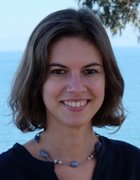
Prof. Dr. Olivia Merkel is the Chair of Drug Delivery at LMU Munich (since 2022) and holds a tenured professorship in the Faculty of Pharmacy. Her academic journey includes postdoctoral work at Philipps-Universität Marburg (2009), a PhD in Pharmaceutics (2009), and a tenure-track professorship at Wayne State University (2011–2017). She leads the Merkel Lab, focusing on advanced drug delivery systems, particularly siRNA and nanoparticle-based therapies. Research interests: Nanomedicine, targeted drug delivery, polymer engineering, and pulmonary delivery systems. Editorial roles: Molecular Pharmaceutics, Journal of Controlled Release, and European Journal of Pharmaceutics and Biopharmaceutics. Award: 2020 PHOENIX Pharma Science Award. Her lab combines experimental and computational approaches, with recent work on machine learning-driven polymer discovery and molecular dynamics simulations. Over 20 students and researchers collaborate in her group, addressing challenges in lung fibrosis treatment and T-cell targeting in asthma.
Marina L. Gavrilova is a Professor at the University of Calgary, Canada. Her research focuses on biometric systems, computer vision, and machine learning with an emphasis on multimodal recognition and security applications. She has authored numerous publications in top journals and conferences, contributing to advancements in fields like emotion-aware de-identification, generative adversarial networks, and ethical AI frameworks in healthcare. Her work spans social behavioral biometrics, gait recognition, masked face recognition, and aesthetic-based person identification. Key contributions include frameworks for ethical AI in care systems, fusion algorithms for multi-biometric systems, and innovations in visual and audio signal processing. Collaborations with experts like Osvaldo Gervasi, Jon G. Rokne, and Padma Polash Paul highlight her interdisciplinary approach. Publications emphasize practical applications such as privacy-preserved biometrics, emotion detection from social media, and adaptive systems for template aging. Despite no explicit mention of grants or labs, her extensive co-author network and frequent citations indicate significant academic influence.
Konstantinos Nikitopoulos is a Professor at the University of Surrey , UK, specializing in Wireless Communications and Signal Processing . His research focuses on MIMO Systems , Open-RAN , and Non-Linear Processing for next-generation wireless networks. His recent work explores Analogue Processing for Tbps Wireless Systems and Neuromorphic Computing in MU-MIMO detection. He has developed frameworks like MIMO-SoftiPHY and SACCESS for software-based radio acceleration and power-efficient network design. Key Publications : Power-Efficient RIC, NL-COMM, NeuroMIMO Collaborators : Rahim Tafazolli, George Katsaros, Marcin Filo His research impacts 6G Network Development through innovations in Beamforming , Channel Estimation , and Software-Defined Radios .
Adlen Ksentini is a Professor at EURECOM, a leading graduate school and research center in Sophia Antipolis, France, specializing in digital science and communication systems. His extensive research focuses on next-generation mobile networks (5G/6G), network management, and the integration of artificial intelligence with telecommunications infrastructure. Dr. Ksentini actively contributes to major EU research initiatives including 6G-BRICKS and AC3, serving as a key researcher and project leader in the development of future network architectures. Dr. Ksentini's research interests center around network slicing, intent-based networking, edge computing, and the application of machine learning to network management problems. His work bridges theoretical advancements with practical implementations in 5G/6G systems, with particular emphasis on zero-touch network management, energy efficiency optimization, quality of service assurance, and the integration of large language models with network operations. His research has significantly contributed to the development of O-RAN (Open Radio Access Network) frameworks and the evolution of network automation. His recent publication trends reveal a strategic shift toward AI-native network architectures, with increasing focus on integrating large language models (LLMs) with network management systems. His work demonstrates a clear progression from traditional network management approaches to more autonomous, AI-powered systems capable of intent-based configuration, self-optimization, and predictive maintenance. The publications show strong emphasis on practical implementations within the 6G research ecosystem, addressing critical challenges in network slicing, resource allocation, and energy efficiency. As a research supervisor, Dr. Ksentini mentors several PhD students including Abdelkader Mekrache, Karim Boutiba, Bouziane Brik, and Houda Hafi, who frequently appear as co-authors on his publications. His research is primarily funded through major EU research projects such as 6G-BRICKS (Building Reusable Testbed Infrastructures for Cloud-to-Device Breakthrough Technologies) and AC3 (which focuses on Cloud Edge Continuum). Dr. Ksentini is actively involved with the 6G-BRICKS project consortium and the AC3 project team, where he contributes to developing next-generation network architectures that integrate communication, computing, and sensing capabilities. His work within these projects focuses on creating reusable testbed infrastructures and addressing security and trust management challenges in the cloud-edge continuum.
Paul J. Kennedy is a Professor at the University of Technology Sydney's Centre for Artificial Intelligence. He holds a PhD from the same institution (1999). His research focuses on machine learning applications in healthcare, bioinformatics, medical imaging, and data mining. Key areas include developing algorithms for genomic data analysis, healthcare pathway modeling, and edge-cloud frameworks for omics data. Education: PhD in Artificial Intelligence (1999, UTS). Research interests span machine learning, health informatics, and data compression. Notable work includes studies on administrative health records, lung nodule detection, and virtual reality-based cancer cohort analysis. He has co-authored over 100 publications across journals like BMC Bioinformatics, IEEE Transactions, and Artificial Intelligence in Medicine. Advising: Collaborates extensively with students/researchers but no explicit student list provided. Grants and labs: Active in interdisciplinary projects involving medical and computational teams, though specific grants are not detailed here.
Michael Sedlmair is a Professor at the University of Stuttgart's VISUS (Visualization Research Center). His research focuses on visualization, augmented reality, and immersive analytics. He holds a PhD in Computer Science from Ludwig Maximilians University Munich (2010). Affiliations: Department of Computer Science, University of Stuttgart Research interests span: Augmented Reality applications in collaboration and industry Immersive analytics and spatial data visualization Human-computer interaction in AR/VR contexts His work emphasizes practical applications such as human-robot collaboration, medical simulations, and molecular visualization. Over 200+ publications since 2008 highlight contributions to visualization theory and tool development.
Prof. Dr. Markus Strohmaier holds the Chair of Data Science in Economics and Social Sciences at the University of Mannheim's Business School. His research focuses on applying machine learning and data science to understand socio-economic systems and human behavior, leveraging text, relational, and emerging data types. He teaches graduate courses and supervises theses in these areas. Research interests include algorithmic fairness, behavioral analysis via computational methods, and the societal implications of AI. Notable work addresses demographic representativeness in large language models, bias mitigation in rankings, and gender gaps in blockchain adoption. His team is located at L15, 3rd floor – Room 307 in Mannheim, adjacent to the central station. Collaborations span interdisciplinary topics like social media analysis, network dynamics, and computational social science. Key contributions include developing benchmarks for neural network similarity (Resi) and frameworks for measuring algorithmic fairness perceptions (FairCeptron). Research often bridges technical innovation with societal impact, addressing ethical challenges in AI and data-driven decision-making.
Dr. Maxime Ramzi is a Researcher at the University of Münster, affiliated with the Mathematisches Institut and the Faculty of Mathematics and Computer Science. He is an Investigator in Mathematics Münster and a member of the Collaborative Research Centre (CRC) 1442 'Geometry: Deformations and Rigidity'. Previously, he completed his PhD at the University of Copenhagen under the supervision of Jesper Grodal and Markus Land. His research focuses on advanced topics in topology, including algebraic topology, homotopy theory, and category theory, with particular emphasis on ∞-categories, motives, and homological algebra. His recent publications explore foundational questions in these areas, such as the universality of Barwick’s unfurling construction and the properties of topological Hochschild homology. Ramzi collaborates with leading mathematicians like Thomas Nikolaus, Arthur Bartels, and Maria Yakerson. His work contributes to the 'K-Groups and Cohomology' research program within Mathematics Münster. Despite no listed scientific awards, his academic trajectory reflects a strong focus on innovative research in geometric and algebraic topology. Education: PhD in Mathematics, University of Copenhagen (2024) Supervisors: Jesper Grodal and Markus Land Research Interests: Algebraic Topology: Homotopy Theory, ∞-Categories Categorical Structures: Motives, Stable Homotopy Theory Applications in Algebraic Geometry and K-Theory Grants & Projects: Member of CRC 1442 'Geometry: Deformations and Rigidity' Contributor to 'K-Groups and Cohomology' (T1) program Labs/Teams: Active in the working groups of Professors Thomas Nikolaus and Arthur Bartels at the University of Münster.
Dr. Stephan Rave is a Researcher in the Institute for Analysis and Numerics at the University of Münster. He is affiliated with the Applied Mathematics Münster cluster and serves as an Investigator in Mathematics Münster. His work focuses on numerical analysis, scientific computing, and machine learning, with a strong emphasis on model reduction techniques for complex systems. Education : PhD in Mathematics (2012), University of Münster, thesis on finitely summable K-homology. Master's and Bachelor's degrees in Mathematics from the University of Münster. Research Interests : Dr. Rave specializes in model order reduction (MOR) methods, including reduced basis techniques, localized orthogonal decomposition (LOD), and nonlinear approximation strategies. His work addresses challenges in multiscale modeling, domain decomposition, and parametrized partial differential equations. He also develops open-source software tools like pyMOR for MOR and contributes to initiatives like the MaRDI (Mathematical Research Data Initiative) to enhance interoperability in scientific computing. Projects : Key initiatives include the MaRDI project (2021–2026), EXC 2044 Cluster of Excellence (Geometry-based modeling), and MULTIBAT (lithium-ion battery simulation). His research bridges theoretical developments with practical applications in battery modeling, electrochemistry, and computational fluid dynamics. Grants & Awards : Funded by DFG, the German Federal Ministry of Research, and internal university grants, his work addresses strategic areas like sustainable research software and energy storage systems. He leads projects on distributed model reduction and communication-avoiding algorithms. Teaching : Dr. Rave teaches advanced numerical methods courses, including Model Order Reduction, Numerical Methods for PDEs, and Python-based computational labs. He co-organizes seminars and workshops on MOR and scientific software engineering.
Jens von Wolfersdorf is a Professor at the University of Stuttgart's Faculty of Engineering, Department of Mechanical Engineering. His research focuses on advanced thermal management systems for high-speed aerospace applications, particularly in the areas of heat transfer, fluid dynamics, and combustion. He specializes in experimental and numerical methods for analyzing complex flows in rotating and stationary cooling channels, transpiration cooling for rocket engines, and turbulence modeling. His work integrates cutting-edge techniques such as thermochromic liquid crystal (TLC) measurements, particle image velocimetry (PIV), and computational fluid dynamics (CFD) to validate novel cooling configurations. Key projects include the COOREFLEX-Turbo initiative and contributions to the European ATLLAS-II program for high-speed vehicle materials. Recent studies emphasize rotational heat transfer effects in two-pass cooling channels, additive manufacturing of ribbed cooling structures, and validation of coupled FEM-CFD frameworks. His research addresses challenges in aerospace thermal protection, turbine blade cooling, and scramjet combustor efficiency. Publications span over 15 years, with a focus on transient heat transfer, flow visualization, and material characterization for transpiration-cooled systems. Collaborations involve experimental facilities for high-speed flows and advanced thermal measurement systems.
Prof. Dr. Björn Sothmann is an Associate Professor and Head of Chair in the Department of Theoretical Physics IV at the University of Duisburg-Essen (Germany). He holds a Diploma in Physics from Ruhr-Universität Bochum (2006) and a PhD in Physics from Universität Duisburg-Essen (2011). His research focuses on theoretical physics, particularly in quantum materials and condensed matter systems. Previously, he conducted postdoctoral research at the Université de Genève (Switzerland, 2011–2015) and Universität Würzburg (Germany, 2015–2016). His academic leadership includes heading the Theoretical Physics IV department, which explores cutting-edge topics in computational quantum materials and solid-state theory. While no specific awards are listed, his work contributes to foundational advancements in theoretical physics. Advising and grants are not detailed here, but his research group includes PhD and master’s students, as indicated by departmental listings. The Lehrstuhl für Theoretische Physik IV (Chair of Theoretical Physics IV) is based at Hubland Süd, Geb. M1 in Würzburg, collaborating with institutions across Europe. His research trajectory reflects a strong emphasis on interdisciplinary theoretical frameworks.
Prof. Can Dincer is a Professor of Sensors and Wearables for Healthcare at the TUM School of Computation, Information and Technology, Technische Universität München (TUM). His research focuses on bioanalytical materials, wearable sensors, and AI-driven diagnostics for One-Health applications, integrating disposable sensor technology with data science. He holds a doctorate from the University of Freiburg (summa cum laude, 2016) and worked as a visiting scientist at Imperial College London before joining TUM in 2024. He is a member of the Munich Institute of Biomedical Engineering (MIBE). Key research interests include: Development of wearable biosensors for real-time health monitoring CRISPR-based diagnostics for nucleic acids and proteins AI integration for therapeutic drug monitoring in sepsis and other critical conditions Environmental health connections via point-of-need diagnostics Notable achievements include the 2021 Biosensors & Bioelectronics Best Paper Award and inclusion in Stanford's World's Top 2% Scientists since 2022. His work spans clinical applications, microfluidic platforms, and nanotechnology-based solutions for healthcare challenges. Publications highlight innovations like optogenetic bioassays (Science Advances, 2024), CRISPR-powered multiplexed biosensors, and wearable systems for continuous biomarker monitoring. His research bridges material science, electrical engineering, and biomedicine to create practical diagnostic tools. Prof. Dincer collaborates across disciplines, focusing on translating lab innovations into clinical and commercial applications through advanced sensor technologies.
Prof. Dr. Beate Escher is Head of the Department of Cell Toxicology at the Helmholtz Centre for Environmental Research (UFZ) in Leipzig, Germany. She holds professorial positions at Eberhard Karls University of Tübingen , is a Privatdozent at ETH Zurich , and is affiliated with the University of Queensland and Griffith University in Australia. Her research program focuses on advancing in vitro bioassays and New Approach Methods (NAMs) for environmental and human health risk assessment of micropollutants. Her research interests lie at the intersection of environmental toxicology , molecular toxicology , and exposure science . She develops and applies bioanalytical tools for water quality assessment, with a focus on pharmaceuticals, pesticides, and transformation products. Her work includes mechanism-based toxicity assessment , toxicokinetic-toxicodynamic (TKTD) modeling , and the development of the CITEPro robotic bioassay platform for high-throughput screening. She integrates omics data , computational modeling , and machine learning to improve chemical hazard characterization. Recent publications highlight trends in chemical mixture toxicity , safe-by-design chemicals , ionic compound assessment , and machine learning applications in toxicology. Her work increasingly leverages data-driven approaches to prioritize contaminants and predict biological effects across species. Scientific Awards: Highly Cited Researcher (Web of Science/Clarivate, Top 0.1%, 2020) Outstanding Achievements in Environmental Science and Technology (ES&T & ACS ENVR, 2023) Advising and Grants: She supervises multiple doctoral students and leads major collaborative projects such as InCeTo, MibiTox, nanoINHALE, and SafePol. She received an Australian Research Council grant (2011–2014) and leads Swiss National Science Foundation-funded initiatives. She was a member of the German Science Council (2017–2024) and serves on the Board of Reviewing Editors of SCIENCE . Labs and Teams: She leads the Cell Toxicology team at UFZ, which includes researchers such as Dr. Luise Henneberger, Dr. Julia Huchthausen, and Dr. Haotian Wang. The team operates the CITEPro platform and contributes to international consortia focused on exposome research and chemical safety.
Prof. Raphaële Clément is affiliated with the Materials Research Laboratory at the University of California, Santa Barbara. Her research focuses on using NMR spectroscopy to investigate ionic conduction mechanisms in battery materials, bridging atomic-level structural insights with macroscopic electrochemical performance. Her work integrates solid-state NMR , pulsed field gradient NMR , and first-principles calculations to understand ion diffusion processes in systems like Li/Na-ion conducting rocksalt halides and polymeric ionic liquids. This multiscale approach connects local structural features to material synthesis and processing conditions. Notably, her 2022 publication on disordered battery materials highlights the interplay between crystallinity, ion dynamics, and electrolyte functionality. While specific awards or student advisement details are not mentioned in the provided text, her methodologies emphasize the synergy between experimental and computational analysis in advancing energy storage technologies.
Ruben Martins is an Assistant Professor at Carnegie Mellon University's School of Computer Science and serves as the program director of the Master of Science in Computer Science (MSCS) . His research focuses on the intersection of constraint programming, program synthesis, analysis, and verification, with recent work aiming to make formal methods tools more accessible through automated reasoning. Ruben earned his Ph.D. with honors from the Technical University of Lisbon, Portugal (2013) , followed by postdoctoral research at the University of Oxford (2014-2015) and UT Austin (2015-2017) . Research Interests : Ruben's work bridges constraint programming and program synthesis , with applications in software verification , optimization , and automated reasoning . He has developed award-winning tools like Open-WBO , a modular MaxSAT solver that has won gold medals in international competitions. His publications span top-tier venues such as POPL , PLDI , FSE , SAT , and CP , often addressing real-world challenges from program analysis to network security. Scientific Awards include: Distinguished Paper Award at PLDI 2018 Distinguished Paper Award at FSE 2021 Distinguished Paper Award at SAT 2022 Gold medals for Open-WBO in MaxSAT competitions Teaching & Advising : Ruben mentors Ph.D., Master’s, and undergraduate students in research projects related to program synthesis, formal methods, and constraint solving. He teaches courses such as Bug Catching: Automated Program Verification and Advanced Topics in Logic: Automated Reasoning and Satisfiability , emphasizing hands-on experience with tools like Why3. His advising spans topics from AI-driven program repair to network protocol verification , fostering collaboration across disciplines.