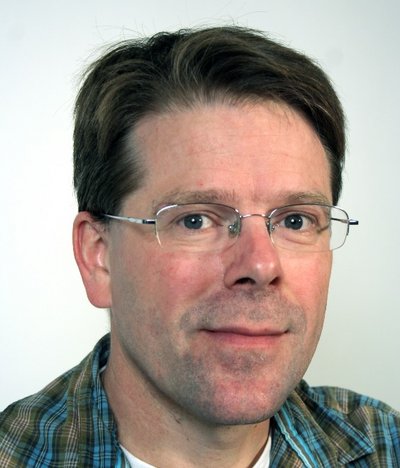
Alec Wright is a Chancellor’s Fellow in Audio Machine Learning at the University of Edinburgh, affiliated with the Edinburgh College of Art and the Music department. He focuses on applying machine learning to musical audio signal processing and synthesis, particularly through neural network-based audio effects modeling. Education: Doctor of Science (DSc) in Neural Modelling of Audio Effects, Aalto University (2023) Master of Science (MSc) in Acoustics and Music Technology, University of Edinburgh (2018) Master of Engineering (MEng) in Mechanical Engineering, University of Manchester (2014) His research explores neural network architectures for real-time audio processing, guitar amplifier emulation, and diffusion-based distortion restoration. Key methodologies include Recurrent Neural Networks (RNNs), neural ordinary differential equations, and synthetic data generation for foundation models. Recent publications highlight sample rate conversion techniques, interpolation filters, and nonlinear distortion modeling. These works span domains like signal processing, computational audio, and physical modeling synthesis. Scientific Awards: Chancellor’s Fellow, University of Edinburgh As an active researcher, he collaborates internationally and contributes to frameworks like Open-Amp for audio effect modeling. No formal student advising details are currently available.
Olaf Steinbach is a University Professor (Univ.-Prof.) at the Institute of Applied Mathematics at Graz University of Technology. His academic career spans over three decades with continuous research activity from 1992 to the present, including publications scheduled for 2026. He serves as a project manager for several research initiatives including the Special Research Area (SFB) F90 Computational Electric Machine Laboratory, which runs from 2022 to 2026. Professor Steinbach's research interests primarily focus on Numerical Analysis and Computational Mathematics . His work centers around developing and analyzing advanced numerical methods, particularly Finite Element Methods (FEM) and Boundary Element Methods (BEM), for solving partial differential equations (PDEs) and optimal control problems. His research spans both theoretical aspects (such as error analysis, stability, and convergence) and practical applications (including electric machines, electromagnetics, and biomechanics). He has made significant contributions to space-time finite element methods, which treat time as an additional dimension in the discretization process, leading to more robust and efficient solvers for time-dependent problems. Analysis of his recent publications (2021-2026) reveals a strong focus on optimal control problems governed by partial differential equations, with particular emphasis on elliptic, parabolic, and hyperbolic PDEs. His work demonstrates a consistent pattern of developing robust numerical methods with rigorous error analysis, often incorporating regularization techniques to handle challenging constraints. The applications span computational electromagnetics (particularly electric machines), fluid dynamics, and wave propagation problems. His research increasingly incorporates advanced computational techniques including parallel computing and isogeometric analysis. Professor Steinbach has supervised numerous doctoral students and has been actively involved in organizing academic events, including summer schools on Boundary Element Methods. His collaborative network extends across multiple disciplines and institutions, reflecting the interdisciplinary nature of his work in computational mathematics. His research has been supported through multiple significant projects including DK-W1244 Doctoral Program on Partial Differential Equations, the EU CASOPT project on optimization of industrial devices, and the ongoing Special Research Area on Computational Electric Machine Laboratory. These projects demonstrate his leadership in establishing research frameworks that bridge theoretical mathematics with practical engineering applications. Professor Steinbach maintains an active research group within the Institute of Applied Mathematics, collaborating closely with researchers in computational engineering, electrical engineering, and biomechanics. His work on the Computational Electric Machine Laboratory represents a particularly strong interdisciplinary effort combining mathematical theory with electrical engineering applications.
Prof. Dr. Mirko Meboldt serves as a Full Professor at ETH Zurich's Department of Mechanical and Process Engineering, where he holds dual leadership roles as Head of Lecturers' Conference and Deputy Head of the Institute of Machine Tools and Manufacturing. His office is located at Leonhardstrasse 21 in Zürich, Switzerland. Professor Meboldt's research spans multiple engineering domains with particular emphasis on: User-oriented product innovations New production technologies Mechanical engineering applications Biomedical device development CAD/PDM systems standardization Engineering education methodologies His recent publication portfolio reveals a distinctive interdisciplinary approach that bridges traditional mechanical engineering with cutting-edge medical applications. Key research trends include human-robot collaboration systems, intelligent medical devices for neurosurgery, augmented reality training platforms for medical procedures, advanced manufacturing processes, and AI-assisted healthcare communication analysis. This diverse research portfolio demonstrates his commitment to solving complex real-world engineering challenges through cross-disciplinary innovation. Professor Meboldt places significant emphasis on the educational impact of his work, explicitly stating that he 'regards the impact on the education of young engineers and its relevance for industry as a key motivation and benchmark for his research.' His industrial background at Hilti AG informs his practical approach to academic research, ensuring strong industry relevance across all his projects.
Juha Järvelä is a Staff Scientist at the Department of Built Environment , Aalto University, and a member of the Aalto Environmental Hydraulics Lab . His research focuses on environmental hydraulics, particularly on Hydraulics of environmental channels Modeling of vegetated flows Environmentally sound hydraulic engineering Järvelä's research spans fluid dynamics in river systems, with an emphasis on vegetation-flow-sediment interactions. Key areas include flow resistance in flexible and rigid vegetation, hydrodynamic modeling of floodplains, and nature-based solutions for water management. His recent publications investigate Blockage effects of woody vegetation Longitudinal dispersion in patchy vegetation Two-stage channel performance in agricultural settings Hydrodynamic characterization of natural-like plants Järvelä has received notable scientific recognition, including 2014 : Outstanding Reviewer Award from the American Geophysical Union for Water Resources Research 2005 : Doctoral Dissertation Award from the Oskari Vilamo Foundation Contact: juha.jarvela@aalto.fi | Phone: +358505626727 | Postal: Tietotie 1 E, 02150 Espoo, Finland
Prof. Yon Visell is an Associate Professor at the University of California, Santa Barbara (UCSB) with appointments in the Department of Bioengineering, Department of Electrical and Computer Engineering, and Department of Mechanical Engineering. He directs the RE Touch Lab, which focuses on haptics, robotics, and interactive technologies, including sensorimotor augmentation, soft robotics, and virtual reality applications. The lab is affiliated with the Media Arts and Technology Program, Communication and Signal Processing group (ECE), Dynamic Systems and Control group (ME), California NanoSystems Institute, Center for Polymers and Organic Solids, UCSB Research Center for Virtual Environments and Behavior, and UCSB Robotics Group. Education: PhD in Electrical and Computer Engineering from McGill University, MA in Physics from University of Texas, Austin, and BA in Physics from Wesleyan University His research spans robotics, haptics, biomechanics, and soft electronics, aiming to advance human-computer interaction and wearable technologies. Recent work includes light-driven tactile displays, biomechanical filtering in tactile encoding, and haptic systems for VR and healthcare. The lab has received numerous awards at IEEE Haptics Symposium, World Haptics Conference, and EuroHaptics Society events. 2025 Best Demonstration Awards at IEEE World Haptics Conference 2024 Best Paper at IEEE Haptics Symposium 2023 Best Journal Paper at IEEE Transactions on Haptics Visell's group has pioneered wave-based haptic rendering, tactile holography, and soft wearable robotics. They have developed tools like SkinSource for tactile biomechanics simulation and collaborated with institutions in North America, Europe, and Japan. Current projects involve photonics-driven tactile systems, soft robotics for therapy, and next-generation haptic interfaces while mentoring students like Gregory Reardon (2024 EuroHaptics Best Dissertation), Max Linnander (IEEE Haptics awards), and Neeli Tummala (SWE Intel Scholar). Research Grants: Funded by NSF, tech, and healthcare industries Lab: RE Touch Lab at California NanoSystems Institute Collaborations: with TU Dresden, Northwestern University, NC State, UCLA, and others
John C. Doyle is the Jean-Lou Chameau Professor of Control and Dynamical Systems, Electrical Engineering, and BioEngineering at the California Institute of Technology (Caltech), where he holds appointments in the Division of Engineering and Applied Science with primary affiliation in the Control and Dynamical Systems Department. His research bridges theoretical foundations with applications across biological, technological, medical, and ecological networks. He earned a BS and MS in Electrical Engineering from MIT (1977) and a PhD in Mathematics from UC Berkeley (1984), followed by consultancy at Honeywell Systems and Research Center (1976-1990). MIT: BS & MS in Electrical Engineering (1977) UC Berkeley: PhD in Mathematics (1984) Doyle's research centers on universal laws and architectures in complex systems, emphasizing robustness-efficiency tradeoffs, speed-accuracy tradeoffs (SATs), diversity-enabled sweet spots (DeSS), bowtie/hourglass structures, and evolvability. His work pioneers System Level Synthesis (SLS) for control systems with sparse, local, saturating, delayed, noisy, quantized, and distributed (SLSDNQD) components, integrating control theory, computation, communication, and machine learning to address challenges from neural networks to infrastructure resilience. Key concepts include virtualization, horizontal transfer, and virality in multiscale systems. Analysis of his publication trends reveals consistent interdisciplinary impact across neuroscience (brain connectivity modeling), systems biology (metabolic oscillations), network science (internet topology), and physics (turbulence, earthquakes), with recurring themes of robust-efficiency limits and architectural principles governing complex networks. His work demonstrates exceptional translation from abstract theory to practical tools like the Matlab Robust Control Toolbox and Systems Biology Markup Language (SBML). His scientific recognition includes: 1990 IEEE Baker Prize (ranked among top 10 most important mathematics papers 1981-1993) Three IEEE Automatic Control Transactions Awards (1998, 1999, 2021) ACM Sigcomm Paper Prize (2004) and Test of Time Award (2016) IEEE Control Systems Field Award (2004) Multiple early-career honors including IEEE Centennial Outstanding Young Engineer (1984) Doyle has mentored generations of students whose contributions include foundational software tools adopted globally. His research has secured sustained funding from NSF, NIH, and other agencies supporting theoretical advances in control frameworks and their applications to biomedical systems, network infrastructure, and environmental modeling. The SBML initiative exemplifies his group's impact in standardizing computational biology research. He leads a highly collaborative research ecosystem at Caltech that integrates engineers, biologists, neuroscientists, and computer scientists to develop universal principles for complex networks. Current efforts focus on translating theoretical insights into health technologies, resilient infrastructure, and climate-responsive systems through the application of robust-efficiency frameworks to emerging challenges in cyber-physical and biological domains.
Dr. Chenming Zhang is an Advanced Queensland Industry Research Fellow at the School of Civil Engineering, The University of Queensland. His research focuses on hydrological processes in coastal and terrestrial groundwater systems, with particular emphasis on evaporation-driven mass and heat transport in soils and tailings, and hydrogeochemical dynamics in aquifers and mine waste systems. Specializes in IoT-based environmental monitoring Develops numerical models for coastal aquifer dynamics Conducts field and laboratory experiments on tailings behavior Research interests span coastal hydrology, groundwater modeling, mine waste management, and environmental monitoring. He works on contamination transport, aquifer protection, and climate impacts on water systems. Recent publications analyze: Iron curtain formation in subterranean estuaries Sea water intrusion mechanisms Salinity dynamics in tidal wetlands Smart sewer monitoring systems Scientific awards include the prestigious Advanced Queensland Industry Research Fellowship. He supervises multiple PhD projects on mine waste hydrology and coastal aquifer management, with notable collaboration on: Evolution Mining's gold tailings projects ARC Discovery Projects on coastal processes Grange Resources' PAF cell instrumentation His work combines field measurements, laboratory testing, and computational modeling to address critical environmental challenges in mining and coastal zones.
Pedram Mortazavi is an Assistant Professor at the University of Minnesota, based in the Civil Engineering Building, Minneapolis, with contact details including email pmortaza@umn.edu and office address 236 Civil Engineering Building, 500 Pillsbury Drive SE. His research centers on structural resilience through: Steel structures and large-scale experimental testing Cast steel energy dissipative systems and passive control devices (damping/isolation) Self-centering systems to mitigate residual deformations Advanced simulation methods including hybrid and multi-platform techniques Validation and codification of new structural systems for seismic applications Analysis of his 2023-2025 publications reveals concentrated work on eccentrically braced frames with replaceable cast steel links, hybrid simulation methodologies, and low-cost re-centering solutions. His research consistently targets enhanced seismic performance, ductility, and resilience via experimental validation and practical design innovations, with significant focus on friction mitigation in multi-axial testing and ultra-low cycle fatigue of structural components.
Giorgio Ascoli is a University Professor in the Department of Bioengineering at George Mason University, where he has been since 1997. He is the Founding Director of the Center for Neural Informatics, Structures, & Plasticity (CN3) and Founding Editor-in-Chief of the journal Neuroinformatics . His affiliations span computational neuroanatomy, neuroinformatics, and hippocampal modeling. Education : PhD in Biochemistry and Neuroscience (1996), Scuola Normale Superiore; MS in Chemistry and Biochemistry (1993), Pisa University; BS in Chemistry and Physics (1991), Scuola Normale Superiore. Dr. Ascoli investigates the relationship between brain structure, activity, and function from cellular to circuit levels. His research focuses on anatomically plausible neural networks to model mammalian brains, particularly the hippocampus, with implications for understanding human memory and consciousness . He pioneered computational neuroanatomy, developing tools like L-Neuron for neuronal shape modeling and curating NeuroMorpho.Org , a central repository for digitally reconstructed neurons. His recent publications emphasize neuronal classification , connectome analysis , and biologically informed machine learning . Awards include the 2012 Outstanding Faculty Award (Virginia), 2022 AIMBE fellowship , and 2023 Presidential Faculty Excellence Awards . He has mentored over 20 graduate students and postdoctoral fellows, with funding from NIH, NSF, DARPA, and private foundations. Scientific Contributions : Over 137 peer-reviewed articles, 4 patents, 2 authored/edited books, and leadership in NeuroMorpho.Org and Hippocampome. Grants : $20M+ in cumulative funding, including NIH R01s, NSF BRAIN EAGERs, and Burroughs-Wellcome Trust support. Labs : Leads the Computational Neuroanatomy Group within CN3, focusing on hippocampal modeling, neuronal morphology, and consciousness theories.
Michael Knap is an Associate Professor of Collective Quantum Dynamics at the Technical University of Munich (TUM), within the Department of Physics at the TUM School of Natural Sciences. His research group focuses on condensed matter theory, quantum many-body systems, and quantum simulation. Knap holds office in room 5101.01.037 at James-Franck-Str. 1, 85748 Garching b. München, and can be reached at michael.knap@ph.tum.de or +49 (89) 289 - 53777. Prof. Knap's research delves into the rich physics of quantum many-body systems, particularly exploring non-equilibrium dynamics and transport phenomena in ultracold quantum gases, interacting light-matter systems, and correlated quantum materials. His work spans multiple subfields including topological phases of matter, quantum simulation with trapped ions, fracton physics, and quantum computation. He develops novel numerical approaches based on quantum information theory and utilizes artificial intelligence and machine learning to tackle challenging problems in condensed matter physics. His group's research connects fundamental theoretical questions with experimental implementations in quantum simulators. The analysis of Prof. Knap's recent publications (2023-2025) reveals a strong focus on topological quantum matter, quantum simulation, and emergent phenomena in constrained quantum systems. His work frequently bridges condensed matter theory with quantum information science, as evidenced by publications on fracton hydrodynamics, higher-form symmetries, and quantum error correction. There's a clear progression toward increasingly complex quantum systems and connections to experimental implementations on quantum processors. His research shows significant interdisciplinary reach, connecting condensed matter physics with quantum computing and quantum information theory. ERC Consolidator Grant (2025) ERC Starting Grant (2019) Supervisory Award, TUM Department of Physics (2018) Promotio sub auspiciis Praesidentis rei publicae, Austria (2013) Prof. Knap has established a robust research program supported by prestigious European Research Council grants. His group actively collaborates with both theoretical and experimental groups worldwide, particularly in the quantum simulation community. He has supervised numerous students through Master's Seminars on Collective Quantum Dynamics covering topics like quantum simulation with trapped ions and theoretical quantum computation. His research has received significant attention, with several publications featured as Editors' suggestions and Research Highlights in leading journals. The Collective Quantum Dynamics group maintains strong connections with experimental quantum simulation efforts, particularly in the areas of ultracold atoms and trapped ion systems. Knap's theoretical work often provides frameworks for interpreting experimental results in quantum simulators, creating a productive feedback loop between theory and experiment. His group participates in collaborative research networks focused on advancing quantum simulation capabilities and understanding fundamental aspects of quantum many-body physics.
Luís Miguel Mendonça Rato is an Associate Professor at the Universidade de Évora and a Senior Researcher with a PhD at Centro ALGORITMI. He is affiliated with the CST R&D Group and VISTA Lab R&D Lab, focusing on interdisciplinary research at the intersection of Electrical Engineering, Computer Science, and Agricultural/Biomedical applications. Academic Degree: PhD Current Position: Associate Professor Labs: VISTA Lab Researcher IDs: ORCID 0000-0003-4492-7548, ResearcherID A-9152-2013, CiênciaID A914-6344-CD2D His research spans machine learning applications in Agricultural Engineering (Sentinel-2 satellite data for nutrient analysis), Biomedical Imaging (MRI-ADC texture analysis for tumor classification), and Control Systems (predictive control algorithms for water delivery canals and solar fields). With an h-index of 11 and 51 publications, his work emphasizes hybrid systems combining traditional engineering with computational innovation. Recent publications highlight trends in SLAM efficiency (2024), cloud service optimization (2022), and deep learning for medical imaging (2022-2023). He has contributed to Smart Cities initiatives through projects like M-Traffic (2006) and NanoSen-AQM (2020). As a senior researcher, he leads projects in the CST R&D Group and VISTA Lab , with notable work in the Universidade de Évora ecosystem.
Olle Eriksson is a Professor in the Department of Physics and Astronomy at Uppsala University, specifically affiliated with the Materials Theory division. His research focuses on theoretical and computational approaches to understanding magnetic materials and their properties. His primary research interests include first principles calculations of bulk materials and surfaces, with particular emphasis on magnetism and chemical bonding. His methodological expertise spans full-potential implementations of density functional theory, dynamical mean-field theory, and self-interaction correction. He also conducts calculations of finite temperature magnetism using Monte Carlo simulations and atomistic spin-dynamics simulations, as well as investigations into lattice dynamics and finite temperature effects on phase stability. Professor Eriksson's recent work demonstrates a strong focus on magnetocaloric materials for magnetic refrigeration applications, two-dimensional magnetic materials including van der Waals magnets, topological magnetic textures such as skyrmions, and computational methods for improving density functional theory. His research has significant implications for energy-efficient cooling technologies, next-generation spintronic devices, and fundamental understanding of quantum magnetic phenomena. Materials Science : Magnetocaloric materials, battery materials, 2D materials Computational Physics : Density functional theory, Monte Carlo simulations, spin dynamics Magnetism : Topological textures, chiral magnets, ultrafast dynamics His extensive publication record shows consistent contributions to high-impact journals across physics and materials science, with a notable increase in interdisciplinary work connecting computational physics with materials design for energy applications.
Theo Arentze is a Full Professor at Eindhoven University of Technology (TU/e) in the Department of the Built Environment, leading the Real Estate Management and Development group. He is affiliated with EAISI Health and EAISI Mobility research institutes. Education: MSc in Psychology (Cognitive Psychology & AI) from Groningen University, PhD from TU/e Urban Planning Research: Spatial choice behavior, decision support systems, activity-based modeling, agent-based simulation His research integrates bounded rationality into spatial choice models to enhance behavioral realism, with applications in real-estate management , neighborhood development , healthy cities , and hybrid work environments . Recent work includes child-friendly urban planning and energy-efficient housing impacts . Prominent article themes include: Hybrid work location decisions Urban public space affective experiences Child friendliness in residential choices Sustainable energy preferences Spatial decision support systems Social network modeling Scientific recognition includes: Best Poster Award (2025) - Computational Urban Planning Conference Long Paper of Distinction (2021) - Healthy Buildings Europe EuroFM Best Paper Award (2017) Pyke Johnson Award (2016) As an educator, he teaches courses in Urban Planning , Housing Economics , and Quantitative Research Methods . His multidisciplinary team combines expertise from psychology, sociology, and urban economics to create high-quality built environments through behavioral research.
Dr. Feras Dayoub is a Senior Lecturer at the School of Computer and Mathematical Sciences (Faculty of Sciences, Engineering and Technology) at the University of Adelaide , specializing in Embodied AI and Robotic Vision within the Australian Institute for Machine Learning (AIML) . He co-directs the CROSSING French-Australian laboratory for human-autonomous agent teaming and holds an Adjunct position at the Queensland University of Technology (QUT) , serving as an Associate Investigator at its Centre for Robotics . Previously, he was a Chief Investigator at the ARC Centre of Excellence for Robotic Vision . His research focuses on advancing reliable deployment of computer vision and machine learning on mobile robots in real-world environments. Applied projects include agricultural automation , environmental conservation , and autonomous infrastructure monitoring . He has published extensively on topics like object detection , domain adaptation , 3D representation learning , and vision-language navigation , with a particular emphasis on robustness in dynamic and partially observed environments. Dr. Dayoub is also an educator specializing in programming , computer vision , and robotic perception . He contributes to open-source robotics research through tools like AARK (Autonomous Racing Toolkit) and has led teams developing solutions for precision agriculture (e.g., Deepfruits fruit detection system) and environmental monitoring (e.g., Crown-Of-Thorns starfish detection ). Key Collaborations : CROSSING Lab, QUT Centre for Robotics Research Themes : Embodied AI, Robust Perception, Domain Adaptation
Oliver Schmitz is a Professor in the Department of Nuclear Engineering & Engineering Physics at the University of Wisconsin-Madison, where he leads research in plasma edge physics for magnetic confinement fusion and next-generation particle accelerators. His work bridges experimental plasma science, computational modeling, and diagnostic development with applications in both tokamaks and stellarators. Education: PhD (2006), Heinrich-Heine-Universität Diploma (2003), Rheinische Friedrich-Wilhelms-Universität Professor Schmitz's research focuses on 3D plasma edge transport phenomena, plasma-wall interactions, and helicon plasma generation for wakefield accelerators. His group employs advanced computational tools like EMC3-EIRENE for 3D plasma edge modeling and develops active spectroscopic diagnostics to measure plasma parameters through atomic emission analysis. Key themes include resonant magnetic perturbation effects in tokamaks, inherent 3D physics in stellarators, and high-density plasma sustainment for accelerator applications. He actively develops atomic models to interpret spectroscopic data and operates helicon plasma test stands for fundamental process studies. Recent publications reveal strong emphasis on experimental-computational integration for fusion boundary physics, with significant contributions to ITER divertor solutions, stellarator exhaust optimization, and plasma-facing materials. The work shows growing focus on wakefield accelerator diagnostics through helicon plasma sources and advanced spectroscopy, alongside persistent innovation in 3D modeling of plasma-material interfaces. Scientific Awards: 2020 Thomas and Suzanne Werner Chair Professorship 2018 UW Madison Teaching Academy Fellow 2017 ITER Science Fellowship & Vilas Mid-Career Award 2015 DOE Early Career Award & NSF CAREER Award 2011 Torkil Jensen Award (General Atomics) 2007 Günther-Leibfried-Preis (Jülich) Professor Schmitz directs multiple DOE/NSF-funded research programs including his UW Madison laboratory and AWAKE project contributions at CERN. He mentors graduate students through NE 890/990 thesis research courses and has developed nationally recognized K-12 outreach including the "Plasma Show" for elementary schools and "Plasma Academy" for high-school educators developing AP Physics curriculum modules. His leadership extends to university governance through the Kaufman seminar on academic leadership. His research group operates helicon plasma test stands and computational facilities for EMC3-EIRENE simulations, with current efforts focused on high-density plasma sources for accelerators and resilient divertor solutions for stellarators. The group maintains strong international collaborations with ITER, CERN, and major fusion facilities worldwide.