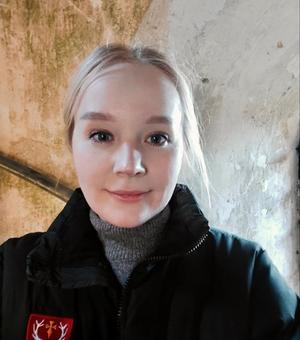
Loli Kim is a Lecturer on Modern Korea at the Faculty of Asian and Middle Eastern Studies, University of Oxford, with a Leverhulme Postdoctoral Research Fellowship (2022–2025). She specializes in cross-cultural multimodal analysis of Asian communication systems, particularly Korean cinema, folklore, and representation in media. Education: DPhil in Asian and Middle Eastern Studies (2019–2022), University of Oxford Research Focus: Multimodal discourse analysis, foodscaping theory, haenyeo women’s communication Editorial Roles: Assistant Editor of European Journal of Korean Studies; General Editor of 'Foodscaping Asia' series Her work develops the Segmented Film Discourse Representation Structures (SFDRS) methodology for analyzing Korean films' narrative conventions, including violence in revenge cinema and socio-pragmatic dimensions of fashion. She collaborates globally as a visiting lecturer and conference organizer. Kimi’s recent publications examine multimodal translation gaps, cultural representation in children’s literature, and the sociocultural implications of foodscaping. She has delivered keynote talks at institutions including Edinburgh University and SOAS, and co-organizes the Translating Squid Game talks series.
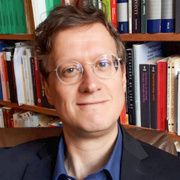
Prof. Dr. Oliver Müller is a Professor at the Department of Philosophy, University of Freiburg, and serves as Vice Dean of the Faculty of Philosophy. His academic journey includes a doctorate from Humboldt University Berlin (2005) and a habilitation in Philosophy (2012). Müller leads research on Philosophical Anthropology, Philosophy of Technology, and Ethics, with a focus on human-machine interactions and Anthropocene ethics. He supervises doctoral and postdoctoral researchers across projects like livMatS and BrainLinks-BrainTools. Research interests span neuroethics, transhumanism, and socio-technological systems, emphasizing ethical frameworks for emerging technologies. Publications explore AI ethics, drone warfare, and phenomenological embodiment, reflecting interdisciplinary engagement with neuroscience and environmental philosophy. Honors include the MTZ Bioethics Award and Heisenberg Fellowship. Müller directs participatory discourse initiatives bridging art and science, fostering public engagement with technological ethics. His work advances critical dialogues on human enhancement and ecological responsibility in the digital age.
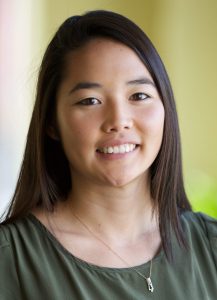
Imogen Forbes-Macphail is an Assistant Professor at the University of California, Davis, specializing in the interdisciplinary intersections of nineteenth-century British poetry and mathematical thought. Her current book project, Line and Number: Formal Problems in Nineteenth-Century Poetry and Mathematics , examines how Victorian poets and mathematicians engaged with analogous formal challenges. Victorian Poetry Caucus Representative, North American Victorian Studies Association Co-Editor (with Anna Henchman), Special Issue of Nineteenth-Century Gender Studies on women’s writing and scientific knowledge production (“Longing to Know”) Research Focus: Forbes-Macphail’s work bridges literary formalism and historical scientific methodologies, particularly exploring topics like computational proof, topological poetics, and the mysticism inherent in Victorian-era mathematical and poetic discourse. Her interdisciplinary approach highlights how mathematical concepts influenced poetic structures and vice versa. Scientific Contributions: Her publications span analyses of the Four-Color Theorem, Ada Lovelace’s literary-scientific legacy, and the gendered dynamics of 19th-century knowledge production. Key trends include the aestheticization of mathematical rigor, the role of formalism in shaping Victorian intellectual paradigms, and crossdisciplinary epistemological inquiries. Honorable Mention, “Expanding the Field” Essay Prize, Northeast Victorian Studies Association (2022) Susan Morgan Graduate Student Essay Prize, Interdisciplinary Nineteenth-Century Studies (2019) Sally Mitchell Prize, North American Victorian Studies Association (2018) Honorable Mention, Susan Morgan Graduate Student Essay Prize (2018) Sussex-Samuel Prize, Australasian Universities Language and Literature Association (2013) Forbes-Macphail’s teaching includes courses such as ENL 164: Writing Science Publications , emphasizing the synthesis of scientific and literary communication. She previously held a Junior Fellowship at the Harvard Society of Fellows (2022–25), underscoring her prominence in Victorian studies.
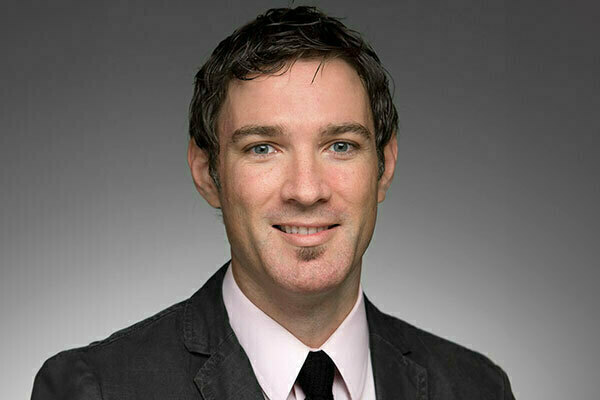
Vaishak Belle is a Reader in Logic and Learning at the School of Informatics, University of Edinburgh, and serves as Director of Research and Innovation at the Bayes Centre (40% position). His academic career focuses on the critical intersection of artificial intelligence, formal logic, and machine learning systems. His research spans multiple domains within AI: Neurosymbolic AI integration approaches Logic-based machine learning frameworks Ethics, fairness, and responsibility in AI systems Generative AI and its societal impact Robotics with advanced reasoning capabilities Causal modeling and probabilistic reasoning Belle leads a research laboratory dedicated to advancing neurosymbolic AI, which combines the explainability of symbolic systems with the learning capabilities of neural networks. His recent work has explored abduction in logical frameworks, formal languages for AI safety, and the relevance of logic for general-purpose AI systems. He has made significant contributions to bridging the gap between theoretical AI foundations and practical applications. His publications demonstrate consistent focus on creating AI systems that can reason formally while learning from data, with applications ranging from robotics to ethical decision-making frameworks. His research addresses fundamental challenges in developing trustworthy, explainable AI that can operate safely in complex environments. Beyond technical research, Belle is actively engaged in AI education through executive programs on AI leadership and ethics, and has contributed to public understanding through his children's book "The girl and the robot" which explores human-robot relationships and emotional projection onto artificial agents. He maintains an active presence in the international AI research community, regularly participating in major workshops including Dagstuhl seminars on neurosymbolic AI, and collaborating with researchers across disciplines from computer science to philosophy.
Joanna Millstein is a Post-doctoral Fellow in Geophysics at the Colorado School of Mines. She earned her Ph.D. in Geophysics from the Massachusetts Institute of Technology in 2023 as part of the MIT-WHOI Joint Program in Oceanography and Engineering, where her dissertation focused on The Flow and Fracture of Antarctic Ice Shelves . She also holds an A.B. in Earth Sciences from Dartmouth College (2017). Her research centers on the deformation and fracture of glacier ice, working at the intersection of fracture mechanics, remote sensing (particularly SAR and InSAR processing), statistical mechanics, and stochastic models. Millstein uses observational data from satellites and field measurements to derive mechanical and statistical models for glacier ice processes, with particular focus on reconciling observations of ice fracture and iceberg calving with theoretical models. Her work aims to resolve the nonlinear physics of glacier ice to better understand future global climate change impacts. Millstein's publication record shows a strong focus on Antarctic ice dynamics, with recent work applying extreme value theory to analyze 47 years of iceberg calving events. Her research demonstrates consistent attention to both theoretical modeling and practical applications for understanding climate change impacts on polar regions. She has developed computational tools including CryoCloud, reflecting her commitment to open science and cloud-based infrastructure for cryosphere research. Her scientific contributions span ice shelf mechanics, fracture prediction, rheology, and statistical modeling of glacial processes. Millstein maintains an active research presence with publications extending to 2025, demonstrating ongoing contributions to the field of glaciology and climate science. She is affiliated with the glaciology research center at Colorado School of Mines and maintains an active GitHub presence with climate-related code repositories. Her work bridges theoretical geophysics with practical climate change impact assessment, particularly regarding ice sheet stability and sea level rise projections.
Miyuki Hino is an Assistant Professor in the Department of City and Regional Planning and an Adjunct Assistant Professor in the Environment, Ecology, and Energy Program at the University of North Carolina at Chapel Hill. She holds a Ph.D. in Environment and Resources from Stanford University and a B.S. in Chemical Engineering from Yale University. Her research focuses on climate hazards, governance, and public policy , with emphasis on equitable adaptation to climate change. Key areas include sea level rise impacts, flood risk on property markets, and managed retreat strategies. She has conducted extensive work on floodplain development policies, household relocation programs, and community resilience frameworks. Dr. Hino's interdisciplinary approach integrates environmental science, urban planning, and social equity . She collaborates with academic and municipal partners, such as the Center for Urban and Regional Studies and Annapolis, MD local governments, to develop actionable solutions for climate adaptation. Her work bridges technical analyses (e.g., sensor networks, machine learning) with policy design to ensure both effectiveness and justice in climate responses. Recent projects emphasize preventing future 'trapped households' by analyzing zoning policies and market dynamics that drive risky development. She advocates for climate-smart growth strategies to balance economic needs with environmental safety, while addressing disparities in vulnerability across communities. Her research has been featured in Science Advances , Nature Climate Change , and interdisciplinary journals. She actively engages with policymakers to translate findings into practical measures, such as equitable buyout programs and floodplain management reforms.
Finlay Maguire is an Assistant Professor jointly appointed in the Faculty of Computer Science and the Department of Community Health & Epidemiology at Dalhousie University. He leads the Maguire Lab, which develops data-driven methods to address health and social crises through genomic epidemiology and interdisciplinary health data science. He is also affiliated with the Shared Hospital Laboratory, Sunnybrook Research Institute, and multiple national and international public health consortia including PHA4GE, CanCOGeN, and IRIDA. PhD: University College London / Natural History Museum (2016) MA: University of Oxford (2011) Donald Hill Family Fellowship, Dalhousie University (2021) Dr. Maguire's research focuses on two main areas: genomic epidemiology of infectious diseases and interdisciplinary health data science collaborations . His work in genomic epidemiology includes developing bioinformatics and machine learning tools to study antimicrobial resistance (AMR) and SARS-CoV-2 dynamics, often in collaboration with public health agencies. His broader health data science work addresses issues such as online radicalization, healthcare access for refugees, and autism-related language use, combining computational methods with social science. His recent publications (2023–2025) reflect a strong trend in pathogen genomics , AMR , zoonotic spillover , and computational social science . He has published on novel coronaviruses in bats, SARS-CoV-2 animal models, invasive Group A Streptococcus, and sociological analyses of incel communities. Much of this work involves tool development (e.g., ArgNorm, Pathoplexus) and data standardization (e.g., PHA4GE metadata standards). Finalist, 2024 Discovery Awards (Emerging Professional) 2023 President’s Research Excellence Award for an Emerging Investigator, Dalhousie Finalist, 2023 Discovery Awards (Emerging Professional) Funding from CIHR, NSERC, Genome Canada, SSHRC, BMGF Dr. Maguire actively mentors graduate students and postdocs, including PhD candidates in Computer Science and MSc students in Community Health & Epidemiology. He has secured major training grants such as the CIHR Health Research Training Platform and the Canadian One Health Training Program for Emerging Zoonoses. He also contributes to capacity-building initiatives like MicroResearch in Ghana and Kenya. The Maguire Lab is embedded in a rich network of collaborations, including the CARD database, Public Health Agency of Canada, Canadian Food Inspection Agency, and Sunnybrook Health Sciences Centre. The lab emphasizes open science, reproducible research, and interdisciplinary training, as seen in the development of open-source tools and participation in international consortia.
Aylwyn Scally is a researcher at the Department of Genetics, University of Cambridge, specializing in human evolutionary genetics and ancestry. His work focuses on computational and mathematical models of genome evolution, leveraging population-scale datasets and archeogenetic evidence to explore ancient human populations and their spatial dynamics. University: University of Cambridge Department: Department of Genetics Fields of Interest: Human Evolutionary Genetics, Population Genetics, Ancestry Analysis, Paleobiology, Environmental Genomics, Genome Evolution Scally's research integrates spatial dynamics into genetic models, offering insights into demographic, social, and cultural factors in ancient populations. His methodologies have broader applications for studying other species as genomic data becomes available. Recent publications highlight his work on mutation rate analysis, historical migration patterns, and ancestral population structures. These studies often employ computational simulations and large-scale genomic datasets to address evolutionary questions. He is associated with the Cambridge NERC Doctoral Landscape Awards (CREATES) and C-CLEAR DTP, contributing to training and collaborative research in genetics and environmental genomics.
Robert Wellington serves as Associate Professor and Director of the Centre for Art History & Art Theory at the School of Art & Design, Australian National University (ANU), within the College of Arts & Social Sciences. His academic leadership focuses on advancing art historical research and public engagement through institutional initiatives. His research spans Art History, Early Modern European Art (particularly Louis XIV's France), Museum Studies, Public Humanities, and Cultural Heritage. Wellington investigates transcultural object exchange, royal iconography, and identity construction through material culture, with emphasis on Versailles, medals, and marginalia. His work bridges historical scholarship with contemporary public humanities applications in museums and digital archives. Analysis of his 2020-2024 publications reveals concentrated exploration of Louis XIV's cultural legacy, Versailles' global impact, and the evolving role of humanities institutions. He pioneers digital critical editions while examining how objects shape identity across cultural boundaries, consistently connecting historical practices to modern museum and archival challenges. No scientific awards were documented in the provided materials. As Centre Director, Wellington oversees research programs and institutional partnerships, though specific student advisees and grant details remain unlisted in available sources. His leadership facilitates interdisciplinary projects including the Jean-Benjamin de Laborde digital edition initiative. The Centre for Art History & Art Theory functions as a research hub under Wellington's direction, driving public humanities innovation through the ANU's Art & Design Seminar Series, Visiting Artist Program, and collaborative projects with national collections. Current initiatives focus on digital heritage and community-engaged scholarship within the School of Art & Design framework.
M. Christine Boyer is a Professor of Urbanism and the William R. Kenan Jr. Professor of Architecture and Urbanism at Princeton University's School of Architecture. She received her B.A. from Goucher College, M.S. from the University of Pennsylvania, and M.C.P. and Ph.D. from MIT. Her research bridges urban history, city planning, preservation, and digital technologies. B.A., Goucher College M.S., University of Pennsylvania M.C.P./Ph.D., Massachusetts Institute of Technology Her work examines intersections between urban history, collective memory, and cybernetics in urban design. Recent research focuses on heritage terrorism, urbicide, and post-conflict urban reconstruction, reflecting her expertise in critical urban theory and digital urbanism. Notable scientific recognition includes the Department of Art and Archaeology Publication Fund award (2010) for her work on Le Corbusier. She has presented lectures on Cold War urbanism and disasters like Hurricane Katrina's impact on New Orleans. As director of Princeton's Undergraduate Urban Studies Certificate Program, she shapes urban pedagogy while collaborating internationally through workshops in Athens and conferences addressing spatial analysis of terrorism and urban security.
Adam Wickberg is a researcher in the Division of History of Science, Technology and Environment at KTH Royal Institute of Technology in Stockholm. He serves as co-director of the VR Excellence Centre for Anthropocene History and deputy director of the KTH Environmental Humanities Lab . His work critically examines the intersections of digitalization, sustainability , and the Anthropocene , focusing on their social, political, and historical dimensions. He leads the research project The Mediated Planet: Claiming data for environmental SDGs and has held visiting positions at the Max Planck Institute for the History of Science in Berlin. Education : Not explicitly stated His research spans media studies, environmental history, critical data studies , and postcolonial science and technology studies . Key themes include: Digital twins and marine futures AI ethics for climate justice Colonial histories of environmental data Temporal dimensions of Anthropocene governance Environing media as epistemological tools Planetary datafication systems Recent publications explore how data infrastructures shape environmental governance and how historical media practices inform contemporary sustainability challenges. He has contributed to journals like New Media and Society , Nature , and Critical Inquiry , while engaging in public debates through op-eds in Dagens Nyheter and Aftonbladet . Teaching : Courses include Artificial Intelligence and Sustainable Development (AK122V), Environmental History (AK2210), and The Anthropocene (AK126V). Labs/Teams : Leads the Environmental Humanities Lab and collaborates with the WASP-HS Community .
Matthew Payne is an Associate Professor in the Department of Film, Television, and Theatre at the University of Notre Dame. His affiliations include roles as Director of Graduate Studies and regional director for the Learning Games Initiative, a multi-institute research collective focused on game archiving and education. His research spans video game studies, media literacy, military entertainment, and the cultural history of video games. He explores play theory, media and war, and the intersection of media production with new technologies. The 15 most recent articles highlight his focus on video game studies, transmedia narratives, and the cultural implications of gaming. These works cover topics from Nintendo Amiibo to slow game time mechanics in Red Dead Redemption 2, with recurring themes of military representation and ludic storytelling. Matthew Payne has co-edited notable works including How to Play Video Games and Joystick Soldiers , emphasizing collaborative approaches to game studies and critical analysis of military gaming.
Timothy R. Tangherlini serves as the Elizabeth H. and Eugene A. Shurtleff Chair in Undergraduate Education and Professor in the Department of Scandinavian and the School of Information at the University of California, Berkeley. A distinguished folklorist and ethnographer, he has pioneered computational approaches to folklore studies, bridging traditional humanities scholarship with cutting-edge digital methods. His research expertise spans multiple interconnected domains: Digital humanities and computational folkloristics Danish and Scandinavian cultural traditions Network analysis of narrative structures Machine learning applications in cultural analysis Conspiracy theory formation and transmission Korean cultural studies and K-Pop analysis Tangherlini's work focuses on how stories circulate across social networks and how individuals use narratives to negotiate ideology within their social groups. He has been instrumental in developing the field of Culture Analytics, co-directing a three-year program at the NSF's Institute for Pure and Applied Mathematics and leading the NEH's Institute for Advanced Topics in Digital Humanities on Network Analysis for the Humanities. His research combines ethnographic depth with computational sophistication, creating novel methodologies for analyzing large cultural corpora. His scholarly contributions have earned him significant recognition: Fellow of the American Folklore Society Fellow of the Royal Gustav Adolf Academy (one of Sweden's Royal Academies) Elizabeth H. and Eugene A. Shurtleff Chair in Undergraduate Education Tangherlini has secured substantial funding from prestigious organizations including the NEH, NSF, NIH, AFOSR, Mellon Foundation, Nordic Council of Ministers, and Google. His work on conspiracy theories, K-Pop choreography analysis, and historical Danish folklore has garnered media attention, demonstrating the public relevance of his research. With extensive international experience including appointments at the University of Copenhagen, University of Iceland, and Harvard University, he maintains a global scholarly perspective while contributing significantly to undergraduate education at Berkeley.
Benjamin Mako Hill is an Associate Professor in the University of Washington Department of Communication and an Adjunct Associate Professor in Human-Centered Design & Engineering , the Paul G. Allen School of Computer Science & Engineering , and the Information School at UW. He is a Faculty Associate at the Berkman Klein Center for Internet and Society at Harvard University and a Fellow at the Center for Information Technology Policy at Princeton University during the 2023–2024 academic year. Educational Background : PhD in an interdepartmental program at Massachusetts Institute of Technology (MIT) , involving the MIT Sloan School of Management and the MIT Media Lab , advised by Eric von Hippel, Yochai Benkler, Tom Malone, and Mitch Resnick. MS in Media Arts and Sciences from MIT. B.A. in Technological and Legal History from Hampshire College . Research Interests span peer production, online communities, collective action, cooperation, learning, and computer-mediated communication. His work explores how communication and information technologies shape social outcomes in collaborative environments like Wikipedia and Linux, focusing on governance, moderation, anonymity, and educational platforms such as Scratch. Article Trends : His publications analyze peer production dynamics, privacy in open collaboration, and computational thinking in youth. Topics include underproduction in open source software, algorithmic fairness, taboo knowledge production, and legitimate peripheral participation in online communities. Methodologies combine big data, quasi-experimental, and comparative analyses. Scientific Awards : Dordick Award for Best Dissertation (2013). CHI '22 Best Paper Honorable Mention (2022). CSCW '18 Best Paper Honorable Mention (2018). CHI '17 Best Paper Honorable Mention (2017). CSCW '13 Best Paper Award (2013). CHI '11 Best Paper Honorable Mention (2011). Advising and Grants : He co-founded the Community Data Science Collective and collaborates with researchers like Aaron Shaw. Grants include multiple National Science Foundation awards for studies on digital knowledge commons, anonymous participation, and collaborative success, as well as a Sloan Foundation grant for modeling underproduction in peer production. Labs and Teams : He leads the Community Data Science Collective , an interdisciplinary research group studying online communities, and contributes to open-source projects like Debian and Ubuntu . He actively edits Wikimedia projects and participates in the Cascadia Wikimedians User Group .
Atsuo Takanishi is a distinguished Professor at Waseda University's Faculty of Science and Engineering, School of Creative Science and Engineering, with appointments in both the Department of Bioscience and Biotechnology and the Department of Modern Mechanical Engineering. With over 700 publications, 10,399 citations, and an h-index of 47, Professor Takanishi has established himself as a leading figure in robotics research. His work spans multiple institutions, including visiting positions at Showa University School of Dentistry and KDDI Research, Inc. Professor Takanishi received his Doctor of Engineering degree from Waseda University in 1985, following his undergraduate studies in the Faculty of Science and Engineering at the same institution, which he completed in 1980. His academic journey began with positions as an Assistant at Waseda University (1985-1988), Lecturer (1988-1990), and Associate Professor (1990-1997) before achieving his current Professor status. Professor Takanishi's research interests center around robotics and intelligent systems, with particular expertise in humanoid robotics, surgical dentistry applications, and biomechatronics. His work demonstrates a unique integration of mechanical engineering principles with biological systems, resulting in innovative robotic platforms that mimic human capabilities. Notably, his laboratory has developed the Waseda Anthropomorphic Saxophonist Robot series and various medical training simulators that have significantly advanced the field of human-robot interaction. His research in experimental psychology complements his robotics work, particularly in human-robot interaction studies. Analysis of Professor Takanishi's recent publications reveals a strong focus on practical applications of robotics technology, particularly in assistive devices for elderly mobility, medical training simulators, and agricultural robotics for Synecoculture environments. His work consistently bridges theoretical robotics with real-world implementation, with recent papers emphasizing reinforcement learning approaches, haptic feedback systems, and computer vision techniques for complex environments. The Waseda Anthropomorphic Saxophonist Robot series represents a culmination of decades of research in humanoid robotics and musical expression. IEEE Fellow (2020-present) Robotics Society of Japan Fellow (2012-present) Japan Society of Mechanical Engineers Fellow (2007-present) Multiple Best Paper Awards from IEEE conferences (ICRA, IROS, ROMANSY) BusinessWeek Asia's Stars Bloomberg (2001) IFToMM Award of Merit (2010) Professor Takanishi has maintained extensive collaborations with research institutions worldwide, particularly with Italian institutions through the Italy-Japan Workshop series. His laboratory has secured substantial funding from Japanese government agencies including the Japan Science and Technology Agency, with particular emphasis on projects bridging robotics with medical applications and human-centered technologies. His international recognition is evidenced by his numerous visiting professorships and collaborative projects across continents. Professor Takanishi leads the Takanishi Laboratory at Waseda University, which maintains specialized facilities for humanoid robotics development, medical robotics research, and human-robot interaction studies. The laboratory has developed several notable robotic platforms including the WABIAN series of bipedal humanoid robots, the WASEDA FLUTIST ROBOT, and various medical training simulators used in clinical education settings. His work on the WASEDA SAXOPHONIST ROBOT represents a unique fusion of musical artistry and robotics engineering.