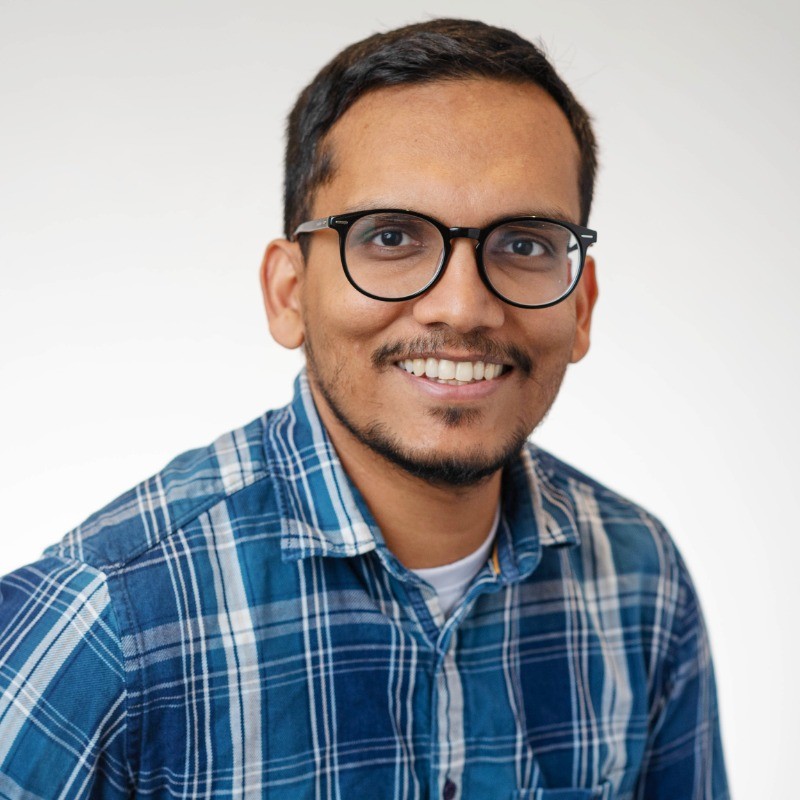
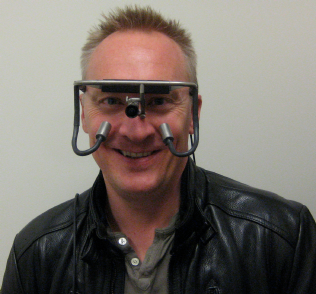
Ken Choi is a Professor of Electrical and Computer Engineering at Illinois Institute of Technology's Armour College of Engineering. He joined Illinois Tech in 2007 after working as a senior CAD engineer and technical consultant at Samsung and Sequence Design. His research focuses on ultra-low-power VLSI design, nanoscale circuit optimization, and carbon nanotube FET applications. Education: Postdoctoral Research Associate at University of Tokyo (2005), Ph.D. in ECE from Georgia Tech (2003). Key research interests include Design for Power (DFP) and Design for Manufacturing (DFM) in VLSI systems, as well as low-power SOC design for multimedia applications. He has received multiple awards, including Best Paper Awards from the International Symposium on Wireless Sensor Networks and IEEE ISOCC conferences. His work spans topics like radiation-hardened latch designs, energy-efficient encoder architectures, and clock-gating techniques for ultra-low-power applications.
Michael Dittenbach is a researcher at TU Wien's Institute of Software Technology and Interactive Systems (E188). He contributes to interdisciplinary work combining machine learning, computer vision, and tourism informatics. His career spans over 15 years of publications in semantic web technologies, data analytics, and 3D virtual environments. Current research focuses on computer vision applications for cultural heritage, tourism recommender systems, and self-organizing map visualization Key projects include Media Square, SOIRE, and Web 3D environments Collaborates extensively with Helmut Berger, Andreas Rauber, and Robert Sablatnig His recent work (2022) explores computer vision techniques for digital library preservation, while earlier studies (2005-2015) focused on tourism informatics, data analytics frameworks, and semantic web applications. Publications demonstrate a consistent trajectory toward integrating machine learning with user-centric digital systems. As part of TU Wien's research infrastructure, he contributes to technical reports, conference proceedings, and multimedia system development without explicit mentions of scientific awards in available records.
Rui J. Lopes is an Associate Professor in the Department of Information Science and Technology at ISCTE – Instituto Universitário de Lisboa, where he has been a faculty member since 1997. He is also an Integrated Researcher and Coordinator of the Network Architecture and Protocols Group at the Institute of Telecommunications - IUL. He holds a PhD in Computer Science from Lancaster University (2005), a Master’s and Bachelor’s in Electrical and Computer Engineering from Instituto Superior Técnico, University of Lisbon. PhD in Computer Science – University of Lancaster (2005) Master’s in Electrical and Computer Engineering – Instituto Superior Técnico (1997) Bachelor’s in Electrical and Computer Engineering – Instituto Superior Técnico (1994) His research focuses on complex and dynamic systems, particularly multilayer hypernetworks, networked multimedia, and applications in sports performance analysis. He has made significant contributions to modeling team synergies in football using network science and optical tracking data. His work bridges computer science, network theory, and sports analytics, with a strong emphasis on real-world applications. His recent publications span high-impact journals in sports science, network science, and complex systems. Key themes include team coordination, temporal networks, performance modeling, and the application of information theory to sports. His research often integrates data-driven modeling with theoretical frameworks to uncover patterns in collective behavior. Guest Editorial: Advances in Tools, Techniques and Practices for Multimedia QoE (2015) Multiple publications in Sensors, Chaos, Solitons & Fractals, European Journal of Sport Science, and Sports Medicine High citation counts across Google Scholar (598), Scopus (282), and Web of Science (269) Rui J. Lopes has supervised over a dozen master’s students and five PhD candidates, three of whom completed with the highest grade. He has also contributed to academic leadership by directing the doctoral program in Complexity Sciences (2018–2020) and promoting internationalization programs such as Erasmus and IAESTE. His research is conducted primarily at the Institute of Telecommunications, where he leads a research group focused on network architectures and protocols. He is actively involved in interdisciplinary research, collaborating with experts in sports science, urban planning, and social systems. His work on syntgen, a system for generating temporal networks, and on protest modeling using agent-based simulations, highlights the breadth of his methodological expertise.
Mathias Wien is a Professor and Head of the Chair of Image Generation and Image Processing at RWTH Aachen University. He specializes in video and image communication, with a focus on compression standards, 3D video technology, and perceptual quality metrics. His work spans medical imaging applications, adaptive coding techniques, and algorithm optimization for real-time video processing. Research interests include video coding algorithms, immersive media standards (e.g., VVC), point cloud quality assessment, and efficient template matching methods for reference picture padding. He actively contributes to MPEG and IEEE initiatives, co-authoring standards and reviewing emerging technologies. Recent publications (2021–2025) emphasize advancements in template-based video coding, medical image segmentation using deep learning, and viewer training protocols for visual assessment. He leads a research team addressing challenges in scalable compression, dynamic mesh coding, and 3D LiDAR odometry. His team collaborates with institutions like the RWTH Aachen University Medical Department and industry partners, focusing on clinical applications of imaging technology.
Dr. Sriparna Saha is an Associate Professor in the Department of Computer Science and Engineering at the Indian Institute of Technology Patna, India. She holds a Ph.D. from the Indian Statistical Institute Kolkata and has held leadership roles including Head of Department (2021-2023) and Associate Dean for Research and Development (2019-2021). Her research focuses on AI, machine learning, natural language processing, bioinformatics, and multiobjective optimization. She has authored over 400 publications with an h-index of 38 and received awards such as the NASI Young Scientist Platinum Jubilee Award and Google India Women in Engineering Award. Her work spans multimodal systems, medical image analysis, and computational social systems. Education: M.Tech (2005) and Ph.D. (2011) in Computer Science from Indian Statistical Institute Kolkata. Research Interests: Multimodal information processing, NLP, machine learning, bioinformatics, and optimization techniques. Awards: Includes Lt. Rashi Roy Memorial Gold Medal, BIRD Award, and multiple fellowships (Humboldt, CNRS, etc.). Administrative Roles: IEEE Student Branch Councilor, Senate Member, and Visvesvaraya Nodal Officer at IIT Patna. Her recent work includes advancements in multimodal recommendation systems, breast cancer prognosis models, and computational social systems for crisis management. She has also contributed to hate speech detection in multilingual contexts and medical imaging diagnostics.
Zhou Wang is a Professor in the Department of Electrical and Computer Engineering at the University of Waterloo. He is a leading researcher in image and video quality assessment, with contributions to foundational metrics like Structural Similarity (SSIM) and Multiscale SSIM. His work bridges signal processing, human perception, and computational vision. Key Contributions: Development of SSIM and CW-SSIM metrics Creation of Waterloo IVC 3D databases for stereoscopic quality assessment Pioneering studies on perceptual evaluation of compression artifacts and distortion types Research interests include: Image/video quality metrics, perceptual modeling, medical image processing, and 3D/VR quality evaluation . Over 124,000 citations highlight his global impact in multimedia signal processing.
Anurag Kumar is a Senior Staff Research Scientist at Google DeepMind, focusing on Audio, Speech, and Multimodal AI. His work emphasizes weakly supervised, self-supervised, and unsupervised learning methods. Before DeepMind, he spent six years at Meta and completed his PhD at Carnegie Mellon University (CMU) under Prof. Bhiksha Raj, where his thesis introduced weakly labeled learning of sounds. He holds an Electrical Engineering degree from IIT Kanpur (2013). Education: PhD in Computer Science, Carnegie Mellon University (2013–2018) Bachelor of Technology in Electrical Engineering, Indian Institute of Technology (IIT) Kanpur (2008–2013) Research Interests: Anurag’s research spans audio and speech processing, including speech enhancement, multimodal understanding, and generative AI. He explores techniques like neural radiance fields (NeRF) for audio-visual scene synthesis and diffusion models for music editing. His work bridges theoretical advancements with practical applications in real-world scenarios like room acoustics and egocentric object localization. Awards & Roles: MIT Technology Review 'Innovators Under 35' (2024) Associate Editor, IEEE Signal Processing Letters Technical Committee Member, IEEE AASP Organized workshops on Generative AI for Audio at NeurIPS 2024 and URGENT Challenge for Speech Enhancement Labs & Collaborations: Leads projects in multimodal AI at Google DeepMind, collaborating on tools like Torchaudio and frameworks for audiovisual learning. His work includes benchmark datasets like Real Acoustic Fields and advancements in neural field-based scene synthesis.
Himawan Ivan is a researcher affiliated with Queensland University of Technology (QUT), specializing in computer science with a focus on signal processing, speech recognition, and machine learning. His work spans anti-spoofing in speaker verification, deep learning applications in wildlife monitoring (e.g., koala activity detection), and domain adaptation techniques for robust speaker recognition systems. He completed his PhD in 2010 at QUT, titled 'Speech recognition using ad-hoc microphone arrays,' and has contributed to over 28 peer-reviewed publications since 2008. Research interests include audio processing, neural network architectures for voice biometrics, and perceptual quality optimization in multimedia systems. His collaborations with institutions like the IEEE and ISCA highlight his expertise in interdisciplinary projects, often involving real-world applications such as environmental acoustic analysis and security systems. Publications between 2016–2019 emphasize advancements in deep neural networks (CNNs, RNNs) for speaker diarization, domain adaptation in PLDA models, and adversarial robustness. Earlier work explored microphone array beamforming and region-of-interest coding in low-bitrate video. Though no specific grants or awards are listed, his consistent publication record in top venues like INTERSPEECH and IEEE transactions underscore active engagement in academic research.
Roles and Affiliations: Professor at Griffith University's School of Environment and Department of Information Technology. Active in interdisciplinary research spanning health informatics, mobile computing, and human-computer interaction. Collaborates with organizations like the Young and Well Cooperative Research Centre (CRC) on digital health interventions. Education & Background: Extensive background in computer science and multimedia systems, with a focus on applying technology to healthcare and well-being. Holds multiple editorial roles in academic journals and conferences. Research Interests: Specializes in mobile health (mHealth) applications, wearable sensors for activity monitoring, emotion recognition via facial expressions and physiological signals, and user-centric design of multimedia systems. Her work emphasizes practical solutions for mental health, alcohol moderation, and physical activity promotion. Key Projects: Co-developed the Mobile App Rating Scale (MARS) for evaluating health apps. Led projects like 'Ray's Night Out' (alcohol intervention app) and 'music eScape' (emotion regulation tool). Labs/Teams: Involved in Griffith's Menzies Health Institute and cross-disciplinary teams focused on digital health innovations. Supervised numerous projects in multimedia quality assessment and sensor-based health monitoring. Grants/Awards: Secured funding for health technology projects through CRC partnerships and grants. Recognized for contributions to mobile health interventions and user experience research.
Adamu Muhammad Buhari is a Lecturer at the School of Information Technology, Monash University. His expertise spans Computer Vision, Artificial Intelligence, Real-Time Machine Learning, and IoT integration in smart systems. He holds a PhD in Engineering (Computer Vision) from Multimedia University, alongside advanced degrees in Engineering and Telecommunication. Research interests include micro-expression recognition using graph-based features, real-time emotion analysis algorithms, and scalable video coding with watermarking. His work bridges theoretical advancements with practical applications in embedded systems and energy-efficient IoT networks. Recent collaborations focus on smart building HVAC automation and solar-powered sensor networks for smart homes. He has been awarded the School Research Grant 2022 for contributions to clinical pharmacy education research. His publications span journals like Journal of Imaging and Multimedia Tools and Applications , with a focus on real-time systems and machine learning applications. Research output highlights include: Invisible emotion magnification algorithms for micro-expression detection IoT-based HVAC systems using machine learning Scalable video coding with low-complexity watermarking His work emphasizes real-world impact through embedded systems and energy harvesting solutions.
Stuart Perry is a Professor at the University of Technology Sydney (UTS), serving as Head of Discipline for Signal Processing and Analytics in the School of Electrical and Data Engineering. He holds affiliations with UTS' Faculty of Engineering and Information Technology, the Global Big Data Technologies Centre, and the Visualization Institute. With over 20 years of experience, his career spans roles at DSTO and Canon Information Systems Research Australia (CiSRA), focusing on image processing, signal processing, and perceptual quality measurement. Perry co-directs the Perceptual Imaging Laboratory (PILab), researching 3D environments, light field technologies, and human perception in immersive realities. He actively contributes to international standards committees like ISO/TC42 and ISO/SC29/WG7, leading JPEG's point cloud coding efforts. His research emphasizes adaptive image processing, machine learning-driven object detection, and medical imaging applications. Perry has authored 60+ publications, two books, and 20 patents. Current projects include VR empathy case studies, point cloud compression, and disaster management digital transformation. Education: PhD in Engineering, University of Sydney (1999) Research Interests: His work bridges computational imaging and human perception, addressing challenges in augmented/virtual reality (AR/VR), 3D scanning, and immersive media. Key areas include light field and point cloud coding, psychophysics of visual perception, and medical diagnostics via machine learning. He explores how perceptual principles can optimize interactive technologies for education, healthcare, and entertainment. Recent Research Trends: Recent articles focus on 3D Gaussian splatting, glaucoma detection via deep learning, and JPEG Pleno standards for plenoptic imaging. His work balances technical innovation (e.g., efficient point cloud compression) with human-centric design (e.g., reducing VR motion sickness through display lag analysis). Awards & Recognition: Member of IEEE and founding SPINet participant. Over 60 refereed publications and 20 patents highlight his industry-academic impact. Grants & Leadership: Leads SmartSat CRC projects on yield estimation and Aus4innovation-funded disaster response tech. Manages grants totaling millions AUD. Editorial roles include Associate Editor of SPIE/IS&T Journal of Electronic Imaging. Labs & Collaborations: PILab collaborates internationally on perceptual imaging standards. Active in ISO committees shaping future media technologies.
Dr. Biswajeet Pradhan is a Distinguished Professor at the University of Technology Sydney (UTS), holding positions in the School of Civil and Environmental Engineering and the Centre for Advanced Modelling and Geospatial Information Systems (CAMGIS). His primary affiliation is within the Faculty of Engineering & IT. He holds a habilitation in Remote Sensing from Dresden University of Technology, Germany (2011), and has served as an 'Ambassador Scientist' for the Alexander von Humboldt Foundation (2015–2022). His research focuses on Geospatial Information Systems (GIS), remote sensing, machine learning, environmental modeling, and disaster risk assessment. He has published over 832 articles (H-index 147) and secured $14M in research funding. Key research trends in his work include AI-driven climate hazard modeling, geospatial applications for disaster management, and machine learning in environmental monitoring. His recent publications span topics like flood risk assessment, landslide susceptibility, and hurricane damage prediction. Awards: 55+ awards, including Alexander von Humboldt Fellowship and Clarivate's Highly Cited Researcher (2006–2020). Grants & Advising: 23 completed projects totaling $14M; supervised 55 PhD students and 42 MSc students. Labs/Teams: Leads the CAMGIS Research Centre, collaborating with institutions globally (Malaysia, Germany, Norway, etc.).
Zhicheng Liu is an Assistant Professor in the Department of Computer Science at the University of Maryland. His research focuses on human-computer interaction, machine learning, and data visualization, emphasizing democratizing visualization design through computational tools and human-centered systems. He received the NSF CAREER Award (2023) for his work on manipulable semantic components in data visualization. Education details are not explicitly stated in the provided texts, but his professional trajectory indicates advanced academic training in computer science. Research interests include interactive visualization authoring, collaborative systems, AI-enhanced design tools, and semantic analysis of visual content. His work bridges computer science with cognitive science, psychology, and graphic design to create impactful interdisciplinary solutions. Liu's recent publications (2023–2025) explore topics like semantic chart decomposition, AI-assisted documentation, and cross-linguistic collaboration tools. His NSF-funded project aims to develop modular visualization components for easier creation of interactive charts. Awards include the NSF CAREER Award, recognizing his potential to advance visualization research. He advises four PhD candidates focusing on visualization and HCI topics. His grants include a $600K NSF award supporting his CAREER project. Collaborative tools developed (e.g., DocDancer, VisAnatomy) demonstrate his focus on practical, user-centric systems. Liu’s lab focuses on responsive documents, AI-driven tutorial systems, and visualization corpus development. He emphasizes real-world impact through tools that simplify data analysis and communication for non-experts.
Soumyabrata Dev is an Assistant Professor in the School of Computer Science at University College Dublin (UCD), where he leads the THEIA lab focusing on interdisciplinary research in computer vision, machine learning, and remote sensing. His work addresses challenges in climate science, environmental monitoring, solar forecasting, and healthcare. He holds a PhD from Nanyang Technological University (Singapore) and has held postdoctoral roles at Trinity College Dublin and ADAPT SFI Research Centre. His education includes a B.Tech. (summa cum laude) from National Institute of Technology Silchar, India, and a visiting doctoral experience at École Polytechnique Fédérale de Lausanne (EPFL), Switzerland. Prior to academia, he worked as a network engineer at Ericsson India (2010–2012). Research interests span image processing, environmental data analytics (e.g., air/water quality), solar energy forecasting, and AI-driven solutions for sustainable development. He collaborates globally with institutions in academia, industry, and government, aligning with UCD’s strategic goals for impactful innovation. He is an SFI Funded Investigator at ADAPT SFI and a UCD Climate Fellow (2024–2026). His scientific awards include the 2024 Stanford/Elsevier Top 2% Scientists List. He advises numerous PhD/MSc students on topics like coastal monitoring, air quality modeling, and AI for sustainability. THEIA Lab’s projects include solar irradiance forecasting, knowledge graph-based climate data platforms, and blockchain-enhanced healthcare systems. He teaches modules on Operating Systems, Wireless Sensor Networks, and Augmented/Virtual Reality. His work bridges theory and application, emphasizing real-world impact in climate action and renewable energy.
Andrew T. Duchowski is a Professor and Chair of the Visual Computing Division at Clemson University's School of Computing (part of the College of Engineering and Science). He holds a Ph.D. in Computer Science from Texas A&M University (1997) and a B.Sc. in Computer Science from Simon Fraser University (1990). His academic roles include service as Focus Area Chair at SIGGRAPH 2019 and Co-organizer of multiple workshops such as MobileHCI 2018 and ETRA 2018. His research focuses on eye tracking, visual perception, human-computer interaction, and computer graphics. Key areas include gaze analytics, virtual environments, and applications in healthcare, education, and cultural heritage. He has pioneered methodologies like the 'Gaze Analytics Pipeline' and authored Eye Tracking Methodology: Theory & Practice (Springer, 3rd ed., 2017). R&D interests span cognitive load measurement via pupil dynamics, ambient/focal attention modeling, and gaze-based interaction design. His work bridges computer science with fields like spatial cognition and neuroergonomics. Recent projects include studies on attention in VR, neurocognitive biomarkers, and sustainable cultural landscape management. Awarded multiple honors including the NSF CAREER Award (2000-2003) and Clemson's Faculty Excellence Award (2001), Duchowski has authored over 150 peer-reviewed papers. He led educational initiatives such as the 'Groovy Graphics Assignments' for SIGGRAPH and co-organized global conferences like ETRA and EuroGraphics. His service includes editorial roles in journals like Transactions on Applied Perception and reviewing for NIH, NSF, and international universities.