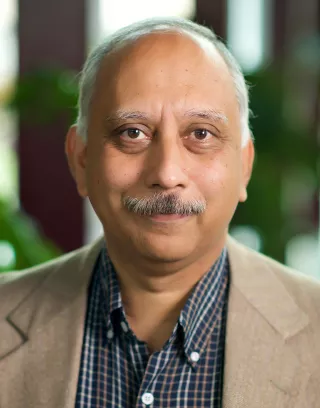
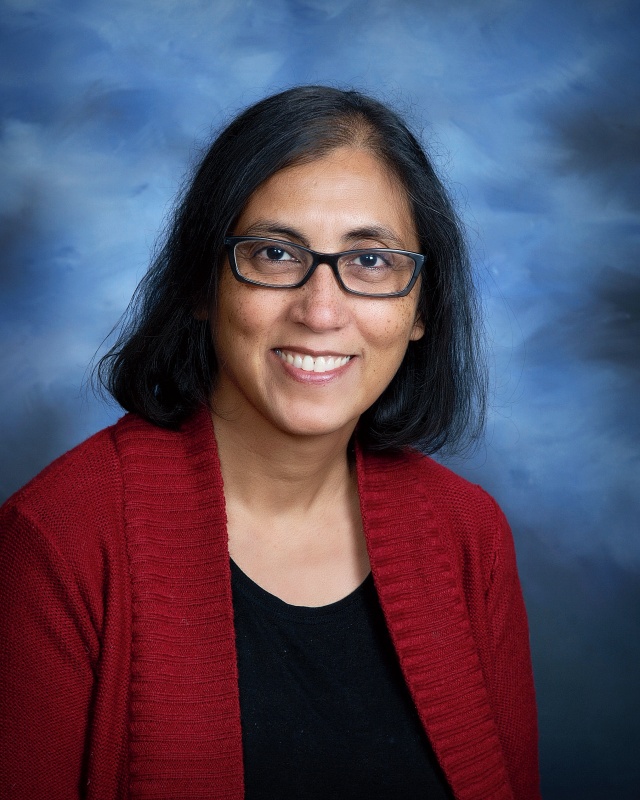
Amir H. Chinaei is an Associate Professor and Department Chair at the Department of Electrical Engineering & Computer Science at York University . He holds a Ph.D. in Computer Science from the University of Waterloo (2007), an MSc in Software Engineering from Amirkabir University of Technology, and a BSc in Software Engineering from Isfahan University. Ph.D. in Computer Science (University of Waterloo, 2007) MSc in Software Engineering (Amirkabir University of Technology) BSc in Software Engineering (Isfahan University) His research focuses on Computer Science Education , Access Control Models , Data Security , and Information Visualization . His publications emphasize security frameworks, privacy preservation in social media/health systems, and access control transitions to modern paradigms. He received the Teaching Excellence in Computer Science award at the University of Toronto and has coached over 100 students in developing information systems. His recent publications span topics from WordPress security to biometric authentication in healthcare. Teaching Excellence in Computer Science (University of Toronto) Additional contributions include curriculum development for software engineering programs, work-integrated learning initiatives, and projects like Decentralized Privacy Preservation in Social Networks and Biometric Access Control for e-Health Records .
Dr. Alvine Boaye Belle is an Assistant Professor in the Department of Electrical Engineering & Computer Science at Lassonde School of Engineering, York University. She leads the DARE! research group and serves on multiple international committees, including ICSE and RE conferences. Her work bridges software engineering with equity, diversity, and inclusion (EDI) initiatives. PhD in Software Engineering (École de Technologie Supérieure, University of Quebec) 2-year Industrial Postdoctoral (University of Ottawa) Graduate Diploma in Public Administration & Governance (McGill University) Dr. Belle's research focuses on system assurance for autonomous systems, generative AI applications in software engineering, and EDI in computing . She applies machine learning to safety case automation and vulnerability detection, as shown in her publications with high-impact journals. Her recent work explores deep learning and SVM models for Android malware detection with 99% accuracy. She mentors a diverse group of students across Bachelor's, Master's, and PhD levels, emphasizing accessibility and social impact in technology. Keynote speaker at Black History Month events Moderator of EDI-focused panels at ICSE conferences Editorial board member for journals like IEEE Software and Information and Software Technology
Gias Uddin is an Associate Professor in the Electrical Engineering and Computer Science department at York University's Lassonde School of Engineering. He also holds an Adjunct Professor position at the University of Calgary. Previously, he served as an Assistant Professor at the University of Calgary from 2020 to 2023. Dr. Uddin's research lies at the intersection of software engineering (SE) and artificial intelligence (AI), with specific focus areas including the assessment of AI trustworthiness using SE (SE4AI) and improving the productivity of software and knowledge professionals using AI-enabled software assistants. His work spans three key domains: Democratized Data Science (HCI → AI4DS, SE4DS), Modernized Software Issue Management (HCI → AI4SE), and Usable Cybersecurity Engineering (HCI → AI4CE). He is particularly interested in how AI can democratize the adoption of machine learning techniques across stakeholders during ML systems development. His recent publications demonstrate a strong focus on practical applications of AI in software engineering, with particular emphasis on detecting hallucinations in LLMs, improving API documentation, and developing AI-assisted tools for software issue management. His research has resulted in numerous publications at top-tier software engineering conferences including ICSE, ASE, and FSE. Distinguished paper award at FSE 2025 for work on hallucination detection in LLMs York University Research Award (2025) IBM Champion recognition for 2024 and 2025 CAS Project of the Year Award at IBM TechXChange 2024 Multiple NSERC-funded research grants Dr. Uddin has successfully secured multiple research grants including an NSERC Discovery Grant, NSERC Alliance International Catalyst Grant on 'Hallucination Detection in LLMs using Metamorphic Testing,' and several industry-funded projects with IBM. He has supervised numerous graduate students who have gone on to successful careers in both academia and industry, with many receiving prestigious scholarships and awards. As the founding director of the Data Intensive Software Analytics (DISA) Lab, he leads a team focused on developing innovative AI-assisted tools for software developers and data scientists.
Dr. Marzieh Ahmadzadeh is an Associate Professor (Teaching Stream) at the Department of Electrical Engineering & Computer Science, York University. She holds a Ph.D. and MSc in Information Technology (Software Engineering) from the University of Nottingham, UK, and a BSc in Computer Engineering from Isfahan University. A certified Professional Engineer (P.Eng.) in Ontario, she has held academic positions at Shiraz University of Technology, University of Toronto, and University of Georgia, USA before shifting her focus to education research in 2015. Education: Ph.D., Information Technology (Software Engineering), University of Nottingham (2006) MSc, Information Technology (Software Engineering), University of Nottingham (2002) BSc, Computer Engineering, Isfahan University Her research intersects Computer Science Education and Human-Computer Interaction , with a focus on Applied Data Mining for educational analytics and security applications. She has published in prestigious venues like ACM SIGCSE, IEEE Transactions, and Future Generation Computer Systems. Recent publications demonstrate expertise in: Exam design and cognitive load optimization Ransomware detection in fog computing environments Breast cancer survivability modeling with imbalanced data Gender preferences in e-commerce UX design Academic integrity analysis in programming education
Natalija Vlajic is an Associate Professor in the Department of Electrical Engineering and Computer Science at York University's Lassonde School of Engineering. She holds a PhD in Electrical Engineering from the University of Ottawa and an M.Sc. in Electrical and Computer Engineering from the University of Manitoba. Dr. Vlajic is a highly accomplished researcher with over 80 publications in international conferences and journals, specializing in cybersecurity with a focus on industrial control systems. Her primary research interests include network and information security, communication systems and network protocols, cybersecurity of industrial systems, machine learning applications in security, and system performance evaluation. She has made significant contributions to the understanding of security risk management, bot and DDoS attacks, user privacy, IoT security, and sensor networks. Her work bridges theoretical security concepts with practical applications in critical infrastructure protection. Dr. Vlajic's recent publications demonstrate a strong focus on Industrial Control Systems security, particularly addressing vulnerabilities through innovative approaches like risk-based cryptoperiod optimization, attack tree modeling using MITRE ATT&CK framework, and advanced bot detection techniques. Her research combines traditional security methodologies with machine learning and data analytics to develop more robust protection mechanisms for critical infrastructure. NSERC University Faculty Award Faculty-Wide Excellence in Teaching Award Departmental Mildred Baptist Teaching Award Best Poster Award at ACM/IEEE ICCPS (2023) Best Paper Award at HoTSoS (2018) Dr. Vlajic actively mentors graduate students including Gabriele Cianfarani, Melina Najimi, Stefan Petrovic, Shadi Sadeghpour, Daniel Brown, and Jazdeep Sarai. Her research group has received significant recognition, with students presenting at major conferences like GradCon hosted by Waterloo's Cybersecurity and Privacy Institute. She serves as a co-editor for the IEEE Communications Magazine special issue on Security of Communication Protocols in Industrial Control Systems. Her research is conducted through the Security Research at York (SecRAY) initiative, focusing on practical security solutions for industrial systems, web applications, and IoT environments. The group maintains strong industry connections and collaborates on real-world security challenges, particularly in the domain of critical infrastructure protection.
Song Wang is an Associate Professor in the Department of Electrical Engineering and Computer Science at York University's Lassonde School of Engineering. He joined York University as an Assistant Professor in July 2019 and was promoted to Associate Professor in May 2024. He serves as an Associate Editor of ACM Transactions on Software Engineering and Methodology (TOSEM) and has established himself as a prominent researcher at the intersection of Software Engineering and Artificial Intelligence. Dr. Wang earned his Ph.D. in Computer Engineering from the University of Waterloo in December 2018 under Prof. Lin Tan. He received his MS degree from the Chinese Academy of Sciences in June 2014 under the supervision of Prof. Ye Yang, Prof. Wen Zhang, and Prof. Qing Wang. His undergraduate education includes a BE in Software Engineering and a BHRM in Human Resource Management from Sichuan University in June 2011. Prior to academia, he gained industry experience through internships at Microsoft Research, Morgan Stanley Capital International, Yahoo, and Baidu, and co-founded a startup named QualDivine. Dr. Wang's research focuses on two main directions: (1) leveraging AI technologies to address software reliability challenges (AI for SE), and (2) developing software reliability assurance techniques for AI systems (SE for AI). His recent work has particularly focused on how Large Language Models can optimize and reshape software testing practices. His research has practical impact, with tools and techniques that have detected hundreds of true bugs in real-world software systems. His work spans multiple application areas including mobile testing, fuzz testing, and functional testing. His recent publications (2024-2025) demonstrate a strong focus on the intersection of AI and software engineering, with significant contributions in automated vulnerability detection, API recommendation, bias analysis in generated code, and mobile application testing. His research combines empirical studies with innovative technical approaches, often involving benchmarking and systematic literature reviews to establish foundations for future work. He has published over 60 papers in prestigious IEEE/ACM Software Engineering journals and flagship conferences, with over 2,600 citations. Dr. Wang has received four best paper awards: a Distinguished Paper Award at APSEC'23, an ACM Distinguished Paper Award at ICPC'22, an ACM Distinguished Paper Award at ICSE'20, and a Best Paper Award at PROMISE'19. He was recognized as one of the top-10 most impactful early-career researchers in Software Engineering by the Journal of Systems and Software in 2020 and received the TOSEM Distinguished Reviewer Award in 2023. Dr. Wang currently supervises multiple PhD and Master's students including Mohammad Abdollahi, Haoran Xue, Jiho Shin, Nima Shiri Harzevili, and Moshi Wei. He has successfully guided several students to complete their theses, including Reem Al Eithan (Master's thesis defense in April 2025), Moshi Wei (PhD thesis defense in April 2025), and Nima Shiri Harzevili (PhD thesis defense in February 2025). His research group has received funding from various sources to support their work on software engineering and AI. Dr. Wang leads an active research group focused on AI and software engineering at York University. His team includes PhD students, Master's students, and research assistants working on various projects related to software testing, reliability, and AI applications in software engineering. The group has developed tools that have detected hundreds of true bugs in real-world software systems, with some findings documented in Jira issues and GitHub repositories across numerous open-source projects.
Dr. Ellen Balka is a Professor in the School of Communication at Simon Fraser University (SFU) and Associate Dean in the Faculty of Communication, Arts and Technology. Her work focuses on the design and implementation of health information technologies, emphasizing equity, patient safety, and participatory design. She leads the Assessment of Technology in Context Design Lab (ATIC Lab), which explores the human dimensions of technological systems. Her research has secured over $7 million in grants, including major funding from CIHR and MSFHR. Key projects include the ActionADE initiative, which aims to reduce preventable adverse drug events (ADEs) through improved cross-setting communication. Education Ph.D. (Interdisciplinary: Communications, Computer Science, Women’s Studies), Simon Fraser University (1991) M.A. (Women’s Studies), Simon Fraser University (1987) B.A. (Geography and Environmental Studies), University of Washington (1981) Research Interests Health Information Technologies and Policy Participatory Design and Social Informatics Gender and Technology Studies Patient Safety and Adverse Drug Events Awards & Grants Paz Buttedahl Career Achievement Award (2025) CIHR Partnership in Health System Improvement Grant ($1.2M+) MSFHR and BC College of Pharmacists Funding Labs & Projects ATIC Lab : Investigates human-technology interactions and participatory design. ActionADE : Develops software to prevent repeat ADEs through PharmaNet integration.
Prof. Wael Ahmed is a full Professor in the School of Engineering at the University of Guelph, within the College of Engineering and Physical Sciences. He specializes in multiphase flow analysis, thermo-fluids, and sustainable engineering, with a focus on applications in energy, aquaculture, and industrial systems. His research integrates experimental and computational methods, leading to patented technologies such as airlift pumps for aquaculture and multiphase flow sensors. Prof. Ahmed holds a PhD in Mechanical Engineering from McMaster University (2005) and has industry experience with Atomic Energy of Canada Ltd. and AMEC-Nuclear Safety Solutions. He joined the University of Guelph in 2014 and has secured over $2.5M in research funding, including grants from NSERC and the Ontario Ministry of Agriculture. His research focuses on Multiphase flow in energy and food systems Airlift pump design for sustainable aquaculture Flow-induced vibration and corrosion mitigation CFD and VR-based educational tools Key innovations include patented sensors for two-phase flow measurements and bioreactor systems for nutrient removal. He has been recognized as a finalist for Fast Company’s World Changing Ideas (2017-2018) and holds eight patents. Current projects include optimizing airlift pumps for biogas production and investigating two-phase flow in complex geometries. Prof. Ahmed leads the Gryph Energy Lab and actively collaborates with industry partners. He is available to mentor graduate students in multiphase flow analysis and seeks partnerships in energy and aquaculture systems.
Sajjad Dadkhah is an Assistant Professor at the University of New Brunswick (UNB), holding the Canada Mastercard IoT Research Chair and leading the Cybersecurity Team at the Canadian Institute of Cybersecurity (CIC) within the Faculty of Computer Science. He specializes in cybersecurity, IoT security, and machine learning applications in security. His work focuses on developing robust security frameworks, intrusion detection systems, and datasets for emerging technologies like IoT and IoV. He has earned Bronze and Gold medals in international invention competitions and holds a fellowship from Kyushu Institute of Technology. Dadkhah serves as a Board Member and Managing Editor for the Applied Soft Computing (ASOC) Elsevier journal since 2016. His research includes pioneering datasets such as CICIoMT2024 and TruthSeeker, addressing critical challenges in medical IoT security, fake news detection, and vehicular network protection. His academic contributions span over 40 publications, emphasizing practical solutions for real-world cybersecurity threats. He actively collaborates with organizations like Kyushu University and IRIS Smart Technology Complex, bridging academic research with industrial applications.
Dr. Waqar Haque is a Full Professor at the University of Northern British Columbia (UNBC), cross-appointed between the Department of Computer Science (Faculty of Science and Engineering) and the School of Business (Faculty of Business and Economics). He has been a key academic figure at UNBC since 1995. PhD in Computer Science from Iowa State University MSc in Computer Science from Iowa State University MSc in Mechanical Engineering from the University of Alberta Dr. Haque’s research focuses on advanced data analytics , business intelligence , parallel and distributed computing , and visual analytics , with applications in healthcare. His work bridges theoretical exploration and industrial collaboration, leading to software commercialization. He has received the Industrial Collaborative Research award BC Top Innovation award and secured grants from NSERC and SSHRC. Dr. Haque leads the Business Intelligence Research Group (BIRG) and contributes to UNBC’s Research Computing Management Board and Health Research Institute (HRI) Leadership Council. He supervises graduate students in MSc Computer Science , MSc Business Administration , and Health Sciences programs but is currently not accepting new graduate students.
Dr. Andreas Hirt is an Assistant Professor in Computer Science at the University of Northern British Columbia, holding a PhD and MSc from the University of Calgary and a BSc from UNBC. His research focuses on cybersecurity fundamentals including network anonymity protocols, cryptographic systems, and performance evaluation of secure communication frameworks. Primary research domains include: Design and analysis of anonymity protocols like Taxis and Buses systems Scalability challenges in private communication networks Security threat modeling for distributed systems Applications of data mining in cybersecurity His most cited work examines performance tradeoffs in strong anonymity systems, addressing latency and scalability constraints. Recent publications demonstrate expertise in practical protocol implementation and adversarial analysis. Dr. Hirt is currently not accepting graduate students.
Dr. Abdul A. Hussein is a Professor in the Department of Mathematics and Statistics at the University of Windsor's Faculty of Science. He holds a Ph.D. from the University of Alberta. His research focuses on sequential analysis, survival analysis, finite mixtures, statistical process control, and health outcomes research. He has supervised multiple master’s students and is actively seeking Ph.D. candidates with expertise in probability theory and stochastic processes. His work spans theoretical and applied statistics, including contributions to nonparametric methods, robust estimation, and clinical trial design. Notable collaborations include studies on pediatric safety interventions and medical device reliability. He has secured research grants supporting projects in sequential analysis and health outcomes. His publications emphasize methodological advancements in statistical testing and applications to biomedicine. Dr. Hussein teaches advanced courses and mentors students in statistical theory and computational methods.
Arunita Jaekel is a Professor in the School of Computer Science at the University of Windsor. She directs the Vehicular Communication Laboratory and maintains professional affiliations with IEEE. Her research focuses on vehicular ad hoc networks (VANETs), secure V2V communications, wireless sensor networks, and mobile network optimization. Key themes include developing machine learning approaches for intrusion detection, congestion control algorithms using reinforcement learning, and privacy-preserving strategies for connected vehicles. Recent publications emphasize deep learning-based anomaly detection, position forgery countermeasures, and adaptive transmission protocols for safety-critical vehicular systems. Her work shows consistent application of AI techniques to enhance security and efficiency in intelligent transportation networks.
Jonathan Anderson is an Associate Professor at Memorial University of Newfoundland's Faculty of Engineering and Applied Science. He holds a B.Eng. and M.Eng. from Memorial University (2006, 2008) and a PhD from the University of Cambridge (2012). His research focuses on computer security, privacy, operating systems, and the hardware/software interface. He is a contributor to the FreeBSD operating system, particularly its Capsicum sandboxing framework, and maintains securityconferences.net . Anderson's work includes the development of the CHERI capability model and the TESLA security logic assertions framework. He has held postdoctoral roles at Cambridge before returning to Memorial in 2014. His honors include the IEEE Canada–Telus Innovation Award and the Rothermere Fellowship. His research spans secure operating systems, cryptographic protocols, and distributed systems. Key contributions include advancements in sandboxing technologies, secure storage systems, and blockchain applications for data integrity. Anderson actively participates in academic workshops and conferences, contributing to the field of security protocols and system design.
Trung Q. Duong is a Canada Excellence Research Chair and Full Professor at Memorial University of Newfoundland, Canada. He specializes in wireless and quantum communications, with a focus on 5G/6G networks, IoT applications, and quantum machine learning. His research addresses challenges in network optimization, digital twin integration, and UAV-based communication systems. Education: PhD in Telecommunications Systems from Blekinge Institute of Technology, Sweden. Research Interests: Quantum machine learning, real-time optimization for UAVs, integrated satellite-terrestrial networks, and security in communications. His work spans applications in healthcare, disaster management, and smart cities. Key Achievements: Over 500 publications (20,000+ citations, h-index 76), $54M+ in grants, and prestigious awards like the Newton Prize and IEEE Fellowship. He serves as an editor for top journals such as IEEE Trans. on Wireless Communications and IEEE Wireless Communications Letters. Global Collaborations: Visiting Professorships at National Chung Cheng University (Taiwan), Kyung Hee University (South Korea), and Thuyloi University (Vietnam). Active in international grant review panels across 20+ countries.