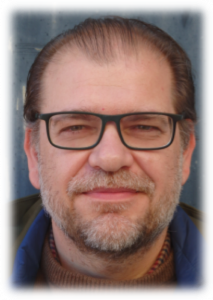
Nikos E. Frangos is a Professor in the Department of Statistics at Athens University of Economics and Business (AUEB), School of Information Sciences and Technology. His research focuses on statistics, stochastic analysis, actuarial science, and pension fund valuation. He has published extensively in journals such as ASTIN Bulletin, Stochastic Processes and their Applications, and Insurance Mathematics & Economics. His work addresses applications in finance, insurance, and risk management. Academic Degrees: B.Sc. in Mathematics (1978, University of Athens), M.Sc. (1981) and Ph.D. (1984) in Mathematics from Ohio State University. Frangos' research emphasizes stochastic differential equations, reinsurance strategies, bonus-malus systems, and applications of Wiener chaos expansions. His recent publications explore finite mixture models, Sichel distribution, and hyperbolic SPDEs. He has taught undergraduate and graduate courses including Stochastic Processes , Insurance Mathematics , and Stochastic Finance , and participated in staff exchanges with Finland, Belgium, and Turkey. Scientific Awards: Best 2002 ASTIN paper award for "Optimal Bonus-Malus Systems" from the Casualty Actuarial Society, USA.
Michael D. Bond is a Professor in the Department of Computer Science & Engineering at Ohio State University's College of Engineering. He leads the Programming Languages and Software Systems (PLaSS) Research Group, which focuses on designing program analyses and software and hardware systems that enhance computing reliability, scalability, and security. His academic service includes general chair for PLDI 2027, program committee membership for multiple top conferences, and committee roles in SIGPLAN Research Highlights (2024-2027). Professor Bond's research spans programming languages, systems, and security, with particular expertise in memory management, concurrency, hardware transactional memory, information flow control, and predictive race detection. His work bridges theoretical foundations with practical implementations, as evidenced by numerous open-source projects accompanying his publications. The PLaSS group has made significant contributions to understanding and improving memory models, developing efficient garbage collection techniques for modern architectures, and creating novel approaches to secure programming in languages like Rust. Analysis of his recent publications reveals a clear trajectory toward addressing security and reliability challenges in modern computing systems, particularly through language-based approaches. His work increasingly focuses on Rust programming language security mechanisms, memory disaggregation for datacenters, and advanced techniques for detecting and preventing concurrency bugs. The research demonstrates strong continuity in exploring memory models and concurrency while adapting to emerging hardware trends and security challenges. Outstanding Teaching Award, Department of Computer Science and Engineering, Ohio State University (2018) Lumley Research Award, College of Engineering, Ohio State University (2016) OOPSLA 2015 Distinguished Paper and Artifact Awards NSF CAREER Award ACM SIGPLAN Outstanding Doctoral Dissertation Award Intel PhD Fellowship Professor Bond actively mentors several PhD students including Chujun Geng, Vincent Beardsley, Chris Xiong, Victor Chen, and Noah Charlton, with external co-advisee Zixian Cai at Australian National University. His research is currently supported by multiple NSF grants including SaTC-2348754 (2024-2027), CyberCorps-2336531 (2024-2029), and CSR-2106117 (2021-2025), reflecting sustained funding for his work in information flow control, security, and systems research. The PLaSS Research Group maintains a strong presence in both academic and industrial communities, with graduated PhD students securing positions at major technology companies like Google, Amazon Web Services, and Huawei, as well as academic positions at institutions like UIUC and IIT Kanpur. The group's work combines theoretical rigor with practical implementation, consistently producing open-source artifacts that enable reproducibility and further research in the systems and programming languages community.
Ruzica Piskac is a Professor of Computer Science at Yale University, where she leads the Rigorous Software Engineering (ROSE) group. She has made significant contributions to the fields of software verification, security, automated reasoning, and code synthesis, focusing on improving software reliability and trustworthiness through formal techniques. Dr. Piskac received her PhD from the Swiss Federal Institute of Technology (EPFL) in 2011, where her dissertation won the Patrick Denantes Prize. Prior to joining Yale, she led an independent research group at the Max Planck Institute for Software Systems in Germany (2012-2013). Her research spans several key areas: symbolic execution for Haskell (G2), privacy-preserving formal methods (PPFM), functional reactive synthesis, verification of configuration files, and analysis of software updates. Her work consistently bridges theoretical formal methods with practical applications in real-world systems. Dr. Piskac's recent publications demonstrate a strong trend toward applying formal verification techniques to emerging challenges including large language models, quantum computing security, legal accountability of automated systems, and cyber-physical systems. Her research increasingly intersects with AI, cryptography, and legal domains while maintaining strong foundations in formal methods. Her scientific achievements have been recognized with numerous prestigious awards: Multiple Amazon Research Awards Yale University's Ackerman Award for Teaching and Mentoring Facebook Communications and Networking Award Microsoft Research Award for the Software Engineering Innovation Foundation (SEIF) Patrick Denantes Prize for her PhD dissertation Dr. Piskac has graduated five PhD students, four of whom have gone on to become assistant professors of computer science. She has served as Program Chair of the 37th International Conference on Computer Aided Verification and is on the Steering Committee of the Formal Methods in Computer-Aided Design conference. She leads the Rigorous Software Engineering (ROSE) group at Yale, which focuses on several key projects including: Symbolic Execution Engine for Haskell (G2) Privacy Preserving Formal Methods (PPFM) Functional Reactive Synthesis Verifications for Configuration Files Analysis of Software Updates and Configuration Files
Alastair F. Donaldson is a Professor in the Department of Computing at Imperial College London's Faculty of Engineering, where he leads the Multicore Programming Group. He also works as a Software Engineer at Google in the Android Graphics Team. Previously, he served as Director of GraphicsFuzz, an Imperial College spinout company acquired by Google in 2018. His research spans programming languages, compilers, verification, and testing, with a particular focus on randomized and fuzz testing techniques for compilers and program analyzers. Donaldson has developed several influential testing frameworks including GraphicsFuzz, RustSmith, and GrayC, which have significantly advanced compiler testing methodologies. Analysis of his recent publications reveals a strong trend toward practical applications of compiler testing techniques across diverse domains including GPU programming, verification-aware languages, and memory models. His work increasingly incorporates continuous integration practices and focuses on addressing real-world challenges in compiler development and verification. Donaldson maintains active involvement in the programming languages research community, serving on program committees for major conferences including PLDI, POPL, ASPLOS, and SPLASH. He has contributed significantly to advancing compiler testing methodologies and has mentored numerous researchers through PLMW (Programming Languages Mentoring Workshop). He leads the Multicore Programming Group at Imperial College London, which focuses on challenges in parallel and concurrent programming. His work bridges theoretical computer science with practical software engineering challenges, particularly in the areas of compiler correctness and verification.
Zhenjiang Hu is a Chair Professor and Dean of the School of Computer Science at Peking University. He serves as Director of the Programming Languages Laboratory and has held significant academic positions including Professor at the National Institute of Informatics and University of Tokyo. BS and MS from Shanghai Jiaotong University (1988, 1991) PhD from University of Tokyo (1996) Lecturer/Assistant Professor at University of Tokyo (1997) Associate Professor at University of Tokyo (2000) Full Professor at National Institute of Informatics (2008) Full Professor at University of Tokyo (2018-2019) Professor Hu's research primarily focuses on programming languages and software engineering, with special emphasis on functional programming, bidirectional transformation, and software adaptation. His work explores transformational programming approaches for automatic program optimization, systematic parallelization of sequential programs, efficient manipulation of structured documents, and bidirectional model transformation for software development. His research has significantly advanced the field of bidirectional programming, developing foundational theories and practical applications that enable more reliable and maintainable software systems. His recent publications demonstrate a strong trajectory in bidirectional programming, program synthesis, and graph processing. The research shows increasing sophistication in handling program transformations, with growing emphasis on practical applications in software engineering contexts. His work increasingly integrates formal methods with practical programming language design, creating systems that maintain theoretical soundness while addressing real-world software development challenges. The research spans multiple venues including top conferences like PLDI, POPL, ICFP, and OOPSLA, reflecting its broad impact across programming language research. Fellow of JFES (Japan Federation of Engineering Society, 2016) ACM Distinguished Scientist (2016) Member of Academia Europaea (2019) IEEE Fellow (2020) Member of Engineering Academy of Japan (2020) Professor Hu actively mentors students and has welcomed excellent candidates to join his group through Peking University's International Elite PhD Program and Boya Postdoctoral Fellowship Program. He serves on numerous program committees for major conferences including PLDI, POPL, ICFP, and OOPSLA, and holds editorial positions for prestigious journals such as Journal of Functional Programming and Science of Computer Programming. His leadership extends to conference organization, having served as PC Chair for CNCC 2024 and General Co-Chair for SoICT 2019. As Director of the Programming Languages Laboratory at Peking University, Professor Hu leads a research team focused on advancing programming language theory and practice. His lab has developed influential frameworks like BiGUL for bidirectional programming and Fregel for graph processing. The laboratory maintains strong international collaborations and contributes to both theoretical foundations and practical implementations in programming languages and software engineering.
Dr. Eleftherios Doitsidis is an Associate Professor at the School of Production Engineering & Management of the Technical University of Crete (TUC) and a member of the Intelligent Systems & Robotics Laboratory. Previously, he served as faculty at the Department of Electronic Engineering at Hellenic Mediterranean University. His expertise spans multirobot systems, autonomous vehicle control, and computational intelligence. He holds a robust record of EU and national research project involvement. Research Interests: Specializes in multirobot team coordination, autonomous navigation systems for UAVs/AUVs, control systems design, and computational intelligence applications. Recent work focuses on energy-efficient path-planning for swarms, educational robotics frameworks like HYDRA, and digital twin integration in autonomous systems. Publications Trends: His 150+ publications address cutting-edge topics including: Autonomous vehicle control architectures Modular robotics for STEM education Optimization algorithms for multirobot systems Energy efficiency in manufacturing systems Advising & Projects: Lead researcher on numerous funded projects involving UAV/AUV missions, swarm robotics, and educational technology. Active in collaborative research with institutions like the University of South Florida. Labs & Groups: Leads the Intelligent Systems & Robotics Lab at TUC, developing advanced robotic platforms and educational tools. Maintains an open-access research portal at doitsidis.tuc.gr .
Irene Koronaki is a Professor at the National Technical University of Athens , affiliated with the School of Mechanical Engineering and the Thermal Engineering Section . She serves as Director of the Laboratory of Applied Thermodynamics, Cooling Technology & Refrigerated Vehicles since 2022 and has held academic roles at NTUA since 1999. Her research focuses include thermodynamics, heat pumps, energy efficiency, and renewable energy systems. Diploma in Mechanical Engineering, NTUA (1996) PhD in Thermal Engineering, NTUA (2000) Postdoctoral Researcher, NTUA (2002) Her research spans thermodynamics of cooling cycles, heat pumps, power cycles, energy saving in buildings, and thermal energy storage. She has pioneered work in nanofluids, solar cooling, and CO2 absorption systems. Her publications and projects reflect expertise in Stirling engines, hybrid solar collectors, and building energy optimization. Her recent articles highlight advancements in superfluid thermodynamics, solar PV/T systems, and medical robotics. Awards include the Edward F. Obert Award (2022) and leadership of the 2021 ASHRAE Student Design Competition winning team. She serves on ASME and ASHRAE committees and co-authored educational materials for refrigeration and energy inspection standards.
Stavroulakis Georgios is a Professor at the School of Production Engineering and Management, Technical University of Crete. His research focuses on smart structures, vibration control, finite element methods, and advanced materials. He leads interdisciplinary projects in structural mechanics, acoustics, and computational mechanics with applications in engineering systems and heritage preservation. Key areas include: (1) Development of robust control systems for smart structures, (2) Numerical modeling of masonry and composite materials, (3) Applications of artificial intelligence in structural analysis and material science. Office: Δ5.109, DPEM Building. Research activities emphasize: Active vibration suppression using piezoelectric systems and auxetic materials Advanced finite element analysis for biomedical and historical structures Data-driven computational methods for material characterization Acoustic comfort optimization in urban environments Structural health monitoring through physics-informed neural networks His work bridges traditional engineering disciplines with modern AI tools, addressing challenges in infrastructure resilience and sustainable design. Publications span smart materials innovation, nonlinear mechanics, and heritage building restoration.
Paraskevi (Vivian) Malliou is an Associate Professor at the Department of Physical Education & Sport Sciences, Democritus University of Thrace (DUTH). Her expertise lies in sport injury rehabilitation, neuromuscular control, and musculoskeletal disorders. She holds a PhD from DUTH (1996), an MSc from the University of Illinois (1991), and two bachelor’s degrees from the University of Athens (1988) and the Technological Institute of Thessaloniki (2010). Teaching includes graduate courses on functional anatomy, neuromuscular control, and musculoskeletal injury management, along with undergraduate courses on therapeutic exercises and athletic training. Professional experience includes serving as Rehabilitation Supervisor for Skoda Xanthi FC (1996–2012). Research focuses on injury prevention, proprioception, and rehabilitation techniques. Over 60 peer-reviewed articles address topics like aquatic therapy for ankle instability, balance training in soccer, and exercise-induced fatigue effects. Her work spans sports medicine, geriatric rehabilitation, and chronic pain management. Notable contributions include studies on FIFA 11+ injury prevention programs, the efficacy of exergames for balance improvement, and the application of Kinesio-Taping® in quadriceps strengthening. She operates the Therapeutic Exercise and Rehabilitation Lab and has advised numerous studies on athlete recovery and workplace musculoskeletal health.
Evangelos F. Magirou is a Professor of Operations Research at the Department of Informatics, School of Information Sciences and Technology, Athens University of Economics and Business (AUEB), where he has served since 1986. His academic career includes significant administrative roles including Chairman of the Faculty Union at AUEB since 1994, Deputy Chairman of the Department of Informatics since 2003, and Member of the Governing Board of the Public Power Corporation since 2004. His educational background includes: PhD in Decision and Control Sciences, Harvard University (1972-76) MS in Decision and Control Sciences, Harvard University (1971-72) BS in Electrical Engineering, Princeton University (1967-71) Professor Magirou's research spans theoretical and applied operations research with particular emphasis on applications to Greek business environment challenges. His work demonstrates consistent focus on finance, shipping, and production systems, with fundamental contributions to optimization, probabilistic models, and quantitative methods. His research trajectory shows evolution from early theoretical work in control systems and game theory to applied research in shipping economics and financial mathematics, with recent work addressing contemporary challenges including infectious disease response and American option pricing. His publication record reveals a strong interdisciplinary approach, bridging operations research with computer science, economics, and maritime transport. The 15 most recent publications indicate continued research productivity with applications spanning finance (option pricing algorithms), public health (infectious disease response), shipping (vessel positioning), and computer security (spam modeling). Professor Magirou has held numerous leadership positions including: Chairman of the Executive Committee for the MSc Program in Business Mathematics Chairman of the Hellenic Procurement Institute (1994-97) Vice Chairman of the Energy Coordination Committee (1993-95) Member of the National Energy Council's Scientific Secretariat (1977-85) He has been actively involved with professional organizations including INFORMS (Institute for Operations Research and the Management Sciences) and the Technical Chamber of Greece. His teaching responsibilities include courses in Elementary and Intermediate Mathematics of Finance, Operations Research, Game Theory, and Decision Theory, for which he has developed extensive teaching materials available in Greek.
Professor Panagiotis Demestichas serves as a faculty member in the Department of Digital Systems at the University of Piraeus, where he has been a Professor since April 2012. He heads the Laboratory of "Telecommunication Networks and Integrated Services" and has held significant leadership positions including Chair of the Department of Digital Systems from 2011 to 2015. His academic journey began with Bachelor's and Doctoral degrees in Electrical Engineering from the National Technical University of Athens. Professor Demestichas' educational background includes: Bachelor's Degree in Electrical Engineering, National Technical University of Athens Doctoral Degree in Electrical Engineering, National Technical University of Athens His research spans the forefront of telecommunications and network technologies, with particular expertise in 5G and emerging 6G systems. Professor Demestichas focuses on smart/cognitive/autonomic management and convergence of ICT infrastructures, SDN/NFV technologies, cognitive radio networks, and cloud and Internet of Things solutions. His work addresses critical challenges in spectrum management, network architecture design for beyond 5G systems, and the integration of artificial intelligence into network management frameworks. His research has significant implications for vertical industries including transportation, manufacturing, and smart cities, where reliable high-speed connectivity is essential. Professor Demestichas' publication record demonstrates a consistent focus on next-generation network technologies, with recent work emphasizing 6G architecture, sustainable network design, and industry-specific applications of advanced telecommunications. His research trajectory shows a clear evolution from 5G foundational work toward pioneering 6G concepts, with increasing emphasis on AI integration, sustainability, and cross-industry applications. The collaborative nature of his research is evident through participation in major European projects. Throughout his career, Professor Demestichas has held leadership positions in numerous significant research initiatives including: Project Coordinator of the OneFIT project (2010-2012) Technical Manager of the E3 project (2008-2009) Chairman of WWRF working groups, most notably the WGC "Communication Architectures and Technologies" (2004-2015) Technical Programme Committee Chair for the European Conference on Networks and Communications (EUCNC 2016) Active participation in European research programs including RACE II, ACTS, BRITE/EURAM, EURET, IST/FP5, IST/FP6, and ICT/FP7 As an educator, Professor Demestichas has made substantial contributions to academic development. He has supervised ten completed PhD theses and currently guides three additional doctoral candidates. He teaches Computer Networks I & II at the undergraduate level and has contributed to the development of research capacity through his leadership roles. His laboratory's research activities are partly funded by the European Union under Horizon 2020, reflecting the significance and impact of his work in the international research community. Professor Demestichas leads the Laboratory "Telecommunication Networks and Integrated Services" (http://tns.ds.unipi.gr), which serves as a hub for advanced research in telecommunications. The laboratory focuses on cutting-edge projects related to 5G/6G technologies, network virtualization, and intelligent network management. Through this laboratory, Professor Demestichas fosters collaboration between academia and industry, particularly in the areas of vertical industry applications of advanced networking technologies.
Prof. Christos Xenakis is a Professor at the Department of Digital Systems within the University of Piraeus , where he has served since 2007. He holds a Ph.D. in Informatics (2004) and M.Sc. in Informatics and Telecommunications (1996) from the University of Athens , following his undergraduate studies in Informatics (1993). As a key member of the Systems Security Laboratory , he directs the postgraduate program Security of Digital Systems and leads numerous high-impact projects, including CUREX , SealedGRID , INCOGNITO , and SECONDO (all funded by the European Commission under H2020), while also coordinating the ReCRED program and managing the UINFC2 project for DGHOME/ISEC. Active participant in over 30 European and national research programs Leader of the Greek National Cyber Security Team and member of the European Cybersecurity Challenge Steering Committee Editorial board member for journals: Computers & Security , Computer Communications , and IET Information Security His research spans systems, networks, and application security , with a focus on IoT security , blockchain applications , smart grid security , and trust management . His work includes over 90 publications and leadership in projects addressing cyber-insurance , edge computing , and 6G security . Recent publications highlight trends in federated architectures , adversarial machine learning , and decentralized identity management .
Evangelos F. Mageirou serves as Professor of Operations Research at the Department of Informatics, School of Information Sciences and Technology, Athens University of Economics and Business (AUEB), a position held continuously since 1986. Previously, he worked at the Scientific Secretariat of the National Energy Council under Greece's Ministries of Coordination, Industry and Energy from 1977-1986. His academic credentials include: PhD in Decision and Control Sciences, Harvard University (1972-1976), Thesis: 'Topics in the Analysis of Interconnected Systems' MS in Decision and Control Sciences, Harvard University (1971-1972) BS in Electrical Engineering, Princeton University (1967-1971) Mageirou's research centers on Theoretical and Applied Operations Research with significant applications to the Greek business environment, particularly in finance, shipping logistics, and production systems. His foundational work spans optimization theory, probabilistic modeling, and quantitative methods development. The consistent publication record through 2020 demonstrates enduring scholarly productivity in his core domains. Analysis of recent publications reveals three dominant research trajectories: maritime logistics optimization (vessel speed/positioning studies), game-theoretic security applications (spam email modeling), and control theory extensions (policy iteration algorithms). These threads demonstrate methodological continuity from his early work on interconnected systems to contemporary applications in financial mathematics and pandemic response modeling.
Wei Yang is an Associate Professor in the Department of Computer Science at the University of Texas at Dallas, actively contributing to software engineering research through program committee roles at ICSE, FSE, ASE, and ISSTA conferences since 2015. His research focuses on software testing innovation , particularly in mobile security, GUI testing, and AI-driven test automation. Key contributions include frameworks for malware analysis (MalScan), UI exploration (Guardian, Vet), and neural network testing (DeepPerform, EREBA), addressing critical challenges in test oracle generation, flaky tests, and resource-constrained environments. Recent work demonstrates a strategic shift toward LLM and foundation model applications for testing, with 2023-2026 publications exploring vision-language models for GUI testing, parameter ownership in collaborative AI development, and instruction alignment in large language models. This evolution reflects the field's broader trajectory toward AI-integrated quality assurance.
Earl T. Barr is a Professor of Software Engineering at University College London (UCL), where he heads the System Software Engineering Group and is a member of the Centre for Research on Evolution, Search and Testing (CREST). His academic journey began with a Ph.D. in Computer Science from the University of California, Davis in 2009, after which he joined UCL as faculty. His research spans multiple domains within software engineering, with particular focus on program analysis, type systems, automated program repair, and the emerging field of dual channel analysis that examines the interplay between natural language and formal programming language in source code. Barr's work on the 'naturalness of software' has been influential in understanding how code differs from natural language while exhibiting statistical regularities. Barr's publication record shows a strong trend toward integrating machine learning with traditional software engineering techniques, particularly in type inference (Typilus), program repair, and code understanding. His recent work increasingly focuses on dual channel analysis, exploring how the natural language elements in code (identifiers, comments) interact with the formal programming language to create a richer communication channel for developers. MSR 2019 Most Influential Paper Award Multiple ACM SIGSOFT Distinguished Paper Awards Best Paper Award at IEEE Conference on E-Commerce Technology (2005) Barr actively supervises numerous Ph.D. students and postdocs, with current projects focusing on dual channel program analysis, AI for code, and software security applications. He has established long-term collaborations with researchers at institutions including Royal Holloway and the University of Luxembourg. His teaching portfolio at UCL includes core courses in Malware, Compilers, and Validation and Verification, reflecting his broad expertise across the software engineering spectrum. Barr leads the System Software Engineering Group at UCL, which focuses on practical applications of software engineering research with strong connections to industry problems. The group's work bridges theoretical foundations with real-world software development challenges, particularly in the areas of program analysis and automated software maintenance.