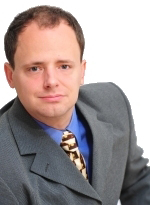
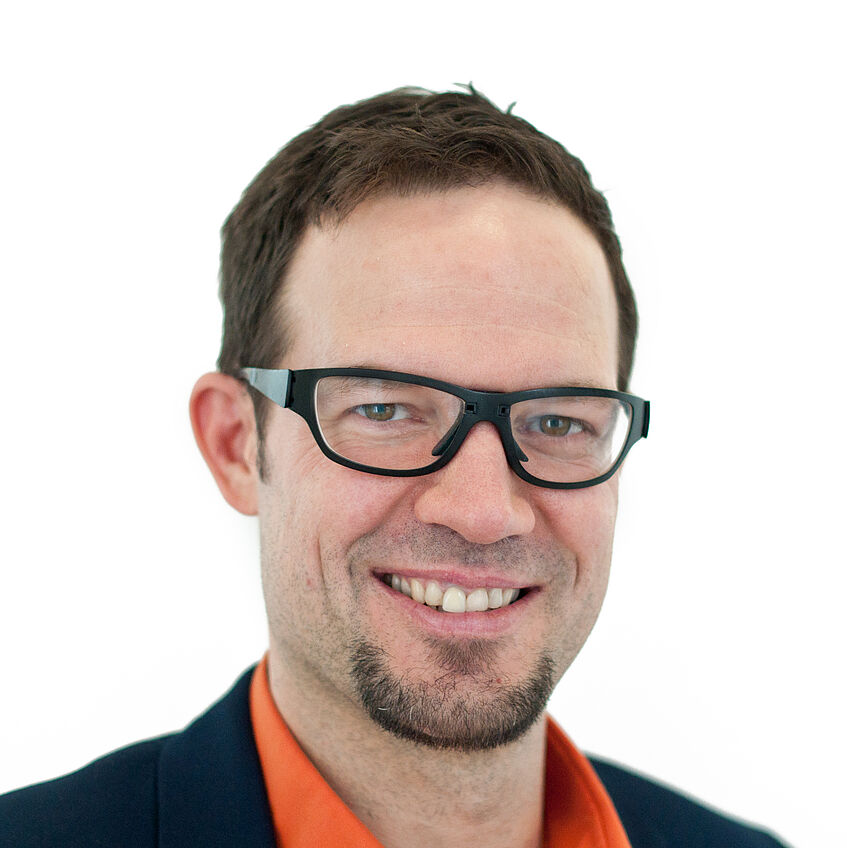
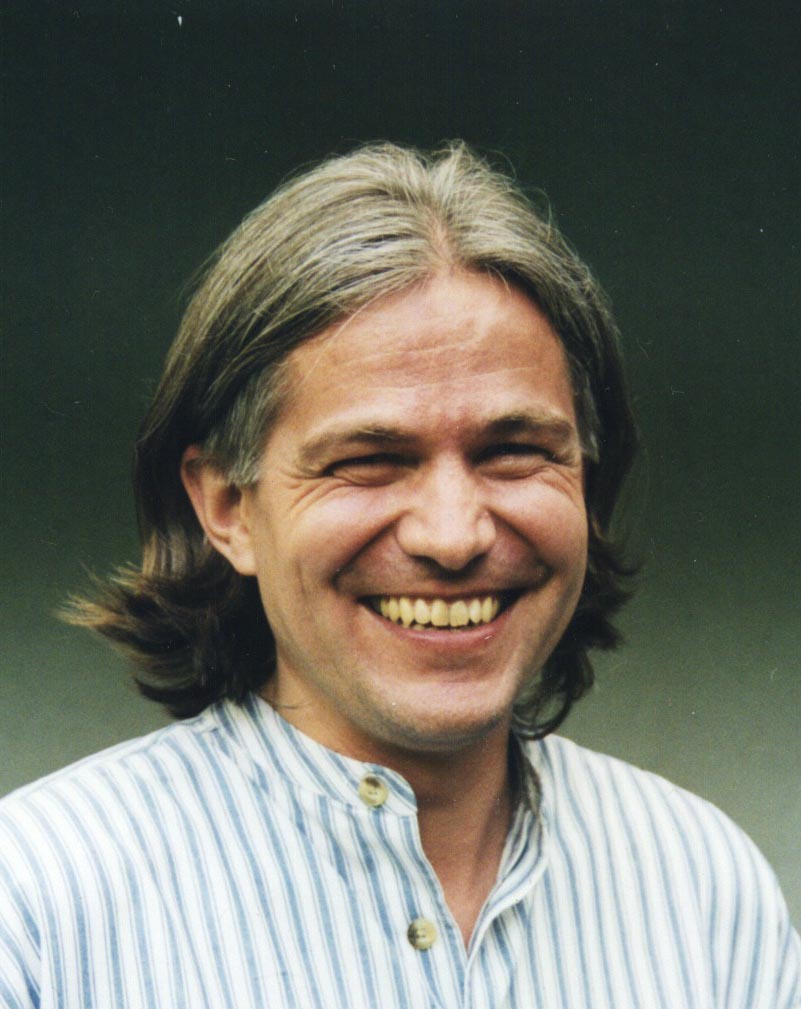
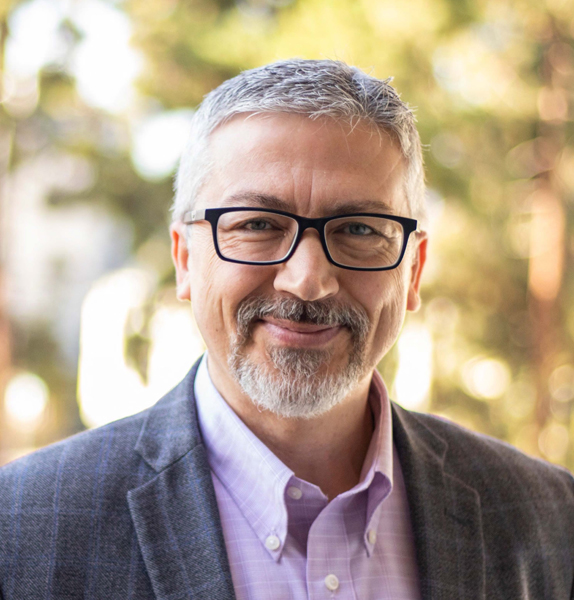
Christoph Koch is a Full Professor in the School of Computer and Communication Sciences at EPFL (Ecole Polytechnique Federale de Lausanne) , Switzerland. He has held academic positions at Cornell University (2007-2010, 2006), Saarland University (2005-2007), and TU Vienna (2001-2005). His research focuses on database systems, logic, programming languages, and data management.
Claus Lamm is a Full Professor of Biological Psychology at the University of Vienna , where he leads the Social, Cognitive and Affective Neuroscience Unit (SCAN-Unit) . He serves as Vice Dean for Research and Advancement of Early Career Researchers at the Faculty of Psychology and holds affiliations with the Vienna Cognitive Science Hub , Environment & Climate Change Hub , and Austrian Academy of Sciences . His academic career spans international collaborations and formative research experience abroad. Scientific Focus: Lamm investigates the neural underpinnings of empathy and prosocial behavior , employing multi-modal approaches combining neuroimaging, psychopharmacology, and psychoneuroendocrinology . His work extends to comparative studies with ravens and dogs, and explores environmental social neuroscience through climate change decision-making research. Recent publications show trends in cross-cultural psychology , machine learning applications , and neurobiological pathways related to social behavior. Awards & Grants: Recipient of the APS Mentor Award for his support of early career researchers. Funded by European Research Council , Austrian Science Fund , Vienna Science and Technology Fund , and intramural grants exceeding €10 million. Key projects include "Unravelling the opioid system in empathy" and "Comparative dog-human fMRI" . Media Engagement: A prominent public science communicator, Lamm has appeared in Nature , Science Magazine , and Austrian media outlets like Ö1 Mittagsjournal and ORF2 , discussing topics from pandemic psychology to social media effects . He maintains active outreach through Science TV and educational programs .
Peter Druschel is a Professor and founding Director of the Max Planck Institute for Software Systems (MPI-SWS) in Saarbrücken, Germany. He holds adjunct professorships at Saarland University and the University of Maryland. His research focuses on distributed systems, operating systems, and privacy-preserving technologies. He earned his Ph.D. from the University of Arizona in 1994 and has held roles at Rice University since 1994, including Professor of Computer Science (2002–2005). Education: Ph.D. in Computer Science, University of Arizona (1994) Research Interests: Distributed systems, operating systems, network security, accountable computing, and privacy technologies. Current projects include privacy compliance in data systems (Thoth), secure communication (EbN), and privacy-aware image capture (I-Pic). Awards: SIGOPS Mark Weiser Award (2008) NSF CAREER Award (1995) Member of Academia Europaea and German Academy of Sciences Leopoldina Grants & Leadership: Leads the ERC Synergy Project imPACT, chairs the Max Planck Society’s Chemistry, Physics, and Technology Section, and collaborates with institutions like Cornell and Google. Advises on policy issues related to technology and privacy. Labs/Teams: Distributed Systems Group at MPI-SWS, collaborations with Microsoft Research and MIT. Current team includes students and postdocs working on privacy, security, and distributed systems.
Massimiliano Di Ventra is a Professor of Physics at the University of California, San Diego, holding this position since 2006 after serving as Associate Professor (2004-2006) and moving from Virginia Tech where he was Assistant Professor (2000-2002) and Associate Professor (2003). His academic journey includes research roles at IBM T.J. Watson Research Center and Vanderbilt University. Education: Undergraduate degree in Physics, summa cum laude, University of Trieste, Italy (1991) PhD in Physics, Swiss Federal Institute of Technology, Lausanne (1993-1997) Di Ventra's research bridges theoretical physics with practical applications, focusing on quantum transport in nanoscale systems, non-equilibrium statistical mechanics, and DNA sequencing/polymer dynamics in nanopores. His pioneering work on memory effects in nanostructures has driven innovations in unconventional computing and biophysics, resulting in over 300 refereed publications and significant commercial impact through memcomputing technologies. His scientific awards include: Senior member, National Academy of Inventors (2025) Humboldt Research Award (2024) Fellow, American Association for the Advancement of Science (2022) IEEE Nanotechnology Council Distinguished Lecturer (2022) Fellow, IEEE (2022) George W. and Carol A. Lattimer Research Fellow (2021) Member of Academia Europaea (2020) Feynman Prize for Theory in Nanotechnology (2020) APS Outstanding Referee (2019) Highly Cited Researcher (2018) Di Ventra has secured major research funding including an NSF CAREER Award and Ralph E. Powe Award, holds 11 granted patents, and co-founded MemComputing, Inc. His mentorship extends to numerous graduate students and postdoctoral researchers within his active research group at UCSD. He maintains a globally recognized research presence through visiting professorships at institutions including École Normale Supérieure of Paris (2024), Technion (2017), and Technical University of Dresden (2015), and has delivered over 350 invited talks including 20 plenary/keynote presentations worldwide.
Dr. Borivoje Dakic is an Associate Professor at the University of Vienna , affiliated with the Faculty of Physics and the Quantum Optics, Quantum Nanophysics and Quantum Information department. His research spans foundational and applied aspects of quantum theory. Operational reconstruction of quantum formalism Quantum interference as a resource for communication Tomography of large-scale quantum systems Macroscopic quantum phenomena His work includes scalable verification techniques for quantum devices and collaborations with experimental teams like Philip Walther’s and Markus Aspelmeyer’s groups. He received the Marko Jarić Prize (2025) for his contributions. Recent projects focus on diagnostics of quantum devices (FWF BeyondC SFB), information-theoretic foundations of quantum interference (FWF P36994), and local operations in quantum field theory (Cluster of Excellence QuantA). His research on quantum coherence in networks and macroscopic entanglement challenges traditional assumptions about quantum-classical boundaries. Publications emphasize resource-efficient tomography, device-independent verification, and foundational frameworks for quantum statistics and field theory. Teaching: Quantum Information (2025W), Theory in Quantum Optics (2025S), VCQ Summerschool Labs: Dakić Group at University of Vienna
Atakan Aral serves as an Associate Professor at the Faculty of Computer Science, University of Vienna, where he leads research in edge computing, distributed systems, and environmental monitoring applications. His work focuses on developing efficient and resilient computing systems for environmental applications, with particular emphasis on neuromorphic edge AI and the cloud-edge continuum. He maintains an active teaching schedule offering courses in Distributed Systems Engineering, Cloud Computing, and Practical Software Courses with Bachelor's Thesis work across multiple semesters through 2025. Dr. Aral's research interests span several critical areas in modern computing including edge computing architectures, federated learning approaches, neuromorphic computing for environmental monitoring, and resilient systems design. His work addresses fundamental challenges in resource-constrained environments, particularly focusing on latency-sensitive applications and energy-efficient computation. The interdisciplinary nature of his research bridges theoretical computer science with practical environmental applications, developing systems that can operate effectively in remote or resource-limited settings. Analysis of his recent publication trajectory reveals a clear evolution from foundational cloud computing research toward increasingly specialized edge intelligence systems. Early work focused on resource allocation and scheduling in cloud environments, while his current research emphasizes neuromorphic approaches for sustainable environmental monitoring. His publications demonstrate growing interdisciplinary collaboration, particularly with environmental scientists, and increasing focus on practical implementations of theoretical concepts in real-world monitoring systems. Dr. Aral leads significant research projects including TROCI (Towards Resilient Operation of Critical Infrastructure), an ongoing initiative, and SWAIN (Sustainable Watershed Management Through IoT-Driven AI), which ran from February 2021 to February 2024. His work spans multiple dimensions of computing systems, from hardware-aware algorithms to application-level implementations, with consistent contributions to major conferences and journals in distributed systems and edge computing. He is an active member of the Scientific Computing research group at the University of Vienna, working from Room 6.49 at Währinger Straße 29. His research environment includes collaboration with the Environment and Climate Research Hub, reflecting the interdisciplinary nature of his work that bridges computer science with environmental applications. His publications indicate strong international collaboration across European institutions and research groups.
Markus Vincze is an Associate Professor at the Institute of Automation and Control Engineering (ACIN) at Vienna University of Technology (TU Wien). He founded the Vision for Robotics (V4R) group in 1996 to advance robotic perception, particularly in real-world environments and homes. His work focuses on cognitive computer vision techniques for robotics. Education: Diplom in Mechanical Engineering (1988) and PhD (1993) from TU Wien; M.Sc. (1990) from Rensselaer Polytechnic Institute. V4R coordinates EU projects like ActIPret, robots@home, HOBBIT, and national initiatives like vision@home. Markus has edited a book on Robust Vision with Gregory Hager and authored 62 peer-reviewed journal articles and over 400 reviewed publications. His recent research explores zero-shot 6D pose estimation, sim-to-real transfer, and transparent object detection. Markus has served as program chair for ICRA 2013 and organized HRI 2017 in Vienna. He has advised numerous students and secured grants from the Austrian Academy of Sciences for work at HelpMate Robotics and Yale's Vision Laboratory. The V4R group leads innovations in robotic vision, including frameworks for synthetic data generation (Unrealgensyn), depth completion (CAGT), and educational robotics applications for sustainability. Their work spans household robotics (RH3), agricultural robotics (EdgeSoil), and human-robot collaboration.
Marco Canteri is a Researcher in the Department of Experimental Physics at the University of Innsbruck, Austria. He holds an MSc degree and contributes to quantum information science with a focus on trapped-ion systems for quantum computing and networking. His educational background includes a Master of Science degree. The specific institution is not provided in available sources. Canteri's research spans quantum networking, quantum communication, and quantum sensing using trapped ions. Key areas include ion-photon interfaces, quantum memory, entanglement distribution, and scalable quantum hardware. His work addresses challenges in noise resilience and long-distance quantum links through experimental implementations of multiqubit systems and telecom-wavelength interfaces. Analysis of his 12 recent publications (2020-2025) reveals consistent advancement in trapped-ion quantum technologies. Notable achievements include entanglement distribution over 101 kilometers, multimode quantum networking, and development of ten-qubit quantum registers. The research demonstrates strong interdisciplinary integration of atomic physics, quantum optics, and quantum information theory for practical quantum network applications. No scientific awards are listed in the available information. Information regarding students advised or research grants obtained by Marco Canteri is not provided in current sources. He operates within the quantum information research group of the Department of Experimental Physics, utilizing advanced laboratories equipped for trapped-ion quantum computing experiments including optical cavities, precision laser systems, and single-photon detection infrastructure under department head Hanns-Christoph Nägerl.
Emanuel Sallinger is a Full Professor at TU Wien's Databases and Artificial Intelligence Group and Vice Dean of Academic Affairs for Business Informatics and Data Science. He leads the Knowledge Graph Lab, focusing on scalable knowledge-based systems, reasoning in knowledge graphs, and AI integration. His research spans computational logic, database theory, and blockchain applications. Education: PhD in Computer Science (awarded 'sub auspiciis praesidentis rei publicae'), Master's degrees in Computational Intelligence and Informatics Management, and a Bachelor's in Software and Information Engineering. Research Interests: Knowledge graphs (construction, reasoning, scalability), logic-based systems, AI/ML integration with databases, enterprise architecture modeling, and financial knowledge systems. His work emphasizes practical applications like enterprise modeling, sustainable waste management, and regulatory compliance. Grants & Projects: Lead Vienna Science and Technology Fund (WWTF)-funded Knowledge Graph Lab. Involved in projects like 'Knowledge Graph-driven Tour Management' (sustainability), 'SustainGraph' (waste processing), and 'Enterprise Architecture Knowledge Graphs'. Teaching: Offers courses on Knowledge Graphs, Generative AI, Database Systems, and research methodology. Supervises doctoral and master's students in AI, databases, and knowledge representation. Labs/Teams: Knowledge Graph Lab at TU Wien, collaborating with industry on blockchain-based systems, financial AI, and enterprise architecture frameworks.
Gabriella Giannachi is Professor of Performance and New Media and Director of the Centre for Intermedia at the University of Exeter's Faculty of Humanities, Department of English. She leads interdisciplinary collaborations between artists, academics, and scientists to advance research in performance and digital arts. Her educational background includes: BA in Modern Languages and Literatures from Turin University's Faculty of Letters and Philosophy PhD in English from Cambridge University, researching silence in modern European Drama with Trinity Hall scholarship Giannachi's research pioneers performance documentation in mixed reality environments, examining how digital archives function as mobile interpretation hubs for cultural engagement. She investigates mobile user-generated documentation's role in knowledge production, museum visitor dynamics, memory formation, and identity construction within ecological and heritage contexts, with significant focus on copyright and accessibility implications. Her publication trends reveal consistent exploration of presence theory across physical-digital boundaries, with award-winning CHI conference papers (2009-2013) and books like 'Performing Mixed Reality' (2011) establishing frameworks for understanding mixed reality performance, environmental art, and digital heritage preservation. Her scientific recognition includes: Three consecutive CHI Best Paper Awards (2009, 2012, 2013) Theatre Library Association Book Award nomination for 'Performing Presence' (2012) Royal Society of Arts Fellowship nomination (2012) While specific advisees aren't documented, her research partnerships demonstrate extensive collaborative supervision across institutions including Tate, Imperial War Museum, British Library, and Stanford Libraries, securing projects that integrate artistic practice with scientific research. As Centre for Intermedia Director, she cultivates experimental teams investigating how digital archives transform cultural engagement through mobile platforms, particularly in environmental contexts via partnerships with Met Office Hadley Centre and Ludwig Boltzman Institute.
Viktor Prasanna is the Charles Lee Powell Chair in Engineering and Professor of Electrical and Computer Engineering and Computer Science at the University of Southern California. He holds courtesy appointments in Computer Science and leads the Center for Energy Informatics, focusing on interdisciplinary research linking energy technologies, computer science, and engineering. Education: BE in Electronics (Bangalore University), ME (Indian Institute of Science), PhD in Computer Science (Pennsylvania State University) His research spans reconfigurable computing, FPGA accelerators, parallel and distributed systems, and big data applications. He has pioneered high-performance architectures and algorithms using FPGAs, impacting domains like networking, security, HPC, and machine learning. Prasanna has published over 600 papers, received 22 best paper awards, and secured >$50M in grants. His work emphasizes energy-efficient computing, with recent grants totaling $12.9M (2016–2021). His h-index is 73, with 23,454 total citations. Scientific Awards: IEEE Fellow, ACM Fellow, AAAS Fellow, W. Wallace McDowell Award, multiple Distinguished Alumnus Awards He has advised over 70 doctoral students and led major centers including CiSoft (Big Data in oilfield tech) and CAST. His editorial roles include Editor-in-Chief of IEEE Transactions on Computers and Journal of Parallel and Distributed Computing.
Professor Matthew Jonathan Rosseinsky holds the Chair of Inorganic Chemistry at the University of Liverpool, a position he has occupied since October 1999. His career includes significant appointments at the University of Oxford (1992-1999) and Bell Laboratories in New Jersey (1990-1992), following his DPhil at Merton College, Oxford. As a Fellow of the Royal Society and recipient of numerous prestigious awards, Professor Rosseinsky maintains an active research program and leadership roles in the international chemistry community. Professor Rosseinsky's educational background includes a First Class Honours degree in Chemistry with Quantum Chemistry from the University of Oxford (1987) and a DPhil in "Physical Properties of Superconducting Oxides and Radical Cation Salts" completed in 1990 under Professor P. Day FRS. His research focuses on the synthesis of new materials with applications in energy storage and generation, communications, separation, and catalysis. The Rosseinsky Group employs a broad range of synthesis and characterization techniques, including neutron and synchrotron X-ray diffraction, combined with computational methods in collaboration with Dr. George Darling. Current research areas include Dynapore, CO2 fuels, SOLBAT, and CATMAT projects that target specific material challenges. Professor Rosseinsky's publication record is exceptional, with 304 papers including 11 in Nature, 6 in Science, and 3 in Nature Materials, accumulating over 15,000 citations and an h-index of 56 as of 2012. His work demonstrates consistent excellence across materials chemistry, with particular emphasis on porous frameworks, electronic materials, and solid-state chemistry. Among his numerous accolades are the Harrison Memorial Prize (1991), Corday-Morgan Medal (2000), Royal Society Wolfson Research Merit Award (2002), De Gennes Prize (2009), and the prestigious Hughes Medal from the Royal Society (2011). He also holds an ERC Advanced Investigator Grant and has delivered distinguished lectures worldwide. Professor Rosseinsky has served in numerous editorial and advisory capacities, including as Associate Editor for Chemical Sciences, membership on the Royal Society Conference and Travel Grant Committee since 2007, and as a member of the International Advisory Board for the Max Planck Institut for Solid State Research since 2011. His professional activities extend to international review committees for research institutions in France, South Korea, and Saudi Arabia. The Rosseinsky Group operates within the Department of Chemistry at the University of Liverpool, collaborating extensively with researchers including Dr. John Claridge, Professor Andrew Cooper, and Professor Paul Chalker. The group maintains strong international partnerships and utilizes advanced facilities for materials synthesis and characterization to drive innovation in functional materials development.
Mathias Benedek is an Associate Professor at the Institute of Psychology, Faculty of Natural Sciences, University of Graz, Austria. He directs the Creative Cognition Lab and is actively involved in several research networks, including the "Complexity of Life" profile area, the "Brain and Behavior" research network, and the "FUTURE EDUCATION" research network at the University of Graz. His research focuses on the cognitive and neural mechanisms underlying creative thinking, with particular emphasis on the role of memory processes, metacognition, and eye movement patterns during creative ideation. Dr. Benedek's work bridges psychological theory with empirical research methods including eye tracking, neuroimaging, and computational modeling of creative processes. His research has important implications for understanding how creative potential develops and how it can be assessed and nurtured in educational and professional contexts. Dr. Benedek's publication record demonstrates a consistent focus on creative cognition across multiple dimensions. His recent work has expanded into emerging areas such as human-AI collaboration for creative tasks, automated assessment of creativity using large language models, and the relationship between physical activity and creative performance. His research shows a strong trajectory toward more ecologically valid methods for studying creativity in real-world contexts, moving beyond traditional laboratory paradigms. Seraphine Puchleitner Anerkennungspreis (PhD Supervision Award), University of Graz, 2021 William-Stern-Preis, German Psychological Society, 2019 Research Prize, University of Graz, 2017 Research Prize (Publication Category), Initiative Gehirnforschung, 2016 Berlyne Award, Division 10, American Psychological Association, 2015 Dr. Benedek has demonstrated strong commitment to mentoring the next generation of researchers, as evidenced by his 2021 PhD Supervision Award. His research has been supported by multiple grants from national and international funding bodies, though specific grant details are not provided in the available information. His professional service includes leadership roles in the Initiative Gehirnforschung Steiermark since 2010 and active membership in several psychological societies across Europe and North America. Dr. Benedek leads the Creative Cognition Lab at the University of Graz, which employs a multidisciplinary approach to studying creative processes. The lab integrates methods from cognitive psychology, neuroscience, and computational modeling to investigate the mechanisms underlying creative thought. Current research projects examine the relationship between eye movements and internal cognitive processes, the development of automated assessment tools for creativity, and the application of creativity research to educational contexts.
Manolis G.H. Katevenis is a Professor at the Department of Computer Science, University of Crete, and Deputy Director and Head of the Computer Architecture and VLSI Systems (CARV) Laboratory at the Institute of Computer Science (ICS), Foundation for Research & Technology - Hellas (FORTH). He co-founded the European Research Center on Computer Architecture (EuReCCA) and is a founding partner of the European Network of Excellence on High-Performance and Embedded Architecture and Compilation (HiPEAC). PhD in Computer Science from University of California, Berkeley (1983) Co-founder of EuReCCA (2011) Contributed to RISC architecture (1980-1983), interconnection networks (1985-2011), and parallel computing (1993-2010) His research spans Scalable Multicore Systems , Interconnection Network Architecture , Packet Switch Design , Computer Architecture , and VLSI Systems . He has made foundational contributions to per-flow queueing, backpressure mechanisms, and wormhole IP over ATM, with applications in internet routers, data centers, and supercomputers. His publications focus on high-radix crossbar switches, flow control algorithms, and explicit interprocessor communication. Notable scientific awards include: ACM Doctoral Dissertation Award (1984) David J. Sakrison Memorial Prize (1983) IBM PhD Fellowship (1981-1983) Greek State Fellowship (1973-1978) He has supervised 40 graduate theses and participated in 22 R&D projects totaling €9M, including HiPEAC (coordinator of interconnection networks), SARC (FPGA prototype design), and ENCORE (cache-optimized remote DMA). His work has received over 2000 citations, with an h-index of 23.
Nadine Akkerman is an Associate Professor at Leiden University's LUCAS (Leiden University Centre for the Arts in Society), specializing in Early Modern English Literature. She is Principal Investigator of the ERC Consolidator Grant project FEATHERS, which investigates collaborative authorship in early modern legal and literary texts. Her academic career spans roles at VU Amsterdam, Radboud University Nijmegen, and visiting fellowships at Queen Mary London, All Souls College Oxford, and NIAS. PhD in English Literature (cum laude) from VU Amsterdam (2008) Junior Lecturer at VU Amsterdam (0.8 FTE, 2002-2006) Junior Lecturer at Radboud University (0.3 FTE, 2006-2007) Her research focuses on epistolary culture, women's history, and intelligence studies. She pioneered the study of female spies in 17th-century Britain through her monograph Invisible Agents , and authored the authoritative biography Elizabeth Stuart, Queen of Hearts . Her work integrates manuscript studies, diplomatic history, and digital humanities, including a groundbreaking Nature Communications paper on virtual document unfolding. Recent publications include the projected The Correspondence of Elizabeth Stuart (3 vols, Oxford University Press) and co-authoring a Yale University Press trade book on early modern spycraft (2024). Her research has transformed understanding of women's roles in espionage and court politics, with methodological innovations in archival science. ERC Consolidator Grant (€2M, 2020) Ammodo Science Award (€300,000, 2019) World Cultural Council Special Recognition Award (2017) Aspasia NWO Premium (2016) Akkerman actively communicates her research to the public through TV/radio appearances and curated exhibitions. She leads the FEATHERS project (2020-2025), funded by the ERC, which examines authorship mediation in early modern texts. Her work combines rigorous archival analysis with interdisciplinary approaches, bridging history, literature, and digital methodologies.