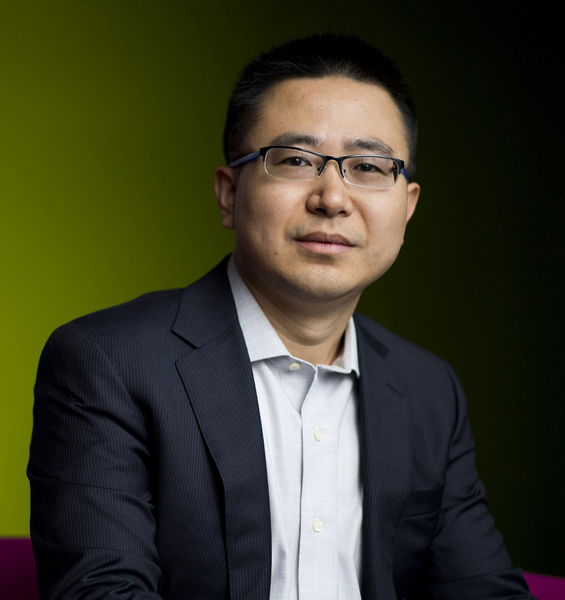
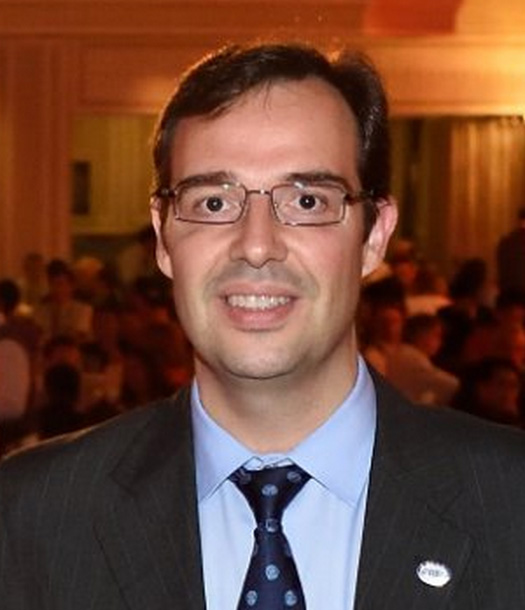
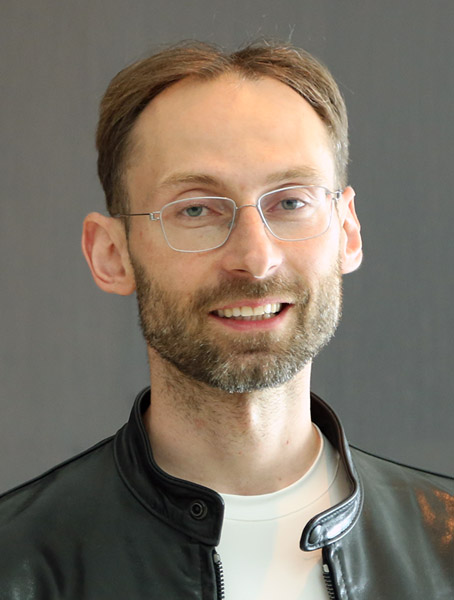
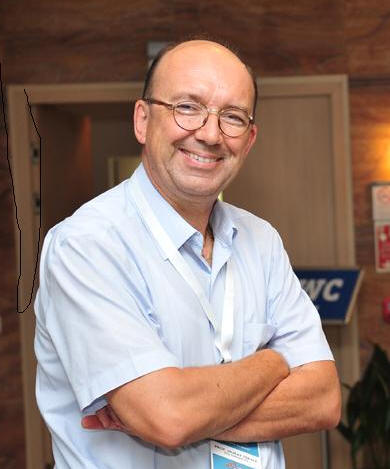
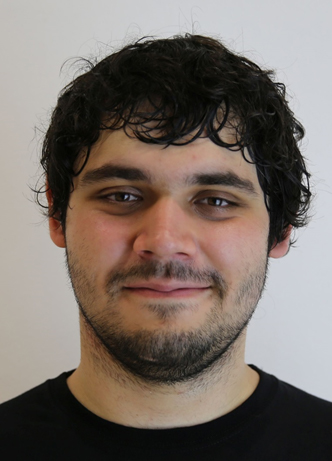
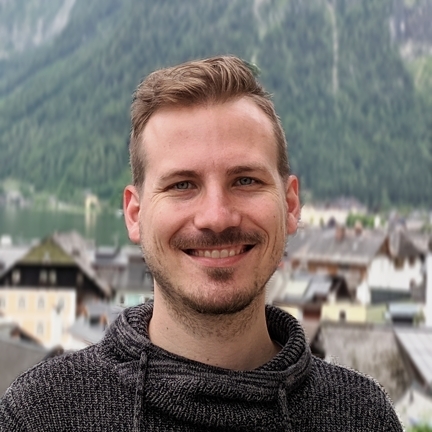
Tobias Batik is a Researcher in the Department of Virtual and Augmented Reality at Technische Universität Wien . His work focuses on haptic devices for virtual reality and mixed metro map visualization, contributing to projects like Action-Origami Inspired Haptic Devices for Virtual Reality (2023) and Shiftly: A Novel Origami Shape-Shifting Haptic Device for Virtual Reality (2025). His research spans Human-Computer Interaction , Computer Graphics , and Interactive Systems , with a particular emphasis on origami-inspired design and shape-shifting interfaces. Recent publications highlight trends in Virtual Reality and Data Visualization , including metro map layout algorithms and user-specified motifs. Contact: tobias.batik@tuwien.ac.at .
Stefan Hagel is a Research Fellow at the Austrian Academy of Sciences and Privatdozent at the University of Vienna, specializing in ancient Greek and Roman music. His work bridges archaeology, philology, and digital reconstruction to analyze ancient musical instruments, notation systems, and performance practices. His research focuses on: Reconstruction of auloi (double-pipes) and hydraulis (water organs) Computational analysis of instrument acoustics Cross-cultural transmission of musical technologies Ancient harmonic theory and notation decipherment He leads major projects including Ancient Music Beyond Hellenisation (ERC Advanced Grant), Digitising Aspects of Graphical Representation in Ancient Music (FWF), and the European Music Archaeology Project . Hagel has developed specialized software for instrument analysis and serves as editor for the Journal of Music Archaeology . His publications demonstrate consistent focus on technical aspects of ancient music through interdisciplinary methodologies.
Yun Fu is a Distinguished Professor at Northeastern University, affiliated with the College of Engineering and Khoury College of Computer Science. He holds tenure in Electrical and Computer Engineering (ECE). His roles include Professor, Senior Vice President at Shiseido Americas, founder of Giaran (acquired by Shiseido), and co-founder of TVision Insights. He earned his Ph.D. from the University of Illinois at Urbana-Champaign. His research focuses on artificial intelligence, computer vision, machine learning, and data mining. Key achievements include over 500 publications, 50+ patents, and prestigious awards like IEEE Fellow, OSA Fellow, and AAIA Fellow. He leads the SMILE Lab, exploring AI applications in vision, robotics, and healthcare. Notable entrepreneurship includes AI-driven ventures in cosmetics and media analytics. Research interests emphasize AI-driven solutions for computer vision challenges, including anomaly detection, trajectory prediction, and multimodal learning. His work bridges academia and industry, with impactful contributions to both fields.
Antonio Plaza is a Full Professor at the University of Extremadura, Spain, and Head of the Hyperspectral Computing Laboratory. With over 600 publications, he is a leading expert in hyperspectral data processing and parallel computing of remote sensing data. He serves as IEEE Fellow and has received numerous accolades, including the 2019 Excellent Teaching Award and multiple Highly Cited Researcher recognitions. Research Interests : His work bridges Hyperspectral Image Analysis , Medical Imaging , and High-Performance Computing . Recent projects focus on 3D anatomical modeling, AI-driven surgical tools, and deep learning applications for aortic dissection segmentation. Scientific Awards : 2019 Highly Cited Researcher (Geosciences) 2015 IEEE Fellow 2019 Excellent Teaching Award 2018 Highly Cited Researcher (Cross-Field) 2002 Best PhD Dissertation, University of Extremadura Editorial Leadership : Served as Editor-in-Chief of IEEE Transactions on Geoscience and Remote Sensing (2013–2017) and held multiple committee roles in IEEE GRSS. His articles reflect a shift from remote sensing to medical imaging, with a focus on Aortic Dissection Segmentation , Skull Reconstruction , and AI-driven Medical Tools .
Michael Bronstein is a Professor & Chair in Machine Learning and Pattern Recognition at the Department of Computing, Imperial College London (2018–present). He previously held academic roles including Professor at the University of Lugano, Switzerland (2010–present, on leave since 2019), Visiting Associate Professor at Tel Aviv University (2015–2017), and Visiting Lecturer at Stanford University (2008–2009). His research focuses on geometric methods for data analysis, with applications in machine learning, computer vision, and social networks. PhD in Computer Science (2007), Technion – Israel Institute of Technology His expertise spans geometric machine learning , deep learning on graphs, manifolds, and point clouds , 3D shape analysis , and geometry processing . His work bridges theoretical and computational approaches to solving problems in computer vision , pattern recognition , and 3D depth sensors . 2020 Royal Academy of Engineering Silver Medal 2018 Fellow, IEEE and IAPR 2016 ERC Consolidator Grant 2014 Young Scientist, World Economic Forum He has led high-impact industrial projects, including the development of Intel RealSense 3D camera technology, and founded startups like Fabula AI (acquired by Twitter in 2019). His academic and entrepreneurial career includes over 150 publications, 30 patents, and leadership roles in both academia and industry.
Ahmet Tekalp is a Professor in the Department of Electrical and Computer Engineering at Koc University's College of Engineering since 2001. He holds dual citizenship in Turkey and the USA, with prior academic roles at the University of Rochester (1986-2005) and research positions at Eastman Kodak (1984-1987) and Rensselaer Polytechnic Institute (1981-1984). He chairs the Electronics and Informatics Group at TUBITAK since 2004 as a part-time position. B.S. (1980) in Electrical Engineering & Mathematics, Bogaziçi University M.S. (1982) and Ph.D. (1984) in Electrical, Computer, and Systems Engineering, Rensselaer Polytechnic Institute His research focuses on digital image and video processing, including video compression, motion-compensated filtering for high-resolution applications, video segmentation, object tracking, content-based video analysis, multi-camera surveillance processing, and digital content protection. He has led numerous European and U.S. grants, including FP7 STREP projects and NSF awards, emphasizing applications in sensor networks, visual databases, and medical imaging. His scholarly work spans diverse areas such as superresolution reconstruction, head gesture animation, 3DTV streaming, and reversible data hiding. He has played pivotal roles in editorial boards, including serving as Editor-in-Chief of Signal Processing: Image Communication, and has contributed to major standards bodies like ISO MPEG and ANSI NCITS. Member, Turkish Academy of Sciences (TUBA) Fellow, IEEE Fulbright Senior Scholarship (1999) TUBITAK Science Award (2004) IEEE Signal Processing Society Distinguished Lecturer (1998) He has led multiple international research collaborations and projects, including European FP6/FP7 networks and NATO programs, with substantial grant funding from NSF, NYSTAR, and industry partners like Eastman Kodak, Xerox, and Siemens.
Michal Piovarci is a Researcher (Postdoc) at ETH Zurich's Computational Design Lab led by Bernd Bickel. He holds a Ph.D. from USI Lugano (2020) under Piotr Didyk, receiving the Eurographics PhD Award for his thesis on Perception-Aware Computational Fabrication. His research focuses on computer graphics, computational fabrication, and haptic/appearance reproduction, emphasizing perception-driven solutions. Education: Ph.D., USI Lugano (2020) Previous postdoc at ISTA's Visual Computing Group Research interests include 3D Printing Innovations Haptic Feedback Systems Material Perception Modeling Directional Surface Design Professional Activities: Area chair at ACM Symposium on Computational Fabrication (2024), program committee roles at SIGGRAPH, SAP, and Eurographics. Organized Computational Fabrication Seminars (2021-2022). Grants: SNSF Project Funding (CHF 1M, 2025-2029) and FWF Lise Meitner Grant (2022-2023). Teaching: Taught Scientific Machine Learning for Design (ETH Zurich, 2024) Computational Fabrication (TU Wien, 2022)
Diana Marin is a PostDoc Researcher at TU Wien's Institute of Visual Computing & Human-Centered Technology. She holds a BSc, MEng, and Dr.techn. (PhD) in technical fields. Her research focuses on computational geometry, point cloud processing, and distributed computing for large-scale datasets. She has contributed to projects like Distributed Surface Reconstruction and RE:STOCK INDUSTRY. Education: BSc, MEng, Dr.techn. (PhD) Her work emphasizes curve and surface reconstruction from unorganized point clouds, leveraging proximity graphs and distributed computational methods. Key projects include optimizing surface reconstruction for massive datasets and developing parameter-free algorithms for connectivity analysis. Her publications span topics like SING neighborhood graphs, Riemannian manifold curve reconstruction, and distributed processing techniques. She collaborates on projects such as PostDisaster and Mixed Reality Lab.
Yun Fu is a tenured Professor in the Department of Electrical and Computer Engineering at Northeastern University, with a joint appointment in the Khoury College of Computer Science. He has established himself as a leading researcher in Artificial Intelligence, with over 500 publications in top-tier venues including IEEE/ACM transactions and major AI conferences. His work spans both theoretical foundations and practical applications, with significant impact in computer vision and machine learning. Professor Fu earned his Ph.D. in Electrical and Computer Engineering from the University of Illinois at Urbana-Champaign. His academic career progressed from Assistant Professor at SUNY Buffalo to his current position as tenured Professor at Northeastern University, where he has held appointments since 2012. His educational background includes a Beckman Graduate Fellowship at UIUC (2007-2008). His research focuses on advancing Artificial Intelligence with particular emphasis on Computer Vision, Pattern Recognition, and Machine Learning. His seminal work includes the "Residual Dense Network for Image Super-Resolution" presented at CVPR 2018, which was ranked among the Top 10 Most Influential CVPR papers. His research interests span image processing, anomaly detection, multimodal learning, and trajectory prediction, with applications ranging from healthcare to consumer technology. Analysis of his recent publications reveals a strong trend toward developing efficient and robust AI systems that bridge computer vision with language understanding. His work increasingly focuses on multimodal learning, trajectory prediction for multi-agent systems, anomaly detection in complex environments, and model validation techniques for black-box systems, while maintaining practical applications in real-world scenarios. Professor Fu's extensive recognition includes: Fellow of IEEE (2018), OSA (2019), SPIE (2018), IAPR (2016), AAIA (2021), and AAAI (2025) Member of Academia Europaea (2022) and European Academy of Sciences and Arts (2023) Fellow of National Academy of Inventors (2023) Multiple Young Investigator Awards from NAE, ONR, ARO, IEEE, ACM, and INNS 12 Best Paper Awards from major conferences Industrial Research Awards from Google, Amazon, Samsung, JPMorgan, and others Professor Fu has successfully mentored numerous Ph.D. students who now hold prominent positions in academia and industry at institutions including Amazon, Microsoft, Meta, Adobe, and major universities. His entrepreneurial ventures include founding Giaran (acquired by Shiseido in 2017) and co-founding TVision Insights, demonstrating his commitment to translating research into real-world impact. He has secured significant research funding from both government agencies and industry partners. As the PI and Founding Director of the SmiLe Lab at Northeastern University, Professor Fu leads a dynamic research group focused on advancing the state-of-the-art in AI and Computer Vision. The lab fosters interdisciplinary collaboration across computer science, electrical engineering, and applied mathematics, with ongoing projects in efficient deep learning, multimodal understanding, and practical AI applications.
Georg Sperl is a research scientist at CLO Virtual Fashion . He holds a PhD in physics-based simulation from the Institute of Science and Technology Austria (IST Austria) , where he was supervised by Chris Wojtan . His research focuses on physics-based animation of natural phenomena like cloth, yarns, granular media, and fluids, emphasizing multi-scale simulation techniques. Education: BSc and MSc in Visual Computing from the Technical University of Vienna , followed by a PhD at IST Austria. His work bridges computational mechanics and visual detail through methods like numerical homogenization. Notable achievements include the SIGGRAPH Outstanding Doctoral Dissertation Award (Honorable Mention) and the Eurographics PhD Award . His research has advanced yarn-level cloth simulation, thin-shell mechanics, and inverse modeling of fabric properties. Prior to his current role, he contributed to projects like iCaRL in computer vision.
Michael Wimmer is a Full Professor at TU Wien, leading the Rendering and Modeling Group and directing the Center for Geometry and Computational Design. He holds a M.Sc. (1997) and Ph.D. (2001) from TU Wien. His research focuses on real-time rendering, procedural modeling, computational design, and point-based graphics. He has co-authored over 200 papers and the book *Real-Time Shadows*. He serves as Co-Editor-in-Chief of Computer Graphics Forum , chairs SIGGRAPH Asia 2025, and received the Eurographics Outstanding Technical Contributions Award (2023). Education: M.Sc. in Computer Science (1997), TU Wien Ph.D. in Computer Science (2001), TU Wien Research Interests: Real-time rendering and visualization Procedural modeling and computational design Point-based graphics and neural rendering Applications in computer games and urban environments Awards: Eurographics Outstanding Technical Contributions Award (2023) Wolfgang Straßer Award (Best Paper, 2022) Eurographics Fellow (2018) Outstanding Service Award (2012) Advising & Grants: Coordinator of the Special Research Programme Advanced Computational Design Key researcher at VRVis Research Center Labs & Teams: Rendering and Modeling Group Center for Geometry and Computational Design
Leif Kobbelt is a Full Professor of Computer Science and Head of the Visual Computing Institute at RWTH Aachen University . He previously held academic positions at the Max-Planck-Institute for Computer Science, University of Erlangen-Nürnberg, and University of Wisconsin-Madison. Diploma in Computer Science (1992), Karlsruhe Institute of Technology PhD in Computer Science (1994), Karlsruhe Institute of Technology His research focuses on computer graphics and geometry processing , with specific interests in 3D reconstruction, quad mesh generation, real-time rendering, and geometric modeling algorithms. He has pioneered techniques for efficient mesh processing, anisotropic geodesic computation, and procedural facade visualization. Recent publications analyze nonlinear constraints in geometric modeling, quad layout optimization, and real-time rendering techniques. Key themes include mesh parameterization, multiresolution analysis, and computational geometry for interactive applications. Scientific recognitions include: 2014 Gottfried Wilhelm Leibniz Prize (Germany's most prestigious research award) 2013 ERC Advanced Grant (ACROSS project) 2008 Eurographics Fellow 2004 Eurographics Outstanding Technical Contribution Award 2000 Heinz-Maier-Leibnitz Award He leads major research initiatives like the excellence clusters UMIC (€40M) and AICES (€15M), and the ERC-funded ACROSS project (€2.5M, 2014-2018). He serves as principal investigator and reviewer for international journals and organizations.
Helmut Hlavacs is a Professor at the Faculty of Computer Science, leading the Research Group on Education, Didactics, and Entertainment Computing. His expertise spans serious games, game design, virtual reality, and health informatics. He has contributed to over 218 publications since 2005, focusing on topics like hedonic experiences in gaming, VR applications in therapy, and AI-driven behavior trees. His work intersects technology, education, and healthcare, with notable projects such as Conquer Catharsis (VR anxiety treatment) and PhyLab (VR physics experiments). Hlavacs has secured research funding for initiatives like Programmieren lernen durch Computerspielentwicklung and Dig-Equality FF , emphasizing digital equity and education. In 2019, he won the Best Poster Award at IFIP for his work on health data from serious games. Research Interests: Serious Games for health and education Virtual Reality applications in therapy and learning Game design methodologies and AI-driven NPC behavior Psychological impacts of gaming and digital consumption Procedural content generation for games Key Projects: Programmieren lernen durch Computerspielentwicklung (2008): Game-based learning for programming skills Dig-Equality FF (2020-2021): Digital competence promotion for equity TP1 PRECIOUS (2013-2016): VR conferencing and stress management Grants and Advising: Hlavacs has advised on projects involving AI in military command systems, VR therapy for anxiety disorders, and participatory design of social media literacy tools. He collaborates internationally on topics like gamification for behavior change and multicultural health interventions. Labs/Teams: His research group focuses on Serious Storytelling and Entertainment Computing , developing tools like the Prototypical game framework and InvisibleSound for blind musicians. Current work includes FiGHT (a web-based tool for eating disorder communication) and OutSmart! (a serious game for social media literacy).
Stefan Rass is a Professor at the Institute of Networks and Security within the Faculty of Engineering & Natural Sciences at Johannes Kepler University Linz (JKU), where he leads the LIT Secure and Correct Systems Lab. As Principal Investigator for FFG-funded projects including reSilienz (digital supply chain resilience, 2023–2025) and ITPUK (AI signature verification, 2022–2024), he bridges theoretical game theory with practical cybersecurity solutions for critical infrastructures and robotics systems. His research spans game-theoretic security models (patrolling games, defense-in-depth strategies), quantum cryptography (QKD network architectures), and cyber deception frameworks like Honeyquest for measuring honeypot effectiveness. Recent work addresses robotics security benchmarking (RobotPerf), cryptographic instruction chaining for control flow protection, and risk assessment methodologies for interdependent infrastructures. His mathematical decision-making approach integrates bounded rationality and stochastic modeling to solve real-world security challenges. Professor Rass actively shapes the field through program committee roles (ARES 2023), peer reviews, and invited talks on security transparency. His current projects focus on cost-benefit-aware monitoring for cyber-physical systems and quantum key distribution standardization, reflecting Austria’s strategic priorities in digital resilience. The LIT Secure and Correct Systems Lab under his direction develops foundational theories while deploying tools for industrial applications, particularly in critical infrastructure protection and secure robotics workflows.
Peter Mohr-Ziak is a researcher affiliated with both the Institute of Computer Graphics and Vision at the University of Technology Graz (TU Graz) and VRVis Forschungs GmbH. His primary focus areas include Augmented Reality (AR) and Mixed Reality (MR) systems, specifically in the domains of AR visualization, content generation for AR, and head-mounted display (HMD) technologies. He is actively involved in projects with AVL List GmbH in addition to his academic research. Academic Rank: Researcher at TU Graz Education: Telematics, TU Graz Peter's research interests center on creating interactive AR systems with applications in industrial assembly, remote assistance, and education. His work spans technical aspects of AR visualization and practical implementations for skill training (e.g., guitar tutorials) and complex tasks like maxillofacial surgery. He investigates spatial rendering techniques, adaptive perspective models, and light field applications in mixed reality environments. Recent research trends include: 2024: Expanding into human-robot interaction and AR affordance templates 2023: Developing interactive guitar tutorials and state-aware configuration detection systems 2022: Advancing focus cues in video see-through MR and assembly instruction authoring 2019-2020: Improving HMD interaction with TrackCap and light field remote assistance 2017: Creating adaptive perspective rendering and video tutorial retargeting systems Scientific recognition includes: 2021: ISMAR Best Conference Paper 2017: CHI Best Paper Honorable Mention He contributes to projects at TU Graz's Institute of Computer Graphics and Vision, including collaborations with VRVis Forschungs GmbH and AVL List GmbH, while maintaining personal interests in photography and drone flying.