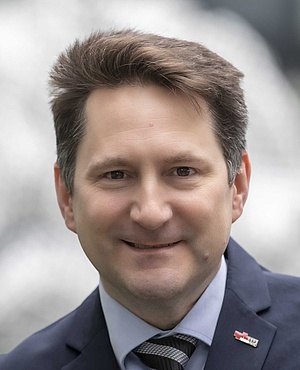
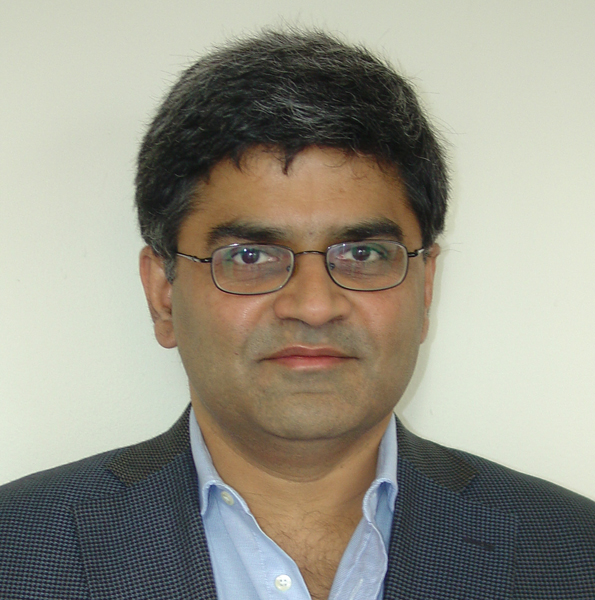
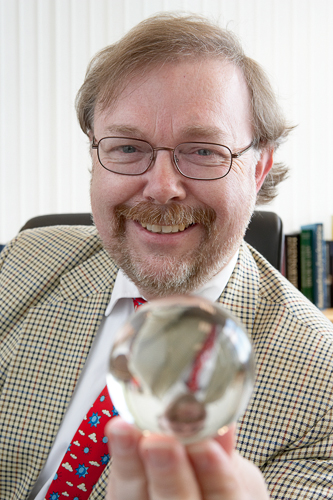
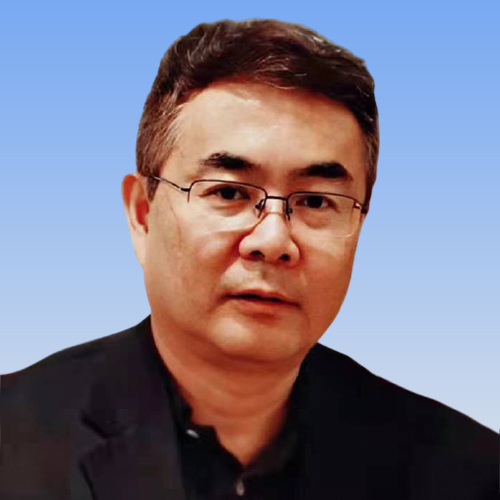
Michael Gervautz is an Associate Professor at the Department of Computer Graphics, Faculty of Informatics, Technische Universität Wien (TU Wien). His primary research areas include Computer Graphics and Virtual Reality , with a focus on applications in cultural heritage, historical replication, and interactive visualization. Research Interests : Gervautz's work bridges advanced 3D visualization techniques with practical implementations in archaeological documentation, cultural heritage preservation, and educational simulations. His projects often integrate multimedia tools and interactive systems to solve complex visualization challenges. Supervision : He has supervised numerous student theses, including projects like Wheelie (2006), Der Türkische Schachspieler (2004), and Image-based rendering of forests (2004), indicating his mentorship in virtual environments and augmented reality. Publications : His research spans topics such as virtual models for archaeology, multimedia excavation tools, and historical simulations, reflecting a consistent application of VR/AR technologies to interdisciplinary challenges.
Angeliki Grammatikaki is a University Assistant and PhD Student at Vienna University of Technology (TU Wien), affiliated with the Visualization Group since at least 2024. Her research focuses on illustrative terrain visualization , digital 3D mapping , and environmental data visualization . Research interests include: Automated 3D modeling of natural landmarks Human perception in geographic visualizations Scientific visualization for environmental monitoring Level-of-detail strategies in cartographic rendering Recent publications analyze tree representation in 3D maps (2025) and precipitation-water level correlations (2024), combining procedural modeling techniques with empirical user studies. She uses generative algorithms for terrain visualization and investigates factors affecting scene recognizability in digital cartography. Contact: angeliki.grammatikaki@tuwien.ac.at | Office: Favoritenstrasse 9 (Room HD0505)
Christoph Heinzl is Privatdozent at Technische Universität Wien, Faculty of Informatics, Institute of Visual Computing & Human-Centered Technology, and an associated researcher at University of Applied Sciences Upper Austria, Wels. His work bridges scientific visualization and industrial X-ray computed tomography, with applications in non-destructive testing and metrology. Education & qualifications: Heinzl holds a Dipl.-Ing.(FH) degree and a doctorate (Dr.) from TU Wien; in 2021 he completed his professorial dissertation (Habilitation) on visualization and analysis of XCT data. Research interests revolve around interactive visual analysis of high-dimensional and multimodal industrial data, uncertainty visualization, metrological evaluation of CT data, and development of immersive analytics workspaces for materials characterization. Across 60+ peer-reviewed publications since 2006 he has advanced techniques for porosity quantification, defect tracking, metal-artefact reduction, and comparative visualization of 3-D volumes, often in close cooperation with the Austrian COMET centre “EXCELLENCE IN COMET” and the K-project “ADVANCED METROLOGY”. Awards & recognition: While no major personal prizes are listed, Heinzl has served as paper co-chair and editorial guest editor for leading visualization venues, indicating peer recognition. Teaching & supervision: He regularly offers bachelor thesis topics such as “ImNDT: Immersive Workspace for Analysis of Multidimensional NDT Data” and teaches courses on visualization and computer graphics; specific PhD students are not named in the supplied sources. Funding & labs: Research is embedded in the university’s Visual Computing research area and supported by national competence centres for metrology, providing access to state-of-the-art XCT facilities and VR/AR laboratories.
Martin Ilcik is a Researcher at the Department of Computer Graphics within the Faculty of Informatics at Vienna University of Technology (TU Wien). His work focuses on procedural modeling, shape grammars, and related computer graphics techniques. He serves as a Scientist in the Rendering and Modeling workgroup and has been actively involved in research projects since 2008, including GameWorld, PAMINA, Wohnen 4.0, AgroEco, and currently Room Imageer and GreenFDT projects. Ilcik's research interests prominently feature procedural modeling techniques, with specializations in shape grammars, layout generation, semantic modeling, 3D reconstruction, and music generation. His work bridges computer science with practical applications in architecture, urban planning, and creative arts. He has made significant contributions to layer-based procedural design of building facades and collaborative modeling systems. His publication record spans from 2007 to 2024, with a strong focus on procedural modeling techniques. The research trajectory shows evolution from flow visualization to sophisticated procedural modeling systems, with increasing emphasis on shape grammars, collaborative design, and applications in architecture and music generation. His work demonstrates consistent innovation in making procedural modeling more intuitive and accessible. VC CultTech Hackathon winner category 'Vienna State Opera challenge' (2017) INiTS Award 2016 Ilcik has supervised student research, including Lukas Eibensteiner's 2021 Diploma Thesis on polyphonic music composition with grammars. He has been instrumental in organizing the Central European Seminar on Computer Graphics (CESCG) since 2008, which has grown into an important annual event for undergraduate students in computer graphics, vision, and visual computing across Central Europe. His community work includes creating educational resources and organizing EXPO events and Academy Videos through CESCG. He leads research in the Rendering and Modeling workgroup at TU Wien's Computer Graphics department, focusing on developing innovative procedural modeling techniques with applications in architecture, urban planning, and creative domains. His current projects (Room Imageer and GreenFDT) continue his longstanding interest in practical applications of procedural modeling techniques.
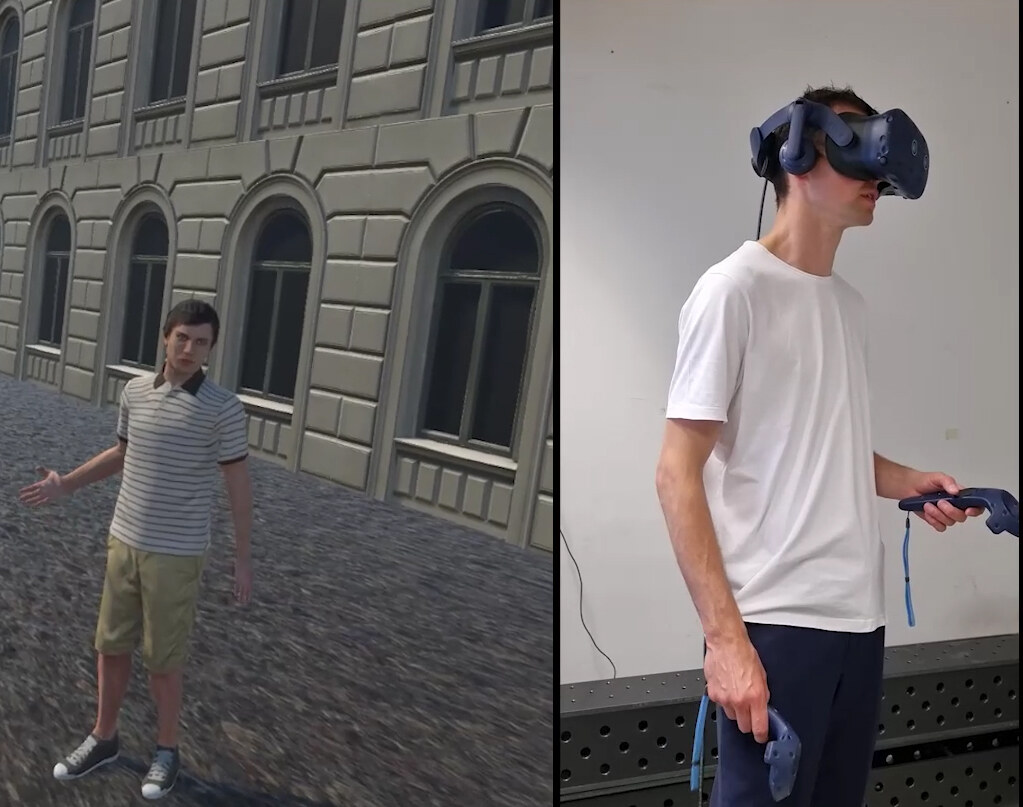
Peter Kán serves as a Senior Scientist at TU Wien's Faculty of Informatics, Institute of Visual Computing and Human-Centered Technology. He manages the Mixed Reality Laboratory and teaches multiple courses including Mixed Reality Lab (193.169), PhD Seminar (193.083), and various Project courses in Computer Science and Visual Computing. PhD in Computer Science from TU Wien Research on High-Quality Real-Time Global Illumination in Augmented Reality His research spans photorealistic rendering, augmented and virtual reality systems, automatic 3D content generation, and embodied conversational agents. Current projects include RE:STOCK INDUSTRY (2024–2027), Circular Twin (2022–2025), and VR Tennis Trainer (2020–2022), funded by FFG and WWTF. His work integrates deep learning with real-time rendering for applications in industrial design, sports training, and accessibility solutions for deaf and hard-of-hearing users. Recent publications demonstrate strong focus on procedural building design, motion analysis, and accessibility interfaces. Key trends include embodied conversational agents with situation awareness, multi-objective optimization for industrial buildings, and haptic feedback systems. His research bridges computer graphics, human-computer interaction, and practical applications in architecture and healthcare. Peter Kán has received research funding from Austrian Research Promotion Agency (FFG) and Vienna Science and Technology Fund (WWTF) for projects including Conversational Agents (2023–2024) and Realistic Indoor Path Visualization (2016–2018). Supervised 10 theses including Tennis Motion Learning in VR (Sebernegg, 2025) and Embodied Conversational Agents (Rumpelnik, 2023) Manages Mixed Reality Laboratory focusing on photorealistic AR/VR systems Leads research teams on projects like Circular Twin and RE:STOCK INDUSTRY
Marek M. Karpinski is a Chair Professor of Computer Science at the University of Bonn and a founding member of the Hausdorff Center for Mathematics . He has held visiting or professorial positions at institutions such as Princeton University, Carnegie-Mellon University, and the University of Edinburgh. His affiliations also include the B-IT Research School on Applied Informatics and the Lab for Foundations of Computing . His research spans efficient algorithms , combinatorial optimization , computational complexity , randomized approximation techniques , and applications in network design , quantum computation , and molecular biology . Recent work focuses on approximation hardness for NP-hard problems, graph algorithms , and algebraic computational complexity . His scientific contributions include polynomial time approximation schemes for dense NP-hard problems and key publications in randomized algorithms , VC dimension , and network optimization . He has advised numerous researchers and received honors such as the Humboldt Research Award and the Max Planck Research Prize .
Dr. Ursula Augsdörfer is an Associate Professor at the Institute for Computer Graphics and Knowledge Visualization, Graz University of Technology (Austria). Her research focuses on visual computing and applied computer science. Contact details include email augsdoerfer@tugraz.at and phone +43 316 873-5414. Consultation hours: Tuesdays 12:00-1:00 p.m. during term time. Research Areas : Computer graphics, knowledge visualization, visual computing Address : Inffeldgasse 16c, 8010 Graz, Austria (CGV Building) Teaching Authorization : Applied Computer Science
Tobias Schreck is a Professor at the Institute of Visual Computing (formerly Computer Graphics and Knowledge Visualization) at Graz University of Technology, affiliated with the Faculty for Computer Science and Biomedical Engineering. His research focuses on Visual Data Analysis, 3D Object Retrieval, and Immersive Analytics, with applications in engineering and industrial contexts. He holds a Dr.rer.nat. from the University of Konstanz and has held academic positions including Assistant Professor at the University of Konstanz and Head of the Visual Search and Analysis Group at TU Darmstadt. Education: Dr.rer.nat., University of Konstanz (2006) M.Sc. in Information Engineering, University of Konstanz (2002) Dipl.-Volkswirt (M.Sc. Economics), University of Konstanz (1999) His research interests include visual analytics for high-dimensional and spatial-temporal data, digital libraries, and collaborative analysis tools. He leads funded projects like HEREDITARY (EU Horizon Europe) and VR4CPPS (FFG), and has served as a program chair for IEEE VAST and EuroVis. His work emphasizes user interaction, eye-tracking integration, and immersive visualization techniques. He supervises a research team including postdocs, PhD students, and student assistants, and collaborates on projects like CrossSAVE-CH and the Joint PhD Programme with Nanyang Technological University. His contributions span publications in IEEE Transactions, EuroVis, and ACM conferences, addressing challenges in data exploration, anomaly detection, and visualization design.
Keshav Pingali is currently the W. A. "Tex" Moncrief Chair of Computing and a Professor in the Department of Computer Science at The University of Texas at Austin. He also serves as Director of the Center for Grid and Distributed Computing at the Oden Institute for Computational Engineering and Sciences. Previously, he held positions as India Chair of Computer Science at Cornell University (2003-2006) and Professor in both the Department of Computer Science and the Department of Electrical and Computer Engineering there (1999-2006). Education: Sc.D. (1986) and S.M./E.E. (1983) from MIT B.Tech. (1978) from Indian Institute of Technology, Kanpur Research Interests: Keshav works in programming languages, compilers, and runtime systems for program optimization and parallelization, with a focus on multicore processors and irregular applications from domains like social networks, data mining, and graphics. Scientific Awards: ACM SIGPLAN Programming Languages Achievement Award (2024) ACM/IEEE CS Ken Kennedy Award (2023) IEEE Charles Babbage Award (2023) Foreign Member, Academia Europaea (2020) IIT Kanpur Distinguished Alumnus Award (2013) Fellowships: ACM (2012), AAAS (2010), IEEE (2010) NSF Presidential Young Investigator Award (1989-1994) IBM Faculty Development Award (1986-1987) President's Gold Medal and Lalit Narain Das Memorial Gold Medal at IIT Kanpur (1978) Leadership & Service: He has served on steering committees of major conferences (PLDI, PPoPP), chaired editorial boards (ACM Transactions on Programming Languages and Systems), and contributed to NSF advisory committees. His research group maintains a homepage at http://iss.ices.utexas.edu/ .
John Tucker is a Professor of Computer Science at Swansea University's Department of Computer Science within the School of Physical Sciences. He has held leadership roles including Head of Department (1994-2007) and Head of School (2007-2011). His academic career spans institutions like University of Leeds and University of Bristol, with a PhD in Mathematical Logic (1977) and MSc in Mathematical Logic and Foundations of Mathematics and Computer Science (1974). Education : PhD (1977) and MSc (1974) from University of Bristol. His research focuses on the theory of synchronous algorithms , algebraic specification , physical foundations of computation , and computational physics , with historical interests in computing, mathematics, and science. He pioneered equational specification methods applied to micro-processors (ARM6 verification), 3D graphics, and non-linear systems modeling whole-heart dynamics. Scientific Awards : Founding Fellow of the Learned Society of Wales (2010) Elected Member of BCS-IET joint UK Computing Research Committee (2007-present) Trustee of the Institute of Welsh Affairs (2006) Fellow of British Computer Society (1998) As an academic leader, Tucker founded three journals and two book series (Cambridge Tracts in Theoretical Computer Science, Springer's History of Computing). He supervised 16 PhD students, advised on EU projects (FP3, FP4), and organized public science programs in Wales. His editorial roles include founding editor of Cambridge Tracts in TCS, Managing Editor of the Journal of Logic and Algebraic Programming, and service on boards of top-tier journals.
Jiebo Luo is a Professor of Computer Science at the University of Rochester, where he has held this position since 2014. He earned his BS and MS in Electrical Engineering from the University of Science and Technology of China (1989 and 1992) and a PhD in Electrical Engineering from the University of Rochester (1995). Prior to academia, he spent 15+ years at Kodak Research Laboratories as a Senior Principal Scientist. His research focuses on computational social science, natural language processing, digital health, computer vision, data mining, and multimedia. Dr. Luo’s work has been recognized through numerous awards, including the ACM SIGMM Technical Achievement Award (2021), Fellowships from ACM, AAAI, IEEE, IAPR, and SPIE. He has authored over 500 peer-reviewed papers, holds 90+ patents, and serves as Editor-in-Chief of the IEEE Transactions on Multimedia. He actively contributes to conference organization (e.g., ACM Multimedia, CVPR) and editorial roles for top journals. Key contributions include pioneering work in social media analytics, sentiment analysis, and digital health, as well as foundational research in multi-label classification and action recognition datasets like UCF 101. His labs and collaborations span the Goergen Institute for Data Science and the Greater Rochester Data Science Industry Consortium.
Galina Paskaleva is a Researcher at the Institute of Information Systems Engineering within the Faculty of Informatics at Vienna University of Technology (TU Wien). She works as a Project Assistant (Projektassistentin) with engineering qualifications (Dipl.-Ing.in BSc) and is actively involved in the Business Informatics Group. Her office is located at HD0205 (Favoritenstrasse 9, 1040 Wien) and she can be contacted at galina.paskaleva@tuwien.ac.at. Her research focuses on the intersection of construction engineering and digital technologies, particularly in tunneling projects. She specializes in Building Information Modeling (BIM), Industry Foundation Classes (IFC), and digital transformation in the Architecture, Engineering & Construction (AEC) sector. Her work addresses practical challenges in conventional tunneling projects, aiming to improve documentation processes through digital solutions. Recent publications demonstrate her expertise in applying software engineering principles to tunnel construction challenges, with a focus on data modeling, automated translation of domain knowledge, and integration of architectural details into 3D models. Her research has practical applications for improving data exchange between project stakeholders in tunnel construction. Galina collaborates extensively with researchers across multiple institutions, particularly with colleagues at TU Wien including Marco Huymajer, Robert Wenighofer, Christian Huemer, and Alexandra Mazak-Huemer. Her work bridges the gap between theoretical modeling approaches and practical construction industry needs.
Karl Bittner MSc. is a researcher at the Institute of Landscape Development, Recreation and Conservation Planning within the Department of Landscape, Water and Infrastructure at the University of Natural Resources and Life Sciences, Vienna (BOKU). His work focuses on the intersection of computer science, landscape visualization, and renewable energy planning, with particular expertise in virtual reality, GIS, and serious game applications for participatory planning processes. Bittner's research interests center around computer graphics, virtual reality visualization, geoinformatics, and their application to landscape planning challenges. His work demonstrates a strong focus on developing innovative visualization tools to address complex environmental planning issues, particularly related to renewable energy integration in landscapes. His research bridges technical computing approaches with practical landscape planning applications, creating tools that help stakeholders visualize and understand potential landscape changes. His recent publications reveal a consistent research trajectory focused on applying advanced visualization techniques to renewable energy planning challenges, with particular emphasis on wind farms, agrivoltaics, and climate adaptation strategies. Bittner's work shows a strong trend toward developing interactive, user-centered visualization tools that facilitate public engagement in planning processes. Bittner has presented his research at numerous conferences including the Digital Landscape Architecture Conference, AgriVoltaics Conference, and various planning forums across Europe. His presentations often focus on practical applications of visualization technologies in real-world planning contexts, demonstrating the tangible impact of his research. His educational background includes a Master's degree in Game Engineering and Simulation (2020-2022) and a Bachelor's degree in Computer Science (2017-2020), both from UAS Technikum Vienna, providing him with a strong technical foundation for his current research in landscape visualization technologies.
Michael Kossmeier (Mag. Mag. Dr., BSc) is a faculty member at the Faculty of Psychology , affiliated with the Department of Cognition, Emotion, and Methods in Psychology . His work focuses on meta-analytic methodologies and statistical modeling in psychological research. Active in Meta-Analysis , Funnel Plot Analysis , and individual differences in Personality Traits , Sexual Orientation , and Sex Differences Contributed to 31 publications with emphasis on replication studies, graphical displays for meta-analysis, and statistical artifacts in behavioral research Developed innovative tools like the sunset funnel plot to enhance statistical power in systematic reviews Research linked to UN Sustainable Development Goals including quality education and reduced inequalities Presented findings at 14 academic activities including conferences and invited talks
Dr. Marcus Wurzer is a researcher in the Department of Statistics and Mathematics at WU Vienna. His work focuses on social stratification, education policy, demography, and microsimulation modeling. He has contributed to studies on gender segregation in educational fields, demographic projections in heterogeneous societies, and pension system dynamics. Key projects include the development of dynamic microsimulation models for Austrian labor markets and pension systems. Education background not explicitly detailed in text, but his academic contributions span interdisciplinary research in statistics, sociology, and economics. He received the 'Preis für innovative Lehre' award in 2007 for his teaching concept 'Statistik integrativ', collaborating with colleagues at WU Vienna. His research activities include presentations at international conferences on topics like socio-economic segregation in teacher training programs and graphical models in microsimulation. He has led a major research project from 2007–2014 focused on developing microsimulation tools for long-term career trajectory projections.