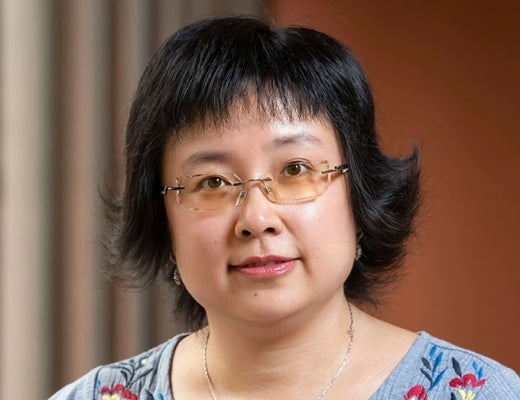
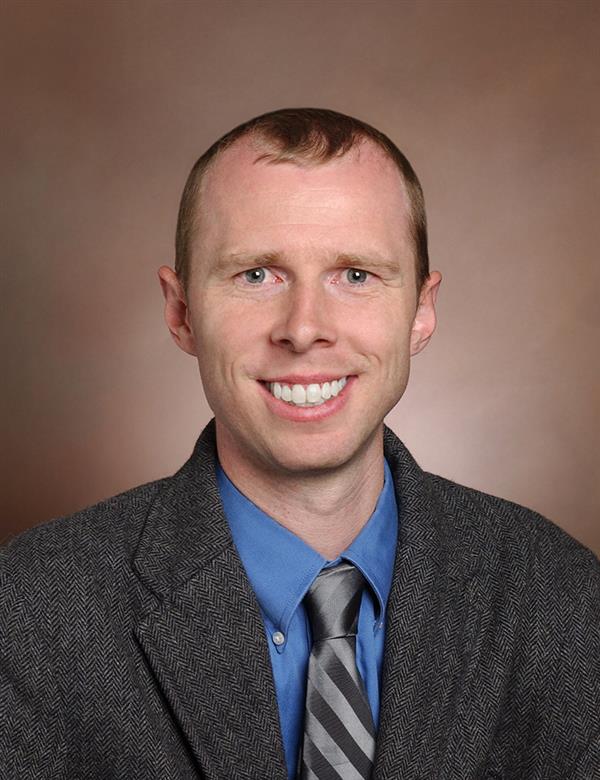
Dan Li is an Assistant Professor at the University of Pittsburgh School of Nursing , affiliated with the Health & Community Systems department. She serves as the Acting Coordinator for the Nursing Informatics Program, overseeing curriculum changes, academic advising, recruitment, and student support. Dr. Li specializes in applying computer vision technology to improve pressure injury assessment efficiency and consistency. Her work addresses nurse knowledge deficits in wound documentation and supports treatment monitoring. She also leverages clinical data-mining to build predictive models for postoperative care in cytoreductive surgery and hyperthermic intraperitoneal chemotherapy (CRS+HIPEC) patients. Her teaching focuses on Information Technology Project Management , Nursing Informatics Theories , and technology evaluation. Dr. Li is actively involved in professional organizations, including Sigma Theta Tau International , AMIA , ANA , HIMSS , and the Wound, Ostomy, Continence Nurses Society . She contributes to institutional governance through the School of Nursing Curriculum Committee and UPMC System Informatics Council . Her peer-review work spans journals like BMJ Open and IEEE Transactions on Medical Imaging .
Zhengjian Wang is a Research Fellow in the Department of Design, Manufacturing and Engineering Management at the University of Strathclyde, United Kingdom, specializing in precision manufacturing technologies. He obtained his PhD from the University of Strathclyde in 2022 and currently leads EPSRC-funded research on hybrid nanomanufacturing platforms. Education PhD in Engineering, University of Strathclyde (2022) Research Interests Dr. Wang's work centers on ultra-precision machining , hybrid micromachining , and nanofabrication , with specific expertise in rolling nanoelectrode lithography (RNEL) for sub-nanometer to micrometer scale product manufacturing. His research bridges diamond turning, chip formation mechanics, and biomedical applications including precision cancer surgery techniques and biocompatible material processing. Research Trends His 2025 publications reveal a strategic shift toward interdisciplinary applications, merging traditional machining with biomedical engineering. The cancer surgery simulation study demonstrates computational modeling of soft tissue resection, while the Ti6Al4V milling research advances laser-assisted manufacturing of aerospace alloys. Both works emphasize damage minimization and precision control across nano-to-macro scales. Awards Best Review Paper Award (2019) Grants and Projects Dr. Wang secures major funding through: EPSRC IAA: Transforming Nanomanufacturing (2024-2026) as Research Co-investigator developing market-ready RNEL technology A hybrid precision manufacturing platform (2022-2025) as Lead Researcher creating flexible nanoscale production systems Professional Engagement He serves on the editorial board of Mechanical Sciences journal and actively participates in Innovate UK commercialization programs, including the ICURe EXPLORE Programme for technology transfer.
Dr. Asimina Kazakidi is a Senior Lecturer in the Department of Biomedical Engineering at the University of Strathclyde , UK. Her academic journey began with a BSc in Physics from Aristotle University of Thessaloniki, followed by an MSc in Engineering and Physical Science in Medicine and a PhD in Biofluid Dynamics from Imperial College London. She continued her research as a Post-Doctoral Associate at Imperial's National Heart and Lung Institute (funded by the British Heart Foundation) and later as a Research Fellow at the Foundation for Research & Technology – Hellas (FORTH) in Greece. Research Interests: Biofluid Mechanics Computational Fluid Dynamics (CFD) Cardiovascular Flows Bio-Inspired Robotic Locomotion Synthetic Jet Technology Numerical Simulation Scientific Awards: Academic Returners Support Scheme Funding (2023) Fellowship for Aortic Arch Haemodynamics in Turner Syndrome (2020) Collaborations & Projects: She leads projects such as Biofluid Flow Effects in Polymeric Membranes (2023–2027) and Vascular Perfusion in Prosthetic Tissue Injury Development (2023–2027), focusing on health and environmental sustainability. Her work aligns with UN Sustainable Development Goals related to education and health.
Jos Ensink is an Assistant Professor at the Faculty of Veterinary Medicine , Utrecht University , specializing in Equine Sciences . With a career spanning over three decades at Utrecht, she focuses on soft tissue surgery, oncology, and ophthalmology in horses. As an EBVS® European Specialist in Equine Surgery and Diplomate of the European College of Veterinary Surgeons (ECVS) , she contributes to advanced veterinary surgical training and patient care standards in Europe. PhD (1995): Pharmacokinetics of oral penicillins in horses Specialist in Equine Surgery (RVNA since 1994, ECVS since 1997) Her research bridges clinical practice and translational medicine, with over 50 publications in journals like Equine Veterinary Journal and BMC Veterinary Research . Key areas include: Equine oncology : Sarcoids, melanomas, squamous cell carcinomas Ophthalmology : Iris cysts, Descemet's membrane detachment Pharmacokinetics : Antibiotic distribution in horses Comparative medicine : Insights into human pathologies via equine models Recent work highlights innovative treatments like tigilanol tiglate for sarcoids (2025) and diode laser therapy for ocular cysts (2023). She actively collaborates on multidisciplinary studies spanning PTSD genetics (2018) and vascular anomalies (2024). Scientific Recognition Diplomate, European College of Veterinary Surgeons (1997) Specialist, Royal Dutch Veterinary Association (1994) Contributor to European Board of Veterinary Specialisation (EBVS®) standards Dr. Ensink teaches Professional Behavior , General Surgery , and Soft Tissue Surgery in Utrecht's veterinary programs, mentoring students through clinical rotations and case-based learning.
Anne Kummeling is an Assistant Professor in the Department of Clinical Sciences at Utrecht University's Faculty of Veterinary Medicine, specializing in Companion Animal Surgery. She is recognized as an EBVS European Specialist in Small Animal Surgery, indicating her advanced expertise in this field. Dr. Kummeling teaches courses including Companion Animal Surgery 1, GD Surgery 2, and Soft Tissue Surgery. Her research focuses primarily on portosystemic shunts in dogs and other companion animals, with extensive work on surgical techniques, outcomes, and complications. She has published numerous articles on hepatic surgery, urinary tract surgery, and innovative surgical approaches for vascular anomalies. Her work spans both clinical applications and molecular research, including gene expression studies related to surgical outcomes. Dr. Kummeling's publication record shows consistent research activity from 1998 through 2025, with recent work examining prognostic factors for surgical outcomes, innovative surgical techniques, and molecular predictors of recovery. Her research demonstrates a strong focus on improving surgical outcomes for companion animals through evidence-based approaches. Among her notable scientific achievements is her certification as an EBVS European Specialist in Small Animal Surgery, which represents a significant professional accomplishment requiring extensive training and examination. Dr. Kummeling has been involved in collaborative research with numerous colleagues across veterinary medicine, contributing to advancements in surgical techniques and understanding of surgical complications. Her work has been published in leading veterinary journals including Journal of Veterinary Internal Medicine, Veterinary Surgery, and PLoS One.
Velibor Đalić serves as an Associate Professor in the Department of Automation at the Faculty of Electrical Engineering, University of Banja Luka. His academic career spans over 15 years with continuous research output in robotics and control systems. His research focuses on industrial robotics , computer vision applications , and advanced control systems . Key contributions include markerless calibration techniques for surgical robots, optimization of PI controllers for hydraulic systems, and computer vision solutions for industrial automation. His work bridges theoretical control algorithms with practical industrial implementations. Analysis of his 15 most recent publications reveals a strong emphasis on precision robotics (68% of works), particularly in calibration and vision systems, followed by industrial process control (25%) and educational robotics (7%). The research demonstrates consistent progression from fundamental control theory toward real-world surgical and manufacturing applications. Current research funding includes two active national projects: Razvoj STEM vjestina i interesovanja kod skolske djece (2025, BAM 3,000) and Metodi za analizu signala zasnovani na masinskom ucenju (2024-2025, BAM 4,000), where he serves as a key participant alongside senior researchers from the Faculty of Electrical Engineering.
Domenica Matranga is a Full Professor at the University of Palermo within the School of Medicine and Surgery , affiliated with the Department of Health Promotion, Maternal and Child, Internal Medicine and Specialist Medicine of Excellence 'G. D'Alessandro' . She teaches Medical Statistics and related disciplines across multiple medical and surgical degree programs. Research Focus : Epidemiology, public health, medical statistics, AI applications in diagnostics, maternal-child health, and oral pathology. Recent Publications : 15 articles (2024-2025) on topics spanning AI-driven diagnostics, healthcare workforce retention, HPV vaccination impacts, and aging-related pathologies. Key Collaborations : Engaged in multicenter studies across Europe and Italy, particularly focusing on healthcare system efficiency and patient safety. Teaching Activities include Biochemistry, Medical Statistics, and Radiation Risk Communication for Medicine, Dentistry, and Health Professions students. Her methodological expertise covers Bayesian modeling, statistical validation, and diagnostic accuracy assessment.
Vikas Patel, MD , is a Professor in the Department of Orthopedics at the University of Colorado Anschutz Medical Campus School of Medicine. He serves as Executive Vice Chair of Orthopedic Surgery and specializes in spinal surgery, with clinical expertise in conditions including Spinal deformities Disc herniation Sacroiliac (SI) joint disorders Neck and back pain
Dr. John Thompson is an Associate Professor in the Department of Neurosurgery at the University of Colorado Anschutz Medical Campus School of Medicine . He earned his PhD in 2008 and BS in 2003, both from Florida State University. Fluent in English, he specializes in deep brain stimulation (DBS) for movement disorders, particularly Parkinson's disease, with expertise in neurophysiological signal analysis and sleep disorders. Education PhD, Florida State University (2008) BS, Florida State University (2003) Research Interests DBS programming optimization Basal ganglia neurophysiology Sleep architecture in neurodegenerative diseases Neurotechnology development Epilepsy surgical outcomes Neuromodulation ethics Scientific Contributions 83+ peer-reviewed publications (2013-2024) 2024 studies on sleep spindles in Parkinson's DBS 2023 work on pediatric dystonia programming 2022 technical innovations in DBS targeting 2017 award-winning Boettcher Investigator research Professional Affiliations Society for Neuroscience American Society for Stereotactic and Functional Neurosurgery University of Colorado Movement Disorders Center Neurotechnology Center Practice Locations University of Colorado Hospital
Nimrod Deiss-Yehiely is an Assistant Professor in the Department of Gastroenterology at the University of Chicago, focusing on clinical and translational research in gastrointestinal disorders. His work bridges cellular mechanisms with patient care outcomes across diverse areas including esophageal diseases, liver transplantation, and colorectal cancer screening. Research interests span Gastroenterology , Hepatology , and Transplantation Medicine , with significant contributions to understanding eosinophilic esophagitis complications in bariatric surgery, psychosocial factors in liver transplant eligibility, and advanced screening methods for colorectal neoplasms. His early career included foundational cell biology work on ion transport and exocytosis mechanisms. Publication trends reveal a strategic evolution from basic cell biology (2014-2016) toward clinically impactful gastroenterology research (2020-2024), particularly in transplant hepatology and endoscopic screening technologies. Key publications demonstrate expertise in both mechanistic studies and large-scale clinical analyses, with recent work in JAMA and Journal of Gastrointestinal Surgery addressing critical gaps in celiac disease management and surgical outcomes. No scientific awards are currently documented in the profile. While specific mentoring activities aren't detailed, collaborative patterns indicate active involvement in multi-investigator studies across gastroenterology and transplantation domains. Major publications consistently involve interdisciplinary teams from hepatology, radiology, and surgery departments, suggesting engagement in institutional research consortia focused on gastrointestinal disease management.
Marc Munar Covas is an Assistant Professor at the Department of Mathematical Sciences and Computer Science, University of the Balearic Islands, since 2020. He holds a PhD in Information and Communication Technologies (2024), Master in Intelligent Systems (2020), and Degree in Mathematics (2019) from the same institution. Education: PhD (2024), Master (2020), Degree in Mathematics (2019) Research Affiliations: Member of SCOPIA research group, Collaborator of UGIVIA group His research focuses on theoretical and applied aspects of fuzzy logic operators, discrete mathematical morphology, and medical image analysis. He has contributed to projects involving abdominal surgery infection detection (Redscar app) and lung pathology identification (MIA4LUNG). His work integrates uncertainty processing with AI techniques for biomedical applications. Marc teaches mathematical analysis, statistics, and linear algebra across multiple degree programs, including Mathematics, Computer Engineering, and interdisciplinary double degrees. He participated in international collaborations at LORIA (France) and clinical validations at Son Espases University Hospital.
Sergio Alejandro Acosta Christian serves as an Assistant Professor in the Graduate School of the Faculty of Dentistry at the University of Chile, dedicating 11 hours weekly to postgraduate dental education with a surgical specialization. His academic career spans over three decades since obtaining professional qualifications in 1993. Academic Credentials: Dentist, University of Chile (1993) Professional Title, University of Chile (1993) Research & Clinical Focus: Dr. Acosta Christian specializes in advanced oral surgical interventions with emphasis on dental implantology and computer-guided surgical planning . His expertise manifests through courses covering surgical techniques for implant placement, bone augmentation procedures, and management of complex oral rehabilitation cases. Current research trajectories indicate strong alignment with evidence-based surgical protocols in restorative dentistry. Teaching Portfolio: For academic year 2025, he serves as Responsible Teacher for Surgery II (OD09531) and Complementary Techniques in Oral Implantology (OD090628), while coordinating Implantology Clinic I (OD090629). Historical records show consistent instructional roles since 2020 across Surgical Seminars (OD09533), Planning Guided Surgery II (OD09534), and Complementary Surgical Techniques II (OD09532). Additional Context: No scientific awards, student advisement records, laboratory affiliations, or grant activities are documented in available materials. His working arrangement follows standard academic contracts without explicit part-time designation despite limited weekly hours.
Logan Walsh, PhD serves as an Assistant Professor in the Department of Human Genetics at McGill University and is affiliated with the Goodman Cancer Institute. His research laboratory employs integrated experimental and computational methodologies to investigate the genetic basis of cancer and the role of the tumor immune microenvironment in therapeutic response. Dr. Walsh's research spans cancer genetics , tumor immunology , and translational oncology , with concentrated efforts on pediatric gliomas , lung adenocarcinoma , and osteoarthritis-related immune dysregulation . His laboratory leverages advanced spatial immune mapping and bioinformatics to dissect cellular interactions within tumor microenvironments, emphasizing myeloid population dynamics and immune suppression mechanisms. Analysis of recent publications reveals a pronounced trend toward spatial biology and immune microenvironment characterization across multiple cancer types. Key methodologies include imaging mass cytometry , digital pathology AI workflows , and computational modeling to identify therapeutic vulnerabilities in gliomas, lung cancer, and melanoma metastases, with emerging work on obesity-cancer interactions. Dr. Walsh leads the Walsh Lab, a collaborative environment comprising clinicians, scientists, and bioinformatic specialists focused on translational cancer research. The laboratory's work bridges basic discoveries with clinical applications to improve cancer diagnostics and develop novel immunotherapeutic strategies targeting microenvironmental interactions.
AHMET FIRAT BEKTAŞ is a Professor of Emergency Medicine at Akdeniz University Faculty of Medicine, where he has served continuously since 1998. His academic progression includes positions from Research Assistant to full Professor, with primary affiliation in the Department of Emergency Medicine. He completed his specialist training in Emergency Medicine at Akdeniz University in 2002, establishing his clinical expertise in acute care settings. His educational background includes specialized certifications in Advanced Life Support (European Resuscitation Council, 2007) and ICH GCP standards (Turkish Ministry of Health, 2009). Prof. Bektaş's research program centers on emergency diagnostics and acute intervention strategies , with significant contributions to point-of-care testing and emergency ultrasonography . His work addresses critical gaps in trauma management, toxicology, and metabolic emergencies, particularly through innovative applications of capillary blood ketone measurement and goal-directed ultrasound. His publication trajectory reveals consistent focus on practical clinical solutions, with recent studies examining COVID-19 diagnostic protocols , trauma epidemiology , and heart failure management . A distinctive pattern involves translating point-of-care technologies into actionable emergency department workflows across diverse clinical scenarios. Prof. Bektaş has supervised 8 theses across emergency medicine subspecialties and served as Editor for Acil Tıp Olgu Sunumları Dergisi (2010-2015). His research has been supported through institutional collaborations and peer-reviewed publications exceeding 140 Web of Science entries. He maintains active participation in the Akdeniz University Emergency Medicine Department's multidisciplinary research collective, contributing to clinical protocol development and resident training initiatives focused on evidence-based emergency care delivery.
Dr. Ibrahim Abukhiran serves as Assistant Professor of Pathology at the University of Pittsburgh School of Medicine and holds multiple leadership roles at the University of Pittsburgh Medical Center (UPMC), including Associate Director of AI Operations at the Computational Pathology and Artificial Intelligence Center of Excellence (CPACE), Director of the Computational Pathology/Pathology Informatics Fellowship, and Medical Director of both the Pathology Image Analysis Laboratory and Synoptic Pathology Reporting across UPMC hospitals. His educational background includes: MBBS from Jordan University of Science and Technology (2009-2015) Anatomic & Clinical Pathology Residency at University of Iowa Hospitals and Clinics (2017-2021) Gastrointestinal, Liver, and Pancreaticobiliary Pathology Fellowship at University of Iowa Hospitals and Clinics (2021-2022) Dr. Abukhiran's research centers on clinical and translational applications of biomarker immunohistochemistry, digital image analysis, and artificial intelligence to improve diagnosis, prognostication, and therapy response prediction for inflammatory, pre-malignant, and malignant diseases. His work focuses on quantitative assessment of tumor characteristics, immune responses, and biomarker validation in gastrointestinal, liver, and pancreaticobiliary pathologies, with particular emphasis on neuroendocrine tumors and gastrointestinal stromal tumors. His extensive publication record demonstrates consistent innovation in computational pathology, with recent work emphasizing AI-driven quantification methods for Ki-67 proliferation indices, tumor-infiltrating lymphocyte analysis, and digital risk stratification models that bridge histopathology with clinical outcomes across multiple cancer types. Scientific distinctions include: Outstanding Teaching in Anatomic Pathology, UPMC Pathology Residency (2024) Stowell-Orbison Certificates of Merit from USCAP (2021, 2022) Association of Indian Pathologists Best USCAP Abstract Award (2021) Rodger C. Haggitt Gastrointestinal Pathology Society Case of The Month Award (2021) Top 5 Junior Member Abstract Award from College of American Pathologists (2020) Paul E. Strandjord Young Investigator Award from ACLPS (2020) As Director of the Computational Pathology Fellowship, Dr. Abukhiran mentors trainees in pathology informatics while leading NIH-funded research initiatives through CPACE focused on AI validation in digital pathology. His current grants investigate microbiome biomarkers in rectal cancer response, digital quantification of tumor cellular density, and antibody optimization for immunohistochemical analysis. He leads the Pathology Image Analysis Laboratory where his team develops and validates AI algorithms for clinical implementation, with ongoing projects including whole-slide digital quantification systems for neuroendocrine tumor grading and real-time synoptic reporting tools integrated with UPMC's enterprise pathology workflow.