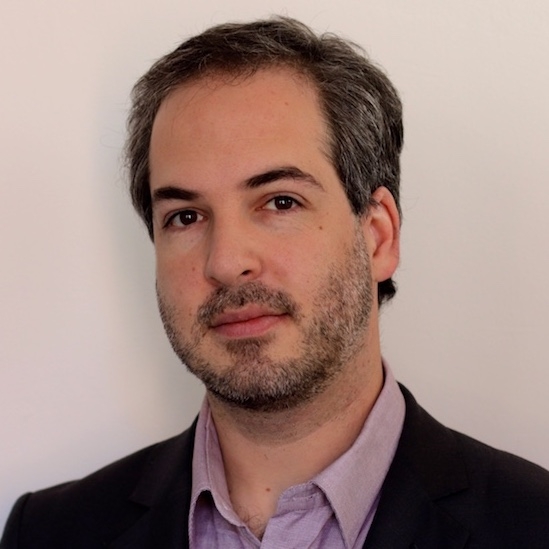
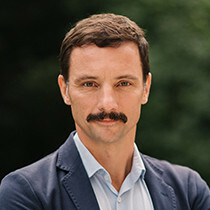
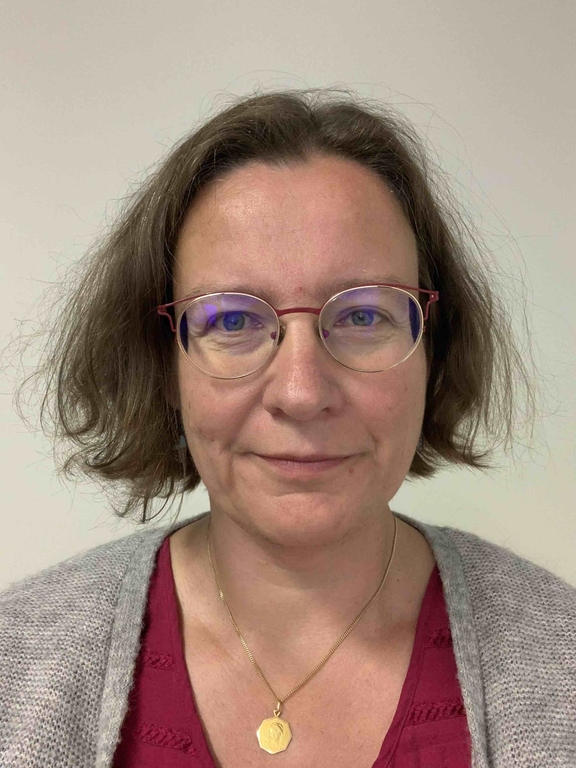
Giuseppe Marra is an Assistant Professor at the Faculty of Engineering Science and affiliated with the Declarative Languages and Artificial Intelligence (DTAI) unit at KU Leuven , Belgium. His research focuses on Neural-Symbolic Artificial Intelligence , integrating symbolic reasoning with neural networks to enhance transparency and reasoning capabilities in AI systems. Current affiliations: Department of Computer Science, DTAI (Leuven) Roles: Promotor in multiple projects (2022-2028), Council member of Faculty of Engineering Science His research portfolio includes projects on: Relational Concept-Based Models (2025-2028) Neuro-Symbolic AI scalability (2024-2026) Deep Statistical Relational Learning (2022-2024) Publications demonstrate expertise in Neuro-Symbolic AI , with applications in: Reinforcement learning safety (probabilistic logic shields) Graph neural network optimization (subgraph mining) Concept-based memory reasoning (interpretable architectures) Markov logic network extensions (quantified logic, temporal models) He contributes to teaching courses on: Artificial Intelligence (H0O18A) Reinforcement Learning (H0O23A) Machine Learning (H0T25A)
Thibaut Septon is a researcher affiliated with the Namur Digital Institute at the University of Namur . His work focuses on Human-Computer Interaction , Augmented Reality , and Wearable Technology , with recent publications on vehicular XR environments and multimodal interface development. Active in multimodal interaction and semantic search applications Key contributions to gesture recognition and data visualization in interactive systems His research spans Wearable Devices , Augmented Reality , and Interactive Computing from 2021 to 2025, emphasizing practical solutions for user interface challenges in emerging technologies. Activities include participation in conferences like ACM IUI , ESANN , and EICS from 2022 to 2025.
Bruno Dumas is a Professor at the Faculty of Computer Science, University of Namur, where he serves as Vice President of the Namur Digital Institute (NADI) and leads the EXUI research group at the Research Center on Information Systems Engineering. He obtained his MSc (2004) and PhD (2010) in Computer Science from the University of Fribourg, Switzerland, specializing in multimodal interfaces. His research explores human-computer interaction through multimodal interfaces, augmented/mixed reality, tangible interfaces, and AI explainability. Current investigations examine how computing evolution impacts daily life, spanning smart cities, adaptive interfaces, and information visualization. Dumas leads projects like Wal4XR (immersive tech for industry) and ARIAC (trustworthy AI foundations). Recent publications demonstrate focus areas: Wearable interaction in vehicular XR environments Voice assistant contextual understanding Medical AI for bronchoscopy diagnostics Rehabilitation interface engineering He teaches courses including Human-Computer Interaction, Information Visualization, and Internet of Things. As research lead, he has supervised 69 works and currently directs projects funded by Wallonia's Digital Innovation initiatives.
Stephan Poelmans serves as an Assistant Professor at KU Leuven within the Faculty of Economics and Business (FEB). He is affiliated with the Information Systems Engineering Research Group (LIRIS), maintaining offices in both Brussels (Warmoesberg 26) and Leuven (Naamsestraat 69). His academic duties encompass teaching courses such as Business Process Management, ICT-Management, and Data Management, alongside conducting research in conceptual modeling and educational technology. His primary research areas include business process management, conceptual modeling education, and the development of e-learning methodologies. Poelmans investigates how token-based animations in BPMN can enhance novice modelers' comprehension and explores adaptive blended learning techniques to improve software engineering education. His work bridges theoretical modeling frameworks with practical educational applications, emphasizing empirical validation through user studies and learning analytics. Analysis of his recent publications (2023-2025) shows a concentrated effort on optimizing business process modeling education. Key themes include token animation for process model comprehension, ambiguity detection in user stories, and the application of explainable AI in learning analytics. His research increasingly integrates eye-tracking and anomaly detection to understand learner behavior, reflecting a multidisciplinary approach combining information systems, cognitive science, and educational technology. Stephan Poelmans has not been recognized with any scientific awards, fellowships, or major prizes as per the available information. As a promotor, Poelmans leads two significant research projects: "Doctoral Researcher in Information Management: Teaching Modelling Skills in the BPMN formalism" (2021-2025) and "Adaptive Blended learning effectiveness in teaching software engineering" (2019-2025). These projects focus on pedagogical innovation in information systems education, particularly for novice learners. Although specific student advisees are not listed, his role as promotor indicates active supervision of doctoral candidates. He operates within the LIRIS research group, which specializes in information systems engineering. His collaborative work extends to the Faculty of Economics and Business, where he participates in the Council and Campus Council for the Brussels Campus, contributing to academic governance and strategic initiatives.
Catharina Olsen is a Research Fellow at the Department of Genetics Reproduction and Development, Vrije Universiteit Brussel (VUB), affiliated with UZB Hospital. Her research focuses on genomics, cancer biology, and bioinformatics applications in clinical settings. She leads and collaborates on projects like TumorScope (2024-2027), exploring AI-driven digital health solutions for cancer diagnostics. Key research interests include: Epigenetic regulation in multiple myeloma (DNMT3B and MYC pathways) Non-invasive biomarkers using cell-free DNA Prenatal genetic diagnostics via meiotic aneuploidy detection Cancer mutation prediction using protein language models Recent articles (2023-2025) highlight innovations in: BRAF variant clinical relevance analysis Spatial transcriptomics of pancreatic cancer heterogeneity Combination therapies targeting MAT2A and epigenetic modifiers Received the Best Poster Presentation BHS 2025 award for work on MAT2A inhibition in multiple myeloma. Active in interdisciplinary collaborations across Belgium and France, including a 2023 internship at Montpellier's Hospital St Eloi lab.
Loup Meurice is a Computer Science researcher at the University of Namur specializing in database systems and human-computer interaction technologies. His work bridges theoretical computer science with practical applications in data management and accessibility. His academic foundation includes: Bachelor in Computer Science (2011, University of Namur) Master in Computer Science (2013, University of Namur) PhD in Computer Science (2017, University of Namur) Meurice's research focuses on evolutionary database systems and accessibility solutions. His HyDRa framework revolutionizes hybrid polystore management through dynamic schema evolution techniques, while his recent work applies transformer models to sign language recognition. These dual research streams demonstrate exceptional versatility across low-level database engineering and high-impact assistive technologies. His publication trends reveal a strategic shift from core database engineering (2022 schema evolution frameworks) toward socially impactful applications (2023 sign language translation systems), maintaining technical rigor while expanding societal relevance. Award recognition: Best Paper Award at QRS 2016 for reliability/security innovations As academic supervisor, Meurice co-promotes doctoral research on French language acquisition tools for deaf students, demonstrating commitment to educational technology. His collaborative network spans 10+ international researchers across database theory and AI accessibility domains. Current projects involve the HyDRa framework development and context-aware sign language translation systems, operating within the University of Namur's computer science research ecosystem through multidisciplinary teams combining database specialists and human-computer interaction experts.
Theo Leclercq is affiliated with the Namur Digital Institute and the Faculty of Computer Science . His research focuses on advancing multimodal interaction systems and contextual understanding in voice assistant queries. Research Trends : Theo's work bridges natural language processing and human-computer interaction, emphasizing pronoun disambiguation and intelligent user interface design. Affiliations : Namur Digital Institute Faculty of Computer Science
Mateusz BYRSKI is a Professor at the Languages and Intercultural Dialogue Office of the College of Europe (Natolin campus). He graduated from Delhi University's St. Stephen’s College (1997) and holds an MA in International Security Studies (MISH) from the University of Warsaw. A certified language educator with Cambridge qualifications (CELTA, DELTA, CELTYL), he has taught in Poland, Australia, and the UK since 1997, specializing in General English, Business English, and Exam Courses for the British Council Warsaw. His research and professional interests include the Lexical Approach, Computer Assisted Language Learning (CALL), Content and Language Integrated Learning (CLIL), and integrating technology into language classrooms. He actively promotes modern pedagogical methods through his involvement in the Quizlet Ambassador Programme. As a teacher trainer, he has conducted presentations, webinars, and workshops for organizations such as the British Council, PASE, IATEFL Poland, and EduNation. He collaborates with National Geographic Learning and Nowa Era Publishing on teacher training initiatives.
Ayla Rigouts Terryn serves as Assistant Professor of Translation Studies and Translation Technology at KU Leuven Kulak within the Centre for Translation Studies. She currently heads the Translation and Technology research group, driving interdisciplinary work at the intersection of linguistics and computational methods. Her academic foundation includes a PhD from Ghent University (2021) focused on machine learning approaches to automatic terminology extraction. This doctoral work established her expertise in computational linguistics and natural language processing. Dr. Rigouts Terryn's research spans critical areas in language technology: Natural Language Processing (NLP) and Computational Linguistics Monolingual and Multilingual Automatic Term Extraction Explainable AI (XAI) for transparent language models Bilingual Lexicon Induction as a probing task for cross-lingual understanding Her work bridges theoretical linguistics with practical applications in translation technology, emphasizing machine learning techniques for terminology management. While no specific publications are detailed in the source text, her research trajectory indicates strong focus on enhancing AI interpretability in multilingual contexts. No scientific awards or honors are documented in the provided materials. Similarly, information regarding graduate student supervision or research grant acquisition remains unspecified in the available documentation. As leader of the Translation and Technology research group, she directs strategic initiatives advancing computational approaches to translation, fostering collaboration between linguists, computer scientists, and translation professionals to develop next-generation language tools.
Philippe Saey is a researcher at KU Leuven specializing in industrial automation, cybersecurity, and embedded systems. His work spans multiple domains including clinical trials technology, robotics education, and astronomical instrumentation. Expertise in industrial communication protocols (PROFIBUS, PROFINET, TSN) Developed open data recording devices for clinical trials Contributed to knowledge-driven control system design for telescopes Research Focus : Real-time systems, network redundancy, and human-centric technology. His 2024 work on TSN synchronization attacks highlights vulnerabilities in Industry 4.0 networks. Earlier projects include low-cost Arduino-based error generators and MATLAB code integration for steel manufacturing. Education & Collaboration : Co-developed project-based robotics curricula with industry partners and contributed to international automation projects like i-MOCCA (Flanders, France, UK). Supervised PhD research on telescope control systems.
Pieter Bonte serves as an Assistant Professor (tenure track) in the Department of Computer Science at KU Leuven's Faculty of Engineering Science, based at the Kulak Kortrijk Campus. He holds dual institutional affiliations as a core member of Leuven.AI - KU Leuven Institute for Artificial Intelligence and participates in academic governance through the Council of the Faculty of Engineering Science, Computer Science Department Council, and Science, Engineering and Technology Group Council at Campus Kulak Kortrijk. His research program centers on Stream Reasoning and Semantic Web technologies, with specialized expertise in Knowledge Graph embeddings , neurosymbolic reasoning , and edge analytics for IoT data streams . Current investigations focus on resource-optimized stream processing, cross-context learning architectures, and ontological frameworks for heterogeneous streaming data. His work bridges theoretical foundations with healthcare and communications network applications, emphasizing practical deployment in distributed environments. Recent publications (2023-2025) reveal dominant themes in RDF stream processing systems, benchmarking methodologies for knowledge graph embeddings, and ontology engineering for streaming linked data. His output consistently targets high-impact venues including VLDB Journal, Semantic Web journal, and DEBS conference, demonstrating leadership in stream reasoning standardization through comprehensive surveys and vision papers. The research trajectory shows increasing integration of symbolic AI with neural approaches for edge-constrained environments. As principal investigator, Bonte leads three major funded projects through 2028: Stream Reasoning for efficient Edge Processing , Neurosymbolic Stream Reasoning , and Edge analytics of heterogeneous IoT data streams . His teaching portfolio includes core computer science courses in Operating Systems (X0A48A), Declarative Languages (X0C99A), Computer Systems Organization (X0E31A), and Scientific Training (X0D49A), reflecting his commitment to foundational and emerging topics in data-intensive systems. Bonte's research group operates within KU Leuven's Leuven.AI ecosystem and Kulak campus infrastructure, maintaining extensive international collaborations evident in multi-institutional publications. The team specializes in developing semantic stream processing frameworks for real-world applications in healthcare monitoring and communications networks, with active partnerships across European research institutions.
Matthew Blaschko is a Senior Lecturer BOF at KU Leuven, affiliated with the Department of Electrical Engineering (ESAT) within the Faculty of Engineering Sciences. He directs the KU Leuven ELLIS unit and serves as a fellow in the ELLIS Health program, part of the European Laboratory for Learning and Intelligent Systems. As a Core PI in the Flanders AI Research Program, he leads work packages for Decision Support Systems and Medical Imaging. He is also a member of the KU Leuven Institute for Artificial Intelligence and co-leads the working group on Machine Learning and Data Science. Habilitation (HDR) from École Normale Supérieure de Cachan Newton International Fellow at University of Oxford Dr. rer. nat. from Max Planck Institutes Tübingen (awarded by Technische Universität Berlin) M.S. from University of Massachusetts Amherst B.S. from Columbia University Blaschko's research focuses on machine learning, computer vision, and medical image analysis, with particular expertise in uncertainty quantification in deep neural networks and trustworthy AI for healthcare applications. His work bridges theoretical foundations with practical implementations, developing methods for calibration, uncertainty estimation, and efficient model deployment. He has made significant contributions to neural network architectures, loss functions, and evaluation metrics for medical imaging tasks, with applications spanning Alzheimer's disease research, surgical phase recognition, and ophthalmic image analysis. His recent publications reveal a strong emphasis on calibration methods, uncertainty quantification, and medical applications of AI. The research spans diverse areas including Alzheimer's disease analysis, Bayesian optimization, novel view synthesis, knowledge extraction from text, and surgical phase recognition. Many papers focus on improving model reliability and safety for healthcare applications, reflecting his commitment to developing trustworthy AI systems that can be deployed in clinical settings. Best Student Paper Award, ECCV 2008 Université Paris-Saclay STIC Doctoral School Best Scientific Contribution Award Best paper award, CVPR 2008 Best paper award, Benelearn 2014 Blaschko actively mentors numerous PhD and MSc students, with current advisees working on topics ranging from uncertainty in deep neural networks to medical image analysis and AI for healthcare. He leads multiple significant research projects including 'onzekerheid in diepe neurale netwerken' (2025-2029), 'Trustworthy AI for Medical Image Analysis and Computer Vision' (2025), and 'Van metingen naar biomarkers in medische beeldanalyse' (2024-2028). His research is supported by the Flanders AI Research Program and other substantial funding sources. As director of the KU Leuven ELLIS unit and a key member of the KU Leuven Institute for Artificial Intelligence, Blaschko leads a vibrant research team focused on machine learning and data science. His laboratory develops cutting-edge AI technologies with practical applications, particularly in healthcare. Technology from his research has been incorporated into MONA, software for ophthalmic image analysis, demonstrating the real-world impact of his work.
Isabelle LINDEN is a Professor in Information Management at the University of Namur (UNamur), affiliated with the School of Management and the Department of Management Sciences . She leads research within the Namur Digital Institute (NADI) and Management of Information and Digital Transformation (MIND IT) research groups, while also collaborating with the Research Group on the Foundations of Computer Science (FOCUS) . Ph.D. in Computer Science (FUNDP 2007) Master in Computer Science (FUNDP 2002) Master in Philosophy (ULg 1999) Master in Mathematics (ULg 1995) Her research focuses on Knowledge Representation , Decision Support Systems , and Business Intelligence , with key projects exploring: Temporal coordination languages (semantics, expressiveness) Expert systems in legal and logistics domains Interactive visualizations preserving textual polysemy Data culture models for local governments Recent collaborative work includes projects like CYBEREXCELLENCE (cybersecurity), ARIAC (trusted AI), and GenQuAD (anomaly detection in industry 4.0), funded by Walloon Region and DigitalWallonia4.AI initiatives.
Pierre-Yves Schobbens is a Full Professor at the University of Namur, Faculty of Computer Science, specializing in software verification and formal methods. He serves as the Director of the Research Group on the Foundations of Computer Science (FOCUS) and holds leadership roles including President of the Research Center on Information Systems Engineering (PReCISE), Chair of the International Affairs Commission for the Faculty of Computer Science, and Chair of the Doctoral Commission for Exact Sciences at the university. Education: Bachelor in Philosophy, Université Catholique de Louvain (UCL), 1982 Master in Applied Mathematics and Economics, UCL, 1983 Master in Computer Engineering, UCL, 1984 Doctorate in Computer Science, UCL, 1992 Research Interests: Professor Schobbens specializes in software product lines, software verification, formal methods, agent-oriented software, and model checking. His research focuses on developing rigorous approaches for software development and verification, particularly in the context of variability-intensive systems. He has made significant contributions to the field of featured transition systems, which enable the verification of software product lines. His work bridges theoretical computer science with practical applications, addressing challenges in real-time systems, adaptive software, and database performance. Recent research directions include applying artificial intelligence techniques to software quality assurance, energy-aware computing, and the development of context-aware systems. Research Trends: Professor Schobbens' recent publications demonstrate a strong focus on the intersection of formal methods and emerging technologies. His work increasingly incorporates AI and machine learning techniques to address traditional software engineering challenges, particularly in software verification and testing. There's a notable emphasis on energy efficiency in computing systems, variability modeling for database performance testing, and the application of formal methods to self-adaptive systems. His research maintains a strong theoretical foundation while addressing practical concerns in software development. Scientific Awards: Most Influential Paper Award, VAMOS 2024 (ten-year award) Most Influential Paper Award, Software Product Lines Conference 2020 Most Influential Paper Award, International Requirements Engineering Conference 2016 Best Presentation Award, SAFECOMP 2012 Advising and Grants: Professor Schobbens has supervised 94 students across various levels. He leads multiple significant research projects including SQUAL.AI (Software Quality through Artificial Intelligence, 2025-2026), ERNEST (schEduler foR eNErgy autonomouS ioT, 2024-2025), and CYBEREXCELLENCE (Cyber Security Excellence project within the Walloon Region, 2022-2027). His research has been consistently funded since 1999, demonstrating sustained impact and relevance in his field. Laboratories and Research Teams: Professor Schobbens directs the Research Group on the Foundations of Computer Science (FOCUS) and is a key member of the Research Center on Information Systems Engineering (PReCISE). He also contributes to the Namur Digital Institute (NADI) and Namur Research Institute for Life Sciences (Narilis). His research group focuses on formal methods for software engineering, particularly addressing challenges in software product lines, model checking, and adaptive systems.