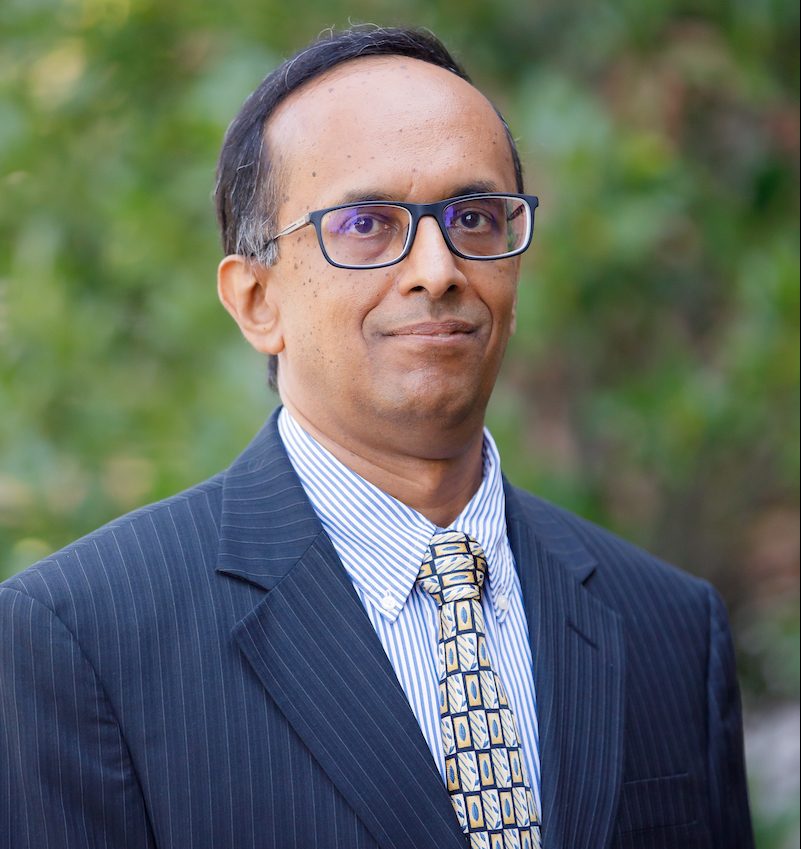
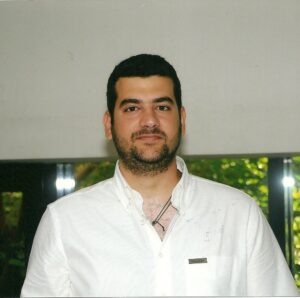
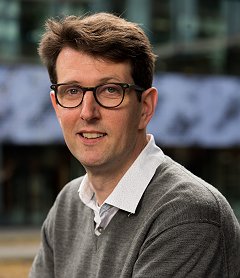
Panagiotis Hadjidoukas is an Associate Professor and Head of the Laboratory for Computing at the Computer Engineering and Informatics Department, University of Patras, within the School of Engineering. His work focuses on high-performance computing systems and parallel programming models. His research spans parallel and distributed computing , runtime support for parallel programming models , and automation of AI/ML workloads . Key contributions include developing the torc runtime system for task parallelism and pioneering work in extreme-scale scientific simulations. His interests bridge theoretical computer science with practical applications in scientific computing and AI acceleration. Notable achievements include the ACM Gordon Bell Prize Winner (2013) for 11 PFLOP/s cloud cavitation simulations and Finalist (2015) for in-silico lab-on-a-chip microfluidics. His software tools ( torc_lite , torcpy ) enable efficient parallelism across diverse architectures. Doctor of Philosophy (2003), University of Patras Master of Science (2001), University of Patras Diploma in Computer Engineering (1998), University of Patras As Head of the Laboratory for Computing, he leads infrastructure development while maintaining active research collaborations with IBM Research and ETH Zurich. His teaching portfolio includes graduate courses on high-performance computing for data sciences and parallel processing principles.
Adrian Spătaru serves as a Lecturer at the Faculty of Mathematics and Computer Science, West University of Timisoara, Romania, with his office located in room 058. He maintains active academic engagement through direct contact channels including email (adrian.spataru@e-uvt.ro) and phone ((0256) 592 157), reflecting ongoing institutional affiliation and research activities within computer science. His research centers on the integration of edge, cloud, and high-performance computing resources within the cloud continuum framework. Key focus areas include service orchestration, resource management, blockchain applications for decentralized systems, and AI-driven optimization of cloud infrastructures. His work addresses critical challenges in heterogeneous platform integration, fault tolerance, and predictive maintenance across large-scale distributed environments, with notable contributions to container deployment and accelerator-aware application specification. Analysis of his publication trends reveals sustained emphasis on the edge-cloud-HPC continuum since 2018, evolving toward intent-based AI orchestration and heterogeneous hardware integration in recent works. His research bridges theoretical distributed systems concepts with practical applications in environmental monitoring (solar forecasting, freshwater quality assessment) and industrial cloud reliability, demonstrating both academic rigor and real-world impact. No scientific awards are documented in the provided institutional information. Details regarding student supervision, research grants, or laboratory affiliations are not specified in the available materials. Current research directions appear focused on advancing the edge-cloud-HPC continuum through heterogeneous platform integration, with 2025 publications indicating active development in this domain.
Wagner Ourique De Morais is a Lecturer at the Academy of Information Technology , Halmstad University, with a focus on Smart Home Systems and Healthcare Technology for elderly populations. Doctoral Thesis : Architecting Smart Home Environments for Healthcare: A Database-Centric Approach (2015) Key Research Areas : Ambient Assisted Living (AAL), Graph Neural Networks for Clinical Prediction, IoT-Edge-Cloud Offloading, and Wearable Health Monitors His work spans 15+ years , including publications on Zero-Day Attack Detection in Vehicular Networks (2025), Graph Neural Networks for Clinical Risk Prediction (2024), and Smart Medication Organizers (2017). Research trends emphasize sensor integration , context-aware computing , and security in smart environments . He contributes to projects like the "Safe at Night" initiative and has developed middleware for heterogeneous sensor networks (2008). Current teaching and research at Halmstad University prioritize technology-enabled elderly care and cyber-physical system design .
Prof. Vana Kalogeraki is a Faculty Member at the Department of Informatics , Athens University of Economics and Business (AUEB) , and serves as the Dean of the School of Information Sciences and Technology and Director of the Computer Systems and Communications Laboratory . She has held academic positions at the University of California, Riverside and was a Research Scientist at Hewlett-Packard Labs . PhD: University of California, Santa Barbara M.S. & B.S.: University of Crete, Greece Her research focuses on Distributed and Real-Time Systems , Big Data Systems , Cloud Computing , Human-Centered Systems , and Crowdsourcing . She has published over 200 papers at top journals (IEEE TPDS, ACM TOS, etc.) and conferences (RTSS, DSN, ICDCS, VLDB, MDM), including co-authoring the OMG CORBA Dynamic Scheduling Standard . Her 2023-2025 publications address AI pipelines in serverless environments, edge computing for trauma detection via eye-tracking, and fairness in resource scheduling. She has received prestigious awards including an ERC Starting Grant , Best Paper Awards (DEBS 2017, IPDPS 2009), a Best Poster Award (EuroSys 2024), and multiple UC Research Awards . Her research is funded by the European Union (ARISTEIA, THALIS), NSF, and industry partners like SUN and Nokia. Advising Legacy : Supervised 10 PhD graduates (now at Google, Amazon, IBM, Apple) and over 60 MS/PhD committees Labs & Teams : Leads the Computer Systems and Communications Laboratory at AUEB, focusing on mobile human-centered systems and urban data analytics
Dr. Purushotham V. Bangalore serves as the James R. Cudworth Professor in the Department of Computer Science at the University of Alabama's College of Engineering and holds the position of Associate Director for the Center for Understandable, Performant Exascale Communication Systems (CUP-ECS), a Predictive Science Academic Alliance Program (PSAAP) Focused Investigatory Center. His academic credentials include: B.E. in Computer Science and Engineering from Bangalore University (1991) M.S. in Computer Science from Mississippi State University (1995) Ph.D. in Computational Engineering from Mississippi State University (2003) Dr. Bangalore's research centers on High-Performance Computing (HPC) with emphasis on designing abstraction layers for heterogeneous architectures, predictive performance modeling, and portability. His work extends to fault-tolerant message-passing middleware, exascale storage security, and reliability frameworks. Additional expertise spans data analytics, object-oriented numerical libraries, grid computing environments, and adaptive systems development through three decades of HPC and cloud computing innovation. Analysis of his 2021-2025 publications reveals dominant themes in HPC security architecture, containerization for scientific workloads, and MPI communication advancements. Key application areas include hydrological modeling (NextGen framework), GPU-accelerated communication protocols, and data provenance systems for exascale platforms, reflecting interdisciplinary approaches to computational challenges. Dr. Bangalore has secured approximately $20 million in research funding as PI/Co-PI from NSF, NIH, DoE, and industry partners, resulting in over 90 peer-reviewed publications. His academic service includes editorial roles for IEEE Transactions on Parallel and Distributed Systems, MPI Forum contributions to the MPI-4.0 standard, and organization of DoD-sponsored HPC training workshops. He leads research initiatives through CUP-ECS while maintaining active participation in the MPI Forum. His team develops frameworks for exascale communication systems with focus on security posture analysis, performance portability, and fault tolerance in next-generation computing environments.
Thomas Kudraß serves as Professor for Database Systems at the Faculty of Computer Science, Mathematics and Natural Sciences (IMN) at Leipzig University of Applied Sciences (HTWK Leipzig). With over 25 years of academic and industry experience, he teaches courses including Database Basics, Database Application Programming, Data Warehousing, and Big Data Technologies. His leadership roles include Internship Coordinator for Computer Science since 2001, Member of the Academic Senate since 2011, and Contact person for the IMN faculty alumni association since 2005. Dr. Kudraß earned his Dipl.-Ing. in Computer Science from Technical University of Dresden (1985-1990) and completed his doctorate at Darmstadt University of Technology (1992-1997), where his dissertation received the prestigious Jos Schepens Memorial Award. Prior to academia, he worked as an Information Systems Architect at UBS AG Zurich and Database Specialist at Swiss Bank Corporation Basel. His research spans database technologies with focus on heterogeneous database integration, data quality, data privacy, and modern database concepts. Recent work explores cloud-native billing applications for 5G, NoSQL databases, and privacy-preserving record linkage techniques. His publication record shows continuous evolution from traditional database systems to contemporary challenges in big data and distributed systems. Jos Schepens Memorial Award for doctoral dissertation (1997) Active participation in German Informatics Society (GI) specialist groups Organizer of multiple database-related workshops and conferences Professor Kudraß has significantly contributed to academic governance as E-Learning Officer (2000-02), Faculty Council member (2009-12), and liaison lecturer for the German Society for Computer Science (2001-14). He has coordinated numerous student projects and served on program committees for major conferences including INFORMATIK 2017 and BTW series.
Stefana Parascho serves as Tenure Track Assistant Professor at the Swiss Federal Institute of Technology in Lausanne (EPFL) within the School of Architecture, Civil and Environmental Engineering (ENAC), specifically in the Institute of Architecture (IA). She leads the Laboratory for Creative Computation (CRCL) and concurrently heads the Diversity Office at ENAC, demonstrating dual commitments to technological innovation and institutional equity. Her research pioneers intersections of digital fabrication, robotics, and sustainable architecture, with particular focus on transforming construction waste into valuable resources. Through computational design and robotic assembly, she develops novel methodologies for upcycling concrete rubble and timber into structurally sound building components, directly addressing circular economy challenges in construction. Her work bridges theoretical frameworks with physical prototyping, emphasizing human-robot collaboration and material reintegration. Analysis of her recent publications reveals a cohesive trajectory toward waste valorization through digital processes, with concrete rubble masonry and timber reuse forming the core technical pillars. These investigations consistently integrate robotic fabrication, structural validation, and circular design principles across 15+ publications since 2023, establishing new paradigms for resource-efficient construction. As an academic advisor, she supervises four PhD candidates (Grangeot Maxence, Skevaki Eleni Maria, Vallat Gabriel Rémi, Wang Jingwen) while contributing to architectural education through courses like "Digital design and making: A critical introduction" that merge technical skill development with theoretical critique. Her leadership extends to the ENAC Teaching Committee and institutional diversity initiatives, reflecting comprehensive engagement with academic community development. Her operational base at CRCL (https://crcl.epfl.ch) provides the technical infrastructure for robotic experimentation, while her Diversity Office role (https://www.epfl.ch/schools/enac/about/diversity-office/) demonstrates parallel commitment to inclusive academic environments. This dual focus positions her at the forefront of both technological innovation and cultural transformation within architectural academia.
Kotronis Christos serves as an Assistant Professor in the Department of Informatics and Telematics at Harokopio University, Athens, with his office located at Omirou 9, Tavros (17778). His academic career is deeply rooted at this institution where he completed all his formal education. His educational qualifications include: Undergraduate Degree in Informatics and Telematics (2014) Postgraduate Diploma in Informatics and Telematics, Major: "Computer and Internet Technologies and Applications" (2016) PhD in Informatics and Telematics, Dissertation: "Model-Centric Design of Systems with Awareness of the Provided Quality of Service Based on the Systems Modeling Language (SysML)" (2021) His research focuses on model-centered systems design with strong emphasis on quality of service awareness, systems simulation, and human-centric requirements analysis. He bridges theoretical model-based engineering with practical applications in cyber-physical systems and Internet of Medical Things (IoMT), particularly addressing human concerns in healthcare monitoring and transportation systems. His methodologies heavily utilize SysML extensions for integrating non-functional requirements like cost and human factors. Analysis of his 15 most recent publications (2018-2025) reveals a cohesive research trajectory centered on model-based systems engineering with three dominant themes: (1) Human integration in cyber-physical systems design through multi-view approaches, (2) Quality of service and cost optimization in SysML frameworks, and (3) Real-world implementations in healthcare (ECG monitoring, fall detection) and transportation (railway passenger comfort). His work consistently demonstrates progression from foundational modeling to edge-computing implementations. Scientific Awards: No scientific awards mentioned in source materials Regarding academic supervision, the source materials do not specify current advisees though his PhD research and publications suggest involvement in graduate mentoring. His departmental role includes teaching undergraduate courses in Informatics and Telematics. While no specific research grants are documented, his publication pattern indicates participation in collaborative projects focused on cyber-physical systems and healthcare technology. The absence of explicit lab/team information suggests his work may be conducted within broader departmental frameworks rather than dedicated laboratories.
Dr. Philip Bittihn serves as Group Leader and Scientist at the Max Planck Institute for Dynamics and Self-Organization in Göttingen, Germany, heading the Emergent Dynamics in Living Systems research group within the Department of Living Matter Physics. His work bridges physics and biology to decipher complex emergent behaviors in biological systems through innovative interdisciplinary approaches. His research spans nonlinear dynamics in biological systems , initially focusing on cardiac arrhythmia mechanisms where he identified novel termination strategies for life-threatening rhythms through topological defect analysis. Current work centers on growth-driven phenomena in cellular active matter , investigating mechanical interactions, expansion flows, orientational order, and shape development coupled with gene regulation and metabolism. He employs reaction-diffusion modeling, synthetic biology, and microfluidic experimentation to study pattern formation in microbial colonies and cardiac tissue. Analysis of recent publications reveals a dominant trend toward active matter physics in multicellular systems , particularly geometry-induced nematic order, phase separation in proliferating matter, and nutrient-mediated antibiotic responses. His group consistently explores how non-equilibrium growth processes generate complex patterns, with increasing emphasis on mechanical stress anisotropy and motility-induced transitions in confined cellular environments. The Emergent Dynamics in Living Systems group operates at the physics-biology interface, utilizing genetically engineered E. coli models (as demonstrated in their Nature Microbiology 2020 work on oscillating growth patterns), advanced microfluidic chambers, and computational frameworks to investigate fundamental principles of biological organization with potential biomedical applications.
Karthik P. N. is an Assistant Professor in the Department of Artificial Intelligence at the Indian Institute of Technology Hyderabad (IIT Hyderabad). He previously served as a Research Fellow at the Institute of Data Science, National University of Singapore (NUS), and completed his Ph.D. and Master of Science (Engineering) at the Department of Electrical Communication Engineering, Indian Institute of Science (IISc), Bengaluru, under the guidance of Prof. Rajesh Sundaresan. Earlier, he worked as a Project Assistant in Prof. Chandra R. Murthy's lab at IISc and earned a Bachelor of Engineering in Electronics and Communications from R V College of Engineering, Bengaluru. Ph.D., Electrical Communication Engineering, IISc Bengaluru M.Sc. (Engineering), IISc Bengaluru B.E., Electronics and Communications, R V College of Engineering His research focuses on Probability Theory, Detection and Estimation Theory, Markov Decision Processes , and Multi-armed Bandits , with applications in Federated Learning, Differential Privacy, Reinforcement Learning, Information Theory , and Statistics . Recent work explores optimal strategies for best arm identification in restless bandits and privacy-preserving machine learning. He has received high instructor ratings for courses like Stochastic Processes and Programming for AI , and was honored with the Faculty Teaching Excellence Award 2025 at IIT Hyderabad. His Google Scholar articles highlight advances in 3D point cloud security, railway accident prevention, and vision-language model robustness . Scientific awards include the Faculty Teaching Excellence Award 2025 and First place in the INAE Kanpur Chapter 100 Seconds Competition (2021) . He collaborates with researchers like Prof. Vincent Y. F. Tan and Prof. Yeow Meng Chee, and has served on technical program committees for conferences such as APWDSIT 2025 and ISIT 2025 . Teaching roles at IIT Hyderabad involve graduate-level courses on Probability and Stochastic Processes , cross-listed with Electrical Engineering.
Devid Maniglio is an Associate Professor at the Department of Industrial Engineering, University of Trento. His research focuses on bioengineering, biomaterials, and tissue engineering, with a particular emphasis on bioprinting, surface modification, and functional materials. He has contributed to advancements in silk fibroin and hydrogel-based systems for medical applications. Research Interests Bioengineering for personalized medicine Biomaterials and surface engineering 3D bioprinting and tissue regeneration Molecular imprinting and biosensors Drug delivery and cell encapsulation Teaching Diagnostic and therapeutic technologies for personalized medicine Engineered materials for precision medicine Fundamentals of biomedical technologies Functional surfaces laboratory Labs & Collaborations Devid Maniglio is affiliated with the Functional Surfaces Laboratory at the University of Trento, collaborating with researchers such as Stefano Rossi and Flavio Deflorian. His work integrates interdisciplinary approaches in biomedical engineering and sustainable medical technologies.
Laure Soulier is a HDR (Habilitation à Diriger des Recherches) Lecturer at Sorbonne University within the MLIA team at the ISIR (Institute for Intelligent Systems and Robotics) laboratory. Her research focuses on the design of language models for Information Retrieval (IR) and Natural Language Processing (NLP) applications, including data-to-text generation , search-oriented conversational systems , language models for robotics , and continual learning with domain adaptation . Recent publications highlight her work on cross-encoders, co-speech gesture generation, and latent space metrics. She supervises an ANR-funded postdoctoral researcher position (SCAI/BnF program) and collaborates on projects involving multimodal techniques, user interaction analysis, and document vectorization. Her scientific contributions include best paper awards at CORIA 2021, SCAI@EMNLP 2019, CORIA 2015, and AIRS 2013. Laure Soulier’s work spans collaborative information retrieval models, entity ranking in heterogeneous networks, and neural approaches for knowledge-based IR. She has contributed to evaluation frameworks for LLMs in IR and co-speech gesture generation, with applications in e-commerce search, medical information retrieval, and social media-based collaboration. Her research integrates user roles, document representations, and reinforcement learning techniques.
Riccardo Zaccone is a Ph.D. candidate in Computer and Systems Engineering at Politecnico di Torino’s Department of Control and Computer Science (DAUIN), specializing in machine learning and computer vision. He also serves as an external lecturer and teaching assistant, contributing to courses in Machine Learning, Deep Learning, and Algorithms and Data Structures for Computer Science Engineering. Education : Ph.D. in Computer and Systems Engineering (2022–2025), Politecnico di Torino. His research focuses on Federated Learning and Visual Place Recognition, addressing challenges in communication efficiency, distributed training, and cross-domain adaptation. Recent work includes Communication-efficient Federated Learning with Heavy-Ball Momentum (2025) MeshVPR for 3D-based Urban Navigation (2025) Distributed CosPlace Training for Large-Scale Localization (2024) He collaborates with the VANDAL laboratory on multimodal learning applications and has co-authored publications in top-tier venues like ECCV, Frontiers in Robotics and AI, and ICPR.
Michael D. Bond is a Professor in the Department of Computer Science & Engineering at Ohio State University's College of Engineering. He leads the Programming Languages and Software Systems (PLaSS) Research Group, which focuses on designing program analyses and software and hardware systems that enhance computing reliability, scalability, and security. His academic service includes general chair for PLDI 2027, program committee membership for multiple top conferences, and committee roles in SIGPLAN Research Highlights (2024-2027). Professor Bond's research spans programming languages, systems, and security, with particular expertise in memory management, concurrency, hardware transactional memory, information flow control, and predictive race detection. His work bridges theoretical foundations with practical implementations, as evidenced by numerous open-source projects accompanying his publications. The PLaSS group has made significant contributions to understanding and improving memory models, developing efficient garbage collection techniques for modern architectures, and creating novel approaches to secure programming in languages like Rust. Analysis of his recent publications reveals a clear trajectory toward addressing security and reliability challenges in modern computing systems, particularly through language-based approaches. His work increasingly focuses on Rust programming language security mechanisms, memory disaggregation for datacenters, and advanced techniques for detecting and preventing concurrency bugs. The research demonstrates strong continuity in exploring memory models and concurrency while adapting to emerging hardware trends and security challenges. Outstanding Teaching Award, Department of Computer Science and Engineering, Ohio State University (2018) Lumley Research Award, College of Engineering, Ohio State University (2016) OOPSLA 2015 Distinguished Paper and Artifact Awards NSF CAREER Award ACM SIGPLAN Outstanding Doctoral Dissertation Award Intel PhD Fellowship Professor Bond actively mentors several PhD students including Chujun Geng, Vincent Beardsley, Chris Xiong, Victor Chen, and Noah Charlton, with external co-advisee Zixian Cai at Australian National University. His research is currently supported by multiple NSF grants including SaTC-2348754 (2024-2027), CyberCorps-2336531 (2024-2029), and CSR-2106117 (2021-2025), reflecting sustained funding for his work in information flow control, security, and systems research. The PLaSS Research Group maintains a strong presence in both academic and industrial communities, with graduated PhD students securing positions at major technology companies like Google, Amazon Web Services, and Huawei, as well as academic positions at institutions like UIUC and IIT Kanpur. The group's work combines theoretical rigor with practical implementation, consistently producing open-source artifacts that enable reproducibility and further research in the systems and programming languages community.
Andy D. Pimentel is a Full Professor at the University of Amsterdam, where he chairs the Parallel Computing Systems (PCS) group within the Systems and Networking Lab at the Informatics Institute. His work focuses on the design, programming, and run-time management of multi-core and multi-processor computer systems, with particular attention to performance, power/energy consumption, system dependability, and design productivity. His academic background includes: PhD in Computer Science, 1998, University of Amsterdam MSc in Computer Science, 1993, University of Amsterdam Professor Pimentel's research spans multiple critical areas in modern computing systems. His primary interests include multi-core embedded systems, system-level design and simulation, design space exploration, performance and power analysis, system dependability, hardware/software co-design, run-time resource management, and Edge AI. His work addresses the growing challenges of making computer systems faster, more sustainable, energy efficient, reliable, and secure in an era of increasing computational demands and climate concerns. The PCS group he leads performs research on the modeling, analysis and optimization of extra-functional aspects of computing systems, which play a pivotal role in their work. An analysis of Professor Pimentel's recent publications reveals a strong focus on edge computing, distributed AI, and energy-efficient system design. His work bridges theoretical computer architecture with practical implementation challenges, particularly in the context of resource-constrained environments. Key trends include the adaptation of AI models for edge devices, thermal management in advanced architectures, and optimization of multi-core systems for both performance and energy efficiency. His research increasingly addresses sustainability concerns in computing, reflecting broader industry and academic priorities. His notable scientific achievements include: IEEE CEDA Outstanding Service Recognition Award DATE Fellow Award Professor Pimentel has served in numerous leadership roles in the academic community, including as General Chair of Design Automation and Test in Europe (DATE) 2024, Vice General Chair of IEEE/ACM Embedded Systems Week 2025, and General Chair of IEEE/ACM Embedded Systems Week 2026. He has secured significant research funding for projects related to sustainable computing, edge AI, and multi-core system design. His professional service includes board membership with the ICT Research Platform Nederland (IPN) since 2020 and leadership roles in major conferences such as DATE, Embedded Systems Week, and SAMOS. The Parallel Computing Systems group he chairs is a vibrant research team within the Systems and Networking Lab at the Informatics Institute. The PCS group focuses on the challenges of modern computing systems, particularly addressing the extra-functional aspects like performance, power consumption, and system dependability. Their work is highly relevant to current technological challenges in edge computing, sustainable systems design, and the integration of AI into resource-constrained environments.