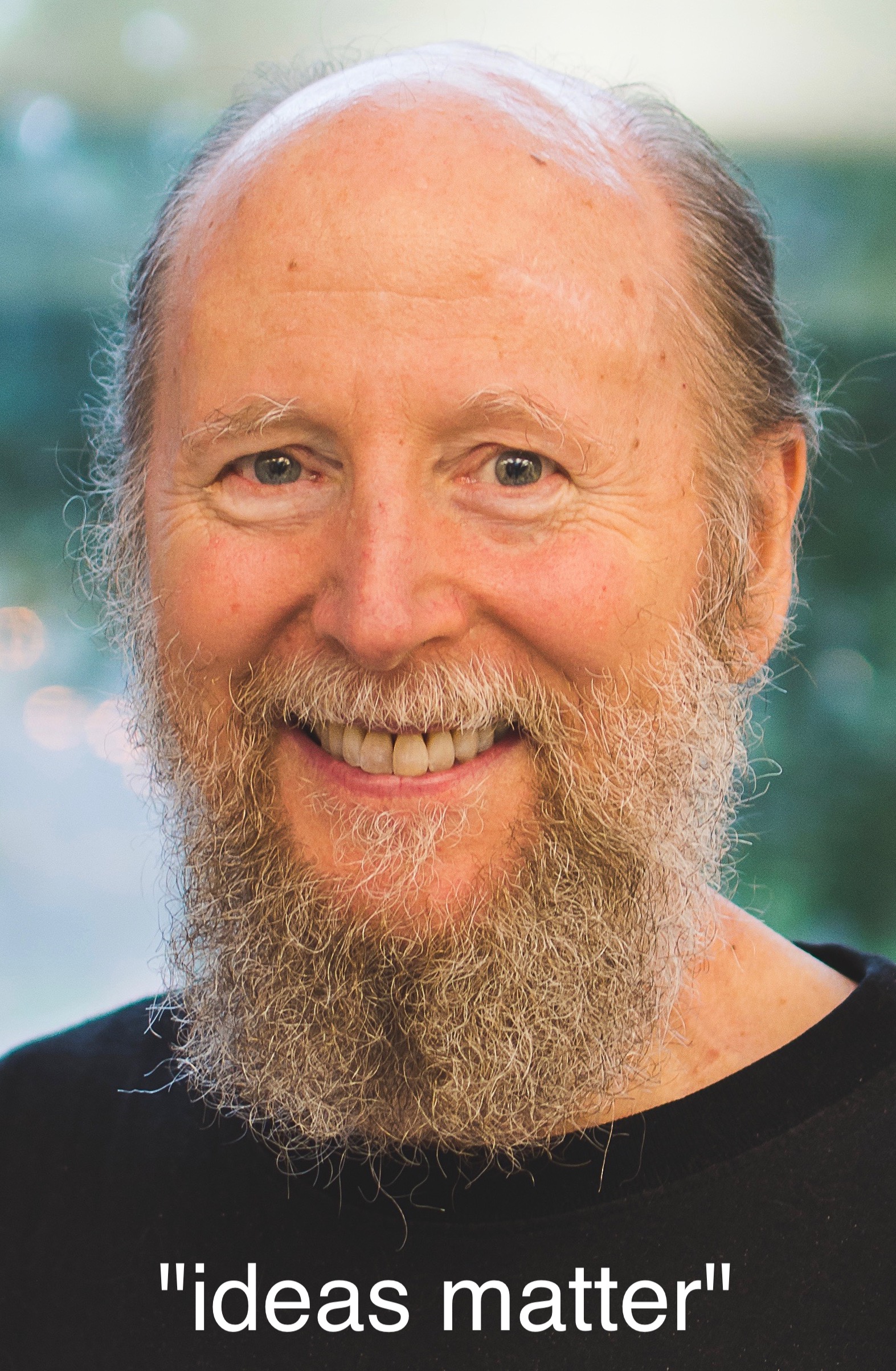
Prof. Dr. Niels Pinkwart is a Professor of Computer Science at Humboldt University Berlin and Scientific Director of the Educational Technology Lab at the DFKI Berlin Project Office. His work focuses on AI-driven educational technologies, including roles as spokesperson for the interdisciplinary ProMINT program and leadership positions in the German Society for Informatics' Learning Analytics and Educational Technologies working groups. Education: Computer Science and Mathematics at University of Duisburg Doctorate: Collaborative learning technologies (2005) Postdoctoral: Carnegie Mellon University's Human-Computer Interaction Institute Research interests span educational technologies , human-AI collaboration , and digital learning systems , with applications in serious games for ASD , creativity assessment , and healthcare informatics . His publications (over 200) demonstrate expertise in scaling educational mentoring through AI. Current affiliations include the Einstein Center Digital Future and Weizenbaum Institute for the Networked Society. He has led projects like AZUKIT (AI tutors for performance assessment), tech4comp (scalable mentoring processes), and AI.EDU Lab (AI in higher education).
Kwang Moo Yi is an Assistant Professor in the Department of Computer Science at the University of British Columbia (UBC), where he conducts research in computer vision and machine learning. He is affiliated with the Computer Vision Lab, CAIDA (Centre for Artificial Intelligence Decision-making and Action), and ICICS (Institute for Computing, Information and Cognitive Systems) at UBC. Education: B.Sc. from Seoul National University Ph.D. from Seoul National University under Prof. Jin Young Choi Post-doctoral researcher at École Polytechnique Fédérale de Lausanne (EPFL) with Prof. Pascal Fua and Prof. Vincent Lepetit Dr. Yi's research focuses on Visual Geometry with the goal of understanding local environments, adapting to them, and acting within them. His work spans applications in autonomous vehicles, drones, robots, and Augmented/Mixed Reality systems. He employs machine learning, particularly deep learning, as the primary tool for advancing computer vision capabilities. His recent publications demonstrate a strong focus on neural rendering techniques, especially 3D Gaussian Splatting and Neural Radiance Fields (NeRF). The research trends show increasing sophistication in handling occlusions, improving rendering quality, and developing more efficient training methods for neural fields. There's also significant work connecting computer vision with practical applications in industrial settings and energy systems. Dr. Yi serves as an area chair for top computer vision and machine learning conferences including CVPR, ICCV, ECCV, NeurIPS, ICML, and AAAI. He was part of the organizing committee for CVPR 2023. He supervises graduate students including Eric (who recently completed his PhD), Gopal (now at Samsung Research), and Jeong-Gi (joining as a postdoctoral fellow). His teaching includes CPSC 425: Computer Vision and CPSC 533Y: 3D Computer Vision with Deep Learning. Dr. Yi is actively involved with the Computer Vision Lab at UBC, collaborating with researchers across CAIDA and ICICS. His work bridges theoretical computer vision with practical applications in various domains including astronomy, industrial automation, and energy systems.
Richard S. Sutton is a Professor in the Department of Computing Science at the University of Alberta , a Research Scientist at Keen Technologies, and the Principal Investigator at the Reinforcement Learning and Artificial Intelligence Lab . He also serves as the Canada CIFAR AI Chair at the Alberta Machine Intelligence Institute (Amii) and as Chief Scientific Advisor there. Additionally, he founded the Openmind Research Institute and is Chief Scientific Officer at ExperienceFlow. His research focuses on identifying general computational principles underlying intelligence and goal-directed behavior. He emphasizes the interaction between intelligent agents and their environment , exploring how goals, choices, and information sources emerge from this interaction. His work spans reinforcement learning (RL) , agent-environment dynamics, and ethical considerations in AI, such as robot rights and moral philosophy. His articles include technical works on RL, ethical frameworks, and philosophical essays like The Bitter Lesson (2019) and The Definition of Intelligence (2016). Canada CIFAR AI Chair Co-author of foundational RL textbook Developed Tile Coding Software for RL
John C. Butler is a Clinical Associate Professor in the Finance Department at the McCombs School of Business, University of Texas at Austin. He holds leadership roles as Academic Director of the Kay Bailey Hutchison Energy Center, Director of the MS Finance Program, and Director of the Energy Management Minor. His academic journey includes a PhD in Management Science and Information Systems from UT Austin (1998) and a BBA from Texas A&M University (1991). His research focuses on applications of decision analysis across domains including operations, finance, and information systems. Key areas include risk analysis, optimization, multi-attribute utility theory, and energy finance. His work integrates theoretical modeling with empirical validation to address complex decision-making challenges in both public and private sectors. Butler's publications demonstrate a consistent focus on decision modeling methodologies, with recent work emphasizing risk quantification and utility theory applications. His articles frequently intersect operations research, behavioral economics, and systems optimization, reflecting interdisciplinary approaches to solving managerial and policy problems. Awards and Honors: MBA Applause Award (2008, 2011) Finalist, INFORMS Franz Edelman Award (2004) INFORMS Decision Analysis Society Practice Award (2000) Fred Moore Teaching Award Dean's Research Fellowship, Ohio State University (2004) Leadership & Advising: Butler has supervised 11 PhD students to completion and secured significant grants including DOE funding for nuclear terrorism risk analysis. He directs multiple energy finance initiatives and serves on editorial boards for Decision Analysis and previously Decision Support Systems . Centers & Programs: As Academic Director of the Kay Bailey Hutchison Energy Center, he leads interdisciplinary energy research. He also developed the Energy Finance concentration and redesigned the MS Finance curriculum to incorporate quantitative energy market analysis.
David J. Crandall is the Luddy Professor of Computer Science at Indiana University's Luddy School of Informatics, Computing, and Engineering. He serves as Director of the Luddy Artificial Intelligence Center and leads the IU Computer Vision Lab. With joint appointments in Informatics, Cognitive Science, Data Science, and Statistics, his work spans computer vision, machine learning, and AI. He holds a Ph.D. from Cornell University and previously worked at Eastman Kodak Research Labs. His research focuses on developing statistical and machine learning methods to analyze visual information, including object recognition, human activity analysis in video, 3D reconstruction, social media mining, and computational studies of visual attention. Key applications include egocentric vision systems, social robotics for healthcare, and cross-disciplinary collaborations with developmental psychology. Recent publications demonstrate strong emphasis on egocentric video analysis (Ego4D), human-robot interaction (CHI/HRI), and explainable AI (IJCAI). Medical imaging, nanoscale security systems, and computational social science represent emerging interdisciplinary directions. His work consistently integrates deep learning with real-world applications in health, environmental monitoring, and cultural analytics. Tracy M. Sonneborn Award (2024) Distinguished Member of the ACM (2023) Luddy Professorship (2021) NSF CAREER Grant (2013) Trustees Teaching Award (2017) He has advised over 20 Ph.D. graduates, with current students working on computer vision, robotics, and AI ethics. Major grants include $20M for the NSF AI Institute on Engaged Learning, $4.4M for trusted AI research, and funding from NIH, Google, ONR, and NASA. He directs the Computer Vision Lab and collaborates with Selma Sabanović's robotics group on social agents for older adults.
Tong Lam is an Associate Professor in the Department of Historical Studies and the Graduate Department of History at the University of Toronto, where he also directs the Dr. David Chu Program in Asia-Pacific Studies at the Asian Institute. His research sits at the intersection of media studies, environmental history, and science and technology studies (STS), focusing on the politics and aesthetics of mobilization in China’s special zones across socialist and postsocialist eras. Employing interdisciplinary methodologies, his work explores themes such as state-precipitated violence, industrial ruination, and the socio-political implications of technology. He is a visual artist whose lens-based projects interrogate military violence, surveillance, and postindustrial landscapes. His recent scholarship analyzes postsocialist urbanism, digital governance, and the temporalities of infrastructure. While the absence of explicit scientific awards or student advisement records in the provided text precludes their inclusion here, his publications and creative practice reflect a sustained engagement with critical historical inquiry and contemporary socio-technological challenges.
Anil Madhavapeddy serves as Professor of Planetary Computing at the University of Cambridge's Department of Computer Science and Technology and directs the Cambridge Centre for Carbon Credits (4C). A Fellow of Pembroke College, he integrates systems research with environmental conservation through the Computer Laboratory's Environment and Energy Group. His career spans industry leadership (NetApp, Citrix, Intel), academic appointments (Cambridge, Imperial, UCLA), and entrepreneurial ventures (XenSource, Unikernel Systems, Docker). Madhavapeddy earned his PhD at Cambridge's Computer Laboratory in 2006. His research bridges computational systems and planetary-scale environmental challenges, with deep expertise in open-source development (OCaml, Xen, Docker, OpenBSD) and technology strategy advising for organizations including Zededa, Tezos Foundation, and Tarides. His work centers on environmental computing and climate informatics, leveraging distributed systems and functional programming to develop sensing infrastructure for conservation. Recent projects focus on carbon credit systems, AI-driven biodiversity monitoring, and sustainable computing architectures that minimize ecological footprints while maximizing analytical capability. Analysis of his 2025 publications reveals a concentrated effort on AI-integrated conservation tools, privacy-preserving carbon accounting, and energy-efficient computing. Key themes include spatial networking for ecological data, LLM-enhanced evidence retrieval in conservation science, and novel metrics for extinction risk assessment—demonstrating computational innovation applied to urgent planetary boundaries. No scientific awards were documented in the source material. Madhavapeddy advises multiple technology firms on strategic development while leading the Cambridge Centre for Carbon Credits, though specific grant funding details remain unreported. He actively contributes to the Environment and Energy Group at Cambridge's Computer Laboratory and directs the interdisciplinary Cambridge Centre for Carbon Credits (4C). His open-source leadership spans critical infrastructure projects including OCaml, Xen, and Docker, fostering collaborative development communities that underpin modern cloud and container technologies.
Univ.-Prof. Torsten Möller, PhD is a Professor at the University of Vienna and serves as Head of the Research Group Visualization and Data Analysis and Head of the Research Network Data Science. His work spans data visualization, visual analytics, and human-computer interaction, with a focus on biomedical, environmental, and societal data applications. Academic rank: Professor Research group: Visualization and Data Analysis Network: Data Science Email: torsten.moeller@univie.ac.at Research interests include: Visual data analysis for complex systems Interdisciplinary applications in climate science and medicine Human-computer interaction in data exploration Image processing and computer graphics Recent publication trends show expertise in: Visualizing climate change and pandemic data Multi-volumetric and network analysis Algorithmic transparency and user-centered design Interdisciplinary collaborations (e.g., astrophysics, medical imaging) Statistical and uncertainty visualization Design frameworks for visualization recommendation Teaching includes courses in: Computer graphics and visualization Image processing and analysis Human-computer interaction Data analysis projects Doctoral research seminars
Dr. Amir Hakami is a Professor in the Department of Civil & Environmental Engineering at Carleton University , where he leads the Carleton Atmospheric Modelling Group . His research focuses on advanced air quality modeling techniques to inform environmental policy. Degrees: B.Sc. (Polytechnic of Tehran), M.Sc., Ph.D. (Georgia Tech), Postdoc (Caltech) Contact: Office 3454 Mackenzie Building, Phone: 613-520-2600 ext. 8609, Email: amir.hakami@carleton.ca Research Interests: Air quality modeling at multiple spatial scales Adjoint sensitivity analysis for atmospheric response Inverse modeling and data assimilation techniques Uncertainty quantification in environmental systems Interdisciplinary applications in policy, public health, and economics Teaching: Courses include Environmental Engineering Systems Modeling , Contaminant Transport , and Air Pollution & Emissions Control at undergraduate and graduate levels. Research Group: The group includes Ph.D. candidates, postdoctoral fellows, and alumni working on topics ranging from atmospheric chemistry to sustainable energy systems. Members come from diverse backgrounds in engineering, science, and policy disciplines.
Florian Shkurti is an Assistant Professor in the Department of Computer Science at the University of Toronto Mississauga (UTM), affiliated with the UofT Robotics Institute, Vector Institute, and Acceleration Consortium. His research focuses on robotics, machine learning, and computer vision, emphasizing safe and effective autonomous systems in dynamic environments. He directs the Robot Vision and Learning (RVL) lab, exploring areas like environmental monitoring, autonomous navigation, and mobile manipulation. Research Interests: His work spans robotics, machine learning, and computer vision. Key areas include robot perception, planning under uncertainty, safe exploration, imitation learning, and applications in field robotics, autonomous vehicles, and chemistry lab automation. He develops methods enabling robots to perceive, reason, and act safely in collaboration with humans. Publications: Recent work includes advancements in safe multitask learning, interactive crowd navigation, and diffusion models for trajectory planning. His research bridges theoretical foundations with real-world applications in environmental science and autonomous systems. Affiliations: Faculty Member, UofT Robotics Institute; Faculty Affiliate, Vector Institute; Faculty Member, Acceleration Consortium. He also holds positions at UTM's Mathematical & Computational Sciences department. Teaching: Courses include Imitation Learning for Robotics, Neural Networks, and Mobile Robotics. He emphasizes hands-on experience with autonomous systems through projects involving RC cars and simulation tools. Labs & Teams: Leads the RVL lab, collaborating on projects like RoboCulture (automated biological experimentation) and SICNav (safe crowd navigation systems). The lab focuses on cross-disciplinary robotics solutions for real-world challenges.
Mizuko (Mimi) Ito is a cultural anthropologist and learning scientist at the University of California, Irvine, serving as Director of the Connected Learning Lab and holder of the John D. and Catherine T. MacArthur Foundation Chair in Digital Media and Learning. She previously held research appointments at Keio University and the University of Southern California. Ito earned dual PhDs in Education and Anthropology from Stanford University and a BA in East Asian Studies from Harvard University. Education: PhD in Education, Stanford University PhD in Anthropology, Stanford University Bachelor's Degree in East Asian Studies, Harvard University Research Interests: Ito's work focuses on leveraging youth interests and digital media to foster equitable, socially connected learning. Her research spans mobile media culture in Japan, youth social media engagement in the US, and global adoption of children's media. She developed the connected learning framework, emphasizing youth-centered, equity-oriented approaches to education in the digital age. Grants & Partnerships: Ito has secured funding from major organizations including the MacArthur Foundation, Bill and Melinda Gates Foundation, National Science Foundation, and Microsoft Research. She co-founded the Connected Learning Alliance to advance research and impact in technology and learning. Awards: Recipient of the Jan Hawkins Award for Early Career Contributions (AERA) Labs & Initiatives: Directs the Connected Learning Lab at UC Irvine, which explores opportunities and risks of digital media in education. The Lab collaborates with global networks to design inclusive learning ecosystems.
Emily M. Bender is the Thomas L. and Margo G. Wyckoff Endowed Professor in the Department of Linguistics at the University of Washington. She also holds adjunct appointments in the School of Computer Science and Engineering and the Information School. Her research spans multilingual grammar engineering, computational linguistics, societal impacts of language technology, and sociolinguistic variation. She directs the Computational Linguistics Laboratory (The Treehouse) and leads the CLMS program. Bender is a Fellow of the AAAS (2022) and previously served as Howard and Frances Nostrand Endowed Professor (2019–2022). She has authored influential textbooks on NLP fundamentals and pioneered work on data statements to mitigate bias in NLP systems. Her work integrates linguistic theory with computational methods, emphasizing ethical AI and language documentation. Education: PhD in Linguistics from Stanford University (advisor: Ivan A. Sag), AB in Linguistics from UC Berkeley, with studies at Tohoku University. Past roles include NAACL Executive Board Chair (2016–2017) and current roles in the Association for Computational Linguistics leadership. Her Erdős number is 4. Research focuses on the LinGO Grammar Matrix, automatic grammar inference from interlinear glossed text (AGGREGATION project), and societal implications of NLP technologies like large language models. She co-leads the RAISE initiative and contributes to labs like the Tech Policy Lab and Value Sensitive Design Lab. Over 30 advisees have completed PhD and MS degrees under her mentorship. Teaching includes courses on syntax for NLP, societal impacts of language tech, and computational linguistics. Her 2020 ACL paper on form-meaning distinctions in NLP has been influential in ethical discussions. Current projects include The AI CON (2025) on combating tech hype.
Carey Jewitt is a Professor of Technology and Learning at UCL Knowledge Lab, part of the Department of Culture, Communication and Media at the UCL Institute of Education (IOE). She also serves as Chair of the UCL Collaborative Social Science Domain. Her research focuses on how digital technologies shape interaction and communication, emphasizing interdisciplinary methodological innovation and multimodal theory development. She leads the InTouch project, an ERC Consolidator Award investigating the social implications of digital touch technologies for future communication. She has secured funding from the ERC, ESRC, EPSRC, and the British Academy for interdisciplinary research projects. Carey co-founded the journals Multimodality & Society and Visual Communication (both published by SAGE). Her work appears in journals like New Media & Society and Information, Communication & Society , alongside her 2020 book on digital touch communication. Her research trends emphasize the intersection of technology, communication, and sociology, with recent work exploring multimodal interaction, digital touch, and sociotechnical systems. Awards include the prestigious ERC Consolidator Award. Carey has advised numerous interdisciplinary projects and led grants from major funders. Her work is affiliated with UCL Knowledge Lab and the InTouch initiative, focusing on collaborative social science and innovative digital methodologies.
Nancy Pollard is a Professor at Carnegie Mellon University, affiliated with both the Robotics Institute and the Computer Science Department. Her research focuses on understanding physical interaction with the environment through robotics and computer graphics, particularly in areas like dexterous manipulation, human motion analysis, and soft robotics. She explores how human examples can inform robot control policies and create natural-looking animations. Her work bridges robotics and graphics to solve challenges such as optimizing motion for humanoid robots and improving the realism of animated hands. Key projects include developing fast physically plausible motion techniques, studying hand motion complexity, and creating intuitive tools for modeling hand-object interactions. She also investigates the physical correctness thresholds in graphics and the design of affordable soft robotic hands for real-world applications like agriculture. Recent publications highlight advancements in motion retargeting for anthropomorphic manipulations, co-optimization of soft robotic hand design and control, and frameworks for sensor placement in soft hands. Her research emphasizes human-inspired approaches to robotics and the application of biomechanical insights to improve robotic dexterity. Pollard advises students such as Arjun Lakshmipathy and collaborates on projects involving both academic and industrial applications. Her work has been supported by grants focused on robotics design and simulation-based manipulation capture.
Prof. Dennis Komm is an Associate Professor at ETH Zurich's Department of Computer Science, leading the group for Algorithms and Didactics. He chairs the Center for Computer Science Education (ABZ) and serves on committees such as the Swiss Maturity Board (Schweizerische Maturitätskommission) and the STEM Commission of the Swiss Academies. Previously, he held roles at RWTH Aachen University (Master's, 2008), ETH Zurich (PhD, 2012), University of Zurich (external lecturer, 2014–2020), and PH Graubünden (including department head and professor of 'Fachdidaktik Informatik'). Education: He completed a Master's in Computer Science at RWTH Aachen (2008), a PhD at ETH Zurich (2012), and studies in Information Technology at Queensland University of Technology (2006). His academic journey includes visiting roles at King's College, Stanford, and Comenius University. He has taught extensively across institutions, emphasizing Python and LOGO-based approaches for beginners. Research focuses on algorithm design, approximation algorithms, reoptimization, and advice complexity in theoretical CS. His work in education explores computational thinking, programming pedagogy (especially for K–12), and interdisciplinary approaches (e.g., robotics in math). Recent trends in his articles highlight advancements in online algorithms, optimization under dynamic conditions, and initiatives to integrate CS into Swiss school curricula sustainably. He actively promotes CS education through platforms like WebTigerPython and collaborates on projects such as CyberQuest and MINTerlink. His outreach includes organizing conferences (e.g., STIU 2025) and workshops on programming and cybersecurity for teachers and students. Despite no listed scientific awards, his contributions to education and theoretical CS are recognized through editorial roles in journals like Informatics in Education and contributions to the TigerJython Group. Grant-related advising includes co-supervising doctoral theses on robotics, USOs, and programming didactics. He advocates for equitable educational opportunities via the Passerelle exam and the Swiss Beaver Competition. His team's work spans teacher training, didactic certifications, and bridging university-school collaborations through initiatives like MINTerlink. Labs and teams: Head of ABZ (ETH's CS education center), collaborator with the Computational Robotics Lab, and part of the TigerJython Group. He also co-organizes the Colloquium on Mathematics, Computer Science, and Education with ETH's Mathematics Department.