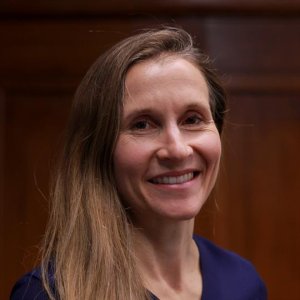
Dr. Annabelle Gourlay is an Assistant Professor at the London School of Hygiene & Tropical Medicine (LSHTM) , affiliated with the Department of Global Health and Development (Faculty of Public Health Policy) and Department of Population Health (Faculty of Epidemiology and Population Health). As an epidemiologist with expertise in quantitative and qualitative research , her work focuses on HIV/AIDS and sexual and reproductive health in sub-Saharan Africa and Europe. Her research spans program evaluation for initiatives like DREAMS (HIV prevention for adolescent girls) and LINEA (anti-transactional sex intervention in Tanzania). She leads mixed-methods data analysis and causal impact assessments , collaborating with institutions in Kenya (APHRC, KEMRI), South Africa (AHRI), and Zimbabwe (CeSHAAR). She also co-leads a realist-style review of gender-transformative approaches to SRH promotion. Teaching: Co-Programme Director of Distance-Learning MSc in Epidemiology Research: PMTCT, HIV continuum of care, DREAMS evaluation Grants: White Paper for UNICEF adolescent HIV strategies (2021-2023) Affiliations: Centre for Evaluation , Centre for Maternal Adolescent Reproductive & Child Health
Shaun Galloway is a Lecturer in Sport and Exercise Psychology at the Faculty of Education, Health, and Wellbeing, University of Wolverhampton. With a PhD in psychophysiology from Semmelweis University, Budapest, he has 20+ years of international academic experience across 6 countries. Research Focus: Sport psychology interventions, block periodization training theory, dance medicine, aging populations, and dementia-related physical activity Teaching: Leads modules from foundational physiology to advanced applied sport psychology across Wolverhampton, APSSB Singapore, and Semmelweis University Publications: 14+ peer-reviewed works spanning injury prevention in dancers, vitamin D effects, emotional regulation in martial arts, and stretching methodologies His work bridges academic research and practical application, with significant contributions to: Adolescent ballet injury prevention (11+ Dance program) Psychophysiological interventions for older adults Sport coaching pedagogy Vitamin D's role in athletic performance
Joel W. Hughes is a Professor in the Department of Psychological Sciences at Kent State University, specializing in Clinical Health Psychology and Cardiovascular Behavioral Medicine . His research explores how psychosocial factors like depression, traumatic stress, and social support influence cardiovascular risk, with a focus on mHealth interventions and patient self-management of chronic conditions such as heart failure and hypertension. Academic Rank: Professor Department: Psychological Sciences University: Kent State University Email: jhughes1@kent.edu Research Trends: His recent publications (2025–2015) highlight interdisciplinary work at the intersection of psychology, cardiology, and digital health. Key themes include stress management interventions , medication adherence , health literacy , and AI-driven healthcare solutions . Studies often employ meta-analytic methods, digital monitoring tools, and behavioral economics principles to address cardiovascular risk factors and chronic disease management. Training & Mentorship: Dr. Hughes supervises graduate students in clinical practicum work and teaches graduate-level research methods courses, emphasizing rigorous training in psychological science and cardiovascular behavioral medicine.
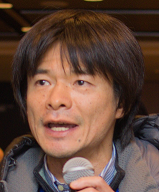
Kazuhiro Ogata is a Professor in the School of Information Science at Japan Advanced Institute of Science and Technology (JAIST). He actively teaches courses such as i116 Basic of Programming, i217 Functional Programming, and i219 Software Design Methodology, indicating a strong commitment to computer science education and curriculum development. Institution: Japan Advanced Institute of Science and Technology (JAIST) School: School of Information Science Position: Professor Email: ogata@jaist.ac.jp Research Laboratory: http://www.jaist.ac.jp/~ogata/lab/ His research interests center on programming languages, software design methodology, formal methods, and compiler construction. He emphasizes formal verification using theorem proving and rewriting logic, particularly with tools like Maude. His work bridges theoretical computer science with practical software engineering and education, focusing on correctness, design patterns, and language semantics. The analysis of his recent publications reveals a consistent focus on formal specification, verification of software systems, and educational tools for programming. His work spans functional programming, concurrent systems, and distributed algorithms, often using rewriting logic as a unifying framework. He integrates formal methods into both research and teaching, promoting rigorous software development practices. No scientific awards are explicitly mentioned in the provided texts. Kazuhiro Ogata advises students through his laboratory at JAIST and has developed structured course materials that suggest active mentorship. While specific grant information is not available, his sustained research output and tool development imply ongoing project funding. He contributes to academic outreach through summer schools and educational frameworks. He leads a research laboratory focused on formal methods and programming language design, fostering a collaborative environment for students and researchers. The lab develops tools for teaching and verifying software systems, emphasizing correctness and educational impact.
Seppo Törmä is a Senior Lecturer and Principal Lecturer at Metropolia University of Applied Sciences, specializing in computing and construction. He holds a D.Sc (Tech) in Computer Science and Engineering from Helsinki University of Technology (1997), an M.Sc (Tech) in Electrical Engineering (1988), and a Teacher's pedagogical qualification (AmO) from Haaga-Helia (2022). As the Head of the International Master's Programme in Computing in Construction, he focuses on advancing digitalization in construction through innovative methodologies. His competences include Artificial Intelligence, BIM Collaboration, Decentralized systems, Digital Twin, Information visualization, Interoperability, IoT, Knowledge graphs, Linked Data, Ontologies, Semantic Web, and Sustainable built environment. He leads projects such as RADIAL (digital models for construction), Digipurku (digital solutions for deconstruction), and HereUkraine! (educational support for rebuilding efforts). His research emphasizes semantic interoperability, ontology-based systems, and sustainable construction practices. Notable projects include developing the DRUMBEAT platform for federated building models and exploring peer-to-peer networks for linked building data. His work bridges information technology with construction workflows to enhance efficiency and sustainability. He has no listed scientific awards but has contributed to over 70 publications since 1988, focusing on BIM, Linked Data, and construction digitalization. His advising and grants are not explicitly detailed, but his leadership in academic and applied projects underscores his commitment to advancing the field. He is part of the Sustainable Development in Real Estate Team at Metropolia.
Camille Schreck is a researcher in Computer Graphics currently holding an Inria Starting Faculty Position (ISFP) at Inria Nancy within the MFX Team. She has been actively contributing to the field of computer graphics with a focus on physics-based simulation and geometric modeling since completing her PhD in 2016. Her educational background includes an engineering degree from ENSIMAG (Grenoble INP) in 2013, followed by a PhD at the University of Grenoble-Alpes supervised by Stefanie Hahmann and Damien Rohmer. Between 2016 and 2020, she conducted postdoctoral research at IST Austria in Chris Wojtan's group. Dr. Schreck's research spans physics-based simulation of natural phenomena, geometric modeling, and computational fabrication techniques. Her work demonstrates particular expertise in simulating deformable materials like paper, water dynamics, and developing novel methods for 3D printing and shape manipulation. She has successfully bridged theoretical computer graphics with practical applications in digital fabrication. Her publication record shows consistent high-impact contributions to top computer graphics venues including SIGGRAPH, Eurographics, and Computer Graphics Forum, with recent work focusing on star-shaped particle simulation, self-shaping 3D printed structures, and efficient mesh processing techniques. The progression of her research demonstrates a clear trajectory from fundamental paper simulation to increasingly complex physical phenomena and fabrication methods. Young Research Fellow of Eurographics France (YFR EGFR) - 2024 Dr. Schreck serves on numerous program committees including SIGGRAPH, Eurographics, and Shape Modeling International. She teaches courses in computer graphics and parallelism at ENSG-GeoRessources and Telecom Nancy, both part of Université de Lorraine. Her teaching spans from 2020 to the current 2024-2025 academic year. As a member of the MFX research team at LORIA (Inria Nancy), she collaborates on advancing the state of the art in physics-based animation and geometric modeling, with her StarDEM project representing a significant contribution to particle simulation methods.
Anna Whitfield is a Professor in the Department of Entomology and Plant Pathology at North Carolina State University , where she joined in 2017 as part of the Chancellor’s Faculty Excellence Program in Emerging Plant Diseases and Global Food Security. Her research focuses on plant-virus-vector interactions , aiming to develop biologically-based strategies for sustainable disease control. Education : M.S. from the University of California-Davis; Ph.D. from the University of Wisconsin-Madison. Research Priorities : Molecular mechanisms of virus transmission, functional genomics of insect vectors, CRISPR/Cas9 genome editing for vector competence reduction, RNA interference for pest control, and plant rhabdovirus infectious clone development. Her work integrates CRISPR, RNAi, and LAMP/Cas12a diagnostic tools to combat resistance-breaking variants of Tomato Spotted Wilt Virus (TSWV) and Maize Mosaic Virus (MMV). She leads multiple USDA-funded grants targeting thrips and orthotospovirus control through innovative molecular approaches. Scientific Awards : Alumni Outstanding Research Award (2023) NSF Faculty Early Career Development (CAREER) Program (2010) American Society for Virology Joel M. Dalrymple Memorial Award (2003) Whitfield mentors a diverse group of Ph.D., M.S., and undergraduate researchers , with former lab members now in academia and the agricultural biotech industry. She also contributes to plant disease management programs via the Plant-Aid sensor platform for real-time pathogen detection.
Dr. Pragalathan (Prahan) Apputhurai is a Lecturer in Applied Statistics at Swinburne University of Technology's School of Health Sciences . With a PhD in Applied Statistics from Swinburne and prior degrees from the University of Peradeniya, Sri Lanka, his expertise spans Bayesian Statistics , Structural Equation Modeling , and Extreme Events Data Modelling . He teaches undergraduate and postgraduate courses in Applied Statistics and supervises PhD/Master's students in areas including Factor Analysis and Social Determinants of Health. Education: PhD in Applied Statistics, Swinburne University of Technology, Australia Bachelor of Science & Applied Statistics, University of Peradeniya, Sri Lanka Research Interests: Specializing in statistical methods for health and social sciences, Dr. Apputhurai's work addresses issues including intimate partner violence, mental health in chronic disease populations, and empathetic AI in healthcare. His recent publications focus on structural equation modeling applications, psychometric validation in gastrointestinal disorders, and conversational agent empathy assessment. Grants: Rome Foundation (2025): Dietary interventions for IBS pain management Civil Aviation Safety Authority (2022-2024): Bayesian methodology in aviation safety Department of Communities and Justice (2018-2019): Indigenous women's reintegration through empowerment pathways Professional Recognition: Vice Chancellor's Teaching Excellence Award (2016) SUPRA Scholarship Recipient (2009) Academic Excellence in B.Sc. Examinations (2003) Academic Supervision: Currently supervising research projects in inflammatory bowel disease mental health support, conversational agent development, and trauma impact on quality of life across various health conditions.
Professor Mike Nicholls is a full-time faculty member at Flinders University, holding a Strategic Professorship in Psychology within the College of Education, Psychology and Social Work. He is Director of the Brain and Cognition Laboratory and currently serves as Dean of Research for his college. Previously, he was a professor at the University of Melbourne for 17 years. His educational background includes a BArchSt from the University of Adelaide (1985–1987), a BA (Hons) in Psychology from the University of Adelaide (1998), and a PhD in Experimental Psychology from King’s College, Cambridge (1990–1993), funded by a Cambridge Commonwealth Trust scholarship. Mike Nicholls’ research is centered on cognitive neuroscience, particularly the study of behavioral and perceptual asymmetries related to brain lateralization. His work investigates handedness, spatial attention in clinical and healthy populations, language, facial expression perception, and the role of eye movements. He explores how attention is controlled by the brain across sensory modalities and spatial dimensions. His recent publications reveal a strong focus on how social context influences perception, body image, facial judgments, and attentional processes, often employing neuroimaging and psychophysical methods. His 15 most recent articles (2023–1996) span topics including inattentional blindness, social modulation of visual perception, reinforcement learning in visual cortex, and attentional distortions in spatial cognition. These works reflect a consistent interest in the neural and cognitive underpinnings of lateralized behavior and attention, with applications in both healthy and clinical populations. Scientific Awards: Outstanding Academic Mentor Award, Australian Psychological Society (2020) Mike Nicholls has supervised numerous research students and PhD candidates, with advising interests in laterality, attention, and cognitive neuroscience. He has secured substantial research funding, including multiple ARC Discovery and Linkage Grants, with recent projects focusing on decision aids in complex environments, augmented reality for defense, and attentional asymmetries in navigation. He has also held editorial roles in journals such as Laterality and the Quarterly Journal of Experimental Psychology , and currently serves on the ARC's Medical Research Advisory Group. He leads the Brain and Cognition Laboratory at Flinders University, a research team dedicated to understanding cognitive processes and their neural representations, particularly in the context of brain asymmetry and attentional control.
Dr. Fadi Kahwash serves as a Lecturer in Mechanical Engineering within the School of Computing, Engineering and the Built Environment at Edinburgh Napier University, where he teaches design and energy-related modules. He joined Napier University in 2021 after working as a research assistant and research fellow at Northumbria University, where he participated in EU-funded projects including Erasmus+ for renewable energy teaching and Horizon 2020 for research initiatives. Dr. Kahwash earned his PhD in Mechanical Engineering in 2018 from Northumbria University with research focused on novel numerical methods applied to modeling machining of composite materials. His educational background established the foundation for his expertise in physics-based modeling and simulation techniques that continue to drive his research agenda. His research spans renewable technologies, energy storage, aerodynamics, materials science, and manufacturing processes, unified by a common thread of physics-based modeling and numerical methods. Recent work demonstrates increasing focus on practical applications in healthcare energy systems, residential multi-energy integration, and biodegradable medical implants through additive manufacturing. His publications reveal a strategic evolution from fundamental machining simulations toward applied energy solutions addressing real-world sustainability challenges. Dr. Kahwash's recent publications show strong emphasis on energy system integration for healthcare facilities, residential applications, and industrial processes. His work combines theoretical modeling with practical implementation considerations, particularly in unreliable grid environments and specialized applications like medical facilities. The research demonstrates sophisticated understanding of both technical and economic aspects of energy systems. Fellowship of the Higher Education Academy (FHEA) Member of the Institution of Mechanical Engineers (MIMechE) Chartered Engineer (CEng) Dr. Kahwash actively supervises multiple PhD students on projects including energy management strategies for hybrid renewable systems, work and heat exchange networks for hydrogen industry, photovoltaic integration in buildings, and optimization of additively manufactured medical parts. His research portfolio includes significant funding from diverse sources including the British Council (£80,000 for Resilient & Green Healthcare in Egypt), EPSRC (£49,531 for Multi-Scale Energy Systems Modelling), and Scottish Funding Council (multiple £4,999-5,000 grants for energy storage projects). These projects demonstrate his ability to secure competitive funding for applied research addressing energy sustainability challenges. His work involves collaboration with multiple research teams including Energy Systems Catapult, Northumbria University researchers, and international partners in Egypt. Current projects focus on developing AI-aided energy management software, modular energy storage solutions, and innovative approaches to healthcare facility power resilience, reflecting a strategic research direction toward practical, implementable energy solutions for critical infrastructure.
UBC Forestry's Assistant Professor Jörn Dettmer specializes in the Department of Wood Science . His focus areas include education and pedagogy in forestry, technology innovation, and wood products in built environments.
Gary Allen is a Senior Lecturer in the Department of Computer Science at the School of Computing and Engineering, University of Huddersfield. He is an active member of the Centre for Planning, Autonomy and Representation of Knowledge, the Centre for Sustainable Software Engineering, the Centre for Sustainable Computing, and an affiliate of the Centre for Autonomous and Intelligent Systems. He holds a PhD in Software Development Methods for Educational Use and has been with the university since 1990, first as a research assistant and then as a full-time lecturer since 1995. His research interests include: Software Engineering Distributed and Client-Server Systems Aspect-Oriented Programming Object-Oriented Analysis and Design Design Patterns Java Programming and JavaSpaces Software Engineering Education Integrated Project Support Environments His recent publications reflect a strong focus on software quality, empirical evaluation of programming paradigms, and educational applications of software engineering. He has contributed to studies on automated testing adoption, hybrid programming systems, and UML extensions, demonstrating a consistent thread in software design, modularity, and educational technology. His scientific contributions are aligned with sustainable computing and autonomous systems, supporting UN Sustainable Development Goals. He actively participates in peer-review for journals such as the Journal of Software: Evolution and Process and international conferences. He supervises PhD students and has been involved in multiple research supervision activities. His work integrates teaching and research, particularly in practical and pedagogical aspects of computer science. He is also engaged in activities related to knowledge representation and intelligent systems through his centre affiliations.
Sergei Savitsky is a Professor at Wedel University of Applied Sciences, where he serves as Head of the Bachelor of Computer Science program and Senate Chairman. He has been a university lecturer at the institution since October 2008, following professional experience at NXP Semiconductors (2006-2008) and Philips Research Europe (2001-2006). His educational background includes: Doctorate in Engineering (Dr.-Ing.) from Technical University of Dresden (2002) with distinction "summa cum laude" Habilitation (Dr.-Ing. habil.) from Technical University of Dresden (2024) with teaching authorization in "Technical Computer Science" Diplom-Informatiker (equivalent to MSc) in Computer Science from Technical University of Dresden (1998) Savitsky's research focuses on reconfigurable computing systems , with particular expertise in FPGA design, hardware acceleration, and error correction coding. His work bridges theoretical computer science with practical hardware implementation, resulting in numerous patents and publications in top venues. He has made significant contributions to the development of adaptive hardware architectures for forward error correction, which are critical for modern communication and storage systems. His recent publications demonstrate a strong trajectory in optimizing hardware design processes, with particular focus on applying machine learning techniques like self-organizing maps and gradient descent algorithms to improve FPGA placement efficiency. His research spans both theoretical foundations and practical applications, with patents filed in collaboration with industry partners like NXP Semiconductors and ST-Ericsson. Among his recognitions is the Best Paper Award at CENICS 2019 for his work on accelerating FPGA placement algorithms. As an educator, Savitsky teaches courses related to digital system design, including "Computer-aided design of digital systems," where he emphasizes algorithmic aspects of Electronic Design Automation beyond basic digital technology concepts.
Michael Frisby is an Assistant Professor in the Department of Educational Policy Studies at Georgia State University's College of Education & Human Development. His academic journey includes a Ph.D. in Educational Studies from the University of Michigan (2022), an M.S. in Statistics from Michigan State University (2012), and a B.A. in Philosophy from the University of Arkansas at Little Rock (2009). Research Focus Frisby specializes in advanced quantitative methodologies, particularly Structural Equation Modeling and Item Response Theory, integrated with critical theory frameworks. His primary research aims include: Developing and validating the White Critical Consciousness Index (WhiCCI) to measure critical consciousness in white individuals Advancing critical quantitative literacy aligned with social justice principles Exploring latent moderation effects in educational and health-related research His recent work in AERA Open demonstrates pedagogical innovations in critical quantitative methods, while his publications span diverse fields including HIV/AIDS research, youth activism studies, and special education policy analysis. Key Contributions Through collaborative projects, Frisby has contributed to understanding: Relational processes in Mozambican couples dealing with HIV/AIDS Longitudinal critical consciousness development in marginalized youth Barriers created by bar exam cut scores in legal education His methodological expertise bridges traditional statistical approaches with critical consciousness theory, challenging conventional data interpretation paradigms.
Laura Hart, MD, FACOG is an Associate Professor in the Department of Clinical Obstetrics, Gynecology & Reproductive Science at the Lewis Katz School of Medicine at Temple University. She serves as Medical Director of the Temple/Wedge Opioid Treatment Program and Co-Director of the Cardio-Obstetrics Program, reflecting her leadership in high-risk maternal care. Her education includes an MD from St. George’s University School of Medicine, a residency in Obstetrics & Gynecology at Drexel University College of Medicine, and a fellowship in Maternal-Fetal Medicine at The University of Texas Health Science Center at Houston. Dr. Hart's research and clinical interests focus on medical complications of pregnancy, including hypertension, preeclampsia, critical care obstetrics, and opioid use disorder. Her work bridges clinical practice and academic inquiry, with a strong emphasis on improving outcomes for high-risk pregnancies. She has contributed to evidence-based guidelines and conducted research on fetal monitoring, delivery timing, and cardiovascular complications in pregnancy. Her publications span topics such as respiratory diseases in pregnancy, seizures in pregnancy, placenta previa management, and transgenerational epigenetic effects. The research demonstrates a consistent focus on maternal safety, fetal well-being, and evidence-based decision-making in complex obstetrical scenarios. Notable awards include: National Award for Excellence in Teaching, Council on Resident Education in Obstetrics and Gynecology (2016) Young Investigator Award, Central Association of Obstetricians and Gynecologists Multiple teaching honors including the Golden Apple Award and Arnold P. Gold Foundation Award for Humanism Early academic distinctions from St. George’s University and Drexel University Dr. Hart is actively involved in resident education and clinical mentorship, though specific advisees are not listed. She has no known grants mentioned, but her leadership roles suggest involvement in programmatic funding and clinical initiatives. Her work in LGBTQ-inclusive care, evidenced by Safe Zone training, underscores her commitment to patient-centered, equitable healthcare delivery. She practices at the Temple Perinatal Diagnosis Center (Fetal Center) in Philadelphia and leads specialized programs addressing opioid use and cardiovascular risks in pregnancy, indicating active clinical and administrative engagement.