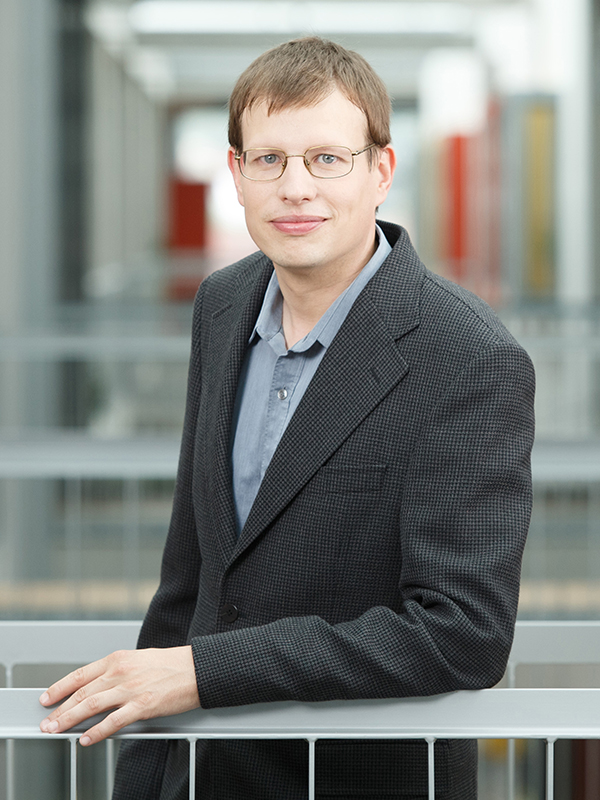
Luka Fürst is an Assistant Professor affiliated with an academic institution, specializing in Computer Science and Software Engineering . His work spans theoretical and applied domains, including Graph Theory , Programming Pedagogy , and Machine Learning . Teaches courses: Programming 2 , Programming 1 , Algorithms and Data Structures 2 , Computability and Computational Complexity Active in the Software Engineering Laboratory as a member Research Focus : Luka Fürst explores graph grammar induction , feature selection in object detection , and innovative programming education methods . His projects include KATARINA (promoting foundational computing knowledge) and legacy work on Computer Vision and Visual Assistant systems. Publications reveal a trajectory centered on formal language processing , machine learning techniques , and interactive educational tools , with recurring themes in software engineering and algorithm design .
Aleš Leonardis is a Full Professor at the Faculty of Computer and Information Science, University of Ljubljana, serving as head of the Visual Cognitive Systems Laboratory. His academic career is anchored in computer science with a focus on advanced visual cognition systems. His research spans computer vision , deep learning , and cognitive systems engineering , emphasizing object recognition, motion analysis, and visual data inconsistency detection. Key projects include ARRS research programmes (2009-2024), European initiatives like POETICON and CogX, and national grants addressing mobile vision frameworks and large-scale object category learning in image databases. As laboratory head, he directs research on hierarchical compositional visual architectures and data-driven machine vision solutions through active projects like MV4.0 (2021-2024). His work bridges theoretical computer vision with practical applications in mobile computing and human-agent interaction systems.
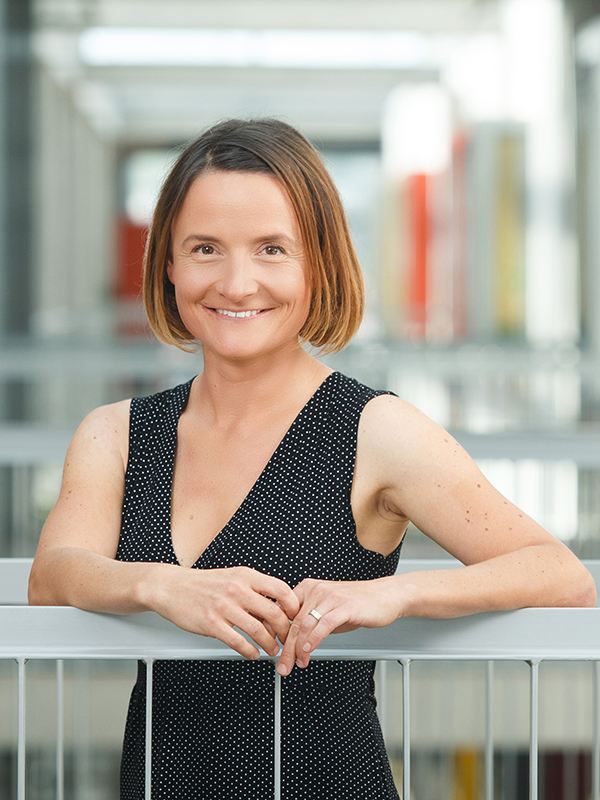
Polona Oblak serves as a Full Professor at the Faculty of Computer and Information Science, University of Ljubljana, where she is an integral member of the Laboratory for Mathematical Methods in Computer and Information Science. Her teaching responsibilities span foundational courses including Linear Algebra, Mathematical Modelling, and multiple levels of Mathematics instruction, reflecting her dual expertise in theoretical mathematics and computational applications. Her research centers on advanced Matrix Theory and Graph Theory, with pioneering contributions to Spectral Graph Theory and Inverse Eigenvalue Problems. She investigates structural properties of commuting matrices, nilpotent matrix centralizers, and tropical semiring algebra, extending theoretical frameworks to practical applications in computer vision and statistical analysis. Recent interdisciplinary projects like "DeepBeauty" demonstrate her ability to bridge pure mathematics with industry-relevant solutions in fashion technology. Analysis of her 15 most recent publications (2021-2025) reveals a dominant focus on spectral graph phenomena, particularly the inverse eigenvalue problem across diverse graph structures including trees, block graphs, and unicyclic graphs. Her work on tropical matrix factorization (e.g., Faststmf algorithm) provides efficient computational tools for sparse data, while theoretical breakthroughs like the "liberation set" concept redefine boundaries in spectral graph theory. This research trajectory shows increasing integration of algebraic methods with machine learning applications. Professor Oblak has secured substantial research funding through the Slovenian Research Agency (ARRS) and international collaborations, including the ongoing "Computer Vision" program (2019-2024) and bilateral projects with Bosnia and Herzegovina on nilpotent orbits. Her leadership in computationally intensive statistical methods (2016-2019) and deep generative models for the beauty industry (2020-2023) demonstrates consistent ability to translate theoretical advances into funded research initiatives, though specific student supervision details remain unlisted in available sources. Within the Laboratory for Mathematical Methods in Computer and Information Science, she contributes to a synergistic research environment where algebraic techniques directly inform computational solutions. Her work on Laplacian-integral graphs and tropical factorization algorithms exemplifies the laboratory's mission to develop mathematical foundations for next-generation information systems, with recent outputs showing heightened emphasis on algorithmic efficiency for real-world data challenges.
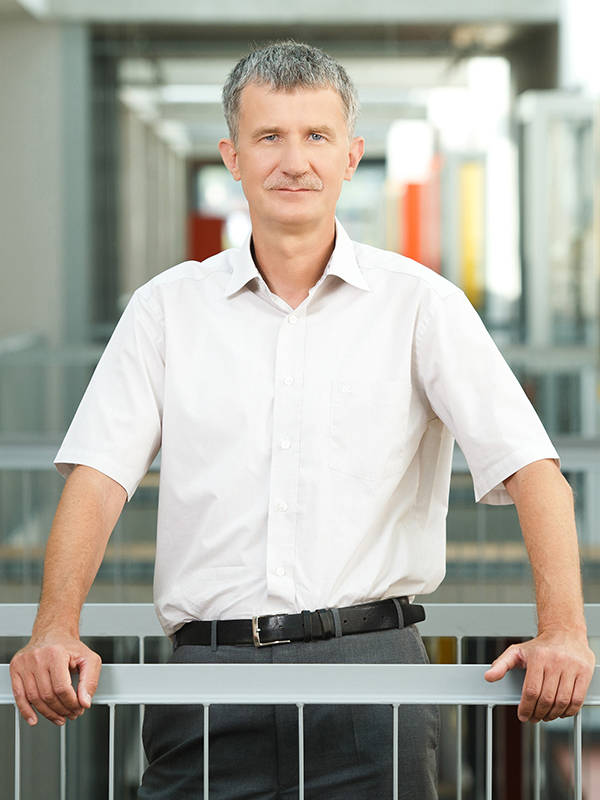
Peter Peer is a Full Professor at the University of Ljubljana's Faculty of Computer and Information Science, where he leads the Computer Vision Laboratory. He serves as Executive Editor for ICT Express , Area Editor for IEEE Access and IET Biometrics , and coordinates dual-degree programs with Kyungpook National University. His administrative roles include membership in the Faculty Board of Directors (2018-present) and Senate (2021-present), and he previously served as Vice-Dean for Economic Affairs (2018-2022). His research spans computer vision and biometrics , with specialization in privacy-enhancing technologies, deep learning applications, and multimodal recognition systems. Key focus areas include: Face/sclera/ear biometric recognition and segmentation Deepfake detection and media forensics Generative models for data privacy Efficient model optimization techniques Publication analysis shows strong emphasis on biometric security (65% of recent works), privacy-preserving AI (25%), and generative modeling (10%), with applications spanning surveillance, forensics, and human-computer interaction. Awards highlight leadership in international biometric competitions and recognition for high-impact publications. Significant scientific honors include: NIST FATE evaluation winner (2025) Top 3 placements in ACM/IEEE biometric competitions (2023-2024) IEEE Transactions top-downloaded articles (2022-2024) European Association for Biometrics awards (2021-2024) He mentors 10+ PhD students working on biometric recognition, privacy preservation, and deep learning applications. Research is supported by national grants including DeepFake DAD (2023-2026) and MIXBAI (2023-2026), focusing on explainable AI and deepfake detection. Leads the Computer Vision Laboratory with international collaborations across Europe and Asia.
Veljko Pejović is an Associate Professor at the Faculty of Computer and Information Science (FRI), University of Ljubljana, Slovenia, where he also serves as Head of the Computer Communications Laboratory. His research focuses on mobile computing with special emphasis on resource efficiency in mobile and IoT environments. His educational background includes a PhD in Computer Science from the University of California, Santa Barbara (2012) and a dipl. ing (BS) from the University of Belgrade, Serbia (2006). Pejović's research interests center around mobile deep learning, approximate computing, and resource-efficient computing. His work explores how computation accuracy can be dynamically adapted based on contextual factors to optimize resource usage without significantly compromising user experience. He has made significant contributions to mobile sensing, machine learning on resource-constrained devices, and security in IoT environments. His recent publications reveal a strong trend toward making AI more efficient and accessible on mobile and edge devices, with particular focus on approximate computing techniques, federated learning frameworks, and context-aware adaptation of computational resources. His research spans applications from precision agriculture using UAVs to behavioral authentication in IoT environments and mental health inference from mobile sensor data. Scientific Awards: 10-Year Impact Runner Up Award at ACM UbiComp for InterruptMe work Outstanding research achievement award for 2024 by the Faculty of Computer and Information Science Best Paper Nominee (top 4%) at UbiComp'14 for InterruptMe Pejović actively mentors PhD and master's students, with numerous theses resulting in workshop, conference, and journal publications. He serves as Associate Editor for ACM IMWUT and ACM JCSS, and has held organizational roles in major conferences including ACM UbiComp 2025. His research is supported by multiple significant projects including approXimation for adaptable diStributed artificial intelligence (ARIS), CODA, AgriAdapt, and CARMA. His laboratory, the Computer Communications Laboratory at FRI, focuses on developing practical systems and frameworks for resource-efficient mobile computing, with several open-source tools and datasets publicly available for the research community.
Nikolaj Zimic serves as a Professor at the University of Ljubljana, leading the Computer Structures and Systems Laboratory while teaching core courses including Introduction to Digital Circuits, Mobile and Wireless Networks, and Wireless Sensors networks. His institutional role spans research leadership and curriculum development in computing disciplines. His research centers on ubiquitous and pervasive computing architectures, with significant contributions to wireless sensor networks, mobile networking protocols, and RFID system design. Recent work extends into biomedical informatics through the ARRS-funded project investigating circadian-time cholesterol synthesis mechanisms, demonstrating interdisciplinary application of computing principles. Prof. Zimic directs the ARRS programme P2-0359 (Ubiquitous computing, 2023-2027) and project J1-50024 (2023-2026), building on prior leadership in the European RFID F2F project (2010-2012) and ARRS computer vision initiatives (2009-2012). His grant portfolio reflects sustained funding from Slovenian and European agencies for applied computing research. As Head of the Computer Structures and Systems Laboratory, he oversees experimental work in digital systems architecture and sensor network implementations, with infrastructure supporting both theoretical research and industry-collaborative development projects.
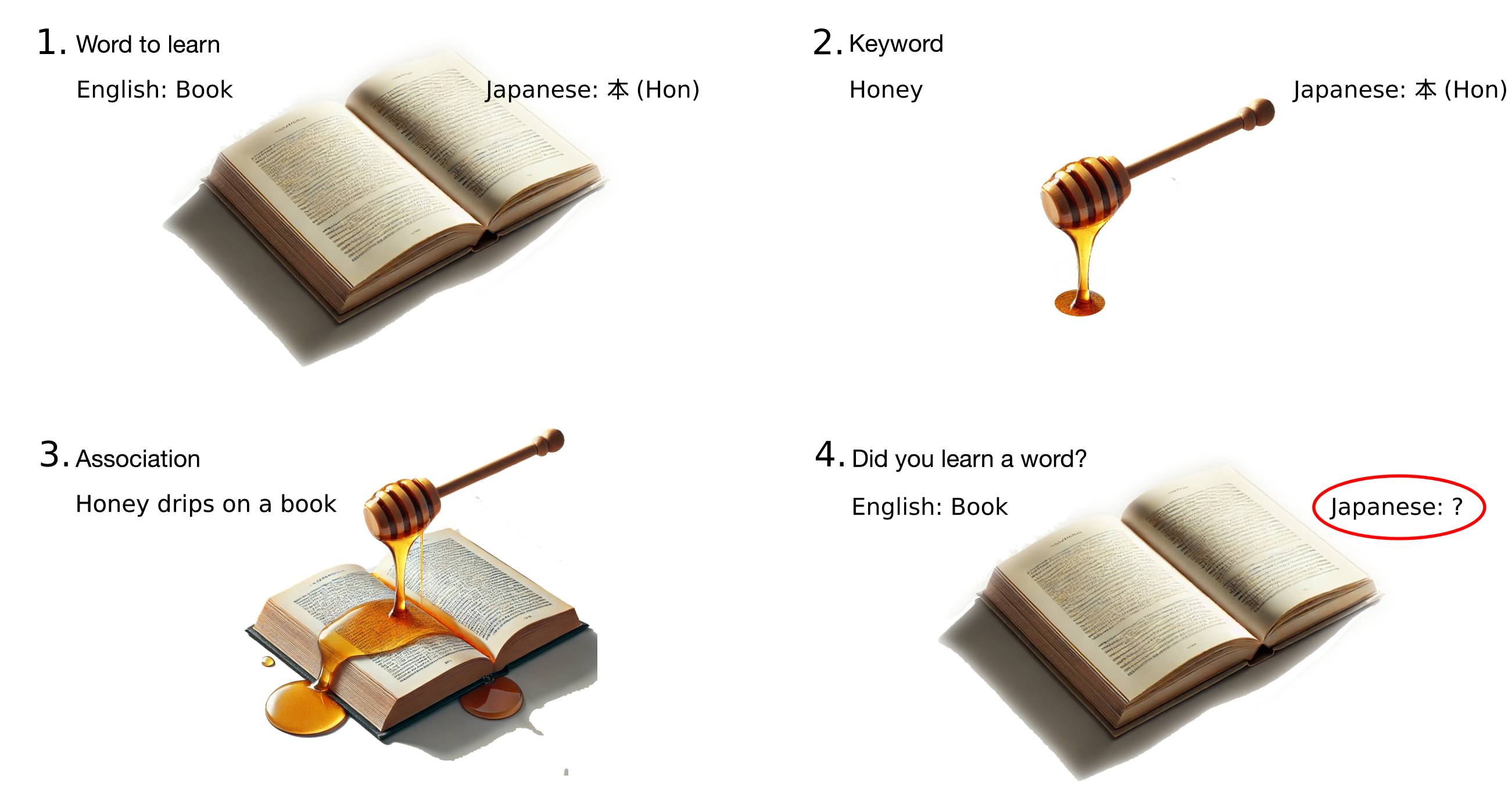
Dr. Klen Čopič Pucihar serves as Associate Professor at the Faculty of Mathematics, Natural Sciences and Information Technologies (FAMNIT) at the University of Primorska in Koper, Slovenia. He holds multiple leadership roles including Department Chair of Information Sciences and Technologies, Deputy Chair of HICUP Lab, and Study Programme Coordinator for the Doctoral Computer Science program. His research centers on Human-Computer Interaction with particular emphasis on: Augmented, Mixed, and Virtual Reality systems Micro-gesture recognition using radar sensing (e.g., Google Soli) Paper interfaces and augmentation of physical media AR for educational applications, particularly vocabulary learning Addressing the 'dual-view problem' in handheld AR systems Dr. Čopič Pucihar's work is driven by the vision to 'unclog the bottleneck' between humans and digital information. His recent publications (2019-2025) show a strong trajectory from theoretical interaction techniques toward practical educational applications and novel input methods using radar sensing, with consistent output in top venues including CHI, ISS, MobileHCI, and ISMAR. His notable achievements include: Best Paper Award at ACM IUI 2025 Honorable Mentions at ACM EICS 2022 and ACM ISS 2022 Best Poster Award at ISMAR Multiple hackathon victories including at Columbia University As Study Programme Coordinator for Doctoral Computer Science, Dr. Čopič Pucihar mentors graduate students and shapes research directions. His HICUP Lab hosts an international research group focused on making digital interfaces more intuitive and effective for human use through advanced sensing methods and personalized services. HICUP Lab leverages techniques from data mining, machine learning, computer vision, and human perception to develop interfaces that function as extensions of human minds, bodies, and behavior, with the ultimate goal of enabling 'digital augmentation of human abilities to its fullest potential.'
Dr. Biljana Božinovski is a Senior Lecturer of English at the Faculty of Tourism, University of Maribor. She holds a PhD in Linguistics with a focus on Slovene-English financial terminology and a BA in Modern English Language. With over a decade of professional experience as a corporate translator before entering academia, she brings practical industry knowledge to her teaching and research. Her research primarily focuses on LSP (Language for Specific Purposes) and terminology, with special emphasis on financial and tourism terminology from a Slovene-English contrastive perspective. She has developed expertise in electronic bilingual terminography, corpora-based terminology analysis, terminology management, and contrastive linguistics. Recently, she has expanded her interests to include sustainable tourism terminology and stakeholder involvement in destination development. Dr. Božinovski has published research on LSP dictionaries, including a model online Slovene-English dictionary of stock market terminology that organizes terminology according to concept systems and suggests preferred terms. Her publications span from financial terminology analysis to tourism language resources, showing an evolution from finance-focused research to broader tourism applications. PhD in Linguistics specialized in Slovene-English financial terminology Professional translator license (DZTPS) ECQA certified professional terminologist Trados Studio certified translator As an educator, Dr. Božinovski employs flipped learning methodology to maximize classroom effectiveness. She teaches various English for Tourism courses, History of Europe for Tourism, Wine Tourism, and Casino Tourism. Her teaching philosophy emphasizes connecting language skills to students' future careers and helping them develop their vision for the future of tourism. She maintains an active professional translation business alongside her academic work, ensuring her teaching remains grounded in current industry practices.