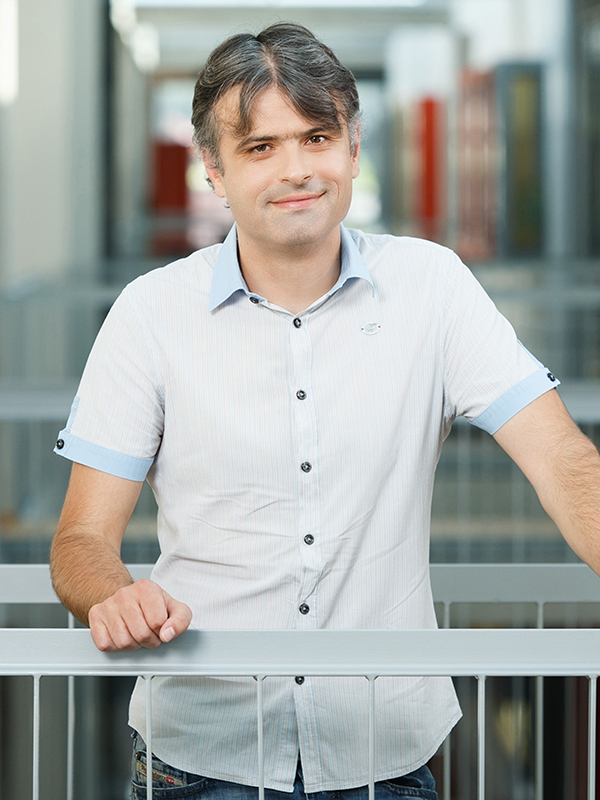
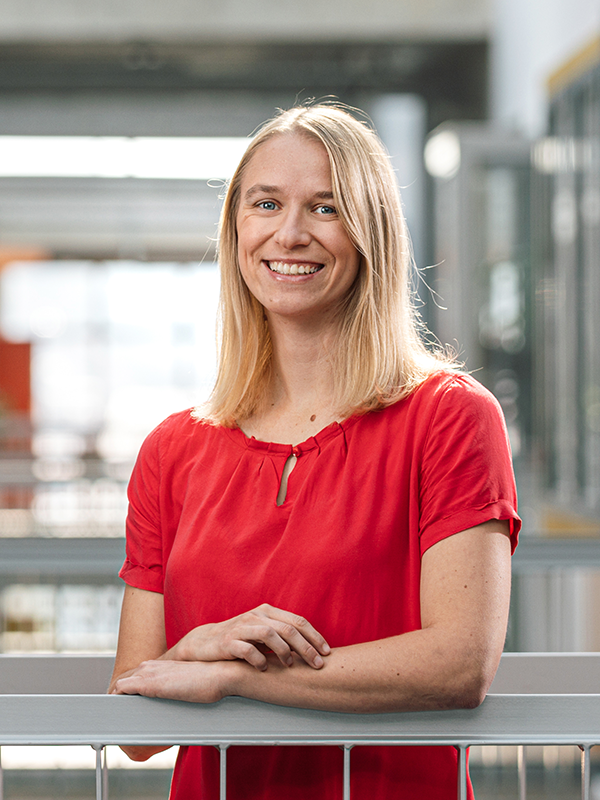
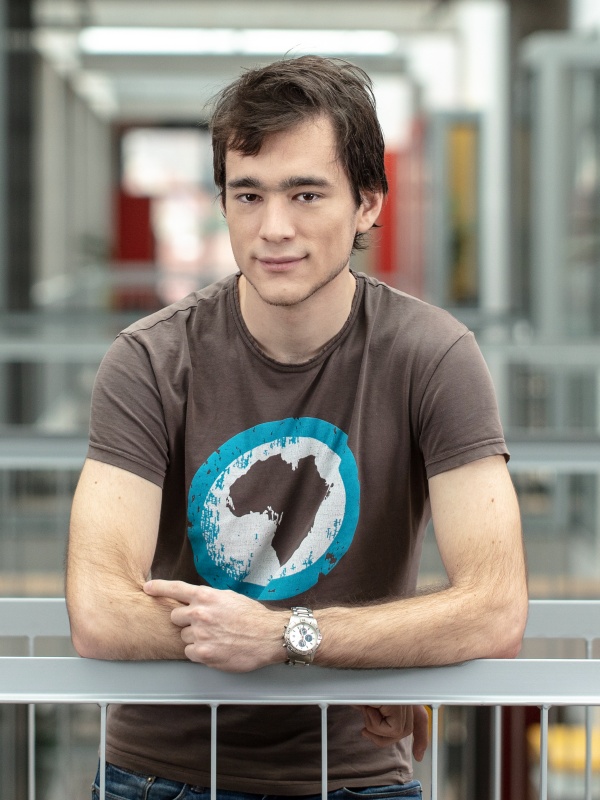
Domen Tabernik is a researcher at the Visual Cognitive Systems Laboratory . His work focuses on advanced computer vision and deep learning applications, particularly in robotics, textile inspection, and multimodal image analysis for anomaly detection. Current projects include RTFM (Robot Textile/Fabric Inspection), RoDEO (Robust Deep Learning for Earth Observation), and MUXAD (Multimodal Image Understanding). Past projects span computer vision for content-based retrieval, factory automation tools (GOSTOP), and deep learning for visual data inconsistency detection.
Patricio Bulić is an Associate Professor at the Faculty of Computer and Information Science, University of Ljubljana, Slovenia. His primary research focuses on computer architecture, embedded systems, and approximate computing for energy-efficient hardware design. Research Areas: Computer Architecture, Parallel Processing, Embedded Systems, Approximate Computing Affiliation: Faculty of Computer and Information Science (University of Ljubljana) Laboratory: Laboratory for Adaptive Systems and Parallel Processing His recent publications explore logarithmic arithmetic and approximate computing techniques to optimize hardware performance while reducing power consumption. These methods have been applied in sensor networks, digital signal processing, and neural network implementations. Scientific Awards: Professor of the Year 2014 Professor of the Year 2020 Professor of the Year 2021 Professor of the Year 2022 He has led numerous research projects including the ARRS programme on Ubiquitous Computing and COST Action IC1303 for enhanced living environments. His teaching responsibilities include courses in Computer Systems Organization, Parallel and Distributed Systems, and Embedded Systems.
Dr. Žiga Emeršič is an Assistant Professor at the University of Ljubljana , Faculty of Computer and Information Science, and a member of the Computer Vision Laboratory (LRV). His research focuses on biometrics , deep neural networks , and computer vision with a specialization in ear-based recognition systems. IEEE Member (#98052610) Recipient of the European Biometrics Association Award (2021) and SDRV Excellence Plaque (2023) Co-organizer of international challenges in ear recognition and machine learning workshops His work addresses unconstrained ear detection , model compression for edge devices , and privacy-preserving biometric systems . He has contributed to AI education through EU projects like AIM@VET and developed curricula for computer vision and biometrics. Highlights: Published in top journals ( Neural Computing & Applications , IET Biometrics , Entropy ) Authored chapters in Springer publications on deep ear recognition and ocular biometrics Active in international conferences (IEEE, IAPR) with over 60 publications He has received special recognition for both research (2018) and teaching excellence (2016, 2019), and his work has been featured in media outlets across Slovenia.
Matej Kristan is a Full Professor at the Faculty of Computer and Information Science , University of Ljubljana, where he serves as Vice Chair of the Department of Artificial Intelligence . He leads the Visual Object Tracking (VOT) Initiative , presides over the IAPR Slovenian Pattern Recognition Society , and acts as Associate Editor for IJCV . PhD from Faculty of Electrical Engineering, UL (2008) Co-organized 13+ workshops/conferences Research Interests focus on: Visual Object Tracking : Long-term re-detection, transparent object tracking, segmentation-based methods Autonomous Boats : Obstacle detection, sensor fusion, maritime navigation Physics-Informed Deep Learning : Sea level forecasting (HIDRA models), climate prediction Surface Defect Detection : Real-time deep architectures for cracks/dents Scientific Excellence : 26 Research Excellence Awards (Slovenian Research Agency) 10 Teaching Excellence Awards (UL/FRI) Best Paper Awards: ISPA2015, BMVC2022, Pattern Recognition Journal 2024 Student Mentorship : Supervised 8 PhD students including Alan Lukežič (summa cum laude 2021), Domen Tabernik , and Peter Uršič . His students have won 23 awards including multiple Prešeren Awards and Uroš Seljak distinctions. Laboratory Involvement : Key member of the Visual Cognitive Systems Laboratory , contributing to multimodal perception systems for maritime robotics, educational robotics platforms, and advanced deep learning architectures.
Uroš Lotrič is an Associate Professor at the Faculty of Computer and Information Science, University of Ljubljana, Slovenia. His academic and professional work spans research in soft computing methods, distributed processing, and high-performance computing applications. Education: BSc in Physics (1994), MSc in Computer Science (1997), PhD in Computer Science (2000), all from the University of Ljubljana. Research Interests He focuses on soft computing techniques, distributed systems, and their applications in industrial and computational domains. His work integrates neural networks, wavelet transforms, and predictive modeling to solve complex problems in fields like rubber processing and time series analysis. Scientific Awards Best Assistant 2007 Best Professor 2009 Projects and Laboratory He is involved in national and European research programs such as P2-0241, EUMaster4HPC, and ARISA. Additionally, he is a member of the Adaptive Systems and Parallel Processing laboratory, contributing to advancements in adaptive algorithms and parallel computing.
Luka Šajn is an Assistant Professor at the University of Ljubljana , affiliated with the Computer Vision Laboratory . His work bridges computer science , machine learning , and medical imaging , focusing on automated analysis of medical data. Academic Rank: Assistant Professor University: University of Ljubljana Laboratory: Computer Vision Laboratory Šajn's research centers on multi-resolution pattern parametrization and its applications in medical diagnostics. His projects include automated segmentation of whole-body bone scintigrams , detection of white spot lesions in dentistry, and 3D documentation of cultural heritage using computer vision. Šajn's publications (2005–2020) span texture classification , image segmentation , and medical AI . Key subfields include dental diagnostics , coronary disease analysis , mobile vision systems , and ultra-wideband trajectory modeling .
Assistant Professor Marko Boben is affiliated with the Faculty of Computer and Information Science at the University of Ljubljana. He is a member of the Laboratory for Mathematical Methods in Computer and Information Science (LMMRI) and teaches Discrete Mathematics . His research focuses on Computer Vision , Machine Learning , and Information Retrieval .
Matej Dobrevski serves as an Assistant Professor at the Faculty of Computer and Information Science, University of Ljubljana. He is actively engaged with the Visual Cognitive Systems Laboratory (Laboratorij LUVSS) and teaches core courses including Development of Intelligent Systems and Introduction to Computer Science . His research focuses on the convergence of cognitive modeling and visual perception systems, with primary interests in Cognitive Systems , Artificial Intelligence , and Computer Vision . Through the Visual Cognitive Systems Laboratory, he investigates biologically inspired computational frameworks for intelligent visual processing. As a laboratory member of LUVSS, Dr. Dobrevski contributes to interdisciplinary projects bridging cognitive science with machine perception, emphasizing real-world applications of visual intelligence systems.
Aleš Jaklič is an Assistant Professor affiliated with the Computer Vision Laboratory . His work spans computer vision, 3D reconstruction, and educational technologies, with a focus on practical applications in archaeology, meteorology, and STEM-C education. Research interests include: 3D modeling from point clouds Superquadric parameter prediction from depth images IoT-based educational tools for computer science Historical artifact digitization Image processing algorithms His publications since 2000 demonstrate expertise in geometric modeling, computer vision, and educational technology. Highlights include work on superquadric recovery (2000, 2003), archaeological modeling (2015), and IoT education frameworks (2020). Recent research (2021) explores neural network approaches to depth image analysis. Active in research programs funded by the Slovenian Research Agency (ARRS) since 2009, including the ongoing P2-0214 - Computer Vision program (2019-2024). He has also contributed to the ŠIPK 5 project on IoT education (2020).
Ajda Lampe is a Researcher at the University of Ljubljana's Faculty of Mathematics and Physics, focusing on deep generative models and their applications in the fashion and beauty industry. She also serves as a teaching assistant for foundational computer science courses, including Programming 1 and Introduction to Programming. Research Interests : Deep generative models for virtual garment try-on Computer vision techniques in fashion technology Semantic and body segmentation using multi-task learning Image processing and analysis for industry applications Project Involvement : ARRS research programme P2-0214 (Computer Vision, 2019–2024) ARRS project J2-2501 (DeepBeauty, 2020–2023) Laboratory : Member of the Computer Vision Laboratory.
Alan Lukežič serves as an Assistant Professor and laboratory member at the Visual Cognitive Systems Laboratory (Laboratorij LUVSS), where he teaches Advanced topics in computer vision. His academic work bridges visual perception systems and computational cognition within the broader field of computer science. His research focuses on Computer Vision, Cognitive Systems, Artificial Intelligence, and Image Processing, exploring machine interpretation of visual data for applications in robotics, medical diagnostics, and human-computer interfaces. This interdisciplinary work integrates neural modeling with real-world visual system design. As part of the Visual Cognitive Systems Laboratory team in room R2.37, he contributes to experimental frameworks analyzing how artificial systems emulate biological visual cognition through computational architectures.
Jon Natanael Muhovič is an Assistant Professor affiliated with the Visual Cognitive Systems Laboratory . His research focuses on machine perception , development of intelligent systems , and robotics , leveraging advanced computational methods to address complex visual data challenges. Key research themes include deep learning applications for inconsistency detection (ARRS project J2-9433, 2018-2021), adaptive sensing techniques for autonomous vehicles (ARRS project J2-2506, 2020-2023), and data-driven frameworks for machine vision (ARRS project L2-3169, 2021-2024). He has also contributed to practical initiatives such as the feasibility study of a navigation system for the blind (2021) and software development for classification tasks (2018). As a member of the Laboratory for Underwater Vision and Signal Processing Systems (LUVSS) , his work bridges theoretical innovation with real-world applications in visual cognition and machine perception.
Assist. dr. Matej Pičulin is an Assistant Professor affiliated with a laboratory (likely at the Faculty of Computer and Information Science, University of Ljubljana, inferred from context). He teaches courses in Introduction to Artificial Intelligence , Analysis of Algorithms and Heuristic Problem Solving , and Databases . His office hours are held every Wednesday from 10:00 AM to 11:00 AM in Room R2.26, Laboratorij LKM. Research Interests : Matej's work focuses on artificial intelligence applications in healthcare and knowledge management. Key projects include STRATIFYHF (2023–2027): Developing an AI-based decision support system for heart failure risk stratification in clinical settings. J5-60084 (2025–2027): Investigating explainable and generative AI integration challenges in organizational knowledge management. Supervised/Unsupervised Learning for Low Vision Assistance (2014–2015): Applying ML techniques to improve mobility for visually impaired individuals. Intelligent Computer Techniques for Medical Detection (2016–2017): Focused on diagnosing cognition/behavior disorders via computational methods.
Matej Vitek is an Assistant and researcher at the Faculty of Computer and Information Science, University of Ljubljana, where he is a core member of the Computer Vision Laboratory (CVL). His work centers on advancing biometric security through innovative computer vision techniques, with primary focus on lightweight sclera recognition systems. His academic journey includes: BSc in Computer Science and Informatics and Mathematics and Physics (2015), University of Ljubljana MSc in Computer Science and Informatics and Mathematics and Physics (2018), University of Ljubljana PhD in Computer and Information Science (2024), University of Ljubljana Vitek's research expertise spans computer vision, biometrics, and deep learning, with specialized focus on sclera recognition. His methodology emphasizes developing computationally efficient models suitable for mobile deployment while addressing critical challenges like model bias and segmentation accuracy. Past explorations include quantum computing circuits and game development, demonstrating interdisciplinary versatility. Current work integrates anomaly detection for deepfake identification and explainable AI frameworks for biometric systems. Publication trends reveal consistent advancement in sclera biometrics through large-scale collaborative efforts, including benchmarking competitions and novel dataset creation. His work demonstrates progression from foundational segmentation studies toward optimized lightweight architectures and bias mitigation strategies, reflecting the field's evolution toward practical, ethical deployment. Vitek actively contributes to two major ARRS-funded projects: J2-50065 'DeepFake DAD' (2023-2026) developing anomaly detection methods for deepfake identification, and J2-50069 'MIXBAI' (2023-2026) creating interpretable mechanisms for explainable biometric AI. Previously, he participated in the P2-0214 Computer Vision research program (2019-2024) and consulting initiatives. As a CVL laboratory member, he collaborates within a specialized biometrics team led by Prof. Peter Peer (supervisor) and Prof. Vitomir Štruc (co-supervisor), working alongside researchers Peter Rot, Žiga Emeršič, and Blaž Meden. His technical environment combines academic research with practical implementation challenges in resource-constrained settings.
Slavko Žitnik is an Associate Professor and Vice-dean at the Faculty of Computer and Information Science, University of Ljubljana, where he is a member of the Laboratory for Data Technologies. His academic career spans multiple research projects and international collaborations focusing on data technologies and natural language processing. His primary research interests include information retrieval, information extraction, natural language processing, entity extraction, relationship extraction, coreference resolution, data merging, redundancy elimination, and ontologies. Dr. Žitnik's work often bridges theoretical computer science with practical applications in various domains including education, healthcare, and smart city ecosystems. Dr. Žitnik has led and participated in numerous significant research projects including P2-0359 on Ubiquitous Computing (2023-2027), PoVeJMo on Adaptive Natural Language Processing with Large Language Models (2023-2026), and the GOBLIN COST Action for building global networks of large-scale knowledge graphs. His recent work demonstrates a strong focus on adapting natural language processing techniques with large language models and creating practical applications of these technologies. His scientific contributions span multiple domains including: Natural Language Processing and Information Extraction techniques Knowledge graph construction and integration Applications in education, healthcare, and smart city ecosystems Development of practical tools and systems for data processing Dr. Žitnik has established international collaborations with institutions including Harvard University's Department of Biomedical Informatics (where he conducted a research visit from July to October 2022), the University of South Florida, and various European partners through COST Actions and other collaborative frameworks.