
Ivan Radosavljević is a researcher affiliated with Singidunum University's Faculty of Informatics and Computing. His work focuses on interdisciplinary applications of artificial intelligence, machine learning, and software engineering. He has contributed to projects involving environmental monitoring frameworks, computer vision applications, and medical informatics solutions. Academic Affiliation: Faculty of Informatics and Computing, Singidunum University Research Themes: AI-driven systems, data generation techniques, software tools for research management His research portfolio includes innovations like the Microraptor GUI software for rendering process monitoring, generative models for synthetic datasets, and frameworks for panoramic image processing in GIS applications. Collaborations with colleagues have produced notable outputs such as breast cancer risk assessment systems and distance estimation algorithms trained on synthetic stereo images. Publications highlight his contributions to both theoretical advancements (e.g., fuzzy space theory applications) and practical implementations (e.g., dictation software development). His work often bridges academic research with real-world problem-solving in sectors like environmental science and healthcare.
جستجوی استاد راهنمای دانشگاهی
برای مسیر پژوهشیتان، استاد راهنما، استاد دانشگاه و پژوهشگر مناسب را پیدا کنید و با آنها ارتباط بگیرید.
نمایش ۷۶-۸۵ از ۸۵ استاد راهنما
اطلاعات پروفایلها از صفحات عمومی دانشگاهها گرفته شده و ممکن است بهروز نباشد.
Ana Vesićمشاهده پروفایل
پژوهشگر
Ana Vesić is affiliated with Singidunum University, holding a Master's degree in Media and Human-Centered Computing from the Technical University of Vienna (2022) and a Bachelor's in Software and Data Engineering from Singidunum University (2018-2022). Her research focuses on machine learning, optimization algorithms, and their applications in healthcare, agriculture, and computer vision. She has authored multiple peer-reviewed articles on topics such as AI-driven medical image classification, agricultural automation, and emotion detection systems. Education: Master's in Media and Human-Centered Computing, Technical University of Vienna (2022) Bachelor's in Software and Data Engineering, Singidunum University (2018–2022) Research Interests: Her work bridges AI and real-world challenges, emphasizing optimization techniques for machine learning models (e.g., Animal Migration Optimization, Multi-verse Optimizer) and their deployment in healthcare diagnostics, agricultural sustainability, and behavioral analysis. Her projects include developing tools like EAGRO for precision farming and analyzing hidden emotional states through facial recognition. Awards: Helmut-Veith stipend award (2021) for promoting excellence in women in computer science (Vienna University of Technology) Grants & Collaborations: Her research has been supported by stipends and industry collaborations, including work with the Development and Testing Center (DTC) in Belgrade and the Serbian Games Association (SGA). She has presented at international conferences such as IEEE ZINC, Sinteza, and INFUS. Labs & Teams: She contributes to Singidunum University's research initiatives in applied informatics and AI, with a focus on interdisciplinary projects merging technology and societal needs.
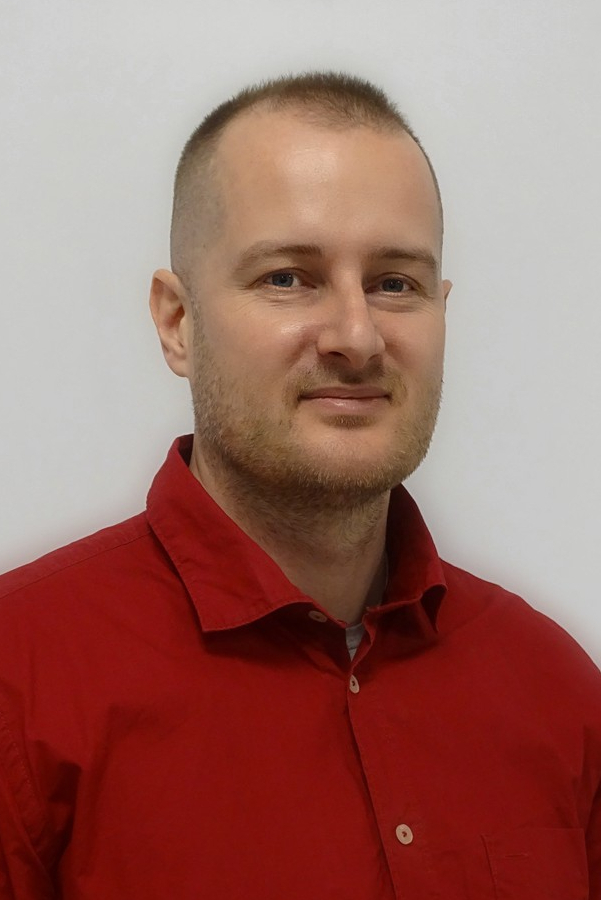
Dr. Danko Milašinović is a Full Professor at the Faculty of Physics and Mathematics, University of Kragujevac, specializing in Applied Computer Science. His academic career spans teaching and research roles since obtaining his Doctorate of Science in 2011. Education: BS in Physics (2006), PhD in Computer Science (2011) from University of Kragujevac International engagement: Research collaboration at University of Jyväskylä, Finland (2009) His research focuses on programming, software development, computer simulations, and biomedical engineering applications. Recent work includes developing open-source frameworks for finite element analysis (dfemtoolz, OpenMandible) and deep learning systems for industrial safety compliance. He has contributed to tourism informatics through subjects like Business Informatics and Information and Communication Technologies in Hospitality and Tourism . His publications span M21/Q1 journals in biomedical engineering, computer science, and tourism technology. Key projects: ARTreat (FP7), SEE-GRID (FP6/FP7), AI4Dim & SurfQA (2022-2023) Software development: Tools for finite element mesh generation, CFD simulation, and post-processing

Xavier Goaoc is a Professor of Computer Science at Université de Lorraine, affiliated with the Department of Computer Science & Engineering at École des Mines de Nancy and the Gamble research team (joint between LORIA and INRIA). His research focuses on algorithms and discrete mathematics, particularly discrete and computational geometry, including convex hulls, intersection patterns, topological generalizations, and geometric transversal theory. University: Université de Lorraine School: School of Engineering Department: Department of Computer Science & Engineering Research Team: Gamble (LORIA/INRIA) Emails: xavier.goaoc@loria.fr , xavier.goaoc@univ-lorraine.fr His research spans computational geometry, combinatorial convexity, geometric transversal theory, and random geometric structures. Key topics include homological minors, order types of point sets, and geometric optimization. His 15 most recent publications highlight advancements in computational geometry algorithms, structural complexity, and topological constraints. Notably, his work has received Best Paper Awards at SoCG 2020, 2018, 2016, and 2012. Administrative roles include heading the computer science & engineering department at Mines Nancy and co-chairing the computer science department of the IAEM doctoral school. He is also a member of the Université de Lorraine's ‘pôle AM2I’ council. Teaching activities encompass courses in algorithms, computer architecture, blockchains, and geometric models for vision, with publications and grants reflecting his interdisciplinary impact in computer science and mathematics.
Djordje Obradovic is a researcher at Singidunum University with a focus on artificial intelligence, fuzzy logic, and geospatial analysis. He holds a Ph.D. in Electrical Engineering and Computer Science from the University of Novi Sad (2011). Education: B.Sc., M.Sc., Ph.D. in Electrical Engineering and Computing, University of Novi Sad (1992–2011) His research spans machine learning, neural networks, and fuzzy systems applied to diverse domains including medical imaging, environmental monitoring, and social media analysis. Recent publications highlight his work on air quality modeling and panoramic image processing in GIS applications. Key contributions include intelligent systems for scoliosis screening using low-cost sensors and innovative approaches to big data management through fuzzy sets and graph theory. He actively participates in international conferences like ICIST and Sinteza, often collaborating with multidisciplinary teams. At Singidunum University, Obradovic contributes to postgraduate studies while developing software architectures for geospatial data processing, educational technology, and inspection management systems. Notable projects include SCORM-compatible e-learning platforms, anthropomorphic gait simulation systems, and web-based tools for topographical symbol detection.

Miloš Antonijević is a researcher at the Faculty of Informatics and Computing at Singidunum University , Serbia. With a PhD in Advanced Protection Systems (2020) and a Master's in Electronic Business (2014), he has focused his career on artificial intelligence applications in cybersecurity, healthcare, and energy forecasting. Doctoral studies: Advanced Protection Systems, Singidunum University (2016-2020) Master's: Electronic Business, Faculty of Organizational Sciences (2012-2014) His research bridges machine learning with natural language processing and computer vision , particularly through metaheuristic optimization techniques. Recent work explores applications in: Solar energy production forecasting Parkinson's disease detection via wearable sensors Real-time rocket detection in aerial imagery Publications demonstrate expertise in hybrid AI frameworks combining recurrent networks, convolutional networks, and gradient boosting methods. He frequently collaborates with multidisciplinary teams on Springer and IEEE publications. Key partnerships include work with institutions in India, Romania, and Austria on applications spanning: Phishing detection Medical diagnostics Industrial IoT security

Miloš Pavkovićمشاهده پروفایل
پژوهشگر
Miloš Pavković is a researcher affiliated with Singidunum University in Serbia. He holds a doctoral degree in Software Engineering from the Faculty of Electrical Engineering, earned after 9 years of study (2012–2021), and a master’s degree in the same field from the same institution (2004–2009). His work spans artificial intelligence, software engineering, environmental modeling, and educational technology. Education : Basic studies in Software Engineering (Faculty of Electrical Engineering, 2004–2009); Doctoral studies in Software Engineering (Faculty of Electrical Engineering, 2012–2021). Pavković’s research focuses on AI applications, including recurrent neural networks for pollution forecasting, metaheuristic optimization, and large language models (LLMs) for web scraping. He has also contributed to software engineering tools for forum crawling, cybersecurity techniques for SQL injection detection, and computer vision applications in agriculture. His publications since 2013 reflect expertise in internet data retrieval, educational technology, and cross-disciplinary applications of AI in environmental and agricultural contexts. Recent works (2025) highlight advancements in pollution prediction and LLM-driven automation.
Ivan Radosavljevic is a researcher at Singidunum University's Department of Postgraduate Studies, actively contributing to the fields of Artificial Intelligence, Machine Learning, and Software Engineering. His work spans diverse applications including environmental monitoring, educational technology, medical diagnostics, and geospatial systems. Research interests focus on AI-driven solutions for air quality assessment, synthetic dataset generation for semantic segmentation, real estate price prediction from internet ads, and medical imaging analysis. He has developed software tools for remote rendering monitoring, automated grading, and eye-tracking-based code interaction studies. His publications demonstrate expertise in integrating fuzzy logic with GIS for environmental applications, creating innovative educational technologies, and applying machine learning to healthcare diagnostics. Ivan collaborates with colleagues across multiple domains while maintaining a strong focus on practical implementations of artificial intelligence.
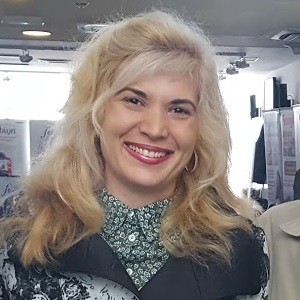
Assoc. Prof. Dr. Sanja Maksimović Moićević serves as Assistant Professor at the Faculty of Applied Management, Economics and Finance, University of Economics Academy in Novi Sad since 2017. Her professional trajectory includes prior appointments as Assistant at EDUKONS University's Faculty of Service Business and Telecommunications Advisor at the Provincial Secretariat for Economy in 2006, demonstrating consistent engagement with Serbia's telecommunications sector. Her academic foundation was built at Novi Sad's Faculty of Technical Sciences, where she completed undergraduate studies in Telecommunications and Signal Processing (2005), followed by a Master's degree (2011) and Doctorate in Computer Engineering and Computer Communications (2015). This technical background underpins her interdisciplinary research approach. Professor Maksimović Moićević's research program bridges telecommunications engineering with practical applications through: Development of image quality metrics for broadcast systems Strategic planning for regional broadband infrastructure Implementation frameworks for telemedicine in Serbian healthcare Digital television standard evolution (DVB-T to DVB-T2) Educational technology solutions for modern pedagogy Her publication record from 2010-2017 reveals consistent contributions to telecommunications policy and technical implementation, with growing emphasis on healthcare and education applications in recent years. No specific scientific awards were documented in the source material. Her research leadership manifests through substantial project involvement: Council coordinator for Vojvodina's Broadband Access Strategy (2012-2015) Metropolitan network management model development for local governments Multiple IPA international project collaborations These initiatives demonstrate strong grant acquisition capability and regional policy influence. While no dedicated laboratory is documented, her project-based work indicates an applied research methodology focused on governmental and institutional partnerships for telecommunications infrastructure development.

Darjan Karabašević is currently serving as the Acting Dean and Full Professor at the Faculty of Applied Management, Economics and Finance, University of Economics Academy in Novi Sad. He was elected to the position of Acting Dean on April 29, 2023, and achieved the rank of Full Professor for the narrow scientific fields of General Management and Informatics on February 22, 2023. Prior to this, he served as Vice-Dean for Research since March 1, 2018, and held positions as Associate Professor (2020) and Assistant Professor (2017) at the same institution. His educational background includes a Doctorate in Computer Science from the University of Novi Pazar (2022), another Doctorate from the Faculty of Management Zaječar, John Nesbitt University Belgrade (2016), Specialist Academic Studies from Megatrend University Belgrade (2012), and undergraduate studies at the Faculty of Management Zaječar, Megatrend University Belgrade (2009). He completed his secondary education at the Zaječar School of Economics and Trade. Professor Karabašević's research primarily focuses on multi-criteria decision-making methods, neutrosophic logic, fuzzy systems, and their applications in management and computer science. His work demonstrates a strong integration of mathematical modeling with practical business applications, particularly in personnel selection, supplier evaluation, website quality assessment, and e-commerce strategy development. He has published extensively on extensions of methods like WISP, TOPSIS, MULTIMOORA, and SWARA, often incorporating neutrosophic and fuzzy logic to handle uncertainty in decision-making processes. His publication record shows a consistent output of high-quality research, with over 200 scientific and professional papers, including more than 60 papers indexed in SCI/SSCI databases. His research has accumulated 2432 citations on Google Scholar, 863 on Web of Science, and 8 on Scopus, indicating significant impact in his fields of study. Professor Karabašević serves as the Editor-in-Chief of the Journal of Process Management and New Technologies (category M52) and is an editor for the SCI-indexed journal "Axioms" (category M22). He is a member of the editorial boards of numerous international journals including Neutrosophic Sets and Systems, International Journal of Neutrosophic Science, and Journal of Fuzzy Extension and Applications, among others. He has reviewed over 200 scientific papers for prestigious journals such as Mathematics, Applied Mathematics and Computation, Journal of Cleaner Production, and Omega. He has held significant leadership roles including being elected as Co-President and Head of the Neutrosophic Science International Association for Serbia (2018), and later becoming President of the association for Serbia (2022). He serves on the scientific committees of multiple international conferences including the International Congress on Aviation Management and conferences on Sustainable Development based on Knowledge (ERAZ). His professional activities also include serving as a reviewer for the National Body for Accreditation and Quality Assurance in Higher Education (NAT) since 2018 and previously for the Commission for Accreditation and Quality Assurance (KAPK) from 2017-2018.