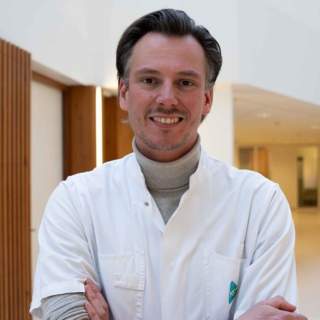
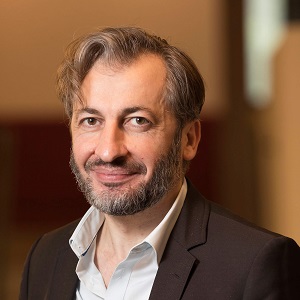
Shenghui Wang is an Assistant Professor in Human Media Interaction with a focus on hybrid human-AI systems. Affiliated with OCLC Research Europe since 2012, his work bridges artificial intelligence, virtual reality, and cultural heritage digitization. Research Interests: Ontology modeling, eye-tracking integration, multimodal conversational agents, and FAIR metadata principles for cultural data Key Activities: Organized HHAI 2025 and ISWC 2025 conferences; presented at ICT Open 2024 and Hybrid Intelligence Consortium meetings Current Work: Developing social VR frameworks for collaborative art exploration and evaluating RAG-based chatbots in healthcare contexts His recent publications emphasize Human-Computer Interaction in educational and cultural settings, with specific attention to: Personalized learning systems Virtual heritage applications Ontology-driven VR environments Author disambiguation algorithms Wang's research contributes to UN Sustainable Development Goals through innovative applications in education, cultural preservation, and accessible AI systems.
Amirreza Yousefzadeh is an Assistant Professor specializing in computer architecture design for embedded systems. His research focuses on hardware acceleration for artificial intelligence, particularly in energy-efficient neuromorphic computing and edge AI applications. Research Interests Neuromorphic computing architectures Event-driven AI hardware Sparsity exploitation in neural networks Embedded vision systems Digital circuit design for AI Research Trends Recent work (2024-2025) demonstrates expertise in spiking neural networks (SNNs), activation sparsity, and hardware-software co-design for neuromorphic processors. Key areas include object detection, energy efficiency optimization, and digital implementations of synaptic delays. Technical Contributions Developed SENMap for multi-objective data-flow mapping Created SENSIM simulator for multi-core neuromorphic systems Investigated 3D stacking for memory-dominated architectures Explored temporal sparsity in event-based processing
Bruno F. Santos is an Assistant Professor in Airline Operations at Delft University of Technology's Faculty of Aerospace Engineering. His research bridges theoretical optimization methods with practical airline operations challenges, focusing on making aviation systems more efficient and sustainable through data-driven approaches. Dr. Santos's research interests center around aircraft maintenance optimization , predictive maintenance using AI , stochastic modeling for airline operations , and strategic planning for sustainable aviation . His work applies advanced computational techniques including Bayesian frameworks and deep reinforcement learning to solve real-world problems in the aviation industry. A key focus is transforming traditional fixed-schedule maintenance into condition-based approaches that respond to actual aircraft system health. His recent publications demonstrate a strong trajectory in high-impact journals, with a focus on counterfactual explanations for remaining useful life estimation, deep reinforcement learning for airport operations, and multidisciplinary coupling for hybrid-electric aircraft design. These works collectively address the critical challenge of making aviation more efficient, sustainable, and cost-effective through digital transformation. TRA VISIONS 2022 Senior Researcher Award Airborne AIAA Electrified Aircraft Technology Technical Committee Best Paper Award (2023) AIAA Software Best Paper Award (2024) Dr. Santos leads significant research initiatives including the €6.8 million ReMAP project, which successfully demonstrated through a six-month trial at KLM that AI models can predict aircraft system health and optimize maintenance scheduling. This project involved collaboration with multiple European universities and industry partners. His editorial roles for Transportation Research Procedia and Transport Policy demonstrate his standing in the academic community. Dr. Santos actively translates research into practical applications, with media coverage highlighting how his work can save airlines hundreds of millions while improving operational efficiency. His Aircraft Maintenance and Operations Research Group focuses on developing adaptive maintenance planning systems that use real-time data to optimize maintenance scheduling, reducing unnecessary maintenance while preventing system failures. The group's work represents a significant shift from traditional fixed-schedule maintenance to condition-based approaches that respond to actual aircraft system health.
Mark Schuuring is a Non-Invasive Cardiologist at Medical Spectrum Twente (MST) and a Researcher at the Biomedical Signals and Systems department of the University of Twente. He holds certifications in CMR (level 3), TTE, and TOE, and is an alumnus of the Postgraduate Course in Heart Failure. His research focuses on eHealth and artificial intelligence in cardiology, with a particular emphasis on heart failure and adult congenital heart disease. University of Twente | Biomedical Signals and Systems Medical Spectrum Twente | Non-Invasive Cardiologist His publications span machine learning for cardiac imaging, digital health interventions, and clinical applications of AI in cardiology. Recent work includes automated echocardiography segmentation, ChatGPT evaluation in heart failure care, and 3D printing for mitral valve surgery. His research trends align with integrating AI into clinical workflows and improving patient outcomes through digital solutions. He supervises multiple PhD candidates and has secured grants from organizations including the Netherlands Federation of University Medical Centers and Hartstichting. He founded the online platform digitalcardiology.net to advance digital cardiology education and innovation.
Laura Veder is a Researcher in the Department of Otorhinolaryngology and Head and Neck Surgery at Erasmus University Medical Center, specializing in pediatric airway disorders and complications from medical interventions like intubation and craniofacial surgery. Her core research domains include: Pediatrics Otorhinolaryngology Head and Neck Surgery Intubation Upper Respiratory Tract Obstruction Laryngeal Injury Analysis of her recent publications reveals a concentrated focus on evidence-based pediatric airway management, particularly risk stratification for laryngeal injury post-intubation through systematic reviews and global expert surveys, alongside innovative work in surgical outcomes for craniofacial syndromes and endoscopic imaging optimization. No records of scientific awards, student supervision, grant funding, or dedicated laboratory teams were documented in the source materials.
Dr. Vicente Alarcon-Aquino is a Professor in the Department of Computing, Electronics, and Mechatronics at Universidad de las Americas Puebla (UDLAP), Mexico. He received his Ph.D. and D.I.C. degrees in Electrical and Electronic Engineering from Imperial College London in 2003. He previously served as department head from October 2012 to June 2018 and spent a research stay at King's College London in 2017. Dr. Alarcon-Aquino is a Senior Member of IEEE, a Level I member of the Mexican National System of Researchers (SNI), and a Fellow of the Mexican Academy of Sciences. His educational background includes: Ph.D. and D.I.C. in Electrical and Electronic Engineering, Imperial College London, UK (2003) Dr. Alarcon-Aquino's research focuses on cybersecurity, network monitoring, anomaly detection, wavelet analysis, and machine learning. His work spans theoretical foundations to practical applications in network security, with significant contributions to intrusion detection systems, cryptographic techniques, and machine learning approaches for security applications. He has developed innovative methods combining wavelet transforms with neural networks for various security and signal processing applications. His scholarly contributions include over 180 research articles in refereed journals and conference proceedings, a book on MPLS networks, and numerous citations. As an editor, he serves as Associate Editor for IEEE Access Journal and as Academic & Section Editor for PeerJ Computer Science, focusing on Security & Privacy. Notable professional recognitions include: Senior Member of IEEE Mexican National System of Researchers (SNI Level I) Member of the Mexican Academy of Sciences Dr. Alarcon-Aquino has supervised over 70 theses, including 8 Ph.D. dissertations, 15 Master's theses, and more than 37 Bachelor's theses. His supervision spans topics including network intrusion detection, information security, encryption algorithms, wavelet-based signal processing, neural networks, EEG signal processing, and biometric cryptosystems. He has hosted international research students from institutions including the Polytechnic University of Madrid and Kiel University of Applied Sciences. His research group at UDLAP focuses on developing advanced security solutions for modern network environments, with particular emphasis on applying machine learning techniques to cybersecurity challenges. Current projects include blockchain-based security solutions, federated learning approaches for intrusion detection, and advanced anomaly detection systems for IoT environments.
Ahmed Elazab serves as an Associate Researcher at Shenzhen University's School of Biomedical Engineering since January 2021, following a Postdoctoral Research Fellowship at the same institution from January 2018 to April 2020. He holds a Ph.D. in Pattern Recognition and Intelligent Systems from the Shenzhen Institutes of Advanced Technology, University of Chinese Academy of Sciences (2017). Education Ph.D. in Pattern Recognition and Intelligent Systems, Shenzhen Institutes of Advanced Technology, University of Chinese Academy of Sciences, China (2017) Research Focus Dr. Elazab's work centers on machine learning and deep learning applications in biomedical contexts, with specialized expertise in medical image analysis , brain anatomy analysis , and computer-aided diagnosis . His research integrates computer vision, bioinformatics, and data science to develop AI-driven solutions for complex medical challenges including neurodegenerative diseases and infectious outbreaks. Publication Trends Analysis of his recent publications (2020-2023) reveals a concentrated focus on deep learning for medical diagnostics, particularly in Alzheimer's disease staging from MRI data and COVID-19 detection from X-ray images. His work consistently incorporates domain-specific knowledge into neural architectures, with growing emphasis on generative models for medical image segmentation and vaccine development. Cross-cutting themes include handling multi-modal biomedical data and addressing real-world clinical constraints. Scientific Recognition Active Academic Editor for PeerJ Computer Science with 1,600 contribution points Reviewer for prestigious international journals across computer science and biomedical domains Author/co-author of over 80 peer-reviewed publications Academic Engagement Dr. Elazab maintains significant scholarly involvement through editorial work at PeerJ Computer Science, where he has handled manuscripts on deep learning applications in medical imaging since 2020. His extensive publication record demonstrates consistent research productivity, though specific grant funding or student supervision details are not documented in available sources. He contributes to multiple subject areas including Artificial Intelligence, Bioinformatics, and Computational Biology. Research Environment As part of Shenzhen University's School of Biomedical Engineering, Dr. Elazab operates within a multidisciplinary research ecosystem focused on AI-driven medical solutions. His work intersects with ongoing initiatives in medical image computing and computational diagnostics, leveraging institutional resources for biomedical data analysis without specified laboratory affiliations.
Dr. Gang Mei is an Associate Professor in Scientific Computing within the School of Engineering and Technology at China University of Geosciences (Beijing), where he has held academic positions since 2014. His career progression includes Postdoctoral Researcher (2014-2016), Lecturer (Oct-Dec 2016), and current Associate Professor (since Jan 2017). His research bridges computational science and engineering applications with significant editorial contributions to computer science literature. Education: Ph.D. in Computer Science, University of Freiburg, Germany (2014) Research Interests: Dr. Mei specializes in Numerical Simulation and Computational Modeling, GPU Computing, Machine Learning, and Data Mining, with strong applications in Network Science and Spatial Information Systems. His work integrates Distributed and Parallel Computing techniques for large-scale scientific simulations, particularly in geospatial modeling and network analysis. The research demonstrates consistent focus on computational efficiency through hardware acceleration and algorithmic optimization across diverse domains including satellite imagery processing, financial event detection, and medical image classification. Publication Trends: His editorial portfolio reveals strong interdisciplinary patterns connecting computer science fundamentals with domain-specific applications. Recent works emphasize GPU-accelerated methods for data-intensive problems (2020-2022), spatial-temporal modeling (2019-2020), and network science applications (2021). The publications consistently address computational scalability challenges while maintaining practical relevance across geospatial, financial, medical, and engineering contexts. Professional Recognition: As an IEEE Member, Dr. Mei serves on editorial boards for IEEE Access and PeerJ Computer Science, reflecting peer recognition in computational fields. His editorial contributions span 15+ publications demonstrating expertise in evaluating cutting-edge computer science research. Academic Service: Beyond editorial work, Dr. Mei's service includes advising on computational methodology across multiple disciplines. His role as Academic Editor demonstrates commitment to scholarly communication, particularly in bridging theoretical computer science with practical engineering applications. No grant funding details were specified in available materials.
Pengcheng Liu is an Associate Professor in the Department of Computer Science at the University of York, holding this position since January 2020. He maintains active memberships in IEEE, IEEE Robotics and Automation Society (RAS), IEEE Control Systems Society (CSS), and the International Federation of Automatic Control (IFAC), while serving on the IEEE Technical Committee for Bio Robotics, Soft Robotics, Robot Learning, and Safety, Security and Rescue Robotics. His research spans robotics, machine learning, automatic control, and optimization, with specialization in humanoid robotics, rehabilitation systems, agricultural applications, and human-computer interaction. Key focus areas include developing lightweight neural networks for embedded agricultural systems, bionic-companionship frameworks for service robots, EMG-controlled rehabilitation devices, and precise control of robotic manipulators using ROS/Gazebo. His work consistently bridges theoretical control systems with practical implementations in healthcare and precision agriculture. Analysis of his publication trends reveals strong emphasis on applying machine learning to real-world robotics challenges, particularly in resource-constrained environments (e.g., agricultural robotics with efficient neural networks) and human-centered applications (e.g., rehabilitation gloves and brain-computer interfaces). Recent work demonstrates increasing integration of computer vision with control systems for autonomous operation. His notable scientific awards include: Global Peer Review Awards from Web of Science (2019) Outstanding Contribution Awards from Elsevier (2017) Dr. Liu has secured and managed research funding through major programs including EPSRC, Newton Fund, Innovate UK, Horizon 2020, Erasmus Mundus, FP7-PEOPLE, and NSFC. He serves as a regular reviewer for EPSRC, NIHR, and NSFC grant panels while reviewing for over 30 flagship journals and conferences in robotics, AI, and control systems. His editorial roles include Associate Editor for IEEE Access and PeerJ Computer Science, where he has edited 17 publications. Though specific lab affiliations aren't detailed, his research in agricultural robotics, rehabilitation systems, and humanoid platforms suggests active collaboration with York's robotics and AI research groups, particularly in developing practical implementations of control algorithms and machine learning models for real-world deployment.
Dr. Noura Al Moubayed serves as an Associate Professor in the Department of Computer Science at Durham University, specializing in Explainable Machine Learning, Natural Language Processing, and Optimisation for high-dimensional data challenges. Education PhD from Robert Gordon University Post-doctoral positions at University of Glasgow and Durham University Research Focus Her work develops machine learning solutions for healthcare, social signal processing, cyber-security, and Brain-Computer Interfaces, specifically targeting noisy and imbalanced datasets through advanced NLP and optimization techniques. Current projects integrate deep learning with explainability frameworks to enhance real-world applicability. Publication Trends Recent publications (2020-2022) demonstrate consistent focus on improving question answering systems via bilinear pooling and paraphrasing techniques, alongside novel deep learning approaches for probabilistic topic modeling. These works bridge computer vision, NLP, and multimodal learning to address data imbalance challenges across healthcare and social computing domains. Academic Service PeerJ Computer Science Editorial Board Member 335 authorship points and 30 reviewer points on PeerJ platform
Paulo Jorge Coelho serves as an Adjunct Professor in the Electrical Engineering Department at the School of Technology and Management, Polytechnic University of Leiria, and as an integrated researcher with the ROBiTECH (Advanced Robotics and Smart Factories) group at INESC Coimbra's Leiria delegation. With over 20 years of academic experience since 2004, he specializes in Microprocessors, Industrial Automation, and Computer Vision instruction. Education: Ph.D. in Informatics (2019), Trás-Os-Montes and Alto Douro University Specialization in Automation and Control (2007), Coimbra University Bachelor of Electrical Engineering (2004), Coimbra University Research Focus: His work bridges industrial automation and computer vision with cutting-edge machine learning applications in biomedical imaging, ambient assisted living, and assistive technologies. Current projects emphasize practical implementations for reducing physical impairments and enhancing healthcare solutions through deep learning frameworks. Publication Trends: Recent work (2024-2025) reveals strong interdisciplinary convergence between healthcare diagnostics (schizophrenia/EEG analysis, perinatal depression prediction) and industrial/computer vision systems (sports analytics, activity recognition). His research consistently leverages sensor fusion and deep learning architectures to solve real-world problems across medical and engineering domains. Professional Engagement: Active member of the Portuguese Engineers Order and Portuguese Association for Pattern Recognition, with significant editorial contributions (89+ edited articles) across AI and computer vision domains. Previously served as course director and Scientific-Pedagogical Committee member for the Master's in Electrical and Electronic Engineering. Research Infrastructure: Operates within ROBiTECH's advanced robotics ecosystem at INESC Coimbra, focusing on smart factory solutions and human-robot interaction systems. His lab environment integrates industrial automation testbeds with biomedical sensor networks for cross-domain innovation.
Ciano Aydin serves as Professor of Philosophy of Technology at the University of Twente, where he also heads the Department of Philosophy of Technology and acts as Vice-Dean (Education Portfolio) for the Faculty of Behavioral, Management, and Social Sciences (BMS). Additionally, he holds a professorship in Philosophy and Applied Sciences at Delft University of Technology. His academic work bridges theoretical philosophy with practical technological applications, focusing on how digital transformations reshape society. Aydin's research interests center on the philosophical dimensions of technology, with particular emphasis on algorithmic bias, digital privacy, and the societal implications of AI. His work critically examines how data collection influences human behavior and how digital networks transform organizational structures. He argues that technology is increasingly embedded in our physical environment through invisible sensors that monitor behavior, raising profound ethical questions about privacy in the digital age. His recent publications reveal a consistent focus on the dual nature of technological advancement - examining both threats and opportunities in digital transformation. Aydin's work demonstrates how biased data leads to biased algorithms, challenging the notion that AI can be truly neutral since it reflects the biases inherent in our world. He emphasizes that humans cannot be fully represented by datasets, arguing for philosophical reflection as essential to achieving genuine diversity and inclusion. As an educator, Aydin serves as core lecturer in the Digital Transformations program, guiding executives through technological revolutions from the Industrial Revolution to the current digital network society. His teaching emphasizes developing thoughtful visions for organizational roles within the evolving digital landscape rather than merely replicating physical processes online.
Jeffrey Dellosa serves as a Professor at Caraga State University in the College of Engineering and Geosciences, Butuan, Philippines. His academic career focuses on renewable energy research with particular emphasis on solar photovoltaic systems for rural development applications in the Philippines. He holds a Doctor of Engineering degree specializing in Renewable Energy from Ateneo de Davao University (2019-2023). Education: Doctor of Engineering in Renewable Energy, Ateneo de Davao University (2019-2023) Professor Dellosa's research spans multiple domains within renewable energy engineering, with particular expertise in solar photovoltaics, energy conversion systems, and power generation technologies. His work bridges theoretical research with practical applications for rural electrification and sustainable development. Current research directions include floating solar photovoltaic systems, IoT-based energy monitoring, and renewable energy integration for healthcare facilities. Analysis of his publication record reveals a strong emphasis on practical implementation of renewable energy solutions in the Philippine context, with increasing focus on interdisciplinary approaches combining AI, IoT, and traditional energy engineering. Recent publications demonstrate a shift toward comprehensive system design that addresses both technical and socioeconomic aspects of renewable energy deployment in rural communities. Professor Dellosa leads research in Nelson Jr Enano's Lab and collaborates extensively with regional institutions on renewable energy projects. His work has resulted in 67 publications with significant readership (60,773 reads) and citations (286 citations), demonstrating impactful contributions to the field of renewable energy engineering in Southeast Asia.