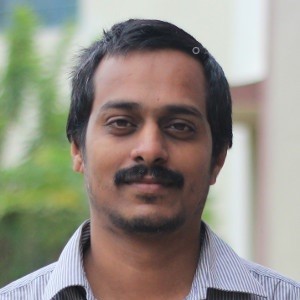
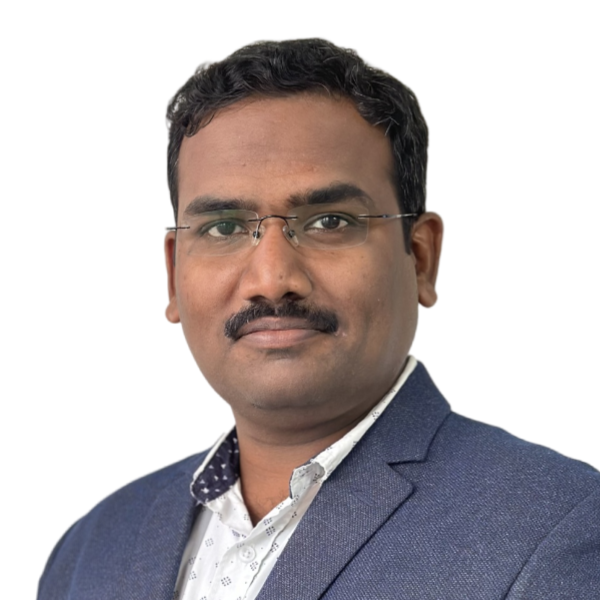
Dr. Preethi Srivathsa is an Assistant Professor - Senior Scale in the School of Computer Engineering at Manipal Academy of Higher Education (MAHE), Bengaluru. She holds a B.Tech, M.Tech, and Ph.D. (awarded by Presidency University in 2022). Her academic career includes positions at Presidency University (2019-2023) and East Point College of Engineering (2008-2019). Her research focuses on: Computer architecture and low-power hardware design IoT applications and cyber-physical systems Cryptography and blockchain security Machine learning implementations in hardware FPGA-based accelerators and optimization techniques Her publication portfolio shows strong emphasis on hardware-efficient algorithms, cryptographic systems (especially elliptic curve applications in blockchain), and emerging IoT architectures. Recent work integrates machine learning with hardware acceleration for smart home systems and agricultural technology. Awards and recognitions: Best Paper Award at IEEE iSES-2021 for low-power sorter design Infosys Bronze Partner Faculty (2013) She has developed intellectual property including IoT-based monitoring systems and blockchain educational frameworks. Technical skills include Verilog, FPGA design, IoT platforms (Arduino/Raspberry Pi), and multiple programming languages.
Phanindra Varma Jampana is an Associate Professor in the Department of Chemical Engineering at Indian Institute of Technology Hyderabad, India. His research focuses on compressed sensing, system identification, and stochastic differential equations, with applications to industrial process control and tomography. Education: Ph.D. in Process Control, University of Alberta (2004-2010) B.Tech. in Chemical Engineering, IIT Madras (2000-2004) His work spans electrical resistance tomography, image processing, and control systems optimization, with key contributions to particle filtering and homotopy optimization. Recent publications highlight applications in hydrocyclone air-core measurements and sparse-view tomography. Contact: pjampana@che.iith.ac.in
Dinesh Acharya U serves as a Professor in the Department of Computer Science and Engineering at Manipal Institute of Technology, Manipal University. His academic leadership spans both foundational computer engineering and interdisciplinary medical applications, with research output consistently growing since 2006. Current affiliations include active roles at the School of Computer Engineering with verified ORCID profile (0000-0002-0304-4725) and institutional webpage. Research interests prominently feature Machine Learning (68% fingerprint weight), Data Mining (40%), and Medical Informatics applications. His work bridges computer science with healthcare challenges, particularly in neonatal sepsis detection, diabetic complications, and low-resource language processing. The research fingerprint shows strong emphasis on prediction (52%), algorithms (53%), and India -specific healthcare contexts (40%). Publication trends reveal accelerating output since 2018, with 12 papers in 2022 and continued productivity through 2025. Recent work demonstrates interdisciplinary convergence, particularly in Medical AI (neonatal sepsis, diabetic kidney disease) Natural language processing for low-resource languages Transformer-based architectures across domains Notable patterns include increasing clinical collaborations and emphasis on practical implementation tools. Professional recognition includes an h-index of 13 with 596 citations across 71 research outputs. Key distinctions: Scopus profile verification ORCID registration Multi-institutional collaborations evident in co-authorship Academic supervision and grant activity cannot be confirmed from available data, though 15+ recent publications suggest active research teams. Current projects appear focused on Medical diagnostic tool development Low-resource language technology Clinical decision support systems with evident laboratory infrastructure supporting computational healthcare research.
Suyash P. Awate serves as the Asha and Keshav Bhide Chair Professor in the Department of Computer Science and Engineering at the Indian Institute of Technology (IIT) Bombay, Mumbai, India. His research spans medical image computing, machine learning, image analysis, computer vision, and statistical modeling and inference. His work focuses on developing novel computational methods for medical image analysis, reconstruction, and quality enhancement. Prof. Awate's research interests center on medical image computing, where he develops advanced machine learning techniques for medical image reconstruction, segmentation, and quality enhancement. His work addresses critical challenges in medical imaging such as low-dose PET/CT imaging, uncertainty quantification in segmentation, robustness to out-of-distribution data, and accelerated MRI/fMRI acquisition. He has pioneered methods combining variational inference, expectation maximization, and deep learning to improve medical image quality while reducing radiation exposure and scan times. His research has significant clinical applications in neuroimaging, tumor analysis, and brain function mapping. His recent publications demonstrate a strong trend toward integrating deep learning with classical statistical methods, particularly focusing on uncertainty-aware models for medical image analysis. His work consistently addresses the challenge of robustness in medical imaging, developing methods that maintain performance even with degraded input data or distribution shifts. A significant portion of his research targets clinical applications, particularly in neuroimaging and oncology, with emphasis on practical implementation for real-world medical settings. Prof. Awate actively mentors PhD, MTech, and BTech students at IIT Bombay. His current PhD students include Vatsala Sharma (awarded Microsoft Research India PhD Award), Jimut Bahan Pal (CMInDS Fellow, Prime Minister's Research Fellow), Tejomay Padole (TCS Research Fellow), Subhankar Nag, and Koustav Pal. He also guides MTech/MS students Soumya Mukherjee, Jay Gorakhiya, and Russel Abreo, along with BTech student Varshith Anumalasetty. He teaches several courses including CS 736: Medical Image Computing (inaugurated in 2014), CS 663: Fundamentals of Digital Image Processing, CS 215: Data Analysis and Interpretation, CS 740: Mathematics for Visual Computing, and CS 101: Computer Programming and Utilization. His laboratory focuses on developing computational methods for medical image analysis, with particular emphasis on uncertainty quantification, robust deep learning for medical imaging, and accelerated acquisition techniques. The research group maintains strong collaborations with medical institutions to ensure clinical relevance of their computational methods.
Supratim Biswas is a Professor in the Department of Computer Science and Engineering at the Indian Institute of Technology Bombay, where he has served since 1995. His academic career spans over four decades, beginning as a Lecturer in the Computer Center in 1980, progressing to Assistant Professor in 1985, Associate Professor in 1990, and achieving full Professorship in 1995. He has held significant administrative roles including Dean of Academic Programs (2007-2010), Head of CSE Department (2000-2003), and Director of IITB-Monash Academy (2009-2010). His research interests focus on Programming Languages, Compiler Optimization, Parallelizing Compilers, Parallel and Distributed computing, and Combinatorial Optimization . Professor Biswas has made substantial contributions to compiler technology, particularly in parallelization techniques for modern architectures. His work bridges theoretical compiler design with practical applications in high-performance computing and CAD systems, demonstrating how compiler optimizations can significantly enhance computational efficiency in real-world applications. The publication record shows a consistent research trajectory spanning nearly four decades, with recent work (2012-2015) focusing on GPU-based parallel algorithms, loop parallelization techniques for non-uniform data dependencies, and mesh processing for CAD applications. His research demonstrates evolution from foundational compiler theory to contemporary parallel architectures, maintaining relevance through practical applications in computational geometry, CAD systems, and high-performance computing. Excellence in Teaching Award (2000) Professor Biswas has supervised over 60 doctoral and master's students, establishing himself as a dedicated mentor in systems software education. His sponsored research portfolio includes significant projects with CDAC (350 lacs), MIT (133 lacs), TCS (81.3 lacs), and Intel Corporation (10 lacs), demonstrating strong industry-academic collaboration. His teaching portfolio spans both undergraduate and postgraduate levels, including foundational courses like Discrete Structures and advanced topics like Parallelizing Compilers, reflecting his commitment to curriculum development across multiple generations of computer science education. His laboratory work has supported students across B.Tech, M.Tech, and Ph.D. programs, with particular emphasis on compiler construction and operating systems. Through the Continuing Education Program, he has extended his expertise to industry professionals, conducting numerous specialized courses for organizations including VSNL, TCS, DRDO, and Reliance.
Nagarajan Ganapathy is an Assistant Professor in the Department of Biomedical Engineering. He holds a Ph.D. from IIT Madras and specializes in cutting-edge research areas at the intersection of biomedical engineering and artificial intelligence. Education: Ph.D. from Indian Institute of Technology Madras His research focuses on applying computational intelligence to healthcare technologies, with specific interests in: Artificial Intelligence Deep Learning Affective Computing Computer Vision Internet of Medical Things Edge Analytics Wearable Sensors Medical Signal/Image Analysis Big Data Applications in Medicine Drug Repurposing Federated Learning
Soumya Ranjan Sahoo is an Associate Professor in the Department of Electrical Engineering at the Indian Institute of Technology Kanpur. His academic career at IIT Kanpur began with a contract position as Assistant Professor in 2014, progressing to Assistant Professor in 2016, and currently holding the position of Associate Professor since December 2020. Prior to joining IIT Kanpur, he worked as a Scientist Fellow at the National Aerospace Laboratories in Bangalore. PhD in Systems and Control Engineering from IIT Bombay (2013) Thesis Title: Coordination problems with minimal sensing and coarse actuation Thesis Supervisors: Prof. Ravi N. Banavar and Dr. Arpita Sinha B.Tech in Electrical Engineering from University College of Engineering, Burla, Odisha (2008) Dr. Sahoo's research spans the complex intersection of control theory and practical engineering applications. His work primarily focuses on nonlinear dynamical systems, with significant contributions to the control of unmanned vehicles and coordinated control systems. His research has evolved to address modern power system challenges, particularly in the domain of AC and DC microgrids, where he has developed innovative control strategies for improved performance. His work on discontinuous systems demonstrates his ability to tackle mathematically challenging control problems with practical implications. Analysis of Dr. Sahoo's publication record reveals a clear evolution from fundamental control theory to applied research with significant practical impact. His early work focused on theoretical aspects of multi-agent systems and network control, which has progressively shifted toward power systems applications, particularly microgrids. The consistent theme across his publications is the development of robust control strategies that work effectively under realistic constraints such as communication delays, incomplete information, and system heterogeneity. His research bridges theoretical control concepts with practical engineering implementations, particularly in the domains of autonomous systems and modern power grids. Dr. Sahoo teaches several key courses in the Electrical Engineering curriculum including Introduction to Electrical Engineering, Control Systems Analysis, Basics of Modern Control Systems, Nonlinear Systems, Adaptive Control Theory, and advanced topics in Nonlinear Systems. His teaching portfolio reflects his deep expertise in control theory and its applications. His laboratory work, particularly through the DiSCo Lab (as referenced in his homepage), focuses on practical implementations of control algorithms for various applications including unmanned vehicle coordination and microgrid management. This laboratory work bridges the gap between theoretical control design and real-world implementation challenges.
K R Guruprasad is an Associate Professor in the Department of Mechanical Engineering at the Indian Institute of Technology Kanpur (IIT Kanpur). With a PhD in Aerospace Engineering from the Indian Institute of Science (IISc) Bangalore, he has established himself as a leading researcher in robotics, motion planning, and multi-robot systems. His research interests span a wide range of topics in robotics including Robotics-Mechanics and Control, Motion Planning, Multi Robots Systems, Cooperative Control, Exo-Skeleton Control, and Voronoi Partition applications. His work particularly focuses on UAV/Drones motion planning, mobile manipulation, and artificial intelligence applications in robotics. His research integrates theoretical foundations with practical implementations, evidenced by his numerous publications in high-impact journals. Prof. Guruprasad's scholarly contributions include a book titled 'Robotics: Mechanics and Control' (PHI, 2019) and several edited volumes. His publication record shows consistent output with an h-index of 11, i10 index of 14, and 382 citations according to Scopus data. His recent work demonstrates strong focus on multi-robot coverage algorithms, UAV applications, and distributed control systems. Among his recognitions are a best presentation award at the IISc-IBM Research Workshop (2008) and a best paper award finalist at DARS 2014. His research has practical applications in search and rescue operations, landmine detection, and autonomous exploration. Prof. Guruprasad maintains active collaborations with researchers globally and has contributed significantly to advancing robotics research in India through his work at IIT Kanpur's Mechanical Engineering department.
Piyush Rai is an Associate Professor in the Department of Computer Science and Engineering at the Indian Institute of Technology Kanpur. He also holds an Adjunct Assistant Professor position in Electrical and Computer Engineering at Duke University. His academic journey includes postdoctoral research at Duke University and the University of Texas at Austin, following his PhD from the University of Utah. His research interests focus on Machine Learning and Bayesian Statistics, with specializations in Latent Variable Models, Probabilistic Modeling, Approximate Inference, and Nonparametric Bayesian Methods. His work bridges theoretical foundations with practical applications in artificial intelligence and data science. Dr. Rai's publication record shows a consistent focus on tensor factorization, Bayesian nonparametrics, and scalable algorithms for large datasets. His work spans conferences including NIPS, ICML, UAI, and AISTATS, demonstrating strong contributions to both theoretical and applied machine learning. Best Student Paper Award at ECML-PKDD (2015) National Science Foundation (USA) EAGER Award (2015) Dr. Deep Singh and Daljeet Kaur Faculty Fellowship at IIT Kanpur (2015) NIPS 2013 Reviewer Award Sheldon Ekland-Olson Postdoctoral Fellowship (2012) He teaches advanced courses in Machine Learning and Probabilistic Machine Learning at IIT Kanpur, mentoring the next generation of researchers in statistical machine learning techniques. His collaborative work with Lawrence Carin and other researchers demonstrates strong interdisciplinary connections between institutions.
Soumyashree is an Assistant Professor at the School of Computer Engineering, Manipal University, with 8 years of experience in academic and research domains. Her work bridges theoretical and applied aspects of Machine Learning, Artificial Intelligence, and Wireless Networks, focusing on solving complex problems in industrial and computational systems. Education: B.E., M.Tech, Ph.D. Research Interests: Machine Learning, AI, 5G Wireless Networks, Energy Efficiency Optimization, and Industrial Monitoring Systems. She has published extensively on topics like graph convolutional networks for resource allocation in 5G, AI-driven energy management in HPC, neural network-based tool wear monitoring, and deep learning architectures for agricultural disease detection. Recent Research Trends: Her publications emphasize applying ML/AI to diverse domains: optimizing wireless networks, enhancing energy efficiency in computing systems, predictive maintenance in manufacturing, plant disease classification, and digital forensics. Keywords include graphs , resources , neural networks , and computer vision . Email: soumya.shree@manipal.edu ORCID: 0000-0001-8988-0021
Renuka Prabhu serves as a Professor in the School of Computer Engineering at Manipal Academy of Higher Education, where she maintains an active research profile with 31 publications and an h-index of 9 according to Scopus metrics. Her work bridges theoretical computer engineering with practical security applications in embedded systems. Her research specializes in: Automotive cybersecurity including car hacking simulation testbeds Object detection optimization for resource-constrained devices like Raspberry Pi Steganography and data security techniques In-vehicle network protocol analysis Recent publications (2024-2025) demonstrate a strong trajectory toward real-world embedded security solutions, particularly in automotive threat landscape evaluation and robotics vision systems. Her work consistently leverages Raspberry Pi platforms to develop accessible, practical implementations of complex security frameworks. No scientific awards were documented in the source material. Similarly, details regarding student advising relationships, research grants, or laboratory infrastructure were not provided in the available information.
Parag Chaudhuri is a Professor in the Department of Computer Science and Engineering at the Indian Institute of Technology Bombay. His research centers on computer graphics, animation, and virtual reality, developing computational models to replicate real-world phenomena for enriched virtual experiences. His educational background includes: Ph.D. from IIT Delhi under Prem Kalra and Subhashis Banerjee Postdoctoral research at MIRALab, University of Geneva with Nadia Magnenat Thalmann Bachelor's degree in Civil Engineering from Delhi College of Engineering Professor Chaudhuri's research spans Computer Graphics with core focus areas in character/natural phenomena animation, visual data understanding, and 2D/3D content generation. His work integrates computer vision, physics simulation, and machine learning to address challenges in virtual worlds. Specific interests include rendering, modeling, VR/AR systems, and vision-based graphics. Applications extend to medical simulation, entertainment, industrial processes, and digital heritage preservation through physics-driven approaches. Recent publications (2022-2025) reveal strong trends in document analysis for multilingual text recognition (especially Indic scripts), real-time hand/character animation in AR environments, and physics-based fracture/deformation systems. His work bridges graphics with machine learning for practical solutions in visual data processing. At IIT Bombay, he mentors graduate students requiring foundational courses CS675 and CS775. He accepts Ph.D./M.S. candidates through official CSE department procedures but does not offer internships to non-IITB students. He leads a research group advancing computational techniques for virtual world creation, focusing on interactive animation systems and visual data synthesis.
Dr. Maunendra Sankar Desarkar is an Associate Professor at the Computer Science and Engineering Department of Indian Institute of Technology Hyderabad , India, with affiliations to the AI Department. His research spans Natural Language Processing , Information Retrieval , and Machine Learning , focusing on robust, responsible, and culturally-aware AI systems. Education: B.E. (University of Burdwan), M.Tech (IIT Kanpur), Ph.D. (IIT Kharagpur, 2014) Current work emphasizes zero-shot cross-lingual transfer , dialogue interpretability , and ethical NLP (non-toxicity, empathy). Recent articles explore large language model evaluation , hallucination detection , and tokenization for Indic languages . Collaborations include Microsoft and JICA-funded projects. Scientific contributions include: Microsoft India Ph.D. Fellowship Award Yahoo Key Scientific Challenges Honorable Mention (2012) Students include Suvodip Dey (Ph.D. in Dialogue Systems), Aishwarya Maheswaran , Debolena Basak , Kaushal Kumar Maurya , and Maharaj Brahma . Advises on projects involving disaster response systems , generative AI , and multilingual NLP .
Dr. Praveen Tammana is an Assistant Professor in the Department of Computer Science and Engineering at Indian Institute of Technology Hyderabad , where he leads the NetX lab focusing on systems, networks, and security research. He completed his PhD from University of Edinburgh (2013-2018) and holds a Masters from IIT Madras (2009-2011). Education: Ph.D in Computer Science, University of Edinburgh, UK (2013-2018) Masters in Computer Science, IIT-Madras, India (2009-2011) B.E. in Computer Science, Vasavi College of Engineering, Osmania University (2005-2009) Research Focus: His research spans systems and networking , network security , software-defined networking (SDN) , machine learning for networks , wireless communication , high performance computing , and cybersecurity . His lab specializes in programmable data planes using technologies like P4, eBPF, DPUs, and PISA switches. Research Applications: His recent work demonstrates strong focus on AI infrastructure systems , including distributed AI learning and serving, networked robotics, GPU-centric packet processing, and edge cloud applications for autonomous systems. His research bridges the gap between networking infrastructure and AI workloads. Recent Publications Trend: His 2021-2025 publications show significant contributions to network security , programmable switches , edge computing , and AI systems integration . Key themes include securing traffic control systems, AI workload optimization, malicious traffic detection, and real-time applications for autonomous vehicles. Current Funding: Actively funded by industry partners including Mondee (systems for AI workloads), Marvell Technology (data acceleration offload), and ZF India (efficient load-balancer for edge applications). Lab and Team: Leads NetX lab at IIT Hyderabad, actively recruiting full-time research candidates for exciting projects in AI infrastructure, networked systems, and programmable networks. The lab focuses on building next-generation systems for AI workloads and secure network architectures.
Rajesh Kedia is an Assistant Professor in the Department of Computer Science & Engineering at Indian Institute of Technology Hyderabad . He received his Ph.D. from IIT Delhi under the supervision of Prof. M. Balakrishnan and Prof. Kolin Paul, and holds a B.Tech. in Electronics and Communication Engineering from MNIT Jaipur (2006). His research focuses on computer architecture , embedded systems , and VLSI design automation , with specific emphasis on thermal management of processors and memories , shared resource management , and FPGA-based accelerator design . His recent publications address CNN execution time prediction, thermal modeling for 3D systems, and efficient resource allocation in multi-accelerator environments. Rajesh has received multiple scientific awards including the Visvesvaraya Ph.D. fellowship , IEEE Senior Member designation, and a BEST PAPER NOMINATION at DATE 2022 . He has mentored several Ph.D. and M.Tech students, including Lakshay Arora , Venugopal Ramamurthy , and M A Muneeb , with research topics spanning compilers, thermal management, and RISC-V architecture. He actively contributes to the academic community as a reviewer for leading conferences/journals (ASPDAC, DAC, IEEE ESL, CODES+ISSS) and previously served as Design Contest co-chair for ISLPED 2024 . His work has been supported by a SERB startup research grant (INR 20.26L) for shared resource management research.