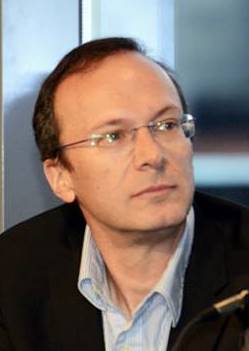
Assoc. Prof. Dr. Klaus Schöffmann is an Associate Professor at the Institute of Information Technology (ITEC) at Klagenfurt University, Austria. He holds a PhD and MSc in Computer Science, and received his habilitation (venia docendi) in 2015. His research focuses on video content understanding (including medical/surgery videos), deep learning, multimedia retrieval, and interactive multimedia. He has secured over €2M in research funding and mentored 6 PhD candidates. He chairs the Video Browser Showdown (VBS) and Lifelog Search Challenge (LSC), and is a member of IEEE/ACM. He has served as program co-chair for MMM 2021, CBMI 2021, ACM ICMR 2020, and others. Affiliations: Deputy Head of the Institute of Information Technology, Chairman of the Curricular Commission for Computer Science. Grants & Impact: €2M+ funding from FWF, KWF, and industry; Google H-index 36 (4,000+ citations). Teaching: Courses in computer vision, multimedia technologies, and app development. He actively organizes conferences including general co-chair roles for ACM ICMR 2024, CBMI2025, and ACMMM2025, and contributes as a reviewer for top journals/conferences in multimedia and medical imaging.
Mohamed Khamis is an Associate Professor at the University of Glasgow , specializing in Human-Computer Interaction (HCI) with a focus on Human-centered Security and Eye Tracking for privacy protection. His research spans Pervasive Displays , Usable Security , and User Privacy in immersive environments. PhD from Ludwig Maximilian University of Munich (LMU) Supervised by Florian Alt and Andreas Bulling Research Interests: Usable Security and Privacy Designing Gaze-based Systems Thermal Attacks and Shoulder Surfing Mitigation Security in Public Displays and Virtual Reality Recent Publications demonstrate expertise in: Drone Interaction and Proxemics Privacy Scales for Measuring Granular Constructs Gaze-enabled Mobile Authentication Multimodal Security Systems Deepfake Privacy Applications XR Dark Patterns Analysis Scientific Contributions: Recipient of multiple Honorable Mention Awards at CHI and MobileHCI Funding from EPSRC for thermal imaging research Keynote speaker at ECCV 2020 Open Eyes Workshop Co-organizer of ETRA workshops on Eye-Gaze for Security
Marc Pollefeys is a Full Professor of Computer Science at ETH Zurich and Director of the Microsoft Mixed Reality and AI Zurich Lab. He has held roles such as Visiting Professor at Stanford University (2007) and Assistant/Associate Professor at UNC-Chapel Hill (2002–2009). His research focuses on 3D computer vision, robotics, machine learning, and augmented reality. Education: PhD in Computer Science from KU Leuven (1999), followed by postdoctoral research there until 2002. He transitioned to academic roles at UNC-Chapel Hill before joining ETH Zurich in 2007. Research interests include 3D reconstruction, visual localization, SLAM, and applications in archaeology, urban modeling, and robotics. Notable projects include real-time 3D scanning, city-scale reconstruction, and autonomous vision-based drones. Key awards include ACM Fellow (2022), IEEE Fellow (2012), and ERC Starting Grant (2008). He advises numerous PhD students and collaborates with institutions like Google and Microsoft. Labs and teams: Leads the Computer Vision and Geometry (CVG) lab at ETH Zurich and directs the Microsoft Mixed Reality and AI Lab. His work bridges academia and industry, focusing on perception for mixed reality and autonomous systems.
Antonio Somaini is Full Professor of Film, Media, and Visual Culture Theory at Université Sorbonne Nouvelle (Paris 3) since 2012 and a Senior Member of the Institut Universitaire de France (IUF). He has held visiting professorships at Yale (2022) and Harvard (2024), and conducted fellowships at German research centers like ZfL Berlin and Cinepoetics. As director of the book series Images, médiums and co-director of the LIRA research unit, he bridges academic and curatorial practice. Key Research Areas: Eisenstein's montage theories, media archaeology, AI's impact on visual culture, history of photography, and interdisciplinary film-art-philosophy. Honors: 2012 Prize Limina for best Italian film studies book. Curatorial Projects: Chief curator of Time Machine: Cinematic Temporalities (2020) and upcoming AI and Contemporary Art at Jeu de Paume (2025). His work connects 1920s-30s avant-garde theories (Benjamin, Bloch, Eisenstein) with contemporary debates on digital media. Current research explores AI's transformative role in image creation and visual culture.
Georges Gielen is Full Professor in the Department of Electrical Engineering (ESAT) at KU Leuven, Belgium, and part-time Research Director at imec. He has held multiple leadership roles including Chair of ESAT Department (2012-2013, 2020-2024) and Vice-Rector for Science, Engineering & Technology (2013-2017). His academic career spans over 30 years at KU Leuven, progressing from Assistant to Full Professor. His research focuses on analog and mixed-signal integrated circuit design automation , with expertise in CAD tools, design optimization, sensor interfaces, and neuromorphic systems. His work bridges hardware design with machine learning, particularly in hardware-efficient AI implementations and biomedical applications. He has pioneered techniques for automated analog circuit sizing, topology synthesis, and reliability-aware design in nanometer CMOS. Gielen has received numerous accolades including the IEEE CAS Mac Van Valkenburg Award (2015), IEEE CAS Charles Desoer Award (2020), and EDAA Achievement Award (2021). He holds an ERC Advanced Grant AnalogCreate and is an IEEE Fellow since 2002. As a prolific scholar, he has chaired major conferences including DATE (2006), ICCAD (2007), and ESSCIRC (2017). He has graduated over 55 PhD students through the MICAS research group at KU Leuven, currently supervising 13 doctoral candidates. His research team collaborates extensively with imec and industry partners on cutting-edge projects in carbon-aware AI accelerators, uncertainty-aware design, and neuromorphic sensor interfaces.
Johannes Brandstetter is an Associate Professor at the Institute for Machine Learning at Johannes Kepler University Linz (JKU) where he leads the "AI for data-driven simulations" research group. He is also Co-founder and Chief Scientist at Emmi AI, bridging academic research with industrial applications in AI-driven physics simulation. Brandstetter earned his PhD after working at CERN's CMS experiment on Higgs boson physics. In 2018, he transitioned to machine learning, joining Sepp Hochreiter's research group in Linz. From 2021-2023, he worked at the Amsterdam Machine Learning Lab under Max Welling and Microsoft Research, developing expertise in Geometric Deep Learning and neural surrogates for partial differential equations. He returned to JKU in October 2023 to establish his own research group. His research spans Machine Learning, Deep Learning, and Physics-Informed Machine Learning with focus areas including Neural PDE solvers, Computational Fluid Dynamics, and Climate Modeling. Brandstetter believes AI is poised to revolutionize industrial-scale simulations, potentially saving thousands of compute hours across engineering domains. His work integrates computer vision, numerical simulation, and engineering components to advance data-driven approaches. Recent publications reveal a strong trend toward foundation models for scientific applications, particularly in atmospheric modeling (Aurora), geometric deep learning, and neural surrogates for complex physical systems. His interdisciplinary work spans computer vision, climate science, computational physics, and engineering, demonstrating the versatility of his research approach. Principal Investigator for "AlKa-DL: Alpine karst spring discharge prediction" (FWF-funded, 2024-2027) Principal Investigator for Cluster of Excellence "Bilateral Artificial Intelligence" (FWF-funded, 2024-2029) Co-PI for "Fast, efficient and flexible CFD simulation through generative AI" (FFG-funded, 2025-2026) As an educator and researcher, Brandstetter actively engages with the scientific community through invited talks at major conferences including presentations on "Closing the Gap Between Scientific Foundation Models and Real-World Applications" (March 2025) and "Scientific Machine Learning for Science and Engineering" (February 2025).
Univ.-Prof. Karl Crailsheim is a Professor at the University of Graz, affiliated with the Institute of Zoology within the Faculty of Natural Sciences. His research focuses on honeybee behavior, physiology, and health, particularly investigating the honeybee superorganism and threats to their colonies. He explores swarm systems, robotics, and swarm intelligence, with recent emphasis on colony losses and environmental threats. His work bridges biology and robotics, applying insights from honeybee behavior to algorithm design. Research interests include honeybee nutrition, immune responses, pathogen impacts, and the application of citizen science in ecological studies. Key projects involve tracking honeybee behavior, analyzing pollen diversity, and developing robotic systems inspired by swarm dynamics. Collaborative efforts with citizen scientists enhance ecological data collection. Publications highlight advancements in understanding bee health, pesticide effects, and swarm robotics. His interdisciplinary approach addresses both biological and technological challenges in apiculture and robotics.
Martin Holler is a Professor at the Institute of Mathematics and Scientific Computing at the University of Graz, Austria, where he leads the research group Applied Mathematics and Machine Learning . His work bridges theoretical mathematics with practical applications in imaging and machine learning. Research Focus: His primary research areas include the mathematics of data science, variational methods in imaging, dynamic and multi-modality inverse problems, and biomedical imaging. He has made significant contributions to model-based regularization techniques, particularly with Total Generalized Variation (TGV) approaches for image and video reconstruction. Publication Trends: Over the past decade, Holler's research has evolved from traditional variational methods for image reconstruction toward increasingly sophisticated machine learning approaches. His recent work (2021-2023) focuses on integrating deep learning with variational methods, particularly for motion separation in medical imaging and learning-informed parameter identification in partial differential equations. His publications demonstrate a consistent thread of applying rigorous mathematical frameworks to solve practical problems in medical imaging and computer vision. Mathematics of data science and machine learning Generative models in machine learning Variational methods in imaging Dynamic and multi-modality inverse problems Model-based regularization Biomedical imaging Image and video decompression Technical Leadership: Holler has developed several open-source software packages implementing advanced reconstruction algorithms, particularly for multi-modal imaging problems. His GitHub repositories show active maintenance and development of these tools, which have been cited in the medical imaging community.
Armin Kirchknopf serves as a Junior Researcher at the Media Computing Research Group within the Institute of Creative Media/Technologies, Department of Media and Digital Technologies at the University of Applied Sciences St. Pölten. His interdisciplinary work bridges artificial intelligence, computer vision, and social media analysis, with significant contributions to misinformation detection and disaster response systems. Based at Campus-Platz 1 in St. Pölten, Austria, he actively collaborates on EU-funded projects and publishes in top-tier AI venues. His educational journey spans humanities and technology: a Bachelor of Arts in Egyptology and Master of Arts in Classical Archaeology from the University of Vienna (including fieldwork at excavation sites across Austria, Germany, and Egypt), followed by a Bachelor of Science in Media Technology from FH St. Pölten. This unique background informs his human-centered AI research approach. Kirchknopf's research centers on explainable multimodal AI systems for real-world challenges. His recent work demonstrates expertise in transformer-based architectures for cross-lingual fake news detection, sexism identification, and flood monitoring through social media imagery. He pioneers techniques like Grad-CAM for object detection explainability and develops visualization tools for complex data interpretation, emphasizing transparency and social impact in AI deployment. Analysis of his 13 publications (2017-2022) reveals a strategic shift toward applied AI in societal contexts , particularly using social media data for disaster management and combating online toxicity. His projects consistently integrate computer vision with natural language processing, showing increasing sophistication in multilingual capabilities and model interpretability frameworks. His scientific recognition includes: Creative Business Award for co-developing the Tenjin learning quiz application No documented student advisement or grant leadership appears in current records, though he actively mentors through project-based collaborations. His work with the Media Computing Research Group drives innovation in educational technology and public safety applications. Kirchknopf contributes to the Media Computing Research Group's portfolio including Fake News Detection, SAiEX (Safe AI with explainable integrity), InfraBase (building footprint segmentation), and Ressel Center music therapy projects. His cross-disciplinary collaborations span computer scientists, archaeologists, and social scientists, reflecting the group's commitment to human-centric technological solutions .
Sylvain Lefebvre is a permanent researcher at INRIA (Institut National de Recherche en Informatique et en Automatique) in France, where he leads the MFX research team since 2018. Previously, he was part of the ALICE group at INRIA Nancy (2009-2018) and the REVES team in Sophia Antipolis (2006-2009). His career includes a postdoctoral position at Microsoft Research Seattle (2005) following his PhD at INRIA Rhones-Alpes under Fabrice Neyret. His educational background includes a PhD in Computer Graphics from Université Joseph Fourier (Grenoble) in 2005, preceded by a Master in Computer Graphics from INP Grenoble in 2001. His habilitation thesis focused on Runtime Texture Synthesis. Lefebvre's research centers on simplifying content creation for highly detailed patterns, structures, and shapes with applications spanning Computer Graphics to additive manufacturing. He develops fast, controllable by-example synthesis approaches that generate content while enforcing user-specified constraints. His work addresses computational challenges through novel data structures and algorithms optimized for GPUs and FPGAs, including his Silice programming language. The ERC-funded ShapeForge project (2012-2017) advanced shape generation for 3D printing, leading to the IceSL software for digital modeling and fabrication. Analysis of his 15 most recent publications reveals a strong focus on additive manufacturing optimization, with recurring themes in structural integrity, material efficiency, and geometric algorithms. His work bridges computer graphics theory with practical fabrication constraints, particularly in microstructure design, slicing techniques, and mechanical metamaterials. The interdisciplinary nature spans computer science, materials engineering, and robotics. EUROGRAPHICS Young Researcher Award (2010) ERC Starting Grant for ShapeForge project (2012) Lefebvre has advised over 25 PhD students and interns including Marco Freire, Thibault Tricard, and Jimmy Etienne. His ShapeForge project received significant ERC funding, supporting research in computational fabrication. He serves on numerous program committees including SIGGRAPH, Eurographics, and SIGGRAPH Asia, reflecting his leadership in the computer graphics community. As leader of the MFX team since 2018, Lefebvre directs research in computational fabrication, focusing on IceSL software development for 3D printing workflows. The team integrates computer graphics techniques with manufacturing constraints, developing tools that simplify complex object design and fabrication while addressing real-world challenges in material usage and structural integrity.
Dr. Alexander Plopski is an Assistant Professor at the Institute of Visual Computing, Technische Universität Graz. His research focuses on advancing augmented reality (AR) technologies, human-computer interaction (HCI), and optical display systems. He holds a PhD, M.Sc., and BSc in relevant fields. His work emphasizes perceptual optimization in AR displays, eye tracking integration, and accessibility solutions for color vision deficiencies. Key research areas include gaze-contingent AR interfaces, light field manipulation for extended reality, and multimodal interaction techniques. Notable contributions include the development of the 'guitARhero' interactive AR guitar tutorial system and studies on focal distance effects in optical see-through displays. His publications span topics from AR display calibration to gesture recognition using radar sensing. He has explored applications in industrial training, medical AR, and robotic telemanipulation. His work often bridges theoretical perceptual studies with practical system implementations, aiming to enhance user experience and accessibility in AR/VR environments.
Professor Dong Xu is a Tenured Professor in the Department of Computer Science at the University of Hong Kong (HKU), part of the School of Computing and Data Science. He holds a B.Eng. and Ph.D. from the University of Science and Technology of China (USTC). His career includes tenured roles at Nanyang Technological University and the University of Sydney, alongside postdoctoral research at Columbia University. His research focuses on Artificial Intelligence, Computer Vision, Multimedia, and Machine Learning , with applications in autonomous driving, AR/VR, medical image analysis, and video surveillance. Xu has authored over 150 papers in top journals and conferences, including CVPR, ICCV, and IEEE Transactions. He actively contributes to the academic community as an editorial board member for journals like ACM Computing Surveys and IEEE Transactions, and through leadership roles in conferences such as ACM Multimedia and ICME. Notable awards include Fellowships from IEEE and IAPR, and the IEEE Signal Processing Society Distinguished Lecturer title (2021–2022). Education: B.Eng. (USTC, 2001), Ph.D. (USTC, 2005) Professional Service: Program Coordinator of ACM Multimedia 2024, Guest Editor of over ten special issues.
Erich Schweighofer serves as Associate Professor at the University of Vienna within the Institute for European, International and Comparative Law, specifically affiliated with the Department of International Law and International Relations. His research activities are centered at the Juridicum building (Schottenbastei 10-16, 1010 Vienna), where he maintains an active office presence with scheduled consultation hours. His scholarly focus spans Legal Informatics , Artificial Intelligence and Law , Data Protection , and Legal Knowledge Representation , with particular emphasis on explainable AI systems for legal contexts and formal methodologies for translating legal norms into computational frameworks. This interdisciplinary work bridges jurisprudence and computer science through projects examining biometric regulation, autonomous vehicle governance, and natural language processing applications in legal domains. Analysis of his 2021-2024 publications reveals consistent thematic progression toward operationalizing legal principles in AI systems, with increasing focus on transparency mechanisms, temporal logic for dynamic regulations, and cross-jurisdictional compliance challenges. His work predominantly appears in the International Legal Informatics Symposium (IRIS) proceedings and JURIX conferences, reflecting deep engagement with the legal informatics community. Professor Schweighofer leads a dedicated research team including project assistants Mag. Jessica Fleisch, Mag. Jonas Pfister, Felix Schmautzer, and Mag. Jakob Zanol, while actively participating in the University of Vienna's Working Group on Legal Informatics (Arbeitsgruppe Rechtsinformatik). His collaborative approach extends to organizing the biennial IRIS symposium, which has established itself as a cornerstone event for European legal informatics scholarship since 1998.
Craig Gotsman is a Professor and Dean at the Ying Wu College of Computing, New Jersey Institute of Technology. He previously held roles at Cornell Tech, Technion, ETH Zurich, and MIT. His research focuses on computational geometry, computer graphics, and 3D animation. Ph.D. in Computer Science, Hebrew University of Jerusalem (1991) His work spans geometric modeling, mesh processing, and applications in animation and visualization. Recent research trends include gaze correction in video conferencing, mesh parameterization, and spectral compression techniques. Notable awards include Fellowships in the US National Academy of Inventors and the Academy of Europe, multiple best paper awards, and the Technion's Hewlett Packard Chair in Computer Engineering. Gotsman has mentored over 50 postgraduate students and holds ten US patents. He co-founded three companies: Virtue 3D Inc. (acquired by NVIDIA), Estimotion Inc. (now ITIS Israel Ltd.), and CatchEye.
Christian Timmerer is a Professor at the Institute of Information Technology, Alpen-Adria-Universität Klagenfurt. His research focuses on adaptive video streaming , energy efficiency , MPEG standardization , and quality of experience (QoE) , with significant contributions to HTTP Adaptive Streaming (HAS), multi-codec optimization, and immersive media systems. Email: christian.timmerer@aau.at Office Hours: Monday 3:00-4:00 PM (by appointment) Projects: CD-Labor ATHENA, GAIA, SPIRIT His research integrates machine learning and generative AI to enhance video encoding, super-resolution, and voice dubbing, while prioritizing sustainability through energy-aware algorithms and open-source tools like GREEM and VEED. Current work emphasizes latency reduction and dynamic bitrate adaptation in live streaming environments. Recent publications address VVC optimization , multi-resolution encoding , and perceptual quality modeling , reflecting interdisciplinary efforts in networking , computer vision , and human-computer interaction . Awards include leading funded projects on adaptive streaming and green video systems.