Risto Ojala is an Assistant Professor at Aalto University's Department of Energy and Mechanical Engineering, leading the Autonomy & Mobility Lab within the Mechatronics research group. His work focuses on intelligent vehicle systems, particularly addressing challenges in automated driving under Nordic winter conditions. Research interests include: Perception solutions for harsh environments Connected vehicle technologies Energy-efficient transportation systems Advanced driver assistance systems (ADAS) Recent publications highlight innovations in: Winter road condition monitoring using computer vision 3D point cloud processing for real-time perception Self-supervised learning for sensor data analysis Infrastructure-based vehicle localization Contact: risto.j.ojala@aalto.fi
Kari Tammi serves as Professor and Dean of Aalto University's School of Engineering since 2015, concurrently holding the position of Chief Engineer Counselor at Finland's Administrative Supreme Court. His career spans industrial research leadership at VTT Technical Research Centre (2000-2015), postdoctoral work at North Carolina State University (2007-2008), and foundational research at CERN (1997-2000). His academic credentials include: MSc, Helsinki University of Technology, 1999 LicSc, Helsinki University of Technology, 2003 DSc, Helsinki University of Technology, 2007 Teacher’s Pedagogical Qualification, Häme University of Applied Sciences, 2017 Research Focus: Tammi pioneers in Mechatronics , Autonomous/Electric Vehicle Systems , and Energy Efficiency Optimization , with specialized expertise in Dynamics , Control Systems , and Digital Twin Applications . His work bridges theoretical innovation with industrial deployment across maritime, automotive, and manufacturing sectors. Publication Trends: Recent output (2024-2025) demonstrates concentrated advancement in industrial digital twins for crane operations, winter-condition autonomous perception, and marine energy systems. Key patterns include GPU-free real-time processing, semantic-enhanced metaverse architectures, and snow-robust sensor fusion techniques. Professional Leadership: As former VTT Team Leader and current Engineering Dean, Tammi directs cross-disciplinary research initiatives connecting academic theory with industrial practice, particularly in sustainable transportation and smart manufacturing ecosystems.
Benedikt Schwab is a Researcher at the Chair of Geoinformatics at the Technical University of Munich (TUM), specializing in semantic road space modeling and geospatial technologies for automated driving systems. His work focuses on the intersection of 3D city modeling, sensor data analysis, and autonomous vehicle testing. His primary research interests include semantic road space modeling, HD cards development, spatial-semantic analysis of sensor data, simulation of LiDAR, RADAR and camera sensors, and submicroscopic driving simulation. He has developed multiple Rust-based libraries for geospatial data processing including ecitygml, epoint, and evoxel, demonstrating strong technical expertise in both geospatial concepts and software development. His recent publications reveal a strong focus on 3D city modeling applications for autonomous driving, with particular emphasis on OpenDRIVE to CityGML conversion (r:trån), road space validation, and sensor simulation. His work frequently appears in ISPRS conferences and journals, showing consistent contribution to the geospatial research community. As an educator, Schwab teaches Advanced GIS for Environmental Engineering, Applied Geoinformatics 2, and Geo Sensor Networks courses at TUM, demonstrating his commitment to training the next generation of geospatial professionals. He has led multiple research projects including SAVeNoW (2021-2023) focused on functional and traffic safety for automated and connected mobility, and has contributed to the development of open data resources such as LOD3 Road Space Models and TUM2TWIN.
Dr. Martin George Von Mohrenschildt is an Associate Professor in the Department of Computing and Software at McMaster University's Faculty of Engineering. He actively contributes to interdisciplinary research spanning control theory, autonomous systems, biomedical signal processing, and cognitive neuroscience. His academic work focuses on Hybrid control systems for robotics and autonomous vehicles Neural correlates of multisensory integration in human perception Wavelet and model-free approaches to mechanical systems analysis Sensor fusion techniques for autonomous driving Human factors in transportation and virtual reality training Recent publications (2025-2024) highlight Domain adaptation for electric motor vibration analysis Multi-sensor autonomous driving datasets (CMHT) Wavelet-based damping estimation in dynamic systems EMG biofeedback applications for muscle interventions Landmark-specific route navigation in simulated environments Dr. Von Mohrenschildt has maintained continuous teaching engagement since 2017, delivering graduate courses in Time Series Analysis (CAS 748), Intelligent Control (MECHTRON 6AX3/4AX3), Signals and Systems (SFWRENG 3MX3), and Advanced Computing Topics (CAS 781).
Yongqi Dong is a Junior Research Group Leader at the Institute of Highway Engineering, RWTH Aachen University, and a Ph.D. Researcher at TU Delft since 2019. His research focuses on AI-driven automated mobility, traffic safety, and intelligent transportation systems. Ph.D. in Transport and Planning, TU Delft M.Sc. in Control Science and Engineering, Tsinghua University B.Eng. in Telecommunication Engineering, Beijing Jiaotong University His work emphasizes: Automated vehicle safety and socially-compliant driving Machine learning for anomaly detection in traffic Transformer models in lane detection and parking prediction Cross-cultural driving behavior analysis Human-machine interfaces for driverless systems Recent publications highlight trends in deep learning for lane detection (2023-2025), anomaly detection in mixed traffic (2025), and cyclist perception studies (2025). Key journals include Transportation Research Record and IEEE Transactions on Intelligent Transportation Systems. Scientific contributions include: Tsinghua Outstanding Master Thesis nomination Leadership in Traffic and Transportation Safety Lab (TU Delft) Presentations at TRB, ITSC, and ICTCT conferences
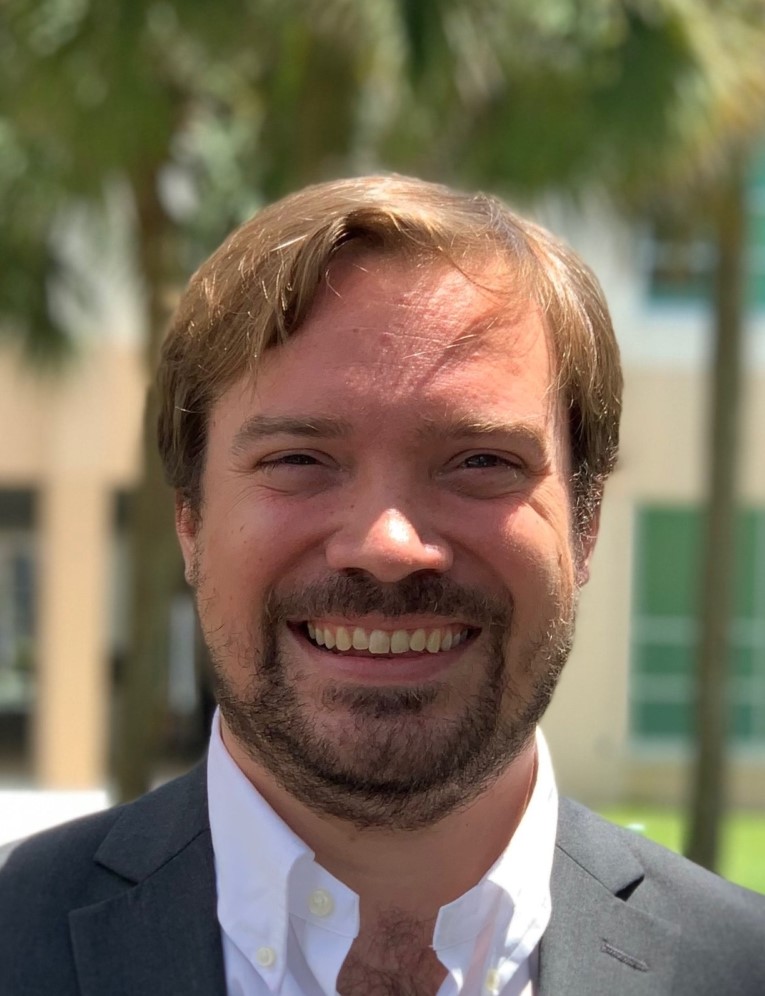
William Edward Hahn is an Associate Professor in the Department of Mathematics and Statistics at Florida Atlantic University (FAU), where he co-directs the Machine Perception and Cognitive Robotics Laboratory (MPCR) and the FAU AI Sandbox. His research bridges mathematical theory with practical AI applications across diverse domains including finance, healthcare, and robotics. Dr. Hahn's academic foundation: Ph.D. in Complex Systems, Florida Atlantic University (2016) B.S. in Physics and Mathematics, Guilford College (2008) His core research integrates: Compressed Sensing & Sparse Modeling : Developing efficient signal reconstruction algorithms with applications in medical imaging and data analysis. Deep Learning & Machine Learning : Creating neural network architectures for financial forecasting, drug discovery, and autonomous systems. Computer Vision & Computational Neuroscience : Modeling human perception through gait analysis and biomimetic systems. Analysis of his 2018-2022 publications reveals a strategic evolution from theoretical sparse coding to applied deep learning. Key trends include bio-inspired modular architectures for general learning, transformer networks for molecular binding prediction, and GANs for robotic telesurgery. His work consistently addresses real-world challenges in substance abuse monitoring, financial markets, and medical robotics through interdisciplinary approaches. As co-director of the MPCR Lab and FAU AI Sandbox, Dr. Hahn leads initiatives that merge cognitive science with machine perception, providing critical infrastructure for AI experimentation and education while advancing the frontiers of human-robot interaction and computational neuroscience.
Qingshan Liu is a faculty member at the Nanjing University of Information Science & Technology, School of Information and Control. His research focuses on computer vision, pattern recognition, remote sensing, and artificial intelligence, with specialized applications in satellite imagery analysis, LiDAR processing, and spatiotemporal modeling. Dr. Liu has contributed significantly to neural network architectures for video analysis, 3D segmentation, and domain adaptation techniques. His recent work demonstrates strong engagement with deep learning approaches for environmental monitoring and geospatial analysis, including precipitation nowcasting systems, change detection in remote sensing data, and crowd counting methodologies. Publications show consistent innovation in transformer networks, generative adversarial models, and multimodal learning frameworks applied to real-world problems in urban computing and autonomous systems.
Jerry Zeyu Gao is a Professor at San Jose State University's College of Engineering, Department of Computer Engineering. He has affiliations with institutions like University of Auckland, University of Melbourne, and Xi'an Jiaotong University, reflecting a global research network. PhD in Computer Science and Engineering from University of Texas at Arlington (1995) Research focus: Software testing, AI, machine learning, and smart systems His research spans AI testing , mobile application quality assurance , and big data analytics for smart cities. Recent work includes autonomous vehicle testing , drone-based security systems , and encryption technologies . Publications highlight GUI testing , environmental data modeling , and reinforcement learning applications. Key trends include machine learning in test automation , smart city infrastructure , and data-driven environmental solutions . He has served as General Chair for IEEE CISOSE conferences and contributed to AI quality standards. His work involves collaborations with researchers across institutions, focusing on security , data quality , and urban sustainability . Notable projects: smart OCR testing , EV charging infrastructure analysis , and automated graffiti detection .
William Robert Norris is a Research Professor and Clinical Associate Professor in the Department of Industrial and Enterprise Systems Engineering at the University of Illinois at Urbana-Champaign (UIUC). He is the Founding Director of the Center for Autonomous Construction and Manufacturing at Scale (CACMS) and an affiliate in multiple departments, including Mechanical Science and Engineering, Electrical and Computer Engineering, and the Coordinated Science Lab. His expertise spans robotics, control systems, and autonomous systems, with a focus on machine learning, decision analysis, and adaptive systems. Education: Norris holds a Doctor of Philosophy (2001), Master of Business Administration (2007), and two Master of Science degrees (1997, 1996), all from UIUC, with concentrations in Control Theory, Robotics, and Systems Engineering. Research Interests: His work emphasizes optimal machine design, decision analysis, machine learning (including deep learning and reinforcement learning), adaptive systems, and control theory. He has pioneered advancements in autonomous vehicle navigation, sensor fusion, and robotics applications in construction and agriculture. Professional Highlights: Norris led the development of the first large-scale autonomous vehicle from concept to deployment. His contributions include innovations in Kalman filtering, fuzzy logic control, and autonomous system architectures. He has authored over 100 publications, including peer-reviewed journal articles and conference proceedings. Awards: Dean's Award for Early Innovation (2024), Robert A. Jewett Endowment (2020), William A. Chittenden Award (1998). Labs/Teams: My Lab, Center for Autonomy, Coordinated Science Lab (CSL), Discovery Partners Institute (DPI). Grants/Consulting: Active collaborations with the US Army Corps of Engineers, Deere & Company, and startups like Robust Smart Control Solutions LLC.
Elahe Arani is an Assistant Professor in the Department of Mathematics and Computer Science at Eindhoven University of Technology. She also holds external positions as Head of AI Research at Wayve (since October 2023) and previously served as Senior AI Manager and Senior Research Scientist at Wayve from September 2020 to September 2023. Her research interests are centered around Continual Learning, Self-Supervised Learning, and Learning under Noisy Labels. She focuses on developing algorithms for efficient, reliable, and adaptable AI models, particularly in the context of Scene Understanding and Multi-Task Learning. Her work also explores the application of AI in Autonomous Vehicles and integrates insights from Neuroscience to design more biologically plausible AI systems. Key areas include improving generalization in neural networks, mitigating catastrophic forgetting, and leveraging shape-awareness for robust model training. Elahe Arani's recent publications highlight advancements in Continual Learning and Self-Supervised Learning techniques, with a focus on improving model efficiency and adaptability. Her work also delves into applications for Autonomous Vehicles, such as vision-language alignment in SimLingo and generative world models in Gaia-2. She has contributed to frameworks addressing catastrophic forgetting and neural network optimization, often combining biological plausibility with computational methods. No scientific awards are explicitly mentioned in the provided text. No supervised students or specific grant information is listed. Her research emphasizes practical applications and theoretical contributions to AI, with a notable focus on reducing data dependency and environmental impact through efficient model designs. While no specific lab or team names are mentioned, her research involves collaborations in AI-driven systems, including work on road maintenance inspection and autonomous driving technologies. These collaborations aim to bridge academic and industry applications of AI.
Parag Batavia is an Adjunct Instructor at Carnegie Mellon University's Robotics Institute. He is a roboticist and entrepreneur with extensive experience spanning both academia and industry. His career includes roles as CEO and Founder of Neya Systems, Director of Projects and Operations at Applied Perception Inc. (API)/QinetiQ North America, and Commercialization Specialist at CMU's National Robotics Engineering Center. Dr. Batavia earned his PhD from Carnegie Mellon University's Robotics Institute in 1999 with a dissertation on "Driver Adaptive Lane Departure Warning Systems." His interest in robotics began during high school in the late 1980s while working with Hero Heathkit robots, setting him on a trajectory toward his current career. Dr. Batavia's research focuses on robotics, particularly off-road autonomy and manned/unmanned teaming. His work addresses the unique challenges of outdoor navigation in difficult terrains where traditional rules of the road don't apply. He has developed expertise in path planning, obstacle detection, and sensor fusion for autonomous systems operating in environments ranging from construction sites to military applications. His approach emphasizes practical solutions for real-world robotic navigation challenges across diverse outdoor conditions. Dr. Batavia's publication record spans from 1998 to 2013, showing a clear evolution from automotive safety systems to broader robotics and autonomy applications. His early work focused on lane departure warning systems, while his later research shifted toward off-road autonomy, path tracking in challenging environments, and robotic systems for military applications like the CANINE robotic mine dog. Developed extremely high accuracy path tracking systems (2-3 cm precision) for hydrostatic skid-steer platforms and automated golf course mowers Created autonomy solutions for the Family of Integrated Rapid Reconnaissance Equipment (FIRRE) program for the Army Built a full autonomy software stack at API, including low-level drivers, path planning, and perception systems Pioneered technology for manned/unmanned teaming, enabling robots to follow soldiers and participate in military formations Dr. Batavia founded Neya Systems in 2009, growing it into a successful robotics company that was acquired in 2017. His entrepreneurial journey demonstrates a successful transition from academic research to commercial application of robotics technologies. He currently shares his industry experience as an Adjunct Instructor at CMU, bridging the gap between academic theory and real-world robotics applications. Dr. Batavia is associated with the CMU Center for Autonomous Vehicle Research, where his expertise in off-road autonomy and manned/unmanned teaming continues to influence research directions. His industry experience provides valuable perspective for students interested in both the technical and business aspects of robotics innovation.
Dr. Sean Seok-Chul Kwon is a Tenured Associate Professor in the Department of Electrical Engineering at California State University, Long Beach's College of Engineering. He founded and directs the Wireless Systems Evolution Laboratory (WiSE Lab) since Fall 2017, leading research in next-generation wireless systems. His research spans 6G wireless design , machine learning applications for communications, polarization diversity , and body area networks . Current projects focus on AI-driven solutions for wireless channel modeling, federated learning in UAV networks, and polarization-reconfigurable systems. His work bridges theoretical innovation with industry applications through collaborations with Intel, DARPA, NSF, and the US Army. Kwon's publication portfolio shows consistent advancement from polarization channel modeling (2010-2015) to cutting-edge AI-integrated wireless systems (2021-2025), with recent emphasis on interpretable transformers, NOMA optimization, and energy-efficient aerial data delivery. His research trajectory demonstrates progression from foundational channel studies to leadership in 6G-enabling technologies. Award highlights include: 5 IEEE Best Paper Awards Intel Invention Disclosure Awards Multiple TPC Service recognitions As an educator, Kwon advises graduate students through the WiSE Lab and teaches core EE courses. His industry experience at Intel (2015-2017) and Pantech (2001-2004) informs practical curriculum development. Current grants involve Department of Navy, NSF, and aerospace partnerships focused on next-generation wireless standards. The WiSE Lab serves as an innovation hub for wireless research, collaborating with federal agencies and industry on polarization-reconfigurable systems, UAV networks, and 6G standardization efforts.
Sudip Dhakal is an Assistant Professor in the Department of Computing & Software Engineering at Florida Gulf Coast University's U.A. Whitaker College of Engineering. His research focuses on autonomous systems, computer vision, and AI applications in robotics. He specializes in 3D object detection, real-time motion planning, and cybersecurity for autonomous vehicles. Key research areas include facial emotion recognition using CNNs, sensor fusion for object detection (e.g., Camera-LiDAR integration), and privacy-preserving technologies for vehicular systems. His work addresses challenges like sparsity in 3D data, dynamic environment adaptation, and threat modeling for autonomous driving safety. Publications emphasize cutting-edge solutions in autonomous vehicle motion planning, privacy protection mechanisms, and open-source approaches to self-driving systems. Recent work (2023-2025) highlights advancements in real-time algorithms, differential privacy applications, and multi-modal sensor fusion frameworks. No scientific awards are explicitly listed. Advising and grant details are not provided in available texts. His affiliation with the Whitaker College positions him within a robust engineering research ecosystem focused on innovation in computing and software systems.
Dr. Khalid Elgazzar is an Associate Professor and Canada Research Chair in the Internet of Things (IoT) at Ontario Tech University's Faculty of Engineering and Applied Science. He holds a PhD in Computer Science from Queen's University and has expertise in IoT, AI, Big Data, distributed systems, and mobile computing. His research bridges physical infrastructure with technological innovations, with applications in healthcare, transportation, and smart cities. Education: PhD in Computer Science, Queen's University, 2013 MSc in Computer Engineering, Arab Academy for Science and Technology, 2007 BSc in Computer and Communication Engineering, Alexandria University, 1995 Research Interests: Dr. Elgazzar focuses on IoT architectures, real-time data analytics, and edge computing, with emphasis on cybersecurity, smart healthcare systems, and transportation safety. His work integrates AI techniques like deep learning and reinforcement learning to address challenges in distributed computing and sensor networks. Awards: Best Paper Award at IEEE/ACM International Conference on Utility and Cloud Computing (2013) Outstanding Achievement in Sponsored Research Award (2017) Queen's School of Computing Distinguished Research Award (2014) Grants & Labs: Recipient of a Canada Research Chair Tier II (2018-present). He leads the IoT Research Lab, advancing projects like real-time ECG monitoring systems and intelligent traffic prediction models. Collaborations include institutions like Carnegie Mellon University and IBM Canada. Teaching: Design and Analysis for IoT Software Systems (SOFE 4610U) Real-Time Data Analytics for IoT (ENGR 5785G) Introduction to Programming for Engineers (ENGR 1200U)
Dr. Sandesh Athni Hiremath is a Researcher at the Department of Mechatronics in Mechanical Engineering and Vehicle Technology at RPTU Kaiserslautern-Landau, affiliated with the Chair of Mechatronics (MEC). He holds a PhD in Mathematics from TU Kaiserslautern (2015) and a Master's in Informatics from the same institution. His research focuses on stochastic processes, partial differential equations (PDEs), optimal control, computer vision, and multiscale mathematical modeling. He has professional experience as an algorithm developer at Valeo Schalter und Sensoren in Germany. His work spans interdisciplinary areas including mathematical biology (cancer invasion modeling), control systems, and autonomous driving technologies. Recent contributions include PDE-based depth estimation for fisheye cameras and resilience analysis in industrial control systems. His publications integrate theoretical frameworks with practical applications in robotics, computer vision, and biomedical systems. Research highlights include developing stochastic models of acid-mediated tumor invasion and exploring optimal control strategies in dynamic systems. He collaborates with institutions like TU Kaiserslautern and international conferences (IEEE, ICCSA). Current interests align with advancing multiscale modeling and real-world applications in mechatronics and vehicle technology.