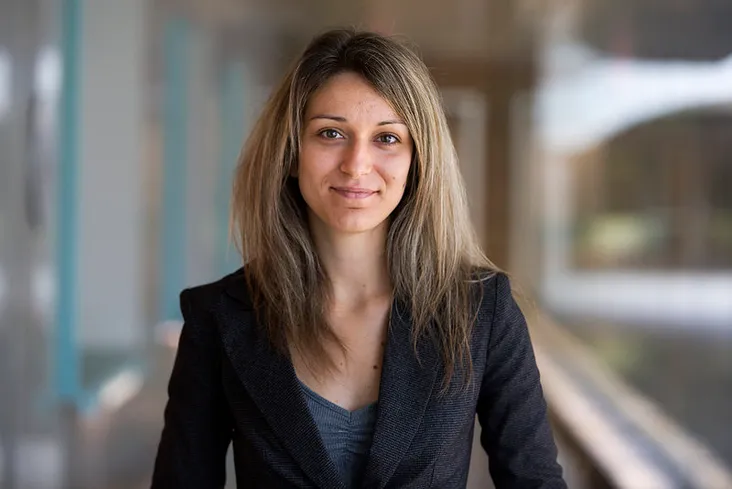
Dr. Ikram Ur Rehman is an Associate Professor of Computer Science and Course Leader for MSc Health Informatics at the School of Computing and Engineering, University of West London. He is actively engaged in research, teaching, and academic leadership, with a strong publication record in mobile healthcare, AI in education, and smart cities. His research interests span Mobile Healthcare (mHealth) , Telehealth , AI-Driven Adaptive Learning , Smart Cities , Assistive Technologies , and Quality of Experience (QoE) in Medical Video Streaming . He applies AI, VR/AR, and data analytics to enhance educational accessibility and effectiveness, particularly for people with disabilities. His recent publications (2021–2024) reflect a strong focus on AI in healthcare and education , including emotion detection in online learning, intelligent tutoring systems, assistive technologies for autism and disabilities, UAV-based telemedicine, and 6G for mHealth. His work bridges technical innovation with real-world societal impact. Dr. Rehman supervises PhD students and contributes to a wide range of undergraduate and postgraduate programs, including BSc and MSc degrees in Computer Science, Cyber Security, Data Science, and Health Informatics.
Dr. Abubakar Bala is a Senior Lecturer at the Malaysia School of Business, Monash University. His research focuses on artificial intelligence (AI), machine learning, and their applications in cybersecurity, edge computing, environmental engineering, and optimization algorithms. He actively contributes to the UN Sustainable Development Goals (SDGs), particularly in sustainable resource management and innovation. His work spans diverse domains such as drone detection via machine learning, AI-driven machine maintenance, and hybrid desalination plant optimization using deep learning. He has collaborated internationally on projects addressing cyber-physical systems security, multi-object tracking, and cloud computing efficiency. Publications highlight a trend toward applying metaheuristics in reservoir computing and neural networks, alongside optimizing industrial processes like virtual machine placement and fault prediction in aviation engines. His research also emphasizes energy efficiency, security protocols for IoT/drone systems, and Six Sigma methodologies in plant analytics. No scientific awards or formal advisees are explicitly listed. His work bridges theoretical advancements with practical applications in engineering and computer science.
Luis Usero Aragonés is a Professor at the Department of Computer Science at Universidad de Alcalá (UAH). He is affiliated with research groups including CSRG-UAH (Cognitive Science Research Group) and previously HCIS (Health computing and Intelligent Systems). His research focuses on computational intelligence applied to wildfire prevention, computer vision technologies, and educational software development. He holds a PhD from UAH on computational intelligence techniques for monitoring forest fuel moisture using satellite imagery. His academic background includes work in neural networks, machine learning, and cloud governance frameworks for higher education institutions. Notable contributions include development of the LearningRlab educational R package, drone detection algorithms using thermal imaging, and outlier detection models for wind tunnel sensor data. Publications span topics such as semi-supervised video segmentation, R package comparisons for text mining, and trust models in e-commerce systems. His research integrates contextual information analysis for applications in health informatics, aviation systems, and library user guidance.
António Cunha is an Assistant Professor at the University of Trás-os-Montes and Alto Douro (UTAD), affiliated with the Department of Engineering. He holds a doctorate from UTAD (2005) and has been a senior researcher at the Center for Research in Biomedical Engineering (C-BER/INEC-TEC) since 2014. His research focuses on medical and biological image analysis, computer vision, and machine learning, particularly in developing CAD tools for applications like CT imaging and endoscopic videos. Key research areas include medical imaging analysis (e.g., retinography, endoscopy), deep learning for disease detection (e.g., glaucoma, fatty liver disease), and agricultural applications (e.g., grapevine classification using drones and neural networks). He actively participates in biomedical projects and collaborates on datasets like MedShapeNet. His work bridges computer science and healthcare, emphasizing practical clinical integration. Publications emphasize medical AI applications, dataset development, and algorithmic innovation in low-resource imaging scenarios. He explores techniques like GANs for data augmentation, transformer architectures for image classification, and active learning for pathology detection. His contributions span both technical advancements and real-world healthcare challenges.
Dr. Oluyomi Simpson is a Principal Lecturer and academic lead of the Communications Lab at the University of Hertfordshire's School of Physics, Engineering & Computer Science. He specializes in wireless communication systems, with a focus on 5G/6G, physical layer security, and machine learning integration. His research also encompasses cognitive radio networks, RFID technologies, and RF energy harvesting. Simpson has over 50 publications and serves as an Associate Editor for IEEE Communications Letters. Education: PhD in Communications and Electronics Engineering from the University of Hertfordshire (2011). Research Interests: His work spans interdisciplinary applications in wireless communication systems, including next-generation multiple access, near-field sensing, and STARS (Simultaneously Transmitting and Reflecting Surfaces). He emphasizes practical industry applications in telecommunications, manufacturing, and healthcare. Projects: Advanced Telematics and RFID Systems for Asset Monitoring in Emergency Medical Services (2025–2027) RFID System for Sample Management (2021–Present) Asset Monitoring via Coaxial Cable Strain Sensing (2025) Grants & Funding: Supported by ERDF, Innovate UK, and the Niger Delta Development Commission (NDDC). Labs & Teams: Leads the Wireless and Mobile Communication Lab, focusing on 6G research and collaborative projects with industry partners.
Dimitra Panagou is an Associate Professor with the Department of Robotics and the Department of Aerospace Engineering at the University of Michigan. She directs the Distributed Aerospace Systems and Control Laboratory (DASC Lab) located in the Ford Robotics Building, where she leads research in safe and resilient autonomy for robotic systems. Her research interests focus on motion planning, coordination and control of robotic networks, autonomous multi-vehicle systems, nonlinear systems and control, navigation and guidance, distributed/decentralized control, and dynamic coverage. Professor Panagou's work emphasizes the development of planning, learning and control methods to address real-world, safety- and time-critical problems through provably correct solutions. Her research spans nonlinear systems, decision making under constraints and uncertainty, estimation and learning, mission planning, and networked control systems with applications across aerial, ground, marine, and space domains. Professor Panagou's recent publications (2024-2025) demonstrate a strong focus on control barrier functions, safety-critical control, resilient multi-robot systems, and risk-aware navigation. Her work bridges theoretical foundations with practical applications in autonomous systems, with particular emphasis on providing mathematical guarantees for safety and performance. The research spans multiple domains including aerial vehicles, marine systems, and ground robotics, addressing challenges in uncertain environments and under various constraints. Professor Panagou has received several prestigious awards including: NASA Early Career Faculty Award AFOSR Young Investigator (YIP) Award NSF CAREER Award IEEE TCAC Best Student Paper Award (for work from her lab) She has been invited to deliver a plenary talk at CDC 2024 and a keynote talk at ICRA 2025, highlighting her prominence in the control and robotics communities. Her research is supported by multiple grants from agencies including NASA, NSF, and AFOSR. The Distributed Aerospace Systems and Control Laboratory (DASC Lab) is equipped with state-of-the-art facilities including a fleet of UAVs (Hummingbirds, Firefly, and Solos), a high-precision motion capture system with 14 VICON cameras, drone LiDAR, and various sensors. The lab conducts both indoor and outdoor flight experiments, with permission for outdoor flights over the Wave Field at the University of Michigan's North Campus.
Neal Snooke is a Lecturer in the Department of Computer Science at Aberystwyth University. His research focuses on Artificial Intelligence, model-based reasoning, temporal logic, and software analysis, with applications in UAV technology for environmental monitoring and failure analysis. He maintains the Marking Scheme and Feedback tool and has contributed to over 34 publications since 1997. Snooke has led projects such as the 2011–2014 EADS-funded study on Model Driven Architecture failure analysis. Education: PhD (Wales), BSc. Research Interests: Snooke’s work integrates AI with practical systems like UAVs for ecological tracking, glacier monitoring, and vegetation analysis. His recent studies include low-cost animal tracking systems and high-resolution ice sheet photogrammetry. Publications: Over 30 peer-reviewed articles since 1997, with recent emphases on UAV applications, environmental modeling, and failure mode analysis. Key areas include UAV-based ice sheet dynamics and vegetation classification. Grants/Projects: PI of the 2011–2014 EADS Innovation Works project on Model Driven Architecture failure analysis. Personal: Enjoys kite surfing, mountain biking, and FPV drone building.
Huaizhong Zhang is a Senior Lecturer in Computer Science affiliated with the Computer Science Health Research Institute. His research focuses on machine intelligence, medical image processing, and computer vision with applications in healthcare, agriculture, and urban analytics. He leads projects on early diagnosis of Parkinson’s Disease Dementia, hyperspectral land management strategies, and traffic scene analysis using bipartite graphs. His work integrates deep learning techniques with domain-specific challenges such as imbalanced datasets and real-time processing. Research interests span medical imaging (e.g., OCT vessel segmentation, retinal topology), agricultural technology (3D wheat part segmentation, crop cultivar analysis), and traffic systems (vehicle detection via drones, graph modeling). His contributions include open-source tools like the mzqLibrary for proteomics data and novel algorithms like SSP-Regularizer for shape-based segmentation. Labs: Visual Computing Lab, Data and Complex Systems Research Centre, Data Science STEM Research Centre Grants: 5 projects including Early Diagnosis on PDD (2022-2023), Hyperspectral Imagery Analytics (2020-2021), and Thales-Challenge Low-Pixel Target Detection (2016-2017) Advising: Supervised 2 research projects involving PhD students in machine learning and medical imaging
Rita Cunha is an Associate Professor at the Institute of Systems and Robotics (ISR) within the University of Lisbon. Her academic role includes teaching courses such as Introduction to Robotics, Signals and Systems, and Control Engineering. Her research focuses on advanced robotics and control systems, with particular emphasis on multirotor drones, formation control, trajectory planning, and autonomous systems. She has contributed significantly to the development of control strategies for unmanned aerial vehicles (UAVs), sensor-based navigation, and distributed multi-agent systems. Her work integrates theoretical control methodologies with practical applications, addressing challenges in aggressive drone maneuvers, collision avoidance, and sensor network deployment for wildfire surveillance. She leads research in collaborative robotics, including multi-drone cinematography and cooperative load transportation systems. Her contributions span both algorithm design and experimental validation, leveraging tools like the Pegasus simulator and physics-informed neural networks. Key Research Areas: Autonomous Systems, Aerial Robotics, Formation Control, Trajectory Optimization, Sensor Networks Teaching: Introduction to Robotics, Control Systems, Signals and Systems Labs/Teams: ISR (Institute of Systems and Robotics) - active in UAV control and autonomous systems research Her over 50 publications since 2013 demonstrate sustained innovation in robotics control, with recent emphasis on high-order consensus algorithms, adaptive control under uncertainties, and real-time trajectory generation for confined spaces. Current projects include LiDAR-based autonomous inspection systems and distributed mission execution frameworks for aerial cinematography.
Carl Chalmers is a Senior Lecturer in Machine Learning and Applied Artificial Intelligence at the School of Computer Science and Mathematics, Liverpool John Moores University, since October 2018. He holds a PhD in Computer Science (2014-2017) and a BSc (Hons) Computer Science (2010-2014) from the same institution.
Jane L. E is a postdoctoral researcher at Stanford HAI in Computer Science, mentored by James Landay, and an Adjunct Assistant Professor in Computer Science at the National University of Singapore (NUS). She will join NUS School of Computing as an Assistant Professor in Fall 2025 and is actively recruiting PhD students. She is also affiliated with the Smart Systems Institute at NUS. Education: PhD in Computer Science, Stanford University (advised by James Landay and Pat Hanrahan) Postdoctoral Fellow, The Design Lab @ UCSD (mentored by Haijun Xia and Steven Dow) Her research lies at the intersection of human-computer interaction, computer graphics, and artificial intelligence. She focuses on designing computational tools that support novices in developing creative expertise, drawing from cognitive science and education theory. Her work emphasizes scaffolding artistic vision and enhancing creative learning through AI-augmented tools. The 15 most recent publications reflect a consistent trajectory in creative AI tools, design education, and interactive systems. Key themes include timing of feedback in design, AI-supported creativity, and tools for visual composition and storytelling. Her work integrates qualitative user studies with technical innovation, often resulting in deployable systems with real-world impact. Scientific Awards: Best Paper Award at CHI 2023 for 'DataParticles' UCSD CSE Undergraduate Research Award (awarded to advised student Mingyi Li) Jane L. E has advised multiple students including Mingyi Li, Grace Yen, Tone Xu, and Rima Cao. She has received recognition through speaking invitations at institutions such as University of Toronto, NUS, USC, Tsinghua, and UC Berkeley. While no formal grants are mentioned, her research has been conducted at prestigious labs including Stanford HAI, The Design Lab @ UCSD, and Stanford’s HCI group. She is building a strong research program focused on human-centered AI for creativity. Labs and Affiliations: Stanford HAI (current postdoc) The Design Lab @ UCSD (past postdoc) Smart Systems Institute @ NUS (affiliate)
Dr. Xiao Zhang is an Assistant Professor in the Department of Computer and Information Science at the University of Michigan-Dearborn's College of Engineering and Computer Science. He leads the Trustworthy AIoT Lab (TAI Lab) and advises the Immersive Computing Club. Previously, he was a Postdoctoral Associate at Duke University and holds a Ph.D. from Michigan State University, M.S. from Northwestern Polytechnical University, and B.E. from Taiyuan University of Technology. Education: Ph.D. in Computer Science and Engineering - Michigan State University M.S. - Northwestern Polytechnical University B.E. with Honors - Taiyuan University of Technology Dr. Zhang's research focuses on next-generation wireless systems with emphasis on mobile computing, AIoT, cyber-physical systems, and AI-assisted sensing/localization. His work explores spatial-temporal diversities in Optical Wireless Communication (OWC) to enable secure, location-aware communication for IoT and human-centered computing. Applications include LiFi, V2X networks, underwater navigation, digital health, smart cities, HCI, and AR/VR. Recent publications demonstrate a strong focus on optical communication systems (OWC, LiFi), drone technology, IoT security, and AI-assisted sensing. Trends include innovations in 3D optical connections, adversarial defense for audio systems, radar-based point cloud generation, and federated learning solutions for heterogeneous IoT environments. Awards & Grants: 2025: IHP Research Engagement, OE Review/Creation Grants, Creative Teaching Fund 2024: NSF I-Corps, RAG Grant 2023: Dissertation Fellowship (MSU) 2022: Travel Fellowship (MSU) 2019-2023: Multiple Graduate Fellowships 2016-2018: Postgraduate Scholarships 2013-2015: National/University Scholarships Dr. Zhang advises 10+ students across multiple levels including PhD candidate Deniz Acikbas, MS students Ashwin Sarvadey, Jaskirat Sudan, Rohit Raval, and Nishaant Madhankumar, and undergraduate researchers including NSF STEM Scholars Christian Nwobu, Fatima Qasem, and Fatima Mohammed. His TAI Lab focuses on trustworthy AI-driven IoT systems.
Marco Esposito is a Visiting Fellow at Cornell University's School of Integrative Plant Science (Soil and Crop Sciences Section) and a Postdoctoral Associate at Sant'Anna School of Advanced Studies of Pisa. His research integrates agroecology and technology to develop sustainable weed management systems that reduce chemical inputs while maintaining crop productivity. Education: Ph.D. in Sustainable Agricultural and Forestry Systems & Food Security, University of Napoli Federico II (2023) M.S. in Agricultural Science & Technology, University of Napoli Federico II (2019) B.S. in Agricultural, Forestry, Environmental Sciences, University of Napoli Federico II (2017) His work centers on non-detrimental weed communities and ecological crop-weed interactions , leveraging AI, robotics, and RNAi to manipulate weed composition. Key goals include reducing pesticides and tillage to enhance soil health, biodiversity, and water availability—addressing critical challenges in climate-resilient agriculture. Recent publications (2020-2024) reveal a strong focus on precision agriculture (drone-based weed detection, AI algorithms), stress physiology (salt/drought tolerance mechanisms), and agroecological innovations (neutral weed communities, circular economy systems). His interdisciplinary approach bridges ecological theory with engineering solutions for sustainable farming. No scientific awards or fellowships are documented in available sources. As a postdoctoral researcher, Dr. Esposito contributes to collaborative projects under principal investigators but has no documented doctoral advisees. His work involves partnerships with engineering teams on AI-driven weed management systems, indicating active grant-supported research. He operates within the DiTommaso Lab at Cornell (specializing in soil-crop-weed dynamics) and the Agroecology Group at Sant'Anna School of Advanced Studies, focusing on translational research for real-world agricultural sustainability.
Professor Barbara Bollard is a distinguished academic at the University of Wollongong with over 20 years of experience in computational conservation and remote sensing. She is recognized as a leader in the field, particularly for her innovative use of drone technology for ecosystem mapping and monitoring, with special emphasis on Antarctic environments. Her research interests span multiple domains within environmental science and technology: Computational conservation methodologies Remote sensing applications for ecosystem monitoring Drone technology for environmental data collection Machine learning applications in ecological research Antarctic and polar ecosystem studies Conservation of fragile ecosystems Professor Bollard's publication record demonstrates a strong focus on applying cutting-edge drone technology and artificial intelligence to monitor and conserve vulnerable ecosystems, particularly in Antarctica. Her work bridges the gap between technological innovation and practical conservation applications, with numerous publications on drone-based monitoring of moss communities, lichen distribution, and other fragile Antarctic vegetation. Her research has significant implications for understanding climate change impacts on polar environments. Among her notable achievements is the leadership of the major ARC-funded project "Securing Antarctica's Environmental Future" which runs from 2021-2030, demonstrating her standing as a key researcher in Antarctic environmental science. Professor Bollard is actively involved in mentoring the next generation of researchers, currently supervising PhD students working on: Remote sensing and conservation of Antarctic moss communities Using remote sensing and hydrological mapping to determine water availability for nonvascular plants in Antarctica
Selwin Hageraats is a Researcher at Wageningen University & Research, specializing in Robotics and Automation within greenhouse horticulture. His work focuses on integrating computer vision, digital twin technology, and automated phenotyping to optimize crop cultivation. Research Interests His research spans agricultural robotics, digital agriculture, and plant science, with specific contributions to: Autonomous farming platforms and precision horticulture Computer vision for crop monitoring and phenotyping Digital twin applications in tomato cultivation Non-invasive measurement techniques for plant physiology Deep learning and sensor fusion in agricultural systems Technological solutions for greenhouse pest and disease detection Research Output Active in developing automated systems for tomato growth analysis and perennial ryegrass phenotyping, Hageraats has pioneered camera-based parameter tracking and mobile segmentation algorithms. His work bridges theoretical models with practical greenhouse automation, emphasizing data-driven cultivation strategies.