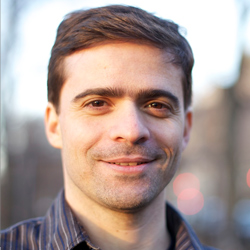
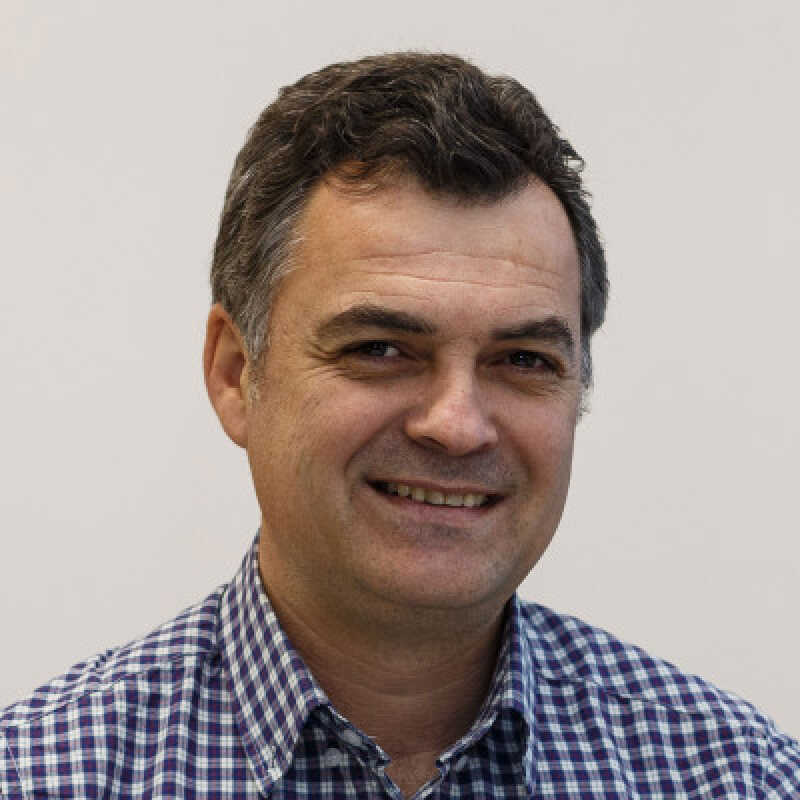
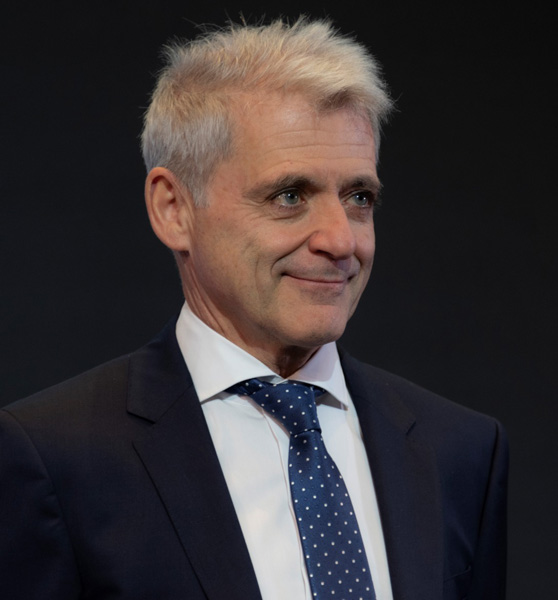
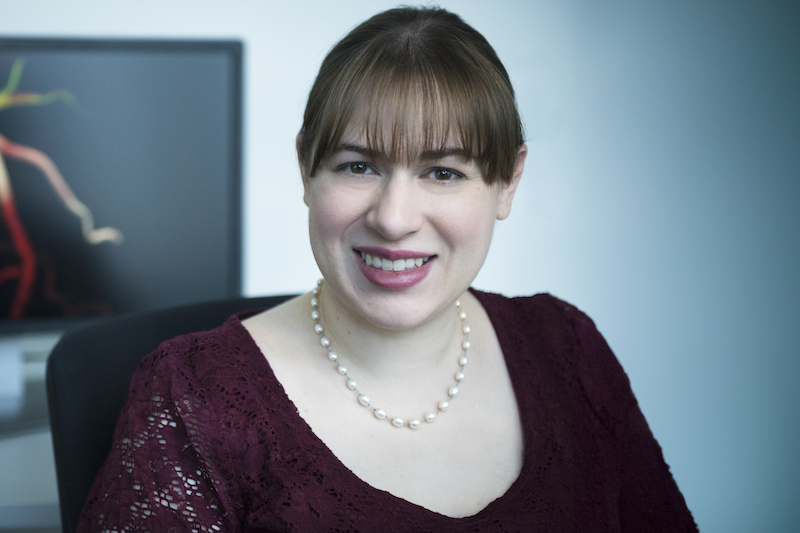
Ann B. Lee is a Professor and Co-Director of the PhD Program in Statistics at Carnegie Mellon University , with a joint appointment in the Department of Statistics & Data Science and the Machine Learning Department. Prior to joining CMU, she held positions as a J.W. Gibbs Assistant Professor at Yale University and a visiting research associate at Brown University. PhD in Physics, Brown University MSc/BSc in Engineering Physics, Chalmers University of Technology, Sweden Her research focuses on statistical methodology for complex data in the physical sciences , emphasizing trustworthy inference, uncertainty quantification, and integration of classical statistics with machine learning. Recent work includes likelihood-free inference, calibrated forecasting, and diagnostics for generative models. The STAMPS research group , which she co-founded in 2018, hosts weekly meetings and public webinars. In Fall 2024, STAMPS will transition into a CMU Research Center. Recent publications span likelihood-free inference , climate modeling , and astronomy . Notable collaborations include applications to hurricane intensity guidance , galaxy redshift estimation , and cosmological parameter biases . She mentors PhD students and has advised multiple award-winning researchers, including ASA Best Student Paper Award winners. Her teaching includes advanced courses on probability, regression, and AI for climate sciences.
Aviad Levis is an Assistant Professor at the University of Toronto's Department of Computer Science, starting July 2024. He is affiliated with the Dunlap Astronomical Data Science and Technology Group (DADDAA) and collaborates with the Toronto Computational Imaging Group alongside Kyros Kutulakos and David Lindell. Previously, he was a postdoctoral researcher at Caltech's Computing + Mathematical Sciences department under Katherine Bouman, working with the Event Horizon Telescope (EHT) collaboration. PhD in Electrical Engineering from the Technion (supervised by Yoav Schechner) Research focuses on computational imaging tools at the intersection of AI and physics Develops algorithms for 3D tomography in both cloud physics and black hole imaging Recipient of ERC Synergy grant for CloudCT space mission His research spans two major domains: Computational Climate Imaging through cloud tomography to improve climate models, and Black Hole Imaging with the EHT collaboration. He pioneered methodologies for 3D cloud structure recovery using scattered sunlight and contributes to dynamic 3D reconstructions of black hole environments. Current interests include non-linear inverse problems, equation discovery from data, and ML-accelerated scientific simulations. Recent publications highlight advancements in atmospheric tomography and black hole emission modeling. His work on CloudCT involves coordinated nano-satellites for 3D cloud imaging, while EHT contributions include first images of Sagittarius A* (2022) and ongoing development of algorithms for 3D structure recovery. The ERC Synergy grant underscores his impact on climate imaging technology. Personal Website Work Email
Oliver S. Cossairt is an Adjunct Associate Professor at Northwestern University's departments of Computer Science and Electrical and Computer Engineering. He leads the Computational Photography Lab , focusing on computational imaging, optics, and display technologies. His work bridges computer vision, graphics, and optical engineering to design novel imaging systems with applications in medical, astronomical, and scientific domains. Education: Ph.D. Computer Science, Columbia University (2011) M.S. Media Arts and Sciences, MIT Media Lab (2003) B.S. Physics, Evergreen State College (2003) Research Interests: Cossairt develops imaging systems that combine optical innovations with computational methods to enhance performance and functionality. Key areas include computational displays, depth sensing, and high-precision 3D imaging. His work emphasizes practical applications like medical imaging, holography, and non-line-of-sight sensing. Awards: NSF CAREER Award (2015–2020) Best Paper Award at ICCP 2011 NSF Graduate Research Fellowship (2008–2011) Teaching & Funding: Taught courses on computational photography and computer vision. Secured grants from NSF, NIH, and industry partners (e.g., Samsung, Omron) for projects like Coherent Computational Imaging and Snapshot 3D Holographic Microscope . Labs & Teams: Directs the Computational Photography Lab, collaborating with institutions like Argonne National Labs and museums for projects in cultural heritage imaging.
Tamás Budavári is an Associate Professor in the Department of Applied Mathematics and Statistics at Johns Hopkins University (JHU), with joint appointments in Physics and Astronomy and a secondary appointment in Computer Science. He is affiliated with the Whiting School of Engineering and the Institute for Data-Intensive Engineering and Science (IDIES). His research focuses on computational and statistical methods for big data in astronomy and interdisciplinary applications such as urban blight analysis. Education: PhD in Astrophysics (2001), Eötvös Loránd University, Budapest Master’s in Theoretical Physics (1997), Eötvös Loránd University Research Interests: Budavári develops algorithms for handling large astronomical datasets, including Bayesian inference, streaming algorithms, and GPU-accelerated processing. His work includes SkyQuery (an online astronomy data tool), photometric redshift estimation, and cross-matching catalogs. He also applies computational methods to urban planning, such as optimizing strategies to address vacant housing in Baltimore City. Publications & Tools: Budavári’s recent work spans topics like deep learning for astronomical image restoration, combinatorial optimization for urban policy, and probabilistic catalog matching. His tools, such as CUDAHM and NWAY, enable scalable analysis of multi-epoch survey data and N-way catalog cross-identification. Awards & Grants: Recipient of the Gordon and Betty Moore Fellowship and SAMSI Research Fellowship Funded by NSF, STScI, NIH, and others Leadership & Outreach: He serves on the Steering Committee of the 21st Centuries Cities Initiative and is a founding editor of the Journal of Astronomy and Computing. His interdisciplinary work bridges astrophysics, data science, and urban systems.
Prof. Dr. Raphael Sznitman serves as Director of the ARTORG Center for Biomedical Engineering Research and Head of the Artificial Intelligence in Medical Imaging group at the University of Bern, Switzerland, holding a Full Professor position in AI for Medical Imaging since 2015. Education: PhD in Computer Science, Johns Hopkins University (2011) MSc in Computer Science, Johns Hopkins University (2009) BSc in Cognitive Systems, University of British Columbia (2007) Research Interests: Sznitman's work centers on computational vision , probabilistic methods , and statistical learning applied to medical imaging challenges. His group develops AI algorithms for ophthalmic diagnostics, surgical robotics, and medical image analysis, with emphasis on OCT, surgical phase recognition, and domain adaptation techniques. Key application areas include retinal disease detection and cataract surgery automation. Publication Trends: His 2021-2025 publications reveal concentrated efforts in deep learning for medical imaging , particularly in ophthalmology (OCT analysis) and surgical video understanding. Emerging themes include LLM applications for clinical monitoring, unsupervised out-of-distribution detection for surgical safety, and physics-informed AI for multimodal medical data fusion. Research Leadership: As ARTORG Center Director, Sznitman oversees interdisciplinary research bridging computer science and clinical medicine. His group collaborates extensively with Bern University Hospital clinicians on translational projects, securing funding for AI-driven diagnostic tools and surgical assistance systems. Current initiatives focus on real-time intraoperative guidance and spaceflight ophthalmology applications. Laboratory: The Artificial Intelligence in Medical Imaging group operates within ARTORG's dedicated facilities, maintaining partnerships with surgical robotics labs and ophthalmology departments for clinical validation of AI systems. Their work integrates multimodal data streams including OCT, VR perimetry, and surgical video feeds.
Rodrigo Ventura is an Associate Professor at the Department of Electrical and Computer Engineering, Instituto Superior Técnico (IST), University of Lisbon. He is also a senior researcher at the Institute for Systems and Robotics (ISR-Lisbon), leading the Space and Aeronautics thematic line. His research focuses on the intersection of Robotics and Artificial Intelligence, emphasizing human-robot interaction, space robotics, and cognitive architectures. He coordinates the Minor in Space Sciences and Technologies at IST and the MBE on Space Systems for Tecnico+. As Adjoint Faculty at the International Space University (ISU), he contributes to global academic initiatives. His work includes experiments on the International Space Station and participation in analog space missions. Research interests span biologically inspired systems, machine learning, and teleoperation interfaces. Recent publications address reinforcement learning for UAVs, microgravity experiments, and pseudo-haptic feedback for robotic control. He teaches subjects like Artificial Intelligence and Decision Systems, Satellite Engineering, and Autonomous Systems.
Professor David Taubman is a distinguished academic serving as Professor and Deputy Head of School (Research) at the School of Electrical Engineering and Telecommunications (EE&T) at the University of New South Wales (UNSW) in Sydney, Australia. He is also co-director of Kakadu Software Pty. Ltd. and its affiliates Kakadu R&D and Kakadu GPU. With a career spanning over three decades, Professor Taubman has made significant contributions to the field of image and video compression, most notably as the author of the EBCOT coding algorithm adopted in the JPEG2000 international standard. Professor Taubman earned his B.Sc. in Mathematics and Computer Science (1986) and B.E. (Medal) in Electrical Engineering (1988) from the University of Sydney, followed by an M.Sc. (1992) and Ph.D. (1994) in Electrical Engineering from the University of California at Berkeley. His professional journey includes engineering work at the Electricity Commission of N.S.W. (1988-1990), research positions at Hewlett-Packard Laboratories in Palo Alto (1994-1998), and an academic career at UNSW where he progressed from Senior Lecturer (1998-2003) to Associate Professor (2004-2009) and finally to Professor (2009-present). He has held various leadership roles including Head of the EE&T Telecommunications Research Group (2003-2014), Head of the EE&T Signal Processing Research Group (2014-present), Director of Research for the School of EE&T (2011-2016), and Deputy Head of School (Research) since 2017. Professor Taubman's research interests center on image and video compression, with particular expertise in JPEG2000 standards and implementations. His work spans signal processing, wavelet transforms, scalable video coding, motion modeling, and multimedia systems. He has pioneered numerous compression algorithms and frameworks, including the EBCOT coding algorithm that became central to the JPEG2000 standard. His recent research focuses on efficient motion modeling with cuboidal partitioning, learned lifting-based transform structures, and high-throughput implementations of JPEG2000 for video applications. His work bridges theoretical foundations with practical implementations, as evidenced by the commercially successful Kakadu Software tools that have garnered around 500 commercial licensees. Analysis of Professor Taubman's recent publications reveals a consistent focus on advancing compression technologies with particular emphasis on scalability, efficiency, and adaptability. His work spans traditional image compression (JPEG2000 extensions), video coding (cuboid-based partitioning for UHD/360-degree video), and emerging applications (nanopore sequencing data compression). A notable trend is the integration of machine learning techniques with traditional compression frameworks, as seen in his work on learned lifting-based transform structures. His research maintains strong connections to real-world applications across diverse domains including medical imaging, astronomical data processing, and genomic sequencing. IEEE Fellow Engineers Australia Fellow (by invitation) Professor Taubman has served as Associate Editor for the IEEE Transactions on Image Processing for two four-year appointments (2003-2005 and 2010-2013). He has been actively involved in numerous research grants focused on image and video compression technologies, particularly those related to the JPEG2000 standard and its extensions. His work has received significant industry support, reflected in his consultancy with various U.S., Japanese, and Australian corporations. He has also contributed to international standards development as a member of Standards Australia Technical Committee MS-065 (mirroring ISO TC42 on Digital Photography) and as a constitutional member of Standards Australia Technical Committee IT-029 (Coded Representation of Picture, Audio and Multimedia/Hypermedia Information). Professor Taubman co-directs Kakadu Software Pty. Ltd. and its research affiliates Kakadu R&D and Kakadu GPU, which have developed the commercially successful Kakadu Software tools for JPEG2000. His research group at UNSW focuses on advanced image and video compression techniques, with particular expertise in wavelet-based methods, scalable coding, and motion modeling. The group maintains strong industry connections and has contributed significantly to the development and standardization of image compression technologies worldwide.
Dr. Alfred Kume is a Senior Lecturer in Statistics at the University of Kent, affiliated with the School of Mathematics, Statistics and Actuarial Science. He has held this position since 2004 and has been involved in examining processes for the Institute of Actuaries. His research focuses on shape analysis, directional statistics, image analysis, and stochastic geometry. Kume obtained his PhD and postdoctoral training at the University of Nottingham after working as an actuary. He has supervised students including Theodoros Gkolias and Justyn Campbell-White. His work spans statistical methodology applied to astronomy (e.g., stellar light observations, HII regions) and computational statistics (e.g., holonomic gradient methods, clustering algorithms). His publications reflect expertise in probability distributions, algorithm development, and interdisciplinary applications. His office is located in Cornwallis South, Canterbury Campus. Research interests emphasize statistical techniques for shape and directional data, with applications in astronomy and biology. Key contributions include saddlepoint approximations for normalizing constants and statistical clustering methods. His work bridges theoretical statistics with practical problems in astrophysics and actuarial science. Publications highlight trends in statistical methodology (e.g., Bingham/Fisher-Bingham distributions), computational algorithms, and interdisciplinary collaborations. While no specific awards are listed, his extensive publication record and academic roles reflect scholarly recognition. Advising focuses on statistical shape analysis and Bayesian methods, with grants possibly tied to collaborative projects. He is part of research teams analyzing molecular clouds and astronomical phenomena. His lab or team activities are integral to interdisciplinary projects, though specific lab names are not mentioned.
Robert J. Brunner is a Professor at the University of Illinois with primary appointments in the Gies College of Business (Department of Accountancy) and the School of Information Sciences. He holds affiliate roles across multiple departments including Astronomy, Computer Science, and Statistics, as well as research centers like the Beckman Institute and NCSA. His research focuses on applying statistical/machine learning to solve complex problems in astronomy, finance, and large-scale data science. Education: Ph.D. in Astrophysics from Johns Hopkins University (advisor: Alex Szalay). Postdoctoral work at Caltech on the Digital Sky project. Research Interests: Machine learning applications, computational techniques, data management/visualization, and observational cosmology. His work bridges astrophysical data analysis with modern data science methodologies. Recent work includes developing spatio-temporal neural networks for forecasting, evaluating AI-driven financial analysis tools, and planning for the Vera C. Rubin Observatory. He collaborates internationally on large-scale surveys like the Dark Energy Survey and SDSS. Labs/Teams: Leads data science initiatives at the University of Illinois Research Park. Active in interdisciplinary teams at NCSA and Beckman Institute focusing on algorithm optimization and data-intensive research.
Kerri Cahoy is the Sheila Evans Widnall (1960) Professor in MIT's Department of Aeronautics and Astronautics, where she serves as Director of the Small Satellite Collaborative and Head of the Space Sector. Her work bridges electrical engineering and aerospace to advance space-based sensing and communication technologies through nanosatellite platforms. Her academic foundation includes: Ph.D. in Electrical Engineering, Stanford University (2008) M.S. in Electrical Engineering, Stanford University (2002) B.S. in Electrical Engineering, Cornell University (2000) Professor Cahoy's research integrates atmospheric sensing with exoplanet detection , pioneering laser communications and adaptive optics for space applications. She develops autonomy systems for nanosatellites to enable cost-effective Earth observation and astronomical missions, transforming how we study planetary atmospheres and distant worlds through innovative small satellite constellations. Her recent publications (2018-2020) demonstrate consistent focus on optical engineering for space systems, with core themes in CubeSat-based atmospheric tomography, laser communication terminal development, and wavefront correction techniques for exoplanet imaging. These works reveal interdisciplinary convergence of aerospace engineering, optics, and machine learning to solve extreme-environment challenges. Her scientific recognition includes: MIT Committed to Caring Award (2020) AIAA Associate Fellow (2018) MIT Outstanding UROP Mentor (2013) Cornell Co-Op Mentor of the Year (2008) As an educator, Cahoy champions hands-on satellite development through MIT's UROP program, with mentoring philosophy emphasizing technical rigor and mission-driven innovation. Her STAR Lab provides students direct experience in spacecraft design, laser communication testing, and orbital operations while securing research funding from NASA and aerospace industry partners for cutting-edge space technology development. She directs the Space Telecom, Astronomy & Radiation Lab (STAR Lab) and leads the Small Satellite Collaborative, driving projects in laser communication terminals, adaptive optics for space telescopes, and nanosatellite constellations for atmospheric science. These initiatives position MIT at the forefront of miniaturized space instrumentation and autonomous satellite operations.
Brandon A. Jones is an Associate Professor in the Department of Aerospace Engineering and Engineering Mechanics at the University of Texas at Austin. He holds the Charles Elmer Rowe Fellowship in Engineering and leads the Texas Spacecraft Laboratory (TSL) and the Controls, Autonomy, Estimation, and Learning for Uncertain Systems (CAELUS) Laboratory. His research focuses on space situational awareness, spacecraft navigation, and uncertainty quantification, with applications to orbital mechanics, multi-target tracking, and autonomous systems. Dr. Jones received his Ph.D. in Aerospace Engineering from the University of Colorado Boulder and has held roles at NASA Johnson Space Center and as a Research Assistant Professor. He is an Associate Fellow of the AIAA and former chair of the American Astronautical Society's Space Surveillance Technical Committee. His work includes NASA-funded projects like the SCOPE-1 CubeSat mission for terrain-relative navigation and the Crater-based Navigation and Timing (CNT) system for lunar missions. Key research areas include: Multi-source information fusion for space object tracking Machine learning for crater detection and autonomous navigation Uncertainty propagation in cislunar and highly perturbed orbits Event-based sensor systems for harsh-lighting environments Recent achievements include the 2023 W. A. 'Tex' Moncrief Grand Challenge Award and leadership in collaborative projects with NASA, JPL, and academia. His labs emphasize student-driven CubeSat missions and cutting-edge algorithms for space domain awareness.
Professor Wes Armour is a Professor of Scientific Computing at the University of Oxford and serves as the Associate Head of Department for Research in the Department of Engineering Science. He previously directed the Oxford e-Research Centre, an interdisciplinary research center within the Engineering Science Department. With over £31 million secured as PI or Co-I, his work spans supercomputing, signal processing, machine learning, computational fluid dynamics, and protein crystallography. Professor Armour's research focuses on extracting science from data through fundamental challenges in modeling, simulation, and data processing. His work draws from numerical analysis, signal processing, and machine learning to develop technologies enabling future scientific discoveries, particularly for the Square Kilometre Array (SKA) telescope. Key interests include GPU computing, high performance computing, and machine learning applications across diverse domains from radio astronomy to finance. As Director and Principal Investigator of JADE and JADE2, a 700-GPU machine, he established the UK's first national High Performance Computer facility dedicated to advancing Artificial Intelligence and Machine Learning. His research group has pioneered GPU applications across multiple fields, including Square Kilometre Array data processing, protein crystallography, and graphene simulations. Current projects span energy-efficient machine learning, stock price prediction in finance, prime number prediction in cryptography, and multi-modal CCTV data analysis. Professor Armour has been instrumental in developing real-time signal processing techniques for astronomical observations, including the ARTEMIS system for millisecond radio transient detection. His publications demonstrate consistent innovation in GPU-accelerated computing dating back to early work in 2008 on accelerating conjugate gradient routines for electron transport in graphene.
Jean Ponce is a Professor of Computer Science at Ecole Normale Superieure (ENS) in Paris and a Part-Time Global Distinguished Professor at New York University's Courant Institute of Mathematical Sciences and Center for Data Science (CDS). He previously served as Director of the ENS Computer Science Department (2011-2017) and held positions at Inria (2017-2022), University of Illinois at Urbana-Champaign (1998-2006), MIT, Stanford, and Inria (1982-1985). Academic Leadership: Scientific Director of PRAIRIE Interdisciplinary AI Research Institute in Paris Startup Involvement: Co-founder and CEO of Enhance Lab (2022) Editorial Roles: Senior Editor-in-Chief of International Journal of Computer Vision (2019-2022) Conference Leadership: Chair of IEEE CVPR (1997,2000), ECCV (2008), and upcoming ICCV (2023) Research Focus: Computer vision, machine learning, robotics, and AI with applications in exoplanet imaging, 3D reconstruction, and image quality assessment. His work bridges statistical learning and deep learning approaches. Awards: IEEE Fellow (2003) ELLIS Fellow (2019) ERC Advanced Grant (2011) IEEE CVPR Longuet-Higgins Prizes (2016,2020) ICML Test-of-Time Award (2019) Patents & Publications: Co-author of influential textbook Computer Vision: A Modern Approach (translated into Chinese, Japanese, Russian). Holds two US patents and one pending French patent. Google Scholar h-index of 78 with over 55,000 citations.
Kobus Barnard is a Professor in the Department of Computer Science at the University of Arizona, with his office located in GS 708. His research bridges computer vision, machine learning, and interdisciplinary scientific applications across diverse domains. Education: Ph.D. from Simon Fraser University (1999) His research interests focus on extracting meaningful insights from complex data through computer vision and probabilistic modeling. Key areas include machine learning for environmental monitoring (flood detection, plant disease analysis), social dynamics (interpersonal coordination, emotional coregulation), astronomy (transient classification), and multimodal learning (visual-linguistic integration). His work consistently applies deep learning to real-world problems requiring high-resolution data interpretation. Analysis of his 2022-2025 publications reveals three dominant trends: (1) Environmental applications using satellite imagery for flood mapping and agricultural monitoring, (2) Cognitive modeling of human teams and emotional dynamics through probabilistic frameworks, and (3) Astronomical data analysis leveraging host galaxy properties for transient classification. These threads demonstrate his commitment to solving practical scientific challenges through computational innovation. While scientific awards aren't documented in available sources, his leadership in projects like FloodPlanet and ToMCAT indicates significant contributions to data infrastructure. His advising and grant activities remain unreported in the source material, though his extensive interdisciplinary collaborations suggest substantial mentorship impact. Barnard's work operates at the intersection of multiple scientific communities, evidenced by applications spanning neuroscience, agriculture, astronomy, and social science. His current focus on high-resolution data fusion and multimodal modeling positions him at the forefront of real-world AI deployment.
Michelle Borkin is an Assistant Professor in the Khoury College of Computer Sciences at Northeastern University’s Boston campus, where she co-leads the Visualization @ Khoury Lab and co-directs the Northeastern Visualization Consortium (NUVis). She additionally serves as Affiliated Faculty with the NULab for Text, Maps, and Networks and with the Information Design & Data Visualization Program in the College of Arts, Media, and Design. Education PhD, Applied Physics, Harvard University School of Engineering and Applied Sciences (2014) MS, Applied Physics, Harvard University BS, Astronomy & Astrophysics and Physics, Harvard University Research Interests Borkin’s research integrates data visualization and human-computer interaction to create novel techniques that enable discovery across disciplines. Her work spans: Multidimensional brushing-and-linking methodologies 3D data visualization and selection techniques Tree and network visualization Visualization evaluation methodologies and perception/cognition theory Accessibility and visualization for social good Medical and astrophysical visualization applications Publication Trends Across more than 50 peer-reviewed papers, Borkin’s research exhibits three dominant threads: (1) foundational studies on visualization perception and memorability, (2) design and evaluation of novel interactive tools for complex data (medical, astronomical, political, and social media), and (3) methodological contributions such as the Design Study “Lite” Methodology that accelerate visualization pedagogy and community-engaged research. Awards & Honors CHI 2020 Best Paper Award IEEE VIS 2020 Best Poster Honorable Mention IEEE VIS 2018 Best Poster Award NSF Graduate Research Fellowship NDSEG Graduate Fellowship TED Fellow Advising & Grants Borkin currently advises five PhD students—Jane Adams, Mackenzie Creamer, Franc O, Aditeya Pandey, and Laura South—and has previously mentored Michail Schwab and Uzma Haque Syeda. Her research has been supported by NSF, NDSEG, and TED fellowships, as well as internal Northeastern awards. Labs & Teams Co-Lead, Visualization @ Khoury Lab Co-Director & Co-Founder, Northeastern Visualization Consortium (NUVis) Affiliated Faculty, NULab for Text, Maps, and Networks Affiliated Faculty, Information Design & Data Visualization Program, CAMD