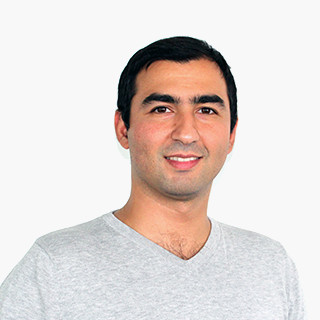
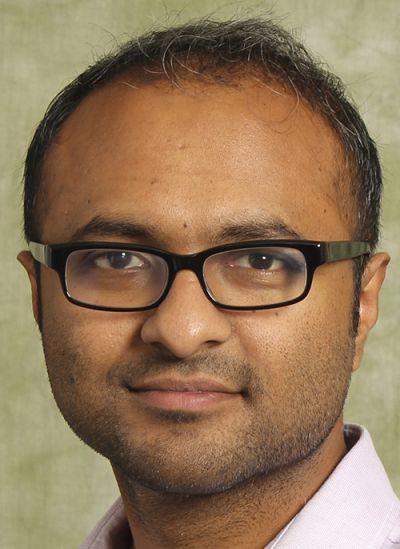
Paul Rosen is an Associate Professor at the University of South Florida within the Department of Computer Science and Engineering. His research focuses on computer graphics, visualization, and geometric modeling, with significant contributions in camera models, 3D rendering, and interactive visualization techniques. Academic Rank: Associate Professor Affiliation: University of South Florida, Department of Computer Science and Engineering Research Areas: Computer Graphics, 3D Visualization, Geometric Modeling, Image Processing, Human-Computer Interaction. His publications span topics including Bézier curves, nonpinhole camera approximations, and volumetric display perception studies. While he collaborates with institutions like Purdue University (CGVLab), he is currently an active faculty member at USF, not part-time, retired, or former staff.
Mohammad Rastegari serves as a senior technical manager in Apple's AI/ML organization and holds an affiliate assistant professor position in the Computer Science and Engineering Department at the University of Washington. Previously, he was a research scientist at the Allen Institute for AI (AI2) where he contributed to the PRIOR team, and co-founded XNOR.ai as Chief Technology Officer. He completed his Ph.D. at the University of Maryland under the supervision of Professor Larry S. Davis, focusing on computer vision and machine learning. His research centers on efficient deep learning with major contributions in binary neural networks (notably XNOR-Networks for resource-constrained devices) and model compression . Current work extends to large language model efficiency through weight clustering, token pruning, and memory optimization while maintaining strong foundations in computer vision. Analysis of his recent publications reveals a strategic shift toward optimizing transformer-based architectures across vision and language domains, with consistent emphasis on deployable solutions for edge computing and real-world applications. He co-founded XNOR.ai (acquired by Apple) and contributed to AI2's PRIOR initiative, demonstrating a career trajectory bridging academic innovation and industrial implementation in efficient AI systems.
Prof. Dr.-Ing. Martin Ruskowski is a leading academic and researcher in automation and industrial AI. He serves as Head of the Innovative Factory Systems research department at the German Research Center for Artificial Intelligence (DFKI) and holds the Chair of Machine Tools and Control Systems at the University Kaiserslautern-Landau (RPTU) . Additionally, he chairs the board of the SmartFactory KL technology initiative. DFKI : Head of Innovative Factory Systems RPTU : Chair of Machine Tools and Control Systems SmartFactory KL : Chairman of the Board Research Interests : Ruskowski focuses on innovative control concepts for automation , artificial intelligence in industrial systems , and industrial robotics . His work bridges advanced AI with manufacturing, emphasizing resilience, safety, and human-centric integration. Project Highlights : RAASCEMAN : Resilient supply chains for adaptive manufacturing STAR : Secure human-centric AI in manufacturing PHYSICS : Hybrid space-time service continuum for FAAS ReCircE : Digital lifecycle records for circular economy MAS4AI : Multi-agent systems for modular production Contact: Martin.Ruskowski@dfki.de
Dr. Luuk Spreeuwers is an Associate Professor specializing in Datamanagement & Biometrics , with a focus on Artificial Intelligence , Computer Vision , and Machine Learning . His research spans biometric security, face recognition, morphing attacks, and finger vein verification, resulting in over 255 publications and 10 years of active research contributions. He has collaboratively developed datasets like Orchid Flowers Dataset and FLUXSynID , advancing AI applications in biology and forensic science. Research Interests: Face recognition, biometric security, deep learning, morphing attack detection, finger vein biometrics, explainable AI, and historical image analysis. Scientific Awards: Best Paper Award (BIOSIG 2017), Best Poster Award (BIOSIG 2014), Educational Award of Electrical Engineering (2018). Activities: Organized SITB 2025 and IWBF 2024 conferences; delivered invited talks on face recognition and forensic applications; serves as Editor-in-Chief of IET Image Processing . Article Trends highlight his work on: deep learning for biometric security, forensic face recognition, morphing attack detection frameworks, finger vein pattern analysis, and robustness testing in AI systems.
Michael F. P. O'Boyle is a Professor of Computer Science at the University of Edinburgh's School of Informatics. He is a leading researcher in compiler technology, specializing in optimizing compilation, machine learning for compilation, and heterogeneous systems. His work addresses the critical challenges of compiling software for increasingly diverse hardware architectures in the post-Moore's Law era. Professor O'Boyle's research interests focus on: Optimizing compilation techniques Machine learning applications in compilation Heterogeneous computing systems Program synthesis Neural machine translation for code Hardware/software co-design His recent publications demonstrate a strong focus on tensor optimization, compiler infrastructure for heterogeneous systems, and machine learning applications in program analysis and transformation. O'Boyle's work bridges traditional compiler techniques with modern AI-driven approaches to code optimization, addressing the growing complexity of hardware-software interfaces. Professor O'Boyle has received several notable honors and awards: ACM CGO Test of Time award (2017) Senior EPSRC Research Fellow Fellow of the British Computer Society (BCS) He holds significant leadership roles including Director of the ARM Research Centre of Excellence at Edinburgh and Director of the EPSRC Centre for Doctoral Training in Pervasive Parallelism. O'Boyle is also a founding member of HiPEAC, a European network for high-performance and embedded architecture and compilation, and has delivered keynote addresses at major conferences including PPoPP 2019 where he presented his vision for "Rethinking Compilation in a Heterogeneous World."
Heikki Ailisto serves as a Research Professor at VTT Technical Research Centre of Finland within the BA5A Management and Support department. With a research career spanning from 1985 to present, he maintains active involvement in cutting-edge technology research and development projects. His research interests focus on Artificial Intelligence applications , Software Engineering methodologies , Smart Building technologies , and Digital Governance frameworks . A significant portion of his work addresses the practical implementation of AI systems in public sector contexts and industrial applications, with particular attention to Finnish societal needs and environmental considerations. Analysis of his recent publications reveals a strong trend toward interdisciplinary research connecting technology development with policy implications and sustainability goals. His work consistently bridges theoretical concepts with practical implementations, particularly in energy management systems and manufacturing data integration. Dr. Ailisto actively contributes to major research initiatives including: Future of Software Engineering (2025-2027) GOWELL: Governance of new technologies towards sustainability and well-being (2024-2026) His media presence includes contributions to discussions about AI development in Finland, such as the 2021 media appearance "Kohti tekoälyn kesää?" (Toward the Summer of AI).
Ehsan Namjoo serves as a Research Fellow in the Department of Electronics & Computer Engineering at the University of Limerick, with a primary affiliation at Lero – the Irish Software Research Centre. His multidisciplinary work bridges theoretical signal processing, machine learning applications, and hardware implementation for real-world systems. His research spans signal processing (DOA estimation under non-ideal noise conditions, EEG source imaging), machine learning (explainable AI for medical diagnostics, feature selection in cancer detection), and computer engineering (polar code decoders, visible light communication systems). Notable biomedical applications include breast cancer diagnosis and epileptic source analysis, while cybersecurity work focuses on intrusion detection in cloud environments. Recent publications (2021-2025) reveal a consistent trajectory toward developing lightweight, interpretable models for tabular medical data alongside robust signal processing frameworks for communication systems. His work increasingly integrates hardware-aware algorithms, particularly in polar coding implementations, and emphasizes practical validation through experimental demonstrations in visible light networks. As an active Lero researcher, Namjoo participates in Ireland's national software research ecosystem, contributing to interdisciplinary projects that connect theoretical innovations with healthcare, communications, and security applications through collaborative frameworks.
Dr. Hongwei Tan serves as Group Leader at the Department of Molecular Electronics, Max Planck Institute for Polymer Research (MPIP) in Mainz since November 2024. Previously, he was Research Fellow (2022-2024) and Postdoctoral Fellow (2017-2022) at Aalto University's Department of Applied Physics, following postdoctoral work at the University of Massachusetts Amherst on neurointerface devices. His academic credentials include: Bachelor of Physics, Nankai University (2011) Doctorate in Materials Physics and Chemistry, University of Chinese Academy of Sciences (2016), focusing on neuromorphic photomemristors Tan's research pioneers neuromorphic biointerfaces—integrating brain-inspired electronics with biological systems to enable energy-efficient computation and seamless biointeraction. His work targets transformative applications in brain-machine interfaces, prosthetics, and diagnostics through interdisciplinary convergence of neuroscience, materials science, and engineering. His publication portfolio (2015-2024) reveals a clear evolution from foundational optoelectronic memristor research toward complex neuromorphic systems for sensory processing. Key thematic trajectories include photomemristor-based vision systems, tactile coding with spiking nerves, and nanoionic human-machine interfaces, demonstrating consistent innovation in bioinspired hardware. As MPIP Group Leader, Tan directs research strategy and team mentorship within his neuromorphic electronics program, though specific advisees and grant details remain unlisted in available materials. His laboratory focuses on developing integrated neuromorphic systems—from novel materials and devices to algorithms—that facilitate bidirectional communication between electronic and biological neural networks for next-generation neurotechnologies.
Mallesham Dasari is an Assistant Professor in the Electrical and Computer Engineering department at Northeastern University. His research focuses on immersive media, XR systems, wireless networks, and wearable computing, with a particular emphasis on optimizing video streaming and human-robot collaboration in extended reality environments. He joined Northeastern in January 2024 and is affiliated with the Institute for the Wireless Internet of Things. Education: PhD in Computer Science from Stony Brook University (2021). Research Interests: His work spans advanced video codecs, spatial video distribution, and sensor fusion technologies. Recent projects include developing FSO-based wireless links for VR headsets and neural compression techniques for point cloud streaming. He explores how XR technologies can enhance healthcare through systems like XRAI Care and enable seamless human-robot collaboration via platforms like RoboTwin. Publications: Over 30 peer-reviewed articles in top conferences like ACM SIGCOMM, NSDI, and MMSys, focusing on network optimization, immersive media systems, and edge computing. Awards: Received the Best Reproducible Paper Award at ACM MMSys 2025 and the Best Demo Award at ACM HotMobile 2025 for RoboTwin. His team also pioneered award-winning solutions for NASA’s SUIT Competition and developed markerless localization systems for AR. Advising & Grants: Mentors students in Northeastern’s College of Engineering, leading projects funded by industry partnerships and federal grants. His lab collaborates on multi-agent tracking systems combining visual and RF sensing technologies. Labs/Teams: Active in Northeastern’s XR systems research group, focusing on scalable 3D scene capture (MeshReduce) and time-varying mesh compression (TVMC). His work intersects with digital twin technologies and edge-based asset virtualization frameworks.
André de Matos Pedro is an Assistant Professor in the Department of Computer Science at the University of Beira Interior. He teaches courses including Teoria da Computação (Theory of Computation), Programação Funcional (Functional Programming), and Segurança e Fiabilidade de Software (Software Security and Reliability). His research focuses on formal methods, runtime verification, and programming language theory. His publication record shows consistent focus on formal verification methods applied to real-time and embedded systems. Recent work emphasizes runtime monitoring frameworks, SAT/SMT-based verification techniques, and applications in safety-critical domains like autopilot systems. The research trajectory demonstrates increasing emphasis on practical applications of temporal logic and co-simulation testing platforms.
Yu Yang is a Researcher at KTH Royal Institute of Technology's Division of Electronics and Embedded Systems. He has been affiliated with KTH since at least 2020 and currently holds a postdoc position. His research focuses on neuromorphic computing, FPGA/ASIC implementation, approximate computing, and embedded systems design. He also explores ergonomic applications using wearable sensors to address workplace safety and musculoskeletal disorders. Yang has taught courses like Digital Design and Embedded Hardware Design in ASIC and FPGA , demonstrating expertise in both theoretical and applied electronics. His work bridges hardware acceleration (e.g., memristor-based neural networks) with practical applications like surgeon workload analysis and posture correction systems. Notable projects include the eBrainII ASIC implementation of a human-scale cortical model and developing smart workwear systems for real-time vibrotactile feedback. Publications span IEEE conferences (DATE, FDL, ASP-DAC) and journals like Frontiers in Neuroscience and Journal of Signal Processing Systems . His research often emphasizes low-power, high-performance computing while addressing ergonomic challenges in manufacturing and healthcare sectors.
Peter Schelkens is a Professor at the Department of Electronics and Informatics (ETRO), Vrije Universiteit Brussel (VUB). He holds additional roles including Department Chair and Head of Research Group, focusing on technology transfer and innovation in electronics and informatics. His research spans fundamental signal processing, holography, medical imaging, and standardized multimedia coding frameworks like JPEG Pleno. Education and Academic Background: Postdoctoral Fellowship (2002–2011) funded by the Research Foundation – Flanders (FWO). His work bridges theoretical advancements with applied domains such as eHealth, bio-informatics, and cultural heritage preservation. Research Interests: Holography and digital signal processing dominate his focus, including holographic compression, Fourier-based techniques, and light field imaging. Strategic projects involve error-resilient coding, computer architectures (e.g., GPU/GPGPU), and quality assessment metrics. His applied research addresses medical imaging, 3D media broadcasting, and immersive technologies. Article Trends: Recent work emphasizes holographic video codecs (e.g., INTERFERE), high-throughput hologram generation, and JPEG Pleno standardization. He explores computational methods for 3D metrology and deep learning applications in hologram optimization. Scientific Awards: Gauss Award (2000), ERC Consolidator Grant (2014), Best Associate Editor Award (2014), and multiple industry accolades. Grants/Projects: Leads major initiatives like the SRP-Onderzoekszwaartepunt LSDS (2022–2027) and GEAR (2021–2025), focusing on health tech and learning-based systems. Labs/Teams: Active in ETRO, the interdisciplinary research group at VUB, collaborating globally on holography, multimedia standards, and biomedical imaging systems.
Andreas Andreou is a Professor of Electrical and Computer Engineering at Johns Hopkins University (JHU), with secondary appointments in Computer Science and the Whitaker Biomedical Engineering Institute. He co-founded the JHU Center for Language and Speech Processing (CLSP) and co-directs the Andreou Lab, focusing on brain-inspired microsystems, neuromorphic engineering, and biomedical sensors. His research spans CMOS-based neuromorphic processors, event-based vision systems, and wearable health monitoring devices like the StethoVest. Key contributions include silicon retinas, polarization-sensitive imagers, and algorithms for pattern analysis. Research Interests: Neuromorphic Computing: Designing energy-efficient brain-inspired chips using 3D CMOS, FETs, and memristive technologies. Biomedical Microsystems: Wearable acoustic sensors for cardiac monitoring and vestibular prosthetics. AI Hardware: Neuromorphic accelerators for edge computing, leveraging LLMs for automated circuit design. Notable Achievements: IEEE Fellow (since 2020) Recipient of the 3rd Best Paper Award at IEEE BioCAS 2018 $2M DARPA grant for bio-inspired event cameras Labs/Teams: The Andreou Lab collaborates with the Kavli Neuroscience Discovery Institute and NSF-funded neuromorphic projects. Ongoing work includes neuromorphic Ising machines, LLM-driven chip design, and quantum sensing for medical applications.
Ziyan Wang is a researcher affiliated with Carnegie Mellon University's School of Computer Science, Department of Computer Science. Their work focuses on computer graphics, machine learning, and medical imaging, with a strong emphasis on dynamic capture and animation of human hair and heads. They hold a PhD in Computer Science from Carnegie Mellon University (2023). Research interests include 3D modeling, neural networks, reinforcement learning, and applications in medical informatics. Notable contributions include high-fidelity hair modeling using computed tomography and neural dynamic models for volumetric hair capture. Their work spans conferences like CVPR, NeurIPS, and ECCV, demonstrating expertise in both theoretical and applied aspects of computer vision and graphics. Publications highlight advancements in diffusion models, multi-agent reinforcement learning, and domain adaptation for fault diagnosis. Collaborations span institutions like the University of Washington, Max Planck Institute, and NVIDIA Research, reflecting interdisciplinary engagement. Recent work explores AI-generated content in virtual environments and cybersecurity in package management systems.
Adnan Siraj Rakin is an Assistant Professor at Binghamton University's School of Computing. He holds a PhD and MS in Computer Engineering from Arizona State University (2022 and 2021) and a BS in Electrical and Electronic Engineering from Bangladesh University of Engineering and Technology (2016). His research focuses on AI security, including adversarial attacks on deep learning systems, model stealing, and hardware vulnerabilities. Notable contributions include defenses against bit-flip attacks, weight duplication frameworks, and RowHammer exploits. Research Interests: Adversarial Attacks (Input/Weight/Model Stealing) Deep Learning Security Hardware Vulnerabilities (e.g., FPGA/DRAM) Robust Neural Network Design Publications highlight advancements in detecting and mitigating adversarial perturbations, with work featured in CVPR, ICCV, and IEEE Security & Privacy. His recent efforts address LLM vulnerabilities and edge computing efficiency. He received the 2022-2023 Educator of the Year award from Binghamton's CS department. Current projects include developing full-stack obfuscation frameworks, secure domain adaptation, and exploring adversarial impacts on robotics systems.