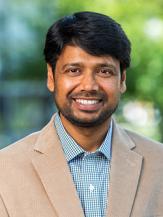
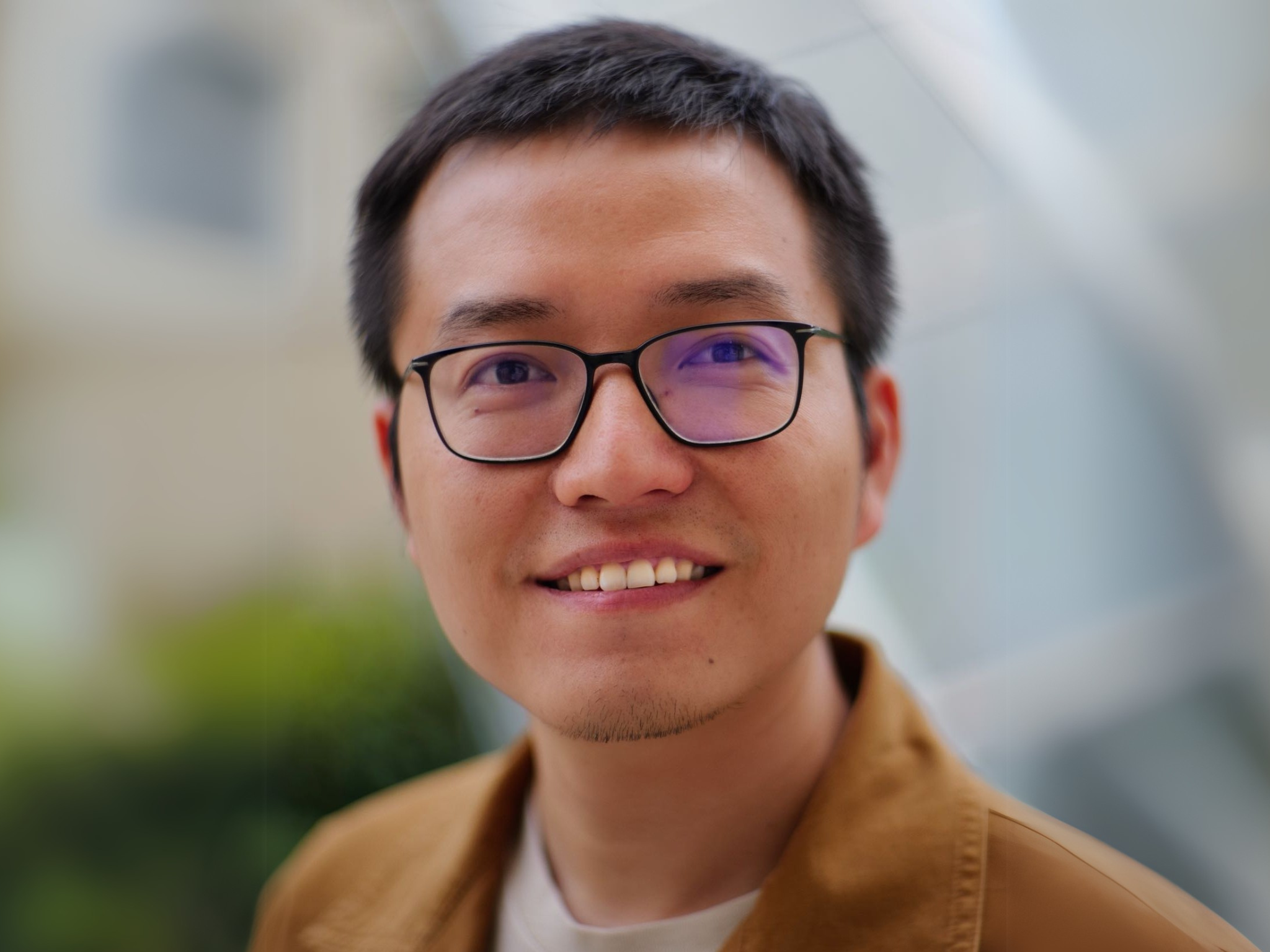
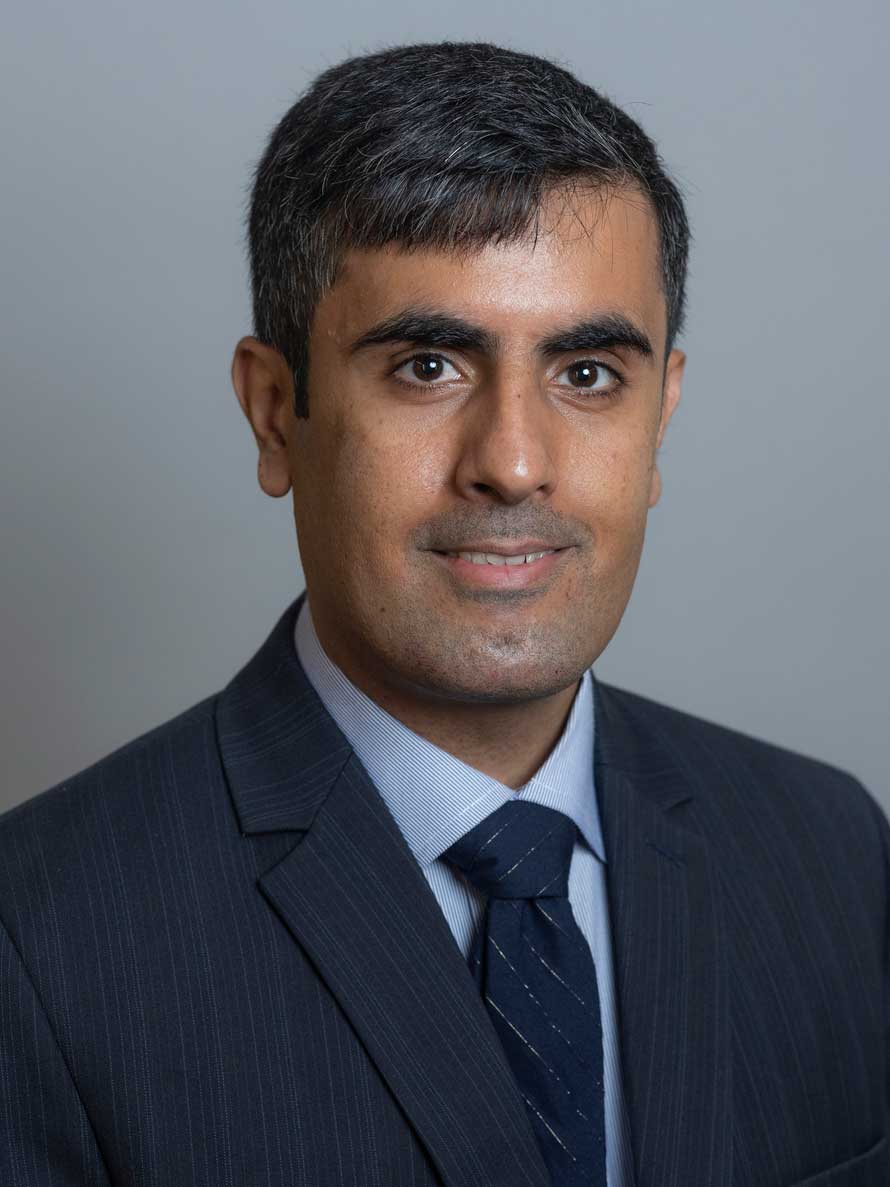
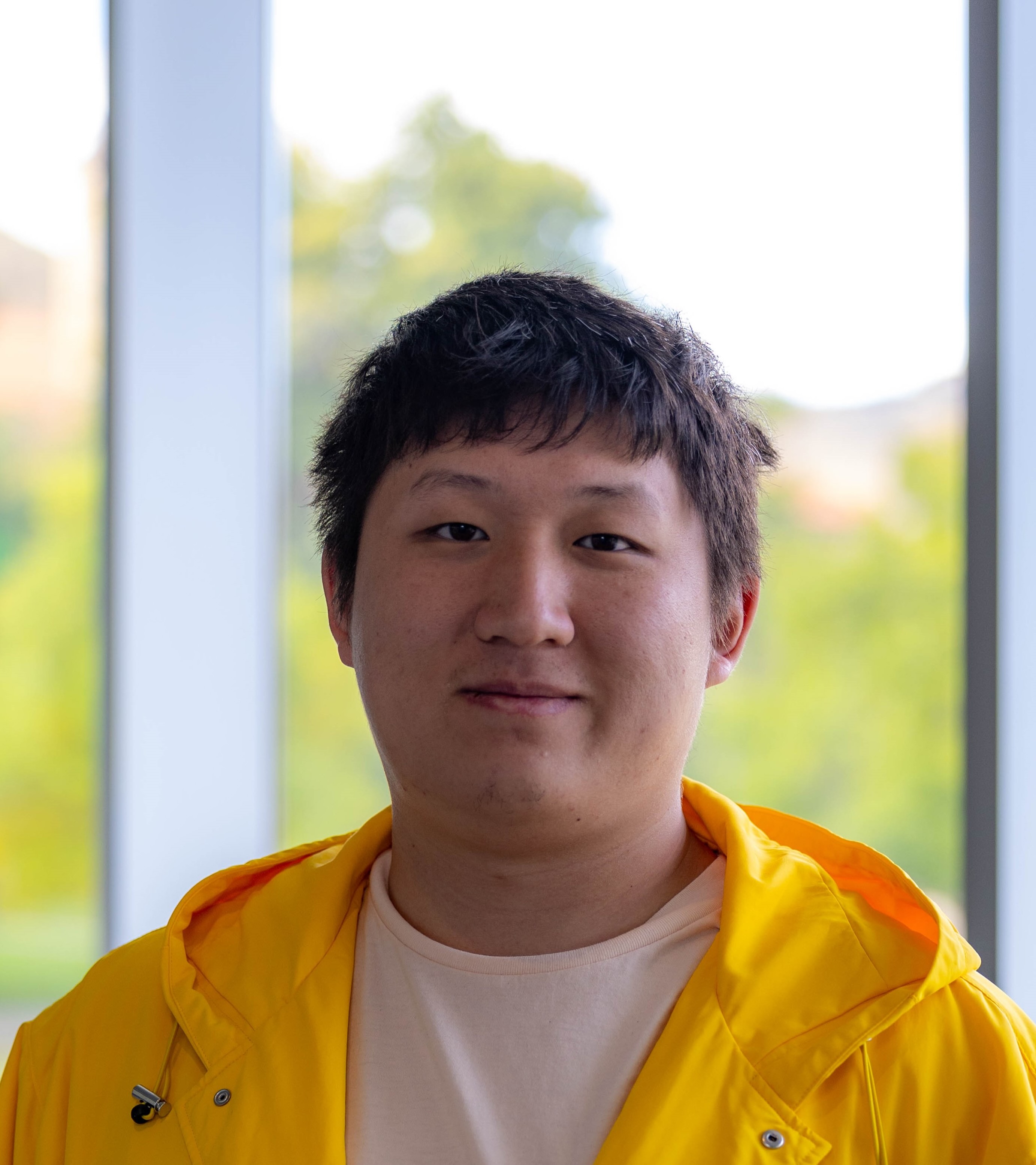
Wlodek Kulesza is a Senior Professor in the Department of Mathematics and Natural Sciences at the Blekinge Institute of Technology in Karlskrona, Sweden. He has held academic positions since 2001, including a Professorship in Multi-sensor Systems since 2007. Research: Multisensory systems for health and security applications Teaching: Research Methodology, Philosophy of Science, and Sensors Signals and Systems Expertise: Systems engineering, sensor fusion, IoT, and measurement data handling Research Focus : His work in systems engineering emphasizes multisensor integration for applications spanning healthcare, security, wind energy safety, and subsea cable monitoring. He has pioneered approaches to stereovision calibration, localization algorithms, and real-time safety systems. Awards : Andy Chi Best Paper Award (2009, IEEE Transactions in Measurement and Instrumentation) Collaborations : Visiting Professor at Chinese and Polish universities, with extensive cross-border educational workshops and remote lab federations (e.g., PILAR/VISIR projects).
Shafaeat Hossain is a Professor in the Department of Computer Science at Southern Connecticut State University (SCSU) . He holds a Ph.D. in Computational Analysis and Modeling from Louisiana Tech University (2014) and advanced degrees from the University of Dhaka. His research focuses on machine learning , user authentication in smart devices , behavioral biometrics , and multi-biometric verification . B.S. in Computer Science and Engineering, University of Dhaka (2006) M.S. in Computer Science, Louisiana Tech University (2012) Ph.D. in Computational Analysis and Modeling, Louisiana Tech University (2014) His work bridges machine learning with security applications , particularly in touchscreen gesture analysis , continuous authentication , and behavioral biometrics for smartphones. He explores multi-biometric fusion strategies to enhance security and user convenience, while also investigating game theory in social networks and NLP for deep authorship attribution . Recent publications highlight advances in capacitive swipe authentication , zoom gesture analysis , and Wi-Fi indoor positioning . Collaborative studies address sleep apnea diagnosis and smartwatch dynamics in verification systems. SCSU Faculty Scholar Award (2023) SCSU Mid-Level Faculty Research Fellowship (2019) Senior Member, IEEE He has secured grants totaling over $25,000 from SCSU, CSU-AAUP, and UConn for projects on child safety in digital authentication and multi-biometric security enhancement . His scholarship spans IEEE Access , Computers & Security , and top-tier conferences like IEEE IJCNN and SMARTCOMP .
Patricia Anthony serves as Associate Professor at Lincoln University's School of Landscape Architecture in New Zealand, where she holds an ORCID identifier 0000-0002-4991-3340. Her academic appointments include Faculty Postgraduate Chair for the Faculty of Environment, Society and Design (2021-2024) and current affiliation with the Centre for Geospatial and Computing Technologies (2025-present). Previously, she served as Head of Department (2016-2017), Department Postgraduate Coordinator (2014-2016), and SHIFT Coordinator (2017-2020). Her educational background comprises a Ph.D. from the University of Southampton, United Kingdom; an M.Sc. from Birkbeck, University of London, United Kingdom; and a BSc (High Honors) from the State University of New York, United States. She is proficient in Malay language, with reading, writing, and speaking capabilities. Dr. Anthony's research centers on agent and multi-agent systems, utilizing artificial intelligence techniques including machine learning, evolutionary computation, and text processing as decision-making strategies for agents. She is recognized as a leading researcher applying intelligent agents across diverse domains such as online auctions, agriculture, education, and social media analysis. Her specialized work in sentiment analysis and emotion identification enables agents to detect emotional states in textual communications, with recent applications in earthquake tweet analysis. Her publication record demonstrates consistent scholarly output with over 130 publications, showing particular strength in applying multi-agent systems to practical challenges. Recent work reveals three major research streams: trust and reputation management in IoT environments (accounting for approximately 30% of recent publications), agricultural technology applications including mastitis detection and water resource management (approximately 40%), and social media analysis focusing on elderly technology adoption and cyber aggression classification (approximately 30%). Adjunct Professor, Hubei University of Technology, Wuhan, China Program Committee/Senior Program Committee member for Pacific Rim International Conferences on Artificial Intelligence (PRICAI) 2016, 2018, 2019 Co-chair for International Carnahan Conference on Security Technology (ICCST) 2014, 2016, 2018, 2020 Member of Institute of Electrical and Electronics Engineers (IEEE) Reviewer for Engineering Applications of Artificial Intelligence, Malaysian Journal of Computer Science, and Adaptive Behaviour Dr. Anthony has supervised numerous postgraduate students across multiple research areas related to multi-agent systems, with completed projects spanning cyber aggression classification, agricultural technology, IoT security, and elderly technology adoption. She serves as an examiner for advanced computing courses including Advanced Database (COMP643), Advanced Programming (COMP642), and Studio Project (COMP639), demonstrating her integration within the university's computing curriculum despite her Landscape Architecture appointment. Her research aligns with Sustainable Development Goal 11 (Sustainable Cities and Communities), reflecting her commitment to applying computational techniques to address real-world challenges in urban and community contexts. She actively collaborates across disciplines through the Centre for Geospatial and Computing Technologies, bridging computational methods with landscape architecture applications.
Chang Liu is a Research Associate at NHR@FAU (Center for National High Performance Computing Erlangen) at Friedrich-Alexander-Universität Erlangen-Nürnberg (FAU), where he joined the AI group in April 2025 to support AI-oriented projects across diverse research fields. Prior to this position, he was a doctoral researcher at the Pattern Recognition Lab at FAU until March 2025. Chang Liu earned his degree in Medical Engineering at FAU. His academic journey at FAU began in September 2016 as a student, progressed to a researcher at the Pattern Recognition Lab starting in March 2020, and culminated in his doctoral research until March 2025. Dr. Liu's research focuses on medical image processing and analysis, with particular emphasis on the automated segmentation of computed tomography (CT) images and the generation of high-quality CT images. His work bridges computer science and medical applications through artificial intelligence to solve complex healthcare problems. Beyond his core research, he has contributed to applying AI technologies in diverse fields including second language education and nail disease diagnosis, demonstrating his interdisciplinary approach to problem-solving. His expertise spans data augmentation techniques, multi-organ segmentation, CT reconstruction, and radiation dose optimization. His publication record reveals consistent advancement in medical image analysis techniques, particularly in CT imaging and segmentation. His work shows a progression from foundational deep learning applications to more sophisticated approaches incorporating anatomical knowledge and addressing practical clinical constraints like limited annotations and radiation safety. Dr. Liu has mentored numerous students through their thesis work, guiding them in cutting-edge research at the intersection of AI and medical imaging. His advisees have completed projects on breast cancer risk stratification, medical segmentation annotation, U-Net architecture configuration, and other innovative topics in medical image analysis. As part of NHR@FAU, Dr. Liu works with the AI group to enhance research projects using modern high-performance computing systems, applying his expertise in medical image analysis to support diverse research fields across FAU.
Ning Yu serves as an Associate Professor in the Department of Computing Sciences within the School of Arts & Science at State University of New York Brockport. He earned his Ph.D. in Computer Science from Georgia State University and joined SUNY Brockport in 2017 after serving as a Tenure-Track Assistant Professor at the University of South Carolina Upstate. Georgia State University, Computer Science, Ph.D. Southern Illinois University Carbondale, Computer Science, M.S. Dr. Yu's research spans artificial intelligence, network and information security, big data analytics, deep learning, and cloud computing with significant applications in bioinformatics. His work demonstrates a clear progression from foundational AI and security research toward specialized applications in healthcare and energy systems. The most recent publications show increased focus on graph-based deep learning approaches for biomedical problems, particularly in cancer genomics and drug response prediction. His scholarly impact includes over 40 publications in prestigious venues including ACM/IEEE Transactions, BMC, PLoS, and Information Sciences. The publication trend reveals consistent output with increasing emphasis on interdisciplinary applications, particularly at the intersection of AI and biomedical research. Teacher of The Year, School of Science and Art, SUNY Brockport 2022-2023 Influential Professor 2022, SUNY Brockport, Fall 2023 Provost Post-Tenure Scholarship Award, $3,500, SUNY Brockport, Spring 2024 Google Research Credits Grants (2018, 2020-2021) WORLDWIDE TOP 10 FINALISTS, IBM 2017 Watson Analytics Global Competition As an educator, Dr. Yu has mentored numerous undergraduate researchers who have presented at national conferences including NCUR and SURC. He founded SUNY Brockport's first ACM SIGAI Student Chapter and has secured significant funding including a multi-campus SUNY IITG grant for AI education development. His research group actively recruits students for projects involving cloud development (Azure/GCP/AWS), CI/CD, Docker/K8s, and software architecture. Prior to academia, Dr. Yu accumulated 10 years of professional experience in software development and system networking with certifications from Cisco, Microsoft, and Google.
Dr. Feras Dayoub is a Senior Lecturer and Chief Investigator at the QUT Centre for Robotics (QCR) , where he co-leads the Visual Learning and Understanding program. He previously served as Chief Investigator at the ARC Centre of Excellence for Robotic Vision (2016-2020) and holds a PhD in Robotics and Computer Vision from the University of Lincoln. Research Focus: Deploying computer vision and machine learning for real-world mobile robotics applications, including autonomous weed control (CRC-P), vision-enabled underwater robots for reef protection (COTSbot/RangerBot), and UAV-based infrastructure inspection. Teaching: Coordinates advanced robotics topics (EGB439) and teaches microprocessor systems (CAB202). His recent publications focus on uncertainty quantification in robotic vision, open-set recognition, and performance monitoring of deployed models. His work has been recognized with multiple awards from the Australian Centre for Robotic Vision and a Google Impact Challenge popular vote award. 2023: Hyperdimensional Feature Fusion for Out-of-Distribution Detection 2023: Class Distribution Shift Prediction for Domain Adaptation 2022: Uncertainty for Open-Set Error Identification 2022: FSNet for Semantic Segmentation Failure Detection Awards include: 2020: ACRV Best-Profile Raising Event 2019: QUT STEM Camp Certificate of Appreciation 2016: Google Impact Challenge People's Choice Award 2015: QUT Vice Chancellor's Performance Award As supervisor, he guides projects on robotic object detection, cross-view localization, and continues to advance visual learning methodologies for real-world autonomous systems.
Mohammad Fanaei is an Associate Teaching Professor in the Department of Electrical and Computer Engineering at Northeastern University, affiliated with the College of Engineering. His research focuses on machine learning applications, wireless sensor networks, automotive systems, and network security. He has contributed to advancements in vehicular communication protocols, distributed estimation techniques, and cybersecurity measures against tunneling attacks. Research Interests Fanaei’s work spans deep learning for autonomous systems , vehicular networks , and sensor fusion . He explores challenges in distributed signal processing, including power allocation strategies and robust communication protocols for automated vehicles. His cybersecurity research addresses vulnerabilities in vehicular ad hoc networks and sensor infrastructure. Key Contributions His publications highlight trends in 3D vehicle localization , DSRC receiver modeling , and modulation-channel coding interplay . Earlier work includes foundational studies on distributed detection algorithms and spatial randomness in sensor networks. Advising & Grants While specific advising/grants are not detailed, his academic role suggests involvement in teaching and mentoring in electrical engineering and computer science disciplines.
Dr. Ying Zhou is a Lecturer in the School of Computer Science at The University of Sydney. She holds a BSc and MEng from Nanjing University (1997) and a PhD from the School of Computing at the National University of Singapore (2003). Her research focuses on human-centred data management, including large-scale data storage, user behavior analysis, and improving image query systems. Current projects include mining socially tagged images and accountability mechanisms for multitenant cloud platforms. Teaching responsibilities include courses on Advanced Data Models (COMP5338), e-Commerce Technology (COMP5347), and Cloud Computing (COMP5349). She collaborates with industry partners like Amazon and IBM, and advises four research students. She is a member of the Sydney Southeast Asia Centre. Her publication record spans 20 years, with recent work emphasizing machine learning applications, big data systems, and cloud security. Research trends include optimizing distributed computing frameworks (Hadoop/Spark/Flink), adversarial machine learning, and trustworthy database systems. Earlier work focused on social network analysis, web communities, and blogosphere dynamics. Current research projects address both technical challenges (e.g., efficient image search, cloud platform accountability) and applied solutions for leveraging social media data. Her lab activities involve interdisciplinary collaboration between computer science and information systems domains.
Dr. Thomas Sutter is a Researcher affiliated with the Department of Computer Science at ETH Zurich , specifically part of the Professorship for Medical Data Science. His work focuses on advanced machine learning techniques applied to medical data, including anomaly detection, generative AI, and multimodal learning. He contributes to healthcare innovation through projects like improving radiology diagnostics via Vision-Language Models (RadVLM) and developing denoising techniques for physiological signals in cardiology. Research Interests: Medical Data Science, Anomaly Detection in Healthcare, Generative AI for Biomedical Signals, Multimodal Representation Learning, and Cardiac Function Prediction using Echocardiograms. His methods often combine deep learning with domain-specific medical challenges. Key Publications Trends: Recent work emphasizes medical imaging analysis (e.g., MIMIC-CXR studies), generative models for signal denoising, and contrastive learning for anomaly detection. His research bridges computer science theory with clinical applications, particularly in cardiology and radiology. Awards & Grants: No specific awards or grants mentioned in the provided texts. Advising & Teams: While no advisees are listed, he collaborates within the Medical Data Science research group at ETH Zurich, contributing to interdisciplinary projects in healthcare AI.
Shahab Bakhtiari is an Adjunct Professor in the Department of Psychology at the University of Montreal's Faculty of Arts and Sciences. His research focuses on NeuroAI, exploring the intersection of neuroscience and artificial intelligence, particularly in visual perception and learning mechanisms in biological systems and artificial neural networks. He holds a PhD in Neuroscience from McGill University and conducted postdoctoral research at Mila, Quebec AI Institute. Education: Bachelor's and Master's in Electrical Engineering, University of Tehran PhD in Neuroscience, McGill University His research interests include computational neuroscience, machine learning, visual system modeling, and energy-efficient predictive coding. He teaches courses on AI, cognitive neuroscience, and deep learning applications in psychology. Key grants include a CRSNG grant (2023–2029) for comparative visual system studies and the UNIQUE strategic initiative (2022–2029), co-led by 50+ researchers. He has supervised one Master's student, Hamza Abdelhedi, on AI-human face recognition comparisons. His work bridges AI and biological systems, leveraging neuroimaging and deep learning to model brain dynamics and improve AI's biological plausibility.
Alexandre BENOIT is a Professor at Polytech Annecy-Chambéry, Université Savoie Mont-Blanc, and a permanent member of the LISTIC laboratory. His research focuses on deep learning, federated learning, computer vision, remote sensing, and explainable AI, with applications in astrophysics, environmental monitoring, and healthcare. He leads projects on glacier modeling, federated learning bias mitigation, and satellite image analysis. His teaching activities include courses on deep learning (TensorFlow/PyTorch), image processing (Matlab/OpenCV), and programming (C/C++/Python) at undergraduate and graduate levels. He has supervised over 10 PhD students and collaborates with industries like Total, Renault, and startups on AI integration. Research highlights include developing the GammaLearn framework for Cherenkov Telescope Array data analysis and bio-inspired retina models integrated into OpenCV. He co-organized major conferences such as CBMI 2012 and EUSFLAT 2011, and serves on editorial boards for IEEE Transactions on Image Processing and other journals. Current projects address federated learning fairness, glacier thickness estimation via deep learning, and oil slick detection using SAR imagery. His work emphasizes frugal models, physically informed AI, and ethical AI practices in collaborative environments.
Praboda Rajapaksha is a Lecturer in Health Data Science at Aberystwyth University and a Data Scientist at HDUHB, NHS Wales. She holds a PhD in Computer Science from IP Paris, alongside advanced degrees from AIT (Thailand), IMT (France), and a B.Eng. from the University of Peradeniya, Sri Lanka. With over nine years of research experience, her expertise spans data science, natural language processing, generative AI, machine learning, and digital twin technologies. She leads the UKRI EPSRC-funded 'Portable Luminescent Chemical Compass' project and collaborates on the Welsh Government-funded 'DeepDetect' initiative. Education: PhD (IP Paris), M.Eng (AIT), M.Sc (IMT), B.Eng (Peradeniya) European Projects: ITEA, BPI, Horizon, FUI Her research focuses on applying AI to healthcare delivery transformation via Patient Digital Twins, traffic sensor optimization, and mitigating hallucinations in LLMs for sexism detection. Key areas include emotion analysis in arguments, cross-lingual hate speech detection, and unsupervised video anomaly frameworks. Recent work addresses redundancy reduction in sensor networks and emotion-aware meta-learning models. Scientific Contributions: 14+ peer-reviewed articles (2023-2025), conference proceedings Grants: EPSRC, Welsh Gov, EU initiatives Current projects include developing mobile diagnosis apps for agriculture and advancing IoT-enabled digital twin systems. Her work aligns with UN SDGs for health innovation and sustainable cities.
Dr. Keyang Yu is an Assistant Professor in the Department of Computer Science at Marquette University, affiliated with the College of Engineering. His research focuses on designing data-driven computer systems to enhance cybersecurity and user privacy in Cyber-Physical Systems (CPS) and the Internet of Things (IoT). He teaches COSC 6280: Advanced Computer Security. Research interests include Cyber Physical Systems, Edge Computing, Tiny Machine Learning, and Security & Privacy. He emphasizes privacy-aware automation in CPS at various scales. Recent work explores challenges in IoT privacy preservation despite traffic reshaping and vulnerabilities in smart home router operating systems. Publications highlight innovations such as PACAS (privacy-aware smart cameras), TrafficSpy (disaggregating encrypted IoT traffic), and SmartAttack (open-source security research tools). His work spans both theoretical frameworks and practical implementations in smart home security and renewable energy diagnostics. No scientific awards are explicitly listed, but ongoing contributions to IoT privacy and CPS security reflect impactful research. Advising and grant details are not provided in available texts. His work connects to labs focused on embedded systems security and privacy-preserving technologies.
Christopher F. Barnes is an Associate Professor in the School of Electrical and Computer Engineering at the Georgia Institute of Technology, with adjunct status as a Principal Research Engineer at the Georgia Tech Research Institute (GTRI). He holds a Ph.D. from Brigham Young University (1989) and has over 27 years of experience in radar signal processing, software engineering, and applied research. His research focuses on synthetic aperture radar (SAR) analysis, data mining, and image/video-driven technologies with applications in remote sensing, medical imaging, and seismology. Dr. Barnes' expertise includes radar imaging algorithms, software architectures for radar systems, and object-oriented programming. He pioneered methods for three-dimensional coherently fused SAR imaging and developed image-driven systems for hurricane damage assessments and bioinformatics. His work in video tracking and content-based search leverages residual vector quantization and machine vision techniques. Notable achievements include the Georgia Tech Outstanding Professional Education Award (2009) and an Interdisciplinary Research Initiative Award (2006). His contributions span over 140 publications and one patent, with research supported by defense and academic collaborations. Dr. Barnes teaches SAR at professional and graduate levels and advises research in video-driven data mining and medical imaging applications. His current projects explore AI-driven SAR analysis and advanced radar system architectures.
Alexa Delbosc is an Associate Professor at Monash University's Department of Civil and Environmental Engineering, where she also serves as Director of Graduate Research. She holds appointments in the Institute of Transport Studies and specializes in the intersection of transport systems and social sciences. Delbosc's research focuses on: The psychological dimensions of travel behavior and mobility choices Impact of emerging micromobility solutions (e-scooters, bike-sharing) Transport equity and accessibility for diverse populations Generational shifts in automobility patterns Policy interventions to improve transport safety and efficiency Her scholarly output explores trends in sustainable transportation, behavioral adaptations during crises like COVID-19, and equity considerations in urban mobility systems. Recent work examines pandemic-induced shifts in work commutes, cycling infrastructure efficacy, and interventions to improve cyclist safety through public perception campaigns. Significant honors include: Stanford University recognition as top 2% of global transportation researchers (2020-2023) Vice-Chancellor's Research Impact Award (2017) William W. Millar Award for public transportation research (2012) Multiple PhD Supervisor of the Year nominations She leads several doctoral projects investigating public transport accessibility for mothers, e-scooter integration, and infrastructure impacts. Current grants support research on millennial mobility patterns and cyclist safety interventions.