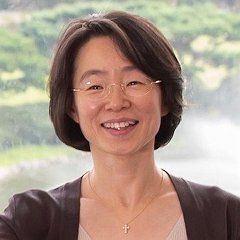
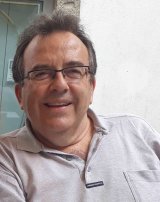
Raul Garcia Castro is a Professor in the Department of Artificial Intelligence at Universidad Politécnica de Madrid. He has been affiliated with the university since 2016 and contributes to both academic and research activities. His work spans interdisciplinary domains, including artificial intelligence, software engineering, and automation systems. University: Universidad Politécnica de Madrid Department: Artificial Intelligence Academic Rank: Professor His research interests focus on Artificial Intelligence , with applications in Software Engineering , Automation & Control Systems , and Information Systems . He also explores multidisciplinary areas such as materials science, building construction, and computer networks. His work bridges theoretical and applied domains across engineering, chemistry, and computer science. Email: r.garcia@upm.es
María Asunción Cucala García is a Professor at the Higher Technical School of Engineering (ICAI) of the Comillas Pontifical University, where she has been teaching for 23 years. She is affiliated with the Department of Telematics and Computing and is also a researcher at the Technological Research Institute (IIT). Dr. Cucala García obtained her degree in Industrial Engineering, specializing in Electronics, from the Comillas Pontifical University ICAI in 1995, and earned her PhD in Electrical Engineering from the same institution in 2003. Her research focuses on the analysis, design, and improvement of railway systems operations, with particular emphasis on: Railway traffic design and control Automatic traffic planning and regulation Railway system modeling and simulation Optimization techniques for railway operations Fuzzy logic applications in railway systems Energy efficiency in railway systems Her publications demonstrate a consistent focus on railway operations, energy efficiency, and optimization techniques, with particular attention to the application of artificial intelligence and advanced algorithms to improve railway system performance. She has published extensively in high-impact journals related to transportation engineering, electrical engineering, and artificial intelligence applications. Dr. Cucala García has received several professional recognitions: Sexenio Campo 6.2 - Ingenierías y Arquitectura - Ingenierías de la Comunicación, Computación y Electrónica (2013-2018) Sexenio Campo 6.2 - Ingenierías y Arquitectura - Ingenierías de la Comunicación, Computación y Electrónica (2006-2012) Certificación ACAP - Profesor Doctor de Universidad Privada (07/06/2005) She currently teaches courses in Computer Science Fundamentals and Advanced Systems for Railway Traffic Design and Control at the Comillas Pontifical University. Her research work is closely integrated with practical applications in railway systems, particularly in the areas of energy efficiency and intelligent control systems.
Eduardo Alonso Rivas is an Assistant Professor (Doctor Level 3) in the Department of Electronics, Automation and Communications at the Higher Technical School of Engineering (ICAI) , Comillas Pontifical University , Madrid. With 13 years of teaching experience and recent appointment as Professor in 2023, he specializes in electronic systems, biomedical engineering, and instrumentation. Education PhD in Industrial Engineering, Comillas Pontifical University, 2023 MSc in Engineering Systems Modeling, Comillas Pontifical University, 2015 Industrial Engineering Degree, Comillas Pontifical University, 2009 Degree in Automation & Industrial Electronics, Comillas Pontifical University, 2009 Research Interests Dr. Alonso Rivas focuses on the convergence of electronics and biomedical applications. His work spans intraoperative neurophysiological monitoring systems , fast-settling biosignal amplifiers , skin–electrode interface characterization , and portable impedance-based health monitors . He also investigates power-line communication strategies for smart-grid metering, illustrating a dual expertise in clinical electronics and industrial communications. Publication Focus Across seven peer-reviewed articles (2014-2022), his research follows two dominant threads: (1) biomedical instrumentation —designing wireless, low-noise devices for real-time neural monitoring and diagnostics; (2) power-line communications —optimizing latency and polling strategies in PRIME-based smart-meter networks. This duality underscores a commitment to both cutting-edge healthcare technology and sustainable energy systems. Scientific Awards No specific awards or fellowships are listed in the provided text. Teaching & Supervision Since 2010 he has taught Electronics , Digital Electronics , Microprocessors , Electronic Systems , and Biomedical Instrumentation , as well as supervising Master theses. He progressed from Assistant Collaborator to full Professor in 2023, demonstrating sustained pedagogical commitment. Laboratory & Team Affiliation While explicit laboratory names are not provided, his affiliation with the Department of Electronics, Automation and Communications and prior research at the Technological Research Institute suggests active participation in instrumentation and communications laboratories within ICAI.
Sergio Dominguez Cabrerizo is a Professor in the Department of Automatic, Electrical and Electronic Engineering and Industrial Computational Technology at the School of Industrial Engineering, Technical University of Madrid (UPM). He has held this position since June 6, 2000, and currently serves as Director of the School of Industrial Engineering. He is an active member of the Computer Vision and Aerial Robotics research group (since June 14, 2005) and the Center for Automation and Robotics (CAR), a joint UPM-CSIC research center (since July 8, 2009). His research focuses on Computer Vision and Aerial Robotics, with strong emphasis on Control Systems and Automation. His work integrates Electrical Engineering and Computer Science principles to develop advanced robotic systems, particularly for aerial applications. Bibliometric analysis of his publications reveals prominent engagement in Automation & Control Systems, Robotics, and interdisciplinary engineering fields. Professor Dominguez Cabrerizo contributes significantly through the Center for Automation and Robotics (CAR), where he participates in cutting-edge research in robotics and automation. His leadership as Director of the School of Industrial Engineering underscores his administrative impact within UPM's academic structure.
Luis Miguel Pozo Coronado serves as a Professor in the Department of Mathematics Applied to Information and Communication Technologies at the Technical University of Madrid, holding this position since December 19, 2012. He actively contributes to the Mathematical Modeling and Biocomputing Research Group as a member since March 3, 2015. His research demonstrates exceptional interdisciplinary breadth across mathematical and physical sciences, with core expertise in Algebra and Number Theory, Theoretical Computer Science, and Discrete Mathematics and Combinatorics. Significant contributions extend into Statistical and Nonlinear Physics, Quantum Science & Technology, and multidisciplinary applications of Applied Mathematics and Mathematical Physics. This synthesis of pure mathematics with computational physics and information technologies defines his scholarly identity. Within the Mathematical Modeling and Biocomputing Group, Pozo Coronado engages in collaborative projects bridging abstract mathematical frameworks with real-world biocomputing challenges, particularly through quantum-inspired computational models and nonlinear dynamical systems analysis.
Daniel Martinez Ruiz is an Associate Professor at the Technical School of Aeronautics and Space of the Polytechnic University of Madrid (UPM), working in the Department of Fluid Mechanics and Aerospace Propulsion since September 2018. He progressed from Teaching and Research Staff to his current position as Associate Professor, with promotion to Contracted Doctor status in May 2021. His research focuses on: Fluid mechanics and combustion phenomena Green hydrogen and energy transition technologies Reactive flows and shock wave dynamics Turbulent mixing and multiphasic interactions Premixed flame propagation in narrow channels Supersonic combustion and detonations Dr. Martinez Ruiz employs a multidisciplinary approach combining asymptotic theoretical methods, experimental testing, and numerical simulation to address fundamental combustion challenges. His work has significant implications for clean energy technologies and hydrogen-based propulsion systems. His research contributions have been recognized with prestigious awards: Milton Van Dyke Prize (Atlanta 2018 Gallery of Fluid Motion) by the American Physical Society for work on "Premixed-flames oscillations in narrow channels" José Castillejo scholarship for international mobility of university professors 2021 Juan de la Cierva - Incorporation 2017 state scholarship As an academic supervisor, Dr. Martinez Ruiz has guided two PhD students to completion: Fernando Veiga López ("Flame propagation in narrow channels" - UC3M, defended June 15, 2020 Cum Laude) and Alba Domínguez González ("Isolated flames of lean hydrogen-air mixtures in narrow gaps" - UPM, scheduled defense February 2025). He leads the Combustion and Fluid Mechanics Laboratory at ETSI Aeronautics and Space, which maintains specialized experimental equipment and computing resources. His laboratory actively participates in national and international collaborations with institutions including UC San Diego, Stanford University, CIEMAT, Carlos III University of Madrid, and European research centers M2P2 and IRPHE in France.
Dr. Juan Carlos Aguado Chao is a full-time Professor at the Polytechnic University of Catalonia , affiliated with the School of Telecommunications and Aerospace Engineering and the Department of Systems Engineering, Automatics and Industrial Informatics . He holds a PhD in Computer Science and has contributed extensively to intelligent data science and knowledge engineering research. Research focus: AI, data science, and knowledge engineering Active member of the GREC and IDEAI-UPC research groups Contact: juan.carlos.aguado@upc.edu ORCID: 0000-0002-1548-8964
Albert Almajano Serra serves as an Associate Professor at the Business Engineering School (BES) of Ramon Llull University's La Salle Campus Barcelona since 2008, while concurrently holding the position of CIO Iberia at BBraun. His academic credentials include: Computer Engineering Degree (Universitat Autònoma de Barcelona, 1998) Master in Business Administration (ESADE, 2002) Master in Technology Management (BES La Salle, 2007) Management Development Program (IESE) CIO Advanced Program (ESADE, 2015) Master in Digital Business (ESADE, 2016) His expertise bridges engineering and business disciplines with emphasis on digital transformation. He actively teaches across seven master's programs including Technology Management, Information Technology, eHealth, Project Management, and Supply Chain Management, reflecting his integrated approach to technological and organizational leadership. His work demonstrates strong industry-academia alignment through practical applications in healthcare IT and enterprise systems. Internationally, he maintains an associate professor role at Universidad San Ignacio de Loyola in Lima, Peru, extending his educational impact across Iberian and Latin American institutions.
Sukyoung Ryu is a Professor in the Department of Computer Science at KAIST's College of Computing, South Korea. Her research centers on programming languages and program analysis, with significant contributions to WebAssembly, JavaScript semantics, and language specification. She leads the Programming Languages Research Group (PLRG) at KAIST. Her research spans multiple critical areas including executable specification engineering, static analysis techniques, and language interoperability. Recent work focuses on WebAssembly conformance testing, C-to-Rust translation, and bridging real-world implementations with formal semantics. Her group develops practical tools like SpecTec for mechanized language specifications and JISET for JavaScript semantics extraction. Analysis of her 15 most recent publications reveals strong trends in executable specifications (7 papers), WebAssembly tooling (5 papers), and language translation (4 papers). Key methodological approaches include record-replay debugging, filtered-simulation for binary lifting, and algebraic data type transformations for memory safety. Ryu actively contributes to the programming languages community through leadership roles including Steering Committee Chair for APLAS, Program Co-Chair for SPLASH/OOPSLA, and committee positions at POPL, PLDI, and ICFP. She frequently organizes workshops on real-world language specification (RPLS) and presents keynotes on programming language research for social good. Her mentoring activities include co-chairing New Faculty Symposia and participating in RTFM panels on faculty mentoring. She advises students through KAIST's programs and supervises research in the PLRG lab, which focuses on building practical language tools with formal foundations. Current projects emphasize WebAssembly standardization, secure language interoperability, and specification-based testing frameworks.
Alastair Reid is a researcher at Intel (2021–present) focusing on formal instruction set architecture (ISA) specifications and model checking processor pipelines. His career spans roles at Google Research (2019–2021) developing Rust verification tools, Arm Ltd (2004–2019) working on formal ISA specifications and vectorizing compilers, University of Utah (1998–2004) on component-based operating systems, Yale University (1994–1998) contributing to Haskell functional reactive programming, and University of Glasgow (1988–1994) in formal specification and verification. Ph.D. in Defining interfaces between hardware and software: Quality and performance , Glasgow University M.Sc. in A precise semantics for Ultraloose Specifications , Glasgow University B.Sc., University of Strathclyde His research interests include formal verification, security analysis, functional programming languages (particularly Haskell and Rust), and computer architecture. He has contributed to the development of machine-readable ISA specifications for ARM, RISC-V, and Intel architectures, and worked on symbolic execution tools like KLEE for Rust verification. Key publications include work on RISC-V specification improvements (2024), formal methods for persistent programming (2023), PLARCH workshop contributions on ISA specification (2023), and foundational papers on ARM processor verification with ISA-Formal (2016). His technical blog posts cover topics in symbolic execution, SMT solvers, and practical verification challenges. Contributions to conferences include committee roles in PLDI (2024), PriSC (2024), and workshop organization in formal methods and programming language design.
Francisco Javier Cantoral Justo is a Part-Time Lecturer in the Department of Statistics, Mathematics and Informatics at Miguel Hernández University of Elche, Spain. His teaching focuses on database management and software development techniques. Contact: fcantoral@umh.es | jcantoral@teralco.com | Personal Website Office hours: Thursday & Friday, 10:00–11:00 (by prior email request) Teaching since at least 2023/2024 academic year Research fields include: Database Systems Agile Software Development Statistical Computing Mathematical Informatics His academic activity is primarily focused on teaching and laboratory instruction, with current affiliations in the School of Computing Languages and Systems and the Department of Statistics, Mathematics and Informatics.
José Juan López Espín is an Associate Professor at the Department of Statistics, Mathematics and Informatics at Miguel Hernández University of Elche. He holds the academic rank of Associate Professor and serves as Vice Rector for Student Affairs and Coordination, overseeing educational initiatives and administrative coordination. Additionally, he co-directs the Chair of Rock, Modern Music and New Trends. His research interests include mathematical modeling in supercomputers, high-performance systems, and computational optimization. He has coordinated courses across multiple academic programs, such as Digital Communication and the Internet for Journalism degrees, Innovation and New Technologies in Education for teacher training, and Artificial Intelligence in Optimization for computational statistics. He also leads the research group 'Mathematical Modeling in Supercomputers and High-Performance Systems.' Contact details include his office location at the Vice Rectorate for Student Affairs and Coordination, and his departmental office in Elche, Alicante.
Noel Suárez Barro is a researcher at the University of Santiago de Compostela (USC), affiliated with the Intelligent Systems Group. He contributes to teaching in the BSc on Artificial Intelligence, delivering courses such as "Integrated Project of AI I" and "Unsupervised Machine Learning." His work spans academic instruction and research in computational intelligence. Research Interests: His expertise focuses on artificial intelligence, particularly in machine learning and unsupervised learning methodologies. This aligns with his teaching responsibilities and research group involvement. Academic Roles: Currently engaged as a researcher and instructor in the BSc program, he plays an active role in the academic community at USC despite the absence of detailed information about awards, publications, or advisees.
Angel Manuel Martin Cojo is an Associate Professor in the Department of Architecture at La Salle Technical School of Architecture, Universitat Ramon Llull. His research focuses on Human-Environment interactions within architectural design and urban planning contexts, with particular emphasis on innovative housing solutions and digital design methodologies. Dr. Martin Cojo's research profile reveals significant expertise across multiple architectural domains: Housing Unit Engineering (100% focus) Building System and Dwelling Engineering (50% focus) Design Process and Design System Engineering (50% focus) Optimization Techniques for Floor Plan development Affordable Housing solutions and mass customization approaches His scholarly work demonstrates a consistent trajectory from foundational research on digital housing systems to contemporary interdisciplinary projects examining human-environment interactions. The Barcode Housing System concept represents a significant contribution to the field, proposing an open and collaborative framework for housing design and construction that integrates information and communication technologies. Dr. Martin Cojo has maintained an active research program with an h-index of 5, indicating a focused scholarly impact in his specialized areas of expertise. His work shows strong connections between architectural design, digital technologies, and user-centered housing solutions. He has been consistently involved in major research initiatives supported by: Agència de Gestió d'Ajuts Universitaris i de Recerca (AGAUR) European Commission funding programs Current projects include Human-Environment Research (2022-2025) and A-PLACE: Linking places through artistic practices (2019-2023), demonstrating his expanding interdisciplinary approach that integrates architectural practice with social and environmental considerations.
Professor José I. Borrell is affiliated with the IQS School of Engineering at Universitat Ramon Llull , where he leads the Pharmaceutical Chemistry Group . His research focuses on drug design for hematological cancers , particularly targeting CXCR4 and kinase pathways like IRAK4 , FGFR2 , and IGF1R . He directs key projects such as DisX4lymph (CXCR4 allosteric inhibitors) and PROTEOblood (proteinopathy analysis in blood cancers). His projects span 2003-2025 with funding from the State Research Agency , European Commission , and AGAUR . Recent work includes covalent reversible IRAK4 inhibitors , non-symmetrical CXCR4 antagonists , and structure simplification methods for dual kinase inhibitors. His team employs molecular modeling and virtual screening to develop novel therapeutics. Scientific production shows 161 publications with 2615 Scopus citations. Active collaborations within PROTEOblood and with researchers like R. Estrada-Tejedor and J. Teixidó highlight his role in B-cell lymphoma and pancreatic cancer research. The Pharmaceutical Chemistry Group maintains focus on oxidative dehydrogenation and heterocyclic synthesis since 2017.