Liang Kong is a Researcher at the Southern University of Science and Technology (SUSTech) . He previously held academic positions at Tsinghua University (Associate Professor), Harvard University (Research Associate), University of New Hampshire (Lecturer), and several postdoctoral institutes including the Max Planck Institute, IHES, and California Institute of Technology. Education : PhD in Mathematics (2005, Rutgers University), Master (1997) and Bachelor (1994) in Physics (University of Houston and University of Science & Technology of China). Research Interests : His work bridges mathematical physics , topological field theories , and category theory , focusing on 2D conformal field theories , topological phases of matter , and enriched monoidal categories . He explores connections between quantum field theories and algebraic structures like tensor categories and braided fusion categories, with applications to quantum computing and condensed matter physics . Publications : His research spans topological quantum field theory , conformal field theory , and quantum lattice models , with notable contributions to Levin-Wen models , Cardy algebras , and anyon condensation . Collaborative works with Xiao-Gang Wen and Ingo Runkel underpin his impact in topological order classification and gapless edge states . Positions : Current role at the Shenzhen Institutes of Quantum Science and Engineering (2018–present) follows appointments at Harvard, Tsinghua, and the University of New Hampshire.
Fang Kong is an Assistant Professor in the Department of Statistics and Data Science at the Southern University of Science and Technology (SUSTech). He earned his PhD in Computer Science from Shanghai Jiao Tong University under the supervision of Prof. Shuai Li and received his Bachelor's degree in Software Engineering from Shandong University. Education: PhD in Computer Science, Shanghai Jiao Tong University (2020-2024) Bachelor's Degree in Software Engineering, Shandong University (2016-2020) Dr. Kong is broadly interested in developing theoretically guaranteed algorithms for sequential decision-making problems, with particular focus on multi-armed bandits and reinforcement learning, as well as their applications in online experimentation and recommendation systems. His research spans theoretical foundations of bandit algorithms, matching markets, influence maximization, and online learning under various feedback structures. He has made significant contributions to the understanding of best-of-both-worlds algorithms that perform well in both stochastic and adversarial environments. His publication record shows a strong trajectory of high-impact work in top-tier conferences including NeurIPS, ICML, ICLR, AAAI, WWW, and AAMAS. His research demonstrates expertise in theoretical machine learning with a focus on bandit algorithms, particularly in matching markets and sequential decision-making problems. His work often bridges theoretical guarantees with practical applications in recommendation systems and online experimentation. Scientific Awards: CCF Doctoral Dissertation Award in Agent and Multi-Agent Systems (2025) Baidu Scholarship (2024) National Scholarship for PhD students (2023, 2022) AAMAS Student Scholarship (2023) Microsoft Research Asia Excellence Award (2022) Dr. Kong actively mentors students at various levels, including PhD and Master's students at SUSTech, visiting students from other institutions, and undergraduate researchers. He serves as a reviewer for top machine learning conferences (ICLR, NeurIPS, ICML, WWW) and journals (IEEE PAMI, TMLR). His teaching includes graduate Machine Learning and undergraduate Artificial Intelligence courses at SUSTech.
Dr. Shaobo (Kevin) Li is a Tenured Associate Professor at the School of Business, Southern University of Science and Technology (SUSTech), with secondary appointment in the Department of Information Systems & Management Engineering. He holds a PhD in Business Administration from Nanyang Technological University (2019), Master of Business Administration (University of Virginia, 2014), Master of Finance (West Virginia University, 2012), and Bachelor of Business Administration (Lanzhou University, 2011). National High-Level Youth Talent Program awardee Overseas High-Caliber Personnel in Shenzhen City Recipient of 2018 China Scholarship Council’s Excellent Self-Funded Student Scholarship His research focuses on the intersection of digital economy, social welfare, and technology-driven marketing, employing experimental methods, empirical models, and neuroscience. He serves as Associate Editor for the Journal of Business Research and has published in top UTD-24 journals including Journal of Consumer Research, Information Systems Research, and Production and Operations Management. His work examines platform economics, brand management during crises, and consumer behavior related to AI, sustainability, and health decisions. He has led 10+ research projects (National Natural Science Foundation, Ministry of Science and Technology 2030 Program) and received multiple research awards, including Academy of Marketing Science Best Doctoral Dissertation Proposal Award (2019) and Best Paper Awards at China Marketing Science (2020,2024), China Marketing International Conference (2023), and CMAU Annual Conference (2023,2024). Teaching accolades include SUSTech’s Premier Teaching Award, Top 10 Most Popular Professor among undergraduates, and Nanyang Business School’s Best Graduate Teaching Award (2017). Teaches Financial Marketing (undergraduate) Teaches Frontiers of Management & Research Methods (PhD) Actively recruiting research assistants, postdocs, and joint PhD candidates with Hong Kong Polytechnic University
Dr. Shuping Liu is a Research Assistant Professor at the Institute for Quantum Science and Engineering , Southern University of Science and Technology (SUSTech), China, since August 2019. Her research focuses on solid-state quantum memory, rare earth crystals, and their applications in quantum storage, communication, and computation. Ph.D. in Materials Sciences (2016), Shanghai Institute of Ceramics, Chinese Academy of Sciences Joint Ph.D. (2015), Institute of Physics, Czech Academy of Sciences Master's (2012), University of Science and Technology of China Bachelor's (2011), Wuhan University of Technology Dr. Liu's expertise spans design, synthesis, and high-resolution spectroscopy of rare earth ion-doped materials, with applications in optical quantum technologies and scintillation ceramics. Her work addresses defect engineering, size reduction of nanoparticles, and optimization of luminescence properties for quantum memory systems. Her publications emphasize quantum-grade nanomaterials (2020–2021), coherent spectroscopy (2019), and scintillator optimization (2014–2017). Key methodologies include defect control, codoping strategies, and nanoscale fabrication, aligning with quantum storage and radiation detection technologies. Dr. Liu has no explicitly listed scientific awards or advisees in the provided text. Her collaborative work spans institutions including CNRS (France), Academy of Sciences of Czech Republic, and Shanghai Institute of Ceramics.
Huanhuan CUI is a Research Associate Professor in the Department of Biology within the School of Life Sciences at Southern University of Science and Technology (SUSTech) in Shenzhen, China. She joined SUSTech in December 2018 and serves as a master's supervisor, contributing to both research and graduate education in molecular biology and genetics. Educational Background: PhD in Biology, Free University of Berlin (2011.09-2016.04) MS in Animal Genetics, Northwest A&F University (2008.09-2010.06) BE in Bioengineering, Northwest A&F University (2004.09-2008.06) Dr. CUI's research focuses on the mechanisms and method development of gene transcription and epigenetic regulation, with particular emphasis on RNA translation control. Her work spans multiple biological systems including cancer biology, developmental biology, and cardiovascular research, demonstrating a strong interdisciplinary approach that integrates molecular biology, genomics, and bioinformatics techniques. She has made significant contributions to understanding chromatin remodeling, transcriptional regulation, and RNA processing mechanisms. Dr. CUI's publication record shows a consistent trajectory of high-impact research, with publications in prestigious journals including Nature Communications, Nucleic Acids Research, and Cellular & Molecular Immunology. Her work demonstrates expertise in CRISPR-based technologies, epigenetic regulation, and multi-omics approaches to studying complex biological processes. Before joining SUSTech, Dr. CUI held positions as a Clinical Research Manager at BGI Genomics (2017.09-2018.11), a PostDoc at Charite Universitaetsmedizin Berlin (2016.05-2017.06), and a Research Assistant at Humboldt University of Berlin (2010.09-2011.08), building a diverse research background that bridges basic science and clinical applications.
Zhang Jin is a Professor at the Department of Mathematics in the College of Science at Southern University of Science and Technology (SUSTech) since December 2024. He also serves as the Associate Vice Director of the Shenzhen National Applied Mathematics Center since February 2023. Education: Ph.D. in Applied Mathematics (2014, University of Victoria); M.Sc. in Operational Research (2010, Dalian University of Technology); B.Art in Journalism (2007, Dalian University of Technology) Research Interests span optimization theory , variational analysis , bilevel programming , and their applications in machine learning , economics , and data science . His work includes convergence analysis of first-order methods , stochastic/robust optimization , and error bound conditions . Recent Publications focus on nonconvex bilevel optimization , gradient-based algorithms , and stochastic programming , with papers in IEEE TPAMI , SIAM Journal on Optimization , and conferences like ICML , NeurIPS , and ICLR . Scientific Awards include the Youth Science and Technology Innovation Award from Guangdong Province (2022) , Youth Science and Technology Award from the Operations Research Society of China (2020) , and Junior Research Award from SUSTech's Faculty of Science (2020) . Students: Supervises Ph.D. candidates like Yixia Song , Peixuan Yang , and Qichao Cao , along with Master's students Yixuan Zhang , Kaiqi Sun , and Feifan Wang . Grants: Leads projects such as the National Key R&D Program (3.2M RMB, 2024-2028) and National Science Fund for Distinguished Young Scholars (2M RMB, 2023-2025) .
Yongshun Chen is a Chair Professor at Southern University of Science and Technology (SUSTech), where he serves as the founding director of the Department of Marine Science and Engineering. Previously, he was a Professor at Peking University's School of Earth and Space Sciences and an Associate Professor at Oregon State University's Institute of Oceanography. He is currently the President of InterRidge, the international association for mid-ocean ridge studies. Chair Professor, Southern University of Science and Technology (2013-present) Professor, Peking University, School of Earth and Space Sciences (2001-2013) Associate Professor, Oregon State University, Institute of Oceanography (1990s-2001) PhD in Geophysics, Princeton University (1989) Bachelor's degree in Geophysics, University of Science and Technology of China (1982) Professor Chen's research focuses on marine geophysics and seismotectonics, with particular emphasis on the dynamics of oceanic spreading plate boundaries and the formation mechanisms of the oceanic crust. His pioneering work has provided explanations for seismic observations of mid-ocean ridges and continental ophiolite suites. After returning to China in 2001, he pioneered the field of "seismic geotectonics" in mainland China, conducting mobile seismic array observations and developing seismological methods to study the three-dimensional structure of the crust and upper mantle in key tectonic regions. His research has led to several significant contributions, including the "corner flow" model for the asthenosphere in southern Tibet, a new model of Indian lithosphere subduction beneath Tibet, and a "local upper mantle convection model" to explain intraplate volcanism in Northeast China. His work has had substantial impact on the international geoscience community, with his oceanic crust formation model being widely adopted by marine geologists. Professor Chen has published over 130 academic papers with more than 2,038 citations, including a single paper with 270 citations. His research spans marine geophysics, seismic tomography, crustal and mantle structure, plate tectonics, and volcanic processes, with a particular focus on the Tibetan Plateau and Northeast China. National Science Fund for Distinguished Young Scholars (2002) Editor-in-Chief of Marine Geophysical Researches (2004-2008) Editor of Journal of Geophysical Research-Solid Earth Reviewer for the Earth Science Department of the National Natural Science Foundation of China Professor Chen has supervised numerous graduate students and postdoctoral researchers. He has led more than ten major research projects, including those funded by the National Natural Science Foundation of China, 973 and 863 programs of the Ministry of Science and Technology, and special projects for earthquake research. His research group utilizes advanced seismic techniques and collaborates with international institutions to study Earth's structure and dynamics. As the founding director of the Department of Marine Science and Engineering at SUSTech, Professor Chen has established research teams focusing on marine geophysics, ocean dynamics, and seafloor exploration. His department conducts field observations using mobile seismic arrays and collaborates on international ocean drilling programs to advance understanding of Earth's structure and evolution.
Jiaqing He is a Chair Professor and Vice Dean at the College of Science , Southern University of Science and Technology (SUSTech) , and serves as Head of the Department of Physics. He obtained his PhD in Physics from Wuhan University and Germany Juelich Research Center in 2004, followed by postdoctoral and faculty roles at Brookhaven National Laboratory (2004–2008), Northwestern University (2008–2012), and Xi'an Jiaotong University (2012–2013) before joining SUSTech in 2013. Education PhD in Physics (2004), Wuhan University & Juelich Research Center BS in Physics (1998), Wuhan University Research Focus : His lab specializes in Transmission Electron Microscopy (TEM) for atomic-scale characterization of materials, particularly thermoelectric materials for energy conversion. Key areas include defect analysis, phase transformations, and structure–property correlations in chalcogenides, skutterudites, and 2D systems. Techniques span HRTEM, STEM, EELS, and in-situ TEM. Recent Publications highlight advancements in high-entropy materials, nanostructure engineering, and resonant phonon scattering mechanisms. His work bridges fundamental physics and scalable device applications. Awards & Honors : Pengcheng Scholar Distinguished Professor (2014) Ministry of Education Natural Science Second Prize (2017) Shenzhen Natural Science Second Prize (2017) & First Prize (2022) Shenzhen May 1st Labor Medal (2018) Laboratory Overview : The JQHe Research Lab integrates TEM with thermoelectric material development, emphasizing atomic-level insights into defects and interfaces. It also explores flexible Bi2Te3 films and high-entropy GeTe-based systems for power generation.
Hong Wei is a Professor at the Department of Mechanics and Aerospace Engineering , Southern University of Science and Technology (SUSTech) . He also serves as Director of SUSTech Global and Associate Dean of Academic Affairs at Shuli College . Previously, he held tenured positions at Iowa State University and dual appointments at Hokkaido University . Hong Wei earned his B.S. and M.S. in Solid Mechanics from Tsinghua University , followed by a Ph.D. in Engineering Science from Harvard University (2006) . His research spans solid mechanics , soft matter mechanics , dielectric breakdown , smart materials , electrochemical reactions , and surface instability . Current work focuses on phase-field modeling and coupled deformation-transport phenomena in soft materials. His representative publications cover cutting-edge topics in Science Advances , J. Mech. Phys. Solids , and Soft Matter , with trends in hydrogel mechanics , electromechanical coupling , and material failure analysis . Scientific recognition includes being named a Fellow of the American Society of Mechanical Engineers (ASME) , alongside editorial roles in journals like Meccanica and International Journal of Applied Mechanics . Hong Wei has mentored students such as Sun Xingjian (doctoral student), Wang Sicong , Pan Lei , Feng Xianke , and Shen Zhiyuan , who received the Lixue Scholarship . He has led international projects and secured grants from the National Science Foundation (USA) and National Natural Science Foundation of China .
Dr. Huan Hu is an Assistant Professor at the School of Microelectronics, Southern University of Science and Technology (SUSTech), Shenzhen, China. He holds a Ph.D. from Washington State University (2021) and has worked in industry at Skyworks Solutions and Biotronik/MSEI on low-power circuits for IoT and biomedical applications. Education: Ph.D., Washington State University, 2021 M.S., Oregon State University, 2015 B.S., University of Electronic Science and Technology of China, 2013 His research focuses on ultra-low power analog/mixed-signal integrated circuits for biomedical wearable/implantable devices and artificial intelligence of things, including applications in sensor interfaces, energy-efficient radios, and in-memory computing architectures. Recent publications highlight advancements in time-domain processing , biofuel cell integration , and injection-locked transmitters for IoT and biomedical applications, with awards including Shenzhen Overseas High-level Talent (2022) and IEEE RFIC Best Student Paper Award Nomination (2020). Scientific Awards: Shenzhen Overseas High-level Talent (Class C), 2022 RFIC Best Student Paper Award Nomination, 2020 Alaska Airline Travel Award, 2018 WSU Grand Challenges Fellowship, 2016-2017 OSU Laurels Scholarship, 2014-2015 He seeks motivated researchers for Research Assistant Professor , Postdoctoral Fellow , and Graduate Student positions in his group. Visit his lab page for details.
Qihang Liu serves as Professor in the Department of Physics at Southern University of Science and Technology (SUSTech), where he leads a research group focused on theoretical condensed matter physics and computational materials science. Previously Associate Professor at SUSTech (2018-2023), he maintains active collaborations with Peking University and international institutions including University of Colorado Boulder and Northwestern University. Education: Ph.D. in Condensed Matter Physics, Peking University (2007-2012) B.S. in Physics, Peking University (2003-2007) Research Focus: His work centers on symmetry-driven phenomena in quantum materials, particularly spin-group theory for magnetic systems and topological effects induced by spin-orbit coupling. Key contributions include: Development of FINDSPINGROUP program for spin symmetry identification Prediction of unconventional magnetism in antiferromagnets Design principles for quantum anomalous Hall effect in superlattice structures Computational exploration of spin-orbitronics materials Publication Trends: Recent publications (2019-2022) demonstrate consistent innovation in symmetry applications to magnetic topological materials, with emphasis on antiferromagnetic spintronics and computational design of novel quantum states. His work bridges theoretical predictions with experimental realizability in systems like Mn-Bi-Te compounds. Scientific Recognition: SUSTech Young Researcher Award (2021) SUSTech Young Professor Award (2022) Shenzhen Jieqing Talent Project (2022) Stanford Top 2% Scientists (2021, 2022) Grants & Leadership: Principal Investigator for China's National Key R&D Program "Quantum Control and Quantum Information" (2020), securing major funding for quantum materials research. His group actively mentors graduate students while developing next-generation spintronic materials and symmetry-based computational tools. Research Infrastructure: The Liu Research Group maintains specialized computational facilities for first-principles calculations and collaborates with experimental teams to validate theoretical predictions on spin-orbit coupling effects and topological phenomena in low-dimensional systems.
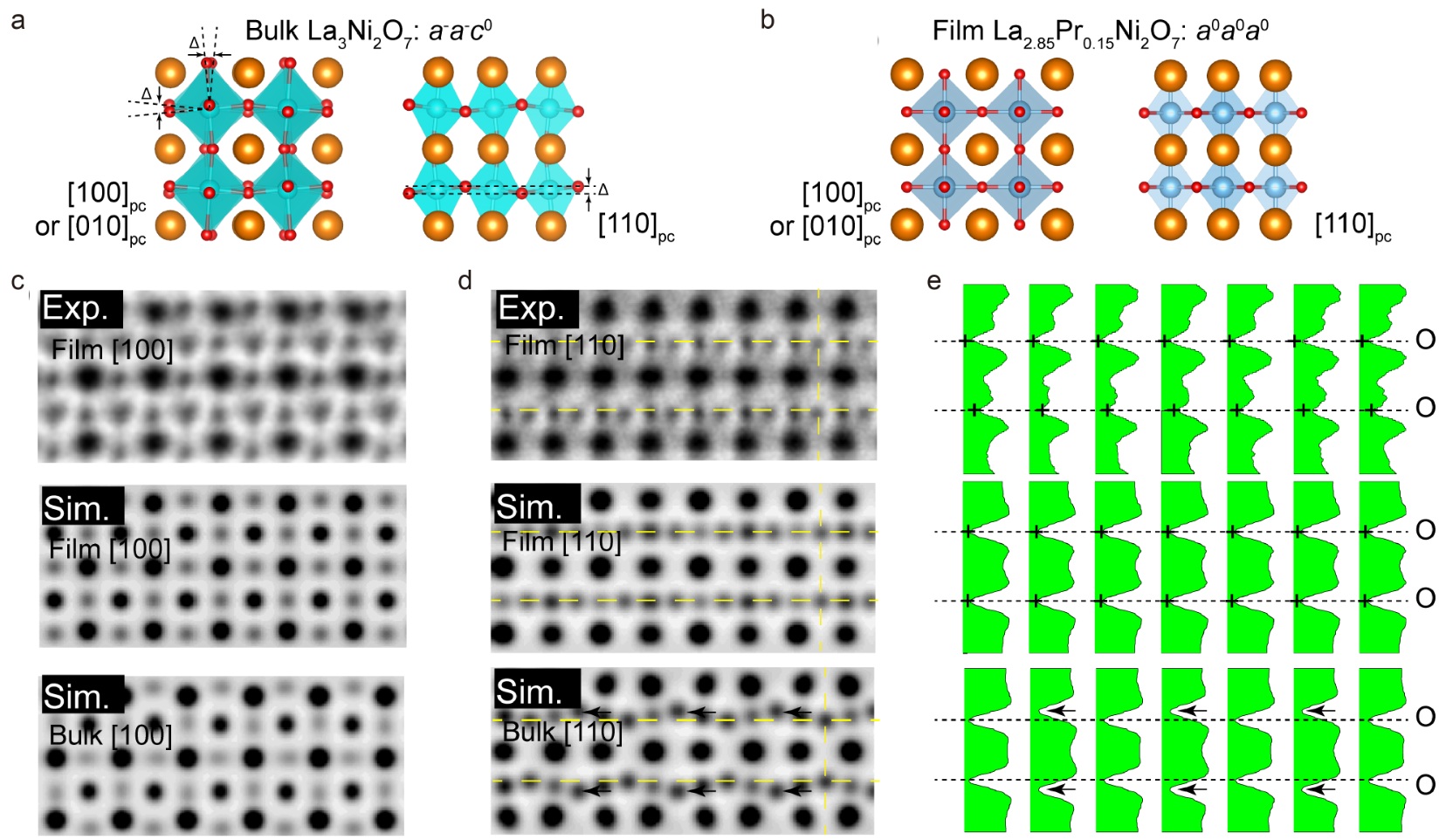
Prof. Junhao Lin is a tenured Full Professor at the Department of Physics, Southern University of Science and Technology (SUSTech). With a dual background in experimental and theoretical physics, he specializes in atomic-scale characterization of 2D materials, combining aberration-corrected STEM, EELS spectroscopy, and density functional theory calculations to study defect-structure-property relationships. Ph.D. (2015) from Vanderbilt University Postdoctoral work at National Advanced Institute of Science and Technology (Japan) under Kazu Suenaga Research Interests : Atomic-scale defect engineering in 2D materials In-situ high-resolution electron microscopy under external stimuli High-energy-resolution EELS for optical property characterization Quantum material structure-property correlations Publication Trends : Over 130 high-impact publications (Nature, Science, PRL) focusing on 2D material defects, phase transitions, and atomic engineering. Recent works explore nickelate superconductivity, magnetic phenomena in topological materials, and energy storage applications. Scientific Recognition : MIT Technology Review TR35 China (2021, Visionary category) Elsevier 2024 Highly Cited Researcher (China) Multiple international conference awards 8+ million RMB investment in glove-box interconnected lab systems Lab Overview : The Advanced Low-Dimensional Materials Laboratory at SUSTech (10+ members) integrates atomic-resolution STEM, in-situ TEM, and computational modeling. Collaborations span Oak Ridge National Lab, Peking University, and Singaporean/Japanese institutions.
Dr. Xiang Li serves as a Research Assistant Professor in the Department of Mechanics and Aerospace Engineering at the College of Engineering, Southern University of Science and Technology (SUSTech). He earned his Ph.D. in Mechanics from Harbin Institute of Technology in 2022 and previously held the position of SUSTech Presidential Postdoctoral Fellow. His academic journey includes: Ph.D. in Mechanics, Harbin Institute of Technology (2018-2022) Master in Mechanical Engineering, Shantou University (2015-2018) Bachelor in Mechanical Engineering, Shenyang University of Chemical Technology (2010-2014) Dr. Li's research specializes in experimental and computational fluid dynamics of complex multiphase systems, with particular focus on magnetic fluids. His work integrates theoretical modeling, numerical simulation techniques, and practical applications in microfluidics and advanced manufacturing. He has developed novel lattice Boltzmann methods for simulating ferrofluid behavior under magnetic fields, contributing significantly to the understanding of multiphase interface phenomena. His scholarly impact is evidenced by 19 research papers (including 4 ESI highly cited papers and 1 ESI Hot paper), 58 filed national patents in China (26 granted), and 3 PCT patents. His publications demonstrate a consistent focus on computational methods for magnetic multiphase flows, with recent work extending into biomedical applications such as COVID-19 detection systems. Professional recognitions include: Young Research Award of Guangdong Mechanics Society (2023) Excellent Postdoc of Shenzhen (2023) PoF Young Researcher Award (2017) National Scholarship at both Master's and PhD levels Outstanding Doctoral Graduate and Dissertation awards from SUSTech (2022) Dr. Li has secured five research projects totaling 930,000 yuan in funding, including the National Natural Science Foundation of China Youth Project. He actively contributes to the scholarly community as a reviewer for multiple journals, maintaining Star Reviewer status for Physics of Fluids from 2019-2023.
Dr. Tao Dong is a full professor in the School of Life Sciences and Department of Immunology and Microbiology at Southern University of Science and Technology (SUSTech), Shenzhen, China. His academic journey includes a BSc from Shandong University (1999-2003) and a PhD from McMaster University (2004-2010), followed by postdoctoral training at Harvard Medical School under John Mekalanos, where he received the Banting Fellowship. Prior to joining SUSTech, he served as an assistant professor at the University of Calgary (2013-2021), achieving tenure and promotion to full professor. Education : BSc (Shandong University, 2003), PhD (McMaster University, 2010) Institutional Affiliation : Southern University of Science and Technology (2021-present) Dr. Dong’s research centers on bacterial survival mechanisms in diverse environments, focusing on protein secretion systems in host-pathogen interactions. His work addresses molecular adaptation, novel antimicrobial discovery, and the functional dynamics of secretion systems. Recent publications highlight advancements in Type VI Secretion System (T6SS) regulation, effector delivery mechanisms, and stress responses, spanning journals like mBio , Proc. Natl. Acad. Sci. , and Nat. Microbiol. . Scientific Awards : Banting Fellowship, Canada Research Chair Tier 2 Dr. Dong actively mentors postdoctoral fellows and graduate students, offering internationally competitive fellowships. His lab explores host-microbe interactions through experimental models like CRISPR/Cas9 editing and transgenic mice. He contributes to academic discourse via teaching courses such as Advanced Microbiology and Introduction to Biological Sciences.
DAI Jiansheng is a Chair Professor at Southern University of Science and Technology (SUSTech) and Director of the Robotics Research Institute. He is a Fellow of the Royal Academy of Engineering (FREng), Fellow of the Academia Europaea, and holds multiple fellowships including IEEE, ASME, RSA, and IMechE. As Editor-in-Chief of the international journal Robotica, he has established himself as a leading authority in mechanisms and robotics research. His educational background includes a PhD from the University of Salford (1989-1993), a Master's degree from Shanghai Jiao Tong University (1982-1984), and a Bachelor's degree from the same institution (1978-1982). His academic journey has taken him from postdoctoral work at Salford University to research positions at Unilever Liverpool Research Centre before becoming a faculty member at the University of Sunderland and ultimately King's College London, where he served as Reader and then Chair Professor from 2007 until his current position at SUSTech. Professor Dai's research spans theoretical kinematics, screw theory, Lie algebra, and their applications to metamorphic and reconfigurable mechanisms. His pioneering work bridges the gap between versatile but expensive robots and efficient but non-flexible machines. His research interests include origami-inspired robotics, rehabilitation robotics for ankle treatment, soft robotics, and industrial applications in packaging and manufacturing. His theoretical framework has enabled significant advances in reconfigurable parallel mechanisms and metamorphic robotics. His extensive publication record shows a clear progression from fundamental theoretical work on screw algebra and Lie groups to practical applications in rehabilitation, manufacturing, and soft robotics. Recent publications demonstrate increasing focus on soft robotics, variable stiffness actuators, and continuum robots with Shape Memory Alloy applications, while maintaining strong theoretical foundations in screw theory and kinematic analysis of metamorphic mechanisms. ASME Mechanisms and Robotics Award (2015) ASME Machine Design Award (2020) IFToMM Excellence Award (2023) Tianjin Municipal Natural Science First Prize (2021) Crossley Award (2018) AT Yang Award in Theoretical Kinematics (2019) Professor Dai has supervised over 50 PhD students who now hold faculty positions at world-leading universities including University College London, Queen Mary University London, Purdue University, and Wollongong University. His research has been supported by numerous grants enabling the establishment of advanced robotics laboratories and international collaborations. He founded the IEEE Triennial International Conference on Reconfigurable Mechanisms and Robots (ReMAR), creating a major platform for international scholarly exchange in this specialized field. His research group maintains strong industry partnerships with companies including Cambridge Consultants, Goldman Sachs, and Amazon. The Robotics Research Institute he directs at SUSTech serves as a hub for interdisciplinary research, bringing together experts in mechanical engineering, computer science, biomedical engineering, and materials science. The institute focuses on both fundamental theoretical advances in mechanism design and practical applications in healthcare, manufacturing, and service robotics, with particular emphasis on metamorphic and reconfigurable systems that can adapt to multiple tasks.