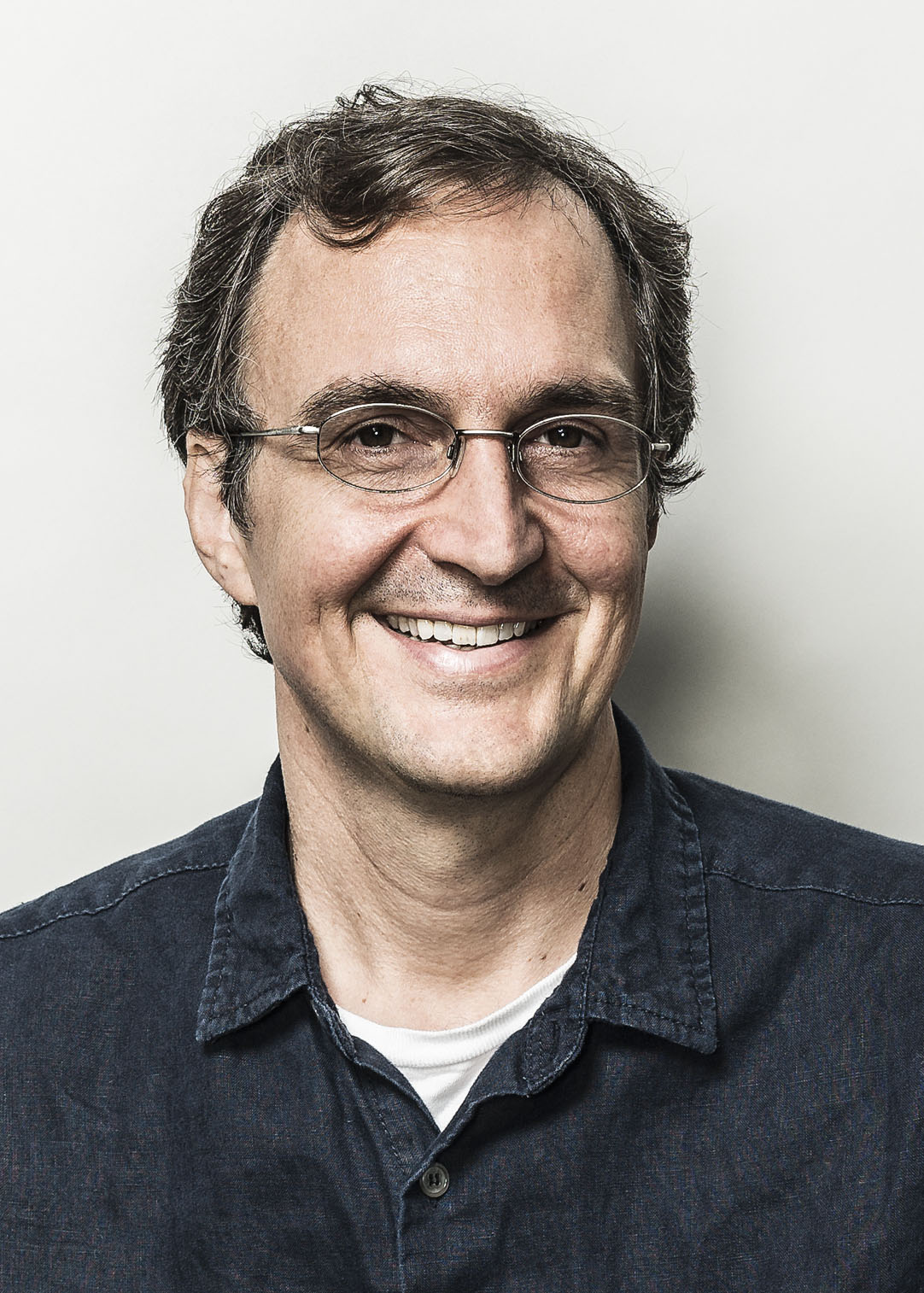
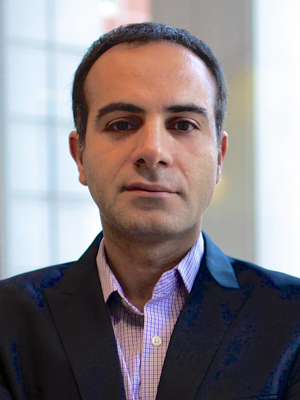
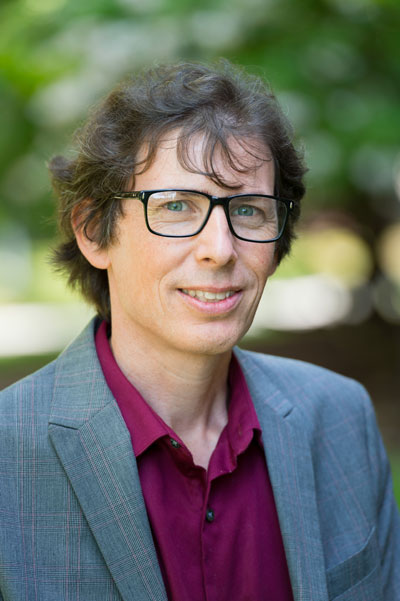
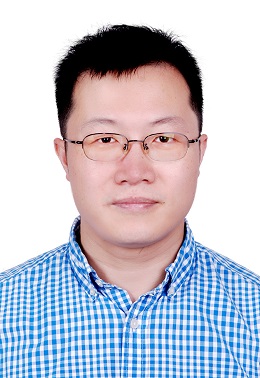
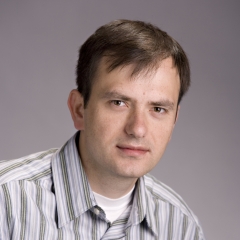
Michael S. Brown is a Professor and Canada Research Chair at York University's Department of Electrical Engineering and Computer Science (EECS). He also serves as Senior Director at the Samsung AI Center in Toronto, Canada. His research focuses on computer vision, image processing, and computer graphics, with a deep specialization in camera imaging pipelines, color theory, and AI-driven ISP optimization. He has organized major conferences like ProCams, eHeritage, WACV, and ICCV, and holds editorial roles in journals like TPAMI and IJCV. He is renowned for his work on computational color constancy, ISP hardware algorithms, and AI-based image enhancement techniques. His recent ICCV 2023 tutorial detailed modern camera pipelines and AI applications in ISP components. His research is supported by grants from NSERC, Samsung, Adobe, Google, and Microsoft. Brown advises numerous graduate students and has mentored over 30 alumni now in academia and industry roles at Meta, Samsung, Microsoft, and startups. His lab focuses on camera systems, noise modeling, and cross-platform color management, with contributions to open-source datasets and software platforms for ISP experimentation.
Deval Desai serves as Reader in International Economic Law at the University of Edinburgh's Edinburgh Law School, a position he has held since 2020 after serving as Lecturer from 2020-2023. His academic career includes research positions at Harvard Law School and the Geneva Graduate Institute. Dr. Desai also brings extensive practical experience from a decade working with the World Bank on rule of law and governance in sub-Saharan Africa, as well as advising the United Nations on rule of law issues. Dr. Desai's educational background includes an MA in History and French Literature from Oxford University, followed by legal training at City University/BPP Law School (PGDipL and PGDipLP), and advanced law degrees (LLM and SJD) from Harvard Law School. At Harvard, he held prestigious fellowships including the Byse Fellowship, Program on Negotiation Next Generation Fellowship, and Institute for Global Law and Policy Fellowship. MA (Oxon), History and French Literature PGDipL, PGDipLP, City University/BPP Law School LLM, Harvard Law School SJD, Harvard Law School Dr. Desai's research centers on law and development, administrative law and regulation, theories of the state, and patterns of knowledge and authority across the Global North and South. His work examines institutional reform processes, particularly how expertise and knowledge operate within rule of law initiatives. His interdisciplinary approach draws from legal and social theory, development studies, international relations, and performance studies, as evidenced in his monograph Expert Ignorance (Cambridge University Press). His recent work focuses on fiscal sociology, administrative law in the Global South, and the politics of social welfare provision. Dr. Desai's publications span leading journals in law, political science, and development studies, revealing a consistent focus on the intersections between legal institutions, governance, and development. His work demonstrates increasing engagement with comparative methodologies and critical perspectives on knowledge production in global governance. Recent articles show particular attention to fiscal policy, welfare systems, and responses to global crises like the Covid-19 pandemic, with comparative studies between India and European contexts. Dame Muriel Spark Medal (2024, Royal Society of Edinburgh) Chancellor's 'Rising Star' Award (2023, University of Edinburgh) Member of the Young Academy of Scotland Fellow of the Royal Society of Arts Fellow of the Young Academy of Europe Dr. Desai has secured significant research funding from diverse international sources, including a £2.1 million Swiss National Science Foundation Sinergia grant titled 'Reversing the Gaze: Towards Post-Comparative Area Studies' where he serves as PI. He also leads projects funded by the British Academy, University of Edinburgh's Big Ideas Accelerator, Scottish Funding Council, and Foreign, Commonwealth, and Development Office. His commitment to mentoring is evident through his recognition with the Susan Manning Award for Inspiring Mentor and his leadership in establishing programs like the Global Scholars' Academy at the Geneva Graduate Institute and the Global Justice summer school at CEU. As editor-in-chief of the Cambridge University Press book series 'Elements in Legal Theory and the Global South' and serving on multiple editorial boards, Dr. Desai plays a significant role in shaping scholarly discourse. His current research projects examine 'loss' in legal institutions guiding transitional processes, constitutional implications of fiscal arrangements in fragile contexts, and social welfare provision in India and Italy.
Affiliation & Education Scott Hauck is a Professor at the University of Washington's Department of Electrical & Computer Engineering and an Adjunct Professor in Computer Science & Engineering. He leads the Adaptive Computing Machines and Emulators (ACME) Lab . He earned his BS in EECS from UC Berkeley (1990), and MS/PhD in CSE from the University of Washington (1992/1995). Research Focus Dr. Hauck specializes in FPGA-based reconfigurable computing with applications in: Quantum Computing: FPGA controllers for trapped-ion quantum systems enabling precise laser control and quantum state readout. Medical Imaging: Portable radiation sensors for personalized cancer therapy and PET scanner enhancements. High-Energy Physics: FPGA readout systems for ATLAS pixel detectors at CERN's Large Hadron Collider. AI Acceleration: Real-time machine learning inference for scientific applications via projects like hls4ml. His work bridges hardware innovation with computational physics, emphasizing real-time processing and low-latency systems. Publication Trends Recent research focuses on FPGA-accelerated machine learning for particle physics (e.g., transformer networks for LHC trigger systems) and quantum computing instrumentation. Earlier work established foundations in reconfigurable computing architectures and medical imaging electronics. Awards & Recognition Distinguished Teaching Award, University of Washington (2010) Advising & Funding Leads the ACME Lab with extensive funding from NSF, DARPA, NIH, DOE, and industry partners including Intel, Xilinx, and Microsoft. Mentored over 30 MS/PhD students in VLSI, reconfigurable systems, and scientific computing. Collaborations & Labs Directs the ACME Lab (EE1-307), collaborating with UW Radiology (Prof. Robert Miyaoka), UW Physics (Prof. Shih-Chieh Hsu), and Drexel University (Prof. Josh Agar). Projects include quantum control systems, LHC readout electronics, and medical sensor networks.
J. Anthony Movshon is a Professor at New York University (NYU) in the Department of Psychology and a key member of NYU's Center for Neural Science (CNS). His research focuses on the primate visual system, particularly the encoding and decoding of visual information in cortical areas like V1 and MT, and its role in behavior and perception. Education: Doctorate in Visual Neurophysiology and Psychophysics from Cambridge University Research Interests: Movshon investigates the functional architecture of the visual cortex, emphasizing motion, form, and color processing. His work explores how neural activity relates to perceptual decisions and motor behavior, using electrophysiological recordings, neuroimaging, and computational models. He also studies developmental disorders like amblyopia and their impact on visual system organization. Publications: His recent work spans visual texture selectivity in V2, contextual modulation in neural responses, motion processing in MT, and decoding mechanisms in visual cortex. These studies employ interdisciplinary approaches blending neurophysiology, computational neuroscience, and cognitive modeling. Labs & Collaborations: Movshon leads the Visual Neuroscience Laboratory at NYU, collaborating with researchers such as Michael Hawken, Lynne Kiorpes, and Eero Simoncelli.
Sainyam Galhotra is an Assistant Professor in the Department of Computer Science at Cornell University. His research focuses on developing data science tools for trustworthy analytics, integrating causal inference, data management, and machine learning to enhance robustness, explainability, and fairness in algorithmic systems. PhD: University of Massachusetts Amherst (2020), advised by Barna Saha B.Tech: Indian Institute of Technology Delhi (2014), advised by Amitabha Bagchi Postdoctoral Research: University of Chicago (Computing Innovation Fellow) His work spans artificial intelligence, causal inference, and responsible data science, emphasizing ethical algorithm design and reliable data integration. Recent publications highlight advancements in fair clustering, causal feature selection, and entity resolution frameworks. His research trends from 2023–2024 include contributions to spatio-temporal data correlation, community detection in geometric graphs, and distribution-aware dataset search. Key themes are fairness in machine learning, causal modeling, and scalable data management solutions. Computing Innovation Fellowship (2021) DAAD AInet Fellow (2021) ACM SIGMOD Entity Resolution Programming Contest Finalist (2021) Krithi Ramamritham Computer Science Scholarship (2019) BEST Paper Award in SIGSOFT FSE 2017 He actively seeks PhD or Master’s students interested in data science and trustworthy AI. Contact via email: sg@cs.cornell.edu .
Professor Daniel Segrè is a faculty member at Boston University, holding the title of Professor of Biology, Bioinformatics, and Biomedical Engineering. His research focuses on systems biology, microbial ecology, and metabolic engineering, with an emphasis on understanding complex biological networks and their applications in bioenergy and biomedicine. Segrè leads the Segre Lab ( segrelab.bu.edu ), where theoretical and computational approaches are applied to study metabolism, microbial interactions, and synthetic biology. Segrè earned his PhD from the Weizmann Institute of Science, Israel. His work bridges fundamental science and applied engineering, addressing topics such as microbial community dynamics, metabolic pathway design, and environmental microbiome applications. Research Interests: Systems biology of metabolism, evolution of biochemical networks, microbial interactions, bioinformatics, and environmental microbiome engineering. His lab develops computational models (e.g., COMETS) to simulate microbial ecosystems and design synthetic microbial communities for climate change mitigation and bioenergy production. Teaching: Courses include BE 777 (Computational Genomics), BF 821 (Bioinformatics Seminar), and BF 571 (Dynamics and Evolution of Biological Networks). These courses reflect his expertise in integrating computational methods with biological systems analysis.
Nima Mesgarani is an Associate Professor of Electrical Engineering at Columbia Engineering, Columbia University, affiliated with the Sense, Collect and Move Data Committee. His research bridges engineering and neuroscience through reverse-engineering neural signal processing mechanisms, leading to advancements in brain-machine interfaces, neural prosthetics, and speech processing algorithms. He received his PhD in Electrical Engineering from the University of Maryland and completed postdoctoral training at Johns Hopkins University's Center for Language and Speech Processing and UC San Francisco's Neurosurgery Department. Research Focus Professor Mesgarani's lab integrates computational neuroscience and engineering to study acoustic signal processing. Key areas include: Neural decoding of speech and auditory attention in multi-talker environments Development of brain-controlled hearing technologies Novel speech separation and synthesis algorithms inspired by cortical processing Cross-modal learning between auditory and visual systems Applications of large language models in neural signal interpretation Publication Trends Analysis of his 15 most recent articles (2025) reveals dominant themes: neural decoding techniques using intracranial EEG, brain-inspired speech separation models (e.g., Mamba architectures), applications of large language models in auditory neuroscience, cross-modal distillation methods, and clinical translation of audio processing algorithms. A strong emphasis emerges on real-time brain-computer interfaces and noise-robust speech processing. Laboratory and Collaborations Mesgarani directs an interdisciplinary lab developing neurotechnology for hearing restoration. His team collaborates with neurosurgery departments and speech processing centers, focusing on translating theoretical models into clinical brain-machine interfaces. The lab's work has yielded patents for brain-informed speech separation systems and attention-decoding frameworks.
Steven Rogak is a Professor in the Department of Mechanical Engineering at the University of British Columbia's Faculty of Applied Science. He holds a P.Eng. license and degrees including a B.A.Sc. in Mechanical Engineering from UBC, and M.Sc. and Ph.D. from Caltech. P.Eng., University of British Columbia B.A.Sc., University of British Columbia M.Sc., Ph.D., California Institute of Technology His research focuses on aerosol science, particularly solid nanoparticles from combustion processes, their climate and health impacts, and mitigation strategies. Key areas include: Soot morphology and transport properties Engine emission reduction via fuel injectors Indoor air filtration systems Membrane-based energy exchangers Atmospheric particulate analysis The 15 most recent articles span experimental and theoretical studies on soot characterization, membrane technologies, and aerosol dynamics, with applications in climate modeling, healthcare ventilation, and sustainable materials. Collaborations include Westport Innovations and interdisciplinary teams. Rogak leads the Aerosol Laboratory at UBC, where he applies fluid mechanics and heat transfer fundamentals to address environmental and health challenges. He emphasizes experimental rigor and welcomes graduate students with expertise in these areas.
Rik Crutzen is a Full Professor at the Faculty of Health, Medicine and Life Sciences, Maastricht University, specializing in health promotion and digital interventions. His research focuses on leveraging technology to improve health behaviors across diverse populations, including adolescents, older adults, and immigrant communities. He leads projects in the CAPHRI research group for Promoting Health & Personalised Care. Research trends include: Digital health innovations (e.g., helplines, apps, algorithms) Chronic disease management (post-COVID-19, dementia risk) Health equity in immigrant populations (cervical cancer, maternal care) Behavioral interventions (physical activity, sleep, STI prevention) Systematic reviews and mixed-methods studies He has supervised 22 academic works and contributed to datasets on activity patterns and sleep-activity correlations. His work spans public health policy, health education, and technology integration.
Dr. Zhu Lailai serves as Assistant Professor in the Department of Mechanical Engineering at the National University of Singapore (NUS), appointed in January 2020. His research bridges fundamental fluid mechanics with cutting-edge engineering applications through computational and theoretical approaches. Dr. Zhu holds a PhD from KTH Royal Institute of Technology (Sweden) and completed postdoctoral training at Princeton University. His research program centers on: Low-Reynolds-number fluid-structure interactions and bio-inspired adaptive systems Active matter dynamics (Janus colloids, active droplets, flagella/cilia) Intelligent fluids integrating machine learning for fluid dynamics Microrobotics with reinforcement learning-based chemotactic navigation Non-Newtonian/multiphase flows and microfluidics applications Analysis of his 2017-2025 publications reveals a clear trajectory toward AI-enhanced fluid mechanics, evolving from foundational theoretical models to machine learning integration. Recent work emphasizes foundation models for fluid dynamics prediction and topology-adaptive microrobotic navigation, demonstrating interdisciplinary convergence of physics, AI, and bionics. Scientific Awards: No major scientific awards specified in source materials Advising and Grants: While specific advisees and grants aren't detailed, his active publication record across high-impact journals (Nature Communications, Journal of Fluid Mechanics) indicates ongoing supervised research and likely grant funding through NUS and collaborative projects. Research Group: Dr. Zhu leads a computational/theoretical research team at NUS investigating active and intelligent fluids, with current projects on PCM thermal systems, microrobotic navigation, and active matter phase transitions, collaborating with experimentalists globally.
Marek Pycia serves as Professor of Organizational Economics at the University of Zurich and Co-Director of the Zurich Center for Market Design. His research has driven tangible policy impacts including the U.S. kidney-transplant voucher program and school system redesigns, with publications in premier journals like American Economic Review and Econometrica . His academic foundation includes a Ph.D. in Economics from the Massachusetts Institute of Technology (MIT), complemented by prior faculty roles at UCLA, Pennsylvania State University, and Leon Koźmiński Academy of Entrepreneurship and Management, plus a visiting fellowship at Princeton University. Professor Pycia specializes in Market Design and Mechanism Design , where he bridges theoretical microeconomics with real-world applications in healthcare allocation and educational systems. His work emphasizes strategyproofness , simplicity , and efficiency in matching markets, influencing both academic frameworks and practical policy implementations globally. Recent publications (2024-2025) reveal a concentrated focus on simplifying mechanism design for discrete environments, advancing double auction theory, and optimizing information structures in trade. These works consistently apply game-theoretic principles to solve complex allocation problems across healthcare, education, and financial markets. Key recognition includes: Research Fellow at the Centre for Economic Policy Research (CEPR) Editorial board membership at Theoretical Economics , Journal of Economic Theory , and Games and Economic Behavior While specific grant details remain unmentioned, his editorial leadership and center directorship indicate active research funding. He supervises graduate work through the University of Zurich’s economics programs, though no named students appear in the source text. The Zurich Center for Market Design, which he co-directs, functions as an interdisciplinary hub connecting theoretical research with practitioners in healthcare, education, and public policy to implement novel market mechanisms.
Jonathan Snow is a Professor and Chair of the Department of Geology and Geophysics at Louisiana State University (LSU), College of Science. Previously, he held faculty positions at the University of Houston, including roles as Assistant Professor (2005–2008), Associate Professor (2008–2014), and Professor (2014–2019), and served as President of the Faculty Senate (2016). His academic journey includes a Bachelor’s in Geology from Indiana University (1983), Master’s from the University of Rochester (1986), PhD in Oceanography from MIT/WHOI (1993), and a Habilitation in Mineralogy from Universitat Mainz, Germany. Research interests focus on the Earth’s lithosphere formation, mantle melting processes, and oceanic crustal accretion. Key areas include mid-ocean ridge basalt petrogenesis, mantle noble metal geochemistry (Os, Re), and tectonics of fracture zones. Notable contributions include studies on the Arctic Ocean’s Gakkel and Lena Troughs, Hess Deep, and Shikoku Basin oceanic core complexes. Professional recognitions include NSF Graduate Fellowship (USA), Alexander von Humboldt Foundation Fellowship (Germany), DFG Heisenberg Program (Germany), and Japan Society for the Promotion of Science Fellowships. His work integrates field expeditions (e.g., ARKTIS cruises), laboratory geochemistry, and computational models to advance understanding of mantle dynamics and crustal evolution.
Emma Brunskill is an Associate Professor of Computer Science at Stanford University, with a courtesy appointment in Education. She holds a PhD in Computer Science from MIT (2009). Her research focuses on reinforcement learning, educational technology, and healthcare applications, aiming to develop AI systems that support human learning and decision-making. Notable projects include AI tutoring systems, policy evaluation methods, and behavior change interventions using large language models. Her work bridges theory and practice, addressing challenges in off-policy evaluation, fairness-aware decision making, and scalable educational tools. Brunskill has contributed to foundational research in reinforcement learning algorithms and their applications in real-world scenarios such as healthcare, education, and human-AI collaboration. She also leads initiatives to improve equity and efficiency in educational technologies through data-driven approaches. Brunskill's research has been supported by grants such as the NSF RI: Small grant for data-efficient reinforcement learning. She actively explores the ethical implications of AI systems, particularly in healthcare and education settings. Her recent work emphasizes leveraging large language models (LLMs) for personalized feedback and simulated training environments, as seen in studies like GPTCoach and LLM-based counselor upskilling.
Dmitri Strukov is a Professor at the University of California, Santa Barbara in the Department of Electrical and Computer Engineering. His work spans material science, electrical engineering, and computer science, focusing on novel computing paradigms using emerging memory devices. Education: PhD in Electrical and Computer Engineering from SUNY Stony Brook, MS in Applied Physics and Mathematics from Moscow Institute of Physics and Technology. Research Interests include neuromorphic computing , non-volatile memory applications , and mixed-signal circuits for machine learning and hardware security. His group develops memristive crossbar arrays and 3D NAND flash for energy-efficient systems. Scientific Leadership features Fellow of IEEE and Distinguished Lecturer roles. His work has been recognized with best paper awards at ASPLOS’19 and Computing Frontiers’13. Students: Mentored PhD graduates in neurocomputing, security, and memristor design including Z. Fahimi, S. Larimian, M.R. Mahmoodi, and X. Guo. Grants: Funded by AFOSR, ARO, DARPA, NSF, and industry leaders like Google and Samsung. Labs: Utilizes UCSB’s nanofabrication center and advanced tools for memristor characterization.
John Duchi is an Associate Professor at Stanford University, holding positions in the Department of Statistics and the Department of Electrical Engineering (with a courtesy appointment in Computer Science). He is affiliated with the School of Engineering. His research focuses on statistical learning, optimization, information theory, and computation, with an emphasis on balancing computational efficiency, privacy, and robustness. Key interests include developing algorithms for large-scale optimization, privacy-preserving techniques, and tools for evaluating machine learning systems' validity. Education: BS and MS in Computer Science (Stanford University, 2007–2008), MA in Statistics (UC Berkeley, 2012), and PhD in EECS (UC Berkeley, 2014). Research Interests: His work addresses three core areas: (1) optimizing trade-offs between computational resources and statistical performance, (2) creating scalable optimization methods, and (3) quantifying confidence in machine learning systems. Recent publications highlight contributions to privacy in federated learning, robust statistical validation, and uncertainty quantification. Articles: His recent work explores topics like distribution-free M-estimation, private federated learning, and instance-optimal mechanisms for statistical estimation. These studies emphasize privacy, robustness, and scalable solutions for modern data challenges. Advising & Grants: While no advisees are listed, his research has been supported by grants focused on optimization, privacy, and statistical theory.