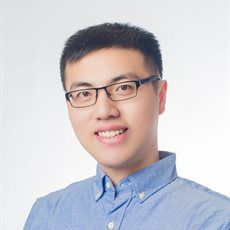
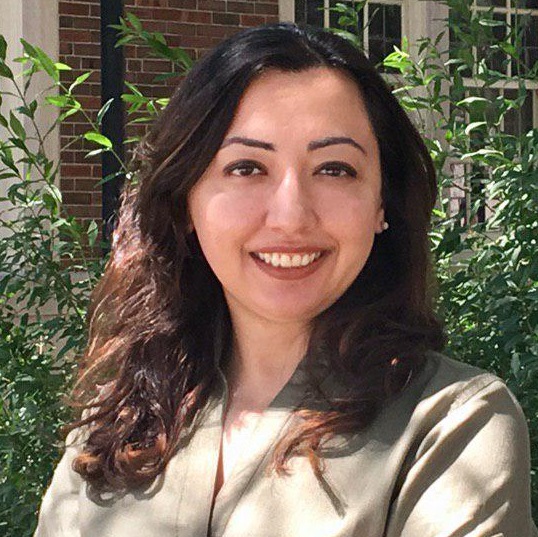
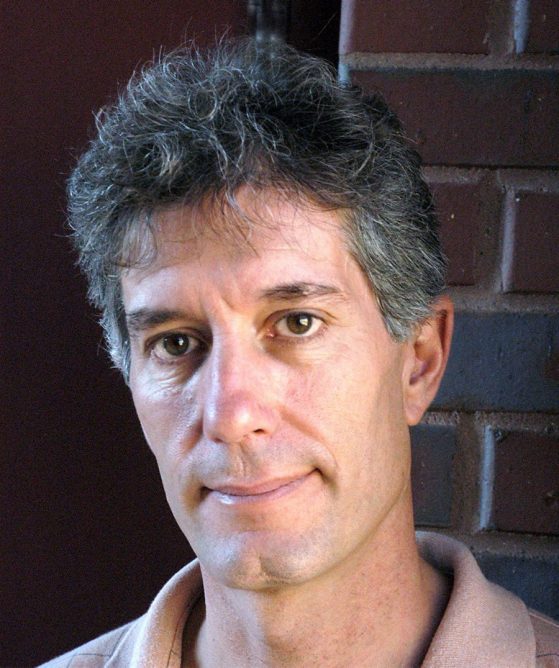
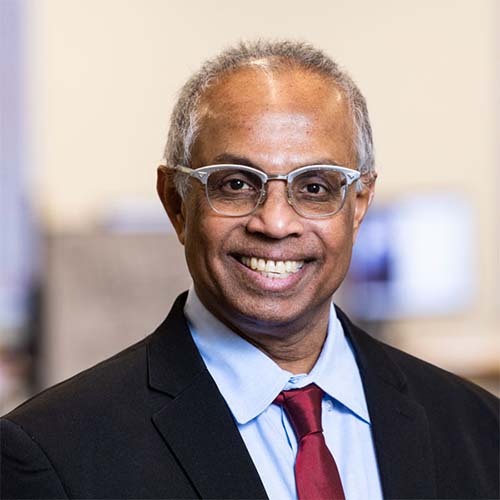
Xiaocheng Shang is an Associate Professor in Mathematical Optimisation and Data Science at the University of Birmingham's School of Mathematics. His research focuses on numerical methods for stochastic differential equations, with applications in computational mathematics, statistics, physics, and data science. He is affiliated with the Optimisation and Numerical Analysis Group, Statistics and Data Science Group, and the Institute for Data and AI. Shang holds a PhD in Applied and Computational Mathematics from the University of Edinburgh (2016) and completed postdocs at the University of Edinburgh, Brown University, and ETH Zurich before joining Birmingham in 2019. His academic achievements include fellowships from The Alan Turing Institute, the LMS Emmy Noether Fellowship, and the EUniWell Leadership Fellowship. He has secured funding from EPSRC, the Royal Society, and the Isaac Newton Institute. Shang is actively involved in supervising PhD students and co-organizing research initiatives such as the Data Science and Computational Statistics Seminar. Research interests include structure-preserving integrators, Bayesian sampling techniques, and machine learning applications in dynamical systems. His work bridges numerical analysis, probability theory, and multiscale modeling in materials science. Recent projects involve neural networks for complex dynamical systems and numerical algorithms for deterministic/stochastic systems.
Andrew Warfield is an Adjunct Professor in the Department of Computer Science at the University of British Columbia (UBC) and a Senior Principal Engineer at Amazon. His research focuses on computer systems software, including virtualization, distributed storage, security, and high-availability systems. He previously held roles as Associate Professor at UBC, CTO at Coho Data, and Technical Director at Citrix Systems. His work has led to projects like Remus (high-availability replication), Tralfamadore (execution analysis), and secure hypervisor development with Xen. Warfield's education includes a PhD from the University of Cambridge's Computer Laboratory, where he researched I/O device virtualization under Steven Hand. He has held visiting roles at Intel Research Cambridge and internships at AT&T Research and Nortel Networks. Research Grants: Supported by Intel Research, NSERC, Network Appliance, and the Communications Security Establishment. Professional Activities: Technical Advisory Board Member at Teradici, and involvement in program committees for conferences like HotOS, EuroSys, and FAST. His research emphasizes practical systems, aiming to bridge the gap between theoretical computer science and real-world applications. Notable contributions include innovations in storage for virtualized environments, secure hypervisor architectures, and disaster-tolerant systems like SecondSite. Warfield is affiliated with UBC's Department of Computer Science and maintains active collaboration with industry partners. Though currently not actively recruiting students, his prior mentorship has influenced many in systems research.
Jieqiong Zhao is an Assistant Professor in the School of Computer and Cyber Sciences at Augusta University, specializing in visual analytics and human-computer interaction. She holds a Ph.D. in Electrical and Computer Engineering from Purdue University and has postdoctoral experience at Arizona State University's VADER lab. Education: Ph.D. Electrical & Computer Engineering, Purdue University (2020) M.S. Computer Science, Tufts University (2013) B.E. Computer Software Engineering, Zhejiang University (2010) Research: Focuses on visual analytics for decision-making in domains like healthcare, cybersecurity, and environmental science. Key projects include ATVis (adversarial training visualization), FeatureExplorer (hyperspectral data analysis), and MetricsVis (law enforcement performance evaluation). Current interests span trustworthy AI, human-AI collaboration, and uncertainty visualization. Service: Organized the IEEE VIS 2024 panel on the future of visual analytics, serves on IEEE Transactions review boards, and mentors the WiCyS student chapter. Active in conference organizing and review roles. Awards: Received the 2020 VAST Mini-Challenge award for ConstellationBuilder's innovative cybersecurity interface design.
Zohreh Sharafi is an Assistant Professor of Software Engineering in the Department of Computer and Software Engineering (GIGL) at Polytechnique Montréal. Previously, she served as a Senior Research Fellow in the Department of Electrical and Computer Engineering at the University of Michigan, Ann Arbor, where she worked with Dr. Westley Weimer and was awarded the prestigious NSERC Postdoctoral Fellowship. Prior to her academic career, she worked as a software engineer at Morgan Stanley, contributing to the firm's electronic trading platform and serving as principal architect of SURF, a market data simulator. Her educational background includes a Ph.D. in Computer Engineering from École polytechnique de Montréal under the supervision of Dr. Giuliano Antoniol and Dr. Yann-Gaël Guéhéneuc, a Master of Applied Science in Software Engineering from Concordia University, and a Bachelor of Computer Engineering from the University of Tehran. Dr. Sharafi leads the SENSE Lab, a multidisciplinary software engineering research laboratory focused on understanding problem-solving strategies developers use during software development, with particular attention to human factors such as gender and native language. Her research combines human-centric design with experimental methodologies, investigating cognitive processes involved in software development using biometric measures including eye tracking and neuroimaging. Current active projects include evaluating trustworthiness perceptions of software artifacts and studying the role of creativity in software engineering tasks. She has made significant contributions to understanding how gender influences program comprehension and code review processes. Her publication record demonstrates a strong focus on empirical methods in software engineering, particularly eye tracking and neuroimaging techniques to study developer cognition. Her work spans program comprehension, code review, requirements engineering, and the impact of human factors on software development processes. She has developed methodological frameworks for conducting eye tracking studies in software engineering and has made notable contributions to understanding how visualization techniques affect software development tasks. NSERC Postdoctoral Fellowship NSERC Discovery Grant Program and Launch Supplements (Sep 2024-Sep 2029) IVADO Startup & Operation Fund (Jan 2022-Jan 2023) Scholarship for Doctoral Studies from Fonds de Recherche du Quebec Distinguished Reviewer Awards from IEEE ICPC 2020 and ACM FSE 2024 Dr. Sharafi actively mentors students including Mahta Amini (PhD Candidate, IVADO Scientifique en résidence 2024 Laureate), Cameron Cherif (PhD Candidate), Sara Yabesi (Master's Student), and Anthonia Njoku (Graduate research intern). She serves on numerous conference organizing committees including as Local Arrangement Chair for SANER 2025, Program Co-chair for SEMLA 2024, and as a reviewer for top-tier journals including IEEE Transactions on Software Engineering and ACM Computing Surveys. Her research is supported by multiple grants focused on understanding human factors in software engineering through empirical methods. At Polytechnique Montréal, Dr. Sharafi directs the SENSE Lab which brings together computer scientists, cognitive scientists, and software engineering researchers to investigate the cognitive aspects of software development. The lab employs advanced methodologies including eye tracking, functional near-infrared spectroscopy (fNIRS), and functional magnetic resonance imaging (fMRI) to study how developers comprehend, navigate, and modify software systems. Current projects examine trustworthiness perceptions in code review, the role of creativity in software engineering tasks, and gender differences in software development processes.
Professor August Evrard is a distinguished academic at the University of Michigan, holding the Arthur F. Thurnau Professorship in Physics and Astronomy. He is affiliated with the Department of Physics within the College of Literature, Science, and the Arts. Known for his contributions to cosmology and astrophysics, he pioneered the Problem Roulette tool, recognized with the Provost's Teaching Innovation Prize. His research focuses on galaxy clusters, dark matter, and cosmological surveys like the Dark Energy Survey (DES) and XXL Survey. He has been honored as an AAS Fellow (2025) and has contributed to advancements in physics education through innovative teaching methods and technologies. In research, Prof. Evrard explores topics such as dark matter halo dynamics, galaxy cluster properties, and weak lensing analyses. His work spans observational cosmology, computational modeling, and multi-wavelength astronomy. Notable projects include studies on galaxy cluster mass distributions, the relationship between X-ray emissions and velocity dispersions, and the application of machine learning to astrophysical data analysis. His contributions to education highlight the integration of AI-driven tools to enhance learning, as seen in initiatives like the Problem Roulette and course recommendation systems. Prof. Evrard's awards include the Provost's Teaching Innovation Prize for Problem Roulette and his AAS Fellowship. His academic leadership and innovative approaches to both research and education solidify his role as a pivotal figure in astrophysics and STEM pedagogy.
Duminda Wijesekera serves as Professor in the Department of Cyber Security Engineering and Department of Computer Science at George Mason University, where he was inaugural chairman of the Cyber Security Engineering Department until December 2022. He concurrently held the position of visiting research scientist at the National Institute of Standards and Technology (NIST) from 2007-2022 and maintains status as a fellow at the Potomac Institute of Policy Studies. He leads the Mason Innovation Laboratory at Mason Square, driving translational research in cyber-physical security. His educational foundation includes: PhD in Computer Science, University of Minnesota (1997) PhD in Mathematical Logic, Cornell University (1990) BSc in Mathematics, University of Colombo Professor Wijesekera's research centers on cyber-physical system security , with pioneering work in Intelligent Transportation Systems spanning trains, aircraft, and connected vehicles. His digital forensics innovations establish frameworks for evidence-based scenario reconstruction and error management, while his formal methods research provides mathematical guarantees for safety-critical systems. Current projects address Next G-based edge services, digital twin vulnerability detection, and healthcare security architectures, consistently bridging theoretical rigor with real-world infrastructure protection. Analysis of his 2022-2025 publications reveals intense focus on autonomous vehicle security (38% of recent output), including traffic signal control optimization, ramming attack countermeasures, and CARLA-based scenario validation. Digital forensics using AI (20%) and secure manufacturing/edge computing (27%) constitute other major thrusts, demonstrating how formal verification and machine learning converge to solve complex cyber-physical security challenges across transportation, energy, and healthcare domains. His scientific recognition includes: CCI Impact Award (2022) for groundbreaking cyber-physical security contributions Fellowship at the Potomac Institute of Policy Studies for cybersecurity policy leadership Professor Wijesekera has secured substantial research funding through: NIST grants for health record security frameworks (2014-2015) US Department of Transportation projects on wireless frequency mapping for high-speed rail (2013-2014) Cyber Security Research Alliance funding for trust architectures in cyber-physical systems (2014) Commonwealth Cyber Initiative awards for autonomous vehicle security and energy-efficient manufacturing His industry partnerships with Honeywell and NIST ensure practical impact of theoretical research. The Mason Innovation Laboratory under his direction serves as an interdisciplinary hub for cyber-physical security, integrating researchers from computer science, electrical engineering, and policy studies to develop deployable solutions for transportation networks, power grids, and critical infrastructure protection.
Ke Xu is a Professor in the Department of Computer Science at Tsinghua University's School of Information Science and Technology. With extensive research contributions in network security, privacy-preserving technologies, and machine learning applications for networking, Professor Xu has established himself as a leading researcher in computer science. Professor Xu's research interests span network security, privacy-preserving technologies, machine learning for networking, federated learning, internet protocols, encrypted traffic analysis, blockchain applications, and AI in networking. His work bridges theoretical foundations with practical implementations, focusing on real-world security challenges and network optimization problems. He has developed novel frameworks for secure network operations, privacy-preserving data sharing, and efficient AI deployment in distributed environments. Professor Xu's publication record shows a clear trend toward integrating artificial intelligence with traditional networking challenges. His recent work explores federated learning security, encrypted traffic analysis using deep learning, and novel approaches to network security that leverage machine learning techniques. The interdisciplinary nature of his research spans computer networking, security, privacy, and artificial intelligence. Professor Xu has received recognition for his contributions to network security and privacy-preserving technologies through publications in top-tier venues including IEEE journals, ACM conferences, and security symposia. His work has appeared in IEEE Transactions on Dependable and Secure Computing, IEEE/ACM Transactions on Networking, and security conferences like CCS and NDSS. Professor Xu actively collaborates with researchers across institutions, supervising students and junior researchers in exploring cutting-edge problems in network security and AI. His research has been supported by significant grants focusing on network security, privacy, and intelligent networking infrastructure. He leads projects that address fundamental challenges in secure communication, privacy-preserving data analysis, and intelligent network management. Professor Xu is involved with research laboratories focusing on network security and intelligent systems at Tsinghua University. His team works on developing practical security solutions, privacy frameworks, and AI-enhanced networking protocols that address real-world challenges in today's increasingly connected world.
Kamal Sarabandi is the Rufus S. Teesdale and Fawwaz T. Ulaby Distinguished University Professor of Electrical Engineering and Computer Science at the University of Michigan. He leads the Radiation Laboratory, renowned for research in applied electromagnetics, radar remote sensing, and antenna technology. His academic rank is Professor, and he holds affiliations with the College of Engineering. His research spans radar systems for environmental monitoring (e.g., soil moisture, snowpack), automotive radar for autonomous vehicles, metamaterials for antenna miniaturization, and security applications like concealed weapons detection. He has advised over 60 PhD students, many of whom hold academic or industry leadership roles globally. Awards and Recognition: National Academy of Engineering member, IEEE Picard Medal, Humboldt Award, Ellis Island Medal of Honor, and Stephen S. Attwood Award. His work bridges fundamental science with practical innovations, including NASA collaborations and military/defense applications. Labs and Teams: Directs the Radiation Laboratory, a hub for applied electromagnetics and radar innovation. Collaborates with industry (e.g., Qualcomm, SAIC) and government agencies (NASA, Army Research Lab) on projects like the COMBAT center for autonomous systems. Education: Earned his PhD in Electrical Engineering from the University of Michigan (1989). Alumni of his lab include professors at UW-Madison, Purdue, and international institutions.
Juergen Dingel is a Professor in the School of Computing at Queen's University, Canada. He joined the faculty in 2000 and holds a PhD in Computer Science from Carnegie Mellon University (1999). His research focuses on software modeling, model-driven engineering, formal methods, and formal verification, with applications in real-time systems and embedded systems. He leads the Modeling and Analysis in Software Engineering (MASE) research group. Education: PhD in Computer Science, Carnegie Mellon University (1999) M.Sc. in Pure and Applied Logic, Berlin University of Technology (1994) M.Sc. in Computer Science, Berlin University of Technology (1992) Research Interests: Model-driven engineering and transformation Formal specification and verification Automated testing and debugging Real-time and embedded systems Service composition and distributed systems His work emphasizes practical tools like Papyrus-RT and MDebugger , integrating formal methods into software development. Grants & Collaborations: Funded by NSERC, OCE, and industry partners (IBM, GM, Ericsson) Focus on automotive systems, IoT, and safety-critical applications Service: Editorial board member for SoSyM , STTT , and JOT Former chair of the MODELS Steering Committee (2016–2018) PC co-chair for MODELS 2014 and FMOODS/FORTE 2011 Labs & Teams: Leads the MASE group, which develops open-source tools for model-driven engineering. Collaborates with industry on automotive and IoT projects.
Dr. Ahmad Afsahi is a Professor in the Department of Electrical and Computer Engineering at Queen's University, Canada. He leads the Parallel Processing Research Laboratory (PPRL) and chairs the Graduate Studies committee in ECE. His research focuses on parallel processing, high-performance computing (HPC), and network-based systems, with emphasis on communication runtime systems, accelerated computing, and deep learning infrastructure. Education: Ph.D. (Electrical Engineering, 2000) from University of Victoria; M.Sc. (Computer Engineering, Sharif University of Technology); B.Sc. (Computer Engineering, Shiraz University). Research interests include parallel programming models, MPI optimization, GPU-aware communication, network-aware algorithms, and power-efficient HPC systems. He is a Senior Member of IEEE, ACM member, and licensed Professional Engineer in Ontario. Key Awards: Canada Foundation for Innovation Award, Ontario Innovation Trust Award. Over 50 publications in top venues like SC, EuroMPI, IPDPS, and IEEE journals. Current teaching includes cluster computing and digital systems. Labs/Groups: PPRL, Queen's Collaborative Graduate Specialization in Computational Science and Engineering, Data, Analytics, and Computing (DAC) Research Group.
Ellen Zegura is the Stephen Fleming Chair and Professor in the School of Computer Science at Georgia Tech's College of Computing. She holds multiple degrees from Washington University in St. Louis: BS in Computer Science, BS in Electrical Engineering, MS in Computer Science, and DSc in Computer Science. Her research focuses on computer networking, social responsibility in STEM education, and computing for development. She co-founded the Computing for Good initiative, emphasizing project-based learning to address societal challenges. Zegura is an IEEE and ACM Fellow, and serves on the Computing Research Association (CRA) Executive Board. Her education spans interdisciplinary fields at Washington University, combining computer science and electrical engineering. She has held leadership roles at NSF and CRA, advocating for equitable technology policies. Notable contributions include advancing QoE metrics for video conferencing, analyzing mobile broadband infrastructure disparities, and developing ethics education frameworks for computing curricula. Research interests include network measurement, community-empowered data practices, and bridging technical innovation with social impact. Recent work examines tribal mobility during pandemics, sensor co-design with Indigenous communities, and ethical pedagogy for teaching assistants. Her labs and collaborations, such as CERCS, emphasize interdisciplinary problem-solving. Zegura’s awards reflect her dual impact in technical innovation and societal engagement.
Jiannong Cao is a Chair Professor and Director of the University Research Facility in Big Data Analytics at the Department of Computing, Hong Kong Polytechnic University. He has held various academic roles since 1990, including Assistant Professor at City University of Hong Kong and Lecturer at Australian universities. PhD in Computer Science, Washington State University (1990) MSc in Computer Science, Washington State University (1986) BSc in Computer Science, Nanjing University (1982) His research focuses on cloud and edge computing , parallel and distributed computing , and mobile computing , with significant contributions to wireless sensor networks (WSN) for structural health monitoring (SHM) and software-defined networking (SDN) for vehicular communications. Recent work includes WiFi-based non-invasive health monitoring systems and multi-user computation partitioning in mobile cloud environments. Dr. Cao’s publications demonstrate trends in WSN optimization , SDN architectures , and cognitive modeling for network embedding , with applications in smart healthcare , transportation systems , and industrial IoT . Ministry of Education Natural Science Award (2018) ACM Distinguished Member (2017) IEEE Fellow (2014) Best Paper Awards at IEEE DSAA, SMARTCOMP, WCNC He has mentored numerous researchers, including Linchuan Xu , Xuefeng Liu , and Weigang Wu , who have authored key publications in top venues like ACM WSDM and IEEE INFOCOM . His professional roles include chairing IEEE committees and serving on grant panels for the Hong Kong Research Grant Council.
Prof. Dr. Fabian Gieseke is a Professor and Chair of Machine Learning and Data Engineering at the University of Münster. He holds a PhD in Computer Science from Carl von Ossietzky University of Oldenburg and a dual degree in Mathematics and Computer Science from the University of Münster. His research focuses on Machine Learning, High-Performance Computing, and their applications in Geosciences, Smart Cities, and Astrophysics. Education: PhD in Computer Science (2012), Carl von Ossietzky University of Oldenburg University studies in Mathematics and Computer Science (2006–2011), University of Münster Research Interests: Data Mining and Machine Learning High-Performance Computing & Distributed Systems Deep Learning Applications in Environmental Science and Astrophysics Geospatial Data Analysis using Satellite Imagery Publications Trends: His recent work emphasizes large-scale environmental monitoring via deep learning, including canopy height estimation, forest biomass prediction, and national-scale tree counting. He also explores interactive systems for geospatial data retrieval and optimization of machine learning models for resource-constrained environments. Advising & Grants: Supervised over 30 theses on topics like satellite image analysis, deep learning on microcontrollers, and data marketplaces for smart grids. Active in securing grants for interdisciplinary projects combining AI with Earth observation. Labs/Teams: Leads the Machine Learning and Data Engineering group at the University of Münster, focusing on scalable AI solutions for real-world challenges in science and industry.
Brian Calder is a Research Professor at the Center for Coastal and Ocean Mapping, University of New Hampshire, with a strong affiliation in Ocean Engineering and Earth Sciences. He holds a Ph.D. and M.S. in Image Analysis and Electronics Communications Engineering from Heriot-Watt University. His academic work is centered on advanced methods in seafloor characterization and hydrographic data processing. Ph.D., Image Analysis, Heriot-Watt University M.S., Electronics Communications Eng, Heriot-Watt University His research focuses on the development and application of computational techniques for seabed mapping, bathymetric uncertainty modeling, and autonomous ocean sensing. He integrates machine learning, signal processing, and remote sensing to improve the accuracy and reliability of marine geospatial data. His work supports navigation safety, coastal zone management, and deep-ocean exploration. Recent publications highlight trends in automated nautical chart generalization, trusted community bathymetry systems, and wireless ocean-of-things networks for volunteer data collection. His article portfolio reveals a strong emphasis on data quality, uncertainty quantification, and algorithmic innovation in hydrography and marine geodesy. Brian Calder has received multiple research grants, primarily from NOAA and the U.S. Navy, supporting projects such as IT support for NOAA personnel at UNH, development of bathymetric uncertainty models, and autonomous mapping using Saildrone technology. These grants reflect sustained funding and recognition in the field of hydrographic science. He teaches graduate courses including Seafloor Characterization , Seabed Mapping , and Doctoral Research , indicating active mentorship and academic leadership. His work is conducted within the Center for Coastal and Ocean Mapping, a leading institution in hydrographic research, where he collaborates extensively with experts like Yuri Rzhanov, Larry Mayer, and Christos Kastrisios.
Panruo Wu is an Associate Professor in the Department of Computer Science at the University of Houston (UH). He joined UH in 2018 as an Assistant Professor, transitioning to his current rank. His research focuses on high-performance computing, numerical algorithms, parallel and distributed systems, and fault tolerance. He holds a Ph.D. in Computer Science from the University of California, Riverside (2016), advised by Zizhong Chen, and a B.S. in Mathematics from the University of Science and Technology of China (USTC). Research Interests: His work spans high-performance computing, numerical linear algebra, GPU acceleration, fault-tolerant systems, and scalable machine learning. Key projects include LATER (Linear Algebra on Tensor Cores), LibKernel (a scalable kernel machine framework), and Wukong (a serverless parallel computing framework). He emphasizes energy-efficient and hardware-aware algorithms. Publications: Dr. Wu's recent work includes advancements in QR factorization using tensor cores, symmetric eigenvalue decomposition optimizations, and fault-tolerant algorithms for heterogeneous systems. His research often addresses computational challenges in big data and exascale computing. Awards & Grants: Received NSF Grant No. 2146509. His work on high-accuracy matrix computations was a Best Paper Nominee at HPDC'20. He has authored over 30 peer-reviewed publications in top venues like SC, ICS, and IEEE TPDS. Students & Advising: Advises PhD students including Shaoshuai Zhang, Ruchi Shah, Benjamin Carver, and Ao Wang. His students have contributed to projects like LibKernel and fault-tolerant linear algebra libraries. Labs & Collaborations: Leads research in UH's high-performance computing group, collaborating with institutions like Jack Dongarra's Innovative Computing Lab (University of Tennessee) and industry partners on exascale computing initiatives.