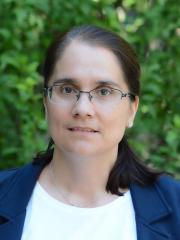
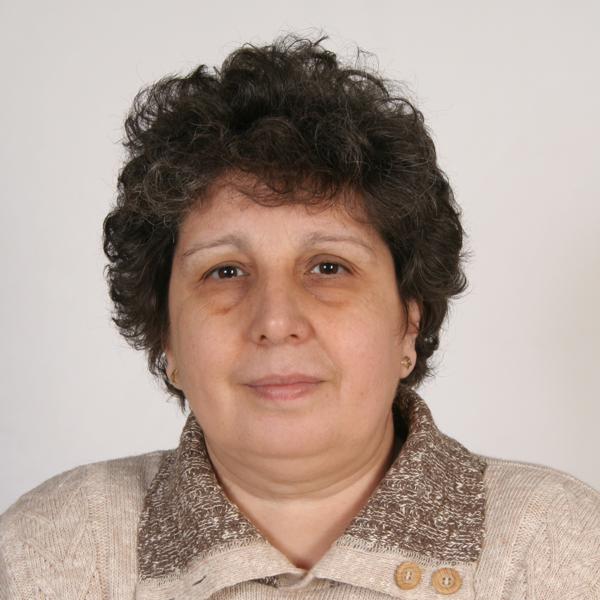
Melina Vanyova Neykova is an Assistant Professor at the Department of Mathematics, Physics and Informatics within the Faculty of Forest Industry at the University of Forestry. She holds a Bachelor's degree in Electronics (2009) and a Master's in Industrial Management (2011) from the Technical University of Sofia. She joined the University of Forestry in 2011 as a part-time assistant professor, later becoming a full-time assistant in 2016. In 2018, she was promoted to Chief Assistant Professor and reassigned to her current department in 2021. Her research spans interdisciplinary domains including: Enterprise-level information systems and security frameworks E-business strategy formulation and technological innovation CAD/CAM optimization for industrial applications Technology-enhanced educational methodologies She teaches diverse courses across bachelor's and master's programs including Fundamentals of CAD Design, Business Intelligence Systems, Database Management, and Information Technologies for specialties like Wood Technology, Agronomy, and Business Management.
Assoc. Prof. Zlatko Georgiev Varbanov is a distinguished academic at the Faculty of Mathematics and Informatics, University of Veliko Tarnovo (Bulgaria). With expertise spanning discrete mathematics, coding theory, and software development, he has established himself as a prominent researcher in both theoretical and applied computer science domains. His scholarly work bridges mathematical theory with practical implementations, particularly in DNA coding, quantum error correction, and software engineering principles. Dr. Varbanov's research interests encompass a diverse range of topics including Discrete Mathematics, Coding Theory, Algorithms, Programming, DNA codes, Quantum codes, and Information security. His scholarly work demonstrates a consistent focus on the intersection of algebraic structures and practical coding applications, with particular emphasis on self-dual codes over finite fields and their applications in DNA computing and quantum information theory. In software engineering, he has made significant contributions to design patterns, asynchronous programming in C#, and static site generation techniques. Analysis of Dr. Varbanov's recent publications reveals a dual research trajectory: one strand focusing on theoretical aspects of coding theory (particularly DNA codes and quantum codes), and another addressing practical software engineering challenges. His work on design patterns, SOLID principles, and asynchronous programming in C# demonstrates his commitment to improving software development practices. The publications on static site generation and data storage services reflect his engagement with contemporary web development technologies and their optimization. Dr. Varbanov has been actively involved in numerous research projects, with current engagements extending into 2025. These projects focus on AI-driven information systems, mobile technologies for students with special needs, digital accessibility for visually impaired users, and enhancement of research indicators for faculty members. His collaborative work spans multiple institutions and demonstrates a strong commitment to both theoretical research and practical applications that address real-world challenges.
Petko Staynov is an Assistant Professor at the New Bulgarian University (NBU) , affiliated with the Department of Informatics . His career spans academic roles in Bulgaria and France, with expertise in informatics, linguistics, and educational technology. Education : M.Sc. in Applied Information and Communication Technologies in Education and Learning, Louis Pasteur University, Strasbourg, France (2004) B.A. in Philology (Bulgarian Language and Literature), Sofia University "St. Clement of Ohrid" (1982) Dr. Staynov's research focuses on the intersection of computer science , linguistics , and multimedia technologies . His work explores ethnopragmatics , language-cognition relationships , and computer-assisted translation , while developing online courses and national information systems . Publications highlight his contributions to semantic theory , archaeological computing , and pedagogical resource sharing . At NBU, he teaches courses in French for Administration , Professional Correspondence , and Informatics . His professional experience includes directing master's programs (since 1998) and teaching multimedia and internet technologies (since 1997). Earlier roles in France involved new technologies management , advertising analysis , and multilingual engineering projects.
Assoc. Prof. Polina Mihova, PhD is a faculty member at New Bulgarian University (NBU) in the Department of Healthcare and Social Work. Her academic career spans over two decades at NBU, where she serves as Associate Professor in Public Health (since 2021) and Head of Department (since 2023). Doctoral degree in Medical Informatics (2014) Master's degrees in Medical Computer Technologies (2006) and Speech Pathology Rehabilitation (2020) Bachelor's in Medical Computer Systems (2004) Her research focuses on medical informatics, telemedicine systems, healthcare information security, and digital interventions for autism spectrum disorders. She has contributed to international telemedicine standards and clinical process management through 10+ EU projects including e-KINE, EuRiCa, and DAAD-funded initiatives. The 15 most recent publications highlight her work in telemedicine evolution (2025), ASD digital interventions (2024-2023), pandemic-era education adaptations (2023), and serious games for developmental therapies (2022-2021). These works span keywords including Telemedicine, Medical Informatics, Autism Spectrum Disorders, and Digital Health Interventions. As a certified Board Certified Telehealth Professional (BCTP®-III) and active participant in organizations like American Telemedicine Association, she bridges clinical needs with technology while ensuring compliance with GDPR and HIPAA standards.
Assoc. Prof. Petya Asenova, PhD, is a permanent faculty member at New Bulgarian University's Bachelor's Faculty since 2001, holding the rank of Associate Professor in the Department of Informatics. She has served as Director of bachelor's programs in Informatics and Network Technologies, Director of the Master's program in IT Project Management, Head of the Department of Informatics, and Dean of the Bachelor's Faculty. Her academic credentials include: Bachelor's degree in Computational Mathematics from Plovdiv University "P. Hilendarski" Master's degree in Mathematics Education from Plovdiv University "P. Hilendarski" Master's degree in Informatics from Sofia University "St. Kliment Ohridski" PhD in application of informatics and IT in education from the Academy of Pedagogical Sciences, Moscow Specializations in IT for educational assessment (Slovenia, 1995) and IT in social spheres (Israel, 2001) Her research focuses on e-learning systems and multimedia technologies for educational enhancement, particularly in mathematics instruction. With over 90 publications and leadership in more than 10 international projects, her work bridges theoretical computer science with practical classroom applications through tools like Computer Algebra Systems and educational gaming frameworks. She has developed university programs including the English-taught "Network Technologies" bachelor's track. Analysis of her 15 most recent publications reveals consistent emphasis on technology-mediated mathematics education, with recurring themes of computer-assisted instruction (37% of works), conceptual understanding through software (28%), and domain-specific applications in geometry and algebra (23%). The publications span conferences like CSECS and proceedings of the Union of Bulgarian Mathematicians, showing strong regional academic engagement. No scientific awards or fellowships were documented in the source material. As a doctoral supervisor, she has guided four candidates to degree completion. Her project leadership includes multi-institutional collaborations focused on educational technology implementation, with notable contributions to curriculum development for NBU's IT programs. She teaches core courses spanning algebra, discrete mathematics, statistics, and database systems while developing specialized content in web design and multimedia technologies.
Valentina Volodymyrivna Dvorak serves as an Assistant Professor in the Department of Computer Science at Chernivtsi National University. Her professional activities span across computer vision, deep learning, IT project management, and business analysis, with significant contributions to both academic research and practical applications in these fields. Dr. Dvorak holds a Candidate of Technical Sciences degree with specialization in Pressure Processing Processes and Machines. Her educational background includes a Master's in Metallurgical Equipment (2004) and a degree in Organizational Management (2010) from Donbass State Machine-Building Academy. This unique combination of metallurgical engineering and computer science expertise informs her interdisciplinary research approach. Her research interests prominently feature Computer Vision and Deep Learning applications across diverse domains including medical diagnostics, satellite imagery analysis, and industrial process optimization. Dr. Dvorak has made significant contributions to convolutional neural network implementations, automated recognition systems, and polarization-correlation microscopy techniques for biomedical applications. Her work bridges theoretical computer science with practical implementations in healthcare, manufacturing, and environmental monitoring. Analyzing her publication record reveals a strong focus on practical applications of deep learning, with particular emphasis on computer vision systems for medical diagnostics, industrial quality control, and environmental monitoring. Her research demonstrates consistent progression from fundamental metallurgical process optimization to advanced AI applications. Certificate of acknowledgment as scientific supervisor for BLACK SEA SCIENCE 2022 Educational Grant from SoftServe for developing training course (2021) Dr. Dvorak actively contributes to IT education through multiple textbooks including 'Deep Learning for Computer Vision,' 'IT Project Management,' and 'Intelligent Data Analysis.' Her professional development includes numerous certifications from Sigma Software University and SoftServe, reflecting her commitment to staying current with industry practices. She serves as a member of the Bukovina Information Technology Cluster and provides scientific consulting for SKB 'Electronmash KM.'
Yatsko Oksana Myroslavivna is an Associate Professor at the Department of Computer Science, Chernivtsi National University named after Yuriy Fedkovych. She holds a Candidate of Pedagogical Sciences degree (specialty 13.00.02 - theory and methods of teaching informatics) and has been certified as an Associate Professor since 2022. Her research focuses on computer-oriented methodological systems for teaching computer disciplines, with specializations in data mining for business applications, game theory implementation in economic decision-making, web technologies development, and algorithm design. She actively contributes to educational literature with multiple textbooks on Discrete Mathematics, Operations Research, Web Technologies, and Systems Modeling. Her professional engagements include membership in the Bukovina Information Technology Cluster, Chernivtsi Mathematical Society, and participation in international conferences like SPIE Optical Engineering and Correlation Optics. She has completed advanced certifications in machine learning, data visualization, and online education technologies from Prometheus, SoftServe, and other institutions. Her publications demonstrate expertise in strategic business analysis, cross-platform decision support systems, and educational software development. The 15 most recent works (2023-2024) cover data structures, game theory applications, web development tools, and polarization-based biomedical diagnostics. She serves as an expert for Ukraine's Ministry of Education and National Agency for Quality Assurance in Higher Education.
Prof. Dr. Arch. Orlin Davchev serves as the Dean of the Faculty of Architecture at the University of Architecture, Civil Engineering and Geodesy (UACEG) in Sofia, Bulgaria. He holds the academic position of Associate Professor in the Department of Interior and Design for Architecture since 2015 and has been a lecturer in the same department since 2005. As Dean, he oversees all academic and administrative functions of one of UACEG's primary faculties. Davchev earned his Doctoral degree in 2013 with a dissertation on "EXPO - Main architectural aspects of world exhibitions" from UACEG. He completed his Master's degree in Architecture with excellent results from the Department of Interior and Design for Architecture at UACEG between 1998-2003. Earlier, he graduated with excellent results from the Technical College of Electronics and Electrical Engineering in Plovdiv (1993-1997). Professor Davchev's research focuses on the intersection of traditional architectural practices with emerging digital technologies. His work explores parametric design methodologies, digital transformation in architectural practice, and the evolution of hotel architecture in the 21st century. He has extensively researched World Exhibitions (EXPO) as significant cultural and architectural phenomena, examining their impact on contemporary design trends. His scholarship also addresses sustainable approaches to architectural design, particularly in hospitality architecture and urban reconstruction projects. Davchev's publication record reveals a consistent trajectory from historical architectural analysis toward increasingly technology-focused research. His early work centered on EXPO exhibitions and historical architectural sites like the Late Roman residence "Scretisca," while his recent publications emphasize digital technologies, parametric design, and contemporary architectural challenges. This evolution reflects the broader shift in architectural practice toward computational methods and digital workflows. 2018 – Golden Capital 2018, Union of Architects in Bulgaria 2019 – National Award 'Arhitekton' from Union of Architects in Bulgaria 2019 – M2 Classification Award for Architect of the Year (Hotel category) 2015 – First prize for reconstruction of Vratsa's central pedestrian zone 2011 – Sofia Architectural Salon Award for Lom riverfront reconstruction As Dean and academic leader, Davchev has supervised numerous student projects and research initiatives, particularly in the areas of parametric design and architectural reconstruction. He has served on juries for major architectural competitions including the Ideal Standard Bathroom of the Year, Dibla Design Awards, and the National Building of the Year competition. His professional studio MIODESIGN, co-founded with Assoc. Prof. Dr. Arch. Maria Davcheva, has provided practical design experience that informs his academic work. Davchev has also led research projects including the Competence Center for Digital Technologies in Architecture, Design and Spatial Planning under the Operational Program 'Science and Education for Intelligent Growth'. Professor Davchev maintains active involvement with architectural laboratories and workshops, particularly the Smart Fab Lab at UACEG where he has mentored students in digital fabrication and parametric design. His leadership extends to international collaborations, including participation in the Dynamic Fields architectural workshop in Bucharest with Patrik Schumacher (Zaha Hadid Architects) and multiple ARХ+ International Architectural Workshops on parametric design in Varna.
Assoc. Prof. Dr. Eng. Petar Nikolov is an Associate Professor at the University of Architecture, Civil Engineering and Geodesy (UACEG) in Sofia, Bulgaria, working within the Faculty of Transport Engineering, Department of Roads and Transport Facilities. Since 2024, he has served as Vice-Rector for International Cooperation and Integration at UACEG, and previously served as Head of the Department of Roads and Transport Facilities from 2020-2024. His academic career at UACEG spans over two decades, beginning as an Assistant in 2003 and advancing to Associate Professor in 2013. Dr. Nikolov's educational background includes: Doctor of Science in "Building Structures" from UACEG, with dissertation on "Research in modeling for bridge analysis" Master's degree in "Research of Building Structures" from UACEG, focusing on seismic safety of viaducts Master of Engineering in "Industrial and Civil Engineering" with specialization in "Structures" from UACEG Construction Technician qualification from Construction College "Hristo Botev" in Sofia Dr. Nikolov's research focuses on bridge engineering, with particular expertise in reinforced concrete bridges, integral bridges, seismic provision of bridges, and bridge modeling and analysis. His work addresses critical challenges in bridge design, construction, and maintenance, with emphasis on improving safety standards and developing practical engineering solutions for Bulgarian infrastructure. He has contributed significantly to the development of bridge design regulations in Bulgaria and has conducted extensive research on seismic resistance of existing bridges. His publication record demonstrates consistent contributions to bridge engineering, with recent work focusing on three-dimensional modeling, integral abutments for seismic design, nonlinear analysis of concrete bridges, and practical solutions for bridge drainage and maintenance. His research shows a clear progression from theoretical modeling to practical implementation in bridge design standards. Dr. Nikolov is a member of the Chamber of Engineers in Investment Design (KIIP) - Sofia Section "Structures". As an academic leader, Dr. Nikolov has supervised numerous student projects and theses in bridge engineering. He has led significant research projects including "Research on reinforced concrete elements with wide compression zones" (2020-21) and "Experimental study of the behavior of elastomeric bearings type B" (2018-19). His practical engineering work includes design of bridge structures, strengthening of construction excavations, and inspection and testing of existing bridges. Dr. Nikolov has also contributed to national standards development, participating in the creation of the National Application for seismic design of structures (Part 2: Bridges) and leading efforts to develop bridge design regulations in Bulgaria.
Assoc. Prof. Dr. Arch. Milena Nanova serves as Head of the Department of Residential Buildings at the Faculty of Architecture, University of Architecture, Civil Engineering and Geodesy (UACEG). She teaches specialized courses in residential building design and pre-diploma projects, with regular consultation hours. Her educational background includes a Doctorate in Architecture from UACEG (2015) focusing on renovation of industrialized housing, and a Master's in Architecture from the same institution (1987). Nanova's research focuses on: Renovation of residential environments and housing policy Low-rise, high-density housing structures Application of digital technologies in architectural design Sustainable urban development and energy efficiency She has led significant research projects including 'Optimizing residential design using automated technologies' (2024) and participated in international collaborations like the TEMPUS program developing urbanism curricula. Her publication history shows strong focus on housing innovation, with recent work exploring digital generative design methods (2023) and hybrid collective living models (2021). She maintains active professional practice with numerous commercial and residential projects completed between 2012-2023, including shopping malls, office buildings, and housing complexes. Nanova is fluent in English and French, and maintains membership in the Bulgarian Chamber of Architects. Her extensive design portfolio demonstrates practical application of her research in housing and urban regeneration.
Temenuzhka Borisova Zafirova-Malcheva is an Associate Professor at the Faculty of Mathematics and Informatics, Sofia University "St. Kliment Ohridski," specializing in educational technologies for special needs populations. Her work bridges computer science , inclusive education , and digital design . PhD in Informatics and Computer Science (2015), dissertation: "Specialized software environment for computer training of children with cerebral palsy" Master's in Mathematics and Informatics (2000) Her research focuses on: Design and development of educational software for special needs Inclusive e-learning systems and pedagogical frameworks Computer graphics and digital design for accessible learning Competence-based training models for STEM educators Adaptation of digital resources for remote learning Recent publications (2017-2022) emphasize inclusive education technologies , inquiry-based learning , and remote/hybrid teaching models , particularly during the pandemic. She frequently collaborates with researchers like Pencho Mihnev and Albena Antonova.
Dr. Georgi Ivanov Georgiev is an Associate Professor at the Department of Communication Equipment and Technologies , Technical University Gabrovo , with over 15 years of experience in teletraffic engineering, biometric systems, and artificial intelligence applications. He has led multiple research projects on network security, voice/facial recognition, and smart home systems. Current academic rank: Associate Professor Key collaborations: University of Ruse, IEEE, MDPI, AIP Publishing Research Interests : Biometric diagnostics with AI Machine learning for network traffic Neural networks (FFNN, GRNN, PNN) Smart home systems Teletraffic modeling Optical communication systems Recent Article Trends focus on hybrid AI methodologies (neural networks, decision trees, SVM) applied to: Noise analysis in communication systems Biometric authentication Internet traffic optimization Signal processing Smart environment monitoring Scientific Awards : Crystal Prize 2017 for Best Paper Multiple Best Paper awards at international conferences (2016, 2018) Student Advising : Reviewed thesis works on topics including Wind Farm Safety , Power Grid Modeling , and Lightning Protection Systems . Publications include 6 textbooks and 97 peer-reviewed works.
Zvezditsa Petrova Nenova is a distinguished faculty member at the Technical University of Gabrovo, Bulgaria, where she serves in the Department of Fundamentals of Electricity and Electrical Engineering. With a career spanning nearly four decades, she has established herself as a leading expert in sensor systems, environmental monitoring, and measurement technologies. Her extensive research portfolio includes 15 books, 139 scientific publications, and leadership in 33 research projects, demonstrating her significant contributions to engineering education and research. Dr. Nenova's research focuses on the development and application of advanced sensor systems for environmental monitoring, with particular expertise in humidity sensing elements, thin-film technologies, and measurement systems. Her work bridges materials science, electrical engineering, and environmental applications, resulting in numerous innovations in sensor design and implementation. She has pioneered research in doped oxide films, graphene-based sensors, and piezoelectric measurement systems, contributing significantly to the field of environmental monitoring technology. Analysis of her recent publications reveals a consistent focus on improving humidity sensing technologies through advanced materials science. Her work increasingly incorporates nanotechnology approaches, particularly with graphene and doped metal oxides, while maintaining practical applications for environmental monitoring systems. The research shows a progression from fundamental material characterization to sophisticated sensor system integration, demonstrating both theoretical depth and practical implementation. Dr. Nenova has successfully supervised three PhD students to completion, guiding research in air environment monitoring systems and advanced sensor technologies. Her extensive project portfolio includes both national and international collaborations, with significant participation in EU-funded programs including Erasmus+ and Leonardo da Vinci initiatives focused on vocational education and industrial automation.
Aleksandar Dimov Dimov is an Associate Professor at the Department of Software Technologies, Faculty of Mathematics and Informatics (FMI), University of Sofia. He specializes in software reliability engineering, neuro-fuzzy systems, and cloud computing architectures. His research focuses on optimizing software systems through adaptive methodologies and addressing challenges in distributed computing environments. His work spans over two decades, with contributions to neuro-fuzzy optimization for manufacturing, machine learning applications in healthcare, and architectural patterns for scalable systems. Key areas include improving software reliability models, cloud storage performance, and privacy-preserving software design. He has published extensively on topics like microservices, service-oriented architectures, and educational technology. Dr. Dimov's publications reflect a strong emphasis on practical solutions for real-world challenges in software engineering and data systems. His research bridges theoretical models with applied implementations, particularly in domains requiring high precision and adaptability.
Goran Danailov Goranov is a Professor at the Technical University - Gabrovo , affiliated with the Faculty of Electrical Engineering and Electronics and the Department of Electronics. His research focuses on control systems , sensor networks , electric vehicles , and microcontroller applications . Projects: Led and participated in 15 research initiatives, including electric vehicle development and contactless power transmission systems. Students: Advises three PhD students in areas like digital control and sensor networks. His work involves FPGA design , Arduino-based solutions , and industrial automation , with recent publications addressing Hall element testing, wind turbine controllers, and open-source hardware for education. He has authored four textbooks and contributed to 74 scientific publications, emphasizing energy efficiency and embedded systems.