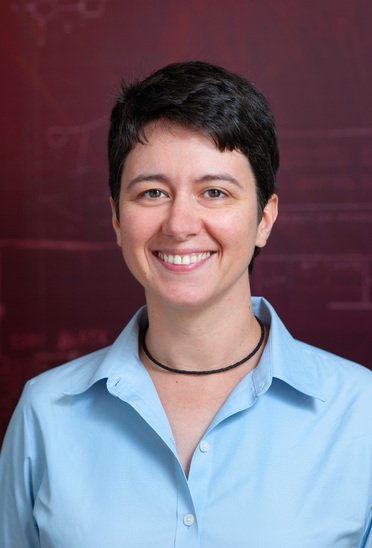
Svetlana "Lana" Yarosh is an Associate Professor in the Computer Science & Engineering Department at the University of Minnesota, and a faculty member in the GroupLens Research Center. She holds the distinguished titles of Distinguished University Teaching Professor and McKnight Presidential Fellow, and serves as Director of Undergraduate Studies for Computer Science. Her academic journey began with dual B.S. degrees in Computer Science and Psychology from the University of Maryland, followed by a Ph.D. in Human-Centered Computing from Georgia Institute of Technology. Dr. Yarosh's research focuses on embodied interaction in social computing systems, with particular contributions to Child-Computer Interaction, Online Health Communities, and Pervasive Health applications. She leads the ProDUCT (Prototyping, Design, and Usability of Communication Technologies) research group within GroupLens, where her team explores how technology can enhance social connections, particularly in contexts like intergenerational mentorship, substance use disorder recovery, and health support communities. Her work often integrates embodiment perspectives, such as adding projection and haptics to communication systems. Her recent publications reveal a strong trend toward VR/AR technologies, ethical considerations in children's technology, and applications supporting recovery from substance use disorders. The research spans HCI, social computing, and health informatics, with growing emphasis on ethical design frameworks and participatory approaches to technology development. Morse-Alumni Award for contributions to undergraduate education McKnight Presidential Fellow (2020-2023) NSF CAREER Award recipient Multiple Best Paper and Honorable Mention awards at top venues including CHI, CSCW, and IDC Google Faculty Research Award Dr. Yarosh has successfully advised numerous Ph.D. students who have gone on to tenure-track positions at institutions like Carnegie Mellon University, North Carolina State University, and McMaster University. Her research is supported by significant grants including NSF ER2 ($400,000), NSF REU Site ($404,983), and her NSF CAREER award ($548,228). She is particularly committed to mentoring students interested in computational support for substance use disorders and has established structured pathways for undergraduate and graduate students to join her research lab.