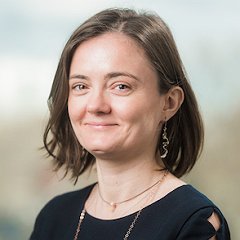
Pedro Manuel Moreno Marcos serves as an Associate Professor in the Department of Telematics Engineering at Charles III University of Madrid, where he maintains an active research profile in educational technology. His academic work bridges telecommunications engineering with data-driven educational innovation, focusing on the practical implementation of analytics in real-world learning environments across Spanish and European higher education institutions. His research centers on learning analytics and artificial intelligence applications in education, with particular expertise in student behavior modeling, dropout prediction, and AI-enhanced learning environments. Key contributions include developing predictive models using multi-source data, creating tools like Statoodle for cheating prevention in LMS platforms, and pioneering human-centered generative AI applications through projects like GENIE Learn. His methodological approach combines machine learning algorithm evaluation with institutional ethnography to address adoption challenges in learning analytics. Analysis of his 15 most recent publications reveals an accelerating focus on generative AI's educational potential since 2023, with increasing attention to ethical implementation frameworks and micro-credentialing systems. His work consistently addresses practical barriers in learning analytics adoption while maintaining strong connections to Spanish higher education contexts through projects like PALABRIA-CM-UC3M. No scientific awards were documented in the provided materials. While specific student supervision details aren't disclosed, his research methodology frequently involves multi-institutional collaborations across European higher education settings. Current projects indicate active grant funding for initiatives including SHEILA (Support Higher Education to Integrate Learning Analytics) and PALABRIA-CM-UC3M, though specific grant amounts and durations aren't specified in the source text. Dr. Moreno Marcos leads research within the university's learning analytics ecosystem, contributing to frameworks like SHEILA that inform institutional policy. His work with telepresence classrooms and IoT-enabled educational scenarios demonstrates engagement with emerging technology infrastructure, while his focus on multi-source data integration suggests leadership in developing comprehensive analytics platforms for complex educational environments.