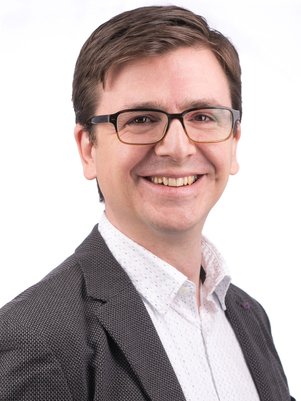
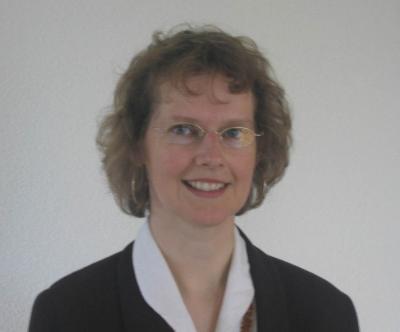
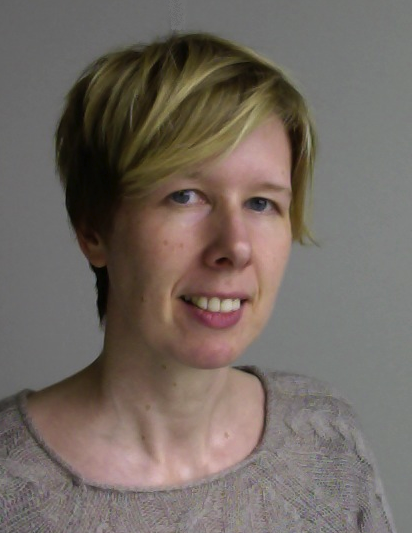
Prof.dr.ir. C. Poelma is a Professor in the Department of Process and Energy at Delft University of Technology (TU Delft). His research focuses on experimental fluid dynamics, multiphase flows, and measurement engineering. Research Areas: Cavity Engineering, Turbulent Flow, Reynolds Number Analysis, Air Lubrication, Velocity Field Measurement, and Wave Propagation. Projects: Led the Flows Unveiled project on multimodal measurement in opaque two-phase flows (2017-2022). Scientific Contributions: His work includes pioneering studies on ventilated cavities, bubbly shock waves, and particle-laden flows using X-ray and LED-based PIV techniques. He has received an ERC Advanced Grant for his research. Key Publications: 125+ research outputs, including articles in Journal of Fluid Mechanics , Ocean Engineering , and International Journal of Multiphase Flow . Datasets: Generated critical datasets for void fraction analysis, nozzle flow, and biomedical velociometry. Supervised Students: Mentored 9 PhD candidates and collaborated with researchers across fluid mechanics and biomedical engineering.
Bert de Vries is a Professor at the Signal Processing Systems Group at Eindhoven University of Technology (TU/e), where he has been employed since January 2012. He maintains a dual career, also working at GN Hearing in the hearing aids industry since April 1999, where he holds both research and managerial roles. His academic journey began at TU/e, where he earned his MSc in Electrical Engineering in 1986, followed by a PhD from the University of Florida in 1991. Between 1992 and 1999, he worked at Sarnoff Research Center in Princeton, NJ, contributing to diverse signal and image processing projects. Professor de Vries's research centers on Bayesian Machine Learning, with particular focus on the Free Energy Principle and its applications to engineering problems. His work bridges theoretical neuroscience with practical signal processing systems, especially in biomedical applications. He directs the BIASlab research team at TU/e, which develops probabilistic programming tools including RxInfer.jl, ForneyLab.jl, GraphPPL.jl, ReactiveMP.jl, and Rocket.jl. His research spans active inference, variational message passing, probabilistic programming, and Bayesian neural networks, with applications ranging from hearing aids to multi-agent systems. Analysis of his recent publications reveals a strong trend toward practical implementations of Bayesian inference frameworks, particularly through Julia-based probabilistic programming tools. His work shows increasing focus on active inference applications, message passing algorithms, and the intersection of Riemannian geometry with probabilistic modeling. The research demonstrates consistent progression from theoretical foundations toward real-world engineering applications, particularly in biomedical signal processing and autonomous systems. Professor de Vries teaches a graduate-level course on Bayesian Machine Learning at TU/e and actively contributes to open-source software development through his GitHub profile (bertdv), with recent activity as recent as August 2025. His research team has developed several influential probabilistic programming libraries that have gained significant attention in the machine learning community. The BIASlab research group continues to advance the state of the art in Bayesian inference methods with applications in hearing technology, robotics, and signal processing.
Gianfranco Bertone is a Professor at the Faculty of Science, University of Amsterdam, specializing in astrophysics and theoretical physics with a focus on dark matter, black holes, and gravitational waves. His work bridges cosmology and particle physics through multi-messenger approaches. Research Interests: Dark matter detection via gravitational wave signatures Black hole binary dynamics in dark matter environments Relativistic simulations of extreme mass ratio inspirals Multi-messenger astronomy and fundamental physics Cosmological simulations for dark matter distribution Publication Trends: Recent works emphasize gravitational wave astronomy's role in dark matter studies, including waveform distortions from dark matter spikes, boson cloud effects in black hole binaries, and simulation-based inference for astrophysical observations. His research spans theoretical modeling, computational astrophysics, and observational constraints.
Dr. Juan Durán is an Assistant Professor at the Faculty of Technology, Policy and Management at TU Delft, specializing in the philosophy of science and technology. His work focuses on computer simulations, AI ethics, Big Data, and the epistemological challenges in computational science. Education: Bachelor/Master in Computer Science and Philosophy, National University of Córdoba (Argentina) PhD in Cluster of Excellence SimTech, University of Stuttgart (Germany) Research interests: Epistemic opacity and trust in algorithms Ethics of medical AI and machine learning Computational reliabilism as a framework for justification Dark data and scientific data governance Teaching roles include courses on ethics and engineering, IT and values, and philosophy of science. His publications include influential works like Computer Simulations in Science and Engineering (2014) and co-authored papers on AI trustworthiness and medical epistemology.
Prof. Rineke Verbrugge is a Professor in Artificial Intelligence at the University of Groningen's Faculty of Science and Engineering, affiliated with the Bernoulli Institute. Her research focuses on computational theory of mind, multi-agent systems, hybrid intelligence, and logical frameworks applied to social networks and legal reasoning. She holds additional roles on the Institute Advisory Board of CWI (Dutch National Research Institute for Mathematics and Computer Science) and several ERC/NWO selection committees. Her work bridges cognitive science and AI, emphasizing human-agent collaboration, belief formation in groups, and ethical AI design. Recent projects include developing computational models for theory of mind in negotiations and scenario-based Bayesian networks for legal evidence analysis. She has authored over 220 publications and supervised multiple PhD candidates in AI and logic. Key research themes include higher-order theory of mind applications, zero-one laws in provability logic, and agent-based policy evaluation for sustainable technologies. Her contributions span conferences like AAMAS, ICAIL, and HHAI, addressing topics from lie detection mechanisms to privacy conflicts in multi-user systems.
Prof. Henk Stoof is a theoretical physicist at Utrecht University's Department of Theoretical Physics (ITF), specializing in condensed matter and quantum systems. His research focuses on collective quantum phenomena in ultracold atomic gases, neutron stars, and topological materials like Weyl semimetals and quantum Hall systems. He has pioneered studies on space-time crystals, excitonic dynamics in nanomaterials, and holographic models of strongly correlated systems. Recipient of prestigious grants: NWO VICI (2003), NWO Gravitation (2012) Fellow of the American Physical Society (2006) Distinguished Simons Lecturer (2004) His work bridges quantum many-body theory with experimental systems, including Bose-Einstein condensates and light condensates. Key contributions include discovering space-time crystalline order in superfluids and advancing understanding of topological excitons and strange metal behavior. Teaching responsibilities include courses on statistical field theory and complex systems. He collaborates internationally and advises on grants related to quantum hydrodynamics and topological phases.
Dr. Judith Verstegen is an Assistant Professor in the Department of Human Geography and Spatial Planning at Utrecht University's Faculty of Geosciences. Her research focuses on geosimulation modeling and spatial optimization, with applications in urban planning, environmental vulnerability assessment, and policy analysis. She leads projects such as HEADS 4 Health (2023-2024), which integrates agent-based models into urban digital twins, and coordinates the GeoSIM research group. Her work emphasizes interdisciplinary collaboration, including projects analyzing linguistic diversity in South America and environmental threats to Amazonian indigenous lands. She is the Program Chair of the MSc Geographical Information Management and Applications (GIMA) program and serves as Editor-in-Chief of the Journal of Spatial Information Science. Notable contributions include methodologies for spatial optimization under uncertainty and agent-based modeling of pedestrian behavior in urban environments. Key research areas include applied data science, complex systems analysis, and the PtS - Transforming Cities initiative. She has advised PhD students on topics ranging from fire prevention optimization to indigenous land vulnerability. Her lab at the University of Münster previously focused on spatial modeling frameworks, and she collaborates internationally with institutions like Leiden University and the PBL Netherlands Environmental Assessment Agency. Recent projects highlight innovation in computational methods, such as Python-based open-source tools for land-use modeling (IMAGE-land) and immersive video experiments for behavioral studies. Her work bridges theoretical modeling with practical policy applications, addressing challenges in sustainable urban development and environmental conservation.
Prof. I. Toni (Ivan) is a Professor of Cognitive Psychology at the Donders Institute for Brain, Cognition and Behaviour, Radboud University Nijmegen. He leads the Intention & Action research group, focusing on the neural mechanisms underlying instrumental and communicative actions. Research Interests: Integration of perceptual, conceptual, and rule-based information into sensorimotor processes Neural substrates of goal-directed movements (object prehension, tool use) Computational models of communicative innovation and shared symbol systems Role of lateral occipito-temporal, inferior parietal, and premotor cortices in action planning Research Grants: 2022-2027: ERC Advanced Grant (€2.5m) for "Human communication as joint epistemic engineering" 2021-2027: NWO-STW Open Competition Grant (€0.75m) on social-emotional regulation 2017-2022: NWO Language in Interaction Consortium Grant (€1.5m) for "Creating a shared cognitive space" 2011-2015: NWO Grant (€500k) on mental simulation 2009-2014: NWO-MAGW VICI Grant (€1.3m) for "Raising glasses and pointing fingers" Editorial Roles: Senior Editor, The Journal of Neuroscience (since 2012)
Dr. Vadim Cheianov is an Associate Professor in the Leiden Institute of Physics (LION) within the Faculty of Science at Leiden University. He leads the Cheianov Group, which specializes in theoretical quantum many-body physics with applications in condensed matter and ultracold atomic systems. His research interests span several cutting-edge domains in theoretical physics, including the behavior of mobile quantum impurities in quantum fluids, adiabatic protocols in driven many-body systems, mechanisms of non-ergodicity in quantum systems such as many-body localization and integrability, and the macroscopic manifestations of quantum anomalies like the chiral magnetic effect in condensed matter and cosmological contexts. The recent publications from his group reflect a strong focus on quantum dynamics, topological effects, and fundamental aspects of quantum statistical mechanics. These works integrate concepts from condensed matter, ultracold atoms, quantum field theory, and mathematical physics, often bridging theoretical predictions with potential experimental observations in quantum simulators and solid-state devices. Scientific Awards: NWO Physics Projectruimte Grant (2018) Dr. Cheianov has secured competitive research funding, including the NWO Physics Projectruimte grant awarded in 2018, which supports innovative and high-risk theoretical physics research. While formal advising roles are not detailed in the provided text, his leadership of an active research group implies mentorship of PhD and master’s students. His work contributes significantly to foundational understanding in quantum matter and has implications for quantum technologies and emergent hydrodynamic phenomena in quantum systems. The Cheianov Group operates within the Quantum Matter and Optics division of LION, collaborating with experimental and theoretical physicists to explore non-trivial quantum phenomena in both synthetic and natural quantum materials.
Prof.dr. R. Arthur Bouwman is a Full Professor at the Electrical Engineering department of the Eindhoven University of Technology and affiliated with the Eindhoven MedTech Innovation Center . His work bridges biomedical engineering and clinical medicine , focusing on physiological monitoring , medical imaging , and biomarker validation for real-time patient care. Education : Not explicitly detailed in the text His research emphasizes non-invasive diagnostics and AI-driven health monitoring , including video-based cardiac arrhythmia detection , sweat-based renal function analysis , and Doppler ultrasound optimization . Recent work explores causal inference in observational studies and automated early warning systems in surgical wards. Key article trends highlight biomedical signal processing , medical device innovation , and integration of wearables in perioperative care . Collaborations span institutions like Catharina Hospital and research centers across cardiovascular and renal domains.
T.J.C. van Terwisga is a Professor at the Ship Hydromechanics and Structures department of Delft University of Technology (Faculty of Mechanical, Maritime and Materials Engineering). His research focuses on cavitation phenomena, vortical flows, and microbubble dynamics, with applications in ship hydrodynamics and marine technology. PhD in Mechanical Engineering (specialization in cavitation physics) Editorial Board Member: The Journal of Ocean Technology (2006–present) Research Interests : Cavitation inception and erosion mechanisms Air lubrication systems for ship drag reduction Underwater shipping noise propagation Bubble dynamics in vortical flows Experimental fluid mechanics Hydrofoil performance optimization Scientific Contributions : Developed advanced calibration methods for microbubble measurement systems Investigated air lubrication regime transitions under varying flow conditions Studied cavitation onset in counter-rotating vortex flows Explored bubble capture mechanisms in vortical flows Contributed to underwater soundscape modeling for maritime operations Editorial Roles : Editor, The Journal of Ocean Technology (2006–present) Editor, The Journal of Ocean Technology (2009–present)
Yorrit van de Kaa serves as a Researcher and Teacher within the Department of Biology at Utrecht University's Faculty of Science, actively contributing to the Experimental and Computational Plant Development research group. His work bridges experimental methodologies with computational modeling to advance understanding of plant systems in dynamic environmental contexts. His research spans interdisciplinary domains critical to modern plant science, with core emphases on: Plant Biology: Investigating fundamental growth mechanisms and adaptive responses Computational Biology: Developing predictive models for plant development processes Developmental Biology: Decoding genetic and molecular pathways in morphogenesis Environmental Biology: Analyzing ecological interactions and stress responses Experimental Biology: Designing innovative empirical validation frameworks The Experimental and Computational Plant Development group, where van de Kaa is embedded, pioneers integrative approaches that combine wet-lab experimentation with advanced simulations. This synergy enables comprehensive analysis of plant-environment interactions, driving innovations with significant implications for sustainable agriculture and ecosystem management under changing climatic conditions.
Hans Vernooij is a Lecturer in Farm Animal Health at the Faculty of Veterinary Medicine, Utrecht University. He specializes in statistical methods and data science applications in veterinary epidemiology and animal health. His areas of expertise include: Statistical methods for veterinary research Applied Data Science in Life Sciences Epidemiological modeling Machine learning applications in animal health Vernooij has extensive experience in developing statistical models for animal health applications. His research focuses on applying advanced statistical techniques and data science methods to solve problems in veterinary epidemiology and farm animal health. He has particular expertise in Random Forest models, as demonstrated during his sabbatical at the Human Sciences Research Council in Pretoria where he developed a model for HIV status prediction based on demographic information and knowledge of HIV prevention from large-scale survey data. His publication record shows consistent contributions across veterinary epidemiology, with recent work emphasizing machine learning applications and big data analytics in animal health surveillance. The research demonstrates a clear trajectory from traditional statistical methods toward more advanced data science approaches. Vernooij is actively involved in teaching and mentoring: Teaches statistics to Bachelor students at the veterinary faculty Supports PhD candidates and Master students during data analysis phases of their research Provides statistics education for the Master of Epidemiology program at the Julius Centre of University Medical Centre
Dirk Thierens is an Associate Professor in the Department of Computer Science at Utrecht University's Faculty of Science, specializing in Intelligent Systems within AI & Data Science. His academic career spans over 25 years, with continuous publications from 1996 through 2025, demonstrating sustained research activity and leadership in his field. He maintains an active research program with numerous collaborations, most notably with Peter A.N. Bosman, indicating a long-standing productive research partnership. Thierens' research focuses on evolutionary computation, particularly model-based evolutionary algorithms, genetic algorithms, and optimization techniques. His work has evolved from foundational genetic algorithm research in the late 1990s and early 2000s to more specialized model-based approaches in recent years, including significant contributions to Gene-pool Optimal Mixing Evolutionary Algorithms (GOMEA). His expertise spans single-objective and multi-objective optimization, permutation problems, mixed-integer problems, and real-valued optimization. In recent years, his research has expanded into applications in machine learning, particularly semi-supervised learning and neural network optimization. His publication record shows a consistent output of high-quality research, with numerous papers in top conferences like GECCO and journals in evolutionary computation. His most recent work (2023-2025) demonstrates continued innovation in synthetic data generation, neural network combination techniques, and parameterless evolutionary algorithms. The breadth of his work spans theoretical algorithm development, benchmarking methodologies, and practical applications in healthcare and other domains. While no specific scientific awards are mentioned in the available information, his extensive publication record, tutorial contributions at major conferences, and sustained research productivity over multiple decades indicate recognition within the evolutionary computation community. His tutorial work at GECCO conferences suggests he is considered an authority on model-based evolutionary algorithms. Thierens maintains an active research laboratory focused on evolutionary algorithms and their applications, with recent work exploring the intersection of evolutionary computation and deep learning. His research continues to advance both theoretical understanding and practical applications of optimization techniques in complex problem domains.
Dr. Silke Hamann is a researcher at the University of Amsterdam, Faculty of Humanities, Department of Linguistics. Her work bridges phonology and phonetics, focusing on the emergence of phonological features, perceptual cues in segmental contrasts, and the interaction of phonology with orthography and language acquisition. Current projects: diachronic loanword adaptation, congenital amusia's impact on speech perception, Bantu languages (with Nancy Kula and Laura Downing), Catalan studies (with Francesc Torres-Tamarit) Research interests span synchronic/diachronic phonology, phonetic perception, computational modeling of phonological acquisition, and cross-linguistic analysis of retroflex consonants. Her publications analyze phenomena in Korean, Japanese, Bantu languages, German, Portuguese, and Slavic languages, with recurring themes of cue weighting, phonological constraints, and orthographic influence. Recent articles highlight her focus on creaky voice diagnostics, loanword phonotactics, congenital amusia, and Bantu intonation systems. Collaborations with Nancy Kula (Bantu) and Francesc Torres-Tamarit (Catalan) underscore her international research network.