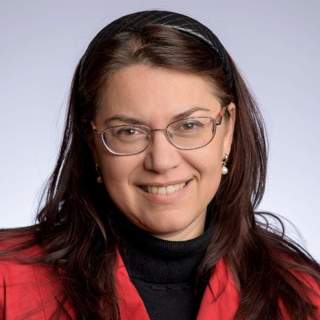
Mila N. Koeva is a Vice Dean Research and senior Associate Professor at the University of Twente's Faculty of Geo-Information Science and Earth Observation (ITC), Department of Urban and Regional Planning and Geo-Information Management. Her research focuses on 3D modeling and Digital Twins for land management and urban planning, integrating geospatial technologies, UAV data, and AI/ML methods. PhD in architectural photogrammetry MSc in Engineering (Geodesy) Research Themes: Digital Twinning for urban ecosystems AI-driven cadastral boundary extraction 3D modeling with LiDAR and satellite data Global partnerships in Rwanda, Kenya, and Ethiopia Interoperability standards for local digital twins Scientific Contributions: Geospatial World Innovation Award 2021 Copernicus Masters Competition (3rd place 2016) Editorial roles in Photogrammetric Records and MDPI journals Keynote speaker at 3D GeoInfo, GI Forum, and FIG events Her educational impact includes developing courses, lecturing, and supervising students whose work has received top awards in The Netherlands and international competitions.
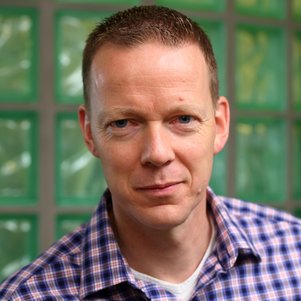
Nina Schwarz is Assistant Professor of human-environment interactions in cities at the Department of Urban and Regional Planning and Geo-Information Management, ITC—University of Twente. Holding a Diploma in Environmental Sciences (University of Lüneburg, 2003) and a PhD in Social and Economic Sciences (University of Kassel, 2007), she spent a decade as senior scientist at the Helmholtz Centre for Environmental Research – UFZ before joining ITC. Her interdisciplinary research integrates urban land-use science, ecosystem-service evaluation and advanced modelling techniques—especially agent-based models—to explore sustainable urban development under global change. Research interests revolve around three interconnected themes: (i) urban land-use change —understanding how residential, commercial and green-space dynamics co-evolve; (ii) urban ecosystem services —quantifying both supply and demand of services such as local climate regulation, recreation and biodiversity; and (iii) behavioural modelling —formalising human decision-making to simulate policy scenarios ranging from slum-upgrading to vineyard management. She actively links these themes to UN Sustainable Development Goals, notably SDG 11 (Sustainable Cities) and SDG 15 (Life on Land). Recent publications (2022-2025) reveal a methodological breadth spanning citizen-science impact assessment in Suriname, cooling effects of urban water bodies in Chinese mega-cities, European wine-growers’ adaptive behaviour, and methodological advances in upscaling and validating agent-based land-use models. Across these studies, Schwarz consistently combines empirical field data, geospatial analytics and participatory approaches to produce policy-relevant insights for cities in both the Global North and South. She has (co-)authored >80 peer-reviewed works, accumulating c. 5 900 citations and an h-index of 28 (Scopus). While specific honours are not itemised in the supplied text, her sustained citation impact and invited contributions to major conferences (e.g., iEMSs 2020, IAHR 2025) underscore scientific recognition. Schwarz frequently engages with societal stakeholders: her projects have generated open datasets on urban green-space monitoring in Paramaribo, e-learning modules for Latin-American universities, and interactive dashboards for sustainable water management. Within ITC she contributes to capacity-building programmes for emerging economies, supervises graduate researchers and maintains active collaborations across Europe, Latin America, Africa and Asia. No explicit lists of PhD students or personal grants are provided in the current corpus, but her leadership of externally funded projects (e.g., citizen-science evaluation, vineyard decision-making database) indicates ongoing acquisition of research funding.
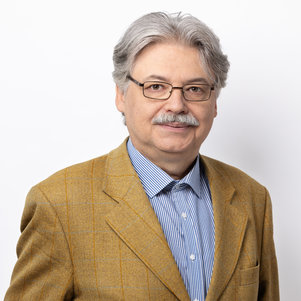
Coen H.H.M. Custers is a Researcher at Eindhoven University of Technology (TU/e), affiliated with the Department of Electromechanics and Power Electronics within the College of Electrical Engineering, Mathematics and Computer Science. His work focuses on electromechanical systems, magnetic materials, and actuator design, contributing to UN Sustainable Development Goals related to sustainable energy and industrial innovation. Education: MSc and PhD in Electrical Engineering from TU Eindhoven. His research emphasizes advanced modeling techniques such as harmonic analysis and finite element methods, particularly in segmented structures and solid-state transformers. He has collaborated on projects like the Impuls II Long Stroke synchronous reluctance actuator (2016–2022) and the Nanometer-accurate planar actuation system (2015–2019), both as a project member. Research interests include improving precision in planar motor systems, reducing eddy currents in conducting structures, and advancing solid-state transformer technology. His publications highlight contributions to control systems, magnetic levitation, and semi-analytical modeling approaches. He has advised M. Kleijer on a conference contribution. His work has been recognized by 61 total citations (Scopus) and he is active in the Electromechanics Lab, focusing on interdisciplinary projects involving electromagnetic design and mechanical deformation.
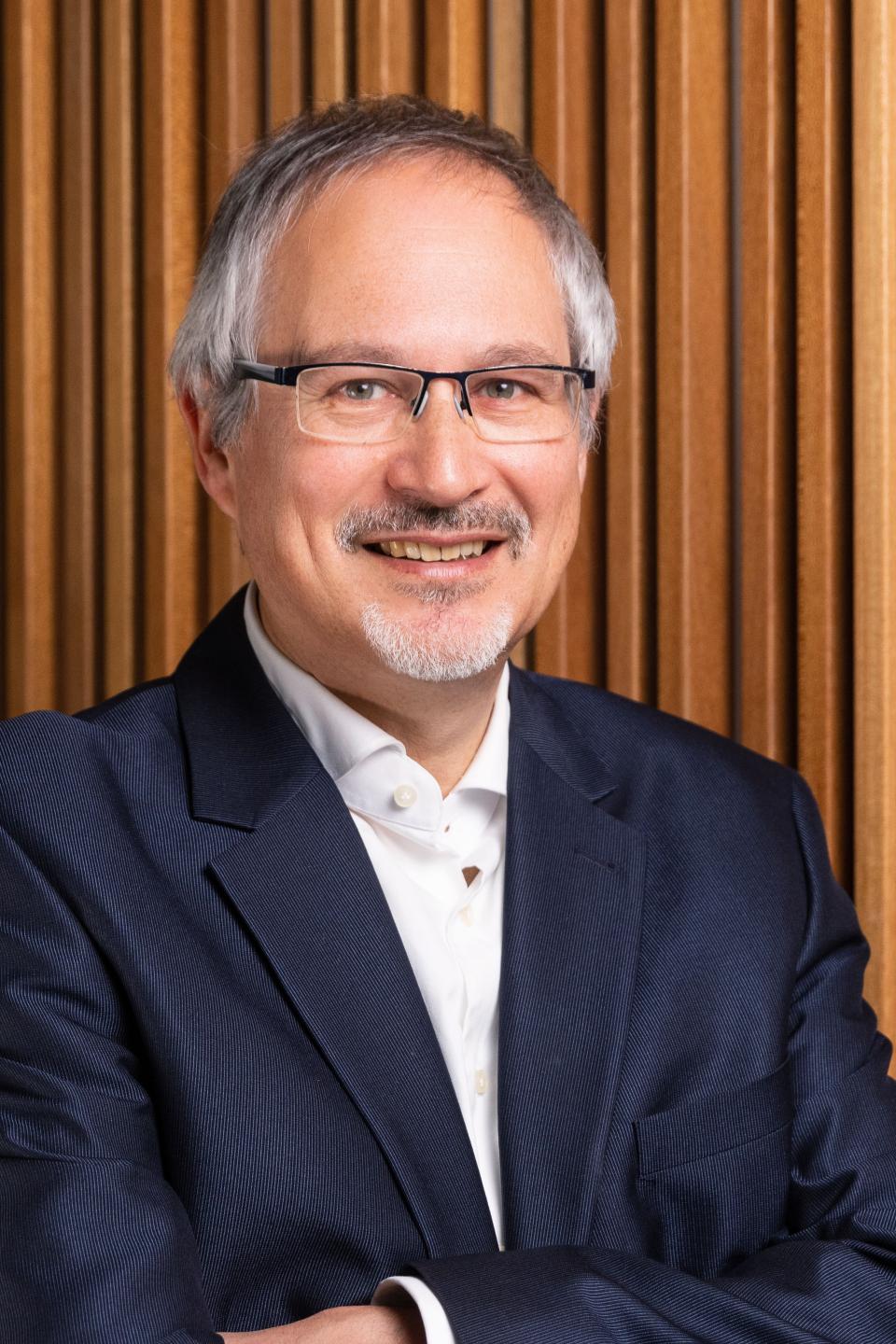
Professor L.J. Sluys is a Full Professor and Chair of Computational Mechanics at the Faculty of Civil Engineering and Geosciences, Delft University of Technology (TU Delft). He has been a leading figure in computational mechanics since 1999, heading the Computational Mechanics group and serving as head of the Department of Materials, Mechanics, Management and Design (3MD) from 2018 to 2024. His research is centered on the computational modeling of material behavior, particularly focusing on failure processes and high-performance materials. His research interests include computational mechanics of materials, modeling of failure and fracture processes, multi-scale methods, and the computational modeling of high-performance materials such as composites and concrete. He employs advanced numerical techniques including the finite element method, extended finite element method (XFEM), level-set methods, and cohesive zone modeling to simulate complex mechanical behaviors under static and dynamic loading conditions. His work spans civil, mechanical, and materials engineering domains, with applications in infrastructure, energy, and sustainable materials. The recent publications highlight a strong trend in modeling fracture, fatigue, and degradation in heterogeneous materials such as composites, concrete, and geological formations. His work integrates multi-physics and multi-scale approaches, often coupling mechanical, thermal, and chemical effects. There is a consistent focus on numerical robustness, model validation, and the development of adaptive computational frameworks for simulating progressive damage and failure. Research Fellow of the Netherlands Academy of Arts and Sciences (KNAW) Professor Sluys has taught core courses such as Introduction to the Finite Element Method and Computational Methods in Non-linear Solid Mechanics for over a decade, indicating a strong commitment to academic education. He has supervised numerous students, though specific names are not listed in the provided texts. He leads an active research group in computational mechanics, contributing to both fundamental and applied research in solid mechanics. His work involves collaboration with international institutions and industry partners, particularly in the areas of infrastructure durability and advanced materials.
Nicolas Cambier is a Visiting Professor at Vrije Universiteit Amsterdam, affiliated with the Faculty of Science's Artificial Intelligence department and the Network Institute. His research focuses on swarm robotics, collective behavior, and evolutionary systems. He explores topics like emergent communication, modular robotics, and prosociality in robotic swarms. Key areas include task-driven language evolution, adaptive decision-making, and environmental interaction in constrained environments. His work bridges theoretical models with practical implementations, emphasizing self-organization and cultural evolution in synthetic systems. Recent contributions address challenges in heterogeneous swarms, skill acquisition in modular robots, and decision-making without prior knowledge. He collaborates widely, with publications in IEEE Robotics and Automation Letters, Nature Communications, and top conferences like GECCO and Distributed Autonomous Robotic Systems. Research interests span robotics, artificial intelligence, and evolutionary computation, with applications to both theoretical frameworks and real-world robotic systems. His studies often involve agent-based simulations and embodied evolution approaches to understand complex collective phenomena.
Florian Bociort is an Assistant Professor at the Optics Research Group , Delft University of Technology (Faculty of Applied Sciences). He holds a PhD in Physics from TU Berlin (1994) and has dedicated his career to optical system design, gradient-index optics, and computational methods in lens design. Research Interests Bociort’s research focuses on design landscapes of optical systems , where he pioneered the use of saddle points to escape local minima in optimization. His work spans Gradient-index optics (conversion of homogeneous lenses to GRIN media) Artificial intelligence in lens design Optics education (simulation-driven learning) Academic Contributions He has supervised multiple PhD theses on topics like: A. M. Boyd (2025): Generalized gradient-index lens optimization Z. Hou (2023): Systematic lens design searches Y. Shao (2021): Imaging coherence and optimization M. Strauch (2020): Tunable optics M. Mout (2019): Ray-based diffraction simulation Recent Publications His 2025-2018 publications show a trajectory from classical optical design to modern computational approaches, including simulation-driven education, gradient-index conversions, and high-NA diffraction modeling. The 2024 paraxial reconstruction and 2025 simulation-education articles exemplify this evolution. Patents & Expertise He co-invented two ASML-related patents in lithographic design and served as expert witness in the 2018 ASML-Nikon patent lawsuit. His personal webpage details his networks of local minima and fractal basins in optimization.
Joost Batenburg is a Professor at Leiden Institute of Advanced Computer Science (LIACS) , with a chair in Imaging and Visualization . He is affiliated with the Centrum Wiskunde & Informatica (CWI) and serves as Program Director for the interdisciplinary Society, Artificial Intelligence and Life Sciences (SAILS) initiative. His research focuses on tomographic image processing and reconstruction , where he has published over 80 journal articles and 60 conference papers. Current projects include Universal Three-dimensiOnal Passport for process Individualization in Agriculture (UTOPIA) and Center for Optimal, Real-Time Machine Studies of the Explosive Universe (CORTEX) , both funded by NWO grants. He leads the FleX-Ray Lab , a custom CT system integrated with advanced data processing algorithms. His research spans discrete tomography , real-time imaging pipelines , and AI-enhanced reconstruction methods , with applications in industrial inspection, agricultural analysis, and cultural heritage conservation. Recent articles demonstrate novel approaches to: Single-shot dynamic object tomography using level-set methods and motion modeling X-ray scattering quantification for defect detection in real-time systems Cross-modal image registration between CT scans and physical photographs Auto-differentiation in CT workflows combining classical and machine learning algorithms Scientific Awards: Dutch Award for ICT Research (2018) C.J. Kok Prize (2007) Philips Mathematics Prize (2006) He has supervised numerous PhD candidates including Mary Go, Eani Lachmansingh, and Zhichao Zhong, while maintaining editorial roles at IEEE Transactions on Computational Imaging and Journal of Mathematical Imaging and Vision . His work bridges theoretical mathematics with practical applications in agriculture, industry, and art conservation.
Ivana Nikoloska is an Assistant Professor at the Department of Electrical Engineering, Eindhoven University of Technology (TU/e). She is affiliated with the Center for Quantum Materials and Technology Eindhoven and BIASlab (Bayesian Intelligence and Stochastic Agents Lab). Her academic career includes prior roles as a Research Associate at King’s College London and a Visiting Researcher at Aalborg University. PhD: Monash University, Australia (2023) MSc & Dipl.-Ing.: University of Ss. Cyril and Methodius, North Macedonia Research Interests span foundational and applied machine learning, quantum computing, and information/communication engineering. Her work focuses on integrating Bayesian inference, variational methods, and quantum technologies for tasks like signal processing, channel estimation, and power control optimization. Quantum Machine Learning Bayesian Simulation-Based Inference Meta-learning for Wireless Systems Hybrid Quantum-Classical Architectures Stochastic Signal Processing Quantum Sensing & Metrology Notable Trends in Publications include quantum recurrent neural networks with adaptive gating, Bayesian frameworks for quantum sensing, and meta-learning applications in communication systems. She explores variational inference for planning and robust algorithms for channel estimation under non-ideal conditions.
Sofie Haesaert is an Assistant Professor in the Control Systems group at the Department of Electrical Engineering, Eindhoven University of Technology. Her work focuses on formal verification and control synthesis methods for cyber-physical systems, particularly through stochastic simulation relations and temporal logic specifications. Education: BSc (cum laude) and MSc (cum laude) in Mechanical Engineering and Systems & Control from Delft University of Technology; PhD from Eindhoven University of Technology (2017) Experience: Postdoctoral researcher at Caltech (2017-2018), then returned to TU/e as Assistant Professor Her research interests include: Cyber-physical systems verification Stochastic control methods Temporal logic specification Markov decision processes Formal methods in control engineering Model abstractions and simulation relations Recent publications show strong focus on: Stochastic temporal logic control Robust and risk-aware control Multi-agent system verification Formal synthesis via simulation relations AI integration in control systems Software tools for formal control Scientific achievements: Veni Grant recipient (2020) Co-developer of the SySCoRe toolset for stochastic control synthesis Contributor to formal verification benchmarks through ARCH-COMP reports She contributes to education through courses on: Control principles for engineered systems Control challenges in autonomous racing Supervisory control of cyber-physical systems Haesaert collaborates across disciplines including computer science, applied mathematics, and robotics, with over 750 citations and significant contributions to formal control theory for stochastic systems. Her work bridges theoretical developments with practical applications in autonomous systems and complex control architectures.
Ralf Peeters is a Full Professor in Mathematics of Knowledge Engineering at Maastricht University's Faculty of Science and Engineering , Department of Advanced Computing Sciences. He serves as Vice-Dean of Research and Director of the STEM Graduate School, while leading the university's team at the inter-university research school DISC and co-chairing the Mathematics Centre Maastricht. Education: PhD in Mathematics (Free University, Amsterdam, 1994) Technical Mathematics (Delft University of Technology, 1988) Research Interests span applied mathematics, systems and control theory, signal/image processing, artificial intelligence, and biomedical engineering applications. His work bridges mathematical techniques with real-world challenges in healthcare and industrial systems. Recent Publications highlight advancements in deep learning for cardiac signal reconstruction, tensor-based signal decomposition, and recurrence plot analysis. These works integrate machine learning with clinical diagnostics, particularly in electrocardiographic imaging and arrhythmia characterization. Key Collaborations: Mathematics Centre Maastricht Dutch Mathematics Platform Dutch Institute of Systems and Control Leadership Roles: Vice-Dean of Research (FSE), Director of STEM Graduate School, Head of DISC-affiliated team, and Co-Chair of Mathematics Centre Maastricht. He has supervised over 25 PhD projects, emphasizing applied research across health and industrial domains.
Anuj Pathania serves as an Assistant Professor in the Parallel Computing Systems (PCS) group within the Informatics Institute at the University of Amsterdam's Faculty of Science. His research pioneers sustainable computing systems operating under severe power, thermal, and reliability constraints, with significant contributions to energy-efficient hardware design and embedded systems. Education: PhD in Computer Science (2018), Karlsruhe Institute of Technology MSc in Computer Science (2012), National University of Singapore B.Tech in Computer Science (2009), Maharaja Agrasen Institute of Technology Pathania's research centers on low-power design and sustainable systems for constrained environments, with particular expertise in thermal management of 3D-stacked architectures and energy-efficient machine learning inference . His work bridges electronic design automation with real-world reliability challenges, developing novel power budgeting techniques like T-TSP that incorporate transient temperature effects ignored by conventional methods. Current projects include EU-funded initiatives on energy labeling for digital services, addressing ecological impacts through technological, behavioral, and legal frameworks. His publication trajectory reveals a strategic evolution toward zero-waste computing , with recent work (2023-2025) focusing on hardware-software co-design for edge AI, energy modeling across computing continua, and parameter-efficient neural adaptation. Key themes include thermal-aware scheduling for S-NUCA many-cores, cooperative processor utilization in heterogeneous systems, and sustainability metrics for digital services. Scientific Recognition: Best Paper Award Nomination at IEEE Computer Society Annual Symposium on VLSI 2023 for 3D-TTP power budgeting technique Pathania actively mentors 4 PhD students (Ehsan Aghapour, Saeedeh Baneshi, Sudam Wasala, Yixian Shen) and has successfully supervised 5 Master's theses (including Cum Laude defenses by Joris op ten Berg and Jurre Wolff). His research is supported by major grants including Energy Labels for Ecologically Sustainable Digital Services (2023-2024) and Towards Zero-Waste Computing (2021-2025), developing simulation frameworks like HotSniper and CoMeT for thermal analysis. The PCS group maintains strong industry collaborations with ARM and NVIDIA, particularly through tools like ARM-CO-UP for heterogeneous processor utilization.
Dr. Duarte Guerreiro Tomé Antunes is an Assistant Professor at the Department of Mechanical Engineering , Eindhoven University of Technology (TU/e), specializing in control theory. He is affiliated with the Control Systems Technology Group and focuses on optimal/stochastic control and networked control systems. Research emphasizes overcoming the curse of dimensionality in large-dimensional systems through approximate control strategies. Explores event-triggered control for networked systems with latency and computational constraints. Teaches Optimal Control and Dynamic Programming , Training Project 4 , and Robotic Seminars . Publications highlight advancements in: Event-triggered methods for linear quadratic control Stability analysis of networked systems with asynchronous links Frequency-domain modeling of control loops with data losses Switched system regulation via informed policies
R.H. Bemthuis serves as an Assistant Professor in the Pervasive Systems Research Group at the University of Twente, affiliated with the Department of Computer Science within the Faculty of Electrical Engineering, Mathematics and Computer Science (EEMCS). Education: Ph.D. in Electrical Engineering, Mathematics, and Computer Science from University of Twente Master's in Industrial Engineering and Management (specialization: production and logistics management) from University of Twente Bachelor's in Industrial Engineering and Management (specialization: production and logistics management) from University of Twente Research Focus: Bemthuis develops IoT- and Big Data-driven solutions for emerging behavior management, with expertise spanning multi-agent systems, logistics simulation, and applied process mining. His work integrates real-world applications through projects like ECOLOGIC (sustainable construction logistics) and ECOCHECK, emphasizing IoT-based approaches to complex logistical challenges. Leadership & Service: As principal investigator for major research projects, Bemthuis directs significant grant-funded initiatives. He demonstrates institutional commitment through extensive service: serving as Treasurer and Vice-President of the PhD Network (P-NUT) from 2019-2022, and co-chairing annual PhD Day events throughout this period.
Edgar J.D. Vredenbregt is an Associate Professor in the Department of Applied Physics at Eindhoven University of Technology (TU/e). His research focuses on quantum technologies, including ultracold atom trapping for quantum computing and novel charged particle sources. He leads projects on Rydberg atom-based quantum computing and ultracold ion beams for nanoscale applications. Education: MSc in Applied Physics (TU/e, 1986), PhD in Atomic and Molecular Physics (TU/e, 1990). Postdoctoral research at SUNY Stony Brook (1991-1993) and NIST (1998). He holds a KNAW fellowship (1995-2000) and has been a project member in KAT-1: Rydberg Atom Quantum Computing and Simulation since 2020. Research interests include ultracold electrons/ions for high-brightness applications, Rydberg atom arrays for quantum gates, and laser-cooled ion beams for nanotechnology. He has developed ultracold electron sources for ultrafast diffraction and focused-ion beam tools for 1 nm-scale silicon wafer modification. Publications span quantum computing, atomic physics, and nanotechnology. He teaches courses like Hybrid Quantum Computing and Physics of Plasma and Radiation. Supervised 69 student works but no names are listed in the provided texts.
Aniket Ambekar is a Research Fellow at the Department of Chemical Engineering and Chemistry, Eindhoven University of Technology. His research focuses on multiphase flow dynamics in porous media, with expertise in computational fluid dynamics (CFD) and experimental validation techniques. He holds a PhD in Chemical Engineering from the Indian Institute of Technology Delhi (2022), an MSc in Computational Fluid Dynamics from National Institute of Technology (2016), and a BSc in Chemical Technology from the University of Pune (2013). Research interests include packed bed hydrodynamics, gas-liquid flow mechanisms, and the role of wettability in two-phase systems. His work combines high-resolution simulations (e.g., volume-of-fluid method) with experimental measurements to study flow regimes, interfacial dynamics, and phase distribution. Notable contributions address perforation effects in structured packings, particle aspect ratio impacts, and monolith gas-liquid interactions. He has received prestigious awards including the Marie Skłodowska-Curie postdoctoral fellowship (2022) and the Outstanding Ph.D. Thesis Award (2024). Collaborations span European institutions, focusing on energy-efficient separation processes and reactor design optimization.