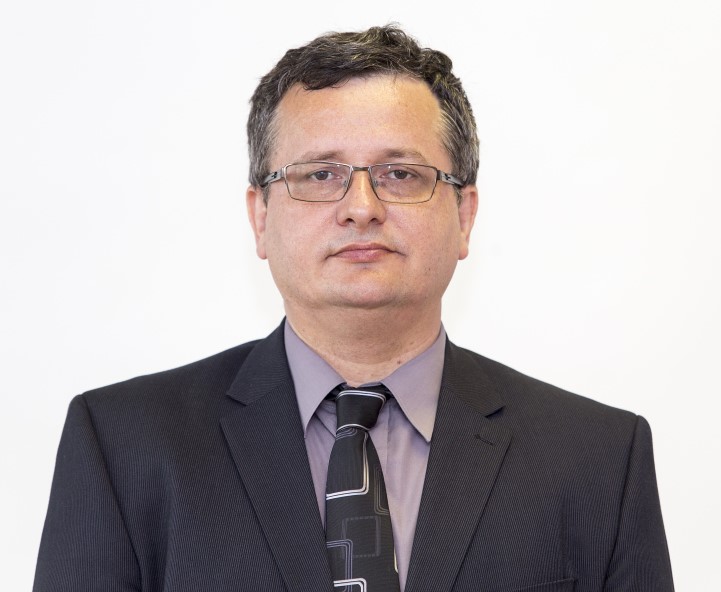
Dr. Sándor Baranya is an Associate Professor at the Department of Hydraulic Engineering and Water Management, Faculty of Civil Engineering, Budapest University of Technology and Economics. As Head of Department and Faculty Council Member, he leads educational initiatives and chairs institutional committees. Specializes in river hydraulics and sediment transport Active in Danube River studies and environmental monitoring Develops numerical models for morphodynamics and pollution assessment His research integrates advanced measurement techniques like LSPIV, acoustic mapping, and deep learning for riverbed analysis. Recent work focuses on microplastic contamination, thermal discharge impacts, and sediment budget modeling in large rivers. Publications emphasize computational fluid dynamics, river restoration, and EU Water Framework Directive compliance. Scientific awards include the #builder250 scholarship. He teaches courses on hydraulics, hydromorphology, and water systems modeling, with a consultation schedule on Mondays.
Dr. Peter Rucz is an Adjunct Professor at the Department of Network Systems and Services, Budapest University of Technology and Economics (BME). He holds a Ph.D. in Electrical Engineering (Summa cum laude, 2016) from BME's Doctoral School of Electrical Engineering. His research focuses on acoustic modeling, sound design of musical instruments, and audio compression technologies. He has participated in projects like REEDDESIGN, INNOSOUND, and AMORES, addressing topics such as organ pipe acoustics, nonlinear navigation algorithms, and robust communication protocols. Teaching roles include courses on Acoustic Measurements, Sound Engineering, Programming Basics, and Multimedia Systems. His research interests span aeroacoustic simulations, psychoacoustic models in audio compression, and computational methods for open-space acoustics. Awards include the 2016 Best Student Paper Award and 2013 I-INCE Grant. He mentors students in topics like cavity sound formation in wind instruments and DSP-based signal processing.
Professor András Baranyai is a Doctor of Science at Eötvös Loránd University's Institute of Chemistry, where he leads research in physical chemistry and molecular modeling. His work focuses on developing advanced computational methods to understand liquid structure and ion interactions. Research interests explore: Molecular dynamics of aqueous systems Statistical mechanics foundations Polarizable force fields Water's anomalous properties Interfacial phenomena Astrochemical processes His publications demonstrate consistent focus on water structure, ionic solutions, and methodological advances in molecular simulation techniques. Laboratory activities include development of novel algorithms for charge distribution calculations and validation of molecular models against experimental data.
Dr. Zoltán Siménfalvi serves as Dean of the Faculty of Mechanical Engineering and Informatics at the University of Miskolc, Hungary, holding the academic rank of Professor. His leadership encompasses oversight of academic programs, research initiatives, and administrative functions within the faculty, positioning him at the forefront of mechanical engineering education and innovation in Central Europe. His research spans explosion protection, biogas technology, combustion engineering, and sustainable energy systems. Key focus areas include computational fluid dynamics (CFD) simulations for hazardous area classification, flash point determination of flammable mixtures, hydrogen/methane dispersion modeling, and optimization of anaerobic digestion processes. His work bridges theoretical analysis with industrial applications in energy safety and renewable resource utilization. Analysis of his 15 most recent publications (2022-2024) reveals dominant themes in explosion hazard analysis (60% of works), particularly 2D/3D hazardous area modeling, gas detector performance in ammonia environments, and FLACS-CFD simulations for hydrogen-methane mixtures. Biogas technology constitutes 25% of output, emphasizing mixing efficiency in anaerobic digesters and process optimization. Remaining research addresses sustainable engineering through carbon capture strategies for V4 countries, coal gasification efficiency, and propane leakage dynamics. No scientific awards were documented in the available materials. Information regarding student advising, research grants, or laboratory supervision was not provided in source materials. His administrative role as Dean suggests strategic oversight of research funding and academic programs, though specific grant details remain unreported. No dedicated research laboratories or specialized teams were explicitly referenced, though his publications indicate collaboration with computational modeling groups and industrial safety partners for experimental validation of CFD simulations.
Dr. Balázs Rakos is an Associate Professor at the Budapest University of Technology and Economics (BME), affiliated with the Department of Automation and Applied Informatics . His research bridges nanotechnology, biophysics, and optical computing. His work focuses on: Integrating photoswitchable proteins with photonic devices for optical computing Developing infrared energy harvesting systems using nanoantennas and MIM diodes Modeling dipole-dipole and Coulomb-coupled protein arrays for molecular electronics Designing self-adapting pixel antenna systems for dynamic signal processing His publications from 2025–2015 reveal a trajectory from infrared sensor technologies to biophotonics and renewable energy applications , with a recurring emphasis on nanoscale biomolecular systems .
Péter Stumpf is an Associate Professor at the Budapest University of Technology and Economics (BME), affiliated with the Department of Automation and Applied Informatics. His research focuses on advanced control systems, power electronics, and machine learning applications in electrical drives. Contact Information: • Office: Building Q.B114, 1117 Budapest, Magyar tudósok krt. 2. Hungary • Phone: +36 (1) 463-2870 • Email: Stumpf.Peter@aut.bme.hu His recent work explores predictive control methods, including Model Predictive Control (MPC) and Reinforcement Learning (RL), applied to permanent magnet synchronous motors, grid-side converters, and high-speed drives. He has developed novel algorithms for optimal current computation, weighting factor assignment, and harmonics compensation. Key research trends include: Integration of machine learning in control systems Optimization of power electronics for renewable energy Advanced modulation techniques in motor drives Compensation of nonlinear effects in high-speed systems
Dr. Forgács Tamás is an Assistant Professor at the Department of Structural Mechanics, Faculty of Civil Engineering, Budapest University of Technology and Economics. He teaches courses such as Basic Mechanics (BMEEOTMPRE3) and Introduction to Strength of Materials (BMEEOTMAT42) . His research focuses on masonry arch bridges, structural mechanics, and discrete element modeling (DEM). Key areas include the mechanical behavior of skew arches, backfill interaction in historic bridges, and stochastic strength prediction of masonry structures. Trends in his publications highlight advanced DEM applications for analyzing masonry arch bridges' load-bearing capacity, dynamic behavior, and failure mechanisms. Specific topics include skew geometry effects, spandrel wall contributions, and multi-scale modeling approaches.
Dr. Brigitta Krisztina Tóth is an Associate Professor at the Department of Structural Mechanics, Faculty of Civil Engineering, Budapest University of Technology and Economics (BME). She serves on the Faculty Council and its Education Committee, and holds the communication and marketing officer role within her department. Her research bridges structural mechanics and biomedical applications, with a focus on computational modeling and mechanical testing. Academic Affiliation: Budapest University of Technology and Economics (BME), Faculty of Civil Engineering, Department of Structural Mechanics Leadership Roles: Member of Faculty Council and Education Committee; Communication and Marketing Officer Research Trends: Her publications span biomechanics (brain aneurysms, collagen fibrils), hyperelastic material modeling, fire safety engineering, and interdisciplinary topics like hand hygiene protocols. Recent work emphasizes energetically stable computational methods and statistical evaluation of biological tissues. Key Research Areas: Biomechanics, Structural Mechanics, Computational Modeling, Hyperelastic Materials, Cerebral Aneurysm Analysis Scientific Awards: #építő250 scholarship Teaching: Courses include Material Models in Mechanics , Nonlinear Mechanics , and foundational topics in structural analysis.
Dr. Ádám Török is a prominent researcher affiliated with the Budapest University of Technology and Economics (BME) and the Institute of Transport Sciences (KTI) . Active since 2000, he specializes in transport economics, emissions modeling, and sustainable mobility systems. His work spans 2024-2026 and focuses on autonomous vehicles, CO2 decomposition techniques, and public transportation sustainability. 2000-2012: Department of Transport Economics at BME 2013-2020: Department of Transport Operations and Transport Economics at BME 2021-present: Department of Transport Technology and Transport Economics at BME 2018-present: Institute of Transport Sciences (KTI) His research integrates environmental impact analysis with transport policy modeling , emphasizing autonomous vehicle economics and CO2 emission drivers . Recent publications in Transport Policy , Energy Reports , and Journal of Economy and Technology demonstrate expertise in scenario-based forecasting and multi-criteria sustainability assessment . Key article trends show collaboration with international researchers like Ammar Al-lami and Anas Alatawneh, combining machine learning with transport economics to address challenges in European mobility systems . His work appears in journals categorized as Q1-Q2 by SJR indicators across transportation, environmental science, and engineering disciplines. Dr. Török contributes to academic committees including: Doctoral Qualification Committee in Economics (IXGJO GMB) International Committee on Political Science and Law (IXGJO ÁJB) Sociological Scientific Committee (IXGJO SZTB) He advises doctoral students and publishes extensively on automated vehicle adoption , transport safety , and alternative drive chains . Current projects suggest ongoing engagement with European transport policy and climate resilience initiatives.
Dr. Attila Imre is a Full-Time Professor in the Department of Power Machines and Systems at Budapest University of Technology and Economics (BME) . He also serves as a Part-Time Scientific Advisor at the MTA Energy Research Center . His research spans thermodynamics, energetics, physical chemistry, and ecology, with a focus on working fluids, phase transitions, and energy systems. Doctor of Science (DSc), Hungarian Academy of Sciences (2015) PhD in Physics, ELTE (1996) DrUniv in Solid-State Physics, ELTE (1994) MSc in Physics, ELTE Faculty of Physics (1990) Imre’s research integrates theoretical and applied studies in thermodynamic cycles, metastable fluids, and supercritical systems. He has pioneered work on working fluid selection, cycle efficiency, and cold energy utilization, particularly in organic Rankine cycles and power-to-methane technologies. His 15 most recent publications emphasize artificial intelligence in energy systems, economic analyses of sustainability, and thermodynamic modeling of extreme-state fluids. Key trends include AI-driven performance mapping, techno-economic evaluations of waste heat recovery, and ecological applications of fractal geometry. Scientific Awards : Humboldt Scholarship, Johannes Gutenberg University, Mainz, Germany (1999) Imre has held prestigious postdoctoral roles at the University of Tennessee and senior research positions in Hungarian institutions. His work bridges energy engineering, computational modeling, and interdisciplinary challenges in translation and cultural studies.
Angelo Valli is a Senior PostDoc Researcher at the Department of Theoretical Physics , Budapest University of Technology and Economics. His research spans condensed matter physics, nanotechnology , and quantum physics , focusing on many-body phenomena, quantum interference, and molecular electronics. 2025/S: Instructor for Modern Physics BMETE15AP59 2024/W: Instructor for Physics Problem Solving Tutorial BMETE15AP58 His work combines quantum field theoretical methods with numerical simulations of low-dimensional systems. Key research areas include: Quantum interference in electron transport Spintronics applications in graphene nanoflakes Molecular electronics with ab-initio and many-body approaches Electronic correlations from bulk to nanoscale Quantum dynamics and coherence effects Valli's theoretical frameworks have direct implications for quantum sensor design , spintronic devices , and chemical detection technologies . He has developed efficient local orbital (LO) basis methods for simulating realistic molecular systems while maintaining numerical accuracy.
Márton Karsai is an Associate Professor and Head of the Department of Network and Data Science at Central European University (CEU). He also serves as a Research Professor at the Rényi Institute of Mathematics (Hungary) and Editor-in-Chief of Advances in Complex Systems . His work focuses on computational social science, human dynamics, and data-driven modeling of socioeconomic systems. Karsai holds advanced degrees including a DSc from the Hungarian Academy of Sciences and an HDR (Habilitation) in Computer Science from École Normale Supérieure de Lyon. His research integrates temporal networks, human mobility, and social contagion phenomena, often using large-scale datasets from digital platforms and wearable sensors. Notable projects include studies on evacuation behavior during disasters, vaccination hesitancy, and urban socioeconomic stratification. Karsai leads interdisciplinary initiatives like the DyLNet project, which examines social interactions and language development in preschool environments through sensor technology. Recent publications highlight innovations in network clustering algorithms (PASCO), epidemic modeling with generalized contact matrices, and the application of machine learning to infer socioeconomic status from satellite imagery. His work bridges computational methods with real-world challenges in public health, urban planning, and humanitarian development.
Laszlo Matyas is a University Professor at the Department of Economics and Business at Central European University (CEU). He has held leadership roles, including Head of the Hungarian Accredited PhD Program in Economics and former Provost of CEU. His work focuses on econometrics , panel data analysis , and policy analysis in Central and Eastern Europe . He has co-authored/co-edited influential works, such as the Springer book series on econometrics. Education: Ph.D. (C.Sc, D.Sc) in Economics/Econometrics from the Hungarian Academy of Sciences. Research Interests: His research emphasizes panel data methodologies, fixed effects models, gravity models in trade analysis, and the impact of institutional changes on economic behavior. Recent work explores inflation dynamics, post-pandemic economic recovery, and machine learning applications in econometrics. Articles Trends: His recent publications address panel data techniques, policy implications of trade flows, and the economic effects of geopolitical events like the Ukraine war. He also investigates methodological challenges in econometrics, such as discretized variables and pairwise observations. Grants & Labs: While specific grants are not listed, his editorial roles and co-edited volumes (e.g., Seven Decades of Econometrics ) highlight his contributions to advancing econometric theory and practice.
Ágnes Vathy-Fogarassy is Habilitated Associate Professor and Head of the Department of Computer Science and Systems Technology at the University of Pannonia's Faculty of Engineering and Informatics. She also serves as the Rector's Commissioner for Artificial Intelligence Education and Development and the Dean's Representative for Quality Assurance and Accreditation. Additionally, she leads the Data-intensive Artificial Intelligence Methods and Systems Research Laboratory and the Healthcare Analytics Research and Development Center. Her educational background includes: PhD in Information Science (2009) Studies at Eötvös Loránd University in Computer Science (1999-2007) Studies at University of Pannonia in Computer Science (1995-1998) Mathematics-Physics and Computer Science Teacher training at Berzsenyi Dániel Teacher Training College (1995) Ágnes Vathy-Fogarassy's research focuses on machine learning, artificial intelligence, data science, and their applications in healthcare . Her work spans predictive analytics, network analysis, and medical informatics, with a particular emphasis on developing AI methods for healthcare data analysis. She has pioneered approaches for N-glycomics-based biomarker discovery, cancer treatment prediction, and heart failure risk assessment using machine learning techniques. Her interdisciplinary research bridges computer science with medical applications, creating innovative solutions for healthcare challenges. Her recent publications demonstrate a strong trend toward applied AI in healthcare , with significant work on diabetes classification, chemotherapy effectiveness prediction, and cardiovascular risk assessment. She also maintains active research in automotive AI applications (vehicle dynamics prediction) and renewable energy optimization (solar power plant modeling). Her work consistently combines theoretical machine learning advancements with practical implementations across diverse domains. Her notable scientific achievements include: László Méray Award, University of Pannonia (2024) Tarján Memorial Medal, John Neumann Computer Science Society (2022) Pro Sciencia Award, University of Pannonia (2021) Veszprém Women's Roundtable Association Women's Empowerment Award (2019) Pro Universitate Pannonica silver medal (2017) PE-MIK Best Female Instructor (2017) As an academic advisor, Ágnes Vathy-Fogarassy has successfully guided multiple PhD students to completion, including Dániel Leitold (2020), Szabolcs Szekér (2024), and János Kontos (2025). She currently supervises several ongoing doctoral research projects with Attila Knolmajer, Tamás Miseta, Veronika Gombás, and Eszter Szakács. Her commitment to talent development is evident through her students' numerous Best Paper awards at international conferences and successful TDK papers. She has developed the curriculum for several data science subjects and established the Data Science master's program at the University of Pannonia in 2023. She leads two major research entities: the Data-intensive Artificial Intelligence Methods and Systems Research Laboratory (founded 2021) and the Healthcare Analytics Research and Development Center (founded 2017). These teams focus on cutting-edge AI research with particular emphasis on healthcare applications, bringing together interdisciplinary researchers to tackle complex data challenges in medical domains.
SERES Noémi is an Assistant Professor at the Department of Structural Engineering , Budapest University of Technology and Economics . Her academic work focuses on computational modeling and structural analysis of steel and composite systems. Research Interests : SERES specializes in Structural Engineering , with emphasis on Composite Materials , Computational Modeling , and Steel-Concrete Interaction . Her research investigates shear connections, interface interlock, and numerical simulation techniques for composite slabs and steel structures. Scientific Awards : építő250 Scholarship Academic Contributions : She has published extensively on computational methods for steel-concrete composites, including shear connection modeling and concrete-encased embossments. Her work bridges experimental and numerical studies to enhance structural performance.