Johannes Alexander Karder is an Assistant Professor at Upper Austria University of Applied Sciences (Research Center Hagenberg), specializing in Information & Communications Technology (ICT) under the HEAL focal area. His research focuses on optimization algorithms, metaheuristics, and simulation modeling. Focal area: ICT - Information & Communications Technology Institution: Upper Austria University of Applied Sciences Collaborations: Active in international projects (Austria, Germany, Spain) Research interests include: Dynamic Optimization Fitness Landscape Analysis Network Optimization Crane Scheduling Personnel Planning Evolutionary Algorithms Recent publications (2024-2025) demonstrate expertise in: Dynamic Stacking Optimization Concurrent Crane Scheduling Self-Adaptive Optimization Fitness Landscape Metrics Robust Production Systems Simulation-Based Decision Making He contributes to projects like adaptOp (Josef Ressel Center for Adaptive Optimization) and SimGenOpt2, focusing on production planning and control using heuristic methods.
Peter Supancic is an Associate Professor and Deputy Head of the Institute of Structural and Functional Ceramics at Montanuniversität Leoben. He holds a habilitation in Functional Ceramics and has a career spanning materials science research and education. Studied Physics and Chemistry at Karl-Franzens-University Graz (1985-1993) PhD in Materials Science (1998) Habilitation in Functional Ceramics (2004) His research focuses on the mechanical stability and fracture mechanics of electroceramics and brittle materials, including thermal shock behavior and strength testing methodologies. His publications analyze topics like PTC thermistors, varistor components, and fiber-reinforced composites. Key methods include finite element modeling, Monte-Carlo simulations, and experimental strength tests. Recent articles highlight advancements in biaxial stress testing (Ball-on-Three-Balls Test), nanoscale electrical characterization, and failure statistics beyond Weibull distributions. Collaborative work includes thermal conductivity analysis of polymer composites and fractography of electroceramics. Scientific Awards: Styrian Prize for Science and Research (2002) Georg Sachs Prize from DGM (2001) Peter Supancic has led research projects on ceramic failure mechanisms, contributed to international conferences, and collaborated on standard testing procedures for advanced ceramics and composites. His work bridges theoretical modeling with practical applications in ceramic material reliability.
Beatrix C. Hiesmayr is a Privatdozent (habilitated Associate Professor) of theoretical physics at the University of Vienna, Faculty of Physics, where she has led the Quantum Particle Workgroup since 2008. She serves as elected member of the works-council for scientific staff and teaches a broad spectrum of courses from introductory lab sessions to advanced quantum-information theory. Education & qualifications: The text does not list prior degrees, but her title Mag. Dr. and the rank Privatdoz. indicate a doctorate and post-doctoral habilitation at an Austrian university. Research interests sit at the tripartite interface of quantum information science , high-energy particle theory and medical-imaging technology . Her group develops mathematical tools to detect and quantify entanglement in composite qudit systems, subjects discrete space-time symmetries to precision tests with positronium decays, and translates the resulting detector know-how into the world-first plastic-scintillator total-body PET scanner (J-PET). Across 15 representative papers (2023-2025) she explores entanglement witnesses, distillation protocols, quantum neural networks, and realistic PET engineering, signalling a coherent programme that moves from abstract quantum-structure theorems to hardware prototypes now entering clinical feasibility studies. Although no specific grants or honours are mentioned, she currently coordinates the COST action “Relativistic Quantum Information” (CA21106) and her group operates an international consortium on J-PET development. Student names are not disclosed in the supplied text. Contact: beatrix.hiesmayr@univie.ac.at — Boltzmanngasse 5, 1090 Wien, room 503.
Jan Fabian Ehmke is a Professor at the University of Vienna , Faculty of Business, Economics and Statistics, and Head of the Department of Business Decisions and Analytics. He actively supervises Master's theses in quantitative fields like business analytics, logistics, production, and transportation, requiring mathematical modeling and data analysis skills. Key Research Areas: Business Analytics, Logistics, Transportation, Supply Chain Management, Data Science, and Stochastic Optimization Current Projects: AI-based Energy-Efficient Train Planning, Proactive Route Planning for Pandemic Testing, Reliable Railway Scheduling Recent Publications focus on pandemic logistics, mobile parcel lockers, railway operations, and collaborative transportation systems. His work contributes to SDGs like Sustainable Cities and Responsible Consumption. 2025: 7 publications including pandemic waste supply chain optimization, equitable disease testing models 2024: 4 key papers on dynamic learning for itineraries, bike-sharing systems Awards: Transportation Science Meritorious Service Awards (2021, 2023), EJOR Best Review Paper (2021). He serves as President and Communications Chair in INFORMS Transportation Science Society.
Rainer Abart is a full Professor and the Dean of the Faculty of Earth Sciences, Geography and Astronomy at the University of Vienna, where he leads research at the Department of Lithospheric Research. His academic career spans over three decades with appointments at prestigious institutions including the Free University Berlin, University of Basel, and Karl-Franzens-University Graz. Abart's research focuses on petrology, mineral physics, thermodynamics, and geochemistry. His work particularly emphasizes metamorphic, magmatic, and experimental petrology, with significant contributions to understanding diffusion and diffusive phase transformations in minerals, phase equilibria, irreversible thermodynamics, mineral reaction kinetics, and fluid-rock interactions. His research bridges theoretical models with experimental approaches to unravel complex geological processes. His recent publications demonstrate a consistent focus on mineral reactions, diffusion processes, and microstructural evolution in geological materials. A significant portion of his work investigates alkali feldspar systems, examining diffusion mechanisms, phase transformations, and crystal structures using advanced techniques like atom probe tomography and neural network modeling. He also conducts important research on mantle xenoliths, mineral inclusions in garnet, and the petrogenesis of various rock types. Elected full member of the Austrian Academy of Sciences (2022) Elected corresponding member of the Austrian Academy of Sciences (2013) FWF grant I 4404-N: Diffusion-diffusive phase transformations in alkali feldspar (2020-2023) FWF grant I 4580-N: Moldanubian deep crustal metasomatism (2021-2023) FWF grant I3998-N29: Fe-Ti oxide inclusions and magnetism of oceanic gabbro (2019-2023) Felix-Machatschki award of the Austrian Mineralogical Association Abart has secured numerous research grants from major funding agencies including FWF, DFG, and SNF. He has served in significant administrative roles including Head of Department of Lithospheric Research (2010-2022), Deputy Director of Earth Sciences studies program, and Speaker of the DOGMA doctoral school. His research collaborations span internationally with partners in Germany, Slovenia, Russia, and other countries. His laboratory work combines experimental petrology with advanced analytical techniques to study mineral reactions and transformations.
Ivo Hofacker is a Professor at the University of Vienna, holding a double appointment in the Faculty of Chemistry and Faculty of Computer Science. He leads the Research Group Bioinformatics and Computational Biology at the Institute for Theoretical Chemistry. His research focuses on computational biology , with emphasis on RNA bioinformatics (including the Vienna RNA Package for RNA structure prediction) and systems chemistry problems like combinatorial reaction networks. His work spans RNA structure prediction, RNA-RNA interactions, and development of bioinformatics tools. Recent publications (2021-2024) explore RNA 3D modeling, evolutionary constraints, viral RNA structures, membrane protein optimization, and limitations of deep learning in RNA folding. His group actively develops methods integrating phylogenetic data, chemical probing, and biophysical analyses. He collaborates extensively across disciplines, contributing to virology, microbiology, and biophysics. No awards or student advisees are explicitly mentioned in the source material.
Arman Ferdowsi is a researcher at the Faculty of Computer Science , affiliated with the Scientific Computing Research Group . His primary focus lies at the intersection of mathematics, computer science, physics, and synthetic biology. ORCID: 0000-0002-9374-3828 Research interests: • Design and analysis of dynamic processes in discrete and continuous spaces • Graph theory (abstract and geometric representations) • Network analysis in metric-measure spaces • Algorithms as discrete dynamics • Microscopic physical models of materials • Applications in synthetic biology Key research areas: His work explores dynamic processes through a multidisciplinary lens, combining geometric structures with computational approaches. Research spans topics like geometric measure theory, algorithmic modeling, and physical simulations in material science and synthetic biology contexts.
Georg Kresse is a full Professor of Computational Quantum Mechanics at the University of Vienna's Faculty of Physics, leading the Computational Materials Physics group. He developed the Vienna ab initio Simulation Package (VASP), a globally dominant tool for quantum mechanical materials simulations. His research spans theoretical solid-state physics, surface science, and computational materials physics, with recent emphasis on machine learning integration and advanced electronic structure methods. Born in Vienna (1967), habilitated in condensed matter theory Full member of Austrian Academy of Sciences and International Academy of Quantum Molecular Science Recipient of START Grant (2003), Kardinal-Innitzer-Preis (2016), honorary doctorate from Lund (2022) Research focuses include: Density Functional Theory : Development of advanced functionals (hybrid, GW, RPA) Machine Learning : Applications to materials properties and force fields Quantum Monte Carlo : AFQMC methods for solids Surface Physics : Oxidation reactions and catalytic processes His publications show strong representation in: Quantum mechanical simulations Electronic and optical properties Phase transitions and thermodynamics Energy materials and nanotechnology Major projects include: MECS : Materials for Energy Conversion and Storage (2023-2028) TACO : Taming Complexity in Materials Modeling (2021-2029) DCAFM : Doctoral College Advanced Functional Materials (2020-2025) His group maintains VASP, combining first-principles methods with machine learning to advance materials science understanding.
Eva Benková is a Professor and Dean of the Graduate School at the Institute of Science and Technology Austria (ISTA). She leads the Benková Group focused on Plant Developmental Biology, investigating how plants integrate environmental signals through complex hormonal networks. Her research has significantly advanced our understanding of auxin and cytokinin signaling pathways and their roles in plant adaptation to environmental conditions. Benková received her academic training through postdoctoral positions at the Max Planck Institute for Plant Breeding in Cologne and the Centre for Plant Molecular Biology in Tübingen. She held a habilitation position at the University of Tübingen before establishing her independent research group at the Flanders Institute for Biotechnology and later at the Central European Institute of Technology. In 2013, she joined ISTA as an Assistant Professor and was promoted to Professor in 2016. Her research interests center on plant hormonal networks, with particular focus on: How plants integrate environmental signals through hormonal signaling cascades Auxin and cytokinin crosstalk in root development Nitrate-hormone interactions in nutrient-dependent growth Mechanisms of hormonal network establishment and maintenance Transport-dependent auxin distribution and its regulation Convergence points that integrate different hormonal inputs Analysis of her recent publications reveals a strong emphasis on the molecular mechanisms underlying plant adaptation, particularly through hormonal signaling networks. Her work increasingly integrates advanced imaging techniques, computational modeling, and systems biology approaches. A significant portion of her research examines the intersection of nutrient signaling (particularly nitrate) with hormonal pathways that control root development. Benková's scientific achievements have been recognized with several prestigious awards: EMBO Membership (2017) Highly Cited Scientist designation (2014) FWF-ANR Bilateral Grant (2014) FWO Grants (2011) ERC Starting Grant (2008) Margarete von Wrangell Habilitation Program (2003-2007) As an academic mentor, Benková supervises multiple PhD students and postdoctoral researchers. Her lab includes PhD students David Babic, Valentin Leitner, Stefan Riegler, Tereza Tomickova, Ljupka Trajkova Petrova, and Yiqun Wang, as well as postdocs Marina Borges Osorio and Dekel Cohen Hoch. Her research is supported by grants including an Austrian Science Fund grant for her nitrate project. The Benková Group maintains a specialized research platform including a vertical confocal microscope (LSM700) equipped with root tracker software, enabling long-term observations of root growth in real time. This technology has been instrumental in their discoveries regarding the earliest changes in root growth in response to environmental stimuli.
Elias Karabelas serves as Assistant Professor at the Institute of Mathematics and Scientific Computing within the Faculty of Natural Sciences at University of Graz. His research integrates advanced computational methods with biomedical applications, particularly in cardiac modeling and fluid dynamics. His primary research interests span Computational Simulation, Artificial Neural Networks, Biomechanics, and Numerical Mathematics. Karabelas develops cutting-edge finite element frameworks for simulating cardiac hemodynamics and incompressible elasticity, with strong emphasis on robustness and clinical applicability. His publications demonstrate expertise in multiscale cardiac modeling, fluid-structure interaction, and numerical methods for biomedical engineering. Recent work focuses on sensitivity analysis of heart hemodynamics and obstacle modeling in fluid flow. Scientific Awards: IEEE TBME Featured Research (2022) for "Global Sensitivity Analysis of Four Chamber Heart Hemodynamics Using Surrogate Models" Academic Service: Karabelas actively contributes to scholarly communities as Editor for Frontiers in Physiology (since 2021), Reviewer for Advanced Modeling and Simulation in Engineering Sciences (since 2020) and Biomedizinische Technik (since 2018). He holds memberships in the American Mathematical Society, European Mechanics Society, and Austrian Society for Biomedical Engineering. As Principal Investigator of the BioTechMed-Graz Young Researcher Group (2023-2027), he leads the "Computational Inference of Pressure Fields from Non-Invasively Measured Flow Patterns" project, developing novel methods for non-invasive cardiac diagnostics.
Gundolf Haase is a Professor at the Department of Mathematics and Scientific Computing at the University of Graz, Austria. His academic career spans several decades with significant contributions to parallel computing and numerical methods for partial differential equations. He maintains an active research profile with numerous publications in high-impact journals and conferences. His research interests primarily focus on Scientific Computing, High Performance Computing, Parallel Algorithms, Domain Decomposition Methods, Finite Element Methods, Multigrid Methods, and GPU Programming. His work has increasingly incorporated biomedical applications, particularly in cardiac electrophysiology modeling and computational fluid dynamics for cardiovascular applications. Haase's recent publications demonstrate a strong focus on many-core parallelization techniques, particularly for GPUs, with applications spanning from computational cardiology to engineering simulations. His research shows a consistent pattern of developing efficient numerical methods for solving complex partial differential equations across various scientific domains. He teaches courses including Scientific Computing and FEM, Computer Mathematics, Programming in C++, and High Performance Computing at both undergraduate and graduate levels, demonstrating his commitment to education alongside research.
Nikolaj Popov is a Research Professor at the Research Institute for Symbolic Computation (RISC) of Johannes Kepler University, Linz, Austria. His work focuses on program verification, formal methods, and automated reasoning, particularly within the Theorema system. He specializes in verifying functional and recursive programs, combining symbolic computation with logical techniques to ensure correctness and termination. Education: PhD in Computer Science, RISC, Johannes Kepler University (2008) Research Interests: Popov’s research bridges theoretical computer science and practical applications, emphasizing automated theorem proving, program analysis, and formal verification. He develops methods for verifying complex program structures like mutual recursion and nested recursion, leveraging computer algebra systems. His work also explores the integration of formal methods into software engineering workflows. Key Contributions: Popov has co-authored foundational papers on verification condition generation, termination proofs, and automated debugging frameworks. His collaborations with Tudor Jebelean and others have advanced Theorema’s capabilities in handling functional programs and bridging logical and algebraic methodologies. Labs/Teams: Core member of RISC, contributing to its mission in symbolic computation and mathematical theory exploration.
Georg Nawratil is an Associate Professor at the Department of Differential Geometry and Geometric Structures, TU Wien. His research focuses on kinematic mechanisms, rigid-foldable structures, and geometric design principles. He leads projects like 'Singularity Closeness of Stewart-Gough Platforms' and 'Stewart Gough platforms with self-motions', exploring the interplay between geometric analysis and mechanical engineering. His work frequently involves computational design tools and applications in deployable structures, origami-inspired mechanisms, and multi-stable systems. Nawratil collaborates extensively with institutions and has contributed to interdisciplinary projects such as transformable luminaires and haptic devices for virtual reality. His research bridges theoretical geometry with practical engineering solutions, emphasizing applications in robotics, civil engineering, and material science. Education details are not explicitly stated in the provided texts, but his academic contributions span over two decades with notable theses supervision in parallel manipulator design and singularity analysis. He actively engages in conference presentations and publishes across journals and proceedings, focusing on topics like discrete Voss nets, antiprismatic skeletons, and continuous flexible Kokotsakis belts. His work often addresses challenges in path optimization, geometric modeling, and mechanism mobility. Research interests include singularity variety analysis, rigid-foldable tubular structures, and isometric deformations of geometric surfaces. He explores applications in architectural design (e.g., foldable bridges) and haptic technology. Despite no explicit awards listed, his prolific publication record and project leadership highlight significant contributions to the field of geometric mechanics.
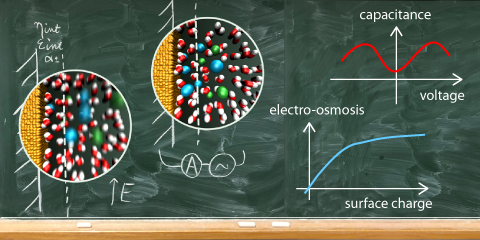
Douwe Jan Bonthuis is an Associate Professor at the Institute of Theoretical and Computational Physics at Graz University of Technology. His research focuses on theoretical biophysics, particularly the transport and dynamics of water, ions, and biological molecules at interfaces and under confinement. He specializes in bridging molecular-level simulations with continuum theory to explain complex electrokinetic phenomena. His research interests include: Molecular solvent structure at aqueous interfaces Dielectric profiles of interfacial water Electro-osmotic flow in nanochannels Ion adsorption phenomena Nanopore transport and ionic current fluctuations Electrohydraulic power conversion Bonthuis's recent publications (2019-2022) reveal a strong focus on the molecular mechanisms behind interfacial phenomena, particularly examining how trace impurities affect surface properties, the dielectric response of water at interfaces, and the connection between microscopic ion motions and macroscopic conductivity. His work combines sophisticated molecular dynamics simulations with continuum theory to provide fundamental insights into electrokinetic phenomena at the nanoscale. Bonthuis has made significant contributions to understanding: The role of interfacial viscosity in electrokinetics Surface activity of hydrated protons Mechanisms of ion channel activation The dielectric profile of water at solid surfaces Electrohydraulic pumping without mobile charges His work has been published in leading journals including Nature Reviews Chemistry, Journal of the American Chemical Society, Physical Review Letters, and Langmuir. Bonthuis maintains active collaborations with researchers across Europe, particularly with R.R. Netz and other prominent scientists in the field of theoretical biophysics.
Christian Scheidl, Senior Lecturer at the University of Natural Resources and Life Sciences, Vienna, specializes in Alpine Natural Hazards , focusing on debris flows, forest impacts on natural hazards, and climate change effects. His research combines field studies, laboratory experiments, and computational modeling to assess geohazard risks and mitigation strategies. His work spans disciplines like Environmental Science , Geomorphology , and Bridge Engineering , with publications analyzing debris-flow dynamics, soil biodiversity impacts from timber harvesting, and afforestation for avalanche protection. Recent studies include debris-flow run-up measurements, woody debris effects on bridges, and climate change interactions with mountain hazards. His articles reflect expertise in Debris Flow Modeling , Natural Hazard Mitigation , and Forest Ecology , often integrating Field Experiments and GIS-based Simulations . Key collaborations involve gWNGEF Forest and Natural Hazards and iANGF Alpine Natural Hazards .