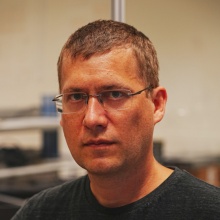
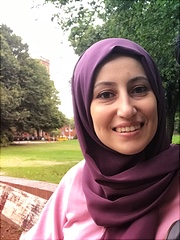
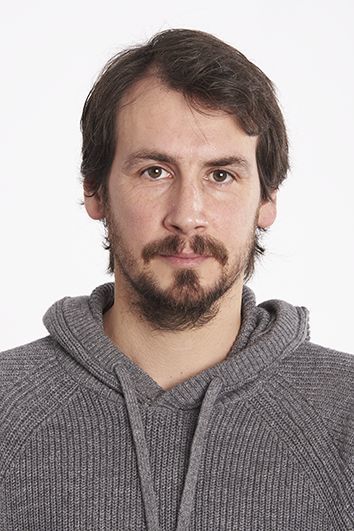
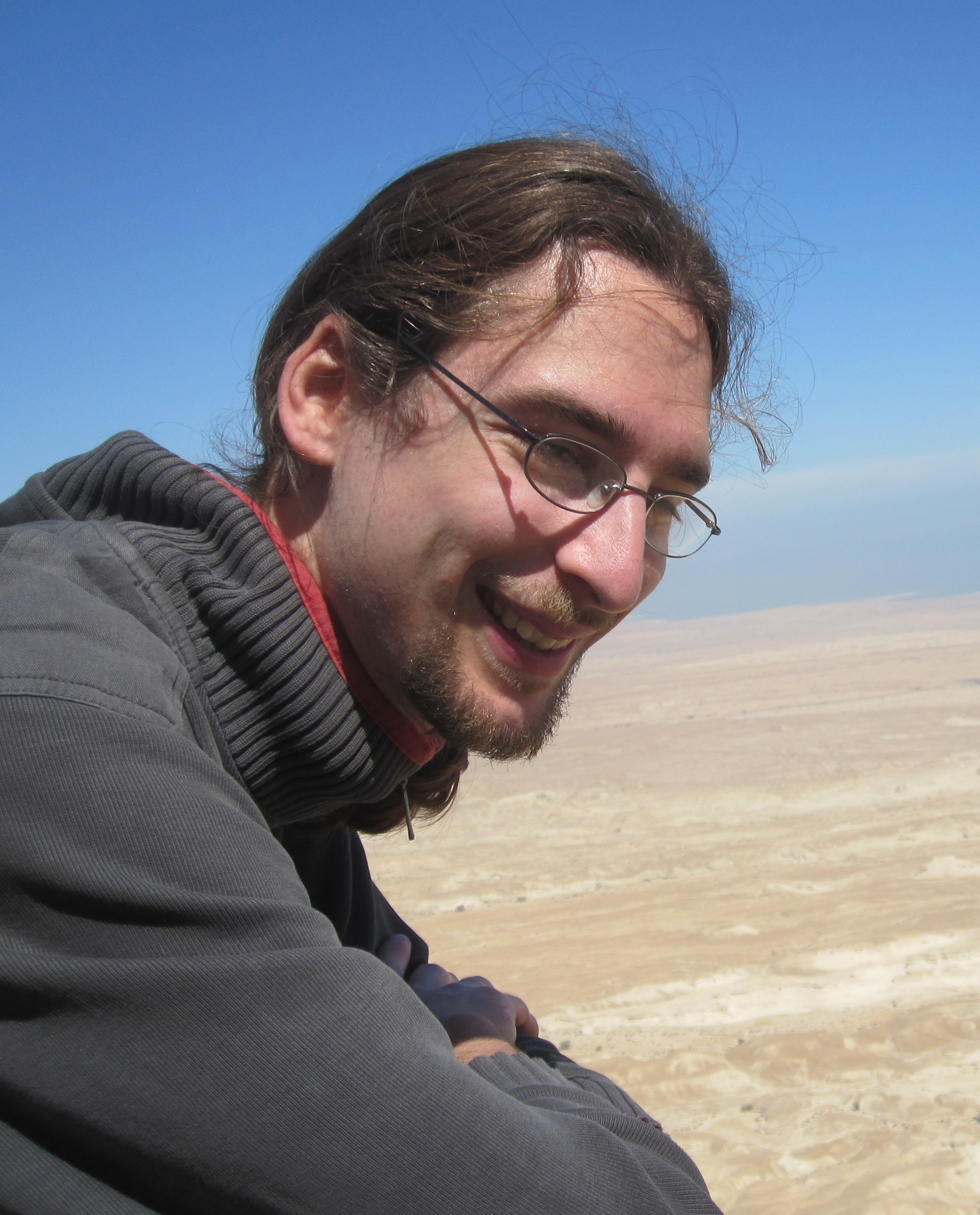
Björn Annighöfer is a Professor at the Institute of Aviation Systems (ILS) at the University of Stuttgart, where he serves as Managing Director. His work focuses on complex, digital, and safety-critical avionics systems, including self-adaptive platforms, cybersecurity, and AI-supported aerospace systems. Research interests include: Self-adaptive avionics platforms Model-based cybersecurity frameworks Integrated Modular Avionics (IMA) development Virtualization and middleware for safety-critical systems AI applications in aerospace Automated development and certification processes Recent publications highlight advancements in PLUG-AND-FLY avionics, security assessment using large language models, and domain-specific modeling tools. He leads a team of ~25 scientists at ILS, which operates modern labs, flight simulators, and research aircraft for testing.
Dr. Nurefşan Sertbaş Bülbül is a Research Associate/Postdoc at the University of Hamburg's Department of Informatics, part of the Faculty of Mathematics, Informatics and Natural Sciences. She completed her PhD at the University of Hamburg in 2023 under Prof. Mathias Fischer, following two Bachelor's degrees (Electronics and Communication Engineering, Computer Engineering) from Istanbul Technical University and a Master's from Boğaziçi University. Her research focuses on programmable networks, TSN (Time Sensitive Networks), and network security. Key areas include SDN (Software Defined Networking), attack detection, and reinforcement learning applications in networking. Her work addresses critical challenges like DoS attack mitigation in TSN, dynamic path reconfiguration, and P4-based solutions for network security. She has contributed to publications at IEEE GLOBECOM, IFIP Networking, and other conferences. Her research emphasizes practical implementations and resilient network designs, particularly for mission-critical systems. She is part of the Computer Networks research group, previously known as the IT-Security and Security Management group. Dr. Bülbül's recent projects include developing TSN Gatekeeper mechanisms and Transparent TSN solutions for agnostic end-hosts, leveraging SDN and reinforcement learning. Her work bridges theoretical advancements and real-world network challenges, ensuring robust and adaptable network infrastructures.
Bernhard Heinloth, M.Sc., is affiliated with the Department of Computer Science (INF) at Friedrich-Alexander-Universität Erlangen-Nürnberg (FAU), specifically within Chair of Computer Science 4 (System Software). His research focuses on system software optimization, kernel tailoring for embedded systems, and dynamic software updates. He has contributed to projects like Luci (dynamic shared object updates), Cocoon (on-demand kernel compilation), and Honey (binary library reduction). Teaching activities include leading exercise sessions for courses such as Betriebsysteme (Operating Systems), Systemnahe Programmierung in C (Low-Level Programming), and Praktikum angewandte Systemsoftwaretechnik (Systems Software Lab). He has advised numerous master's theses on topics ranging from interrupt latency analysis to compiler-based OS optimization. His publications span academic venues like USENIX ATC, PLOS, and SBESC, with a strong emphasis on practical system software engineering. Current work continues exploring compiler-driven system optimizations and real-time kernel performance.
Christian Heck is an Assistant Professor for Aesthetics and New Technologies at the Academy of Media Arts Cologne (KHM), where he has worked since 2017. His academic background includes a Master of Arts from the Berlin University of the Arts (2015) and a Diploma in Media Arts from the Academy of Fine Arts Munich (2012). Research Interests: Peace research, AI ethics, adversarial hacking, code literature, natural language processing, generative systems, and the militarization of digital technologies. Key Themes: Focus on algorithmic critique (especially neural networks), aesthetic research in cultural/peace work, and the societal impacts of technologies like IT security, weaponized drones, and autonomous weapon systems. His recent publications and talks address: AI-driven warfare and pre-emptive security policies Civil clauses in academia to prevent dual-use exploitation Cyberpeace strategies and artistic resistance Ethical implications of language models in military contexts He collaborates with organizations like the Forum InformatikerInnen für Frieden (FIfF), Science4Peace , and Arbeitskreis gegen bewaffnete Drohnen . His work connects artistic methods with peace activism, emphasizing civil society's role in reclaiming technological sovereignty.
Dr. Christian K. Karl, Senior Lecturer in Civil Engineering Didactics at the University of Duisburg-Essen, combines engineering practice with educational innovation. As Head of the Civil Engineering Didactics group and Chair of the VDI 2552 Guidelines Committee, he pioneers simulation games, BIM training frameworks, and AI integration in pedagogy. Lead developer of simulation tools like 'Einsatz in Grimhausen' for disaster management Recipient of the Best Workshop Award at ISAGA 2025 Principal investigator for projects: KI4Edu , DigiTeamsBau , and BIM Kommunal Author of 20+ publications on BIM, AI, and educational games His research focuses on competency-oriented teaching methods, digital transformation in construction, and immersive learning technologies. Recent work explores AI's impact on teacher roles, Smart Home systems, and circular construction practices. Articles highlight trends in simulation games for crisis training, BIM education frameworks, and AI applications for personalized teaching. He emphasizes human-centered technology development and collaborative digital workflows . Scientific recognition includes: Best Workshop Award (ISAGA 2025) Hochschuldidaktische Innovationen (2010) As Chair of the VDI 2552 committee, he shapes national BIM training standards. His leadership in EU Academy platform development and initiatives like 'Personalisierte KI-generierte Podcasts' underscores his commitment to accessible, forward-thinking education.
Arash Mohammadi is an Assistant Professor in the Department of Electrical and Computer Engineering at Concordia University, Montreal, Canada. He holds a PhD from the University of Toronto (2015) and was formerly affiliated with Amirkabir University of Technology, Iran. His research bridges signal processing, artificial intelligence, and biomedical applications. Research Interests: Signal and image processing for healthcare (e.g., lung cancer detection, ECG analysis) Machine learning for smart grids and cyber-physical systems AI in mobile edge computing and 6G networks Transformer and diffusion models for medical and motion data Federated and efficient deep learning for edge devices His recent publications (2021–2025) in top venues like IEEE TSP, ICASSP, and AAAI demonstrate a strong focus on applying cutting-edge AI—especially vision transformers, Mamba architectures, and diffusion models—to critical domains such as medical diagnostics, gesture recognition, and network security. Trends include multimodal fusion, uncertainty quantification, and efficient model design. Scientific Contributions: Developed novel frameworks like NYCTALE and MIXCAPS for lung nodule malignancy prediction Introduced CacheMamba and TEDGE-Caching for edge network optimization Advanced EMG-based gesture recognition using hybrid and transformer models Contributed to cybersecurity in smart grids via attack detection models He actively advises students and collaborates with researchers such as Konstantinos N. Plataniotis and Jamshid Abouei. He has contributed to special issues on neurorehabilitation and AI for COVID-19 diagnosis. His work often involves interdisciplinary teams and real-world applications in healthcare and smart infrastructure.
Christoph Lenzen is a Professor at CISPA Helmholtz Center for Information Security since July 2021. Previously, he served as a Group Leader at the Max Planck Institute for Informatics (2014-2021), and held postdoctoral positions at MIT CSAIL (2013-2014), Weizmann Institute (2012), and Hebrew University (2011). Research Interests Design and analysis of distributed algorithms Clock synchronization and adversarial fault tolerance Randomized and self-stabilizing systems Hardware algorithms for fault-tolerant systems Grants and Awards ERC Proof-of-Concept Grant (2021) ERC Starting Grant (2017-2022) ETH Zurich Medal for Outstanding Thesis (2011) Education Ph.D. in Computer Science (2011), ETH Zurich Diploma in Mathematics (2007), University of Bonn Teaching Clock Synchronization and Adversarial Fault Tolerance (2022 winter) How To Clock Your Computer (2022 summer) Theory of Distributed Systems (2019 winter, 2020 winter, 2018 winter, 2017 winter, 2016 winter, 2015 winter)
Ivan DeAndres-Tame is an Assistant Professor in the Department of Signal Theory and Communications at the School of Engineering, Universidad Autónoma de Madrid. His research focuses on advancing biometric systems with particular emphasis on face recognition and behavioral biometrics using cutting-edge computer vision and machine learning techniques. His research interests span face recognition systems, synthetic data generation for biometric applications, explainable AI in biometric contexts, and keystroke verification systems. DeAndres-Tame has made significant contributions to the field through his leadership in major international challenges including the FRCSyn Challenge at CVPR and WACV, and the Keystroke Verification Challenge at IEEE BigData. His work bridges theoretical advances with practical applications in biometric security systems. Analysis of his recent publications reveals a strong focus on evaluating and improving face recognition systems using synthetic data, with a growing interest in the intersection of large language models and biometric systems. His research demonstrates consistent innovation in benchmarking methodologies and evaluation frameworks for biometric systems. Throughout his career, DeAndres-Tame has collaborated extensively with leading researchers in the biometrics community, including Ruben Tolosana, Rubén Vera-Rodríguez, Aythami Morales, Julian Fiérrez, and Javier Ortega-Garcia, contributing to the advancement of biometric technologies through both theoretical and applied research.
Ali Hassan is a researcher affiliated with the National University of Sciences and Technology (NUST), School of Electrical Engineering and Computer Science, Department of Computer and Software Engineering. His work spans multiple domains in computer science, engineering, and applied mathematics, focusing on areas such as machine learning, IoT, energy systems, and medical informatics. His research explores: Reinforcement learning applications for battlefield information systems IoT antenna design and performance evaluation Optimization of second-life battery systems in electric vehicles Transformers for real-time vehicle collision avoidance Image hashing techniques using visual attention models Neural network-based phasor estimation for power grids Biomedical sensor systems for non-invasive health monitoring Mathematical modeling of viral dynamics Recent publications demonstrate his emphasis on interdisciplinary approaches combining AI, signal processing, and sustainability. He has collaborated with institutions across Pakistan, France, Saudi Arabia, and the USA, with a focus on practical implementations in cybersecurity, energy optimization, and healthcare technology.
Dr. Julia Pohle is Co-head of the Research Group "Politics of Digitalization" at the WZB Berlin Social Science Center since May 2024, where she has served as Senior Researcher since April 2015. She concurrently holds positions as Associate Researcher at the CNRS Centre Internet and Société in Paris (since January 2025) and Senior Associate Researcher at the Center for Digitalisation, Democracy and Innovation (CD2I), Brussels School of Governance (since October 2021), establishing her as a leading transnational scholar in digital governance. Her academic journey includes a PhD in Communication Studies from Vrije Universiteit Brussel (2016), a Magister Artium in Cultural Studies, Computer Science, and Philosophy from Humboldt-Universität zu Berlin (2004-2007), and foundational studies at Universität Bremen and Università di Bologna. Her research critically examines the tension between nation states and global digital cooperation through the lens of digital sovereignty, geopolitics, and communication governance. Pohle's extensive publication record reveals a decisive shift from multistakeholder internet governance frameworks toward critical analyses of digital sovereignty discourses since 2019. Her interdisciplinary work bridges communication studies, political science, and law, with recurring themes including power dynamics in internet architecture, gendered dimensions of data privacy, and the geopolitical implications of EU regulatory initiatives. Recent articles demonstrate increasing engagement with Global South perspectives and sustainability concerns in digital policy. Her scientific recognition includes: Fellow of the Global Governance Futures Program (Robert Bosch Foundation Multilateral Dialogues) (2014-2015) PhD fellow of the Research Foundation Flanders (FWO) (2010-2015) As Academic Editor of Internet Policy Review since 2020 and Co-Chair of IAMCR's Communication Policy and Technology Section, she actively shapes scholarly discourse. Her leadership extends to steering committees of the Internet Governance Forum Germany (2016-2022) and Global Internet Governance Academic Network (2013-2016), demonstrating sustained engagement with policy communities. At WZB, she leads the "Politics of Digitalization" research group and drives multiple high-impact projects including "Re-claiming Digital Sovereignty in discourse, policy and practice (ClaimSov)", "Forging Successful AI Applications for European Economy and Society (FORSEE)", and "Balancing Acts: European digital policy amidst economic, normative and security competition", positioning her at the forefront of critical digital policy scholarship.
Qian Li is a researcher working at the intersection of database systems and operating systems, with primary affiliation at DBOS Inc. and academic connections to Stanford University's School of Engineering, Department of Computer Science, and Peking University in Beijing, China. The research focuses on developing the Database Operating System (DBOS) concept, which reimagines operating systems with database technology at their core. Research interests center on database systems, operating systems integration, transaction processing, and serverless computing. The work explores how database principles like ACID transactions can improve system reliability, debugging, and application development, particularly in cloud environments. Key projects include DBOS, Epoxy for cross-data store transactions, and Apiary for transactional serverless computing. The publication record shows a strong trend toward integrating database transaction semantics with modern computing paradigms, particularly serverless architectures. Recent work demonstrates how transactional guarantees can simplify application development, improve debugging, and enable new approaches to cloud-native application design. The research bridges theoretical database concepts with practical systems implementation. As a core contributor to the DBOS project, Qian Li has collaborated extensively with leading researchers including Michael Stonebraker, Matei Zaharia, Christos Kozyrakis, and Peter Kraft. The work has been published consistently in top-tier venues including VLDB, USENIX ATC, and CIDR, reflecting significant impact in the systems research community.
Dr. Kwek-Tze Tan is an Associate Professor in the Mechanical Engineering Department at the University of Akron's College of Engineering and Polymer Science. His research focuses on composite materials, acoustic metamaterials, mechanical metamaterials, and bioinspired structures, with applications in aerospace and advanced materials. He has published over 30 peer-reviewed papers and secured significant research grants. Post-Doc: Purdue University (2013) Ph.D.: Tokyo Metropolitan University, Japan (2011) M.Eng. and B.Eng.: National University of Singapore (2006, 2004) His research investigates composite material behavior under extreme conditions, acoustic wave propagation, and bioinspired design. He has received awards from JSPS, ONR, and international scientific bodies. UA Faculty Research Committee (FRC) Summer Fellowship (2019) Firestone Research Initiative Fellowship (2018) LaunchTown Entrepreneurship Award (2016) Japan Society for the Promotion of Science (JSPS) Invitational Fellowship (2016) International Commission for Acoustics (ICA-ASA) Young Scientist Grant (2013) Metamaterials Congress Travel Grant Award for Young Researchers (2012) Dr. Tan teaches courses in mechanical engineering, including aerospace structures and computational methods. He has led multi-year projects funded by the U.S. Office of Naval Research (ONR) to study composites in arctic environments.
Udaya Kiran Tupakula is an Associate Professor in the Department of Computing within the School of Computer, Data and Mathematical Sciences at Western Sydney University. With over two decades of research experience, his work focuses on cybersecurity with particular emphasis on network security, cloud infrastructure protection, and emerging technologies. He has established himself as a leading researcher through extensive collaborations, particularly with Professor Vijay Varadharajan, and has contributed significantly to securing virtualized environments and next-generation networks. Dr. Tupakula's research spans multiple critical areas in cybersecurity. His early work focused on fundamental security challenges like DDoS mitigation and TCP SYN flood attacks, evolving into more complex domains including Software Defined Networking security, cloud security architectures, and IoT protection. Recent research directions include AI security, privacy-preserving machine learning, and securing 5G infrastructure. His approach combines theoretical frameworks with practical implementations, often developing novel security architectures that address specific vulnerabilities in emerging technologies. Analysis of his publication trends shows a clear progression from traditional network security toward more sophisticated systems. His work has increasingly incorporated machine learning techniques for intrusion detection, expanded into industrial control systems security, and recently embraced AI safety challenges. The breadth of his research demonstrates adaptability to evolving security landscapes while maintaining focus on practical, implementable solutions rather than purely theoretical approaches. Dr. Tupakula has mentored numerous researchers who have become active contributors in the cybersecurity field. His collaborative approach is evident in the extensive co-authorship network spanning multiple institutions and countries. His research has been supported by various grants focusing on critical infrastructure protection, cloud security, and next-generation network security. His laboratory work focuses on practical security testing environments for SDN, cloud infrastructure, and IoT systems. Current research directions include securing AI systems from malicious use, enhancing privacy in federated learning environments, and developing more robust security frameworks for industrial control systems. The applied nature of his research ensures close alignment with real-world security challenges faced by industry and government organizations.
Professor Melanie Schmidt is a faculty member in the Department of Computer Science at Heinrich-Heine-Universität Düsseldorf, where she leads the Algorithms and Data Structures research group. Previously, she was affiliated with the University of Bonn's Institute of Computer Science, where she completed her PhD under Prof. Dr. Heiko Röglin and headed a subgroup on "clustering for big data" within his research group. Current Position: Professor at Heinrich-Heine-Universität Düsseldorf Previous Position: Researcher and lecturer at University of Bonn PhD Advisor: Prof. Dr. Heiko Röglin Her research focuses on geometric data analysis, particularly k-means clustering in data streams, combinatorial optimization, and approximation algorithms. Her work bridges theoretical computer science with practical applications in big data processing. She has made significant contributions to understanding the theoretical foundations of clustering algorithms while developing efficient implementations for real-world applications. Professor Schmidt's publication record shows a consistent evolution from theoretical analysis of k-means to practical implementations for big data environments. Her recent work explores fairness in clustering, privacy-preserving techniques, and efficient algorithms for high-dimensional data. She has published in top-tier conferences including SODA, ICALP, ESA, and ITCS, demonstrating both theoretical rigor and practical relevance. Best Student Paper Award at ESA 2012 (joint work with Martin Groß, Jan-Philipp W. Kappmeier, and Daniel Schmidt) She actively supervises numerous Master's and Bachelor's students, with current advisees including Lena Carta, Lukas Drexler, and Anna Arutyunova. Her research group includes members such as Anja Rey, Julian Wargalla, and Annika Hennes. She teaches advanced courses in algorithms and data structures, with a focus on randomized algorithms and efficient algorithm design for big data problems. Professor Schmidt leads the Algorithms and Data Structures research group at Heinrich-Heine-Universität Düsseldorf, which focuses on developing and analyzing efficient algorithms for fundamental computational problems, with particular emphasis on clustering, geometric data analysis, and big data applications.
Jan Pennekamp is a postdoctoral researcher at the Chair of Communication and Distributed Systems (COMSYS) within the Department of Computer Science at RWTH Aachen University. He is a member of the Security and Privacy research group and is actively involved in the Cluster of Excellence 'Internet of Production,' where he serves as deputy workstream coordinator. His academic journey includes a B.Sc. and M.Sc. in Computer Science from RWTH Aachen, with exchange studies at Aalto University and an internship at the University of Luxembourg. His research interests center on security and privacy in the Industrial Internet of Things (IIoT), privacy-enhancing technologies (PETs), secure computation, and interdisciplinary applications in healthcare, particularly synthetic data and single-cell genomics. He has led and contributed to numerous research projects, including CALCIPROTECT, RFC, RUST, SUSTAINET-guardian, and SYNCLIVER. His methodological focus includes both technical innovation and rigorous evaluation in real-world scenarios. His recent publications demonstrate a strong trend toward privacy-preserving data sharing in industrial and healthcare contexts, leveraging techniques such as confidential computing, blockchain, and machine learning. His work bridges computer science with industrial engineering and clinical research, emphasizing secure, interoperable, and accountable data ecosystems. Scientific Awards: Klaus Tschira Boost Fund Fellow 2025 Attendee of the 12th Heidelberg Laureate Forum 2025 Young Researcher Award 2022, Cluster of Excellence Internet of Production ICT Young Researcher Award 2021 TDWI Award 2018 (best master thesis) Google Scholarship 2018 Finalist, Artifacts Competition and Impact Award at ACSAC 2022 Outstanding Reviewer Award, TheWebConf/WWW 2024 Jan has advised numerous B.Sc. and M.Sc. theses on topics ranging from privacy-preserving benchmarking to intrusion detection and blockchain-based accountability. He has received research stipends and travel grants from RWC and ACSAC and has held leadership roles in academic service, including organizing conferences and serving on program committees for top venues like IEEE S&P, CCS, and EuroS&P. He is also a Certified ScrumMaster and RWTH Research Manager, reflecting his strong project and team leadership skills. He is actively engaged in interdisciplinary research labs and teams, particularly within the 'Internet of Production' initiative, collaborating with industrial partners and medical researchers to develop secure and privacy-preserving information systems for real-world applications.