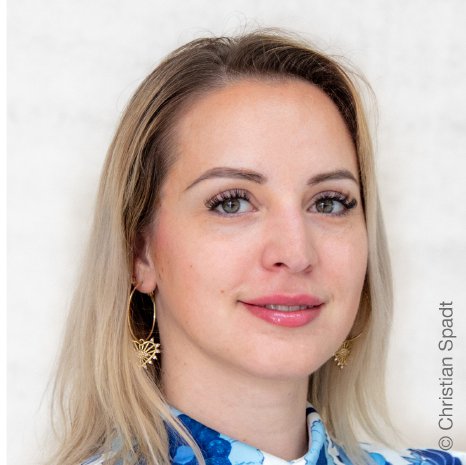
Benjamin Leopold Baureder is a Teaching and Research Assistant at the Department of Computer Science and Security, University of Applied Sciences St. Pölten. He contributes to the Information Security (MA) programme, focusing on both instructional and research activities in cybersecurity domains. His academic work emphasizes Information Security and Computer Science , aligning with the department's focus on contemporary digital protection frameworks. No awards, supervised students, or recent publications are detailed in available records.
Alexander Buchelt serves as a Researcher in the Department of Computer Science and Security at University of Applied Sciences St. Pölten, contributing to the Data Science and Artificial Intelligence (BA) program. His industry background includes data analytics roles at Hutchison Drei Austria (2014-2018) and MindTake Research GmbH (2019-2020), followed by academic experience as a Student Assistant at FH St. Pölten (2020-2022). His research spans artificial intelligence with emphasis on natural language processing for German content moderation, fractal-based neural network architectures, and AI policy frameworks. Current work demonstrates strong focus on real-world implementation including drone applications in forest ecology, multilingual social media analysis, and regulatory compliance for emerging AI systems. Technical approaches integrate machine learning with domain-specific challenges across environmental science, media analysis, and telecommunications. Publication trends since 2022 reveal increasing emphasis on ethical AI deployment and practical system robustness, with 2024-2025 works addressing content moderation safeguards, neural network innovation, and environmental monitoring solutions. His research consistently bridges theoretical AI development with tangible societal applications, particularly in European regulatory contexts and German-language environments. As part of the Department of Computer Science and Security, Buchelt contributes to Austria's applied research ecosystem focused on practical technology solutions. His work aligns with the university's mission in developing industry-relevant AI applications while addressing emerging challenges in security, ethics, and cross-domain implementation.
Felix Krejca serves as a Teaching and Research Assistant in the Data Intelligence Research Group at the Institute of IT Security Research, Department of Computer Science and Security, University of Applied Sciences St. Pölten. Based at Campus-Platz 1 in St. Pölten, he contributes to academic instruction and research initiatives in cybersecurity and data intelligence. Education Bachelor of Arts (BA) Bachelor of Science (BSc) Research Focus His work centers on applying data science and machine learning to cybersecurity challenges, with emphasis on intrusion detection systems, security analytics, and threat intelligence. This interdisciplinary research bridges artificial intelligence methodologies with practical security solutions in digital infrastructure. Team Affiliation As a core member of the Data Intelligence Research Group, Krejca collaborates on advancing IT security through data-driven approaches within the Institute of IT Security Research, contributing to the university's applied research mission in secure technology development. Professional Scope His dual teaching-research role encompasses curriculum development in security technologies and hands-on research, though specific grant funding or student supervision details remain unlisted in public profiles.
Dawn Grace Kremslehner-Haas serves as a Professor at the Department of Computer Science and Security, St. Pölten University of Applied Sciences, where she focuses on teaching and practical applications in technology domains. Her research interests span IT Security, Rail Technology, Mobility Systems, and Computer Science, with direct involvement in bachelor-level programs emphasizing real-world engineering solutions. Key areas include secure rail infrastructure, vehicle technology, and applied informatics within mobility contexts. She actively contributes to the following academic programs: Rail Technology and Mobility (BA) Rail Vehicle Technology (BA) IT Security (BA) Contact: dawn.kremslehner-haas@fhstp.ac.at
Páhi Timea serves as an Assistant Professor in the Department of Computer Science and Security at the University of Applied Sciences St. Pölten, where she teaches in the Cyber Security and Resilience (MA) program. Her academic credentials include an MA and BSc, positioning her at the intersection of theoretical research and practical security applications. Professional trajectory includes: 2015-2022: Scientist at AIT Austrian Institute of Technology GmbH, leading scientific research projects with specialization in cyber exercise development 2022-2024: Manager at Deloitte GmbH, applying security expertise in corporate contexts Her research program centers on cyber resilience frameworks, with particular emphasis on live-fire cyber exercises for threat response training. This work bridges academic theory and real-world security operations through simulated attack scenarios and infrastructure hardening techniques. Current investigations focus on adaptive defense mechanisms against evolving threat landscapes. No scientific awards are documented in the available institutional records. Advising activities and grant funding details remain unspecified in the provided materials, though her project leadership at AIT suggests experience in research team coordination. The absence of student listings indicates either early-career status or non-primary advising responsibilities within her current role. Departmental infrastructure within Computer Science and Security likely provides access to security laboratories and threat simulation environments, though specific lab affiliations aren't detailed in the source material.
Ralf Wunsch is a Lecturer at the Department of Computer Science and Security at the University of Applied Sciences St. Pölten. He contributes to the Media Technology (BA) and IT Security (BA) study programmes, focusing on applied teaching and practical education in technical fields. His research and instructional interests span: IT Security and cyber defense methodologies Media technology systems and digital innovation Interdisciplinary applications in computer science and digital engineering
Jan Odstrčilík is an Academy Scientist at the Institute for Medieval Research (IMAFO) of the Austrian Academy of Sciences (ÖAW) in Vienna, where he has been working since 2015. Since 2023, he has also been a full member of the Cluster of Excellence: EurAsian Transformations. He specializes in Medieval Latin texts and manuscripts, with a particular focus on multilingualism in medieval preaching and educational treatises. His educational background includes a PhD in Medieval and Neo-Latin Studies from Charles University in Prague (2012-2015) and a Master's degree in Czech language and literature with focus on Latin from the same institution (2005-2012). Odstrčilík's research interests center around Medieval Latin texts and manuscripts , Digital humanities applications in medieval studies , Multilingual texts and translation practices , Latin translations of vernacular texts , and the History of education in the Middle Ages . His work bridges traditional philological methods with cutting-edge digital humanities approaches, especially in Handwritten Text Recognition for medieval documents. He has made significant contributions to understanding multilingual sermon traditions, particularly those related to the Hussite movement and Jan Hus. His scholarly output demonstrates consistent focus on multilingual sermon traditions and the application of digital tools to medieval manuscript studies, with recent work emphasizing AI and machine learning techniques for analyzing medieval texts across linguistic boundaries. Herzog Ernst Scholarship (2019) for research on Henry Totting of Oyta Summer school 'Beyond Editing' Scholarship (2017) Paul Lehmann-Scholarship for Codicological Research (2013) Erasmus-Scholarship in Medieval Latin Philology (2010-2011) Odstrčilík has secured research funding for projects examining Prague University's influence in medieval manuscripts and has developed digital resources including the Dictionary of Medieval Latin in Czech Sources. He has organized numerous workshops and conferences, particularly the Winter School of HTR series, which has trained scholars across Europe in digital manuscript analysis techniques. He is actively involved in the Working Group on Textual Networks and Translation Cultures at IMAFO, where he contributes to projects like the Database of Carolingian manuscripts and innovative encoding of Carolingian manuscripts in collaboration with other scholars. His leadership in digital humanities initiatives has established him as a key figure in applying computational methods to medieval studies.
Christoph Baxa is an Associate Professor in the Department of Mathematics at the University of Vienna, where he has been a faculty member since 2000. His academic career at the University of Vienna began in 1990 as an Assistant Professor in the Department of Statistics, then moved to the Department of Mathematics in 1992, where he was promoted to Associate Professor in 2000. He maintains an active research profile and teaching load, with courses scheduled through 2025. Dr. Baxa completed his academic training at the University of Vienna, earning his M.A. in 1990 with a thesis on prime representing functions and Hilbert's Tenth Problem, his Ph.D. in 1994 on the discrepancy of sequences (nα), and his Habilitation in 2000 on estimates for discrepancies of special uniformly distributed sequences. His research focuses on Number Theory, particularly Uniform Distribution Theory, Discrepancy Theory, Continued Fractions, and Diophantine Approximation. His work often connects number theory with mathematical logic, as evidenced by his early research on Diophantine representations. His recent scholarly activity is dominated by book reviews for Monatsh. Math., covering diverse areas including algebraic geometry, number theory, history of mathematics, and mathematical education. Dr. Baxa has received several prestigious awards including the Ph.D. sub auspiciis Praesidentis rei publicae, the Würdigungspreis from the Austrian Ministry of Science and Research, the Jubiläums-Studienpreis from the Austrian Mathematical Society, and the Edmund und Rosa Hlawka Preis from the Austrian Academy of Sciences. He has held research grants from the Austrian Science Fund and was an Erwin Schrödinger Fellow at the University of Colorado at Boulder from 2001-2003. As a professional service, he has been a regular reviewer for Mathematical Reviews since 1996 and reviews books for Monatsh. Math. He is a member of numerous mathematical societies including the AMS, DMV, EMS, LMS, ÖMG, and SMF.
Maximilian Jakob Schirl serves as a Junior Researcher at the Centre for Secure Energy Informatics within the Department of Computer Science, Faculty of Natural and Mathematical Sciences at Paris Lodron University of Salzburg. His work focuses on cybersecurity, energy informatics, and data-driven solutions for smart energy systems, contributing to multiple funded research projects including FTZ CyberSec and ECOSINT. His research spans cybersecurity in energy infrastructure, smart meter data analytics, industry 4.0 adoption, and digital readiness assessment. He employs advanced techniques like reinforcement learning and privacy-preserving algorithms to address challenges in local energy communities, supply chain resilience, and sociodemographic profiling from energy consumption patterns. Key methodologies include microaggregation for data anonymization, load profile analysis, and interoperability frameworks for Austrian energy systems. Recent publications demonstrate a strong trend toward machine learning applications in energy informatics, particularly reinforcement learning for production systems and privacy risk assessment in smart grids. His work bridges theoretical algorithms with practical industrial implementations, emphasizing data-driven optimization of low-voltage networks and secure energy community integration. Dr. Schirl actively participates in major funded projects including FTZ CyberSec (2025-2028) for cybersecurity evaluation, DAWN (2025-2026) for data-driven network optimization, ECOSINT (2021-2024) for energy community integration, and DIH West (2019-2023) supporting SME digitalization. These initiatives involve cross-institutional collaborations with researchers like G. Eibl and D. Radovanovic across Austria. As a core member of the Centre for Secure Energy Informatics, he contributes to developing secure, interoperable energy community frameworks through the ECOSINT project and advances privacy-preserving techniques for smart meter data within the FTZ CyberSec initiative.
Stefanie Wallinger is a Researcher in the School of Business and Tourism specializing in sustainable tourism systems, resilience frameworks, and computational social science applications. Her work directly contributes to United Nations Sustainable Development Goals through empirical studies on tourism sustainability, social capital dynamics, and digital transformation in Alpine and Southeast Asian contexts. Her research portfolio spans sustainable tourism development, resilience engineering in destination management, agent-based modeling of tourist flows, circular economy integration in food tourism, and gender dynamics in retirement migration. She investigates ambivalence in tourism sociology through social capital theory while pioneering data-driven approaches to tourism sustainability using computational methods. Her work bridges disciplinary divides between tourism studies, sociology, and computer science to address complex systemic challenges in destination resilience. Analysis of her 2023-2025 publications reveals a decisive shift toward computational methodologies in tourism research, with 60% of recent work employing agent-based modeling or data-driven frameworks. Key thematic clusters include sustainable Alpine tourism strategies (33% of output), social capital in resilient destinations (33%), and retirement migration gender dynamics (33%). Her research increasingly incorporates generative AI applications for academic writing and tourism policy simulation. Scientific Awards Award for the best thesis of the Tourism Research Working Group and the Tourism Research Initiative (2025) Wallinger has secured €1.2M+ in research funding across 12 projects since 2015, demonstrating exceptional grant acquisition capability. She currently leads three major initiatives: the cross-border resilience strategy project (2024-2026), CEFoodCycle circular economy study (2022-2025), and dTS data-driven tourism platform (2021-2024). Her collaborative network spans 8 institutions with 15+ international co-investigators, focusing on transdisciplinary knowledge transfer between computational science and tourism practice. Though no formal students are documented, her project leadership roles indicate significant mentorship of junior researchers through hands-on project involvement. She maintains active collaborations with Austrian tourism boards, Thai cultural institutions, and EU-funded research consortia. Current work centers on spiritual tourism energy renewal practices (RETURN project), generative AI applications in academic writing centers, and food waste reduction through circular economy models in Alpine tourism ecosystems.
Dorian Achim Prill is a Researcher at the School of Information Technology and Systems Management, Salzburg University of Applied Sciences, specializing in digitization and digital transformation within Industry 4.0 contexts. He serves as Deputy Project Manager for DIH-West-Neu (2024-2028) and contributes to multiple funded research initiatives including Retailization 4.0 and RetailLab4.0, focusing on practical implementations of digital technologies in production and retail environments. His research integrates Machine Learning and Data Science with industrial maintenance systems, developing intelligent frameworks for predictive maintenance scheduling and service choreography. Key interests include Publish-subscribe architectures, Learning Systems for production optimization, and Planning Frameworks that bridge theoretical models with real-world manufacturing applications. His work emphasizes data-driven process monitoring and cloud-based intelligence for industrial IoT ecosystems. Recent publications demonstrate a clear trajectory toward applied machine learning in maintenance engineering, with increasing focus on smart factory implementations and service-oriented architectures. The research consistently connects broad computer science principles with specific industrial subfields like friction coefficient measurement for vehicle safety and retail digitalization. Prill actively participates in externally funded projects totaling 11 initiatives since 2017, securing grants for Digital Innovation Hubs and living labs. His collaborative approach involves interdisciplinary teams across academia and industry, particularly evident in RetailLab4.0's living lab environment and FriCamMod's vehicle safety research. He has shared expertise through invited lectures on data-driven maintenance planning and marine maintenance intelligence. He operates within dynamic project teams including RetailLab4.0's retail digitalization consortium and FriCamMod's vehicle safety collaboration, working closely with principal investigators like S. Kranzer and R. Zniva. Current projects emphasize scalable digital transformation frameworks for both manufacturing and retail sectors through the DIH-West-Neu initiative.