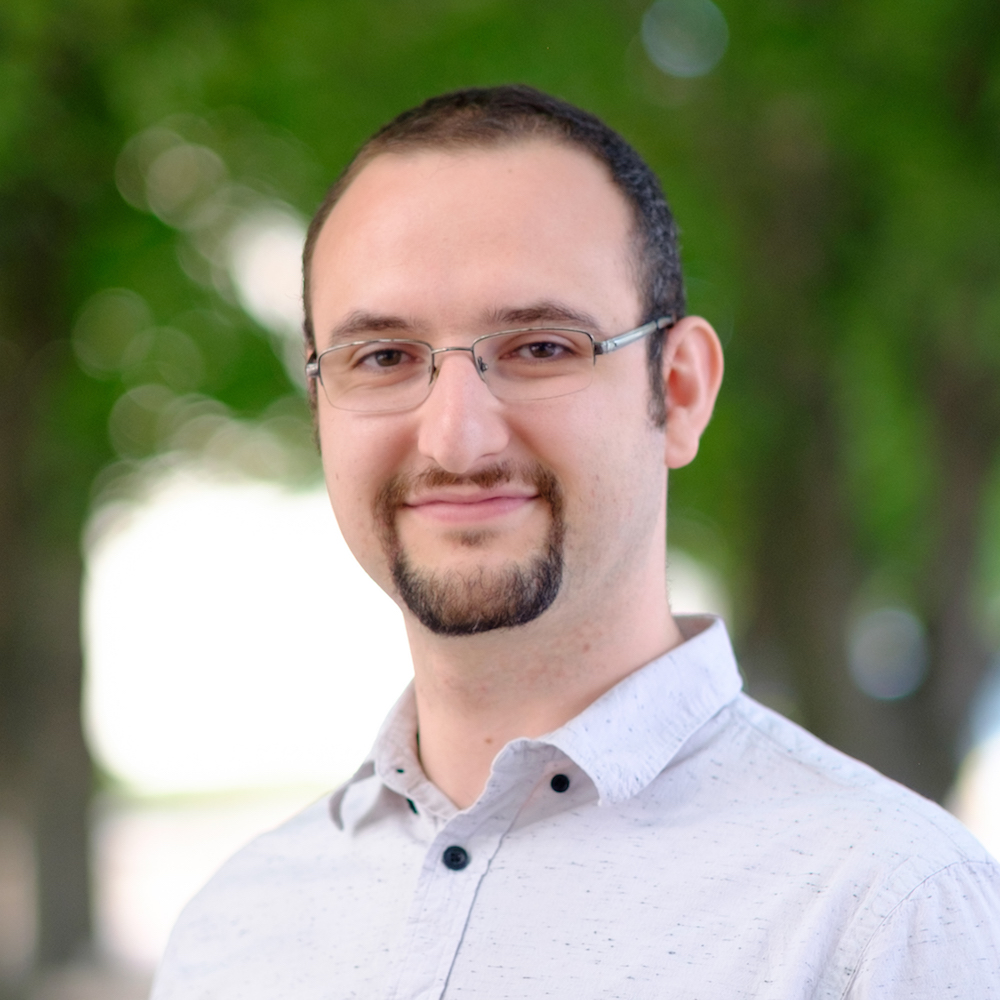
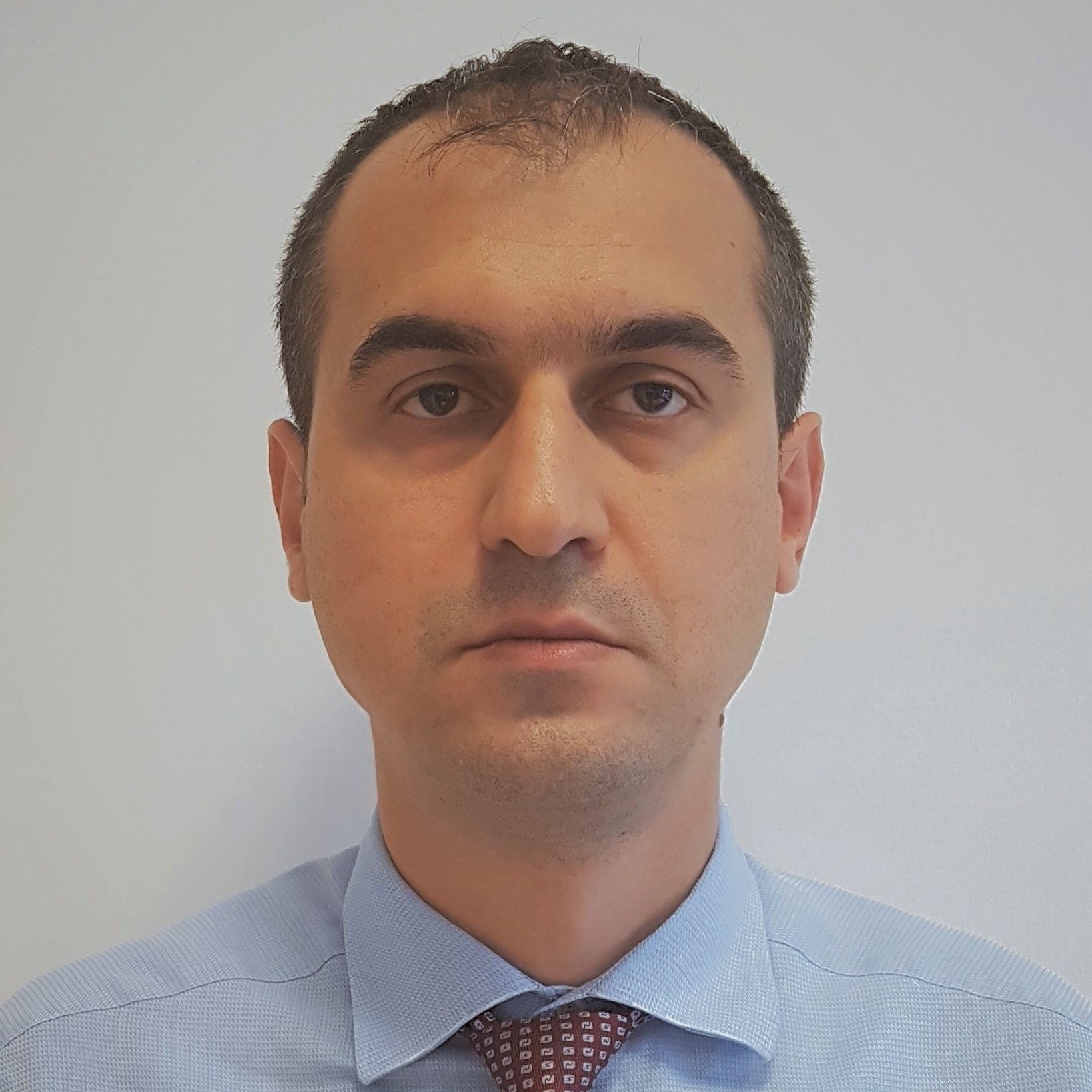
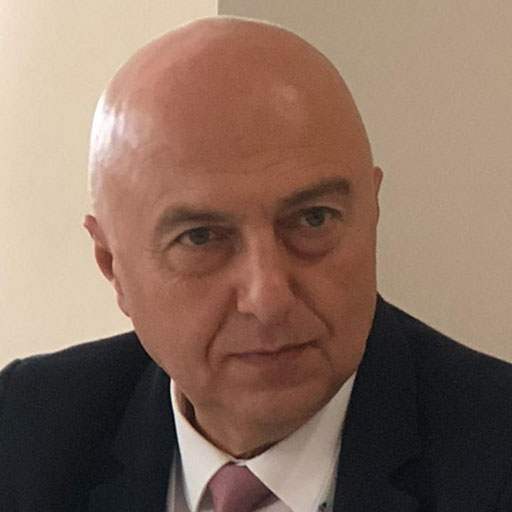
Mustafa Taha Koçyiğit is a Full-time Assistant Professor at Bogazici University. His research focuses on Deep Learning, Self-supervised learning, Efficient training of deep learning methods, Computer vision, Efficient training of large language models, and Language grounded vision models. His recent work addresses computational efficiency in training methods and novel applications of deep learning across domains like aerospace defect detection and computer vision. His publications span advancements in self-supervised learning strategies (2023), efficient training for computer vision tasks (2023), and theoretical contributions like unsupervised batch normalization (2020). The 2025 work demonstrates cross-disciplinary impact in aerospace engineering through AI-driven defect detection via X-ray tomography. Notable Contributions: Bridging efficiency and accuracy in deep learning pipelines Technical Strengths: Neural architecture design, optimization strategies, and domain-specific model adaptation
Veysel Murat İstemihan Genç is a Professor in the Department of Electrical Engineering at Istanbul Technical University (ITU), College of Engineering. His research is centered on modern power systems, with a focus on transient stability, cybersecurity, and integration of renewable energy sources. He actively leads multiple research projects and supervises graduate students in advanced power system technologies. Research Interests: His work spans key areas including transient stability assessment, machine learning applications in power systems, cyber-attack detection in AGC systems, and dynamic security evaluation under high renewable penetration. He employs cutting-edge techniques such as ensemble learning, deep neural networks, and hybrid optimization algorithms. Publication Trends: Recent publications (2023–2025) highlight a strong trend toward integrating AI and machine learning for real-time transient stability prediction, cybersecurity in distributed energy systems, and performance optimization of solar and wind-integrated grids. His work frequently addresses challenges in low-inertia systems and false data injection attacks. Scientific Projects: Strengthened Machine Learning-Based Dynamic Security Evaluation for Transient Stability under False Data Injection Attacks (BAP, 2025) Analysis and Control Methods for Stability of Large-Scale Low-Inertia Power Systems (BAP, 2023–2024) Dynamics Security Evaluation of Renewable-Rich and Cyber-Attacked Power Systems (BAP, 2022–2024) Risk-Based Stability Assessment and Corrective Control Methods in Power Systems (BAP, 2019–2022) Wide-Area Monitoring Protection and Control System Design Using Advanced Signal Processing and Machine Learning (TÜBİTAK, 2018–2020) Advising and Grants: He is the principal investigator (PI) on multiple funded research projects from BAP and TÜBİTAK, indicating strong grant acquisition and leadership. His supervision of 27 ongoing theses reflects an active role in mentoring graduate students in electrical engineering and power systems. Labs and Teams: While specific lab names are not mentioned, his projects suggest leadership in a research group focused on smart grid technologies, AI-enabled power system security, and renewable integration at Istanbul Technical University.
Burak Sunguralp Tekin is an Assistant Professor in the Department of Translation and Interpretation at the Faculty of Humanities and Social Sciences, Ankara Yıldırım Beyazıt University. His academic career includes positions as both Lecturer (2021-2022) and Assistant Professor (2022-present) at the same institution. Dr. Tekin's research primarily focuses on human sociality and the interplay of language, bodies, and technology, with particular emphasis on embodied interaction, social practices, and multimodal communication. Dr. Tekin's educational background includes: Doctorate (2014-2019) from University of Basel, Switzerland, with dissertation "Bodies at play: Exploring participation, spectatorship, and morality in videogaming activities" Postgraduate studies (2012-2013) from University of Newcastle Upon Tyne, United Kingdom, with thesis "Smiles and affective alignment in naturally occurring dyadic academic supervisions" Undergraduate degree (2006-2010) from Hacettepe University, Turkey Dr. Tekin's research interests center on social interaction, multimodal communication, and embodied practices. His work examines how people coordinate their actions, bodies, and language in various contexts including gaming, photography, public spaces, and pandemic-related social adaptations. He employs conversation analysis and multimodal interaction analysis to investigate the micro-details of human sociality, with particular attention to how technology mediates social practices. His research bridges sociology, linguistics, and human-computer interaction to understand the embodied nature of social organization. Analysis of Dr. Tekin's recent publications reveals a consistent focus on embodied social interaction across diverse contexts. His work demonstrates sophisticated methodological approaches to studying how people coordinate their movements, manage social spaces, and create meaning through multimodal resources. A notable trend is his examination of how social practices adapt during extraordinary circumstances like the COVID-19 pandemic, as well as his sustained interest in gaming activities and their social organization. His collaborative work with Lorenza Mondada is particularly prominent in the field of conversation analysis. Dr. Tekin has taught various courses including Multimodal Communication, Introduction to Applied Linguistics, Language and Communication, Language Acquisition, Consecutive Interpreting, Intercultural Communication, World Englishes, Applied Linguistics, Turkish Grammar, Language Culture and Society, and Discourse Analysis at both undergraduate and postgraduate levels. His teaching reflects his research expertise in communication, language, and social interaction.
Handan Kulan serves as Assistant Professor at Yeditepe University's Faculty of Computer and Information Sciences, Department of Information Systems and Technologies since 2024. Previously, she held faculty positions at Istinye University (2023), Uskudar University (2022), and Beykoz University (2020) across computer engineering and software engineering departments. Education: Ph.D. in Computer Engineering, Kadir Has University (2016-2020): Thesis on critical proteins in Down syndrome learning processes M.S. in Computer Science and Engineering, Sabanci University (2013-2014): Thesis analyzing protein residue networks B.S. in Genetics and Bioengineering, Yeditepe University (2007-2013) Second Major in Computer Engineering, Yeditepe University (2009-2013) Her research integrates machine learning with biomedical challenges, specializing in Down syndrome proteomics, neural network analysis of brain aging, and immune system disorders. She develops computational models for protein identification and applies gradient boosting algorithms to biological datasets, bridging AI with healthcare decision systems as demonstrated in her 2023 Springer book. Publications reveal consistent focus on computational approaches to Down syndrome, with recent conference presentations expanding into statistical clustering of biological data and gene ontology analysis for drug discovery. Her work demonstrates methodological evolution from protein network analysis to advanced predictive analytics. Awards: No specific scientific awards documented in source materials. Dr. Kulan actively supervises graduate theses while teaching core computer science courses including Deep Learning, Artificial Intelligence, and Data Structures at both undergraduate and graduate levels across multiple institutions. Her teaching portfolio reflects direct alignment with her research in AI-driven biomedical analysis.
Onur Varol is an Assistant Professor at Sabanci University's Computer Science Department and leads the VIRAL Lab, which focuses on computational social science, network science, and machine learning. He has affiliations with the Center of Excellence for Data Analytics. His research spans social bot detection, misinformation analysis, and online behavior modeling.
Cem Say is a Professor in the Department of Computer Engineering at Boğaziçi University's Faculty of Engineering, where he has established himself as a leading researcher in theoretical computer science and artificial intelligence. His academic journey began with the completion of his doctoral dissertation titled Qualitative System Identification in 1992, which was the first thesis of Boğaziçi University's Computer Engineering PhD program. Professor Say's research interests span multiple domains of computer science, with significant contributions to quantum computing, artificial intelligence, and theoretical computer science. His early work focused on qualitative reasoning and simulation, particularly through the QSIM algorithm, where he made significant improvements to filtering techniques and addressed challenges in representing physical systems. Over time, his research evolved toward quantum computation, where he has made substantial contributions to quantum finite automata theory, space-bounded quantum computation, and quantum complexity classes. His recent work explores the energy complexity of computation, bridging theoretical computer science with thermodynamics. His publication record shows a clear evolution from classical AI and qualitative reasoning toward quantum computation. The most recent articles demonstrate his focus on space-bounded quantum computation, energy complexity of regular languages, and interactive proof systems with minimal resources. His work consistently addresses fundamental questions about computational limits, particularly in quantum and sublogarithmic-space models. Professor Say has also made significant contributions to science communication through several books written for general audiences, including 50 Soruda Yapay Zekâ (2018), Yeni Dünya, Yeni Ağ (2020), and En Hakiki Mürşit (2021), which explain complex concepts in artificial intelligence and scientific methodology in accessible terms. Throughout his career, Professor Say has been actively involved in the Turkish academic community, editing proceedings for multiple Turkish symposia on artificial intelligence and neural networks. His doctoral dissertation established foundational work in qualitative system identification, and his subsequent research has consistently pushed boundaries in theoretical computer science, particularly in quantum computation where he has collaborated extensively with Abuzer Yakaryılmaz and other researchers.
Prof. Dr. Hakkı Polat Gülkan is a Professor at Başkent University's Civil Engineering Department. With a PhD (1971) and Master's (1968) from the University of Illinois in Civil Engineering and a Bachelor's (1966) from METU, his career spans over five decades in earthquake engineering, structural dynamics, and disaster management. PhD: University of Illinois, Civil Engineering (1971) Master's: University of Illinois, Civil Engineering (1968) Bachelor's: Middle East Technical University, Civil Engineering (1966) His research focuses on seismic risk assessment, structural behavior under extreme loads, and disaster mitigation strategies. Key contributions include earthquake simulator development, ground motion analysis, and retrofitting techniques for masonry and reinforced concrete structures. He has published extensively on deformation limits, response spectra, and historical building preservation. Recent work includes 15+ articles from 2024-2012 analyzing Istanbul's seismic hazards, Marmara region dynamics, and post-earthquake structural integrity. Conference papers address Turkey's endemic building vulnerabilities and deformation thresholds for seismic isolation systems. Scientific Achievements: Elected to U.S. National Academy of Engineering (2023) As an active journal reviewer for 13+ publications (2023-2024), he contributes to advancing earthquake engineering discourse. His teaching portfolio includes advanced structural analysis, concrete mechanics, and seismic design courses.
Prof. Dr. Metin Sitti is a leading academic and researcher currently serving as Director at the Max Planck Institute for Intelligent Systems and affiliated faculty at Carnegie Mellon University's Robotics Institute and Koç University's Schools of Medicine and Engineering. His interdisciplinary work bridges robotics, materials science, and biomedicine. His research interests center on medical microrobotics , bio-inspired robotics , and physical intelligence , exploring how intelligent behaviors can emerge from material properties and system design. He leads the Physical Intelligence Research Group , pioneering novel approaches in soft and micro-robotic systems. The scientific publications attributed to Prof. Sitti span diverse areas including micro-robotic locomotion, stimuli-responsive materials, and collective behavior in synthetic systems. Though specific titles are not listed, his body of work consistently contributes to robotics, nanotechnology, and biomedical engineering. Rahmi M. Koç Science Award ERC Advanced Grant IEEE Fellow National Science Foundation CAREER Award SPIE Nanoengineering Pioneer Award IEEE/ASME Best Mechatronics Paper Award Robotics: Science and Systems Conference Best Paper Award IEEE/RSJ Intelligent Robot Systems Conference Best Paper and Video Awards IEEE Robotics and Automation Conference Best Paper and Video Awards IEEE Robotics and Biomimetics Conference Best Paper and Video Awards Prof. Sitti has secured major grants including the ERC Advanced Grant and NSF CAREER Award, supporting high-impact research in intelligent materials and robotic systems. He has mentored numerous researchers and students across institutions, though specific advisees are not listed. His entrepreneurial initiative led to the founding of nanoGriptech Inc. in 2009, commercializing gecko-inspired microfiber adhesives. He leads the Physical Intelligence Department at the Max Planck Institute, where his team develops novel robotic materials and microsystems that exhibit intelligence through physical design rather than computation alone.
Dr. Aykut Koç is an Associate Professor at the Department of Electrical and Electronics Engineering and a faculty member of the National Magnetic Resonance Research Center (UMRAM) at Bilkent University, Turkey. He leads the AykutKoc Lab, focusing on interdisciplinary research at the intersection of machine learning, signal processing, natural language processing, and graph signal processing. Education: B.S. in Electrical and Electronics Engineering (2005, Bilkent University); M.S. in Electrical Engineering (2007), M.S. in Management Science and Engineering (2009), and Ph.D. in Electrical Engineering (2011) under Professor Lambertus Hesselink at Stanford University; LL.B. in Law (Ankara University). His research integrates mathematical signal processing techniques (e.g., fractional Fourier and linear canonical transforms) with modern machine learning architectures like transformers and graph neural networks. Recent work explores semantic communication systems, bias mitigation in legal language models, and cross-modal applications in biomedical imaging and radar technology. Dr. Koç has published extensively in IEEE and Springer journals, with recent articles analyzing Fourier-enhanced transformers, graph-based NLP methods, and time-vertex signal analysis. His work addresses both theoretical innovations and practical applications, including schizophrenia diagnosis, legal outcome prediction, and maritime surveillance. Scientific Awards: Science Academy Young Scientists Award (BAGEP), 2023. He has supervised numerous graduate and undergraduate researchers, many of whom have transitioned to top-tier institutions such as MIT, UCLA, and TU Darmstadt. Dr. Koç actively serves as Associate Editor for multiple IEEE journals and participates in conference program committees, including EMNLP's Natural Legal Language Processing (NLLP) workshop.
Caner Ünlü is an Associate Professor in the Department of Chemistry at Istanbul Technical University with 39 publications and 10 active research projects through 2025. His work focuses on quantum dot synthesis, photophysical characterization, and applications in environmental sensing and renewable energy systems. Research interests center on carbon dots, chalcogenide quantum dots, and their interactions with biological systems. Key areas include tunable emission design, photosynthetic enhancement for algae biomass production, eco-friendly ATP sensing, and micropollutant removal. His methodology integrates experimental synthesis with computational modeling and machine learning for nanomaterial optimization. Recent publications (2024-2025) demonstrate strong thematic coherence in quantum dot engineering for specific functionalities: dopant-driven metal ion sensing, defect state manipulation in chalcogenides, and spectral modulation of photosynthetic complexes. This work bridges nanomaterials science with biotechnology and environmental engineering. Scientific awards: None mentioned in source material. Ünlü has supervised 14 research students and secured multiple grants including TÜBİTAK funding for quantum dot applications in solar cells and environmental remediation. Current projects involve quantum dot integration with metal-organic frameworks and development of fuel-marking nanomaterials. While specific lab names are unreported, his collaborative projects indicate active participation in interdisciplinary teams advancing quantum dot technology for energy and environmental solutions.
Can Güler is an Assistant Professor in the Department of Lifelong Learning and Adult Education at the Faculty of Education, Anadolu University, Turkey. Previously, from 2002 to 2023, he served as a Lecturer in the Department of Distance Education at the Faculty of Open Education, Anadolu University. His academic career spans over two decades with continuous contributions to open and distance education systems. His educational background includes: Bachelor's degree in Computer and Instructional Technologies Education, Anadolu University (2002) Master's degree in Distance Education, Institute of Social Sciences, Anadolu University (2007) Ph.D. in Distance Education, Institute of Social Sciences, Anadolu University (2022) Güler's research centers on open and distance learning methodologies, educational technology integration, and instructional material development. He specializes in video-based learning systems, interactive media design, and gamification strategies for enhancing learner engagement. His work addresses practical challenges in digital content creation and accessibility for diverse learner demographics, particularly adult populations. Analysis of his publication trajectory reveals consistent innovation in multimedia applications for distance education, with recent emphasis on generative AI awareness among educators and interactive video transformation techniques. His research frequently employs design-based methodologies and institutional case studies from Anadolu University's open education infrastructure. Scientific Awards: None mentioned in available sources. Advising and Grants: No information provided regarding student supervision or research funding in current documentation.
Prof. Dr. Yavuz Yakut serves as full-time Professor and Head of the Department of Physiotherapy and Rehabilitation at Hasan Kalyoncu University's Faculty of Health Sciences since 2016. Previously, he held academic positions at Hacettepe University from 1985 to 2016, progressing from Research Assistant to Professor, while concurrently serving on national committees including the Ministry of Health and Ministry of Finance Budget Implementation Commissions (1997-2003) and YÖK Physiotherapy Sub-Commission (2013-2016). His educational foundation includes a Bachelor's (1984), Master's (1987), and PhD (1990) in Physiotherapy and Rehabilitation, all completed at Hacettepe University. Yakut's research demonstrates exceptional breadth across rehabilitation science, with concentrated expertise in biomechanics and scoliosis rehabilitation . His work significantly advances neurological rehabilitation for conditions like multiple sclerosis and cerebral palsy, while pioneering applications in burn rehabilitation and orthotics/prosthetics . Recent publications reveal strategic integration of biopsychosocial models and telerehabilitation , particularly addressing pandemic-related challenges and chronic disease management across diverse populations. Analysis of his 2023-2025 publications shows consistent interdisciplinary innovation: validating cross-cultural assessment tools (e.g., Turkish translations of scoliosis and ADL questionnaires), developing novel exercise protocols (dance therapy, cognitive exercise therapy), and investigating rehabilitation responses in complex cases including HIV, rheumatic diseases, and post-earthquake trauma. His methodology frequently combines biomechanical analysis with patient-centered outcomes, demonstrating particular rigor in controlled trials for spinal deformities and burn recovery. His leadership extends beyond direct research through committee roles shaping national rehabilitation policy and educational standards, including his current departmental leadership and recent systematic review on physiotherapy distance education during pandemic disruptions.
Başar Öztayşi is a Professor at the Department of Industrial Engineering , Istanbul Technical University , with expertise in fuzzy logic, multi-criteria decision making, and decision science. He has held administrative roles including Associate Professor (2017–present), Deputy Director of the Institute (2016–2017), and Assistant Professor (2013–2017). Fields of Study : Fuzzy Logic, Multi-criteria Decision Making, Decision Science Contact : oztaysib@itu.edu.tr , +90 212 293 1300 Research Interests focus on applying fuzzy set theory to complex decision problems, including financial management, risk assessment, and smart city energy systems. His work extends to industry 4.0 applications and process mining in e-commerce. Recent Publications (2024) analyze fuzzy approaches in financial management, risk assessment, and Industry 4.0, with subfields spanning bibliometric trends, allocation optimization, and sustainable energy planning. Earlier works explore AHP matrix consistency, file distribution models, and customer segmentation. Awards : Best Paper Award, FLINS 2018 Science - Art Awards
Canan ATILGAN is a Professor at the Faculty of Engineering and Natural Sciences, Sabanci University, Istanbul, Turkey. She has held leadership roles including Dean (2018-2020), Director of the Graduate School (2018-2020), and President of the Science Academy (2021-present). Her research focuses on computational tools for protein conformational transitions, allosteric communication, and antibiotic resistance mechanisms. Ph.D. (1996) and B.S. (1991) in Chemical Engineering from Boğaziçi University A pioneer in perturbation-response scanning and network-based protein modeling, her work bridges biophysics, structural biology, and molecular evolution. She has supervised 15 PhD and 17 MS students, emphasizing accessible computational biophysics education through workshops and seminars. Her recent publications highlight allosteric mechanisms in biosensors, β-lactam resistance via TolC dynamics, and evolutionary fitness landscapes. Awards include EMBO and Academia Europaea membership, L’Oréal Turkey Young Women Scientist Fellowship, and TÜBA-GEBİP Distinguished Young Scientist Award. President, Science Academy (2021) EMBO Elected Member (2023) TÜBA-GEBİP Distinguished Young Scientist (2004) She leads the MIDST Lab, contributes to Turkish science communication via sarkac.org, and organizes 'Dialogues in the MIDST' workshops for graduate students. Her work integrates theoretical models with experimental validation in iron transport proteins and resistance mechanisms.
Tuğba Dalyan is an Associate Professor in the Department of Computer Engineering at Istanbul Bilgi University, Faculty of Engineering and Natural Sciences. She holds a Ph.D. in Computer Engineering from Yıldız Technical University (2014), an MSc from Kocaeli University (2007), and dual BSc degrees in Mathematics and Computer Science and Business Administration (Minor) from Istanbul Bilgi University (2003). She has been a faculty member since 2016 and previously served as a Teaching Staff member and Research Assistant at the same institution. Her research focuses on Natural Language Processing , Machine Learning , Deep Learning , Text Mining , Data Science , and Big Data Analytics . Her work spans computational linguistics, sentiment analysis, author profiling, machine translation, and smart systems. She has led and contributed to numerous research projects, particularly in AI-driven urban solutions and health technologies. The most recent publications show a strong trend in Turkish NLP, zero-shot classification, multimodal AI (image captioning), emotional robotics, and decision support systems using fuzzy logic. Her work combines theoretical rigor with practical applications in smart cities, education, and healthcare. Best Paper Award , CICLing 2012 TÜBİTAK 2209-A student project awards (2022–2024) Horizon2020 Eşik Üstü Ödülü , MIMOSCSA 2024 TÜBİTAK 2242 competition: 2nd and 3rd place (2016, 2018) She has advised numerous student research projects, many of which have received national recognition. She has directed multiple TÜBİTAK and institutional research grants, including projects on smart homes, blockchain crowdfunding, mental health, and AI for social polarization. Her leadership roles include Head of Department, Vice Dean, and Director of Graduate Programs. Tuğba Dalyan leads research in AI and NLP with a strong emphasis on Turkish language technologies. She is involved in interdisciplinary teams working on emotional robots, smart city platforms, and citizen science ecosystems. Her lab activities focus on neural networks, text analysis, and intelligent systems development.